Download Free Sample
Kindly complete the form below to receive a free sample of this Report
Baby and Toddler Feeding Products and Accessories Market Size, Share, Industry Trend & Analysis Research Report: By Product Type (Feeding Bottles, Sippy Cups, Breast Pumps, Baby Food, High Chairs), By Material Type (Plastic, Glass, Silicone, Stainless Steel, Wood), By Distribution Channel (Online Retail, Supermarkets, Specialty Stores, Pharmacies, Department Stores), By Age Group (Infants, Toddlers, Pre-Schoolers) andBy Regional (North America, Europe, South America, Asia Pacific, Middle East and Africa)- Forecast to 2035
As per Market Research Future analysis, the Baby and Toddler Feeding Products and Accessories Market was estimated at 62.48 USD Billion in 2024. The market is projected to grow from 65.28 USD Billion in 2025 to 101.3 USD Billion by 2035, exhibiting a compound annual growth rate (CAGR) of 4.49% during the forecast period 2025 - 2035
The Baby and Toddler Feeding Products and Accessories Market is experiencing a dynamic shift towards sustainability and technological integration.
| 2024 Market Size | 62.48 (USD Billion) |
| 2035 Market Size | 101.3 (USD Billion) |
| CAGR (2025 - 2035) | 4.49% |
The Baby and Toddler Feeding Products and Accessories Market is currently experiencing a dynamic evolution, driven by changing consumer preferences and heightened awareness regarding child nutrition. Parents are increasingly seeking products that not only meet functional needs but also align with their values, such as sustainability and safety. This shift is prompting manufacturers to innovate, introducing a range of eco-friendly materials and designs that appeal to environmentally conscious consumers. Additionally, the rise of e-commerce platforms has transformed how these products are marketed and sold, allowing for greater accessibility and convenience for parents. As a result, the market landscape is becoming more competitive, with brands striving to differentiate themselves through unique offerings and enhanced customer experiences. Moreover, the Baby and Toddler Feeding Products and Accessories Market is witnessing a growing trend towards personalized and customizable solutions. Parents are looking for products that cater to their child's specific needs, whether it be dietary restrictions or developmental stages. This trend is encouraging companies to develop tailored feeding solutions, such as specialized bottles and utensils designed for various age groups. Furthermore, the integration of technology into feeding products, such as smart bottles that track feeding patterns, is gaining traction. This technological advancement not only enhances the feeding experience but also provides valuable insights for parents, thereby fostering a deeper connection between caregivers and their children. Overall, the market appears poised for continued growth as it adapts to the evolving demands of modern families.
There is a noticeable shift towards eco-friendly materials and sustainable practices within the Baby and Toddler Feeding Products and Accessories Market. Parents are increasingly prioritizing products that minimize environmental impact, prompting brands to innovate with biodegradable and recyclable materials.
The demand for personalized feeding solutions is on the rise, as parents seek products tailored to their child's unique needs. This trend encourages manufacturers to create specialized items that cater to various dietary requirements and developmental stages.
The incorporation of technology into feeding products is becoming more prevalent. Smart feeding solutions, such as bottles that monitor intake, are gaining popularity, providing parents with insights that enhance the feeding experience and foster a stronger bond with their children.
Sustainability is becoming a key focus in the Baby and Toddler Feeding Products and Accessories Market. Parents are increasingly concerned about the environmental impact of the products they purchase. This has led to a rise in demand for eco-friendly feeding products, such as biodegradable utensils and reusable containers. Market trends indicate that brands that prioritize sustainable practices are likely to gain a competitive edge. As consumers become more environmentally conscious, the shift towards sustainable feeding solutions is expected to drive growth and innovation in the market.
Technological advancements are playing a crucial role in shaping the Baby and Toddler Feeding Products and Accessories Market. Innovations such as smart feeding bottles and apps that track feeding schedules are becoming increasingly popular among tech-savvy parents. These products not only enhance the feeding experience but also provide valuable insights into a child's nutritional intake. Recent market analysis suggests that the integration of technology in feeding products could lead to a significant increase in market share, as parents seek solutions that offer both convenience and enhanced monitoring capabilities.
The increasing awareness of health and nutrition among parents appears to be a pivotal driver in the Baby and Toddler Feeding Products and Accessories Market. Parents are more inclined to seek organic, non-GMO, and allergen-free products for their children. This trend is reflected in the growing demand for baby food products that are rich in essential nutrients. According to recent data, the organic baby food segment has witnessed a compound annual growth rate of approximately 10% over the past few years. This shift towards healthier options is likely to influence the types of feeding accessories that parents choose, as they seek products that align with their health-conscious values.
Consumer preferences in the Baby and Toddler Feeding Products and Accessories Market are evolving rapidly. Parents are increasingly favoring convenience and functionality in feeding products. This trend is evident in the rising popularity of ready-to-eat meals and easy-to-use feeding accessories. Market data indicates that the demand for portable feeding solutions, such as pouches and on-the-go feeding kits, has surged, with a notable increase in sales over the last year. As parents juggle busy lifestyles, the need for products that simplify feeding routines is likely to drive innovation and product development in this sector.
The Baby and Toddler Feeding Products and Accessories Market is experiencing growth due to increased birth rates in emerging markets. Countries with rising populations are witnessing a surge in demand for baby feeding products as new parents seek quality solutions for their children. Market data indicates that regions such as Asia-Pacific are expected to see substantial growth in this sector, with a projected increase in sales of baby feeding products by over 15% in the coming years. This demographic shift presents a lucrative opportunity for manufacturers to expand their reach and cater to the needs of a growing consumer base.
In the Baby and Toddler Feeding Products and Accessories Market, Feeding Bottles dominate the segment, representing a substantial portion of the market share due to their essential role in infant feeding. Following closely are Sippy Cups, which also hold a significant share as they transition toddlers from bottles to cups. Breast Pumps and Baby Food are important, but High Chairs represent a smaller yet rapidly increasing segment as they accommodate the growing trend of meal sharing between parents and their babies.
Feeding Bottles (Dominant) vs. High Chairs (Emerging)
Feeding Bottles are a cornerstone in the Baby and Toddler Feeding Products market, appreciated for their versatility and practicality, catering to various feeding needs and preferences. With a wide array of designs and features, they appeal to a broad consumer base, solidifying their dominant position. In contrast, High Chairs are emerging due to the rising trend of interactive feeding experiences, allowing infants to engage with family meals while enjoying their own food. The increasing awareness of ergonomic designs and features such as adjustable heights contributes to their growth, as parents seek products that enhance safety and convenience.
In the Baby and Toddler Feeding Products and Accessories market, the material segment is primarily dominated by plastic owing to its convenience, affordability, and lightweight nature. Plastic feeding products, including bottles, bowls, and spoons, capture a significant share of the market due to their practical usage and variety. Glass products, while traditionally favored for being non-toxic and reusable, carry less market share, although they are recognized for their superior quality and safety, appealing to eco-conscious parents.
The growth trends in the materials segment indicate an increased demand for glass and silicone products, with glass emerging as the fastest-growing option. This growth is fueled by a rising awareness of health and safety, as parents are increasingly opting for materials that are free from harmful chemicals. Silicone feeding products are also gaining popularity due to their flexibility, durability, and ease of cleaning, enhancing their appeal as a modern alternative to traditional materials.
Plastic (Dominant) vs. Glass (Emerging)
Plastic remains the dominant material in the Baby and Toddler Feeding Products and Accessories market due to its affordability and versatility. It offers a wide array of feeding solutions like bottles and utensils, appealing to a broad range of consumers. On the other hand, glass is quickly emerging as a favored choice, particularly among parents prioritizing sustainability and health standards. Glass products are celebrated for being BPA-free, easier to sterilize, and environmentally friendly, positioning them as a premium alternative in the market. While plastic continues to hold a substantial share, the trend toward eco-friendly options is gradually elevating glass—and its market presence—making it a notable contender in the segment.
In the Baby and Toddler Feeding Products and Accessories Market, distribution channels play a vital role in shaping consumer purchasing behaviors. Online retail currently holds the largest share, driven by the convenience it offers to parents looking for a wide range of products at competitive prices. Supermarkets also maintain a significant portion of the market, providing a one-stop shopping experience for essential baby and toddler items, which appeals to time-conscious consumers. Specialty stores, pharmacies, and department stores contribute to the market as well, albeit to a lesser extent, serving niche needs and offering specialized products.
Growth trends indicate that online retail is expected to continue its dominance, propelled by the increasing penetration of e-commerce and changing consumer preferences towards online shopping. Meanwhile, supermarkets are emerging as the fastest-growing channel, attributed to their ongoing expansion of baby product lines and promotional strategies aimed at attracting parents. The proliferation of mobile shopping apps and enhanced delivery services are further amplifying the growth of both online and supermarket channels in this sector.
Online Retail: Dominant vs. Supermarkets: Emerging
Online retail is the dominant distribution channel in the Baby and Toddler Feeding Products and Accessories Market, offering customers the greatest convenience and an extensive selection of products. With the rise of e-commerce, parents are increasingly turning to online platforms for their purchasing needs, valuing the ability to compare prices, read reviews, and access a wider array of brands and products. In contrast, supermarkets represent an emerging channel, quickly adapting to the growing demand for baby products. By enhancing their product lines and implementing targeted marketing strategies, supermarkets are capturing the attention of parents looking for ease in shopping for essential toddler supplies while benefiting from foot traffic and consumer habits associated with grocery shopping.
In the Baby and Toddler Feeding Products and Accessories Market, the distribution among different age groups showcases Infants as the largest segment, capturing a significant share of overall market preferences. This dominance can be attributed to the essential nature of feeding products required for infants, which includes bottles, formula, and solid food introduction aids, making them a primary focus for parents and caregivers.
Feeding Products: Infants (Dominant) vs. Toddlers (Emerging)
The infant segment is characterized by a well-established demand for a variety of feeding products, including bottles, nipples, and baby food. Given that infants require specialized nutrition, this segment benefits from strong branding and product innovation, providing parents with options that prioritize safety and convenience. Conversely, the toddler segment is emerging rapidly, as parents transition their children to more solid foods and seek products that support self-feeding and nutritional variety. This growth is driven by increasing awareness of nutrition in early childhood paired with parents' desire for easy-to-use feeding solutions that encourage independence.
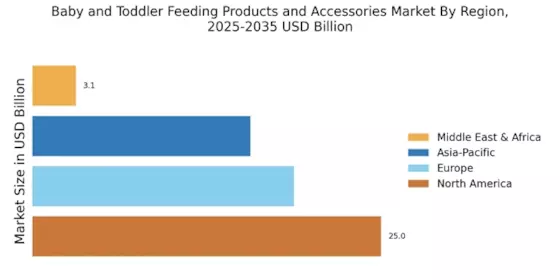
North America is the largest market for baby and toddler feeding products, holding approximately 40% of the global market share. Key growth drivers include increasing awareness of infant nutrition, rising disposable incomes, and a growing trend towards organic and natural products. Regulatory support from agencies like the FDA ensures product safety and quality, further boosting consumer confidence. The United States and Canada are the leading countries in this region, with major players like Procter & Gamble, Gerber, and Mead Johnson dominating the market. The competitive landscape is characterized by continuous innovation and a focus on sustainability, with brands increasingly offering eco-friendly products. The presence of established companies ensures a robust supply chain and wide distribution networks, catering to diverse consumer needs.
Europe is witnessing significant growth in the baby and toddler feeding products market, accounting for approximately 30% of the global share. Factors driving this growth include increasing health consciousness among parents, stringent regulations on food safety, and a shift towards organic and natural feeding solutions. The European Union's regulations on food labeling and safety standards play a crucial role in shaping market dynamics. Leading countries in this region include Germany, France, and the UK, where brands like Danone and Reckitt Benckiser are prominent. The competitive landscape is marked by a mix of established players and emerging startups focusing on innovative and sustainable products. The market is also influenced by changing consumer preferences, with a growing demand for plant-based and allergen-free options, enhancing the overall product offerings.
Asia-Pacific is rapidly emerging as a significant market for baby and toddler feeding products, holding around 25% of the global market share. The region's growth is driven by rising birth rates, increasing urbanization, and a growing middle class with higher disposable incomes. Additionally, government initiatives promoting child health and nutrition are catalyzing market expansion, making it a key area for investment. Countries like China, India, and Japan are leading the market, with local and international brands competing for market share. Key players such as Nestle and BabyBjorn are expanding their product lines to cater to diverse consumer preferences. The competitive landscape is evolving, with a focus on innovative feeding solutions and accessories that enhance convenience for parents, reflecting changing lifestyles and consumer demands.
The Middle East and Africa region is an untapped market for baby and toddler feeding products, currently holding about 5% of the global market share. The growth is primarily driven by urbanization, increasing awareness of child nutrition, and a rise in disposable incomes among the middle class. Government initiatives aimed at improving child health and nutrition are also contributing to market development, creating opportunities for new entrants. Leading countries in this region include South Africa, UAE, and Nigeria, where local and international brands are beginning to establish a presence. The competitive landscape is still developing, with opportunities for innovation in product offerings. Key players are focusing on affordable and accessible feeding solutions to cater to the growing demand, reflecting the region's unique socio-economic dynamics.
The Baby and Toddler Feeding Products and Accessories Market is characterized by increasing demand driven by factors such as the growing population of infants and toddlers, heightened awareness regarding child nutrition, and the development of innovative feeding solutions. This market encompasses a diverse range of products including bottles, sippy cups, breastfeeding accessories, food preparation and storage solutions, as well as various utensils designed specifically for young children. Competitive insights in this market space highlight the importance of product differentiation, brand reputation, and consumer trust, which are essential for establishing a foothold in this dynamic environment.
Companies are increasingly focusing on sustainability and health-conscious materials to appeal to a more informed consumer base, while also leveraging e-commerce platforms for broader market penetration.Babymoov stands out in the Baby and Toddler Feeding Products and Accessories Market due to its commitment to innovation, quality, and practicality. The company has established a solid market presence recognized for its comprehensive range of feeding products that cater to the unique needs of both parents and children. Babymoov emphasizes convenience and safety, ensuring that their products are ergonomically designed, easy to clean, and made from safe materials.
The company also thrives on its dedication to nurturing a community-oriented brand image, often involving parents in the product development process through surveys and feedback. The strengths of Babymoov lie in its ability to adapt to market trends, its focus on educational and user-friendly designs, and the exceptional customer support it offers, which bolsters consumer confidence and loyalty.Baby Brezza has carved out a strong position in the Baby and Toddler Feeding Products and Accessories Market, particularly due to its focus on simplifying meal preparation for parents.
The company is recognized for its innovative and user-friendly products that effectively combine technology with feeding solutions, thereby addressing the common challenges parents face in feeding their little ones. Baby Brezza's strengths include its state-of-the-art baby food makers and formula dispensers that are designed to save time and reduce hassle while ensuring nutritious meals for infants and toddlers. The company's emphasis on high-quality materials and safety standards resonates well with health-conscious parents, who seek dependable and effective feeding products.
Moreover, Baby Brezza's engagement in digital marketing and e-commerce enhances its visibility and accessibility, ensuring that its products reach a broader customer base while fostering brand loyalty.





In recent months, the Baby and Toddler Feeding Products and Accessories Market has witnessed significant developments, particularly with established brands like Babymoov, Baby Brezza, and Nestle continuing to expand their product lines to cater to evolving consumer preferences for health-conscious and eco-friendly items. Evenflo and Oxotot have introduced innovative feeding solutions that emphasize safety and ease of use, reflecting a growing trend towards practicality and sustainability. Recent mergers and acquisitions in the sector have included strategic collaborations among key players, enhancing market accessibility and product diversification.
For instance, companies like Tommee Tippee and Chicco have engaged in partnerships aimed at integrating advanced technologies into baby feeding products, showcasing a shift toward smart childcare solutions. As for market growth, the overall valuation of firms such as Mead Johnson Nutrition and Danone has seen an upward trend, driven by increasing global birth rates and rising disposable incomes, which are fostering demand for premium food products and accessories for infants and toddlers. This environment continues to inspire innovation and competition, positioning the market for robust future expansion and more diversified offerings.
The Baby and Toddler Feeding Products and Accessories Market is projected to grow at a 4.49% CAGR from 2025 to 2035, driven by increasing health awareness and innovative product development.
New opportunities lie in:
By 2035, the market is expected to be robust, reflecting evolving consumer preferences and technological advancements.
| MARKET SIZE 2024 | 62.48(USD Billion) |
| MARKET SIZE 2025 | 65.28(USD Billion) |
| MARKET SIZE 2035 | 101.3(USD Billion) |
| COMPOUND ANNUAL GROWTH RATE (CAGR) | 4.49% (2025 - 2035) |
| REPORT COVERAGE | Revenue Forecast, Competitive Landscape, Growth Factors, and Trends |
| BASE YEAR | 2024 |
| Market Forecast Period | 2025 - 2035 |
| Historical Data | 2019 - 2024 |
| Market Forecast Units | USD Billion |
| Key Companies Profiled | Nestle (CH), Danone (FR), Procter & Gamble (US), Reckitt Benckiser (GB), Gerber (US), Mead Johnson (US), Burt's Bees (US), BabyBjorn (SE), Tommee Tippee (GB) |
| Segments Covered | and Toddler Feeding Products and Accessories Market Size, Share, Industry Trend & Analysis Research Report: By Product Type, Food, High Chairs, Material Type, Distribution Channel, Age Group, Regional |
| Key Market Opportunities | Integration of smart technology in Baby and Toddler Feeding Products and Accessories enhances convenience and safety. |
| Key Market Dynamics | Rising consumer preference for eco-friendly materials drives innovation in baby and toddler feeding products and accessories. |
| Countries Covered | North America, Europe, APAC, South America, MEA |
The market valuation was 62.48 USD Billion in 2024.
The market is projected to reach 101.3 USD Billion by 2035.
The expected CAGR for this market is 4.49% during the forecast period.
Supermarkets are expected to generate the highest revenue, with a valuation range of 20.0 to 30.0 USD Billion.
Plastic, glass, and silicone are the leading materials, with plastic valued at 25.0 to 39.0 USD Billion.
Toddlers are projected to contribute the most, with a valuation range of 25.0 to 40.0 USD Billion.
Key players include Nestle, Danone, Procter & Gamble, and Gerber, among others.
Baby food is expected to see the highest growth, with a valuation range of 20.0 to 30.0 USD Billion.
Online retail sales are projected to range from 12.5 to 20.0 USD Billion, indicating strong growth potential.
The valuation range for high chairs is expected to be between 15.0 and 28.0 USD Billion.



Kindly complete the form below to receive a free sample of this Report

“This is really good guys. Excellent work on a tight deadline. I will continue to use you going forward and recommend you to others. Nice job”


“Thanks. It’s been a pleasure working with you, please use me as reference with any other Intel employees.”


“Thanks for sending the report it gives us a good global view of the Betaïne market.”


“Thank you, this will be very helpful for OQS.”


“We found the report very insightful! we found your research firm very helpful. I'm sending this email to secure our future business.”


“I am very pleased with how market segments have been defined in a relevant way for my purposes (such as "Portable Freezers & refrigerators" and "last-mile"). In general the report is well structured. Thanks very much for your efforts.”


“I have been reading the first document or the study, ,the Global HVAC and FP market report 2021 till 2026. Must say, good info! I have not gone in depth at all parts, but got a good indication of the data inside!”


“We got the report in time, we really thank you for your support in this process. I also thank to all of your team as they did a great job.”


“The Automotive 48V ECU Components Procurement Intelligence Study” was a complex project, but the Market Research Future (MRFR) team handled it with quality, agility, and customer-centricity. They delivered all requested data on time and within the agreed scope. The team, including Shubhendra Anand and Rahul Gotadki, was always readily available to clarify questions and swiftly implement necessary adjustments, driving the project to a successful conclusion within a very demanding timeframe.
I would also like to specifically commend Akshay Agarwal for his responsiveness and support at every stage—from our initial inquiry on May 6th through to final delivery on June 18th. His dedication made the entire process seamless.”



