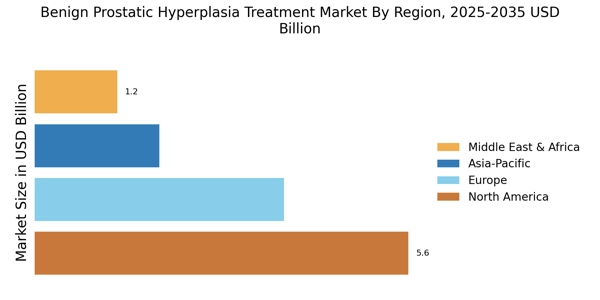
According to Market Research Future analysis, the Benign Prostatic Hyperplasia Treatment Market Size was valued at USD 12.45 Billion in 2024. The market is projected to grow from USD 13.13 Billion in 2025 to USD 22.44 Billion by 2035, registering a CAGR of 5.5% during the forecast period (2025–2035). North America led the market with over 44.98% share, generating around USD 5.6 billion in revenue.
The Benign Prostatic Hyperplasia Treatment Market is growing due to the rising aging male population and increasing prevalence of prostate-related disorders. Key trends include advancements in minimally invasive therapies, growing adoption of combination drug treatments, and increasing awareness of early diagnosis and management options improving patient outcomes in urology care globally.
According to the World Health Organization, the global population aged 60 years and older is expected to reach 2.1 billion by 2050, significantly increasing the prevalence of age-related conditions such as benign prostatic hyperplasia.
Key Market Trends & Highlights
The Benign Prostatic Hyperplasia Treatment Market is experiencing a transformative shift towards innovative and patient-centric solutions.
- The market is witnessing a rise in minimally invasive techniques, enhancing patient recovery and satisfaction.
- North America remains the largest market, driven by advanced healthcare infrastructure and high treatment adoption rates.
- In the Asia-Pacific region, the market is growing rapidly, fueled by increasing awareness and healthcare access.
- Key market drivers include the aging population and advancements in treatment modalities, particularly in Alpha Blockers and Combination Drug Therapy segments.
Market Size & Forecast
| 2024 Market Size | 12.45 (USD Billion) |
| 2035 Market Size | 22.44 (USD Billion) |
| CAGR (2025 - 2035) | 5.5% |
Major Players
Companies such as Astellas Pharma (JP), Boehringer Ingelheim (DE), Eli Lilly and Company (US), GlaxoSmithKline (GB), Merck & Co. (US), Pfizer Inc. (US), Sanofi (FR), Teva Pharmaceutical Industries (IL), AbbVie Inc. (US) are some of the major participants in the global market.