Growth of E-Bike Market
The rapid growth of the e-bike market is significantly impacting the Global Bike Helmet Market Industry. As e-bikes become increasingly popular due to their convenience and efficiency, the demand for helmets specifically designed for e-bike riders is likely to rise. E-bike riders often travel at higher speeds than traditional cyclists, necessitating helmets that offer enhanced protection. This trend is further supported by the increasing number of e-bike users, which is expected to drive helmet sales. The intersection of these two markets suggests a robust growth trajectory for the helmet industry, aligning with the overall expansion of cycling-related products.
Market Growth Projections
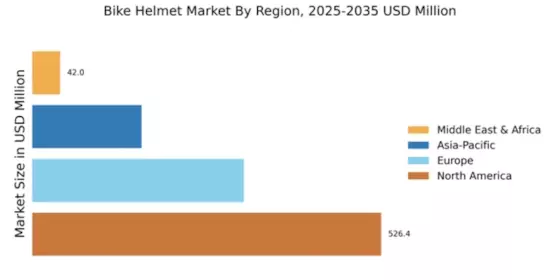
The Global Bike Helmet Market Industry is poised for substantial growth, with projections indicating a market value of 1.05 USD Billion in 2024 and an anticipated increase to 1.87 USD Billion by 2035. This growth trajectory reflects a compound annual growth rate of 5.36% from 2025 to 2035. Factors contributing to this expansion include rising safety awareness, increased cycling participation, and technological innovations in helmet design. The market's evolution is likely to be influenced by changing consumer preferences and regulatory frameworks that prioritize cyclist safety. As these dynamics unfold, the industry is expected to adapt and thrive.
Rising Popularity of Cycling
The increasing popularity of cycling as a mode of transportation and recreation is significantly influencing the Global Bike Helmet Market Industry. Urban areas are witnessing a surge in cycling infrastructure, such as dedicated bike lanes and rental services, which encourages more people to cycle. This trend is further supported by environmental concerns and the push for sustainable transportation options. As cycling becomes more mainstream, the demand for bike helmets is anticipated to grow. By 2035, the market is projected to reach 1.87 USD Billion, reflecting the expanding cycling community and the associated need for protective gear.
Increasing Awareness of Safety
The growing awareness of safety among cyclists is a primary driver for the Global Bike Helmet Market Industry. As more individuals recognize the importance of wearing helmets to prevent head injuries, the demand for high-quality helmets is likely to rise. Educational campaigns and safety regulations implemented by various governments further reinforce this trend. For instance, countries with stringent helmet laws have reported increased helmet usage, which correlates with a decline in cycling-related injuries. This heightened focus on safety is expected to contribute to the market's growth, with projections indicating a market value of 1.05 USD Billion in 2024.
Government Regulations and Initiatives
Government regulations and initiatives aimed at promoting cycling safety are pivotal drivers of the Global Bike Helmet Market Industry. Many countries have enacted laws mandating helmet use for cyclists, particularly for children and young adults. These regulations are often accompanied by public awareness campaigns that emphasize the importance of helmet usage. Additionally, government-sponsored programs that provide subsidies or incentives for purchasing helmets can further stimulate market growth. As these initiatives gain traction, they are expected to bolster helmet sales, contributing to the projected market growth to 1.05 USD Billion in 2024.
Technological Advancements in Helmet Design
Technological advancements in helmet design are reshaping the Global Bike Helmet Market Industry. Innovations such as lightweight materials, improved ventilation systems, and enhanced impact resistance are making helmets more appealing to consumers. Manufacturers are increasingly focusing on integrating smart technologies, such as built-in lights and communication systems, which cater to the needs of modern cyclists. These advancements not only enhance safety but also improve comfort and usability. As a result, the market is likely to experience a compound annual growth rate of 5.36% from 2025 to 2035, driven by consumer demand for high-performance helmets.