Biopsy Devices Market (2025 - 2035)

Biopsy Devices Market Research Report: Size, Share, Trend Analysis By Product Type (Biopsy Guns, Biopsy Guidance System, Biopsy Needles [Vacuum-Assisted Biopsy (VAB) Devices, Fine Needle Aspiration Biopsy (FNAB) Devices, Core Needle Biopsy (CNB) Devices], Biopsy Forceps, Localization Wires, and Others), By Applications (Breast Biopsy, Prostate Biopsy, Liver Biopsy, Lung Biopsy, Gynecological Biopsy, and Others), By Guidance Technique (Ultrasound-Guided Biopsy, Stereotactic Guided Biopsy, MRI-Guided Biopsy, CT Guided Biopsy, and Others), By End Users (Hospitals & Clinics, Diagnostic & Imaging Centers, Academic & Research Institutes and Others), By Region (North America, Europe, Asia-Pacific, And Rest Of The World)) - Growth Outlook & Industry Forecast Till 2035
ID: MRFR/MED/1652-CR
80 Pages
Satyendra Maurya, Rahul Gotadki
Last Updated: June 30, 2026
Biopsy Devices Market
Market Size
Forecast Period2025-2035
CAGR (2025-2035)4.30%
2025 Market SizeUSD 2.40 Billion
2035 Market SizeUSD 3.65 Billion
Key Players
Hologic Inc.
Medtronic plc
Merit Medical Systems
Boston Scientific Corporation
Cardinal Health
Cook Medical
Opportunities
  • AI-Powered Robotic Biopsy Platforms
  • Emerging-Market Hospital Infrastructure Buildout
  • Digital Pathology Data Monetization

Biopsy Devices Market Summary

The Global Biopsy Devices Market size was valued at USD 2.40 Billion in 2025, and the market is projected to grow from USD 2.50 Billion in 2026 to USD 3.65 Billion by 2035, registering a CAGR of 4.30% during the forecast period 2026โ€“2035.ย This trajectory is anchored in government-funded screening mandates โ€” Australia's bulk-billed low-dose CT lung screening program, the EU's Beating Cancer Plan allocating EUR 4 billion across member states, and the U.S. National Cancer Institute's expanded early-detection portfolio โ€” all of which funnel more patients toward tissue confirmation procedures [1][2].

A technology inflection point is reshaping how biopsies are performed. Legacy freehand needle techniques are giving way to integrated platforms that pair vacuum-assisted aspiration with AI-powered image guidance, cutting procedural time by an estimated 30โ€“40% while improving specimen adequacy rates above 95% [3]. Medtronic's 2024 launch of its AI-fused stereotactic platform and Hologic's acquisition of an automated specimen-verification startup underscore where capital is flowing [4]. Regulatory bodies in the U.S. and EU have also streamlined 510(k) and CE-MDR pathways for single-use biopsy instruments, further lowering barriers to device innovation.

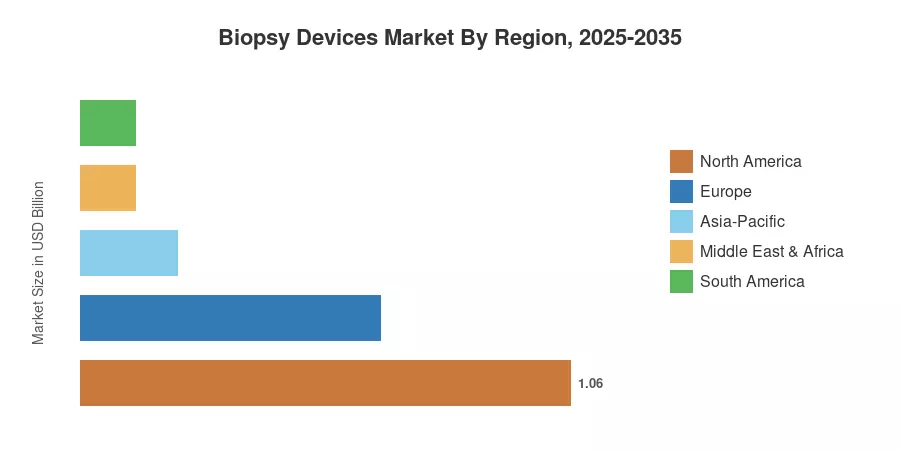
North America commands the largest share of the Biopsy Devices Market at approximately 44% of 2025 revenue, driven by high screening penetration and insurer-mandated biopsy protocols. Asia-Pacific is the fastest-growing region with a projected CAGR of 8.90%, fueled by China's expanding county-level cancer screening infrastructure and India's Ayushman Bharat hospital investment cycle [5]. Europe represents the second-largest region at roughly a 27% share, anchored by the UK's National Health Service breast-screening overhaul and Germany's DRG reimbursement expansion for outpatient biopsy procedures. As diagnostic workflows become increasingly decentralized, the Biopsy Devices Market is positioned for sustained multi-year expansion.

ย 

Key Report Takeaways

โ€ข By Product Type

  • Needle-based biopsy instruments captured 47.5% of the Biopsy Devices Market revenue share in 2025, led by demand for spring-loaded core systems in breast and liver applications.
  • Procedure trays are forecast to register a 5.20% CAGR through 2035, reflecting the hospital preference for pre-packaged sterile kits that reduce setup variability.

โ€ข By Application

  • Breast biopsy procedures held a 33.4% share of the Biopsy Devices Market in 2025, supported by organized mammography-screening recall pathways across OECD nations.
  • Lung biopsy is projected to grow at a 9.70% CAGR through 2035 as low-dose CT screening expands eligibility criteria in North America and Oceania.

โ€ข By End User

  • Hospitals accounted for 63.4% of 2025 end-user spending, reflecting their role as the primary venue for complex image-guided procedures.
  • Ambulatory surgical centers represent the fastest-growing channel, posting a projected 9.90% CAGR as payors incentivize outpatient migration.

โ€ข By Region

  • North America generated approximately 44.1% of Biopsy Devices Market revenue in 2025.
  • Asia-Pacific is forecast to achieve the highest regional CAGR at 8.90% through 2035.

ย 

Market Size and Forecast (2021โ€“2035)

Market Research Future's proprietary estimation framework integrates bottom-up hospital procedure volumes, average selling prices by device category, distributor sell-through data, and national cancer registry incidence rates. Historical data (2021โ€“2024) is triangulated against U.S. FDA 510(k) clearance databases, EU MDR registrations, and company-reported medical-device segment revenues. Forecast projections (2026โ€“2035) apply an econometric model anchored to screening policy adoption curves, demographic aging indices, and technology replacement cycles.
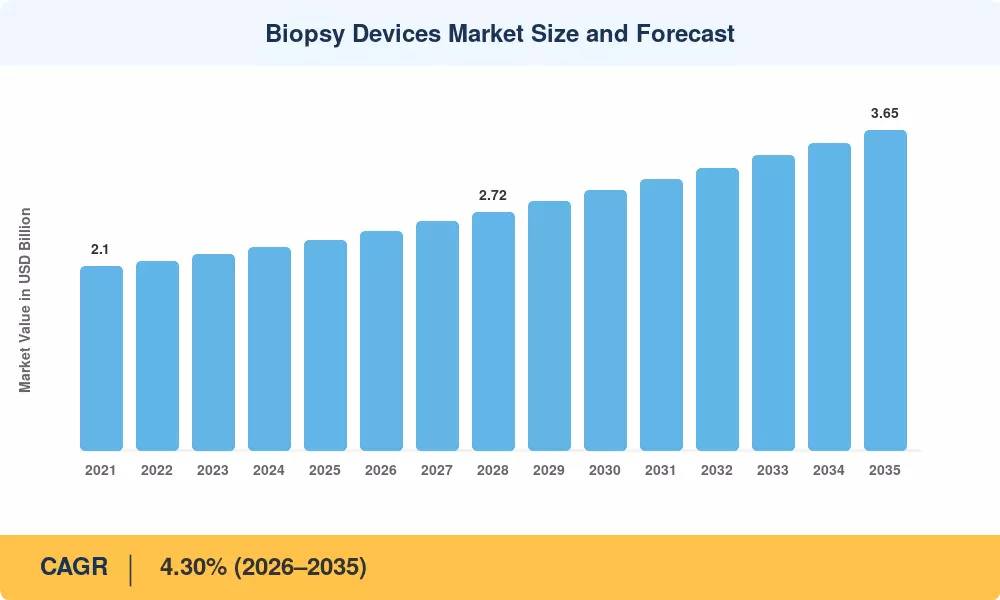
Biopsy Devices Market Size and Forecast
Our Impact
Enabled $4.3B Revenue Impact for Fortune 500 and Leading Multinationals
Partnering with 2000+ Global Organizations Each Year
30K+ Citations by Top-Tier Firms in the Industry

Driver Impact Analysis

Driver ~% Impact on CAGR Geographic Relevance Impact Timeline
Rising global cancer incidence +0.90% Global Long-term (โ‰ฅ4 yr)
Government-funded screening mandates +0.75% North America, Oceania Short-term (โ‰ค2 yr)
AI-integrated image-guidance platforms +0.60% North America, Europe Medium-term (2โ€“4 yr)
Shift to minimally invasive workflows +0.50% Global Medium-term (2โ€“4 yr)
Ambulatory surgical center expansion +0.40% North America, Asia-Pacific Short-term (โ‰ค2 yr)
Aging population demographics +0.35% Europe, Japan Long-term (โ‰ฅ4 yr)
Single-use sterile device preference +0.25% Global Medium-term (2โ€“4 yr)

ย 

Rising Global Cancer Incidence

The International Agency for Research on Cancer predicts that by 2050, there will be 35 million new cancer cases per year, a 77% increase from 2022 [1]. The three applications most dependent on tissue confirmation, breast, lung, and colorectal malignancies, account for around 38% of that total. We find that at least one biopsy event is required for each confirmed diagnosis. This provides a structural demand floor that is mostly insensitive to economic fluctuations. Over 90 nations have national cancer-control strategies requiring pathology-confirmed staging prior to treatment commencement. This means epidemiological trends directly translate to device pull-through volumes.

ย 

Government-Funded Screening Mandates

Australia's 2025 launch of a bulk-billed low-dose CT lung-screening program for high-risk adults aged 50โ€“70 is expected to generate an estimated 180,000 additional CT scans annually, with a projected 5โ€“8% biopsy conversion rate [2]. The U.S. Preventive Services Task Force expanded lung-screening eligibility in 2021 to include adults with a 20-pack-year history starting at age 50, widening the addressable population by roughly 6.5 million individuals [9]. These policy actions compress the timeline between screening detection and tissue sampling, accelerating device consumption across hospitals and imaging centers.

AI-Integrated Image-Guidance Platforms

Advanced biopsy systems now fuse real-time ultrasound, MRI, or CT imagery with machine-learning algorithms that calculate optimal needle trajectories and flag sampling adequacy in under two seconds [3]. Device manufacturers are embedding these algorithms directly into console software, creating a hardware-software bundling strategy that raises average selling prices by 15โ€“22% per unit while improving clinical outcomes.

Ambulatory Surgical Center Expansion

There were about 6,100 U.S. ambulatory surgical centers in 2024, with an average yearly net addition rate of over 200 centers [12]. Now Medicare and commercial payors compensate outpatient breast and thyroid biopsies at rates similar to hospital outpatient departments, removing a long-standing economic barrier. The channel shift is a direct positive for the Biopsy Devices Market, as ambulatory centers are purchasing proprietary single-use needle kits more frequently and with shorter replacement cycles than hospital-based reusable platforms.

ย 

ย 

Restraints Impact Analysis

Restraint ~% Impact on CAGR Geographic Relevance Impact Timeline
Liquid-biopsy competitive substitution โˆ’0.45% North America, Europe Medium-term (2โ€“4 yr)
Product sterility recalls and regulatory scrutiny โˆ’0.30% Global Short-term (โ‰ค2 yr)
High capital cost of advanced systems โˆ’0.25% Emerging markets Long-term (โ‰ฅ4 yr)
Shortage of trained interventional radiologists โˆ’0.20% Asia-Pacific, Africa Long-term (โ‰ฅ4 yr)
Reimbursement variability across jurisdictions โˆ’0.15% Europe, South America Medium-term (2โ€“4 yr)

ย 

Liquid-Biopsy Competitive Substitution

While liquid biopsies currently complement rather than replace tissue sampling โ€” FDA labels still require tissue confirmation for most first-line therapy selections โ€” multi-cancer early-detection tests from GRAIL and Exact Sciences are moving through pivotal trials that could reduce the tissue-biopsy conversion rate for certain indications by 10โ€“15% after 2028. This substitution risk is most pronounced in stage I lung and colorectal screening pathways.

Product Sterility Recalls and Regulatory Scrutiny

Between 2022 and 2024, the U.S. FDA issued 14 Class II recalls of biopsy needle assemblies and procedure trays, most of which were due to impaired sterile-barrier packaging and lubricant-residue contamination [17]. Each recall occurrence disrupts hospital procurement cycles for 3โ€“6 months, requiring institutions to certify replacement suppliers and bear the cost of reprocessing. EU MDRโ€™s more stringent post-market surveillance requirements have also lengthened re-certification timelines for legacy biopsy products, pushing back some manufacturersโ€™ re-entry to the European market by 12-18 months.

ย 

High Capital Cost of Advanced Systems

The cost of a fully fitted vacuum-assisted biopsy console with integrated stereotactic guidance is between USD 85,000 and USD 140,000 and hence exceeds the capital budgets of most district-level hospitals in poor and middle-income nations [18]. Although the economics per operation are favorable for these devices in high-volume settings, hospitals that do less than 200 biopsies annually have difficulty achieving payback within standard 5-year equipment lifecycles. This pricing barrier limits addressable market penetration in regions accounting for >60% of worldwide cancer burden and focuses advanced device usage in tertiary referral centers.

ย 

ย 

Biopsy Devices Market Opportunities

AI-Powered Robotic Biopsy Platforms

Robotic needle-insertion systems guided by deep-learning path planning are advancing from prototype to early clinical deployment. The Biopsy Devices Market stands to benefit as these platforms command ASPs two to three times higher than manual alternatives and create recurring revenue through proprietary consumable kits.

Emerging-Market Hospital Infrastructure Buildout

India's Ayushman Bharat scheme funded 182,879 new health-and-wellness centers in early 2026, with an additional 8,000 targeted through 2028 [5]. China's county-level hospital upgrade program allocated ยฅ120 billion to diagnostic equipment procurement in its 14th Five-Year Plan. Both programs create first-time purchasing opportunities for standardized biopsy device kits in facilities that previously lacked tissue-sampling capability.

Digital Pathology Data Monetization

Data repositories created by hospitals when scanning biopsy specimens for AI-assisted histopathology are financially valuable for pharmaceutical companion-diagnostic development. Device makers can sell anonymised tissue-image data sets or provide cloud-based annotation services, creating post-sale revenue streams that extend the economics of the device life cycle. Early adopters such as Leica Biosystems and Hologic are already piloting subscription-based digital-workflow technologies.

ย 

Single-Use Disposable Device Models

Infection-control mandates tightened during and after COVID-19 have accelerated the shift from reusable to single-use biopsy instruments. Hospitals in North America and Europe are increasingly specifying single-use core-needle devices to eliminate reprocessing costs and liability exposure [14]. This trend expands per-procedure device consumption and supports higher unit volumes for the Biopsy Devices Market over the forecast period.

Point-of-Care Rapid Tissue Analysis

Portable tissue-analysis platforms that deliver preliminary histological assessment within 15 minutes of specimen acquisition are entering clinical validation. These systems reduce the diagnostic turnaround from days to hours, enabling same-visit treatment planning in outpatient settings. Integration of rapid on-site evaluation with next-generation biopsy devices opens a high-value adjacency for device manufacturers targeting ambulatory and rural clinical environments.

ย 

Biopsy Devices Market Future Outlook

AI-Guided Precision Biopsy and Autonomous Navigation

Machine-learning algorithms capable of real-time lesion segmentation and autonomous needle-path planning are expected to become standard features on mid-range and premium biopsy consoles by 2030 [3][15]. By 2035, autonomous biopsy navigation is projected to reduce operator-dependent variability by over 50%, expanding the pool of clinicians qualified to perform complex procedures.

Convergence of Liquid and Tissue Biopsy Workflows

Rather than replacing tissue sampling, liquid-biopsy platforms are increasingly being paired with device-based procedures in complementary diagnostic workflows [16]. Oncologists use circulating-tumor-DNA panels for therapy monitoring while relying on tissue biopsies for initial diagnosis and molecular subtyping. Device manufacturers that integrate specimen-tracking software with liquid-biopsy laboratory information systems will capture workflow-orchestration value that extends the Biopsy Devices Market beyond hardware-only economics.

Decentralized Cancer Screening in Low- and Middle-Income Countries

The WHO's Global Breast Cancer Initiative targets 60% of breast cancers being diagnosed and treated as early-stage (Stage I or II) disease by 2040, up from roughly 30% today [1]. Achieving this goal requires an estimated 25,000 additional biopsy-capable facilities across sub-Saharan Africa, South Asia, and Southeast Asia. Low-cost, battery-operable, single-use biopsy devices designed for field-clinic deployment represent a significant growth vector for the Biopsy Devices Market, particularly in settings where centralized pathology infrastructure remains limited.

Next-Generation Single-Use and Sustainable Device Platforms

The convergence of infection-control mandates and environmental sustainability goals is driving development of fully disposable biopsy instruments manufactured from bio-based polymers [14]. Hologic and BD have both disclosed R&D programs targeting carbon-neutral single-use needle assemblies by 2030. Hospitals in the EU, where the Waste Framework Directive imposes escalating disposal costs on medical plastics, are early adopters. This dual compliance pressure supports premium pricing for sustainable single-use devices through 2035.

ย 

Biopsy Devices Market Segmentation

By Product Type

The Biopsy Devices Market segments by product into needle-based biopsy instruments (including core biopsy devices), procedure trays, and other instruments.

Segment Key Metric Primary Demand Driver
Needle-Based Biopsy Instruments 47.5% share (2025) Standardization of core and vacuum-assisted protocols
Procedure Trays 5.20% CAGR (2026โ€“2035) Hospital preference for pre-packaged sterile kits
Others USD 0.22 Billion (2025) Specialty forceps, punch-biopsy tools

ย 

Needle-based instruments dominate the Biopsy Devices Market because breast, lung, and liver biopsy guidelines uniformly specify either core or vacuum-assisted needle sampling as the standard-of-care first step. Spring-loaded automated core-needle devices account for the majority of unit volume within this segment, though vacuum-assisted systems are gaining share in breast applications due to superior specimen yield and lower re-biopsy rates [3]. Procedure trays are the fastest-growing product category by CAGR, reflecting the operational efficiency gains hospitals realize when consumables, drapes, and needles arrive pre-assembled in a single sterile package.

By Application

The Biopsy Devices Market segments by application into breast, lung, colorectal, prostate, and other biopsy procedures.

Segment Key Metric Primary Demand Driver
Breast Biopsy 33.4% share (2025) Organized mammography-screening recall pathways
Lung Biopsy 9.70% CAGR (2026โ€“2035) LDCT screening program expansion
Colorectal Biopsy USD 0.31 Billion (2025) Colonoscopy-screening compliance improvement
Prostate Biopsy 5.80% CAGR (2026โ€“2035) MRI-fusion biopsy adoption
Others USD 0.18 Billion (2025) Thyroid, kidney, bone-marrow applications

ย 

Breast biopsy remains the Biopsy Devices Market's largest application segment thanks to decades of population-based mammography screening that generates a consistent funnel of recall biopsies across OECD nations. Lung biopsy is the fastest-growing application, propelled by the rapid rollout of LDCT screening programs: the U.S. alone added an estimated 2.4 million eligible adults to its screening pool following the 2024 USPSTF guideline update [9]. Prostate biopsy is transitioning from traditional TRUS-guided systematic sampling toward targeted MRI-fusion approaches, which require upgraded navigation platforms and drive higher per-procedure device revenue.

By End User

The Biopsy Devices Market segments by end user into hospitals, diagnostic and imaging centers, and other settings.

Segment Key Metric Primary Demand Driver
Hospitals 63.4% share (2025) Complex image-guided procedure volume
Diagnostic & Imaging Centers 6.50% CAGR (2026โ€“2035) Outpatient referral growth
Others (ASCs, Research Labs) 9.90% CAGR (2026โ€“2035) Medicare ASC reimbursement parity

ย 

Hospitals maintain the largest end-user share because they house the advanced imaging suites โ€” MRI, CT, and stereotactic units โ€” required for complex biopsies of deep-seated lesions [12]. Ambulatory surgical centers, captured within the "Others" category alongside research laboratories, are the fastest-growing channel. Medicare's 2024 expansion of outpatient biopsy CPT codes to the ASC-approved list removed a key reimbursement barrier, and private payors have followed suit, creating a favorable economic environment for procedure migration out of hospital outpatient departments.

ย 

Regional Market Share Analysis

Region Key Metric Primary Investment Themes
North America 44.1% share (2025) Screening mandates, ASC migration, AI adoption
Europe USD 0.65 Billion (2025) MDR compliance, NHS reforms, outpatient reimbursement
Asia-Pacific 8.90% CAGR (2026โ€“2035) Hospital buildout, cancer registry expansion
South America USD 0.12 Billion (2025) Public oncology networks, Brazil SUS expansion
Middle East & Africa 4.80% share (2025) Saudi Vision 2030, South Africa NHI rollout
Total USD 2.40 Billion (2025) โ€”

The Biopsy Devices Market exhibits a clear geographic concentration, with North America and Europe collectively accounting for over 70% of 2025 revenue. Asia-Pacific's accelerating CAGR reflects massive hospital infrastructure investment in China and India, while South America and MEA remain early-stage but fast-evolving regions.

ย 

North America

Country Key Metric Key Driver
United States 78.5% of regional revenue USPSTF screening expansion, Medicare ASC reimbursement
Canada 12.8% of regional revenue Provincial cancer-agency procurement
Mexico 4.60% CAGR INSABI hospital equipment modernization

ย 

The United States alone generates nearly four-fifths of North American biopsy device revenue, driven by an installed base of over 6,100 ambulatory surgical centers and approximately 1.8 million breast biopsies performed annually [9][12]. Canada's provincial cancer agencies centralize purchasing through group buying organizations, creating stable multi-year contract cycles. Mexico's transition from INSABI to the IMSS-Bienestar model is channeling federal health spending toward diagnostic-equipment upgrades in underserved southern states, positioning the country as a medium-term growth pocket within the Biopsy Devices Market.

Europe

Country Key Metric Key Driver
Germany USD 0.16 Billion (2025) DRG outpatient biopsy reimbursement expansion
United Kingdom 5.10% CAGR NHS breast-screening age-range extension
France USD 0.10 Billion (2025) Plan Cancer IV investment
Italy 4.40% CAGR Regional oncology network consolidation
Spain USD 0.05 Billion (2025) AECC early-detection campaigns
Nordic Countries 4.80% CAGR Organized population-based screening registries
Russia USD 0.03 Billion (2025) Federal oncology modernization program
Rest of Europe 3.90% CAGR EU Beating Cancer Plan funding

ย 

Europe's regulatory transition to the MDR framework has temporarily slowed new product introductions, yet it has also raised quality thresholds that favor established multinational device firms [8]. The UK's NHS recently extended breast-screening invitations to women aged 47โ€“73, widening the recall biopsy funnel by an estimated 15%. Germany's 2024 DRG catalog revision created dedicated reimbursement codes for outpatient vacuum-assisted breast biopsy, encouraging migration from inpatient to day-case settings.

Asia-Pacific

Country Key Metric Key Driver
China 34.2% of regional revenue County-hospital diagnostic-equipment procurement
India 9.50% CAGR Ayushman Bharat health-center expansion
Japan USD 0.08 Billion (2025) Aging-population cancer screening compliance
South Korea 7.80% CAGR NHIS reimbursement for MRI-guided biopsy
ASEAN 8.40% CAGR Thailand/Vietnam public oncology investment
Rest of Asia-Pacific USD 0.04 Billion (2025) Australia lung-screening program launch

ย 

China's 14th Five-Year Plan designated cancer early detection as a strategic public-health priority, allocating ยฅ120 billion to county-level hospital diagnostic upgrades [5]. India's National Programme for Prevention and Control of Cancer targets biopsy-capable infrastructure in 600 district hospitals by 2028. Japan's aging demographics โ€” 29% of the population is over 65 โ€” generate sustained demand for prostate, breast, and colorectal biopsy procedures, positioning the Biopsy Devices Market for steady volume growth across the region.

South America

Country Key Metric Key Driver
Brazil 62.5% of regional revenue SUS oncology network expansion
Argentina 5.20% CAGR National cancer institute procurement reform
Rest of South America USD 0.02 Billion (2025) Chile, Colombia public health investment

ย 

Brazil's SUS (Unified Health System) added 45 new oncology referral centers between 2022 and 2025, each requiring standardized biopsy instrumentation [21]. Argentina's procurement centralization through the national cancer institute has improved price transparency and attracted multinational suppliers previously deterred by fragmented provincial purchasing.

Middle East & Africa

Country Key Metric Key Driver
Saudi Arabia 6.30% CAGR Vision 2030 healthcare investment
UAE USD 0.03 Billion (2025) Medical tourism and private hospital expansion
South Africa 5.40% CAGR NHI rollout, university hospital upgrades
Egypt USD 0.02 Billion (2025) Universal health insurance pilot regions
Rest of MEA 4.10% CAGR Gulf-state hospital construction pipeline

ย 

Saudi Arabia's Vision 2030 has allocated over USD 65 billion to healthcare infrastructure, with diagnostic oncology identified as a priority vertical [22]. South Africa's NHI framework, piloted in 11 districts, is creating centralized procurement channels for biopsy devices in public facilities for the first time, expanding access beyond the private-hospital segment that historically dominated the Biopsy Devices Market in sub-Saharan Africa.

ย 

Biopsy Devices Market By Region, 2025-2035

Competitive Benchmarking

The Biopsy Devices Market exhibits medium concentration, with the top five players accounting for an estimated 48โ€“55% of global revenue. Herfindahl-Hirschman Index (HHI) estimates place the market in the moderately concentrated range (~1,200โ€“1,500), reflecting a competitive structure where two dominant firms โ€” BD and Hologic โ€” hold meaningful share advantages, while a cluster of mid-tier specialists competes on technology differentiation and geographic coverage.

Company Est. Revenue Share Range Key Offerings Strategic Positioning
Becton, Dickinson and Company (BD) ~14โ€“18% Core-needle devices, biopsy site markers Broad portfolio leader, global distribution
Hologic Inc. ~12โ€“16% Vacuum-assisted breast biopsy systems Breast-health ecosystem integration
Medtronic plc ~7โ€“10% Navigation-guided biopsy platforms AI-fusion technology pioneer
Merit Medical Systems ~5โ€“8% Soft-tissue biopsy needles, trays Value-segment positioning, OEM supply
Boston Scientific Corporation ~4โ€“7% Endoscopic biopsy forceps GI and pulmonary endoscopy channel
Cardinal Health ~3โ€“6% Procedure trays, sterile-packaging kits Supply-chain and logistics scale
Cook Medical ~3โ€“5% Specialty biopsy instruments Interventional radiology niche
Argon Medical Devices ~2โ€“4% Bone-marrow and soft-tissue needles Single-use disposable focus
Stryker Corporation ~2โ€“4% Bone biopsy systems Orthopedic-oncology adjacency
Leica Biosystems (Danaher) ~2โ€“3% Tissue-processing integration Digital-pathology workflow play

ย 

ย 

Recent News & Developments

ย 

ย 

ย 

ย 

  • Australian Government (June 2024): Approved the Medicare Benefits Schedule listing for bulk-billed low-dose CT lung screening, creating a direct procedural funnel that is expected to increase follow-up biopsy volumes by 15,000โ€“20,000 annually [2].
  • Boston Scientific (December 2019): Formally secured FDA 510(k) clearance for its pioneering EXALT Model D Single-Use Duodenoscope, establishing the world's first fully disposable, high-volume duodenoscope platform designed to eliminate multi-patient cross-contamination risks during complex ERCP procedures.
  • U.S. FDA (February 2024): Published updated guidance on reprocessing validation requirements for reusable biopsy instruments, tightening sterility-assurance standards and accelerating the transition toward single-use alternatives [14].
  • Cook Medical (November 2023): Expanded its Quick-Core biopsy needle line with a 22-gauge variant for pediatric and small-lesion applications, addressing an underserved clinical niche [25].

ย 

Biopsy Devices Market Report Scope

Parameter Detail
Market Scope Biopsy Devices Market โ€” global, covering needle-based instruments, procedure trays, and related consumables
Study Period 2021โ€“2035
CAGR (2026โ€“2035) 4.30%
Base Year 2025 USD 2.40 Billion
Forecast 2035 USD 3.65 Billion
Fastest Growing Segment Ambulatory Surgical Centers (9.90% CAGR); Lung Biopsy by Application (9.70% CAGR)
Companies Profiled BD, Hologic, Medtronic, Merit Medical, Boston Scientific, Cardinal Health, Cook Medical, Argon Medical, Stryker, Leica Biosystems
Valuation Currency USD Billion

ย 

ย 

FAQs

How do single-use biopsy devices compare economically to reusable systems in high-volume settings?
Single-use devices eliminate reprocessing labor and sterilization costs, averaging USD 12โ€“18 per cycle. In facilities performing over 500 annual procedures, total cost of ownership for single-use models is roughly equivalent to reusable platforms within three years [14].
What reimbursement changes are most likely to shift biopsy procedure volumes before 2030?
Medicare's 2024 ASC-approved CPT code expansion is the most consequential near-term catalyst. Commercial payors in the U.S. and private insurers in Germany are mirroring these codes, accelerating outpatient biopsy migration [12].
How are MRI-fusion platforms changing prostate biopsy accuracy rates?
MRI-fusion targeted biopsy detects clinically significant prostate cancer at rates 20โ€“30% higher than systematic TRUS-guided sampling. This accuracy improvement reduces unnecessary repeat procedures and supports higher per-case device utilization [3].
What role does specimen adequacy verification play in device purchasing decisions?
Real-time specimen verification reduces non-diagnostic rates from 8โ€“12% to under 3%. Hospital procurement committees increasingly mandate this feature, favoring platforms from Hologic and BD that integrate verification imaging [4].
How are biopsy device manufacturers addressing sustainability concerns?
Leading firms are developing bio-polymer needle housings and recyclable packaging to comply with the EU Waste Framework Directive. BD and Hologic have both announced carbon-neutral single-use product targets for 2030 [14].
What training barriers limit adoption of AI-guided biopsy systems in community hospitals?
AI-guided platforms require 15โ€“25 supervised cases for operator proficiency certification. Manufacturers are addressing this through simulation-based training modules that compress the learning curve to under one week [15].
How does the Biopsy Devices Market outlook differ for bone-marrow versus soft-tissue applications?
Bone-marrow biopsy devices grow at a slower 3.1% CAGR due to stable hematologic-procedure volumes. Soft-tissue applications benefit from expanding solid-tumor screening programs and drive the majority of forecast growth [1]. ย  ย 
Author
Author
Author Profile
Satyendra Maurya LinkedIn
Research Analyst
An accomplished research analyst with high proficiency in market forecasting, data visualization, competitive benchmarking, and others. He holds a pronounced track record in research and consulting projects for sectors such as life sciences, medical devices, and healthcare IT. His capabilities in qualitative and quantitative analysis have resulted in positive client outcomes. Working on niche market trends, opportunities, sales, and forecasted value is part of his skill set.
Co-Author
Co-Author Profile
Rahul Gotadki LinkedIn
Research Manager
He holds an experience of about 9+ years in Market Research and Business Consulting, working under the spectrum of Life Sciences and Healthcare domains. Rahul conceptualizes and implements a scalable business strategy and provides strategic leadership to the clients. His expertise lies in market estimation, competitive intelligence, pipeline analysis, customer assessment, etc.

Research Approach

ย 

Secondary Research

The secondary research process involved comprehensive analysis of regulatory medical device databases, oncology and pathology journals, interventional radiology publications, and authoritative cancer surveillance organizations. Key sources included the US Food & Drug Administration (FDA) Center for Devices and Radiological Health, European Medicines Agency (EMA) Medical Device Coordination Group, International Agency for Research on Cancer (IARC) World Cancer Report, National Cancer Institute (NCI) Surveillance, Epidemiology, and End Results (SEER) Program Database, American Cancer Society (ACS) Cancer Facts & Figures, Centers for Disease Control and Prevention (CDC) National Program of Cancer Registries, World Health Organization (WHO) Global Cancer Observatory, European Cancer Information System (ECIS), National Institutes of Health (NIH) National Center for Biotechnology Information (NCBI/PubMed), College of American Pathologists (CAP) Practice Guidelines, American College of Radiology (ACR) BI-RADS Atlas, Radiological Society of North America (RSNA) Practice Parameters, and national cancer registry databases from key markets including the National Cancer Registration and Analysis Service (NCRAS) in the UK, Canadian Cancer Registry, and Australian Institute of Health and Welfare (AIHW) Cancer Data.

These sources were employed to gather cancer incidence and prevalence statistics, screening program participation rates, regulatory approval data for biopsy devices (510(k) clearances, CE marks), clinical safety and efficacy studies comparing guidance modalities, pathology workflow analyses, and reimbursement policies specific to image-guided biopsy procedures.

ย 

Primary Research

During the primary research process, qualitative and quantitative insights were obtained by interviewing supply-side and demand-side stakeholders using structured questionnaires and semi-structured in-depth interviews. The supply-side sources comprised CEOs, VPs of Research & Development, chiefs of Regulatory Affairs, business unit leaders for Interventional Oncology, and commercial directors from biopsy device manufacturers and OEMs that specialize in tissue acquisition technologies. Procurement leads from hospitals, cancer centers, ambulatory surgical centers, and diagnostic imaging centers were included in the demand-side sources. These sources included board-certified interventional radiologists, breast surgeons, urologists (prostate specialists), pulmonologists, surgical pathologists, medical oncologists, and department heads of Radiology and Pathology. Primary research has confirmed the clinical adoption timelines for liquid biopsy technologies versus traditional tissue biopsy, validated market segmentation across product categories (biopsy guns, guidance systems, needles), and gathered insights on reimbursement dynamics for CT-guided versus ultrasound-guided procedures.

Primary Respondent Breakdown:

By Designation: C-level Primaries (38%), Director Level (25%), Others (37%)

By Region: North America (38%), Europe (26%), Asia-Pacific (28%), Rest of World (8%)

ย 

Market Size Estimation

Revenue mapping, installed base analysis, and procedure volume estimation were employed to determine the global market valuation of oncology diagnostics. The methodology comprised the following:

The identification of over 40 significant manufacturers in North America, Europe, Asia-Pacific, and Latin America who specialize in tissue biopsy instruments, needle-based biopsy systems, and image-guided biopsy platforms.

Product mapping encompasses biopsy weapons (vacuum-assisted and core needle), biopsy guidance systems (stereotactic, ultrasound-based, CT-compatible, MRI-compatible), biopsy needles (core needles, fine aspiration needles), biopsy forceps, and localization wires.

Analysis of application-specific segmentation for breast biopsy (stereotactic and ultrasound-guided), prostate biopsy (TRUS-guided and fusion biopsy), lung biopsy (CT-guided navigation), liver biopsy, and gynecological biopsy procedures

An examination of the annual revenues of major medtech conglomerates' biopsy device portfolios and interventional oncology divisions, as reported and modeled.

Direct disclosure and triangulated revenue estimates will be implemented to encompass manufacturers that account for 70-75% of the global market share in 2024.

Derive segment-specific valuations for needle-based biopsy instruments versus surgical biopsy devices through extrapolation using bottom-up (cancer incidence rates ร— biopsy procedure penetration ร— devices per procedure ร— average selling price by country/region) and top-down (manufacturer revenue validation and supply chain verification) approaches.

Download Free Sample

Kindly complete the form below to receive a free sample of this Report

Download PDF ×

We do not share your information with anyone. However, we may send you emails based on your report interest from time to time. You may contact us at any time to opt-out.
















