×
Request Free Sample ×

Kindly complete the form below to receive a free sample of this Report

* Please use a valid business email

Leading companies partner with us for data-driven Insights

clients tt-cursor
Hero Background

Bladder Cancer Market

ID: MRFR/Pharma/1367-HCR
85 Pages
Rahul Gotadki
October 2025

Bladder Cancer Market Research Report Information By Type (Transitional Cell Carcinoma, Invasive Bladder Cancer, Superficial Bladder Cancer, Adenocarcinomax, and Other Rare Types), By Treatment (Chemotherapy, Radiation Therapy, Immunotherapy, Radical Cystectomy, and Others), By Diagnosis (Urine Lab Tests, Cystoscopy, Biopsy, Imaging Test, and Others), By End User (Hospital, Clinic, Cancer Care Centers, and Others), and By Region (North America, Europe, Asia-Pacific, and Rest Of The World) – Market Forecast Till 2035

Share:
Download PDF ×

We do not share your information with anyone. However, we may send you emails based on your report interest from time to time. You may contact us at any time to opt-out.

Bladder Cancer Market Infographic
Purchase Options

Bladder Cancer Market Summary

As per MRFR analysis, the Bladder Cancer Market Size was estimated at 6.07 USD Billion in 2024. The Bladder Cancer industry is projected to grow from 6.35 in 2025 to 9.95 by 2035, exhibiting a compound annual growth rate (CAGR) of 4.6 during the forecast period 2025 - 2035.

Key Market Trends & Highlights

The Bladder Cancer Market is experiencing transformative growth driven by innovative treatment approaches and increasing awareness.

  • The rise of immunotherapy is reshaping treatment paradigms, particularly in the Asia-Pacific region.
  • Advancements in diagnostic technologies are enhancing early detection, especially in North America, the largest market.
  • There is a notable shift towards personalized medicine, catering to the unique needs of patients with non-muscle invasive bladder cancer.
  • The increasing incidence of bladder cancer and growing awareness initiatives are key drivers propelling market expansion.

Market Size & Forecast

2024 Market Size 6.07 (USD Billion)
2035 Market Size 9.95 (USD Billion)
CAGR (2025 - 2035) 4.6%

Major Players

Bristol-Myers Squibb (US), Merck & Co. (US), AstraZeneca (GB), Roche (CH), Pfizer (US), Novartis (CH), Eli Lilly and Company (US), Bayer (DE), Johnson & Johnson (US)

Bladder Cancer Market Trends

The Bladder Cancer Market is currently experiencing a dynamic evolution, driven by advancements in treatment modalities and increasing awareness of the disease. The rise in bladder cancer incidences has prompted a surge in research and development efforts, leading to innovative therapies that aim to improve patient outcomes. Furthermore, the integration of personalized medicine is becoming more prevalent, as healthcare providers seek to tailor treatments to individual patient profiles. This shift not only enhances efficacy but also minimizes adverse effects, thereby fostering a more patient-centric approach to care. In addition, the Bladder Cancer Market is witnessing a growing emphasis on early detection and diagnosis. Enhanced screening techniques and diagnostic tools are being developed, which may facilitate timely intervention and potentially improve survival rates. The collaboration between pharmaceutical companies and research institutions appears to be strengthening, as they work together to bring novel therapies to market. Overall, the landscape of the Bladder Cancer Market is evolving, with a focus on innovation, patient-centered care, and improved diagnostic capabilities, suggesting a promising future for stakeholders in this field.

Rise of Immunotherapy

The Bladder Cancer Market is increasingly leaning towards immunotherapy as a primary treatment option. This approach harnesses the body's immune system to combat cancer cells, potentially leading to more effective and durable responses. As research progresses, new immunotherapeutic agents are being introduced, which may offer hope for patients with advanced stages of the disease.

Advancements in Diagnostic Technologies

There is a notable trend towards the development of advanced diagnostic technologies within the Bladder Cancer Market. Innovations such as liquid biopsies and molecular imaging techniques are emerging, which could enhance the accuracy of early detection. These advancements may allow for more precise monitoring of disease progression and treatment response.

Focus on Personalized Medicine

The Bladder Cancer Market is witnessing a shift towards personalized medicine, where treatments are tailored to the genetic and molecular characteristics of individual tumors. This trend suggests a move away from one-size-fits-all approaches, potentially leading to improved treatment outcomes and reduced side effects for patients.

Bladder Cancer Market Drivers

Market Growth Projections

The Global Bladder Cancer Market Industry is projected to experience substantial growth in the coming years. By 2035, the market is expected to reach 9.95 USD Billion, indicating a robust demand for bladder cancer therapies and diagnostics. This growth trajectory is supported by various factors, including the rising incidence of bladder cancer, advancements in treatment modalities, and increased awareness among the public. The market's expansion reflects the ongoing efforts to improve patient outcomes and the commitment of stakeholders to address the challenges posed by bladder cancer.

Rising Incidence of Bladder Cancer

The Global Bladder Cancer Market Industry is experiencing growth due to the increasing incidence of bladder cancer worldwide. According to health statistics, bladder cancer ranks as the fourth most common cancer in men and the ninth in women, leading to a substantial patient population requiring treatment. This rise in cases is attributed to various factors, including smoking, exposure to certain chemicals, and aging populations. As the global population ages, the number of diagnosed cases is projected to increase, thereby driving demand for innovative therapies and diagnostic tools within the Global Bladder Cancer Market Industry.

Advancements in Treatment Modalities

Innovations in treatment modalities are significantly influencing the Global Bladder Cancer Market Industry. The development of targeted therapies and immunotherapies has transformed the treatment landscape, offering patients more effective options with fewer side effects. For instance, the introduction of immune checkpoint inhibitors has shown promising results in advanced bladder cancer cases. These advancements not only improve patient outcomes but also contribute to the overall market growth, as healthcare providers increasingly adopt these novel therapies. The Global Bladder Cancer Market Industry is expected to reach 6.07 USD Billion in 2024, reflecting the impact of these advancements.

Investment in Research and Development

Investment in research and development is a critical driver for the Global Bladder Cancer Market Industry. Pharmaceutical companies and research institutions are increasingly allocating resources to discover new therapeutic agents and improve existing treatments. This focus on R&D is essential for addressing unmet medical needs and advancing the understanding of bladder cancer biology. As a result, the market is likely to see a surge in novel drug approvals and clinical trials, fostering innovation. The Global Bladder Cancer Market Industry is projected to grow at a CAGR of 4.59% from 2025 to 2035, reflecting the positive impact of these investments.

Growing Awareness and Screening Programs

Increased awareness regarding bladder cancer symptoms and risk factors is propelling the Global Bladder Cancer Market Industry. Public health campaigns and educational initiatives are encouraging individuals to seek early diagnosis and treatment, which is crucial for improving survival rates. Screening programs, particularly in high-risk populations, are becoming more prevalent, leading to earlier detection of the disease. This proactive approach not only enhances patient outcomes but also stimulates market growth as more individuals are diagnosed and treated. The Global Bladder Cancer Market Industry is poised for expansion as awareness continues to rise.

Regulatory Support and Approval Processes

Regulatory support plays a vital role in shaping the Global Bladder Cancer Market Industry. Agencies such as the FDA and EMA are streamlining approval processes for new therapies, which facilitates quicker access to innovative treatments for patients. This supportive regulatory environment encourages pharmaceutical companies to invest in bladder cancer research and development, knowing that their products can reach the market more efficiently. As a result, the Global Bladder Cancer Market Industry is likely to benefit from an influx of new therapies, enhancing treatment options for patients and contributing to overall market growth.

Market Segment Insights

By Treatment Type: Chemotherapy (Largest) vs. Immunotherapy (Fastest-Growing)

In the Bladder Cancer Market, treatment type segmentation reveals distinct market shares across various therapies. Chemotherapy continues to hold a significant portion of the market, often considered the go-to option for managing advanced stages of bladder cancer. Its longstanding presence contributes to its top position, attracting a wide patient base and healthcare provider preference. Conversely, immunotherapy, while now growing rapidly, is capturing attention for its potential in enhancing the immune system's response against bladder cancer cells, marking it as a noteworthy contender in the treatment landscape.

Chemotherapy (Dominant) vs. Immunotherapy (Emerging)

Chemotherapy remains a dominant force in the Bladder Cancer Market due to its established protocols and comprehensive treatment regimens that have been refined over the years. It is particularly effective in aggressive cancer cases, providing effective tumor shrinkage and symptom alleviation. Immunotherapy, an emerging player, is gaining traction due to its innovative mechanisms, such as checkpoint inhibitors, which function to unleash the immune system's power. This therapy shows potential not only for advanced stages but also as adjuvant therapy, thus providing a glimmer of hope for improved patient outcomes. These two therapies cater to different patient needs, making them essential within a multifaceted treatment approach.

By Disease Stage: Non-Muscle Invasive Bladder Cancer (Largest) vs. Metastatic Bladder Cancer (Fastest-Growing)

The Bladder Cancer Market is currently dominated by Non-Muscle Invasive Bladder Cancer (NMIBC), which holds the largest share due to its higher prevalence and early detection among patients. This segment benefits from a range of innovative therapies and ongoing research initiatives aimed at improving patient outcomes. In contrast, Muscle Invasive Bladder Cancer (MIBC) and Metastatic Bladder Cancer (MBC) are smaller segments but are witnessing significant interest from pharmaceutical companies as treatment advancements are made, indicating potential for growth.

Non-Muscle Invasive Bladder Cancer (Dominant) vs. Metastatic Bladder Cancer (Emerging)

Non-Muscle Invasive Bladder Cancer (NMIBC) remains the dominant segment, characterized by its prevalence among early-stage patients who require less aggressive treatments. The continuous evolution of diagnostic tools and non-invasive treatment options has significantly contributed to its market strength. Conversely, Metastatic Bladder Cancer (MBC) is emerging rapidly, driven by an increase in clinical trials and breakthroughs in immunotherapy and targeted treatments. The urgency for effective therapies for patients with MBC, who have limited options, fuels innovation, making it a key focus area for research and development in the bladder cancer market.


By End User: Hospitals (Largest) vs. Cancer Treatment Centers (Fastest-Growing)

In the Bladder Cancer Market, hospitals hold the largest share of the end-user segment, attributed to their established infrastructure and advanced medical technologies. They are the primary hubs for bladder cancer diagnosis and treatment, accommodating a significant volume of patients requiring surgical interventions and follow-up care. Meanwhile, cancer treatment centers are rapidly gaining market traction, driven by specialized services and personalized treatment protocols that cater specifically to bladder cancer, appealing to patients seeking targeted therapies.

Hospitals (Dominant) vs. Cancer Treatment Centers (Emerging)

Hospitals maintain a dominant position in the bladder cancer market due to their comprehensive capabilities in oncology, equipped to handle high patient volumes and offering various treatment options, including surgery, chemotherapy, and radiation. These institutions benefit from a broad patient base and established referral networks. In contrast, cancer treatment centers are emerging as critical players, focusing on innovative therapies, multidisciplinary care approaches, and supportive services, which enhance the patient experience and outcomes. Their growth is fueled by advancements in personalized treatments and the increasing demand for specialized cancer care, positioning them as a crucial alternative for patients.

By Diagnosis Method: Cystoscopy (Largest) vs. Urinary Biomarkers (Fastest-Growing)

In the Bladder Cancer Market, the diagnosis methods are characterized by a diverse distribution of market share. Cystoscopy remains the largest segment due to its established role in direct visualization, allowing for accurate diagnosis and treatment planning. Other methods like urinary biomarkers and imaging techniques are also gaining traction, but cystoscopy continues to dominate the segment. Urinary biomarkers are noteworthy for their emerging status, appealing to patients and clinicians seeking non-invasive options. The growth trends in the Bladder Cancer Market highlight increasing adoption of urinary biomarkers as the fastest-growing segment. The advancements in technology, coupled with a growing emphasis on early detection, are significant drivers for this method. Additionally, imaging techniques are evolving with enhanced accuracy, thus fueling their growth in diagnostics. Overall, the combination of patient convenience and advancements in methodologies is reshaping the diagnosis segment of bladder cancer.

Cystoscopy (Dominant) vs. Urinary Biomarkers (Emerging)

Cystoscopy is a well-established diagnostic method for bladder cancer, offering direct visual assessment and the ability to perform biopsies simultaneously, making it the dominant choice among healthcare professionals. The procedure, while invasive, provides immediate results and enables concomitant treatment. In contrast, urinary biomarkers represent an emerging diagnostic method that appeals through non-invasive means, providing a patient-friendly alternative for early diagnosis. They utilize advanced biochemical assays that detect cancer-related substances in urine, thus facilitating quick assessments. As healthcare shifts towards personalized medicine, urinary biomarkers are receiving increased attention for their potential to improve patient outcomes while minimizing invasive procedures.

By Drug Class: Antineoplastic Agents (Largest) vs. Checkpoint Inhibitors (Fastest-Growing)

The Bladder Cancer Market exhibits a diverse distribution of drug classes. Leading the segment are Antineoplastic Agents, which dominate the market due to their established efficacy in treating various stages of bladder cancer. In contrast, Checkpoint Inhibitors have gained significant attention, especially among patients with advanced disease, showcasing their increasing share as awareness of immunotherapy benefits grows. The presence of Monoclonal Antibodies and Chemotherapeutic Agents also contributes substantially, though they are currently positioned behind the two leading classes in terms of market penetration and adoption rates.

Antineoplastic Agents (Dominant) vs. Checkpoint Inhibitors (Emerging)

Antineoplastic Agents represent a dominant force in the bladder cancer therapeutic landscape, characterized by their ability to target rapidly dividing cancer cells and their historical usage in treatment protocols. These agents are frequently employed as the first line of defense against bladder cancer and enjoy widespread acceptance in clinical practice. On the other hand, Checkpoint Inhibitors are emerging as a promising option, offering a novel mechanism of action that enhances the immune system's ability to fight cancer. Their rapid adoption is driven by clinical successes and ongoing research, which highlights their potential to improve outcomes for patients, particularly those who do not respond to traditional therapies.

Get more detailed insights about Bladder Cancer Market

Regional Insights

North America : Leading Market Innovators

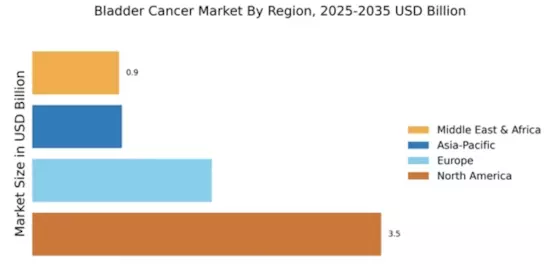
North America holds a significant share of the bladder cancer market, valued at $3.5 billion in 2025. The region's growth is driven by advanced healthcare infrastructure, increasing prevalence of bladder cancer, and robust research initiatives. Regulatory support for innovative therapies and a focus on personalized medicine further enhance market dynamics. The demand for effective treatment options is rising, fueled by awareness campaigns and improved diagnostic techniques. The competitive landscape in North America is characterized by the presence of major players such as Bristol-Myers Squibb, Merck & Co., and Pfizer. These companies are at the forefront of developing novel therapies and expanding their product portfolios. The U.S. leads the market, supported by favorable reimbursement policies and a strong pipeline of clinical trials. The collaboration between pharmaceutical companies and research institutions is expected to drive further advancements in treatment options.

Europe : Emerging Regulatory Frameworks

Europe's bladder cancer market is projected to reach $1.8 billion by 2025, driven by increasing awareness and advancements in treatment options. The region benefits from a strong regulatory framework that encourages innovation and ensures patient access to new therapies. Countries like Germany and the UK are leading in market growth, supported by government initiatives aimed at improving cancer care and funding for research. The rising incidence of bladder cancer is prompting healthcare systems to adopt more effective treatment protocols. Key players in Europe include AstraZeneca, Roche, and Bayer, who are actively involved in research and development. The competitive landscape is evolving, with a focus on immunotherapy and targeted treatments. The UK’s National Health Service (NHS) is committed to enhancing cancer treatment pathways, which is expected to further stimulate market growth. As regulatory bodies adapt to new therapies, the market is poised for significant advancements.

Asia-Pacific : Rapidly Growing Market Potential

The Asia-Pacific bladder cancer market is valued at $0.9 billion in 2025, reflecting a growing awareness of cancer treatment options. The region is witnessing an increase in bladder cancer cases, driven by lifestyle changes and environmental factors. Governments are investing in healthcare infrastructure and cancer research, which is expected to boost market growth. Regulatory bodies are also beginning to streamline approval processes for new therapies, enhancing access to innovative treatments. Countries like Japan and Australia are leading the market, with a growing presence of international pharmaceutical companies. Local players are emerging, focusing on affordable treatment options. The competitive landscape is characterized by collaborations between global and regional firms, aiming to address the unmet needs in bladder cancer care. As awareness and diagnosis improve, the market is set to expand significantly.

Middle East and Africa : Untapped Market Potential

The Middle East and Africa bladder cancer market is estimated at $0.87 billion in 2025, with significant growth potential. The region faces challenges such as limited healthcare access and varying levels of awareness about bladder cancer. However, increasing investments in healthcare infrastructure and initiatives to improve cancer care are driving market growth. Regulatory bodies are beginning to recognize the importance of cancer treatment, leading to improved access to therapies. Countries like South Africa and the UAE are emerging as key players in the market, with a focus on enhancing treatment options. The presence of international pharmaceutical companies is growing, as they seek to tap into this underserved market. Collaborative efforts between governments and private sectors are essential to address the challenges and improve patient outcomes in bladder cancer treatment.

Key Players and Competitive Insights

The Bladder Cancer Market is characterized by a dynamic competitive landscape, driven by increasing incidence rates and advancements in treatment modalities. Key players such as Bristol-Myers Squibb (US), Merck & Co. (US), and AstraZeneca (GB) are strategically positioned to leverage innovation and partnerships to enhance their market presence. Bristol-Myers Squibb (US) focuses on immunotherapy advancements, while Merck & Co. (US) emphasizes its robust pipeline of targeted therapies. AstraZeneca (GB) is actively pursuing collaborations to expand its therapeutic offerings, collectively shaping a competitive environment that prioritizes cutting-edge solutions and patient-centric approaches.

In terms of business tactics, companies are increasingly localizing manufacturing and optimizing supply chains to enhance operational efficiency. The market appears moderately fragmented, with a mix of established players and emerging biotech firms. The collective influence of these key players fosters a competitive structure that encourages innovation and responsiveness to market demands, ultimately benefiting patients through improved treatment options.

In November 2025, Merck & Co. (US) announced a strategic partnership with a leading biotech firm to co-develop a novel combination therapy for advanced bladder cancer. This collaboration is expected to enhance Merck's portfolio and accelerate the development of innovative treatment options, reflecting a trend towards synergistic partnerships that can expedite drug development processes. The strategic importance of this move lies in its potential to address unmet medical needs in bladder cancer, thereby positioning Merck as a leader in this therapeutic area.

In October 2025, AstraZeneca (GB) launched a new clinical trial for its investigational drug targeting specific genetic mutations in bladder cancer patients. This initiative underscores AstraZeneca's commitment to precision medicine and its focus on tailoring treatments to individual patient profiles. The strategic significance of this trial is profound, as it may lead to breakthroughs in treatment efficacy and patient outcomes, further solidifying AstraZeneca's competitive edge in the market.

In December 2025, Bristol-Myers Squibb (US) revealed plans to expand its global manufacturing capabilities to support the production of its innovative immunotherapy products. This expansion is indicative of the company's long-term strategy to meet growing global demand and enhance supply chain reliability. The strategic importance of this move is multifaceted, as it not only strengthens Bristol-Myers Squibb's operational capacity but also reinforces its commitment to delivering timely and effective treatments to patients worldwide.

As of December 2025, current competitive trends in the Bladder Cancer Market are increasingly defined by digitalization, sustainability, and the integration of artificial intelligence (AI) in drug development processes. Strategic alliances are playing a pivotal role in shaping the landscape, enabling companies to pool resources and expertise. Looking ahead, competitive differentiation is likely to evolve from traditional price-based competition to a focus on innovation, technological advancements, and supply chain reliability, ultimately enhancing patient care and treatment outcomes.

Key Companies in the Bladder Cancer Market market include

Industry Developments

July 2022: Using its ClarityDX diagnostic technology, Nanostics Inc. has started a prospective clinical research to evaluate ClarityDX Bladder, a revolutionary and less invasive bladder cancer diagnostic test. In cooperation with DynaLIFE Medical Labs and the Alberta Prostate Cancer Research Initiative (APCaRI) of the University of Alberta

Future Outlook

Bladder Cancer Market Future Outlook

The Bladder Cancer Market is projected to grow at a 4.6% CAGR from 2024 to 2035, driven by advancements in treatment options, increasing awareness, and rising incidence rates.

New opportunities lie in:

  • Development of personalized immunotherapy treatments for advanced bladder cancer patients.
  • Expansion of telehealth services for remote patient monitoring and consultations.
  • Investment in AI-driven diagnostic tools to enhance early detection and treatment planning.

By 2035, the Bladder Cancer Market is expected to achieve substantial growth, reflecting evolving treatment paradigms and increased patient engagement.

Market Segmentation

Bladder Cancer Market End User Outlook

  • Hospitals
  • Cancer Treatment Centers
  • Research Institutions
  • Home Care Settings

Bladder Cancer Market Drug Class Outlook

  • Antineoplastic Agents
  • Monoclonal Antibodies
  • Checkpoint Inhibitors
  • Chemotherapeutic Agents

Bladder Cancer Market Disease Stage Outlook

  • Non-Muscle Invasive Bladder Cancer
  • Muscle Invasive Bladder Cancer
  • Metastatic Bladder Cancer

Bladder Cancer Market Treatment Type Outlook

  • Chemotherapy
  • Immunotherapy
  • Radiation Therapy
  • Surgery
  • Targeted Therapy

Bladder Cancer Market Diagnosis Method Outlook

  • Cystoscopy
  • Urinary Biomarkers
  • Imaging Techniques
  • Biopsy

Report Scope

MARKET SIZE 20246.07(USD Billion)
MARKET SIZE 20256.35(USD Billion)
MARKET SIZE 20359.95(USD Billion)
COMPOUND ANNUAL GROWTH RATE (CAGR)4.6% (2024 - 2035)
REPORT COVERAGERevenue Forecast, Competitive Landscape, Growth Factors, and Trends
BASE YEAR2024
Market Forecast Period2025 - 2035
Historical Data2019 - 2024
Market Forecast UnitsUSD Billion
Key Companies ProfiledBristol-Myers Squibb (US), Merck & Co. (US), AstraZeneca (GB), Roche (CH), Pfizer (US), Novartis (CH), Eli Lilly and Company (US), Bayer (DE), Johnson & Johnson (US)
Segments CoveredTreatment Type, Disease Stage, End User, Diagnosis Method, Drug Class
Key Market OpportunitiesAdvancements in immunotherapy and targeted therapies enhance treatment options in the Bladder Cancer Market.
Key Market DynamicsRising demand for innovative therapies drives competition and influences treatment protocols in the bladder cancer market.
Countries CoveredNorth America, Europe, APAC, South America, MEA

Market Highlights

Author
Rahul Gotadki
Assistant Manager

He holds an experience of about 7+ years in Market Research and Business Consulting, working under the spectrum of Life Sciences and Healthcare domains. Rahul conceptualizes and implements a scalable business strategy and provides strategic leadership to the clients. His expertise lies in market estimation, competitive intelligence, pipeline analysis, customer assessment, etc. In addition to the above, his other responsibility includes strategic tracking of high growth markets & advising clients on the potential areas of focus they could direct their business initiatives

Leave a Comment

FAQs

What is the projected growth of the Bladder Cancer market?

The Bladder Cancer market is the expected increase in total market value of 9.95 USD billion over a defined forecast period 2025–2035. It is driven by factors such as demand trends, technological advances, regulatory changes, and geographic expansion.

What is the size of the Bladder Cancer market?

Bladder Cancer market size was valued at approximately 6.07 billion USD in 2024. This figure will reach 9.95 billion USD covering all regions (America, Europe, Asia, MEA and ROW), focusing its segments / services / distribution channels till 2035.

What is the CAGR of the Bladder Cancer market?

Bladder Cancer market is expected to grow at a CAGR of 4.6% between 2025 and 2035.

How much will the Bladder Cancer market be worth by 2035?

Bladder Cancer market is expected to be worth of 9.95 billion USD, reflecting growth driven by usage, technology and global demands by the end of 2035.

How will the Bladder Cancer market perform over the next 10 years?

Over the next 10 years the Bladder Cancer market is expected to shift from usd billion 6.07 to 9.95 billion USD, led by adoption of advanced tech, demographic trends, regulatory approvals, with potential headwinds from 2025 to 2035.

Which region held the largest market share in the Bladder Cancer market?

North America had the largest share in the global market

Download Free Sample

Kindly complete the form below to receive a free sample of this Report

Compare Licence

×
Features License Type
Single User Multiuser License Enterprise User
Price $4,950 $5,950 $7,250
Maximum User Access Limit 1 User Upto 10 Users Unrestricted Access Throughout the Organization
Free Customization
Direct Access to Analyst
Deliverable Format
Platform Access
Discount on Next Purchase 10% 15% 15%
Printable Versions