Download Free Sample
Kindly complete the form below to receive a free sample of this Report
Blood Processing Device and Consumables Market Research Report By Product Type (Blood Collection Devices, Blood Processing Equipment, Blood Storage Devices, Blood Transfusion Devices, Blood Testing Kits), By Application (Hospital and Clinic, Blood Banks, Diagnostic Laboratories, Research Institutes, Other Medical Facilities), By Consumable Type (Blood Bags, Blood Filters, Blood Tubing, Blood Collection Needles, Blood Transfusion Needles), By Technology (Centrifugation, Filtration, Separation, Immunoassay, Other Technologies), By Material (Plastic, Glass, Rubber, Silicone, Other Materials) and By Regional (North America, Europe, South America, Asia Pacific, Middle East and Africa) - Growth & Industry Forecast 2025 To 2035
As per Market Research Future analysis, the Blood Processing Device and Consumables Market was estimated at 49.67 USD Billion in 2024. The Blood Processing Device and Consumables industry is projected to grow from 52.17 USD Billion in 2025 to 85.24 USD Billion by 2035, exhibiting a compound annual growth rate (CAGR) of 5.03% during the forecast period 2025 - 2035
The Blood Processing Device and Consumables Market is poised for substantial growth driven by technological advancements and increasing demand for blood services.
| 2024 Market Size | 49.67 (USD Billion) |
| 2035 Market Size | 85.24 (USD Billion) |
| CAGR (2025 - 2035) | 5.03% |
Terumo Corporation (JP), Fresenius SE & Co. KGaA (DE), Baxter International Inc. (US), Grifols S.A. (ES), Haemonetics Corporation (US), Medtronic plc (IE), Beckman Coulter, Inc. (US), Sysmex Corporation (JP), Bio-Rad Laboratories, Inc. (US)
Our Impact
Enabled $4.3B Revenue Impact for Fortune 500 and Leading Multinationals
Partnering with 2000+ Global Organizations Each Year
30K+ Citations by Top-Tier Firms in the Industry
The Blood Processing Device and Consumables Market is currently experiencing a dynamic evolution, driven by advancements in technology and increasing demand for efficient blood management solutions. Innovations in automation and digitalization are reshaping the landscape, enabling healthcare providers to enhance operational efficiency and improve patient outcomes. Furthermore, the growing emphasis on safety and quality assurance in blood processing is prompting manufacturers to develop more sophisticated devices and consumables that meet stringent regulatory standards. This trend is likely to foster a competitive environment, encouraging continuous improvement and innovation within the sector. In addition, the rising prevalence of chronic diseases and the aging population are contributing to an increased need for blood transfusions and related services. As healthcare systems worldwide strive to optimize resource allocation, the Blood Processing Device and Consumables Market appears poised for sustained growth. The integration of artificial intelligence and machine learning into blood processing technologies may further streamline operations, reduce errors, and enhance the overall quality of care. As the market continues to evolve, stakeholders must remain vigilant to emerging trends and adapt their strategies accordingly.
The Blood Processing Device and Consumables Market is witnessing rapid technological advancements that enhance efficiency and accuracy. Innovations such as automated blood processing systems and smart consumables are becoming increasingly prevalent, allowing for improved workflow and reduced human error. These developments not only streamline operations but also contribute to better patient outcomes.
There is a growing focus on regulatory compliance and quality assurance within the Blood Processing Device and Consumables Market. Manufacturers are prioritizing the development of products that meet stringent safety and quality standards. This trend is likely to drive innovation, as companies seek to differentiate themselves through superior quality and reliability.
The demand for blood services is on the rise, driven by an aging population and the prevalence of chronic diseases. This trend is prompting healthcare providers to invest in advanced blood processing technologies and consumables. As the need for efficient blood management solutions grows, the market is expected to expand, presenting opportunities for stakeholders.
Rising awareness regarding the importance of blood donation is significantly influencing the Blood Processing Device and Consumables Market. Campaigns aimed at educating the public about the critical need for blood donations are fostering a culture of altruism. This increased awareness is leading to higher donation rates, which in turn drives the demand for efficient blood processing devices. Organizations are investing in modernizing their blood collection and processing facilities to accommodate the growing influx of donations. Consequently, this trend is expected to bolster the market, as enhanced processing capabilities are required to manage the increased volume of blood donations effectively.
The Blood Processing Device and Consumables Market is witnessing a surge in demand for blood services, driven by various factors including an aging population and rising incidences of chronic diseases. As healthcare systems strive to provide adequate blood supply, the need for efficient blood processing devices becomes paramount. Reports indicate that the demand for blood transfusions is projected to rise by approximately 5% annually, necessitating advancements in processing technologies. This growing demand is prompting manufacturers to innovate and expand their product offerings, thereby contributing to market growth. The interplay between demand for blood services and technological advancements is likely to shape the future landscape of the industry.
Regulatory compliance remains a critical driver in the Blood Processing Device and Consumables Market. Stringent regulations imposed by health authorities ensure that blood processing devices meet safety and efficacy standards. Compliance with these regulations not only enhances product quality but also fosters consumer trust. The increasing emphasis on quality assurance protocols is compelling manufacturers to invest in advanced technologies and training programs. This trend is reflected in the rising number of certifications and accreditations obtained by companies in the sector. As a result, the market is likely to witness a steady growth trajectory, with an estimated increase in market value driven by heightened regulatory scrutiny.
The Blood Processing Device and Consumables Market is experiencing a notable transformation due to rapid technological advancements. Innovations such as automated blood processing systems and advanced separation technologies are enhancing efficiency and accuracy in blood component extraction. For instance, the introduction of point-of-care testing devices is streamlining the diagnostic process, allowing for quicker decision-making in clinical settings. Furthermore, the integration of artificial intelligence in blood processing devices is expected to improve predictive analytics, thereby optimizing inventory management and reducing waste. As these technologies evolve, they are likely to drive market growth, with projections indicating a compound annual growth rate of over 6% in the coming years.
Emerging markets are becoming increasingly pivotal in the Blood Processing Device and Consumables Market. As healthcare infrastructure develops in these regions, there is a corresponding rise in the demand for blood processing technologies. Investments in healthcare facilities and blood banks are expanding access to essential blood services. Furthermore, government initiatives aimed at improving healthcare access are likely to stimulate market growth. The increasing focus on establishing robust healthcare systems in developing regions presents a substantial opportunity for manufacturers. As these markets evolve, they may contribute significantly to the overall expansion of the blood processing device sector.
In the Blood Processing Device and Consumables Market, Blood Collection Devices hold the largest market share, representing a crucial component of overall blood management processes. Meanwhile, Blood Processing Equipment is emerging as the fastest-growing segment, driven by innovations and increasing demand for efficiency in blood processing workflows. The diversification of blood processing capabilities has also significantly contributed to this shift, with various technologies being adopted to improve the quality of blood products.
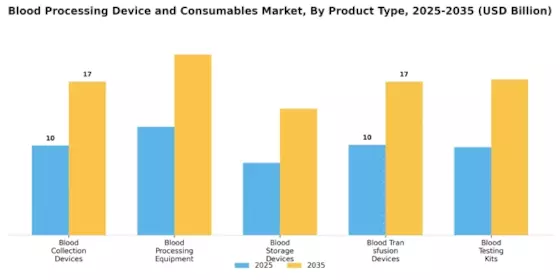
Blood Collection Devices (Dominant) vs. Blood Processing Equipment (Emerging)
Blood Collection Devices serve as the foundational tools in blood management practices, catering to both hospitals and blood banks with essential safety and efficiency features. Their dominant position is reinforced by a consistent demand for safe blood collection methods, while Blood Processing Equipment is rapidly gaining traction with advancements in automation and processing techniques. This segment includes devices that enhance the quality of plasma and blood components, demonstrating a growing trend towards integrated processing solutions that align with modern healthcare practices. As such, both segments play pivotal roles in ensuring that blood products meet high standards of quality and safety.
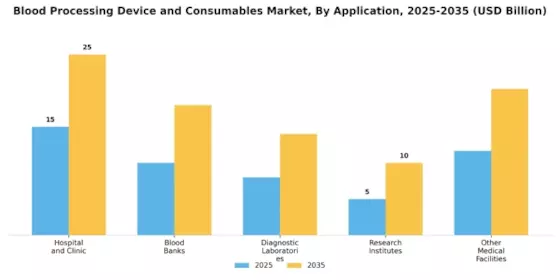
In the Blood Processing Device and Consumables Market, the application segments reveal a diverse distribution. Hospitals and clinics currently dominate the market due to their extensive utilization of blood processing technologies, reflecting their critical role in patient care. Blood banks also represent a significant portion of the market as key players in blood storage and management, driven by an increasing demand for safe blood transfusions and management solutions.
Hospitals and Clinics (Dominant) vs. Blood Banks (Emerging)
Within the Blood Processing Device and Consumables Market, Hospitals and Clinics dominate the application landscape, serving as primary centers for blood collection, processing, and transfusion. Their advanced infrastructure and consistent demand for blood-related services underpin their market position. Conversely, Blood Banks are emerging rapidly, fueled by advancements in technology and a rising public awareness about the importance of safe blood supplies. As healthcare systems evolve, Blood Banks are adapting to incorporate innovative processing solutions and ensuring a steady supply of safe blood, which positions them for significant growth.
Within the Blood Processing Device and Consumables Market, Blood Bags hold the largest market share as they are essential for storing and transporting blood. Their widespread use in hospitals and blood banks contributes significantly to their dominance in this segment. Blood Filters, Blood Tubing, and Blood Transfusion Needles also play crucial roles but occupy comparatively smaller shares, as they are more specialized products used for specific blood processing tasks.
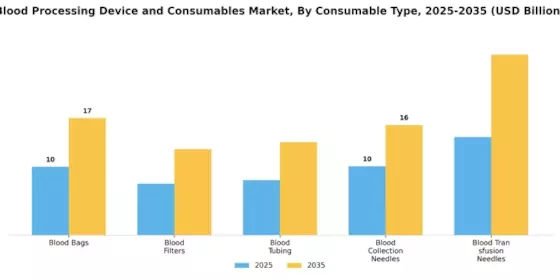
Blood Bags (Dominant) vs. Blood Collection Needles (Emerging)
Blood Bags are the cornerstone of blood management, designed to ensure the safe storage and transport of collected blood. Their robust and versatile design caters to a range of blood volumes, facilitating efficient blood donation and transfusion processes. On the other hand, Blood Collection Needles are emerging rapidly due to increasing awareness about the safety and efficiency of blood collection procedures. With advancements in technology, these needles are becoming more user-friendly and less painful, appealing to both healthcare professionals and patients. As the demand for safe blood transfusions rises, these two segments are set to symbolize the dynamics of the market.
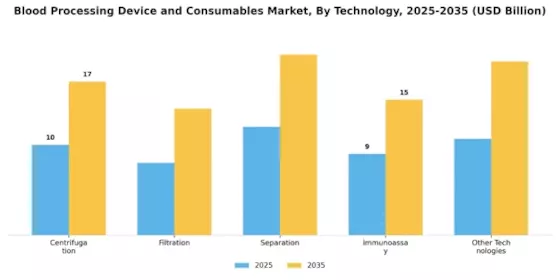
In the Blood Processing Device and Consumables Market, the Centrifugation segment holds the largest share, making it a critical component in the separation of blood components. This segment significantly benefits from its established application in healthcare facilities, driving its dominant market position. In contrast, the Filtration segment is emerging rapidly, catering to increasing demands for high-quality blood processing and safety. The emphasis on effective blood purification techniques is steering its growth trajectory.
Technology: Centrifugation (Dominant) vs. Filtration (Emerging)
Centrifugation stands out as the dominant technology in the blood processing arena, leveraging its effectiveness in the separation of plasma, platelets, and red blood cells. This method is embraced widely due to its reliability and efficiency in processing large volumes, making it a staple in hospitals and laboratories. On the other hand, Filtration is emerging as a strategic technology, focusing on the removal of contaminants and ensuring enhanced safety in blood products. With rising awareness around transfusion-related infections, the filtration technology's importance is escalating, bolstered by innovations aimed at improving filtration performance and user convenience.
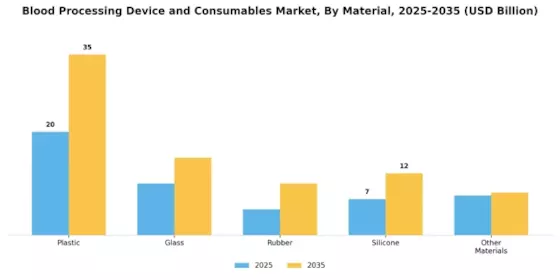
The Blood Processing Device and Consumables Market demonstrates a diverse material landscape, with plastic leading the market due to its lightweight and cost-effective properties. Plastic components dominate because they can be easily molded into various shapes and sizes, catering to a wide array of blood processing requirements. In contrast, glass remains a significant player in this segment, accounting for a notable share as it is preferred for its inert nature and chemical resistance, making it suitable for critical applications.
Plastic (Dominant) vs. Glass (Emerging)
Plastic is the dominant material in the Blood Processing Device and Consumables Market, favored for its flexibility, durability, and low production costs. It is used extensively in various devices and consumables due to these advantages. On the other hand, glass is emerging steadily due to its ability to maintain sterility and chemical integrity. While glass products are more expensive and heavier than plastic counterparts, their safety profile and reliability make them increasingly appealing for specific uses. The transition towards more sustainable practices also stimulates interest in glass, as it is recyclable and environmentally friendly compared to some plastics.
Get more detailed insights about Blood Processing Device And Consumables Market Request Free Sample
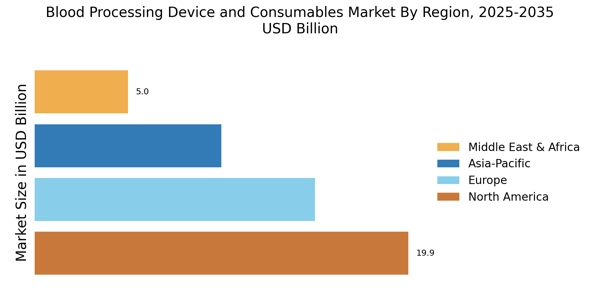
North America is the largest market for blood processing devices and consumables, holding approximately 40% of the global market share. The region's growth is driven by advanced healthcare infrastructure, increasing prevalence of blood disorders, and stringent regulatory frameworks that ensure product safety and efficacy. The demand for innovative blood processing technologies is further fueled by rising investments in research and development. The United States is the leading country in this region, with significant contributions from key players such as Baxter International Inc. and Haemonetics Corporation. The competitive landscape is characterized by a focus on technological advancements and strategic partnerships. Canada also plays a vital role, contributing to the market with its robust healthcare system and increasing adoption of blood processing technologies.
Europe is the second-largest market for blood processing devices and consumables, accounting for approximately 30% of the global market share. The region's growth is supported by increasing healthcare expenditure, a rising aging population, and favorable regulatory policies that promote innovation. The European Medicines Agency (EMA) has been instrumental in streamlining the approval process for new blood processing technologies, enhancing market accessibility. Leading countries in Europe include Germany, France, and the United Kingdom, where major players like Fresenius SE & Co. KGaA and Grifols S.A. are actively expanding their market presence. The competitive landscape is marked by a mix of established companies and emerging startups focusing on innovative solutions. The region's commitment to improving healthcare outcomes drives continuous investment in blood processing technologies.
Asia-Pacific is witnessing rapid growth in the blood processing device and consumables market, holding approximately 20% of the global market share. The region's expansion is driven by increasing healthcare investments, rising awareness of blood donation, and a growing prevalence of chronic diseases. Governments are implementing supportive policies to enhance healthcare infrastructure, which is further propelling market growth. Key countries in this region include China, Japan, and India, where significant investments are being made in healthcare technology. Major players like Terumo Corporation and Sysmex Corporation are expanding their operations to meet the rising demand. The competitive landscape is evolving, with both multinational corporations and local companies striving to innovate and capture market share, making Asia-Pacific a dynamic market for blood processing technologies.
The Middle East and Africa region is an emerging market for blood processing devices and consumables, holding approximately 10% of the global market share. The growth is driven by increasing healthcare investments, rising awareness of blood donation, and government initiatives aimed at improving healthcare infrastructure. The region is gradually adopting advanced medical technologies, which is expected to boost market growth in the coming years. Leading countries in this region include South Africa, Saudi Arabia, and the UAE, where healthcare systems are evolving rapidly. The competitive landscape features both international and local players, with companies like Bio-Rad Laboratories, Inc. making significant inroads. The region presents numerous opportunities for growth, particularly in enhancing blood processing capabilities and expanding access to healthcare services.
The Blood Processing Device and Consumables Market is characterized by a dynamic competitive landscape, driven by technological advancements, increasing demand for blood transfusions, and a growing emphasis on patient safety. Major players such as Terumo Corporation (Japan), Fresenius SE & Co. KGaA (Germany), and Baxter International Inc. (United States) are strategically positioned to leverage these growth drivers. Terumo Corporation (Japan) focuses on innovation in blood collection and processing technologies, while Fresenius SE & Co. KGaA (Germany) emphasizes regional expansion and partnerships to enhance its market presence. Baxter International Inc. (United States) is actively pursuing digital transformation initiatives to streamline operations and improve patient outcomes. Collectively, these strategies contribute to a competitive environment that is increasingly focused on technological innovation and operational efficiency.
Key business tactics within the Blood Processing Device and Consumables Market include localizing manufacturing and optimizing supply chains to enhance responsiveness to regional demands. The market structure appears moderately fragmented, with several key players exerting influence over various segments. This fragmentation allows for niche players to thrive, while larger companies consolidate their positions through strategic acquisitions and partnerships, thereby shaping the overall competitive dynamics.
In August 2025, Grifols S.A. (Spain) announced a strategic partnership with a leading biotechnology firm to develop advanced blood processing technologies. This collaboration is expected to enhance Grifols' product offerings and strengthen its position in the market, particularly in the area of plasma-derived therapies. The partnership underscores the importance of innovation and collaboration in addressing the evolving needs of healthcare providers and patients.
In September 2025, Haemonetics Corporation (United States) launched a new automated blood collection system designed to improve efficiency and safety in blood donation processes. This product introduction reflects Haemonetics' commitment to leveraging technology to enhance operational capabilities and meet the growing demand for blood products. The system's advanced features may provide a competitive edge in a market that increasingly prioritizes automation and safety.
In October 2025, Medtronic plc (Ireland) unveiled a new line of blood processing consumables aimed at improving the accuracy and reliability of blood tests. This launch is indicative of Medtronic's strategy to integrate cutting-edge technology into its product offerings, thereby enhancing its competitive positioning. The focus on accuracy and reliability aligns with the broader industry trend towards precision medicine and personalized healthcare solutions.
As of October 2025, current competitive trends in the Blood Processing Device and Consumables Market are increasingly defined by digitalization, sustainability, and the integration of artificial intelligence. Strategic alliances are playing a pivotal role in shaping the landscape, as companies seek to combine resources and expertise to drive innovation. Looking ahead, competitive differentiation is likely to evolve from traditional price-based competition towards a focus on technological advancements, supply chain reliability, and the ability to deliver innovative solutions that meet the complex needs of healthcare systems.
The market growth is attributed to the increasing prevalence of chronic diseases, growing demand for blood transfusions, and technological advancements in blood processing techniques.
Recent news and developments in the market includeIn 2023, Terumo BCT launched the Spectra Optia Apheresis System, a next-generation apheresis platform designed to enhance patient care and streamline workflow.
In 2022, Haemonetics Corporation received FDA approval for its Acusyst ELITE Cell Processing System, a closed, automated system for the collection, processing, and reinfusion of stem cells.
In 2021, Fresenius Kabi acquired Fenwal, Inc., a leading provider of blood processing technologies, expanding its portfolio of blood management solutions.
These developments indicate the industry's focus on innovation and the growing demand for advanced blood processing technologies.
The Blood Processing Device and Consumables Market is projected to grow at a 5.03% CAGR from 2025 to 2035, driven by technological advancements, increasing demand for blood products, and rising healthcare expenditures.
New opportunities lie in:
By 2035, the market is expected to achieve robust growth, positioning itself as a leader in healthcare innovation.
| MARKET SIZE 2024 | 49.67(USD Billion) |
| MARKET SIZE 2025 | 52.17(USD Billion) |
| MARKET SIZE 2035 | 85.24(USD Billion) |
| COMPOUND ANNUAL GROWTH RATE (CAGR) | 5.03% (2025 - 2035) |
| REPORT COVERAGE | Revenue Forecast, Competitive Landscape, Growth Factors, and Trends |
| BASE YEAR | 2024 |
| Market Forecast Period | 2025 - 2035 |
| Historical Data | 2019 - 2024 |
| Market Forecast Units | USD Billion |
| Key Companies Profiled | Terumo Corporation (JP), Fresenius SE & Co. KGaA (DE), Baxter International Inc. (US), Grifols S.A. (ES), Haemonetics Corporation (US), Medtronic plc (IE), Beckman Coulter, Inc. (US), Sysmex Corporation (JP), Bio-Rad Laboratories, Inc. (US) |
| Segments Covered | Product Type, Application, Consumable Type, Technology, Material, Regional |
| Key Market Opportunities | Integration of advanced automation and artificial intelligence in Blood Processing Device and Consumables Market. |
| Key Market Dynamics | Technological advancements and regulatory changes drive innovation and competition in the Blood Processing Device and Consumables Market. |
| Countries Covered | North America, Europe, APAC, South America, MEA |
The projected market valuation for the Blood Processing Device and Consumables Market in 2035 is 85.24 USD Billion.
The overall market valuation for the Blood Processing Device and Consumables Market was 49.67 USD Billion in 2024.
The expected CAGR for the Blood Processing Device and Consumables Market during the forecast period 2025 - 2035 is 5.03%.
Key players in the market include Terumo Corporation, Fresenius SE & Co. KGaA, Baxter International Inc., Grifols S.A., and Haemonetics Corporation.
The Blood Processing Equipment segment is projected to grow from 12.0 to 20.0 USD Billion by 2035.
The Blood Collection Devices segment is expected to increase from 9.93 to 17.0 USD Billion by 2035.
Blood Bags in the consumable type segment is anticipated to grow from 9.93 to 17.0 USD Billion by 2035.
The Hospital and Clinic application segment is expected to reach 25.0 USD Billion by 2035.
The Separation technology segment is projected to grow from 12.0 to 20.0 USD Billion by 2035.
Plastic is expected to dominate the market, with a projected growth from 20.0 to 35.0 USD Billion by 2035.


Kindly complete the form below to receive a free sample of this Report

“This is really good guys. Excellent work on a tight deadline. I will continue to use you going forward and recommend you to others. Nice job”


“Thanks. It’s been a pleasure working with you, please use me as reference with any other Intel employees.”


“Thanks for sending the report it gives us a good global view of the Betaïne market.”


“Thank you, this will be very helpful for OQS.”


“We found the report very insightful! we found your research firm very helpful. I'm sending this email to secure our future business.”


“I am very pleased with how market segments have been defined in a relevant way for my purposes (such as "Portable Freezers & refrigerators" and "last-mile"). In general the report is well structured. Thanks very much for your efforts.”


“I have been reading the first document or the study, ,the Global HVAC and FP market report 2021 till 2026. Must say, good info! I have not gone in depth at all parts, but got a good indication of the data inside!”


“We got the report in time, we really thank you for your support in this process. I also thank to all of your team as they did a great job.”


“The Automotive 48V ECU Components Procurement Intelligence Study” was a complex project, but the Market Research Future (MRFR) team handled it with quality, agility, and customer-centricity. They delivered all requested data on time and within the agreed scope. The team, including Shubhendra Anand and Rahul Gotadki, was always readily available to clarify questions and swiftly implement necessary adjustments, driving the project to a successful conclusion within a very demanding timeframe.
I would also like to specifically commend Akshay Agarwal for his responsiveness and support at every stage—from our initial inquiry on May 6th through to final delivery on June 18th. His dedication made the entire process seamless.”



