Download Free Sample
Kindly complete the form below to receive a free sample of this Report
Brazil Electric Vehicle EV Insurance Market Size, Share and Research Report By Coverage (First Party Liability Coverage, Third Party Liability Coverage, Comprehensive), By Distribution Channel (Insurance Companies, Banks, Insurance Agents/ Brokers, Others), By Vehicle Age (New Vehicle, Used Vehicle), By Vehicle Category (Passenger Cars, Commercial Vehicles) and By EV propulsion (Battery Operated, Hybrid)- Industry Forecast Till 2035
As per Market Research Future analysis, the Brazil electric vehicle insurance market Size was estimated at 1156.68 USD Million in 2024. The Brazil electric vehicle-ev-insurance market is projected to grow from 1409.07 USD Million in 2025 to 10142.1 USD Million by 2035, exhibiting a compound annual growth rate (CAGR) of 21.8% during the forecast period 2025 - 2035
The Brazil electric vehicle insurance market is experiencing notable growth driven by evolving consumer preferences and regulatory support.
| 2024 Market Size | 1156.68 (USD Million) |
| 2035 Market Size | 10142.1 (USD Million) |
| CAGR (2025 - 2035) | 21.82% |
Allianz (DE), State Farm (US), Progressive (US), Geico (US), AXA (FR), Liberty Mutual (US), Zurich (CH), MetLife (US), Chubb (US)
Our Impact
Enabled $4.3B Revenue Impact for Fortune 500 and Leading Multinationals
Partnering with 2000+ Global Organizations Each Year
30K+ Citations by Top-Tier Firms in the Industry
The electric vehicle insurance market is currently experiencing a notable transformation, driven by the increasing adoption of electric vehicles (EVs) across various segments. This shift is largely influenced by government initiatives aimed at promoting sustainable transportation, which have led to a rise in consumer interest and investment in EV technology. As more individuals and businesses transition to electric mobility, the demand for tailored insurance products that address the unique risks associated with EV ownership is becoming more pronounced. Insurers are adapting their offerings to include coverage for battery damage, charging infrastructure, and potential software-related issues, which are distinct from traditional vehicle insurance policies. Moreover, the regulatory landscape is evolving, with authorities implementing policies that encourage the growth of the electric vehicle-ev-insurance market. Incentives such as tax breaks and subsidies for EV purchases are likely to further stimulate market expansion. Additionally, the integration of advanced technologies, such as telematics and data analytics, is enhancing risk assessment and pricing strategies within the insurance sector. This technological advancement not only improves customer experience but also enables insurers to offer more competitive premiums. As the market continues to mature, it appears poised for sustained growth, reflecting broader trends in environmental consciousness and technological innovation.
As electric vehicles gain traction, there is a growing need for insurance products that cater specifically to the unique characteristics of EVs. This includes coverage for battery replacement, charging equipment, and potential software malfunctions. Insurers are likely to develop specialized policies that address these aspects, ensuring that customers receive adequate protection tailored to their needs.
Government policies are playing a crucial role in shaping the electric vehicle-ev-insurance market. Incentives such as tax reductions and subsidies for electric vehicle purchases are expected to encourage more consumers to opt for EVs. This, in turn, may lead to an increase in demand for insurance products designed for electric vehicles, fostering market growth.
The integration of technology within the insurance sector is becoming increasingly relevant. Insurers are utilizing telematics and data analytics to enhance risk assessment and pricing models. This technological shift not only improves operational efficiency but also allows for more personalized insurance offerings, which could attract a broader customer base.
The electric vehicle-ev-insurance market in Brazil is experiencing a notable surge in adoption rates, driven by increasing consumer awareness and environmental concerns. As of 2025, electric vehicle sales have risen by approximately 30% compared to previous years, indicating a shift in consumer preferences towards sustainable transportation. This growing acceptance of electric vehicles necessitates tailored insurance products that address the unique risks associated with these vehicles, such as battery damage and charging infrastructure. Insurers are thus compelled to innovate and develop specialized policies that cater to the needs of electric vehicle owners, thereby expanding their market share in the electric vehicle-ev-insurance market.
The electric vehicle-ev-insurance market in Brazil is influenced by stringent environmental regulations aimed at reducing carbon emissions. The Brazilian government has set ambitious targets for lowering greenhouse gas emissions, which includes promoting electric vehicle usage. These regulations create a favorable environment for electric vehicle adoption, subsequently increasing the demand for specialized insurance products. Insurers are likely to respond by developing policies that not only cover traditional risks but also address environmental liabilities, thereby aligning their offerings with regulatory expectations and enhancing their position in the electric vehicle-ev-insurance market.
The Brazilian government has implemented various incentives to promote electric vehicle adoption, which in turn impacts the electric vehicle-ev-insurance market. These incentives include tax reductions, subsidies, and exemptions from certain fees, making electric vehicles more financially accessible to consumers. As a result, the number of electric vehicles on the road is projected to increase significantly, leading to a corresponding rise in demand for insurance products tailored to these vehicles. The electric vehicle-ev-insurance market is likely to benefit from this trend, as insurers adapt their offerings to align with government initiatives and consumer expectations.
Technological advancements in vehicle safety are playing a crucial role in shaping the electric vehicle-ev-insurance market in Brazil. Innovations such as advanced driver-assistance systems (ADAS) and enhanced battery management systems are becoming standard in electric vehicles, potentially reducing accident rates and associated insurance claims. As these technologies become more prevalent, insurers may adjust their risk assessments and pricing models, leading to more competitive premiums for electric vehicle owners. This evolution in safety technology not only enhances consumer confidence but also encourages further investment in the electric vehicle-ev-insurance market.
There is a growing trend among Brazilian consumers towards sustainability, which is significantly impacting the electric vehicle-ev-insurance market. As more individuals prioritize eco-friendly practices, the demand for electric vehicles is expected to rise, leading to an increased need for insurance solutions that reflect these values. Insurers are recognizing this shift and are likely to introduce products that emphasize sustainability, such as policies that reward eco-conscious driving behaviors or offer discounts for using renewable energy sources for charging. This alignment with consumer preferences may enhance the attractiveness of the electric vehicle-ev-insurance market.
In the Brazil electric vehicle-ev-insurance market, comprehensive coverage occupies the largest share among the available options, driven by consumer preference for all-inclusive protection during unforeseen events. The demand for this coverage type is being bolstered by various factors, including increased awareness regarding vehicle safety and the financial implications of accidents, which leads users to opt for more robust insurance packages. Comparatively, third party liability coverage is gaining momentum as the fastest-growing segment. It caters to the regulatory requirements of vehicle owners, appealing to those looking for cost-effective solutions that cover legal liabilities arising from accidents involving other vehicles or property. The growth trends for these coverage types are influenced by the increasing adoption of electric vehicles, as owners seek protections that align with the evolving automotive landscape. Comprehensive coverage is benefiting from the premium nature of electric vehicles, where owners are more inclined to invest in extensive protection due to the higher repair costs associated with these vehicles. Meanwhile, the rising number of electric vehicles on the road is rapidly driving the demand for third party liability coverage, making it a vital consideration for many customers as they adapt to this new automotive environment.
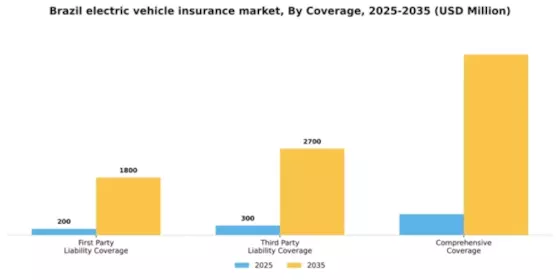
Comprehensive Coverage (Dominant) vs. First Party Liability Coverage (Emerging)
Comprehensive coverage stands out as the dominant force in the Brazil electric vehicle-ev-insurance market, thanks to its comprehensive nature that offers extensive protection against a myriad of risks. This type of coverage appeals to consumers who prioritize safety and security, particularly with the growing interest in electric vehicles. In contrast, first party liability coverage is emerging as an appealing alternative for cost-conscious consumers. While it does not provide the extensive protection of comprehensive coverage, it meets basic legal requirements and offers a more budget-friendly option for many vehicle owners. As the electric vehicle market continues to expand, the dynamics between these two coverage types will evolve, reflecting changing consumer preferences and regulatory pressures.
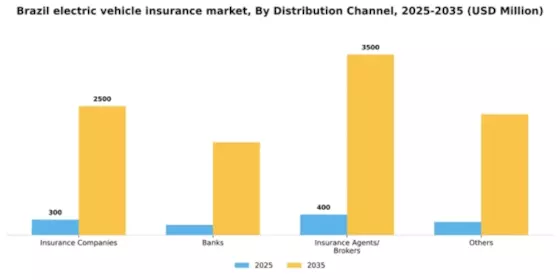
In the Brazil electric vehicle-ev-insurance market, the distribution of market share among various channels reveals that Insurance Companies hold the largest portion, serving as the primary providers of insurance products tailored for electric vehicles. Following them, Insurance Agents and Brokers are emerging swiftly, capturing a notable and growing segment of customers seeking personalized insurance solutions through informed guidance and support. The growth trends in this segment are being driven by an increasing acceptance of electric vehicles in the country and a growing awareness amongst consumers about the unique insurance requirements these vehicles entail. Insurance Agents and Brokers are particularly benefiting from this trend due to their ability to cater to specific needs and offer customized plans, making them a favored choice among new EV owners looking for tailored solutions.
Insurance Companies (Dominant) vs. Insurance Agents/Brokers (Emerging)
Insurance Companies dominate the Brazil electric vehicle-ev-insurance market as they provide comprehensive coverage options and support to consumers adopting electric vehicles. They leverage their established presence and resources to create specialized policies that cater to the unique aspects of electric vehicles, including battery life and charging station considerations. Meanwhile, Insurance Agents and Brokers represent an emerging force in this landscape, offering personalized service and expertise that empower customers to navigate the complexities of EV insurance. They bridge the gap between consumers and providers, tailoring policies that fit individual needs and enhancing customer satisfaction through personalized advocacy. This dynamic interplay between dominant insurers and emerging brokers is shaping the future of the market.
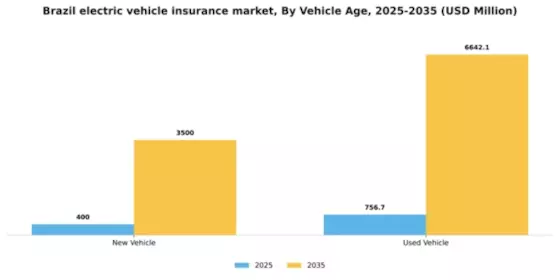
In the Brazil electric vehicle-ev-insurance market, the distribution of market share between new and used vehicles is telling. New vehicles dominate the segment with a substantial share, reflecting consumer preference for the latest technology and features, which are often accompanied by insurance products tailored to new models. On the other hand, used vehicles represent a growing segment due to increasing affordability and accessibility, capturing a notable portion of the market as consumers shift towards sustainable choices at lower costs. Growth trends indicate a significant shift towards used vehicles as consumers become more environmentally conscious yet price-sensitive. Various drivers contribute to this trend, including the rise in electric vehicle adoption among budget-conscious buyers and the availability of specialized insurance products for used electric vehicles. This segment's dynamic nature is further enhanced by government incentives aimed at facilitating transitions to electric mobility, thereby boosting demand in the used vehicle category.
New Vehicle: Dominant vs. Used Vehicle: Emerging
New vehicles in the Brazil electric vehicle-ev-insurance market are positioned as the dominant choice for consumers seeking the latest technologies and safety features. These vehicles often come equipped with advanced insurance options that reflect their higher value and warranty support. On the contrary, the emerging used vehicle segment appeals to a broader demographic, including first-time buyers and those looking for affordable electric options. This segment thrives on the growing availability of pre-owned electric models and tailored insurance solutions designed to address the specific needs of used vehicle purchasers. As sustainability becomes a priority, both segments play crucial roles, but each caters to different consumer motivations and financial capabilities.
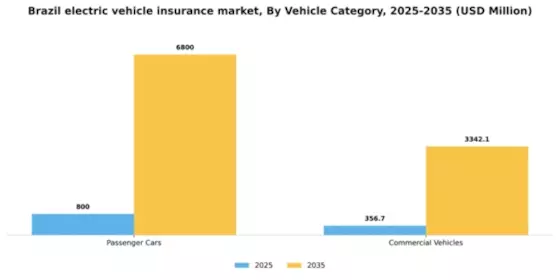
In the Brazil electric vehicle-ev-insurance market, Passenger Cars represent the largest segment, capturing a significant market share driven by consumer preferences for eco-friendly vehicles and increasing urbanization. Commercial Vehicles follow as an emerging segment, rapidly gaining traction due to growing logistics and transportation needs aligned with sustainability goals. The growth trends in this segment are fueled by innovations in battery technology, resulting in extended range and performance for electric vehicles. Moreover, government incentives and regulations promoting electric vehicle adoption significantly influence market dynamics. As the infrastructure for charging stations improves and consumer awareness rises, both Passenger Cars and Commercial Vehicles are poised for further expansion in the coming years.
Passenger Cars (Dominant) vs. Commercial Vehicles (Emerging)
Passenger Cars dominate the Brazil electric vehicle-ev-insurance market, characterized by established manufacturers and a broad consumer base. This segment showcases a variety of models, appealing to diverse demographics seeking environmentally responsible and cost-effective transportation options. The increasing availability of electric models also garners attention from tech-savvy buyers. In contrast, Commercial Vehicles are emerging, driven by companies prioritizing eco-friendly logistics and fleet management. These vehicles are designed for efficiency and are increasingly seen as a means to reduce operational costs. With the rise of e-commerce and urban delivery services, the demand for electric commercial vehicles is surging, highlighting their potential to transform the transportation landscape.
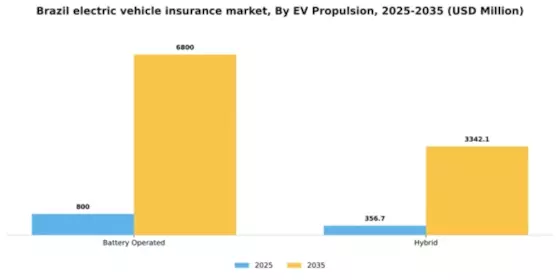
In the Brazil electric vehicle-ev-insurance market, the segment distribution reveals significant insights into consumer preferences. Battery operated vehicles lead the market with a substantial share, attributed to their increasing adoption among environmentally conscious consumers and supportive government policies. Hybrid vehicles, while currently a smaller segment, are experiencing rapid growth due to advancements in technology and changing consumer perceptions about fuel efficiency. The growth trends for the electric propulsion segment are propelled by multiple factors. Innovation in battery technology and charging infrastructure has enhanced the appeal of battery operated vehicles, making them more accessible and practical. Meanwhile, hybrids are gaining traction for their versatility, allowing drivers to make the most of both electric and conventional gasoline power in a shifting regulatory landscape.
Battery Operated (Dominant) vs. Hybrid (Emerging)
Battery operated vehicles dominate the electric propulsion segment, characterized by their reliance on electric energy stored in high-capacity batteries. These vehicles are favored for their zero tailpipe emissions and lower operating costs, aligning with the sustainable goals of consumers and policymakers. In contrast, hybrid vehicles represent an emerging category, combining conventional engines with electric propulsion systems. Their appeal lies in their efficiency and range, offering a bridge for consumers transitioning to full electric vehicles. As the market evolves, both segments are likely to coexist, catering to diverse consumer needs and preferences.
Get more detailed insights about Brazil Electric Vehicle (EV) Insurance Market Request Free Sample
The electric vehicle insurance market in Brazil is currently characterized by a dynamic competitive landscape, driven by increasing consumer demand for sustainable transportation solutions and the growing adoption of electric vehicles (EVs). Key players such as Allianz (DE), State Farm (US), and AXA (FR) are actively positioning themselves to capitalize on these trends. Allianz (DE) has focused on innovation through the development of tailored insurance products that cater specifically to EV owners, emphasizing coverage for battery damage and charging infrastructure. Meanwhile, State Farm (US) has been enhancing its digital capabilities, aiming to streamline the customer experience through advanced mobile applications and online policy management tools. AXA (FR) is pursuing strategic partnerships with EV manufacturers to offer bundled insurance solutions, thereby integrating insurance offerings directly into the vehicle purchasing process. Collectively, these strategies are reshaping the competitive environment, fostering a landscape where innovation and customer-centric solutions are paramount. In terms of business tactics, companies are increasingly localizing their operations to better serve the Brazilian market. This includes optimizing supply chains to reduce costs and improve service delivery. The market appears moderately fragmented, with several players vying for market share, yet the influence of major companies is substantial. Their collective actions are likely to set industry standards and drive competitive dynamics, as they leverage their resources to enhance service offerings and customer engagement. In October 2025, Allianz (DE) announced a partnership with a leading Brazilian EV manufacturer to provide exclusive insurance packages for new electric vehicle buyers. This strategic move is significant as it not only enhances Allianz's market presence but also aligns with the growing trend of integrating insurance solutions into the vehicle purchasing process, potentially increasing customer loyalty and retention. In September 2025, State Farm (US) launched a new telematics program specifically designed for electric vehicles, which rewards policyholders for eco-friendly driving habits. This initiative is crucial as it reflects a shift towards incentivizing sustainable practices among consumers, thereby enhancing State Farm's brand image and attracting environmentally conscious customers. In August 2025, AXA (FR) expanded its digital insurance platform to include features tailored for electric vehicle owners, such as real-time charging station locators and battery health monitoring. This development underscores AXA's commitment to leveraging technology to improve customer experience and engagement, positioning the company as a forward-thinking player in the market. As of November 2025, the competitive trends in the electric vehicle-ev-insurance market are increasingly defined by digitalization, sustainability, and the integration of artificial intelligence (AI) into service offerings. Strategic alliances are becoming more prevalent, as companies recognize the value of collaboration in enhancing their competitive edge. Looking ahead, it is anticipated that competitive differentiation will evolve, shifting from traditional price-based competition to a focus on innovation, technology, and the reliability of supply chains. This transition may ultimately redefine customer expectations and reshape the market landscape.






The Brazil Electric Vehicle EV Insurance Market is witnessing significant developments as the adoption of electric vehicles continues to increase in the country. Recently, numerous companies, including AEGON, Scor and MAPFRE, have expanded their insurance products tailored to electric vehicles, enhancing coverage options for consumers and addressing unique risks associated with EVs. Current affairs indicate that the Brazilian government is pushing for more electric vehicle adoption, which is influencing the insurance sector to innovate their products.
In terms of mergers and acquisitions, recent reports have highlighted that Allianz Seguros acquired a local insurance firm in March 2023 to strengthen its presence in the electric vehicle insurance market. Meanwhile, the rise in EV usage has led to a notable growth in market valuation for firms like Porto Seguro, which reported substantial increases in their electric vehicle insurance portfolios.
In the past couple of years, significant strides have been made as Brazil's electric vehicle market is projected to experience robust growth, thereby enhancing opportunities for insurance companies to cater to an evolving customer base interested in EVs. Additionally, in 2021, Bradesco Seguros announced initiatives aimed at providing specialized insurance solutions for electric vehicles in response to increased consumer demand.
The electric vehicle-ev-insurance market in Brazil is projected to grow at a 21.82% CAGR from 2025 to 2035, driven by increasing EV adoption, regulatory support, and technological advancements.
New opportunities lie in:
By 2035, the market is expected to be robust, reflecting substantial growth and innovation.
| MARKET SIZE 2024 | 1156.68(USD Million) |
| MARKET SIZE 2025 | 1409.07(USD Million) |
| MARKET SIZE 2035 | 10142.1(USD Million) |
| COMPOUND ANNUAL GROWTH RATE (CAGR) | 21.82% (2025 - 2035) |
| REPORT COVERAGE | Revenue Forecast, Competitive Landscape, Growth Factors, and Trends |
| BASE YEAR | 2024 |
| Market Forecast Period | 2025 - 2035 |
| Historical Data | 2019 - 2024 |
| Market Forecast Units | USD Million |
| Key Companies Profiled | Allianz (DE), State Farm (US), Progressive (US), Geico (US), AXA (FR), Liberty Mutual (US), Zurich (CH), MetLife (US), Chubb (US) |
| Segments Covered | Coverage, Distribution Channel, Vehicle Age, Vehicle Category, EV Propulsion |
| Key Market Opportunities | Growing demand for tailored insurance products addressing unique risks of electric vehicles. |
| Key Market Dynamics | Rising consumer demand for electric vehicles drives innovation in insurance products tailored for electric vehicle owners. |
| Countries Covered | Brazil |
The market valuation was $1156.68 Million in 2024.
The projected valuation for 2035 is $10142.1 Million.
The expected CAGR during the forecast period 2025 - 2035 is 21.82%.
Key players include Allianz, State Farm, Progressive, Geico, AXA, Liberty Mutual, Zurich, MetLife, and Chubb.
Coverage types include First Party Liability, Third Party Liability, and Comprehensive Coverage.
First Party Liability Coverage generated $200.0 Million in 2024.
In 2024, Insurance Agents/Brokers generated $400.0 Million, while Banks generated $200.0 Million.
In 2024, new vehicles accounted for $400.0 Million, while used vehicles accounted for $756.68 Million.
Battery Operated vehicles generated $800.0 Million in 2024.
In 2024, passenger cars generated $800.0 Million, while commercial vehicles generated $356.68 Million.



Kindly complete the form below to receive a free sample of this Report

“This is really good guys. Excellent work on a tight deadline. I will continue to use you going forward and recommend you to others. Nice job”


“Thanks. It’s been a pleasure working with you, please use me as reference with any other Intel employees.”


“Thanks for sending the report it gives us a good global view of the Betaïne market.”


“Thank you, this will be very helpful for OQS.”


“We found the report very insightful! we found your research firm very helpful. I'm sending this email to secure our future business.”


“I am very pleased with how market segments have been defined in a relevant way for my purposes (such as "Portable Freezers & refrigerators" and "last-mile"). In general the report is well structured. Thanks very much for your efforts.”


“I have been reading the first document or the study, ,the Global HVAC and FP market report 2021 till 2026. Must say, good info! I have not gone in depth at all parts, but got a good indication of the data inside!”


“We got the report in time, we really thank you for your support in this process. I also thank to all of your team as they did a great job.”


“The Automotive 48V ECU Components Procurement Intelligence Study” was a complex project, but the Market Research Future (MRFR) team handled it with quality, agility, and customer-centricity. They delivered all requested data on time and within the agreed scope. The team, including Shubhendra Anand and Rahul Gotadki, was always readily available to clarify questions and swiftly implement necessary adjustments, driving the project to a successful conclusion within a very demanding timeframe.
I would also like to specifically commend Akshay Agarwal for his responsiveness and support at every stage—from our initial inquiry on May 6th through to final delivery on June 18th. His dedication made the entire process seamless.”



