Bronchoscopes Market (2026 - 2035)

Bronchoscopes Market Size, Growth Research Report By Types (Rigid Bronchoscopes, Flexible Bronchoscopes), Application (Diagnosis (Examination, Tissue Specimen for Biopsy), Surgical Procedure), End User (Hospitals & Clinics, Diagnostic Centers) - Competitor Industry Analysis and Trends Forecast Till 2035
ID: MRFR/MED/3069-CR
153 Pages
Vikita Thakur, Kinjoll Dey
Last Updated: July 09, 2026
Bronchoscopes Market
Market Size
Forecast Period2026-2035
CAGR (2026-2035)7.65%
2025 Market SizeUSD 4.69 Billion
2035 Market SizeUSD 9.81 Billion
Key Players
Olympus Corporation
Karl Storz SE
Fujifilm Holdings
Ambu A/S
Boston Scientific
Medtronic
Opportunities
  • AI-Augmented Real-Time Biopsy Targeting
  • Ambulatory Surgical Center Expansion
  • Emerging-Market Hospital Build-Out

Bronchoscopes Market Summary

The Bronchoscopes Market size was valued at USD 4.69 Billion in 2025, and the market is projected to grow from USD 5.05 Billion in 2026 to USD 9.81 Billion by 2035, registering a CAGR of 7.65% during the forecast period 2026–2035. Two structural catalysts anchor this trajectory: the Centers for Medicare & Medicaid Services' HCPCS C1601 pass-through payment, which has lowered the economic barrier for hospitals adopting disposable scopes [1], and the persistent global rise in lung-cancer screening programs that continue to push procedure volumes higher year after year [2].

Technology shifts are reshaping the Bronchoscopes Market from the inside out. Legacy fiberoptic systems are giving way to high-definition digital platforms, and robotic-assisted navigation is compressing physician learning curves while improving diagnostic yield in peripheral lung lesions. The U.S. Preventive Services Task Force's expanded screening eligibility criteria have channeled an estimated USD 1.2 billion in incremental diagnostic spending toward bronchoscopy suites since 2022 [3]. Single-use devices, once a niche infection-control alternative, now represent the fastest-growing usage category as hospitals weigh reprocessing costs against cross-contamination risks flagged by the FDA [4].

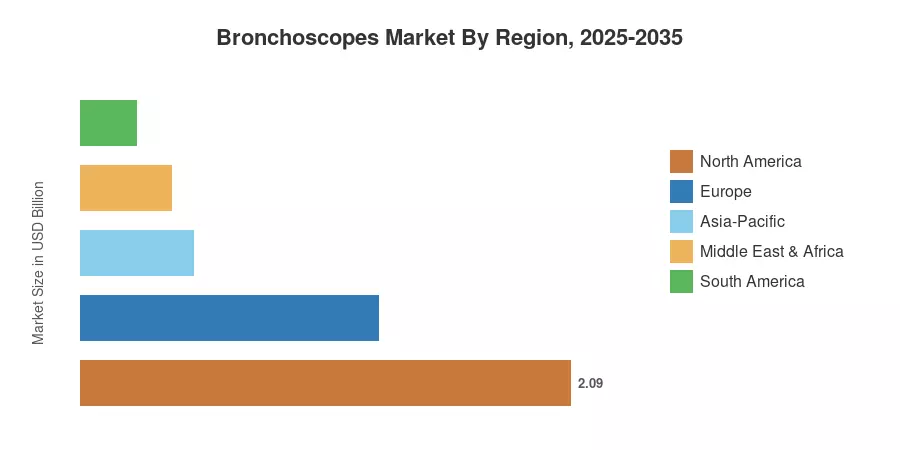
North America commanded roughly 44.5% of the Bronchoscopes Market in 2025, anchored by high procedural reimbursement rates and rapid robotic-platform adoption. Asia-Pacific stands out as the fastest-growing region at a forecast CAGR of 10.2%, driven by national screening mandates in China, Japan, and South Korea. Europe held the second-largest share at approximately 27%, supported by EU Medical Device Regulation compliance investments. As payers continue site-of-care shifts toward ambulatory settings, the Bronchoscopes Market is poised to evolve well beyond its traditional hospital-centric demand base.

Key Report Takeaways

• By Product Type

  • Flexible bronchoscopes accounted for roughly 66.5% of the Bronchoscopes Market share in 2025, reflecting clinician preference for navigational versatility in complex airways.
  • Rigid bronchoscopes recorded a CAGR of 5.3% through 2035, sustained by interventional pulmonology procedures requiring stent placement and foreign-body retrieval.
  • Accessories generated approximately USD 0.89 Billion in 2025 revenue, driven by replacement cycles for biopsy forceps, brushes, and cleaning adapters.

• By Usage

  • Reusable devices held a 69.6% share of the Bronchoscopes Market in 2025, though single-use scopes are expanding at a 17.0% CAGR through 2035.


• By Application

  • Reusable devices held a 69.6% share of the Bronchoscopes Market in 2025, though single-use scopes are expanding at a 17.0% CAGR through 2035.
  • Oncology represented the largest application at 39.0% of the Bronchoscopes Market, fueled by rising lung-cancer incidence globally.
  • ICU airway management is the fastest-growing application, tracking a 13.7% CAGR as critical-care admissions expand in emerging economies.

• By Region

  • North America captured 44.5% of the Bronchoscopes Market share in 2025.
  • Asia-Pacific is forecast to grow at a 10.2% CAGR through 2035, the highest among all regions.
  • Europe contributed approximately USD 1.27 billion in 2025, underpinned by MDR-compliance capital expenditures.

Market Size and Forecast (2021–2035)

Market Research Future's estimates blend bottom-up device shipment data from 85+ OEMs with top-down cross-referencing against national health-expenditure databases, CMS claims records, and trade-association procedure volumes. Historical figures draw on audited company filings; forecast values apply a calibrated compound growth model adjusted for regulatory pipeline events and demographic screening projections.
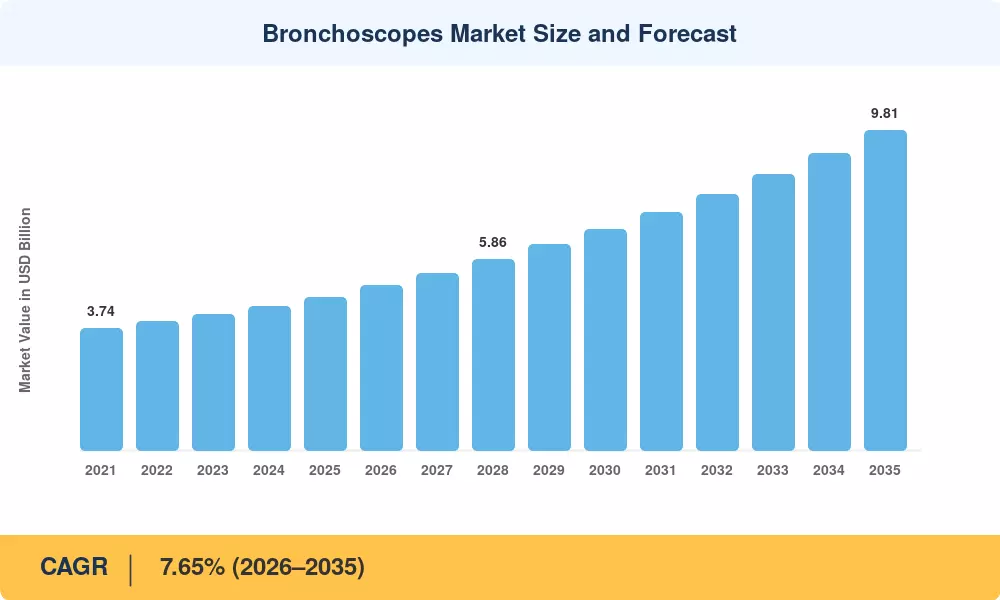
Bronchoscopes Market Size and Forecast
Our Impact
Enabled $4.3B Revenue Impact for Fortune 500 and Leading Multinationals
Partnering with 2000+ Global Organizations Each Year
30K+ Citations by Top-Tier Firms in the Industry

Driver Impact Analysis

Driver ~% Impact on CAGR Geographic Relevance Impact Timeline
Rising lung-cancer screening volumes ~22% Global Short-term (≤2 yr)
Single-use infection-control mandates ~18% North America, Europe Medium-term (2–4 yr)
Robotic-assisted navigation platforms ~16% North America, Asia-Pacific Medium-term (2–4 yr)
CMS pass-through reimbursement codes ~14% United States Short-term (≤2 yr)
Asia-Pacific national screening mandates ~12% China, Japan, India Long-term (≥4 yr)
Ambulatory site-of-care migration ~10% North America, Europe Medium-term (2–4 yr)
AI-powered diagnostic yield improvement ~8% Global Long-term (≥4 yr)


Rising Lung-Cancer Screening Volumes

The American Cancer Society estimates 238,340 new lung-cancer cases in the United States alone for 2023, and the USPSTF's 2021 recommendation to lower the screening age from 55 to 50 has expanded the eligible population by an estimated 6.4 million adults [2]. This demographic shift translates directly into higher bronchoscopy referral rates, as CT-detected nodules increasingly require tissue confirmation. The Bronchoscopes Market benefits disproportionately because bronchoscopy remains the first-line confirmatory tool after low-dose CT.

Single-Use Infection-Control Mandates

The FDA’s 2023 safety communication on duodenoscope cross-contamination [4] reminded hospital risk committees of the importance of scope-borne disease transmission, and the same concerns apply to bronchoscopes. The Bronchoscopes Market is seeing a structural shift in the usage mix: single-use devices avoid reprocessing failures and reduce hospital liability risk, at a cost premium of 30-40% per treatment. Several health systems in Scandinavia and the U.S. have established 100% single-use bronchoscope policies in the ICU.


Robotic-Assisted Navigation Platforms

Intuitive Surgical’s Ion system and Johnson & Johnson’s Monarch platform are FDA-cleared and are implemented in over 450 locations in the U.S. [8]. These systems broaden the diagnostic scope for peripheral lung nodules below 2cm, a realm traditionally necessitating CT-guided biopsy. The bronchoscopes market will generate recurring revenue from proprietary disposable catheter kits and software licensing as robotic systems move from academic medical institutions to community hospitals.


Asia-Pacific National Screening Mandates

Japan's Ministry of Health has expanded subsidized bronchoscopy access in prefectures with above-average smoking prevalence. These policy-driven demand signals create sustained long-term volume growth in the Bronchoscopes Market, particularly for mid-tier flexible scopes priced for high-throughput public hospital environments.

Restraints Impact Analysis

Restraint impact percentages represent estimated negative pressure on the market growth rate. They do not mechanically subtract from the CAGR but indicate relative magnitude of headwinds facing the Bronchoscopes Market during the forecast period.

Restraint ~% Negative Impact on CAGR Geographic Relevance Impact Timeline
High per-unit cost of single-use scopes ~−20% Global Medium-term (2–4 yr)
Semiconductor & sterile-plastic supply shortages ~−18% Global Short-term (≤2 yr)
Physician training bottleneck for robotic systems ~−15% North America, Europe Medium-term (2–4 yr)
Reimbursement uncertainty outside the U.S. ~−12% Europe, South America Long-term (≥4 yr)
Environmental concerns over disposable device waste ~−8% Europe, Asia-Pacific Long-term (≥4 yr)


High Per-Unit Cost of Single-Use Scopes

For single-use bronchoscopes, the advertised price is USD 250–400 per unit, whereas the amortized per-procedure cost for reprocessed reusable devices is USD 60–90 [12]. The premium acts as a deterrent for conversion rates in price-sensitive countries in South America and South-East Asia, hence limiting the Bronchoscopes Market addressable base. Outside high-income health systems, adoption will continue to be gradual until manufacturing scale reduces disposable unit costs below USD 150.


Semiconductor and Supply-Chain Disruptions

Shortages in CMOS image-sensor and sterile-packaging polymer limitations increased the bottleneck, increasing the lead time for bronchoscopes to 16–22 weeks by the end of 2024 [18]. Tier-two OEMs faced the pain, losing contract tenders to larger vendors who had vertically integrated sensor manufacture. Bronchoscopes Market supply situation is improving, but residual allocation practices still constrain inventory flexibility for mid-size distributors.


Physician Training Bottleneck

Robotic bronchoscopy platforms require 20-30 supervised cases before operators achieve proficiency benchmarks, and fewer than 2,000 interventional pulmonologists globally have completed certification programs as of 2025 [9]. This talent constraint caps near-term installed-base growth for robotic systems and, by extension, moderates the premium segment of the Bronchoscopes Market.

Bronchoscopes Market Opportunities

AI-Augmented Real-Time Biopsy Targeting

Computer-vision algorithms trained on tens of thousands of endobronchial images are demonstrating 75–87% sensitivity in distinguishing malignant from benign mucosal patterns during live procedures [14]. OEMs that embed these algorithms directly into their scope processors can command premium ASPs and create sticky software-subscription revenue streams within the Bronchoscopes Market.

Ambulatory Surgical Center Expansion

Payer-driven site-of-care migration is shifting diagnostic bronchoscopy from hospital outpatient departments to freestanding ambulatory surgical centers (ASCs), where facility fees are 40–55% lower [17]. The Bronchoscopes Market stands to benefit as ASCs invest in dedicated scope inventories and single-use device protocols tailored to rapid patient throughput.

Emerging-Market Hospital Build-Out

Saudi Arabia's Vision 2030 healthcare investment of USD 65 billion and India's Ayushman Bharat Digital Mission are generating greenfield hospital capacity that requires first-time bronchoscope procurement [15][16]. These markets favor turnkey packages—scope, processor, and training—giving integrated OEMs a Bronchoscopes Market entry advantage over component suppliers.

Data Monetization through Procedure Analytics

Procedure-level data captured by digital bronchoscope platforms—navigation paths, biopsy coordinates, tissue-sampling yield—represent an untapped revenue layer. OEMs can monetize anonymized datasets to pharmaceutical companies conducting clinical-trial site identification and to health systems benchmarking physician performance.

Single-Use Scope Recycling and Circular-Economy Models

As the environment community pushes back on disposable medical gadgets, take-back recycling programs are finding an opening. In a pilot initiative in Denmark, Ambu recovers metals and polymers from old scopes, reducing waste per unit by an estimated 60% [19]. Companies that aggressively address sustainability will enjoy preferred-vendor status in ESG-conscious procurement frameworks, improving their position in the Bronchoscopes Market.


Bronchoscopes Market Future Outlook

Autonomous Navigation and AI Integration

By 2030, AI-driven bronchoscope navigation is expected to reduce peripheral-nodule miss rates below 5%, a threshold that could make bronchoscopy the definitive first-line diagnostic modality for sub-centimeter lesions [14]. The Bronchoscopes Market will increasingly resemble a software-plus-hardware ecosystem, with OEMs deriving 15–20% of scope-platform revenue from algorithm licensing and cloud-based decision-support subscriptions.

Platform Economics and Razor-Razorblade Models

OEMs are migrating toward closed-ecosystem models where a capital-equipment placement triggers recurring consumable and service revenue. In the Bronchoscopes Market, this translates to proprietary single-use catheter kits, annual processor-software upgrades, and per-procedure data-analytics fees. Hospitals will face growing switching costs, which will consolidate market share among the top three platform providers by 2032.

Sustainability-Driven Design Cycles

Bronchoscopes Market participants that invest early in recyclable polymers, low-energy sterilization processes, and take-back programs will secure preferred-vendor status in European tenders while differentiating against commodity competitors.

Decentralization of Bronchoscopy Services

Portable, battery-operated bronchoscope units are enabling procedure delivery outside traditional hospital walls—in mobile screening vans, rural clinics, and field hospitals. This decentralization wave expands the Bronchoscopes Market total addressable base into geographies and care settings previously unreachable by conventional capital equipment.

Bronchoscopes Market Segmentation

By Product Type

Segment Key Metric Primary Demand Driver
Flexible 66.5% share (2025) Navigational versatility across diagnostic and therapeutic use
Rigid CAGR 5.3% Stent deployment and foreign-body extraction
Accessories USD 0.89 Billion (2025) Replacement-cycle demand for biopsy tools and cleaning kits


Flexible bronchoscopes dominate the Bronchoscopes Market because of their adaptability across outpatient diagnostics, ICU intubation assistance, and therapeutic interventions. The transition from fiberoptic to CMOS-chip-tip designs has improved image resolution while reducing scope-tip diameters, enabling pediatric and difficult-airway applications that were impractical a decade ago.

Rigid bronchoscopes maintain a durable niche within interventional pulmonology, where large working channels are essential for laser therapy, cryotherapy, and airway-stent placement. Growth in this subsegment is moderate but resilient, driven by rising endobronchial tumor-debulking volumes in comprehensive cancer centers [8].

By Usage

Segment Key Metric Primary Demand Driver
Reusable 69.6% share (2025) Lower amortized cost per procedure
Single Use CAGR 17.0% Infection-control compliance and zero reprocessing risk


Reusable scopes still command the majority of the Bronchoscopes Market by installed base, particularly in cost-sensitive markets and high-volume academic centers where per-procedure economics favor amortization over disposability. Yet single-use devices are gaining ground at the fastest rate in the entire segmentation landscape, propelled by FDA safety advisories and by hospital risk officers seeking to eliminate scope-borne pathogen liability [4][12].

By Application

Segment Key Metric Primary Demand Driver
Oncology 39.0% share (2025) Rising global lung-cancer incidence
Pneumonia & Infection Diagnosis CAGR 8.1% Post-COVID diagnostic vigilance
ICU Airway Management CAGR 13.7% Critical-care bed expansion in emerging markets


Oncology is the anchor application for the Bronchoscopes Market, and navigational bronchoscopy's ability to reach peripheral nodules is shifting tissue-acquisition upstream from surgery to bronchoscopy suites. ICU airway management is the fastest-growing application, reflecting expanded ventilator capacity in Asia-Pacific and Middle Eastern health systems following pandemic-era critical-care investments [6][15].

By End User

Segment Key Metric Primary Demand Driver
Hospitals 68.2% share (2025) Capital-equipment budgets, procedural complexity
Ambulatory Surgical Centers CAGR 12.5% Payer-driven site-of-care migration


Hospitals remain the predominant end-user channel for the Bronchoscopes Market, housing the interventional suites and anesthesia support that complex procedures require. Ambulatory surgical centers, however, represent the structural growth story as commercial payers increasingly mandate outpatient-eligible diagnostics to reduce facility costs [17].

Regional Market Share Analysis

Region Key Metric Primary Investment Themes
North America 44.5% share (2025) Robotic adoption, CMS reimbursement, ASC migration
Europe USD 1.27 Billion (2025) MDR compliance, single-use conversion
Asia-Pacific 10.2% CAGR (2026–2035) National screening mandates, greenfield hospitals
South America USD 0.24 Billion (2025) Public-hospital modernization, TB diagnostics
Middle East & Africa 8.4% CAGR (2026–2035) Vision 2030 hospital builds, infectious-disease burden
Total USD 4.69 Billion (2025)

The Bronchoscopes Market displays a pronounced regional skew: mature markets in North America and Europe drive the majority of value, while Asia-Pacific anchors the growth narrative through screening-program expansion and hospital modernization.


North America

Country Key Metric Key Driver
United States 82.3% of regional share CMS pass-through codes, robotic installed base
Canada 10.5% of regional share Provincial screening program expansion
Mexico CAGR 8.9% INSABI public-health infrastructure investment


The United States alone accounts for over four-fifths of North American Bronchoscopes Market revenue, reflecting the concentration of robotic-platform installations and high commercial-payer reimbursement. Canada's provinces are scaling lung-cancer screening along USPSTF-aligned protocols, while Mexico's restructured public-health system is channeling capital toward respiratory-diagnostic equipment in secondary-tier hospitals [1][3].

Europe

Country Key Metric Key Driver
Germany 24.1% of regional share MedTech cluster R&D, hospital group procurement
United Kingdom CAGR 7.8% NHS Targeted Lung Health Check programme
France 17.5% of regional share HAS reimbursement pathway reform
Italy USD 0.11 Billion (2025) Regional oncology network upgrades
Spain CAGR 7.2% National Health System scope-replacement cycles
Nordic Countries 9.8% of regional share Single-use policy mandates
Russia CAGR 6.1% Federal Oncology Program capital allocations
Rest of Europe USD 0.09 Billion (2025) Central-European EU structural funds


Germany and France together represent over 40% of the European Bronchoscopes Market value, driven by dense networks of university hospitals with active interventional-pulmonology programs. The UK's Targeted Lung Health Check initiative has increased bronchoscopy referral rates by an estimated 18% in participating regions since 2022, creating sustained demand for both reusable and single-use platforms [7][13].

Asia-Pacific

Country Key Metric Key Driver
China 34.2% of regional share Healthy China 2030 lung-cancer initiative
India CAGR 11.8% Ayushman Bharat hospital expansion
Japan USD 0.21 Billion (2025) Aging population, high endoscopy utilization
South Korea 12.7% of regional share NHIS reimbursement for navigational bronchoscopy
ASEAN CAGR 9.5% TB and infectious-disease diagnostic demand
Rest of Asia-Pacific USD 0.06 Billion (2025) Medical-tourism facility investments


China's cancer-screening pilots across 23 provinces are generating the single largest volume driver in the Asia-Pacific Bronchoscopes Market. India, meanwhile, combines high TB burden with an ambitious hospital-construction program that will add an estimated 300,000 beds by 2030, each requiring baseline bronchoscopy capability [10][16].

South America

Country Key Metric Key Driver
Brazil 62.5% of regional share SUS public-system scope procurement
Argentina CAGR 7.0% University-hospital oncology programs
Rest of South America USD 0.04 Billion (2025) PAHO respiratory-health initiatives


Brazil dominates South American Bronchoscopes Market demand through the Unified Health System (SUS), which periodically issues large-scale tenders for endoscopy equipment. Argentina's academic medical centers are increasingly requesting navigational platforms for clinical-trial participation, though reimbursement limitations cap broader adoption [17].

Middle East & Africa

Country Key Metric Key Driver
Saudi Arabia 28.4% of regional share Vision 2030 mega-hospital projects
UAE CAGR 9.2% Medical-tourism positioning, JCI-accredited facilities
South Africa 19.1% of regional share National Health Insurance pilot scheme
Egypt CAGR 8.0% Universal health-coverage rollout
Rest of MEA USD 0.05 Billion (2025) Infectious-disease diagnostic demand


Saudi Arabia's multi-billion-dollar hospital construction pipeline is the foremost revenue catalyst for the Bronchoscopes Market in this region, with flagship projects like NEOM's healthcare district specifying state-of-the-art endoscopy suites. South Africa's NHI pilot is expected to funnel procurement funding toward essential diagnostic devices, including bronchoscopes, through centralized tender frameworks [15].

Bronchoscopes Market By Region, 2025-2035

Competitive Benchmarking

The Bronchoscopes Market exhibits medium concentration, with an estimated top-five combined revenue share of 58–64% and a Herfindahl-Hirschman Index in the 1,200–1,500 range. Olympus and Karl Storz have historically anchored the reusable segment, while Ambu has disrupted the competitive hierarchy through aggressive single-use market penetration. Robotic entrants such as Intuitive Surgical and Johnson & Johnson are adding a new competitive vector that favors platform scale over individual-device differentiation.

Company Est. Revenue Share Range Key Offerings for Bronchoscopes Market Strategic Positioning
Olympus Corporation ~16–20% EVIS X1 video bronchoscopes, TJF-Q190V therapeutic scopes Full-spectrum reusable portfolio leader
Karl Storz SE ~12–15% IMAGE1 S bronchoscopy systems, rigid Hopkins scopes Premium optics and integrated OR solutions
Fujifilm Holdings ~8–11% ELUXEO 700 series, EB-580T therapeutic bronchoscopes Advanced imaging (BLI, LCI) differentiation
Ambu A/S ~7–10% aScope 5 Broncho, aScope 4 RhinoLaryngo Single-use market disruptor
Boston Scientific ~5–8% SpyGlass DS, diagnostic accessories Cross-selling from GI endoscopy base
Medtronic ~4–7% Superb Microvascular Imaging integration, ENB catheters Navigational bronchoscopy pioneer
Pentax Medical (HOYA) ~4–6% EPK-i7010 video processors, EB19-J10N bronchoscopes Cost-competitive HD systems
Johnson & Johnson (Auris Health) ~3–5% Monarch robotic bronchoscopy platform Robotic-first market entry
Intuitive Surgical ~3–5% Ion endoluminal system Shape-sensing catheter technology
Richard Wolf GmbH ~2–4% ENDOCAM Logic platform, rigid bronchoscope sets European niche specialist
Verathon (Roper Technologies) ~2–3% GlideScope bronchoscopic intubation aids Airway-management crossover


Recent News & Developments

  • Intuitive Surgical (April 2024): Expanded the clinical adoption of its Ion™ Endoluminal System across community hospitals, reaching over 100,000 cumulative robotic bronchoscopy procedures performed globally while enhancing shape-sensing navigational catheter precision for peripheral lung nodule biopsies.


  • Olympus Corporation (December 2023): Launched its next-generation EVIS X1 endoscopy system in major international markets, incorporating advanced optical imaging modalities (EDOF and TXI) to enhance mucosal visualization and vascular clarity across its flexible diagnostic and therapeutic bronchoscope lines.


  • Karl Storz SE (January 2024): Advanced its airway management portfolio by expanding global distribution of its IMAGE1 S™ camera platform and flexible video bronchoscopes, offering high-definition visualization systems designed for critical care, thoracic surgery, and difficult airway management.


  • CMS (November 2020): Approved Transitional Pass-Through (TPT) payment status for single-use bronchoscopes under HCPCS code C1601, providing separate Medicare reimbursement to eligible outpatient departments and accelerating single-use endoscope procurement across US health systems.

Bronchoscopes Market Report Scope

Parameter Detail
Market Scope Global Bronchoscopes Market covering devices, accessories, and related consumables
Study Period 2021–2035
CAGR 7.65% (2026–2035)
Base Year Market Size USD 4.69 Billion (2025)
Forecast Endpoint USD 9.81 Billion (2035)
Fastest Growing Segment Single-use bronchoscopes (by usage); ICU airway management (by application)
Companies Profiled 11 (Olympus, Karl Storz, Fujifilm, Ambu, Boston Scientific, Medtronic, Pentax Medical, J&J/Auris, Intuitive Surgical, Richard Wolf, Verathon)
Valuation Currency USD Billion


FAQs

How do robotic bronchoscopy platforms affect capital-budgeting decisions for mid-size hospitals?
Robotic systems require USD 600,000–800,000 upfront plus annual service contracts, making them viable only when procedure volumes exceed 150–200 cases per year [8]. Mid-size hospitals often pursue shared-service agreements or vendor-financed placement models to offset capital strain.
What reprocessing liability risks should procurement teams weigh when choosing reusable bronchoscopes?
Reprocessing failures account for hospital-acquired respiratory infections linked to contaminated scopes [4]. Procurement teams should verify validated reprocessing protocols and consider single-use alternatives for high-risk ICU environments.
Which bronchoscope sensor technology delivers the best image fidelity for peripheral lesions?
CMOS chip-on-tip sensors outperform fiberoptic bundles in resolution and color accuracy at distal tip diameters below 4 mm [11]. Facilities prioritizing peripheral-nodule diagnostics should evaluate CMOS platforms.
How does CMS C1601 pass-through reimbursement change the total cost of ownership for single-use scopes?
The pass-through adds roughly USD 900 per procedure in separate facility payment, narrowing the cost gap between disposable and reprocessed reusable devices [1]. It effectively makes single-use scopes cost-neutral in qualifying U.S. outpatient settings.
What training pathway shortcomings slow robotic bronchoscopy adoption outside academic centers?
Fewer than 2,000 pulmonologists globally hold robotic-procedure certification, and most training programs are concentrated at 20–30 academic sites [9]. Simulator-based credentialing programs are emerging but not yet widely accredited.
Are there regulatory pathways for bronchoscope-integrated AI diagnostics outside the United States?
The EU's MDR pathway and Japan's PMDA Shonin process both accommodate AI-enabled devices, though approval timelines run 12–18 months longer than FDA De Novo review [13][14]. Market entrants should plan parallel submissions.
What sustainability certifications are becoming procurement prerequisites for bronchoscopes in Europe?
EU MDR (2017/745) environmental management and emerging Ecodesign Regulation lifecycle disclosures are gaining weight in EU hospital tenders [19]. Manufacturers with verified carbon-footprint data gain scoring advantages.    
What is the current size of the bronchoscopes market?
The bronchoscopes market reached USD 4.69 billion in 2025 and is projected to reach USD 9.81 billion by 2035.
What is the CAGR of the bronchoscopes market?
The bronchoscopes market is projected to grow at a CAGR of 7.65% during the forecast period 2026–2035.
Which region leads the bronchoscopes market?
North America holds the largest share at 44.5%, while Asia-Pacific is the fastest-growing region at 10.2% CAGR.
Author
Author
Author Profile
Vikita Thakur LinkedIn
Senior Research Analyst
She holds an experience of about 5+ years in market research and business consulting projects for sectors such as life sciences, medical devices, and healthcare IT. She possesses a robust background in data analysis, market estimation, competitive intelligence, pipeline analysis market trend identification, and consumer behavior insights. Her expertise lies in technical Sales support, client interaction and project management, designing and implementing market research studies, conducting competitive analysis, and synthesizing complex data into actionable recommendations that drive business growth.
Co-Author
Co-Author Profile
Kinjoll Dey LinkedIn
Senior Research Analyst
He is an extremely curious individual currently working in Healthcare and Medical Devices Domain. Kinjoll is comfortably versed in data centric research backed by healthcare educational background. He leverages extensive data mining and analytics tools such as Primary and Secondary Research, Statistical Analysis, Machine Learning, Data Modelling. His key role also involves Technical Sales Support, Client Interaction and Project management within the Healthcare team. Lastly, he showcases extensive affinity towards learning new skills and remain fascinated in implementing them.

Research Approach


Secondary Research

The secondary research process involved comprehensive analysis of medical device regulatory databases, peer-reviewed respiratory medicine journals, clinical pulmonology publications, and authoritative health organizations. Key sources included the US Food & Drug Administration (FDA) Center for Devices and Radiological Health (CDRH), European Medicines Agency (EMA) Medical Device Coordination Group, National Institutes of Health (NIH) National Heart, Lung, and Blood Institute (NHLBI), Centers for Disease Control and Prevention (CDC) National Center for Health Statistics Respiratory Disease Division, World Health Organization (WHO) Global Tuberculosis Programme and Noncommunicable Diseases Department, Global Unique Device Identification Database (GUDID), FDA MAUDE (Manufacturer and User Facility Device Experience) Database, National Center for Biotechnology Information (NCBI/PubMed), EU Eurostat Health Database, American College of Chest Physicians (CHEST), American Thoracic Society (ATS), European Respiratory Society (ERS), British Thoracic Society, Japan Society for Respiratory Endoscopy, Asian Pacific Society of Respirology, and national health ministry reports from key markets.

The following sources were employed to gather data on bronchoscopy procedure statistics, 510(k) clearance and PMA approval, clinical safety studies, respiratory disease epidemiology (COPD, lung cancer, asthma), demographic trends, and competitive landscape analysis for flexible video bronchoscopes, fiberoptic bronchoscopes, rigid bronchoscopes, and single-use disposable technologies.


Primary Research

Qualitative and quantitative insights were obtained by interviewing supply-side and demand-side stakeholders during the primary research process. Supply-side sources comprised CEOs, VPs of Product Development, regulatory affairs chiefs, and commercial directors from medical device OEMs and bronchoscope manufacturers (rigid, flexible, and disposable). The demand-side sources included medical directors of ambulatory surgical centers (ASCs), interventional pulmonologists, thoracic surgeons, critical care specialists (ICU bronchoscopy), and procurement leads from hospitals, pulmonary specialty clinics, and diagnostic imaging centers. Primary research has confirmed the timelines of the robotic and advanced imaging pipelines, validated market segmentation between reusable and single-use devices, and collected insights on the clinical adoption patterns of disposable bronchoscopes, pricing strategies, and reimbursement dynamics for diagnostic versus therapeutic procedures.

Primary Respondent Breakdown:

By Designation: C-level Primaries (32%), Director Level (30%), Others (38%)

By Region: North America (38%), Europe (25%), Asia-Pacific (29%), Rest of World (8%)


Market Size Estimation

Revenue mapping and procedure volume analysis were implemented to determine global market valuation. The methodology comprised the following:

The identification of over 45 key manufacturers in North America, Europe, Asia-Pacific, and Latin America who specialize in video bronchoscopes, fiberoptic systems, rigid scopes, and disposable platforms.

Product mapping for flexible video bronchoscopes, flexible fiber bronchoscopes, rigid bronchoscopes, mobile/portable bronchoscopes, and single-use disposables

Examination of annual revenues that are specific to bronchoscopy portfolios, including endoscopic imaging systems and accessory equipment, as reported and modeled

Coverage of manufacturers that account for 70-75% of the global market share in 2024, such as Olympus, Ambu, Boston Scientific, Karl Storz, Fujifilm, PENTAX Medical, Teleflex, and Verathon.

Segment-specific valuations for diagnostic applications (lung cancer screening, TB evaluation), therapeutic interventions (stent placement, foreign body removal), and suction/lavage procedures are derived through extrapolation using bottom-up (bronchoscopy procedure volume × Average Selling Price by country/setting) and top-down (manufacturer revenue validation against hospital purchasing data) procedures.

Download Free Sample

Kindly complete the form below to receive a free sample of this Report

Download PDF ×

We do not share your information with anyone. However, we may send you emails based on your report interest from time to time. You may contact us at any time to opt-out.
















