×
Request Free Sample ×

Kindly complete the form below to receive a free sample of this Report

* Please use a valid business email

Leading companies partner with us for data-driven Insights

clients tt-cursor
Hero Background

Carcinoid Tumor Market

ID: MRFR/Pharma/3386-HCR
90 Pages
Rahul Gotadki
October 2025

Carcinoid Tumor Market Research Report Information By Site (Lung, Gastrointestinal), By Diagnosis (Serology, Imaging, Biopsy), By End Users (Hospital & Clinics, Academic Institutes, Research Organization) And By Region (North America, Europe, Asia-Pacific, And Rest Of The World) –Market Forecast Till 2035

Share:
Download PDF ×

We do not share your information with anyone. However, we may send you emails based on your report interest from time to time. You may contact us at any time to opt-out.

Carcinoid Tumor Market Infographic
Purchase Options

Carcinoid Tumor Market Summary

As per MRFR analysis, the Carcinoid Tumor Market Size was estimated at 1458.63 USD Million in 2024. The Carcinoid Tumor industry is projected to grow from 1611.81 in 2025 to 4375.39 by 2035, exhibiting a compound annual growth rate (CAGR) of 10.5 during the forecast period 2025 - 2035.

Key Market Trends & Highlights

The Carcinoid Tumor Market is poised for growth driven by advancements in treatment and increasing awareness.

  • North America remains the largest market for carcinoid tumors, driven by robust healthcare infrastructure and research funding.
  • The Asia-Pacific region is emerging as the fastest-growing market, fueled by increasing healthcare access and rising incidence rates.
  • Pharmacological treatment continues to dominate the market, while surgical intervention is gaining traction as the fastest-growing segment.
  • The increasing incidence of carcinoid tumors and advancements in treatment modalities are key drivers propelling market growth.

Market Size & Forecast

2024 Market Size 1458.63 (USD Million)
2035 Market Size 4375.39 (USD Million)
CAGR (2025 - 2035) 10.5%

Major Players

Novartis (CH), Ipsen (FR), Pfizer (US), Bristol-Myers Squibb (US), Sanofi (FR), AstraZeneca (GB), Eisai (JP), Helsinn Healthcare (CH), Merck & Co. (US)

Carcinoid Tumor Market Trends

The Carcinoid Tumor Market is currently experiencing notable developments, driven by advancements in diagnostic techniques and treatment modalities. Increased awareness regarding carcinoid tumors, which are a type of neuroendocrine tumor, has led to heightened demand for effective therapeutic options. Healthcare professionals are increasingly recognizing the importance of early detection, which appears to enhance patient outcomes. Furthermore, the integration of innovative technologies in imaging and biomarker identification is likely to facilitate more accurate diagnoses, thereby influencing treatment pathways. As a result, pharmaceutical companies are focusing on research and development to introduce novel therapies that target specific tumor characteristics, potentially improving survival rates. In addition, the Carcinoid Tumor Market is witnessing a shift towards personalized medicine, where treatment plans are tailored to individual patient profiles. This trend suggests a growing emphasis on understanding the genetic and molecular underpinnings of carcinoid tumors, which may lead to more effective interventions. Moreover, collaborations between academic institutions and industry stakeholders are fostering an environment conducive to innovation. As the market evolves, it is essential for stakeholders to remain vigilant regarding regulatory changes and reimbursement policies that could impact market dynamics. Overall, the Carcinoid Tumor Market appears poised for growth, driven by ongoing research and a commitment to improving patient care.

Advancements in Diagnostic Techniques

The Carcinoid Tumor Market is benefiting from significant improvements in diagnostic methodologies. Enhanced imaging technologies and biomarker discovery are facilitating earlier and more accurate detection of carcinoid tumors. This trend is likely to lead to timely interventions, which may improve patient outcomes.

Shift Towards Personalized Medicine

There is a noticeable movement towards personalized treatment approaches within the Carcinoid Tumor Market. Tailoring therapies based on individual genetic profiles and tumor characteristics appears to enhance the effectiveness of interventions, potentially leading to better patient responses.

Collaborative Research Initiatives

Collaborations between academic institutions and pharmaceutical companies are becoming increasingly prevalent in the Carcinoid Tumor Market. These partnerships are fostering innovation and accelerating the development of new therapies, which may ultimately benefit patients through improved treatment options.

Carcinoid Tumor Market Drivers

Market Growth Projections

The Global Carcinoid Tumor Market Industry is projected to experience substantial growth over the coming years. With an estimated market value of 1.46 USD Billion in 2024, the industry is expected to expand significantly, reaching 4.38 USD Billion by 2035. This growth trajectory indicates a robust compound annual growth rate of 10.49% from 2025 to 2035. Factors contributing to this growth include rising incidence rates, advancements in diagnostic and therapeutic technologies, and increased awareness among healthcare providers and patients. The market's expansion reflects the ongoing efforts to improve the management of carcinoid tumors and enhance patient outcomes.

Emerging Therapeutic Options

The Global Carcinoid Tumor Market Industry is witnessing the emergence of new therapeutic options, including targeted therapies and immunotherapies. These innovative treatments are designed to specifically target cancer cells while minimizing damage to healthy tissue, offering a more effective approach to managing carcinoid tumors. The introduction of these therapies is likely to enhance treatment efficacy and improve patient quality of life. As the market evolves, the availability of diverse treatment modalities will cater to the varying needs of patients, contributing to the overall growth of the industry. The anticipated increase in market size reflects the potential of these emerging therapies.

Increasing Awareness and Education

Raising awareness about carcinoid tumors is a key driver for the Global Carcinoid Tumor Market Industry. Educational campaigns aimed at healthcare professionals and the general public are essential for improving early detection and treatment rates. Organizations dedicated to cancer awareness are working to disseminate information about symptoms, risk factors, and available treatment options. This heightened awareness is likely to lead to earlier diagnoses, which can significantly improve prognosis and survival rates. As more individuals become informed about carcinoid tumors, the demand for diagnostic and therapeutic services is expected to rise, further propelling market growth.

Rising Incidence of Carcinoid Tumors

The Global Carcinoid Tumor Market Industry is experiencing growth due to the increasing incidence of carcinoid tumors worldwide. According to health statistics, carcinoid tumors are becoming more prevalent, particularly in the gastrointestinal tract and lungs. This rise in cases necessitates enhanced diagnostic and therapeutic options, contributing to market expansion. As awareness of these tumors increases, more patients are likely to seek medical attention, further driving the demand for treatment solutions. The market is projected to reach 1.46 USD Billion in 2024, reflecting the urgent need for effective management strategies and innovative therapies.

Advancements in Diagnostic Techniques

Innovations in diagnostic methodologies are significantly influencing the Global Carcinoid Tumor Market Industry. Enhanced imaging technologies, such as PET scans and MRI, allow for earlier and more accurate detection of carcinoid tumors. These advancements facilitate timely interventions, which are crucial for improving patient outcomes. Furthermore, the development of biomarkers and genetic testing is aiding in the identification of at-risk populations. As diagnostic capabilities improve, the market is likely to see an increase in the number of diagnosed cases, thereby expanding the treatment market. This trend aligns with the projected growth of the industry, expected to reach 4.38 USD Billion by 2035.

Growing Investment in Research and Development

The Global Carcinoid Tumor Market Industry is benefiting from increased investment in research and development. Pharmaceutical companies and research institutions are focusing on discovering novel therapies and treatment modalities for carcinoid tumors. This investment is crucial for developing targeted therapies that can improve patient outcomes and reduce side effects. Clinical trials are underway to evaluate the efficacy of new drugs, which may lead to breakthroughs in treatment options. The anticipated growth of the market, with a CAGR of 10.49% from 2025 to 2035, underscores the importance of R&D in addressing the unmet medical needs of patients with carcinoid tumors.
Market Segment Insights

By Application: Pharmacological Treatment (Largest) vs. Surgical Intervention (Fastest-Growing)

In the Carcinoid Tumor Market, the application segment is primarily dominated by pharmacological treatment, reflecting its widespread acceptance and utilization in managing carcinoid tumors. Diagnostic imaging also plays a crucial role in the market, aiding in the timely detection and diagnosis of these tumors, while radiation therapy is limited in use but remains an important tool for palliative care in certain cases. On the other hand, surgical intervention has been evolving, capturing a growing share as advances in technology enhance surgical outcomes and expand treatment options for patients.

Pharmacological Treatment: Dominant vs. Surgical Intervention: Emerging

Pharmacological treatment stands as the dominant application within the carcinoid tumor market, largely due to the emergence of targeted therapies and novel drug formulations that address patient needs effectively. This segment continues to benefit from robust clinical research and regulatory approvals, leading to increased accessibility. Meanwhile, surgical intervention has gained traction as an emerging method for treating carcinoid tumors, especially with minimally invasive techniques and advancements in surgical technologies. This growth is propelled by a rising awareness of surgical options and improved patient outcomes, making surgical intervention a vital component of a comprehensive treatment approach.

By Type of Carcinoid Tumor: Gastrointestinal Carcinoid Tumor (Largest) vs. Lung Carcinoid Tumor (Fastest-Growing)

In the Carcinoid Tumor Market, the distribution of market share reveals that Gastrointestinal Carcinoid Tumors constitute the largest segment, significantly influencing overall trends. This segment's dominance is attributed to higher prevalence rates and increased detection, leading to robust treatment interventions. Conversely, Lung Carcinoid Tumors are emerging as the fastest-growing segment, fueled by a rise in awareness and advancements in diagnostic procedures, facilitating earlier detection and treatment.

Gastrointestinal Carcinoid Tumor: Dominant vs. Lung Carcinoid Tumor: Emerging

Gastrointestinal Carcinoid Tumors are characterized by their origin in the digestive tract, primarily affecting the small intestine. This dominance in the market is driven by their higher occurrence compared to other types, resulting in greater research and therapeutic investments. On the other hand, Lung Carcinoid Tumors have gained traction as an emerging segment. They are known for their neuroendocrine properties, and the growing incidence rates have catalyzed innovative treatment options. The accessibility of newer therapeutic agents and enhanced multidisciplinary approaches in treating these tumors amplify their market position, making them a focal point in ongoing research and clinical practices.

By Treatment Modality: Chemotherapy (Largest) vs. Targeted Therapy (Fastest-Growing)

In the Carcinoid Tumor Market, the treatment modalities are diverse, with chemotherapy holding the largest market share. It remains the first-line treatment option for many patients due to its long-standing efficacy in managing carcinoid tumors. Targeted therapy, however, is emerging rapidly, capturing the attention of healthcare providers and patients alike as it offers personalized treatment options that are often more effective with fewer side effects. This dynamic establishes a competitive landscape between the conventional and innovative treatment approaches.

Chemotherapy (Dominant) vs. Targeted Therapy (Emerging)

Chemotherapy, as the dominant treatment modality, has established protocols that have supported its success in treating carcinoid tumors effectively for years. It primarily functions through cytotoxic mechanisms that target dividing cells, which is beneficial in managing tumor growth. Conversely, targeted therapy is emerging at an unprecedented rate, attracting significant research investments aimed at developing therapies that can precisely target molecular pathways associated with carcinoid tumors. By enhancing efficacy and minimizing adverse effects, targeted therapy embodies a shift towards personalized medicine, aligning with current healthcare trends.

By Patient Demographics: Age Group (Largest) vs. Gender (Fastest-Growing)

In the Carcinoid Tumor Market, the patient demographic characterized by age groups shows a significant distribution, with older adults (typically aged 60 and above) representing the largest segment. This age group accounts for a considerable percentage of carcinoid tumor diagnoses, driven by increased screening and awareness. Gender representation is also notable, with an increasing number of diagnoses among females, indicating a shift in prevalence dynamics that necessitates tailored approaches to treatment and care.

Age Group (Dominant) vs. Gender (Emerging)

The dominance of older age groups in the Carcinoid Tumor Market is attributed to biological vulnerabilities and environmental factors that contribute to tumor development. Patients aged 60 and above generally have a higher incidence rate, presenting unique challenges in management and treatment. Meanwhile, the emerging trend of heightened diagnoses among females signifies a growing segment, attributed to improved awareness, earlier detection, and active screening programs. This evolution in gender demographics calls for healthcare providers to adopt gender-sensitive strategies that cater to the nuanced needs of both male and female patients.

By Stage of Disease: Localized (Largest) vs. Distant Metastasis (Fastest-Growing)

In the Carcinoid Tumor Market, the stage of disease plays a pivotal role in determining treatment options and patient outcomes. Currently, the Localized stage holds the largest market share, as patients diagnosed at this initial stage have favorable prognoses and higher chances for successful interventions. Conversely, segments such as Distant Metastasis, where tumors have spread beyond the original site, represent a smaller share but are increasingly gaining attention from oncologists and researchers due to the complexity of treatment and management in these cases. The growth trends within the Stage of Disease segment reveal a compelling shift towards more advanced diagnostics and targeted therapies. Factors driving the expansion include the increasing incidence of carcinoid tumors and the ongoing development of innovative treatment modalities aimed at improving outcomes for patients in both Localized and Distant Metastasis stages. The focus on earlier detection and personalized medicine continues to enhance survival rates and attract investment into this dynamic segment.

Localized (Dominant) vs. Recurrent (Emerging)

The Localized stage of carcinoid tumors is recognized as the dominant segment in the market, characterized by early-stage diagnoses that significantly improve treatment efficacy and patient survival rates. Patients with localized carcinoid tumors often experience a greater array of treatment options, ranging from surgical interventions to targeted therapies, greatly influencing their health outcomes. On the other hand, the Recurrent stage, while initially less prevalent, is emerging as a critical area of focus. This segment consists of patients who experience tumor recurrence after initial treatment, necessitating advanced therapy and close monitoring. The increasing understanding of tumor biology and patient response patterns is elevating the Recurrent stage as a key driver for innovative treatment solutions and significantly shaping the future direction of the carcinoid tumor market.

Get more detailed insights about Carcinoid Tumor Market

Regional Insights

North America : Market Leader in Carcinoid Treatment

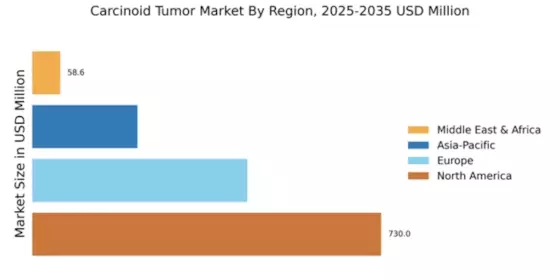
North America is poised to maintain its leadership in the Carcinoid Tumor market, holding a significant market share of $730.0M in 2024. The region benefits from advanced healthcare infrastructure, high R&D investments, and a growing prevalence of carcinoid tumors. Regulatory support, including expedited drug approvals, further fuels market growth, making it a hub for innovative therapies and treatment options. The competitive landscape in North America is robust, featuring key players such as Pfizer, Bristol-Myers Squibb, and Merck & Co. These companies are actively engaged in developing novel therapies and expanding their product portfolios. The U.S. leads the market, driven by increasing awareness and early diagnosis of carcinoid tumors, supported by initiatives from health organizations to improve patient outcomes.

Europe : Emerging Market with Growth Potential

Europe is witnessing a growing interest in the Carcinoid Tumor market, with a market size of $450.0M in 2024. Factors such as an aging population, increased healthcare spending, and advancements in diagnostic technologies are driving demand. Regulatory frameworks in the EU are becoming more favorable, promoting research and development of new treatments, which is essential for addressing the rising incidence of carcinoid tumors across member states. Leading countries in Europe include Germany, France, and the UK, where healthcare systems are increasingly prioritizing cancer treatment. Major players like Novartis and Ipsen are investing in clinical trials and partnerships to enhance their market presence. The competitive landscape is evolving, with a focus on innovative therapies and patient-centric approaches to treatment.

Asia-Pacific : Emerging Powerhouse in Oncology

The Asia-Pacific region is emerging as a significant player in the Carcinoid Tumor market, with a market size of $220.0M in 2024. The growth is driven by increasing healthcare investments, rising awareness of cancer treatments, and a growing patient population. Regulatory bodies are also enhancing their frameworks to support the development of new therapies, which is crucial for addressing the rising burden of carcinoid tumors in this diverse region. Countries like Japan, China, and Australia are at the forefront of this growth, with a competitive landscape featuring both local and international players. Companies such as Eisai and Helsinn Healthcare are actively involved in research and development, aiming to introduce innovative treatment options. The region's market dynamics are characterized by a blend of traditional and modern healthcare practices, creating unique opportunities for growth.

Middle East and Africa : Resource-Rich Frontier for Treatments

The Middle East and Africa region is gradually developing its Carcinoid Tumor market, currently valued at $58.63M in 2024. The growth is primarily driven by increasing healthcare investments and a rising prevalence of cancer. However, challenges such as limited access to advanced treatments and healthcare disparities remain. Regulatory bodies are working to improve healthcare infrastructure, which is essential for enhancing patient access to necessary therapies. Countries like South Africa and the UAE are leading the way in cancer treatment advancements. The competitive landscape is still developing, with a focus on partnerships and collaborations to improve treatment options. Key players are beginning to explore opportunities in this region, aiming to address the unmet needs of patients suffering from carcinoid tumors.

Key Players and Competitive Insights

The Carcinoid Tumor Market is characterized by a competitive landscape that is increasingly shaped by innovation, strategic partnerships, and a focus on patient-centric solutions. Key players such as Novartis (CH), Ipsen (FR), and Pfizer (US) are actively engaged in enhancing their product portfolios and expanding their market reach. Novartis (CH) has positioned itself as a leader in the development of targeted therapies, while Ipsen (FR) emphasizes its commitment to rare diseases, including carcinoid tumors, through strategic collaborations. Pfizer (US) is leveraging its extensive research capabilities to innovate treatment options, thereby influencing the competitive dynamics of the market.

The business tactics employed by these companies reflect a concerted effort to optimize supply chains and localize manufacturing processes. The market appears moderately fragmented, with a mix of established players and emerging companies vying for market share. This competitive structure allows for a diverse range of treatment options, which may enhance patient access and drive overall market growth. The collective influence of these key players is significant, as they not only compete on product efficacy but also on the ability to deliver comprehensive care solutions.

In November 2025, Ipsen (FR) announced a strategic partnership with a leading biotechnology firm to co-develop a novel therapy for carcinoid tumors. This collaboration is expected to accelerate the development timeline and enhance the therapeutic options available to patients. The strategic importance of this partnership lies in its potential to leverage combined expertise and resources, thereby positioning Ipsen (FR) as a frontrunner in the market.

In October 2025, Novartis (CH) launched a new digital platform aimed at improving patient engagement and adherence to treatment regimens for carcinoid tumors. This initiative underscores the company's commitment to integrating technology into patient care, which may enhance treatment outcomes and foster loyalty among healthcare providers. The strategic significance of this move is evident in its alignment with current trends towards digital health solutions.

In September 2025, Pfizer (US) expanded its clinical trial program for a promising new drug targeting carcinoid tumors, reflecting its ongoing investment in research and development. This expansion is crucial as it not only demonstrates Pfizer's commitment to innovation but also its responsiveness to emerging patient needs. The strategic implications of this initiative could lead to a stronger market position as new therapies gain regulatory approval.

As of December 2025, the competitive trends in the Carcinoid Tumor Market are increasingly defined by digitalization, sustainability, and the integration of artificial intelligence in treatment development. Strategic alliances are becoming more prevalent, shaping the landscape by fostering innovation and enhancing operational efficiencies. Looking ahead, competitive differentiation is likely to evolve from traditional price-based competition to a focus on technological advancements, innovative treatment solutions, and reliable supply chains. This shift may ultimately redefine how companies engage with healthcare providers and patients, emphasizing the importance of value-driven care.

Key Companies in the Carcinoid Tumor Market market include

Industry Developments

March 2022 Amgen's goal is to serve patients, which includes ensuring that all of our medications adhere to our strict quality requirements and are consistently shipped to patients worldwide. Amgen regularly invests in its manufacturing capabilities to keep up its industry-leading capabilities and broaden its  reach.

Future Outlook

Carcinoid Tumor Market Future Outlook

The Carcinoid Tumor Market is projected to grow at a 10.5% CAGR from 2024 to 2035, driven by advancements in diagnostics, increasing awareness, and novel therapeutic options.

New opportunities lie in:

  • Development of targeted therapies for specific carcinoid tumor subtypes.
  • Expansion of telehealth services for remote patient monitoring.
  • Investment in AI-driven diagnostic tools for early detection.

By 2035, the Carcinoid Tumor Market is expected to achieve substantial growth and innovation.

Market Segmentation

Carcinoid Tumor Market Application Outlook

  • Diagnostic Imaging
  • Surgical Intervention
  • Pharmacological Treatment
  • Radiation Therapy

Carcinoid Tumor Market Stage of Disease Outlook

  • Localized
  • Regional
  • Distant Metastasis
  • Recurrent

Carcinoid Tumor Market Treatment Modality Outlook

  • Chemotherapy
  • Targeted Therapy
  • Immunotherapy
  • Somatostatin Analogs

Carcinoid Tumor Market Patient Demographics Outlook

  • Age Group
  • Gender
  • Socioeconomic Status
  • Comorbid Conditions

Carcinoid Tumor Market Type of Carcinoid Tumor Outlook

  • Gastrointestinal Carcinoid Tumor
  • Lung Carcinoid Tumor
  • Appendiceal Carcinoid Tumor
  • Other Neuroendocrine Tumors

Report Scope

MARKET SIZE 20241458.63(USD Million)
MARKET SIZE 20251611.81(USD Million)
MARKET SIZE 20354375.39(USD Million)
COMPOUND ANNUAL GROWTH RATE (CAGR)10.5% (2024 - 2035)
REPORT COVERAGERevenue Forecast, Competitive Landscape, Growth Factors, and Trends
BASE YEAR2024
Market Forecast Period2025 - 2035
Historical Data2019 - 2024
Market Forecast UnitsUSD Million
Key Companies ProfiledNovartis (CH), Ipsen (FR), Pfizer (US), Bristol-Myers Squibb (US), Sanofi (FR), AstraZeneca (GB), Eisai (JP), Helsinn Healthcare (CH), Merck & Co. (US)
Segments CoveredApplication, Type of Carcinoid Tumor, Treatment Modality, Patient Demographics, Stage of Disease
Key Market OpportunitiesAdvancements in targeted therapies and personalized medicine enhance treatment options in the Carcinoid Tumor Market.
Key Market DynamicsRising demand for targeted therapies drives innovation and competition in the Carcinoid Tumor treatment landscape.
Countries CoveredNorth America, Europe, APAC, South America, MEA

Market Highlights

Author
Rahul Gotadki
Assistant Manager

He holds an experience of about 7+ years in Market Research and Business Consulting, working under the spectrum of Life Sciences and Healthcare domains. Rahul conceptualizes and implements a scalable business strategy and provides strategic leadership to the clients. His expertise lies in market estimation, competitive intelligence, pipeline analysis, customer assessment, etc. In addition to the above, his other responsibility includes strategic tracking of high growth markets & advising clients on the potential areas of focus they could direct their business initiatives

Leave a Comment

FAQs

What is the projected growth of the Carcinoid Tumor market?

The Carcinoid Tumor market is the expected increase in total market value of 4.38 USD billion over a defined forecast period 2025–2035. It is driven by factors such as demand trends, technological advances, regulatory changes, and geographic expansion.

What is the size of the Carcinoid Tumor market?

Carcinoid Tumor market size was valued at approximately 1.46 billion USD in 2024. This figure will reach 4.38 billion USD covering all regions (America, Europe, Asia, MEA and ROW), focusing its segments / services / distribution channels till 2035.

What is the CAGR of the Carcinoid Tumor market?

Carcinoid Tumor market is expected to grow at a CAGR of 10.5% between 2025 and 2035.

How much will the Carcinoid Tumor market be worth by 2035?

Carcinoid Tumor market is expected to be worth of 4.38 billion USD, reflecting growth driven by usage, technology and global demands by the end of 2035.

How will the Carcinoid Tumor market perform over the next 10 years?

Over the next 10 years the Carcinoid Tumor market is expected to shift from usd billion 1.46 to 4.38 billion USD, led by adoption of advanced tech, demographic trends, regulatory approvals, with potential headwinds from 2025 to 2035.

Which region held the largest market share in the carcinoid tumor market?

North America had the largest share of the market

Download Free Sample

Kindly complete the form below to receive a free sample of this Report

Compare Licence

×
Features License Type
Single User Multiuser License Enterprise User
Price $4,950 $5,950 $7,250
Maximum User Access Limit 1 User Upto 10 Users Unrestricted Access Throughout the Organization
Free Customization
Direct Access to Analyst
Deliverable Format
Platform Access
Discount on Next Purchase 10% 15% 15%
Printable Versions