Download Free Sample
Kindly complete the form below to receive a free sample of this Report
China Compounding Chemotherapy Market Research Report By Dose (Chemotherapeutic, Non-Chemotherapeutics), By Delivery Method (Gravimetric Automated Compounding Device, Volumetric Automated Compounding Device), By Sterility (Sterile, Non-Sterile), and By Technology (With Robotic Arms, Without Robotic Arms) - Growth & Industry Forecast 2025 To 2035
As per Market Research Future analysis, the China Compounding Chemotherapy Market size was estimated at 39.75 USD Million in 2024. The Compounding Chemotherapy market is projected to grow from 42.14 USD Million in 2025 to 75.51 USD Million by 2035, exhibiting a compound annual growth rate (CAGR) of 6.0% during the forecast period 2025 - 2035
The China compounding chemotherapy market is experiencing robust growth driven by personalized treatment demands and technological advancements.
| 2024 Market Size | 39.75 (USD Million) |
| 2035 Market Size | 75.51 (USD Million) |
| CAGR (2025 - 2035) | 6.01% |
Fresenius Kabi (DE), Baxter International (US), Civica Rx (US), PharMEDium Services (US), Accredo Health Group (US), Athenex (US), Sagent Pharmaceuticals (US), B. Braun Melsungen AG (DE)
Our Impact
Enabled $4.3B Revenue Impact for Fortune 500 and Leading Multinationals
Partnering with 2000+ Global Organizations Each Year
30K+ Citations by Top-Tier Firms in the Industry
The China Compounding Chemotherapy Market is currently experiencing notable growth, driven by an increasing demand for personalized medicine and tailored treatment options. This market is characterized by the preparation of customized chemotherapy drugs, which are essential for patients with specific needs that standard formulations cannot meet. The rise in cancer incidence, coupled with advancements in pharmaceutical compounding techniques, appears to be propelling this sector forward. Furthermore, regulatory frameworks in China are evolving to support the safe and effective use of compounded medications, which may enhance patient access to these critical therapies. In addition, the compounding chemotherapy market is influenced by the growing emphasis on patient-centric care. Healthcare providers are increasingly recognizing the importance of individualized treatment plans, which often necessitate the use of compounded drugs. This trend is likely to continue as more practitioners adopt personalized approaches to oncology. Moreover, the integration of technology in compounding practices, such as automation and quality control measures, suggests a potential for improved efficiency and safety in drug preparation. As the landscape of cancer treatment evolves, the compounding chemotherapy market is poised for further expansion, reflecting the changing needs of patients and healthcare systems alike.
The compounding chemotherapy market is witnessing a surge in demand for personalized treatment options. Patients often require specific formulations that cater to their unique medical conditions, which standard drugs may not address. This trend indicates a shift towards individualized care, where healthcare providers prioritize tailored therapies to enhance treatment efficacy.
Regulatory bodies in China are increasingly focusing on the oversight of compounded medications. This support is crucial for ensuring the safety and effectiveness of compounded chemotherapy drugs. Enhanced regulations may lead to greater confidence among healthcare providers and patients, potentially driving market growth.
The integration of advanced technologies in the compounding chemotherapy market is transforming drug preparation processes. Automation and improved quality control measures are likely to enhance the efficiency and safety of compounded drugs. This trend suggests a future where technology plays a pivotal role in meeting the evolving needs of oncology patients.
The increasing incidence of cancer in China is a primary driver for the compounding chemotherapy market. According to recent statistics, cancer cases are projected to rise by approximately 20% over the next decade. This surge necessitates a greater demand for customized chemotherapy solutions, as patients require tailored treatment regimens. The compounding chemotherapy market is poised to benefit from this trend, as healthcare providers seek to address the unique needs of patients. Furthermore, the growing awareness of cancer prevention and treatment options among the population is likely to contribute to the market's expansion. As a result, the compounding chemotherapy market is expected to experience significant growth, driven by the urgent need for effective cancer therapies that cater to individual patient profiles.
Recent enhancements in the regulatory framework governing pharmaceuticals in China are positively impacting the compounding chemotherapy market. The government has implemented stricter guidelines to ensure the safety and efficacy of compounded medications. This regulatory support is crucial for the compounding chemotherapy market, as it fosters trust among healthcare providers and patients. With improved regulations, compounding pharmacies are more likely to adhere to best practices, leading to higher quality products. Furthermore, the regulatory environment encourages innovation in drug formulation, which may result in the development of new compounded chemotherapy options. As these regulations continue to evolve, the compounding chemotherapy market is expected to benefit from increased credibility and a broader acceptance of compounded therapies.
China's ongoing investment in healthcare infrastructure is significantly impacting the compounding chemotherapy market. The government has allocated substantial funds to enhance healthcare facilities, which includes the establishment of specialized oncology centers. This development is crucial, as it facilitates the availability of compounded chemotherapy drugs tailored to specific patient needs. The compounding chemotherapy market is likely to see increased demand as these facilities become more accessible to the population. Moreover, the integration of advanced technologies in these centers may improve the efficiency of drug compounding processes, further driving market growth. As healthcare infrastructure continues to evolve, the compounding chemotherapy market is expected to thrive, providing essential services to a growing patient base.
The shift towards patient-centric care in China is influencing the compounding chemotherapy market. Healthcare providers are increasingly prioritizing individualized treatment plans that consider the unique characteristics of each patient. This trend is reflected in the rising demand for compounded chemotherapy solutions, which offer tailored dosages and formulations. The compounding chemotherapy market is likely to expand as practitioners recognize the benefits of personalized medicine in improving treatment outcomes. Additionally, patient advocacy groups are playing a vital role in promoting awareness about the importance of customized therapies. As the healthcare landscape continues to evolve, the emphasis on patient-centric care is expected to drive the growth of the compounding chemotherapy market, ensuring that patients receive the most effective treatments available.
The integration of advanced technologies in the compounding process is a significant driver for the compounding chemotherapy market. Innovations such as automated compounding systems and software solutions are enhancing the precision and efficiency of drug preparation. This technological advancement is particularly relevant in the context of chemotherapy, where accurate dosing is critical. The compounding chemotherapy market is likely to experience growth as these technologies reduce the risk of human error and improve overall patient safety. Additionally, the adoption of telemedicine and digital health platforms is facilitating better communication between patients and healthcare providers, further supporting the need for customized chemotherapy solutions. As technology continues to evolve, the compounding chemotherapy market is expected to adapt and thrive in this dynamic environment.
In the China compounding chemotherapy market, the distribution of market share reveals that Chemotherapeutic agents occupy a significant portion, reflecting their established role in cancer treatment protocols. Non-Chemotherapeutics, while smaller in share, are emerging robustly as alternative therapies are gaining traction, particularly among patients seeking adjunctive or supportive care options. This shift illustrates the changing landscape of treatment preferences in oncology. Growth trends within this segment are primarily driven by advancements in chemotherapeutic formulations and an increasing emphasis on personalized medicine. Regulatory support for Non-Chemotherapeutics is enhancing their acceptance and utilization, with healthcare providers recognizing the importance of a holistic approach to cancer care. As such, investment in research and development for both segments is crucial to cater to evolving patient needs and improve therapeutic outcomes.
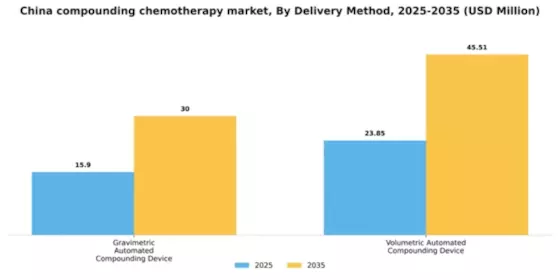
Dose: Chemotherapeutic (Dominant) vs. Non-Chemotherapeutics (Emerging)
Chemotherapeutic agents remain the dominant force within the China compounding chemotherapy market, characterized by their widespread application in treating various cancers and a robust pipeline of innovative formulations. These agents are primarily derived from standard protocols and are backed by extensive clinical evidence. In contrast, Non-Chemotherapeutics present an emerging market segment, focused on supportive therapies such as pain management and palliative care. Although currently smaller in market share, they are rapidly gaining importance due to shifts in patient preferences towards integrative therapies. Their growth is supported by increasing awareness and demand for comprehensive cancer care solutions, positioning them as crucial adjuncts to traditional treatments.
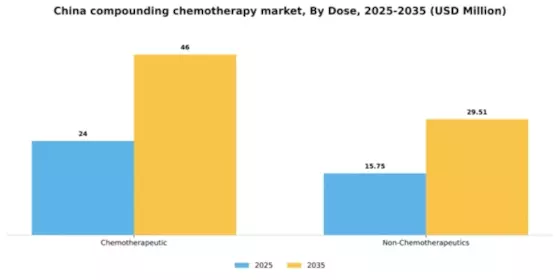
In the China compounding chemotherapy market, the Gravimetric Automated Compounding Device holds a significant portion of the market share, making it the dominant player in this segment. It is preferred by many healthcare facilities due to its precision and reliability in drug preparation processes. In contrast, the Volumetric Automated Compounding Device, while currently smaller in market share, is gaining traction due to its ease of use and versatility, appealing particularly to newer clinics and hospitals. The growth trends within the delivery method segment are driven by advancements in technology and increasing demand for efficient, automated solutions in chemotherapy compounding. As healthcare providers seek to enhance safety and accuracy in medication preparation, the Volumetric Automated Compounding Device is projected to experience rapid growth. Its user-friendly design and lower initial investment make it attractive for smaller facilities looking to modernize their services, suggesting a shifting landscape in compounding practices over the coming years.
Delivery Method: Gravimetric Automated Compounding Device (Dominant) vs. Volumetric Automated Compounding Device (Emerging)
The Gravimetric Automated Compounding Device is recognized as the dominant technology in the segment, noted for its accuracy in measuring chemical compounds, which is critical in the preparation of chemotherapy treatments. It is highly valued in hospitals that prioritize precision to ensure patient safety and treatment efficacy. On the other hand, the Volumetric Automated Compounding Device, while emerging, is rapidly gaining popularity due to its flexible configuration and ability to streamline workflows. This device's growing adoption is fueled by an increasing preference for automation in healthcare, allowing facilities to minimize human error and improve overall operational efficiency.
In the China compounding chemotherapy market, the Sterile segment holds a significant share, maintaining its dominance due to the stringent regulations and safety protocols surrounding chemotherapy preparations. Sterile drugs are critical for ensuring patient safety and minimizing infection risks, which reinforces their market position. In contrast, the Non-Sterile segment, while smaller in market share, is experiencing rapid growth as practitioners seek more cost-effective solutions for less critical applications, expanding the market's diversity. The growth trends in the Sterility segment are shaped by technological advancements and the increasing number of cancer cases in China. As healthcare providers prioritize infection control and treatment efficacy, the Sterile segment is expected to remain the preferred choice. Meanwhile, the Non-Sterile segment is benefiting from innovations that improve formulation processes and reduced costs, appealing to a wider range of healthcare facilities as they adopt more flexible compounding methods.
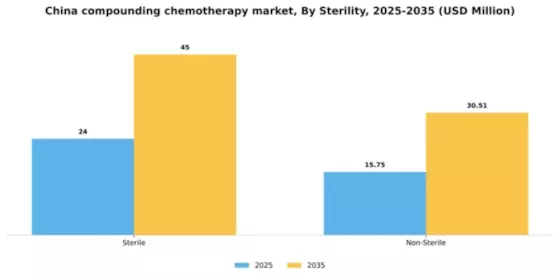
Sterile (Dominant) vs. Non-Sterile (Emerging)
The Sterile segment in the China compounding chemotherapy market is characterized by its rigorous adherence to safety standards and quality control measures, which positions it as the dominant player. This segment is essential for hospitals and clinics that prioritize patient safety, with sterile compounding being crucial for administration. On the other hand, the Non-Sterile segment is emerging rapidly, driven by demand for lower-cost alternatives and the flexibility they offer. While it does not require the same stringent compliance as Sterile compounding, it is gaining traction due to innovations that enhance product viability and accessibility, thereby catering to a broader array of healthcare providers.
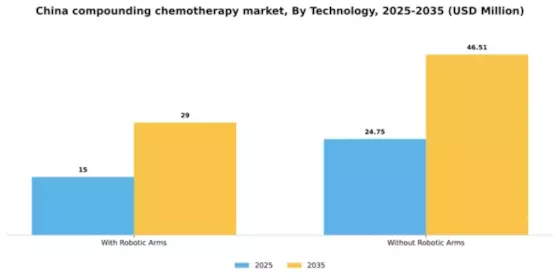
In the China compounding chemotherapy market, the segment with robotic arms holds the largest market share due to its advanced capabilities and efficiency in drug dispensing. This technology is increasingly preferred by healthcare providers for its precision and ability to minimize human errors. In contrast, the segment without robotic arms, while currently smaller, is experiencing a rapid growth trend as cost-effective solutions are sought after by various healthcare facilities, making it more accessible to a broader range of users. Growth trends in this segment are driven by increasing investments in healthcare technology and the rising demand for precision in chemotherapy preparation. The continuous adaptation of robotic technology in hospitals enhances operational efficiencies, while simpler systems without robotic arms target smaller facilities and clinics looking to improve their services economically. This dual movement is shaping a dynamic landscape in technology deployment across the market.
Technology: With Robotic Arms (Dominant) vs. Without Robotic Arms (Emerging)
The technology segment in the China compounding chemotherapy market showcases a clear distinction between solutions with robotic arms and those without. The dominant segment, which includes robotic arms, emphasizes precision, safety, and efficiency, thus attracting larger healthcare institutions that prioritize these attributes. On the other hand, the emerging segment without robotic arms appeals to cost-sensitive providers seeking effective yet economical options. This segment is gaining traction as it allows smaller clinics and hospitals to implement compounding chemotherapy solutions at reduced costs, fostering overall growth in the market. Together, these segments complement each other by catering to diverse healthcare needs.
Get more detailed insights about China Compounding Chemotherapy Market Request Free Sample
The compounding chemotherapy market in China is characterized by a dynamic competitive landscape, driven by increasing demand for personalized medicine and the need for efficient drug delivery systems. Key players such as Fresenius Kabi (DE), Baxter International (US), and Athenex (US) are actively shaping the market through strategic initiatives. Fresenius Kabi (DE) focuses on innovation in drug formulation and delivery, while Baxter International (US) emphasizes partnerships with local healthcare providers to enhance service delivery. Athenex (US) is leveraging its expertise in oncology to expand its product offerings, thereby enhancing its competitive positioning. Collectively, these strategies contribute to a robust competitive environment, fostering innovation and improving patient outcomes.In terms of business tactics, companies are increasingly localizing manufacturing to reduce costs and improve supply chain efficiency. The market appears moderately fragmented, with several players vying for market share. This fragmentation allows for diverse strategies, as companies seek to differentiate themselves through quality, service, and technological advancements. The collective influence of these key players is significant, as they drive trends in product development and market accessibility.
In October Baxter International (US) announced a strategic partnership with a leading Chinese hospital network to enhance the availability of compounded chemotherapy drugs. This collaboration is expected to streamline the supply chain and improve patient access to essential medications, reflecting Baxter's commitment to local market needs. Such partnerships are crucial in navigating the complexities of the Chinese healthcare landscape, where localized solutions are increasingly favored.
In September Athenex (US) launched a new line of compounded chemotherapy products specifically tailored for the Chinese market. This move not only diversifies Athenex's portfolio but also positions the company to meet the growing demand for customized treatment options. The introduction of these products underscores Athenex's strategic focus on innovation and responsiveness to market needs, potentially enhancing its competitive edge.
In August Fresenius Kabi (DE) expanded its manufacturing capabilities in China by investing in a new facility dedicated to the production of sterile compounded drugs. This investment is indicative of Fresenius Kabi's long-term commitment to the region and its strategy to enhance production efficiency. By increasing local manufacturing capacity, the company aims to reduce lead times and improve service levels, which are critical in the highly competitive landscape of compounded chemotherapy.
As of November the competitive trends in the market are increasingly defined by digitalization, sustainability, and the integration of artificial intelligence (AI) in drug development processes. Strategic alliances are becoming more prevalent, as companies recognize the value of collaboration in enhancing innovation and operational efficiency. Looking ahead, the competitive differentiation in the compounding chemotherapy market is likely to shift from price-based competition to a focus on technological advancements, quality of service, and supply chain reliability. This evolution suggests that companies that prioritize innovation and strategic partnerships will be better positioned to thrive in the future.

In recent months, the China Compounding Chemotherapy Market has experienced significant developments. A notable event is the collaboration between Shanghai Pharma and Jiangsu Hengrui Medicine in September 2023, aimed at advancing Research and Development in innovative chemotherapy solutions.
Additionally, Hunan ErKang Pharmaceutical has expanded its production capabilities to meet the growing demand for customized chemotherapy drugs, which reflects the increasing prevalence of cancer in the region. On the regulation front, the Chinese government has introduced new guidelines in August 2023 to enhance the safety and efficacy of compounded chemotherapy medications. This comes amid rising public health awareness and stringent quality standards.
Notably, Sinopharm Group and Shanghai Fosun Pharmaceutical are reported to be exploring potential joint ventures to enhance their presence in the compound oncology market, with discussions intensifying in the latter half of 2023. Furthermore, growing market valuations for companies like Qilu Pharmaceutical and CSPC Pharmaceutical Group have been noted, driven by their continuous investment in innovative treatments. The overall market is poised for considerable growth, influenced by these strategic partnerships and the increasing focus on personalized medicine and tailored treatment plans in China.
The Compounding Chemotherapy Market in China is projected to grow at 6.01% CAGR from 2025 to 2035, driven by increasing cancer prevalence and advancements in compounding technologies.
New opportunities lie in:
By 2035, the market is expected to achieve substantial growth, reflecting evolving healthcare needs.
| MARKET SIZE 2024 | 39.75(USD Million) |
| MARKET SIZE 2025 | 42.14(USD Million) |
| MARKET SIZE 2035 | 75.51(USD Million) |
| COMPOUND ANNUAL GROWTH RATE (CAGR) | 6.01% (2025 - 2035) |
| REPORT COVERAGE | Revenue Forecast, Competitive Landscape, Growth Factors, and Trends |
| BASE YEAR | 2024 |
| Market Forecast Period | 2025 - 2035 |
| Historical Data | 2019 - 2024 |
| Market Forecast Units | USD Million |
| Key Companies Profiled | Fresenius Kabi (DE), Baxter International (US), Civica Rx (US), PharMEDium Services (US), Accredo Health Group (US), Athenex (US), Sagent Pharmaceuticals (US), B. Braun Melsungen AG (DE) |
| Segments Covered | Dose, Delivery Method, Sterility, Technology |
| Key Market Opportunities | Emerging technologies in personalized medicine enhance the compounding chemotherapy market's growth potential. |
| Key Market Dynamics | Regulatory changes and technological advancements drive growth in the compounding chemotherapy market. |
| Countries Covered | China |
The market valuation was $39.75 Million in 2024.
The projected valuation for 2035 is $75.51 Million.
The expected CAGR is 6.01% during the forecast period 2025 - 2035.
Key players include Fresenius Kabi, Baxter International, Civica Rx, PharMEDium Services, Accredo Health Group, Athenex, Sagent Pharmaceuticals, and B. Braun Melsungen AG.
In 2024, chemotherapeutic doses were valued at $24.0 Million, while non-chemotherapeutic doses were valued at $15.75 Million.
Gravimetric automated compounding devices were valued at $15.9 Million, whereas volumetric automated compounding devices reached $23.85 Million in 2024.
Sterile compounding was valued at $24.0 Million, while non-sterile compounding was valued at $15.75 Million in 2024.
Compounding technology with robotic arms was valued at $15.0 Million, while technology without robotic arms reached $24.75 Million in 2024.
The market is likely to experience growth, reaching a valuation of $75.51 Million by 2035, driven by an expected CAGR of 6.01%.
While specific comparisons to other regions are not provided, the growth trajectory in China appears promising, with key players actively participating in the market.


Kindly complete the form below to receive a free sample of this Report

“This is really good guys. Excellent work on a tight deadline. I will continue to use you going forward and recommend you to others. Nice job”


“Thanks. It’s been a pleasure working with you, please use me as reference with any other Intel employees.”


“Thanks for sending the report it gives us a good global view of the Betaïne market.”


“Thank you, this will be very helpful for OQS.”


“We found the report very insightful! we found your research firm very helpful. I'm sending this email to secure our future business.”


“I am very pleased with how market segments have been defined in a relevant way for my purposes (such as "Portable Freezers & refrigerators" and "last-mile"). In general the report is well structured. Thanks very much for your efforts.”


“I have been reading the first document or the study, ,the Global HVAC and FP market report 2021 till 2026. Must say, good info! I have not gone in depth at all parts, but got a good indication of the data inside!”


“We got the report in time, we really thank you for your support in this process. I also thank to all of your team as they did a great job.”


“The Automotive 48V ECU Components Procurement Intelligence Study” was a complex project, but the Market Research Future (MRFR) team handled it with quality, agility, and customer-centricity. They delivered all requested data on time and within the agreed scope. The team, including Shubhendra Anand and Rahul Gotadki, was always readily available to clarify questions and swiftly implement necessary adjustments, driving the project to a successful conclusion within a very demanding timeframe.
I would also like to specifically commend Akshay Agarwal for his responsiveness and support at every stage—from our initial inquiry on May 6th through to final delivery on June 18th. His dedication made the entire process seamless.”



