×
Request Free Sample ×

Kindly complete the form below to receive a free sample of this Report

Leading companies partner with us for data-driven Insights

clients tt-cursor
Hero Background

China Fencing Market

ID: MRFR/PCM/55407-HCR
200 Pages
Varsha More
October 2025

China Fencing Market Research Report By Material (Concrete, Plastic & Composites, Wood, Metal, others), By Product (Hinge-joint Fence, Electric Fence, Welded Fence, others), and By End-user (Residential, Commercial, Industrial, Agricultural)- Forecast to 2035

Share:
Download PDF ×

We do not share your information with anyone. However, we may send you emails based on your report interest from time to time. You may contact us at any time to opt-out.

China Fencing Market Infographic
Purchase Options

China Fencing Market Summary

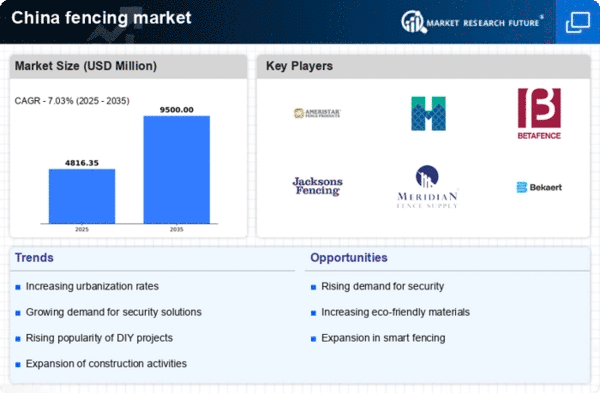
As per MRFR analysis, the China fencing market Size was estimated at 4500.0 USD Million in 2024. The fencing market is projected to grow from 4816.35 USD Million in 2025 to 9500.0 USD Million by 2035, exhibiting a compound annual growth rate (CAGR) of 7.03% during the forecast period 2025 - 2035.

Key Market Trends & Highlights

The China fencing market is experiencing robust growth driven by urbanization and technological advancements.

  • Urbanization and infrastructure development are propelling the demand for fencing solutions across urban areas.
  • Technological advancements in fencing solutions are enhancing security features and aesthetic appeal.
  • Sustainability and eco-friendly materials are becoming increasingly important in consumer preferences.
  • Rising security concerns and government regulations are key drivers influencing the growth of the fencing market.

Market Size & Forecast

2024 Market Size 4500.0 (USD Million)
2035 Market Size 9500.0 (USD Million)

Major Players

Ameristar Fence Products (US), Master Halco (US), Betafence (BE), Jacksons Fencing (GB), Meridian Fencing (US), Bekaert (BE), Viking Fence (US), Cedar Creek Fencing (US), Hercules Fence (US)

China Fencing Market Trends

The fencing market in China is currently experiencing notable growth, driven by various factors including urbanization, increased construction activities, and heightened security concerns. The demand for fencing solutions is expanding across residential, commercial, and industrial sectors. As urban areas continue to develop, the need for effective boundary demarcation and security measures becomes increasingly critical. This trend is further supported by government initiatives aimed at enhancing public safety and infrastructure development. Additionally, the rising awareness of environmental sustainability is influencing the choice of materials used in fencing solutions, with a shift towards eco-friendly options. Moreover, technological advancements are playing a pivotal role in shaping the fencing market. Innovations in materials and design are leading to the introduction of more durable and aesthetically pleasing fencing products. Smart fencing solutions, which incorporate technology for enhanced security, are also gaining traction. As consumers become more discerning, the market is likely to see a diversification of offerings that cater to varying preferences and requirements. Overall, the fencing market in China appears poised for continued expansion, driven by a combination of urban development, technological innovation, and evolving consumer preferences.

Urbanization and Infrastructure Development

The rapid urbanization in China is significantly influencing the fencing market. As cities expand, the demand for fencing solutions in residential and commercial properties is increasing. This trend is further supported by government investments in infrastructure projects, which often require effective boundary solutions.

Technological Advancements in Fencing Solutions

Innovations in materials and design are transforming the fencing market. The introduction of smart fencing technologies, which enhance security and functionality, is becoming more prevalent. These advancements cater to the growing consumer demand for durable and aesthetically appealing fencing options.

Sustainability and Eco-Friendly Materials

There is a noticeable shift towards sustainable practices within the fencing market. Consumers are increasingly favoring eco-friendly materials, reflecting a broader trend towards environmental consciousness. This shift is likely to shape product offerings and influence purchasing decisions in the coming years.

China Fencing Market Drivers

Rising Security Concerns

The increasing concerns regarding safety and security in urban and rural areas are driving the demand for fencing market solutions in China. With crime rates fluctuating, property owners are investing in robust fencing systems to protect their assets. The fencing market is projected to grow as individuals and businesses seek to enhance their security measures. In 2025, the market is expected to witness a growth rate of approximately 8% as more consumers prioritize safety. This trend is particularly evident in residential areas, where homeowners are opting for higher fences and advanced locking mechanisms. Additionally, commercial properties are also investing in fencing solutions to deter theft and vandalism, further propelling the fencing market in China.

Growth of the Construction Sector

The robust growth of the construction sector in China is a significant driver for the fencing market. As new residential, commercial, and industrial projects emerge, the need for fencing solutions becomes increasingly apparent. In 2025, the construction industry is projected to expand by approximately 10%, leading to a corresponding rise in demand for fencing products. This growth is fueled by urbanization and the development of infrastructure, which necessitates the installation of fencing for safety and delineation purposes. Additionally, construction companies are seeking durable and cost-effective fencing options to meet project requirements, thereby enhancing the fencing market's potential. The synergy between construction activities and fencing solutions is likely to bolster market dynamics in the coming years.

Government Regulations and Policies

Government regulations and policies aimed at enhancing public safety and urban planning are influencing the fencing market in China. Local authorities are increasingly mandating the installation of fencing in specific zones, particularly in industrial and commercial areas. These regulations are designed to ensure safety and security, thereby creating a steady demand for fencing solutions. In 2025, it is estimated that compliance with these regulations will contribute to a market growth of around 6%. Furthermore, initiatives promoting the development of public spaces and parks often include fencing as a necessary component, which further supports the fencing market. The alignment of fencing solutions with government policies is likely to create opportunities for manufacturers and suppliers in the industry.

Increased Awareness of Aesthetic Appeal

The growing awareness of aesthetic appeal among property owners is influencing the fencing market in China. Consumers are increasingly recognizing that fencing serves not only a functional purpose but also enhances the visual appeal of their properties. This trend is leading to a demand for decorative and customized fencing solutions that align with personal tastes and architectural styles. In 2025, it is anticipated that the market for decorative fencing will grow by around 7%, as homeowners and businesses seek to create inviting environments. The emphasis on aesthetics is prompting manufacturers to innovate and offer a variety of designs, materials, and finishes. This shift towards aesthetically pleasing fencing options is likely to reshape the fencing market landscape in China.

Technological Innovations in Manufacturing

Technological innovations in manufacturing processes are transforming the fencing market in China. Advances in materials science and production techniques are enabling the creation of more durable, lightweight, and cost-effective fencing solutions. In 2025, it is expected that the adoption of new technologies will enhance production efficiency by approximately 15%, allowing manufacturers to meet the growing demand more effectively. Innovations such as automated manufacturing and smart fencing solutions are also emerging, appealing to tech-savvy consumers. These advancements not only improve product quality but also reduce costs, making fencing solutions more accessible to a broader audience. The integration of technology into the fencing market is likely to drive competitive advantages for manufacturers and reshape consumer preferences.


Market Segment Insights

By Material: Concrete (Largest) vs. Plastic & Composites (Fastest-Growing)

In the China fencing market, the material segment displays distinct characteristics in market share distribution. Concrete emerges as the largest segment, commanding significant preference due to its durability and strength. Following closely are Metal and Wood, which have established a solid presence in various applications. Meanwhile, Plastic & Composites are gaining traction, driven by innovative designs and eco-friendly attributes, appealing to modern consumers looking for sustainable fencing solutions. Growth trends in the material segment of the China fencing market indicate an accelerating shift towards lighter and more versatile materials. The increasing demand for environmentally friendly options has propelled Plastic & Composites to the forefront, marking it as the fastest-growing segment. Additionally, advancements in manufacturing technologies are enabling the production of higher-quality and more customizable fencing products, catering to diverse consumer preferences and enhancing aesthetic appeal.

Concrete (Dominant) vs. Wood (Emerging)

Concrete stands out as the dominant material in the China fencing market, recognized for its exceptional strength, longevity, and low maintenance requirements. It is particularly favored for commercial applications and industrial use, where durability is crucial. On the other hand, Wood is emerging as a viable option among consumers who prioritize aesthetics and natural appeal. Although it requires more maintenance, Wood's versatility and ability to blend with natural surroundings make it a popular choice for residential projects. As consumers seek balance between durability and visual appeal, the competition between these two materials illustrates the evolving preferences within the market.

By Product: Hinge-joint Fences (Largest) vs. Electric Fences (Fastest-Growing)

In the China fencing market, the Hinge-joint Fences segment holds the largest market share, demonstrating significant adoption among consumers due to its durability and cost-effectiveness. Following closely, Electric Fences are gaining ground, offering enhanced security solutions that appeal to both residential and commercial users. The variety of applications and the wide acceptance of these two segments reflect a competitive market landscape. The growth trends indicate a rising preference for security and efficient fencing solutions, with Electric Fences emerging as the fastest-growing segment in response to increasing safety concerns. Additionally, technological advancements, such as smart fencing features and automated systems, are key drivers behind this growth. This shift is transforming how consumers view fencing solutions, from basic barriers to integrated security systems.

Hinge-joint Fences (Dominant) vs. Electric Fences (Emerging)

Hinge-joint Fences are characterized by their robust construction and ease of installation, making them the preferred choice for agricultural and residential uses in the market. This segment dominates due to its cost-effective advantages and versatility, catering to various fencing needs. In contrast, Electric Fences, while still emerging, are rapidly capturing market share with their advanced security features, such as detection systems and remote monitoring. This trend signifies a shift towards higher security concerns among consumers, prompting manufacturers to innovate within this segment. As a result, the market is witnessing a dynamic interplay between traditional and modern fencing solutions, defining the future landscape of fencing preferences.

By End User: Residential (Largest) vs. Industrial (Fastest-Growing)

The distribution of market share among the different end-user segments in the China fencing market reveals a significant dominance of the residential segment, which caters to homeowners seeking security and aesthetic options for their properties. The commercial segment follows, driven by businesses needing fencing for security and delineation of property boundaries. The industrial segment represents a smaller yet growing share, primarily serving manufacturing and logistics needs, while the agricultural segment, although vital, maintains a lesser market presence due to its specialized applications. In terms of growth trends, the residential segment shows steady demand driven by the increasing focus on home improvement and security enhancements, making it the largest segment. Alternatively, the industrial segment is witnessing rapid growth as more industries seek to implement fencing solutions to ensure safety and comply with regulatory standards, positioning it as the fastest-growing segment in the market. Factors like urbanization and increased construction activities further propel these trends.

Residential (Dominant) vs. Agricultural (Emerging)

The residential segment of the China fencing market stands as the dominant force, primarily driven by the need for security, privacy, and aesthetic enhancement of homes. This segment benefits from a growing trend towards home improvement, with consumers increasingly seeking robust and visually appealing fencing options. On the other hand, the agricultural segment, while traditionally vital for farm operations, is emerging as a niche market. Its growth is characterized by the demand for fencing solutions that safeguard crops and livestock, with specialized materials and designs tailored to agricultural needs. While the residential segment captures a larger share due to broader appeal, the agricultural segment is carving out its space through innovations that cater to unique agricultural challenges.

Get more detailed insights about China Fencing Market

Key Players and Competitive Insights

The fencing market in China is characterized by a competitive landscape that is increasingly shaped by innovation, sustainability, and strategic partnerships. Key players such as Ameristar Fence Products (US), Betafence (BE), and Bekaert (BE) are actively pursuing strategies that emphasize technological advancements and regional expansion. Ameristar Fence Products (US), for instance, focuses on high-security fencing solutions, which positions it favorably in sectors requiring enhanced safety measures. Meanwhile, Betafence (BE) has been enhancing its product portfolio with eco-friendly materials, reflecting a growing consumer preference for sustainable options. Bekaert (BE) is also investing in digital transformation initiatives, which may streamline operations and improve customer engagement, collectively influencing the competitive dynamics of the market.

The business tactics employed by these companies include localizing manufacturing and optimizing supply chains to enhance efficiency and reduce costs. The market structure appears moderately fragmented, with several players vying for market share. However, the collective influence of major companies is significant, as they set trends that smaller firms often follow. This competitive environment encourages innovation and responsiveness to market demands, which is crucial for maintaining relevance in a rapidly evolving landscape.

In October 2025, Ameristar Fence Products (US) announced a partnership with a leading technology firm to integrate AI-driven analytics into their manufacturing processes. This strategic move is likely to enhance production efficiency and reduce lead times, thereby improving customer satisfaction. The integration of AI may also provide insights into market trends, allowing Ameristar to adapt its offerings more swiftly to changing consumer preferences.

In September 2025, Betafence (BE) launched a new line of fencing products made from recycled materials, which aligns with the increasing demand for sustainable construction solutions. This initiative not only positions Betafence as a leader in eco-friendly fencing but also caters to a growing segment of environmentally conscious consumers. The strategic importance of this launch lies in its potential to capture market share from competitors who have yet to prioritize sustainability in their product offerings.

In August 2025, Bekaert (BE) expanded its operations in China by establishing a new manufacturing facility aimed at increasing production capacity for high-performance fencing solutions. This expansion is indicative of Bekaert's commitment to meeting the rising demand in the region and enhancing its competitive edge. By localizing production, Bekaert may also mitigate supply chain disruptions and reduce costs associated with importing materials.

As of November 2025, current trends in the fencing market are increasingly defined by digitalization, sustainability, and the integration of advanced technologies. Strategic alliances among key players are shaping the competitive landscape, fostering innovation and collaboration. The shift from price-based competition to a focus on technological differentiation and supply chain reliability is evident. Companies that prioritize innovation and sustainability are likely to gain a competitive advantage, suggesting that the future of the fencing market will be characterized by a more sophisticated approach to product development and customer engagement.

Key Companies in the China Fencing Market market include

Industry Developments

The China Fencing Market has experienced notable developments recently, with Guangdong Zhenghua enhancing its production capabilities by integrating advanced technologies in response to increasing domestic demand, which has grown due to the rising popularity of fencing as a competitive sport.

In September 2023, Yuan Zhi announced a strategic partnership with a leading sports equipment distributor to expand its market reach, emphasizing the growing consumer interest in fencing gear. Fujian Huamin has also reported steady growth, bolstered by new product launches aimed at improving user experience and performance.

Notably, in August 2023, Wu Yun completed an acquisition of a local competitor, further consolidating its position in the market. Current market dynamics have indicated a significant increase in investments across the sector, with companies like Shanghai Jinghua focusing on Research and Development to innovate their product lines.

Furthermore, the overall market valuation is on the rise, driven by both domestic and international competition, and major players like Beijing JH Fencing are expected to expand their market presence by leveraging e-commerce platforms. In the past two years, initiatives advocating for fencing in schools have also spurred interest and engagement in various regions of China.

Future Outlook

China Fencing Market Future Outlook

The fencing market in China is projected to grow at a 7.03% CAGR from 2024 to 2035, driven by urbanization, infrastructure development, and increased security needs.

New opportunities lie in:

  • Expansion of smart fencing solutions integrating IoT technology.
  • Development of eco-friendly fencing materials to meet sustainability demands.
  • Partnerships with construction firms for integrated fencing solutions in new projects.

By 2035, the fencing market is expected to achieve robust growth, reflecting evolving consumer needs and technological advancements.

Market Segmentation

China Fencing Market Product Outlook

  • Hinge-joint Fences
  • Electric Fences
  • Welded Fences
  • Others

China Fencing Market End User Outlook

  • Residential
  • Commercial
  • Industrial
  • Agricultural

China Fencing Market Material Outlook

  • Concrete
  • Plastic & Composites
  • Wood
  • Metal
  • Others

Report Scope

MARKET SIZE 2024 4500.0(USD Million)
MARKET SIZE 2025 4816.35(USD Million)
MARKET SIZE 2035 9500.0(USD Million)
COMPOUND ANNUAL GROWTH RATE (CAGR) 7.03% (2024 - 2035)
REPORT COVERAGE Revenue Forecast, Competitive Landscape, Growth Factors, and Trends
BASE YEAR 2024
Market Forecast Period 2025 - 2035
Historical Data 2019 - 2024
Market Forecast Units USD Million
Key Companies Profiled Ameristar Fence Products (US), Master Halco (US), Betafence (BE), Jacksons Fencing (GB), Meridian Fencing (US), Bekaert (BE), Viking Fence (US), Cedar Creek Fencing (US), Hercules Fence (US)
Segments Covered Material, Product, End User
Key Market Opportunities Integration of smart technology in fencing solutions enhances security and consumer engagement.
Key Market Dynamics Rising demand for sustainable fencing solutions drives innovation and competition in the local fencing market.
Countries Covered China

Leave a Comment

FAQs

What is the expected market size of the China Fencing Market in 2024?

The China Fencing Market is expected to be valued at 4.92 USD Billion in 2024.

What will be the projected market size of the China Fencing Market by 2035?

By 2035, the China Fencing Market is forecasted to reach a valuation of 9.79 USD Billion.

What is the anticipated compound annual growth rate (CAGR) for the China Fencing Market from 2025 to 2035?

The China Fencing Market is expected to experience a CAGR of 6.455% from 2025 to 2035.

Which material segment is projected to have the largest market size in 2024?

The Metal segment is projected to hold the largest market size in 2024, valued at 1.6 USD Billion.

What is the estimated market value of the Concrete segment in the China Fencing Market for 2035?

The Concrete segment is anticipated to reach a market value of 2.45 USD Billion by 2035.

Who are the major players in the China Fencing Market?

Key players in the market include Guangdong Zhenghua, Yuan Zhi, Fujian Huamin, and many others.

What is the expected market size of the Plastic & Composites segment in 2024?

The Plastic & Composites segment is expected to be valued at 0.8 USD Billion in 2024.

What growth opportunities are present in the China Fencing Market?

There are growth opportunities in increasing urbanization and the rising demand for residential fencing solutions.

How has the current global scenario impacted the China Fencing Market?

The China Fencing Market may be influenced by supply chain disruptions and material costs due to global economic conditions.

What is the expected market value of the Wood segment by 2035?

The Wood segment is projected to reach a market value of 1.8 USD Billion by 2035.

Download Free Sample

Kindly complete the form below to receive a free sample of this Report

Compare Licence

×
Features License Type
Single User Multiuser License Enterprise User
Price $4,950 $5,950 $7,250
Maximum User Access Limit 1 User Upto 10 Users Unrestricted Access Throughout the Organization
Free Customization
Direct Access to Analyst
Deliverable Format
Platform Access
Discount on Next Purchase 10% 15% 15%
Printable Versions