Download Free Sample
Kindly complete the form below to receive a free sample of this Report
China Pet Obesity Market Research Report: Size, Share, Trend Analysis By Product Type (Blended Diets, Functional Treats, Weight Loss Diet, Food Supplements, Others), By Animal Type (Dogs, Cats, Horses, Other Companion Animals) andBy Distribution Channel (Online Retail, Veterinary Clinics, Petcare stores, Others) - Growth Outlook & Industry Forecast 2025 To 2035
As per Market Research Future analysis, the China pet obesity market size was estimated at 79.66 USD Million in 2024. The China pet obesity market is projected to grow from 85.46 USD Million in 2025 to 172.59 USD Million by 2035, exhibiting a compound annual growth rate (CAGR) of 7.2% during the forecast period 2025 - 2035
The China pet obesity market is experiencing notable growth driven by heightened health awareness and evolving consumer behaviors.
| 2024 Market Size | 79.66 (USD Million) |
| 2035 Market Size | 172.59 (USD Million) |
| CAGR (2025 - 2035) | 7.28% |
Nestle Purina Petcare (US), Mars Petcare (US), Hill's Pet Nutrition (US), Spectrum Brands (US), PetSmart (US), Petco Animal Supplies (US), Royal Canin (FR), Blue Buffalo (US), Wellness Pet Food (US)
Our Impact
Enabled $4.3B Revenue Impact for Fortune 500 and Leading Multinationals
Partnering with 2000+ Global Organizations Each Year
30K+ Citations by Top-Tier Firms in the Industry
The pet obesity market is experiencing notable changes as awareness of pet health continues to rise. In recent years, pet owners have become increasingly concerned about the well-being of their animals, leading to a greater focus on nutrition and exercise. This shift in mindset appears to be driven by a combination of factors, including the growing availability of specialized pet foods and the influence of social media on pet care practices. As a result, many pet owners are now more informed about the risks associated with obesity in pets, which may lead to a more proactive approach in managing their pets' weight. Moreover, the pet obesity market is likely to see further developments as veterinary professionals emphasize the importance of maintaining a healthy weight for pets. This trend suggests that there will be an increase in veterinary consultations focused on weight management and dietary recommendations. Additionally, the rise of technology in pet care, such as wearable devices that monitor activity levels, could play a crucial role in helping pet owners track their pets' health. Overall, the landscape of the pet obesity market is evolving, with a clear emphasis on prevention and management strategies that prioritize the health of pets.
There is a growing recognition among pet owners regarding the importance of maintaining their pets' health. This trend is reflected in the rising demand for specialized diets and weight management products, as owners seek to combat obesity in their pets.
Veterinarians are increasingly playing a pivotal role in addressing pet obesity. Their recommendations for weight management and nutritional guidance are becoming more prevalent, leading to a shift in how pet owners approach their pets' diets.
The integration of technology into pet care is transforming the pet obesity market. Wearable devices and mobile applications that track activity levels and dietary intake are gaining popularity, providing pet owners with tools to better manage their pets' health.
The pet obesity market in China is significantly influenced by urban lifestyle changes. As urbanization continues, many pet owners lead busier lives, often resulting in less time for physical activities with their pets. This sedentary lifestyle contributes to the rising incidence of obesity among pets. Reports suggest that nearly 30% of pets in urban areas are classified as overweight or obese. This situation prompts pet owners to seek out convenient solutions, such as specialized pet foods and weight management programs. The market is likely to respond by offering more products tailored to address the needs of overweight pets, thus fostering growth in the pet obesity market.
The pet obesity market in China is experiencing growth due to the increasing rates of pet ownership. As more households adopt pets, particularly dogs and cats, the demand for pet care products and services rises. Recent statistics indicate that pet ownership in urban areas has surged, with approximately 60% of households owning at least one pet. This trend correlates with a growing awareness of pet health, leading to a higher demand for specialized diets and weight management solutions. Consequently, the pet obesity market is likely to expand as pet owners seek to maintain their pets' health and well-being, thereby driving sales of weight control foods and veterinary services.
The pet obesity market in China is propelled by a growing awareness of pet health among owners. Educational campaigns and veterinary advice have led to increased recognition of the risks associated with obesity in pets, such as diabetes and joint problems. Surveys indicate that over 70% of pet owners are now more conscious of their pets' dietary needs and exercise requirements. This heightened awareness is likely to result in a shift towards healthier pet food options and weight management solutions. As pet owners become more informed, the demand for products that promote a healthy lifestyle for pets is expected to rise, further stimulating the pet obesity market.
The pet obesity market in China benefits from the increased availability of pet products, particularly those aimed at weight management. Retailers and online platforms are expanding their offerings, providing a wide range of specialized diets, treats, and supplements designed to combat obesity in pets. Recent data indicates that the market for pet food in China is projected to reach approximately $30 billion by 2026, with a notable segment dedicated to weight control products. This accessibility encourages pet owners to invest in healthier options for their pets, thereby driving growth in the pet obesity market as they become more proactive in managing their pets' weight.
The pet obesity market in China is increasingly shaped by the influence of social media and pet influencers. Platforms such as Weibo and Douyin have become vital channels for disseminating information about pet health and wellness. Pet influencers often promote healthy lifestyles for pets, including proper nutrition and exercise routines. This trend appears to resonate with pet owners, leading to a greater emphasis on maintaining their pets' health. As a result, the market for weight management products is likely to see growth, as pet owners are encouraged to adopt healthier practices for their pets, driven by the visibility and engagement fostered by social media.
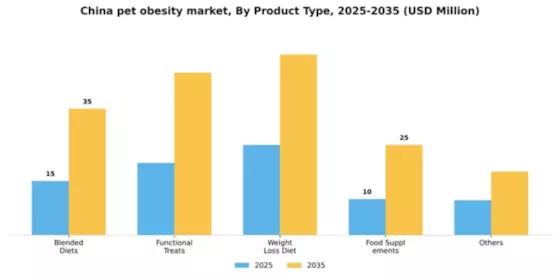
In the China pet obesity market, the product type segment displays a diverse distribution, with Functional Treats capturing the largest market share. This category's appeal lies in the dual benefits of enjoyable taste and health-oriented features, catering to pet owners seeking nutritious options. Following closely are Blended Diets and Food Supplements, which also contribute significantly to market dynamics. The weight loss diet segment is the fastest-growing, driven by increasing pet obesity awareness and demand for specialized nutrition. As pet owners seek to improve their pets' health, the trend towards incorporating weight management products is amplifying. Innovations in formulation and convenience are propelling this segment forward, aligning with the overall trend towards responsible pet ownership and improved quality of life for pets.
Functional Treats: Dominant vs. Weight Loss Diet: Emerging
Functional Treats stand out as a dominant player in the China pet obesity market due to their unique ability to blend palatability with health benefits, appealing to a broad audience of pet owners. This segment encompasses products that not only satisfy pets' cravings but also incorporate functional ingredients aimed at promoting overall health and weight management. The Weight Loss Diet segment, on the other hand, is emerging rapidly, addressing the growing concern over pet obesity. This segment focuses on specialized formulations that help reduce weight in pets while ensuring they receive adequate nutrition. The rising prevalence of obesity-related health issues among pets underlines the critical role of these diets, fostering demand and innovation.
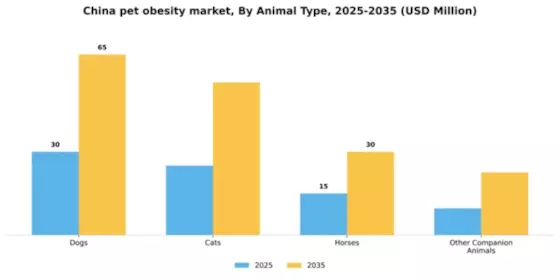
In the China pet obesity market, dogs represent the largest segment, holding a substantial market share compared to other companion animals. Cats follow closely, significantly contributing to the overall market dynamics, with both segments experiencing noteworthy consumer interest and demand. Growth trends indicate a rising awareness among pet owners regarding obesity-related health issues, which drives the demand for targeted weight management products. The trends reflect an increasing preference for premium pet foods and specialized diets catering to the unique needs of dogs and cats, fostering a competitive landscape within the market.
Dogs (Dominant) vs. Cats (Emerging)
Dogs dominate the segment due to their popularity as pets in households, reflected in the availability of diverse dieting options and health management products tailored specifically for them. This dominance is supported by established consumer habits and a well-developed procurement process for pet care products. Conversely, cats are emerging as a significant segment, where owners are increasingly recognizing the importance of addressing obesity in felines through specialized nutrition. This shift is driven by rising concerns over pet wellness and an inclination toward products aimed at transforming feline health, potentially expanding the market share for cat-targeted obesity solutions.
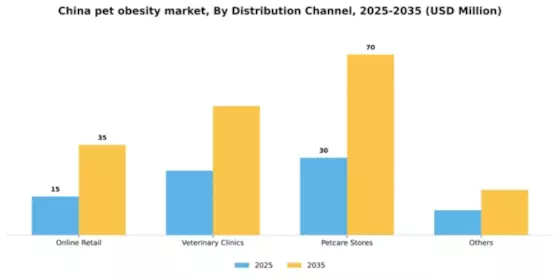
The distribution of the various channels in the China pet obesity market indicates that online retail holds a significant market share, becoming the largest channel for sales. It is popular among consumers due to its convenience, variety, and competitive pricing. Veterinary clinics also play a critical role, albeit with a smaller share, offering specialized products and services that cater to pet owners focused on health and wellness. These channels highlight the diverse consumer preferences impacting purchasing behavior in this sector. Growth trends in the distribution channel segment are driven largely by shifting consumer habits towards online shopping. The COVID-19 pandemic accelerated the trend, as many pet owners turned to digital platforms for their pet care needs. Additionally, veterinary clinics are witnessing an increased footfall as pet owners become more aware of pet obesity and its consequences. This focus on health has spurred demand for nutritional products and veterinary consultations, positioning veterinary clinics as a rapid growth segment.
Online Retail (Dominant) vs. Veterinary Clinics (Emerging)
Online retail stands out as the dominant channel in the market, primarily due to the convenience and broad access it offers to consumers seeking solutions for pet obesity. The platform allows buyers to easily compare products, read reviews, and find targeted solutions tailored for their pets' needs. In contrast, veterinary clinics, categorized as an emerging segment, are expanding their offerings in nutritional products and obesity management programs. As awareness around pet health continues to grow, clinics are positioning themselves as essential service providers, leading to higher engagements with pet owners seeking professional guidance. This dual approach, with online channels catering to ease of access and clinics emphasizing medical expertise, creates a well-rounded ecosystem in the China pet obesity market.
Get more detailed insights about China Pet Obesity Market Request Free Sample
The pet obesity market in China is currently characterized by a competitive landscape that is both dynamic and multifaceted. Key growth drivers include increasing pet ownership, heightened awareness of pet health, and a growing demand for specialized pet nutrition. Major players such as Nestle Purina Petcare (US), Mars Petcare (US), and Royal Canin (FR) are strategically positioned to leverage these trends. Nestle Purina Petcare (US) focuses on innovation in product formulations, emphasizing health and wellness, while Mars Petcare (US) is expanding its digital presence to enhance customer engagement. Royal Canin (FR) is dedicated to veterinary partnerships, which allows for tailored nutritional solutions, thereby shaping a competitive environment that prioritizes specialized offerings and consumer education.In terms of business tactics, companies are increasingly localizing manufacturing to reduce costs and improve supply chain efficiency. The market structure appears moderately fragmented, with a mix of established brands and emerging players. This fragmentation allows for diverse product offerings, yet the collective influence of key players like Mars Petcare (US) and Nestle Purina Petcare (US) remains substantial, as they dominate market share through extensive distribution networks and brand loyalty.
In October Mars Petcare (US) announced a partnership with a leading Chinese veterinary clinic chain to develop a new line of weight management products tailored specifically for the Chinese market. This strategic move is significant as it not only enhances Mars Petcare's product portfolio but also strengthens its position in a market increasingly focused on health and wellness for pets. By collaborating with veterinary professionals, the company is likely to gain credibility and trust among pet owners, which is crucial in a market where health concerns are paramount.
In September Nestle Purina Petcare (US) launched an innovative digital platform aimed at educating pet owners about obesity prevention and management. This initiative is particularly relevant as it aligns with the growing trend of digitalization in the pet care sector. By providing valuable resources and personalized recommendations, Nestle Purina Petcare (US) is positioning itself as a thought leader in pet health, potentially increasing customer loyalty and engagement.
In August Royal Canin (FR) introduced a new line of veterinary-exclusive weight management diets, specifically formulated for different breeds prevalent in China. This strategic action underscores the company's commitment to addressing local market needs through tailored solutions. By focusing on breed-specific nutrition, Royal Canin (FR) is likely to enhance its competitive edge, appealing to pet owners who seek specialized care for their pets.
As of November current competitive trends in the pet obesity market include a pronounced shift towards digitalization, sustainability, and the integration of AI technologies in product development and customer engagement. Strategic alliances are increasingly shaping the landscape, allowing companies to pool resources and expertise. Looking ahead, competitive differentiation is expected to evolve, with a notable shift from price-based competition to a focus on innovation, technology, and supply chain reliability. This evolution suggests that companies that prioritize these areas will likely secure a more sustainable competitive advantage in the future.
The China Pet Obesity Market continues to evolve, marked by significant developments and current trends. In recent months, a stronger focus has emerged among pet food manufacturers such as Royal Canin and Purina towards developing specialized diets aimed at combating pet obesity, reflecting an increasing awareness of pet health issues among Chinese pet owners.
Notably, there was a strategic acquisition attempt by Chewy in June 2023, aimed at enhancing their supply chain capabilities within the China region, although further details on the completion and impact are still pending. Additionally, Diamond Pet Foods and Blue Buffalo are investing in Research and Development for weight management solutions, driven by rising obesity rates reported by the Chinese Veterinary Medical Association.
The market has seen a valuation growth attributed to premium pet food sales, with Wellness Pet Food and Merrick gaining market share as consumers exhibit a willingness to invest in high-quality products for their pets. Over the past two years, increased governmental emphasis on animal welfare standards has shaped market dynamics, pushing companies to innovate and adapt to regulations while addressing the growing need for comprehensive pet health solutions in China.
The Pet Obesity Market in China is projected to grow at a 7.28% CAGR from 2025 to 2035, driven by rising pet ownership and increased health awareness.
New opportunities lie in:
By 2035, the market is expected to achieve substantial growth, reflecting heightened consumer awareness and innovative solutions.
| MARKET SIZE 2024 | 79.66(USD Million) |
| MARKET SIZE 2025 | 85.46(USD Million) |
| MARKET SIZE 2035 | 172.59(USD Million) |
| COMPOUND ANNUAL GROWTH RATE (CAGR) | 7.28% (2025 - 2035) |
| REPORT COVERAGE | Revenue Forecast, Competitive Landscape, Growth Factors, and Trends |
| BASE YEAR | 2024 |
| Market Forecast Period | 2025 - 2035 |
| Historical Data | 2019 - 2024 |
| Market Forecast Units | USD Million |
| Key Companies Profiled | Nestle Purina Petcare (US), Mars Petcare (US), Hill's Pet Nutrition (US), Spectrum Brands (US), PetSmart (US), Petco Animal Supplies (US), Royal Canin (FR), Blue Buffalo (US), Wellness Pet Food (US) |
| Segments Covered | Product Type, Animal Type, Distribution Channel |
| Key Market Opportunities | Integration of smart feeding solutions and personalized nutrition for pets addresses rising obesity concerns. |
| Key Market Dynamics | Rising consumer awareness drives demand for specialized pet diets and obesity management solutions in the market. |
| Countries Covered | China |
The market valuation was $79.66 Million in 2024.
The projected valuation for 2035 is $172.59 Million.
The expected CAGR is 7.28% during the forecast period 2025 - 2035.
The Weight Loss Diet segment had a valuation of $25.0 Million in 2024.
Blended diets had a valuation range of $15.0 Million to $35.0 Million in 2024.
Functional treats had a valuation range of $20.0 Million to $45.0 Million in 2024.
The Dogs segment had a valuation range of $30.0 Million to $65.0 Million in 2024.
Petcare stores had a valuation range of $30.0 Million to $70.0 Million in 2024.
Key players include Nestle Purina Petcare, Mars Petcare, and Hill's Pet Nutrition.
Food supplements had a valuation range of $10.0 Million to $25.0 Million in 2024.


Kindly complete the form below to receive a free sample of this Report

“This is really good guys. Excellent work on a tight deadline. I will continue to use you going forward and recommend you to others. Nice job”


“Thanks. It’s been a pleasure working with you, please use me as reference with any other Intel employees.”


“Thanks for sending the report it gives us a good global view of the Betaïne market.”


“Thank you, this will be very helpful for OQS.”


“We found the report very insightful! we found your research firm very helpful. I'm sending this email to secure our future business.”


“I am very pleased with how market segments have been defined in a relevant way for my purposes (such as "Portable Freezers & refrigerators" and "last-mile"). In general the report is well structured. Thanks very much for your efforts.”


“I have been reading the first document or the study, ,the Global HVAC and FP market report 2021 till 2026. Must say, good info! I have not gone in depth at all parts, but got a good indication of the data inside!”


“We got the report in time, we really thank you for your support in this process. I also thank to all of your team as they did a great job.”


“The Automotive 48V ECU Components Procurement Intelligence Study” was a complex project, but the Market Research Future (MRFR) team handled it with quality, agility, and customer-centricity. They delivered all requested data on time and within the agreed scope. The team, including Shubhendra Anand and Rahul Gotadki, was always readily available to clarify questions and swiftly implement necessary adjustments, driving the project to a successful conclusion within a very demanding timeframe.
I would also like to specifically commend Akshay Agarwal for his responsiveness and support at every stage—from our initial inquiry on May 6th through to final delivery on June 18th. His dedication made the entire process seamless.”



