Download Free Sample
Kindly complete the form below to receive a free sample of this Report
Coffee Pod Machine Market Size, Share, Industry Trend & Analysis Research Report By Product Type (Automatic Coffee Pod Machine, Semi-Automatic Coffee Pod Machine, Manual Coffee Pod Machine), By Pod Type (Open Pod Coffee Pod Machines, Closed Pod Coffee Pod Machines), By Usage Environment (Home, Office, Cafes), By Brewing Type (Espresso, Brewed Coffee, Iced Coffee) and By Regional (North America, Europe, South America, Asia Pacific, Middle East and Africa) - Forecast to 2035
As per Market Research Future analysis, the Coffee Pod Machine Market Size was estimated at 14.94 USD Billion in 2024. The Coffee Pod Machine industry is projected to grow from 15.95 USD Billion in 2025 to 30.69 USD Billion by 2035, exhibiting a compound annual growth rate (CAGR) of 6.76% during the forecast period 2025 - 2035
The Coffee Pod Machine Market is experiencing a dynamic shift towards sustainability and innovation.
| 2024 Market Size | 14.94 (USD Billion) |
| 2035 Market Size | 30.69 (USD Billion) |
| CAGR (2025 - 2035) | 6.76% |
The Coffee Pod Machine Market is currently experiencing a notable transformation, driven by evolving consumer preferences and technological advancements. As individuals increasingly seek convenience and quality in their coffee experiences, the demand for pod machines has surged. These devices offer a quick and efficient way to brew coffee, appealing to busy lifestyles. Furthermore, the market is witnessing a shift towards sustainability, with manufacturers exploring eco-friendly pod options and recyclable materials. This trend reflects a growing awareness among consumers regarding environmental impact, prompting brands to innovate in their product offerings. In addition to sustainability, the Coffee Pod Machine Market is also influenced by the rise of specialty coffee. Consumers are becoming more discerning, seeking unique flavors and high-quality beans. This has led to an expansion of available coffee pod varieties, catering to diverse tastes and preferences. Moreover, advancements in technology are enhancing the user experience, with features such as smart connectivity and customizable brewing options. As the market continues to evolve, it appears poised for further growth, driven by these dynamic trends and the ongoing pursuit of coffee excellence.
The Coffee Pod Machine Market is increasingly focusing on sustainability, with manufacturers developing eco-friendly pods and recyclable materials. This trend reflects a growing consumer demand for environmentally responsible products, prompting brands to innovate and reduce their ecological footprint.
There is a noticeable shift towards specialty coffee within the Coffee Pod Machine Market. Consumers are seeking unique flavors and high-quality beans, leading to a broader range of coffee pod options that cater to diverse preferences and tastes.
Technological innovations are significantly enhancing the Coffee Pod Machine Market. Features such as smart connectivity and customizable brewing options are improving user experiences, making coffee preparation more convenient and tailored to individual preferences.
The coffee pod machine Market benefits from the growing consumer interest in diverse flavor options. As coffee enthusiasts seek unique and varied experiences, manufacturers are responding by offering a wide range of coffee pod flavors, including specialty blends and seasonal offerings. This trend is supported by market data indicating that flavored coffee pods account for a significant portion of sales, appealing to both casual drinkers and connoisseurs alike. The availability of various flavors enhances the appeal of coffee pod machines, making them a preferred choice for consumers who desire customization in their coffee experience. Consequently, this diversity in flavor options is a key driver of growth within the Coffee Pod Machine Market.
Sustainability concerns are increasingly influencing consumer choices within the Coffee Pod Machine Market. As awareness of environmental issues rises, consumers are gravitating towards brands that prioritize eco-friendly practices. Many manufacturers are now producing recyclable or biodegradable coffee pods, addressing the growing demand for sustainable products. Market Research Future indicates that a significant percentage of consumers are willing to pay a premium for environmentally friendly options. This shift towards sustainability not only enhances brand loyalty but also attracts new customers who are conscious of their environmental impact. Thus, the emphasis on sustainability is a crucial driver shaping the future of the Coffee Pod Machine Market.
Technological innovations play a pivotal role in the evolution of the Coffee Pod Machine Market. Advances in brewing technology have led to the development of machines that offer enhanced features such as customizable brew strength, temperature control, and smart connectivity. These innovations cater to the tech-savvy consumer who seeks a more personalized coffee experience. Data suggests that the integration of smart technology in coffee machines is becoming increasingly popular, with a notable rise in sales of connected devices. As manufacturers continue to innovate and improve their products, the Coffee Pod Machine Market is likely to witness sustained growth driven by these technological advancements.
Health and wellness trends are significantly impacting consumer preferences in the Coffee Pod Machine Market. As individuals become more health-conscious, there is a growing demand for coffee products that align with wellness goals. This includes options such as organic coffee pods, low-calorie flavorings, and functional ingredients like adaptogens. Market data indicates that health-oriented coffee products are gaining traction, appealing to consumers who prioritize their well-being. The Coffee Pod Machine Market is adapting to these trends by offering a variety of health-focused options, thereby attracting a broader audience and driving market growth.
The Coffee Pod Machine Market is experiencing a surge in demand due to the increasing preference for convenience and time efficiency among consumers. Busy lifestyles have led individuals to seek quick and easy solutions for their coffee needs. Coffee pod machines offer a streamlined brewing process, allowing users to prepare a fresh cup of coffee in mere minutes. According to recent data, the market for coffee pod machines is projected to grow at a compound annual growth rate of approximately 7% over the next five years. This trend indicates that consumers are willing to invest in appliances that simplify their daily routines, thereby driving the growth of the Coffee Pod Machine Market.
The Coffee Pod Machine market shows a clear preference for Automatic Coffee Pod Machines, which dominate in market share due to their user-friendly operation and consistent brew quality. This segment appeals greatly to consumers seeking convenience, thus solidifying its position as the largest segment in the market. In contrast, Semi-Automatic Coffee Pod Machines, while smaller in share, are rapidly gaining traction among coffee enthusiasts who prefer a bit more control over the brewing process, contributing to their status as the fastest-growing segment.
Product Type: Automatic Coffee Pod Machines (Dominant) vs. Semi-Automatic Coffee Pod Machines (Emerging)
Automatic Coffee Pod Machines are characterized by their ease of use, allowing users to prepare their favorite beverages at the touch of a button. Their ability to produce high-quality coffee consistently has made them the preferred choice for many households and offices. Meanwhile, Semi-Automatic Coffee Pod Machines are emerging as a popular choice for those who enjoy hands-on brewing experiences. These machines offer a balance between convenience and control, attractively catering to both casual drinkers and coffee connoisseurs. Their growth is driven by rising consumer demand for personalized coffee experiences, making them an invigorating presence in the market.
The Coffee Pod Machine Market is characterized by a diverse range of pod types, with closed pod coffee pod machines currently holding a significant market share. This segment appeals to consumers due to its convenience and compatibility with various brand-specific pods. In contrast, open pod coffee pod machines, while smaller in market share, are gaining traction among consumers who seek flexibility and variety in their coffee options. As more brands and third-party manufacturers enter the market, the appeal of open pod systems is expected to grow.
Pod Type: Closed Pod (Dominant) vs. Open Pod (Emerging)
Closed pod coffee pod machines are recognized for their ease of use and consistent quality, catering predominantly to consumers who prioritize convenience and a straightforward coffee-making experience. This segment is often favored by brands that offer a closed system, ensuring proprietary pod use that guarantees freshness and quality control. In contrast, open pod coffee pod machines are emerging as a popular choice for consumers seeking a customizable coffee experience. These machines allow users to experiment with various coffee blends and brands, potentially increasing consumer satisfaction. As the demand for diverse coffee experiences grows, the open pod segment is positioned for significant growth, appealing to a more adventurous coffee-drinking audience.
The Coffee Pod Machine Market is segmented into various usage environments, primarily focusing on Home, Office, and Cafes. The home segment dominates the market, accounting for the largest share, as consumers increasingly seek convenience and quality in their coffee-making process. The office segment follows, driven by rising demand for easy-to-use coffee solutions that enhance workplace productivity. Conversely, cafes represent the fastest-growing segment, fueled by a shift in consumer preferences towards high-quality, specialty coffee experiences in social settings.
Growth trends in this market are largely influenced by consumer behavior, with a rise in at-home coffee consumption leading to increased demand for pod machines. The popularity of coffee culture among millennials and Gen Z, coupled with the burgeoning cafe scene, significantly boosts the adoption of coffee pod machines in these environments. Moreover, advancements in machine technology contribute to efficiency, enhancing the appeal of these products in both cafes and homes.
Home (Dominant) vs. Cafes (Emerging)
The home usage segment in the Coffee Pod Machine Market is characterized by its focus on convenience, allowing consumers to brew high-quality coffee easily and quickly. This segment holds a dominant position, benefiting from the growing trend of home brewing, where consumers are investing in smart appliances that simplify their coffee-making routine. In contrast, the cafe segment is viewed as an emerging market, showcasing an increasing demand for premium coffee experiences. Cafes are leveraging advanced pod technologies to deliver personalized and high-quality coffee, appealing to consumers looking for unique flavors and blends. This shift not only enhances customer satisfaction but also contributes to a more competitive landscape, driving innovation and growth in both segments.
The Coffee Pod Machine Market is characterized by a varied segmentation in brewing types, notably Espresso, Brewed Coffee, and Iced Coffee. Currently, Espresso holds the largest share of the market, appealing to coffee aficionados who value rich flavors and quick preparation. Brewed Coffee follows closely behind, catering to a more traditional audience. In contrast, Iced Coffee is witnessing a considerable rise in popularity, driven by changing consumer preferences towards cold beverages, especially in warmer climates.
Espresso (Dominant) vs. Iced Coffee (Emerging)
Espresso remains the dominant segment in the Coffee Pod Machine Market, prized for its strong taste and ability to deliver a cafe-quality experience at home. With a focus on convenience, Espresso machines often include features such as customizable brewing options and quick operation, making them a favorite among busy professionals and enthusiasts alike. On the other hand, Iced Coffee is an emerging segment that has gained traction due to its refreshing nature, particularly appealing to younger consumers. The growth of this segment is supported by the increasing trend of iced beverages, innovative flavors, and the influence of social media promoting iced coffee beverages, suggesting a promising future as more consumers seek versatile and enjoyable coffee options.
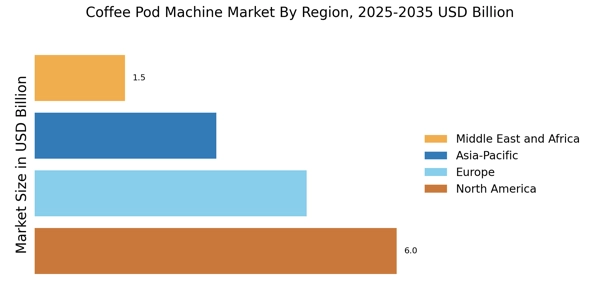
North America is the largest market for coffee pod machines, accounting for approximately 40% of the global market share. The region's growth is driven by a strong coffee culture, increasing demand for convenience, and a rise in single-serve coffee consumption. Regulatory support for sustainable practices is also influencing market dynamics, as consumers increasingly prefer eco-friendly options. The United States and Canada are the leading countries in this market, with major players like Keurig Dr Pepper and Nestle dominating the landscape. The competitive environment is characterized by innovation in product offerings and marketing strategies aimed at enhancing consumer experience. The presence of established brands ensures a robust supply chain and widespread availability of coffee pod machines.
Europe is the second-largest market for coffee pod machines, holding around 30% of the global market share. The region's growth is fueled by increasing consumer awareness regarding sustainability and a shift towards eco-friendly coffee solutions. Regulatory frameworks promoting recycling and waste reduction are also significant drivers, encouraging manufacturers to innovate in sustainable packaging and product design. Leading countries in this market include Germany, France, and the Netherlands, where brands like JDE Peet's and Philips are making significant strides. The competitive landscape is marked by a focus on quality and sustainability, with companies investing in research and development to create environmentally friendly products. The presence of diverse coffee preferences further enriches the market dynamics.
Asia-Pacific is witnessing rapid growth in the coffee pod machine market, accounting for approximately 20% of the global share. The region's increasing urbanization, rising disposable incomes, and changing consumer lifestyles are driving demand for convenient coffee solutions. Additionally, regulatory initiatives aimed at promoting coffee consumption are further catalyzing market growth. Countries like Australia and Japan are leading the charge, with key players such as Breville and Caffitaly System establishing a strong presence. The competitive landscape is evolving, with local brands emerging alongside international giants, creating a dynamic market environment. The growing café culture and increasing interest in specialty coffee are also contributing to the region's expansion.
The Middle East and Africa region is an emerging market for coffee pod machines, holding about 10% of the global market share. The growth is driven by a burgeoning coffee culture, particularly in urban areas, and an increasing preference for convenience among consumers. Regulatory support for coffee imports and local production is also fostering market development. Countries like South Africa and the UAE are at the forefront of this market, with key players such as Smeg and De'Longhi making significant inroads. The competitive landscape is characterized by a mix of local and international brands, with a focus on quality and innovation. As coffee consumption continues to rise, the region presents substantial opportunities for growth and investment.
The Coffee Pod Machine Market is currently characterized by a dynamic competitive landscape, driven by innovation, sustainability, and consumer demand for convenience. Major players such as Nestlé (CH), Keurig Dr Pepper (US), and JDE Peet's (NL) are actively shaping the market through strategic initiatives. Nestlé (CH) has positioned itself as a leader in sustainability, focusing on eco-friendly pod materials and recycling programs, while Keurig Dr Pepper (US) emphasizes its extensive distribution network and brand loyalty. JDE Peet's (NL) is leveraging its diverse portfolio to cater to various consumer preferences, indicating a trend towards personalization in coffee experiences. Collectively, these strategies contribute to a moderately fragmented market, where competition is fierce yet offers opportunities for differentiation through innovation and customer engagement.In terms of business tactics, companies are increasingly localizing manufacturing to reduce costs and enhance supply chain efficiency. This approach not only mitigates risks associated with The Coffee Pod Machine Market demands. The competitive structure of the Coffee Pod Machine Market remains moderately fragmented, with several key players exerting influence. The collective actions of these companies suggest a trend towards consolidation, as they seek to enhance their market positions through strategic partnerships and acquisitions.
In August Keurig Dr Pepper (US) announced a partnership with a leading sustainability organization to develop biodegradable coffee pods. This strategic move underscores the company's commitment to environmental responsibility and aligns with growing consumer preferences for sustainable products. By investing in biodegradable technology, Keurig Dr Pepper (US) not only enhances its product offering but also positions itself favorably against competitors who may lag in sustainability initiatives.
In September Nestlé (CH) launched a new line of premium coffee pod machines that integrate advanced AI technology for personalized brewing experiences. This innovation reflects Nestlé's focus on enhancing consumer engagement through technology, potentially setting a new standard in the market. The introduction of AI-driven features may attract tech-savvy consumers and elevate the brand's competitive edge.
In October JDE Peet's (NL) expanded its distribution channels by entering into a strategic alliance with a major online retailer. This move aims to enhance accessibility and convenience for consumers, particularly in the growing e-commerce segment. By leveraging the retailer's platform, JDE Peet's (NL) can reach a broader audience, thereby increasing its market share and reinforcing its position in the competitive landscape.
As of October the Coffee Pod Machine Market is witnessing significant trends such as digitalization, sustainability, and the integration of AI technologies. These trends are reshaping competitive dynamics, with companies increasingly forming strategic alliances to enhance their market presence. The shift from price-based competition to a focus on innovation, technology, and supply chain reliability is evident. Moving forward, competitive differentiation will likely hinge on the ability to innovate and adapt to evolving consumer preferences, as well as the commitment to sustainable practices.


The coffee pod machine market is projected to reach USD 23.63 billion by 2032, exhibiting a CAGR of 6.76% during the forecast period. The rising popularity of single-serve coffee and the increasing demand for convenience have significantly contributed to the market growth. Moreover, advancements in technology, such as the introduction of smart coffee makers and the integration of IoT, are further driving market expansion. The market is also witnessing a surge in demand for eco-friendly and sustainable coffee pod machines, driven by growing environmental concerns.
The Coffee Pod Machine Market is projected to grow at a 6.76% CAGR from 2025 to 2035, driven by convenience, sustainability, and technological advancements.
New opportunities lie in:
By 2035, the Coffee Pod Machine Market is expected to be robust, reflecting evolving consumer preferences and innovative solutions.
| MARKET SIZE 2024 | 14.94(USD Billion) |
| MARKET SIZE 2025 | 15.95(USD Billion) |
| MARKET SIZE 2035 | 30.69(USD Billion) |
| COMPOUND ANNUAL GROWTH RATE (CAGR) | 6.76% (2025 - 2035) |
| REPORT COVERAGE | Revenue Forecast, Competitive Landscape, Growth Factors, and Trends |
| BASE YEAR | 2024 |
| Market Forecast Period | 2025 - 2035 |
| Historical Data | 2019 - 2024 |
| Market Forecast Units | USD Billion |
| Key Companies Profiled | Nestle (CH), Keurig Dr Pepper (US), JDE Peet's (NL), Hamilton Beach Brands (US), Philips (NL), Breville (AU), Caffitaly System (IT), Smeg (IT), De'Longhi (IT) |
| Segments Covered | Product Type, Pod Type, Usage Environment, Brewing Type, Regional |
| Key Market Opportunities | Integration of smart technology and sustainability initiatives in the Coffee Pod Machine Market. |
| Key Market Dynamics | Rising consumer preference for convenience drives innovation and competition in the Coffee Pod Machine market. |
| Countries Covered | North America, Europe, APAC, South America, MEA |
As of 2024, the Coffee Pod Machine Market was valued at 14.94 USD Billion.



Kindly complete the form below to receive a free sample of this Report

“This is really good guys. Excellent work on a tight deadline. I will continue to use you going forward and recommend you to others. Nice job”


“Thanks. It’s been a pleasure working with you, please use me as reference with any other Intel employees.”


“Thanks for sending the report it gives us a good global view of the Betaïne market.”


“Thank you, this will be very helpful for OQS.”


“We found the report very insightful! we found your research firm very helpful. I'm sending this email to secure our future business.”


“I am very pleased with how market segments have been defined in a relevant way for my purposes (such as "Portable Freezers & refrigerators" and "last-mile"). In general the report is well structured. Thanks very much for your efforts.”


“I have been reading the first document or the study, ,the Global HVAC and FP market report 2021 till 2026. Must say, good info! I have not gone in depth at all parts, but got a good indication of the data inside!”


“We got the report in time, we really thank you for your support in this process. I also thank to all of your team as they did a great job.”


“The Automotive 48V ECU Components Procurement Intelligence Study” was a complex project, but the Market Research Future (MRFR) team handled it with quality, agility, and customer-centricity. They delivered all requested data on time and within the agreed scope. The team, including Shubhendra Anand and Rahul Gotadki, was always readily available to clarify questions and swiftly implement necessary adjustments, driving the project to a successful conclusion within a very demanding timeframe.
I would also like to specifically commend Akshay Agarwal for his responsiveness and support at every stage—from our initial inquiry on May 6th through to final delivery on June 18th. His dedication made the entire process seamless.”



