Conjunctivitis Drugs Market
Conjunctivitis Drugs Market Summary
As per Market Research Future analysis, the Conjunctivitis Drugs Market Size was estimated at 4.41 USD Billion in 2024. The Conjunctivitis Drugs industry is projected to grow from 4.543 USD Billion in 2025 to 6.124 USD Billion by 2035, exhibiting a compound annual growth rate (CAGR) of 3.03% during the forecast period 2025 - 2035
Key Market Trends & Highlights
The Conjunctivitis Drugs Market is experiencing notable growth driven by increasing awareness and advancements in treatment options.
- The market is witnessing a rising incidence of conjunctivitis, particularly in North America, which remains the largest market.
- Advancements in drug formulation are enhancing treatment efficacy, especially within the antihistamines segment, which is currently the largest.
- The Asia-Pacific region is emerging as the fastest-growing market, driven by a growing focus on preventive care and eye health.
- Key market drivers include increasing awareness of eye health and the expansion of over-the-counter options, particularly in the corticosteroids and oral segments.
Market Size & Forecast
| 2024 Market Size | 4.41 (USD Billion) |
| 2035 Market Size | 6.124 (USD Billion) |
| CAGR (2025 - 2035) | 3.03% |
Major Players
Allergan (US), Novartis (CH), Bausch Health (CA), Santen Pharmaceutical (JP), Akorn (US), Hikma Pharmaceuticals (GB), Mylan (US), Teva Pharmaceutical Industries (IL), Pfizer (US)
Conjunctivitis Drugs Market Trends
The Conjunctivitis Drugs Market is currently experiencing notable developments driven by various factors. The increasing prevalence of conjunctivitis, often referred to as pink eye, is prompting a surge in demand for effective treatment options. This condition can arise from multiple causes, including bacterial, viral, and allergic reactions, leading to a diverse range of therapeutic approaches. As awareness regarding eye health continues to grow, healthcare providers are focusing on innovative solutions to address this common ailment. Furthermore, advancements in drug formulation and delivery methods are enhancing patient compliance and treatment outcomes. In addition to the rising incidence of conjunctivitis, the market is influenced by the growing emphasis on preventive care and early intervention. Patients are becoming more proactive in seeking medical advice, which is likely to drive the demand for over-the-counter and prescription medications. The expansion of telemedicine services also plays a role, as it facilitates easier access to healthcare professionals for consultations regarding eye conditions. Overall, the Conjunctivitis Drugs Market appears poised for growth, with ongoing research and development efforts aimed at improving therapeutic options and patient experiences.
Rising Incidence of Conjunctivitis
The increasing occurrence of conjunctivitis is a primary driver of market growth. Factors such as environmental changes, allergens, and infectious agents contribute to this trend, leading to a heightened demand for effective treatments.
Advancements in Drug Formulation
Innovations in drug formulation are enhancing the efficacy and delivery of conjunctivitis treatments. New technologies are being developed to improve patient adherence and optimize therapeutic outcomes.
Growing Focus on Preventive Care
There is a noticeable shift towards preventive care in eye health. Patients are more inclined to seek early treatment options, which is likely to boost the demand for both prescription and over-the-counter medications.
Conjunctivitis Drugs Market Drivers
Increasing Awareness of Eye Health
The rising awareness regarding eye health is a pivotal driver for the Conjunctivitis Drugs Market. Educational campaigns and initiatives by health organizations have led to a greater understanding of conjunctivitis symptoms and treatment options. This heightened awareness encourages individuals to seek medical advice promptly, thereby increasing the demand for conjunctivitis medications. As a result, the market is witnessing a surge in product sales, with estimates suggesting a potential growth rate of 5% annually. Furthermore, the emphasis on eye health is likely to foster innovation in drug formulations, enhancing the overall treatment landscape for conjunctivitis.
Expansion of Over-the-Counter (OTC) Options
The expansion of over-the-counter (OTC) options is reshaping the Conjunctivitis Drugs Market. With an increasing number of consumers preferring self-medication for minor eye ailments, the availability of OTC conjunctivitis treatments is on the rise. This trend is driven by the convenience and accessibility of these products, allowing patients to manage their symptoms without a prescription. Market analysis suggests that the OTC segment is likely to witness a growth rate of 4% annually, as more individuals opt for readily available solutions. This shift not only enhances market dynamics but also encourages pharmaceutical companies to diversify their product offerings to include OTC formulations.
Rising Prevalence of Allergic Conjunctivitis
The rising prevalence of allergic conjunctivitis is significantly impacting the Conjunctivitis Drugs Market. Factors such as environmental pollution and increased exposure to allergens are contributing to a higher incidence of allergic reactions affecting the eyes. This trend is driving the demand for antihistamine and anti-inflammatory medications specifically designed for allergic conjunctivitis. Market data indicates that the segment for allergic conjunctivitis treatments is expected to grow by approximately 6% annually, reflecting the urgent need for effective therapeutic options. Consequently, pharmaceutical companies are focusing on developing specialized drugs to cater to this growing patient population.
Growing Investment in Healthcare Infrastructure
Growing investment in healthcare infrastructure is a crucial driver for the Conjunctivitis Drugs Market. As countries enhance their healthcare systems, access to eye care services is improving, leading to increased diagnosis and treatment of conjunctivitis. This investment is particularly evident in emerging markets, where healthcare facilities are expanding and modernizing. Consequently, the demand for conjunctivitis medications is expected to rise, with projections indicating a potential market growth of 5% in these regions. Enhanced healthcare infrastructure not only facilitates better patient outcomes but also stimulates the development of new drugs and treatment modalities.
Technological Advancements in Drug Delivery Systems
Technological advancements in drug delivery systems are transforming the Conjunctivitis Drugs Market. Innovations such as sustained-release formulations and targeted delivery mechanisms are improving the efficacy of conjunctivitis treatments. These advancements not only enhance patient compliance but also reduce the frequency of dosing, which is particularly beneficial for managing chronic conditions. The market is projected to expand as these technologies become more prevalent, with a potential increase in market size by 7% over the next few years. As a result, pharmaceutical companies are investing in research and development to create more effective and user-friendly drug delivery systems.
Market Segment Insights
By Type: Antihistamines (Largest) vs. Corticosteroids (Fastest-Growing)
The Conjunctivitis Drugs Market exhibits a diverse range of product types, with antihistamines commanding the largest market share. These medications are integral in treating allergic conjunctivitis and have established their dominance due to their effectiveness and acceptance among healthcare providers. In contrast, corticosteroids are emerging as a fast-growing segment, primarily because of their increasing use in managing severe cases of conjunctivitis where inflammation is a significant concern. The rising prevalence of conjunctivitis, driven by environmental factors and increasing awareness, contributes to the robust demand for these therapeutic options.
Antihistamines (Dominant) vs. Corticosteroids (Emerging)
Antihistamines represent the dominant choice in the Conjunctivitis Drugs Market, known for their efficacy in alleviating symptoms caused by allergic reactions. Their mechanism of action focuses on reducing histamine activity, providing relief from itchy, watery eyes. Meanwhile, corticosteroids, identified as an emerging segment, are rapidly gaining traction for their anti-inflammatory properties, which are crucial in treating more severe forms of conjunctivitis. As healthcare professionals become more inclined to prescribe corticosteroids for cases unresponsive to standard treatments, this segment is expected to experience significant growth. The safe and effective transition to corticosteroid prescriptions, with careful monitoring, positions them as a necessary alternative in the treatment paradigm.
By Administration Route: Topical (Largest) vs. Oral (Fastest-Growing)
In the Conjunctivitis Drugs Market, the administration route segment displays a clear hierarchy among its values. Topical medications dominate the market due to their direct application and efficacy in treating conjunctivitis symptoms. They hold the largest market share, making them the preferred choice among healthcare professionals. Oral medications, while playing a smaller role, are gaining traction, particularly for patients who prefer this route for systemic treatment. Injectable options remain a niche segment but are crucial for acute cases requiring rapid relief. As the market evolves, growth trends indicate a rising demand for oral conjunctivitis drugs driven by patient convenience and adherence. Moreover, the ongoing research and development efforts aimed at improving formulations and expanding treatment options are propelling oral medications to the forefront as the fastest-growing segment. This trend reflects a shift toward more patient-centric solutions in conjunctivitis therapy, further emphasizing the need for innovation in these routes of administration.
Topical (Dominant) vs. Injectable (Emerging)
Topical medications are the cornerstone of conjunctivitis treatment, offering targeted relief and minimal systemic side effects. Their dominant position in the market is due to a well-established safety profile and efficacy, making them the go-to choice for healthcare providers. In contrast, injectable options, though currently emerging, are designed for specific situations where rapid action is needed, such as severe allergic reactions. This segment is gaining momentum as advancements in injectable formulations increase their appeal, particularly for patients who do not respond well to traditional therapies. The differentiation of these treatments allows for a more comprehensive approach to managing conjunctivitis, catering to a diverse range of patient needs.
By Indication: Bacterial Conjunctivitis (Largest) vs. Allergic Conjunctivitis (Fastest-Growing)
The Conjunctivitis Drugs Market is primarily divided into three segments: Bacterial Conjunctivitis, Viral Conjunctivitis, and Allergic Conjunctivitis. Among these, Bacterial Conjunctivitis holds the largest market share due to its higher prevalence and demand for effective treatment options. The sustained need for antibiotic therapies has further solidified the position of this segment, capturing attention from healthcare providers and pharmaceutical companies alike. In contrast, Viral Conjunctivitis, while also significant, does not match the market presence of the bacterial type, but still contributes a viable share to the overall landscape. In recent years, the Allergic Conjunctivitis segment has emerged as the fastest-growing area within the Conjunctivitis Drugs Market. This growth can be attributed to rising allergen exposure and the increasing awareness among patients about treatment options. Additionally, advancements in medication, such as the development of antihistamines and anti-inflammatory drugs, have driven this segment's growth. The heightened focus on personal care and rising healthcare expenditure further contribute to the expanding market for Allergic Conjunctivitis treatments, indicating robust future potential with innovative solutions on the horizon.
Bacterial Conjunctivitis: Dominant vs. Allergic Conjunctivitis: Emerging
Bacterial Conjunctivitis, as the dominant segment in the Conjunctivitis Drugs Market, represents a significant portion of the overall treatment approaches employed in clinical settings. Characterized by its reliance on antibiotic therapies, this segment caters primarily to patients suffering from infection-induced eye inflammation. Healthcare providers frequently prescribe topical antibiotics, thereby reinforcing Bacterial Conjunctivitis's strong market presence. Conversely, Allergic Conjunctivitis is emerging rapidly, influenced by the growing incidence of allergies among populations and a greater understanding of allergens' effects on eye health. This segment is leveraging innovative treatment options that include topical antihistamines and corticosteroids, positioning itself for significant growth as awareness of allergic conditions increases. This juxtaposition of a dominant versus an emerging segment illustrates the evolving dynamics within the Conjunctivitis Drugs Market, leading to diverse therapeutic advancements.
By Distribution Channel: Hospital Pharmacies (Largest) vs. Online Pharmacies (Fastest-Growing)
In the Conjunctivitis Drugs Market, Hospital Pharmacies account for the largest share of the distribution channel segment, offering a significant portion of the total sales. These pharmacies provide access to prescribed medications with professional guidance from healthcare practitioners, thus ensuring higher patient adherence. Conversely, Retail Pharmacies also play a notable role, though they hold a smaller market share compared to Hospital Pharmacies. Online Pharmacies, while currently lesser in market distribution, are rapidly gaining momentum, reflecting changing consumer preferences toward digital shopping. As the demand for Conjunctivitis treatments increases, especially with rising incidences and seasonal allergies, growth trends indicate a significant shift towards Online Pharmacies. This growth is driven by factors such as convenience, accessibility, and the ability to compare prices easily from the comfort of home. Furthermore, the ongoing digital transformation in healthcare has facilitated the rise of telemedicine and online prescriptions, propelling Online Pharmacies to become a major player in the distribution landscape of conjunctivitis drugs.
Hospital Pharmacies (Dominant) vs. Online Pharmacies (Emerging)
Hospital Pharmacies are established as the dominant distribution channel in the Conjunctivitis Drugs Market, providing patients with vital access to ophthalmic treatments through healthcare facilities. They leverage the trustworthiness of medical professionals and aim to ensure rigorous patient care, which leads to high customer loyalty. In contrast, Online Pharmacies represent an emerging trend in this segment, appealing particularly to tech-savvy consumers and those seeking convenience. They offer the ability to obtain medications without the need for in-person visits, often at lower prices. While Hospital Pharmacies remain critical for specialized care, Online Pharmacies are reshaping consumer behavior, prioritizing speed and ease of access in medication procurement. Thus, while the traditional model holds substantial weight, the agility and innovation of Online Pharmacies are likely to redefine the future of distribution channels in this market.
Regional Insights
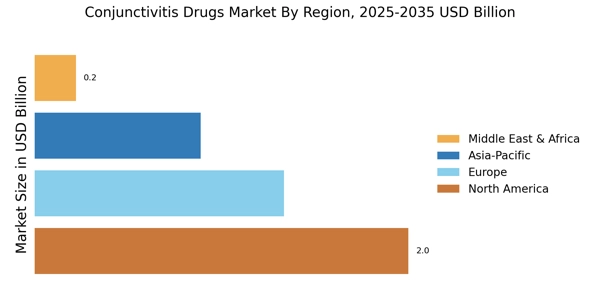
The Conjunctivitis Drugs Market is projected to exhibit diverse regional dynamics, with North America leading the market with a substantial valuation of 1.54 USD Billion in 2023, accounting for a majority holding of the overall market share. Following closely, Europe stands at 1.12 USD Billion, indicating significant demand driven by rising healthcare expenditure and awareness regarding ocular health. APAC, valued at 1.0 USD Billion, showcases potential growth opportunities fueled by increasing population and healthcare accessibility.
Meanwhile, South America and MEA are comparatively smaller segments, recorded at 0.42 USD Billion and 0.2 USD Billion, respectively, in 2023, revealing less dominant yet essential markets owing to evolving healthcare infrastructures and growing public awareness.Overall, the Conjunctivitis Drugs Market segmentation highlights a clear hierarchy in regional importance, which reflects varying healthcare challenges and opportunities across different regions.
Key Players and Competitive Insights
Key Companies in the Conjunctivitis Drugs Market include
Industry Developments
- Q1 2024: Bausch + Lomb Launches Alaway Preservative-Free Antihistamine Eye Drops Bausch + Lomb announced the launch of Alaway Preservative-Free (ketotifen fumarate ophthalmic solution 0.035%) antihistamine eye drops, the first over-the-counter preservative-free antihistamine eye itch relief drop approved by the U.S. FDA for relief of eye itchiness caused by conjunctivitis.
Future Outlook
Conjunctivitis Drugs Market Future Outlook
The Conjunctivitis Drugs Market is projected to grow at a 3.03% CAGR from 2025 to 2035, driven by increasing prevalence and advancements in treatment options.
New opportunities lie in:
- Development of targeted therapies for specific conjunctivitis types. Expansion of telemedicine platforms for remote consultations. Investment in biodegradable drug delivery systems for enhanced patient compliance.
By 2035, the market is expected to achieve robust growth, reflecting evolving treatment paradigms.
Market Segmentation
Conjunctivitis Drugs Market Type Outlook
- Antihistamines
- Antibiotics
- Corticosteroids
- Antiviral Drugs
Conjunctivitis Drugs Market Indication Outlook
- Bacterial Conjunctivitis
- Viral Conjunctivitis
- Allergic Conjunctivitis
Conjunctivitis Drugs Market Administration Route Outlook
- Topical
- Oral
- Injectable
Conjunctivitis Drugs Market Distribution Channel Outlook
- Hospital Pharmacies
- Retail Pharmacies
- Online Pharmacies
Report Scope
| MARKET SIZE 2024 | 4.41(USD Billion) |
| MARKET SIZE 2025 | 4.543(USD Billion) |
| MARKET SIZE 2035 | 6.124(USD Billion) |
| COMPOUND ANNUAL GROWTH RATE (CAGR) | 3.03% (2025 - 2035) |
| REPORT COVERAGE | Revenue Forecast, Competitive Landscape, Growth Factors, and Trends |
| BASE YEAR | 2024 |
| Market Forecast Period | 2025 - 2035 |
| Historical Data | 2019 - 2024 |
| Market Forecast Units | USD Billion |
| Key Companies Profiled | Allergan (US), Novartis (CH), Bausch Health (CA), Santen Pharmaceutical (JP), Akorn (US), Hikma Pharmaceuticals (GB), Mylan (US), Teva Pharmaceutical Industries (IL), Pfizer (US) |
| Segments Covered | Drug Type, Administration Route, Indication, Distribution Channel, Regional |
| Key Market Opportunities | Emerging therapies targeting viral conjunctivitis present new opportunities in the Conjunctivitis Drugs Market. |
| Key Market Dynamics | Rising demand for effective conjunctivitis treatments drives innovation and competition among pharmaceutical companies. |
| Countries Covered | North America, Europe, APAC, South America, MEA |
Market Highlights
FAQs
What is the projected market valuation for the Conjunctivitis Drugs Market in 2035?
The projected market valuation for the Conjunctivitis Drugs Market in 2035 is 6.124 USD Billion.
What was the market valuation for the Conjunctivitis Drugs Market in 2024?
The market valuation for the Conjunctivitis Drugs Market in 2024 was 4.41 USD Billion.
What is the expected CAGR for the Conjunctivitis Drugs Market from 2025 to 2035?
The expected CAGR for the Conjunctivitis Drugs Market during the forecast period 2025 - 2035 is 3.03%.
Which segment of the Conjunctivitis Drugs Market had the highest valuation in 2024?
In 2024, the Antibiotics segment had the highest valuation at 1.76 USD Billion.
What are the projected values for the Antihistamines segment by 2035?
The projected value for the Antihistamines segment by 2035 is 1.2 USD Billion.
Which administration route is expected to generate the highest revenue in the Conjunctivitis Drugs Market by 2035?
The Topical administration route is expected to generate the highest revenue, projected at 2.45 USD Billion by 2035.
What is the anticipated market size for Bacterial Conjunctivitis drugs in 2035?
The anticipated market size for Bacterial Conjunctivitis drugs in 2035 is 2.45 USD Billion.
Which distribution channel is projected to have the highest valuation in 2035?
The Hospital Pharmacies distribution channel is projected to have the highest valuation at 2.45 USD Billion in 2035.
Who are the key players in the Conjunctivitis Drugs Market?
Key players in the Conjunctivitis Drugs Market include Allergan, Novartis, Bausch Health, and Santen Pharmaceutical.
What is the projected value for Oral administration of Conjunctivitis drugs by 2035?
The projected value for Oral administration of Conjunctivitis drugs by 2035 is 1.85 USD Billion.
Kindly complete the form below to receive a free sample of this Report
Customer Stories
“This is really good guys. Excellent work on a tight deadline. I will continue to use you going forward and recommend you to others. Nice job”
“Thanks. It’s been a pleasure working with you, please use me as reference with any other Intel employees.”
“Thanks for sending the report it gives us a good global view of the Betaïne market.”
“Thank you, this will be very helpful for OQS.”
“We found the report very insightful! we found your research firm very helpful. I'm sending this email to secure our future business.”
“I am very pleased with how market segments have been defined in a relevant way for my purposes (such as "Portable Freezers & refrigerators" and "last-mile"). In general the report is well structured. Thanks very much for your efforts.”
“I have been reading the first document or the study, ,the Global HVAC and FP market report 2021 till 2026. Must say, good info! I have not gone in depth at all parts, but got a good indication of the data inside!”
“We got the report in time, we really thank you for your support in this process. I also thank to all of your team as they did a great job.”