Download Free Sample
Kindly complete the form below to receive a free sample of this Report
Content Creation and Distribution Services Market Size, Share and Trends Analysis Research Report Information By End Use (Small Enterprises, Medium Enterprises, and Large Enterprises), By Application (Social Media Management, Content Marketing, Video Production, Graphic Design, and Blogging), By Content Type (Textual Content, Visual Content, Audio Content, and Video Content), By Service Type (Consulting Services, Creative Services, Technical Services, and Training Services), By Distribution Channel (Direct Distribution, Social Media Platforms, Email Marketing, and Content Syndication), And By Region (North America, Europe, Asia-Pacific, And Rest Of The World) – Market Forecast Till 2035.
As per MRFR analysis, the Content Creation and Distribution Services Market was estimated at 55.0 USD Billion in 2024. The Content Creation and Distribution Services industry is projected to grow from 59.04 USD Billion in 2025 to 120.0 USD Billion by 2035, exhibiting a compound annual growth rate (CAGR) of 7.35% during the forecast period 2025 - 2035.
The Content Creation and Distribution Services Market is experiencing dynamic growth driven by technological advancements and evolving consumer preferences.
| 2024 Market Size | 55.0 (USD Billion) |
| 2035 Market Size | 120.0 (USD Billion) |
| CAGR (2025 - 2035) | 7.35% |
Adobe (US), Canva (US), Wix (IL), HubSpot (US), Piktochart (US), Buffer (US), Hootsuite (CA), Sprout Social (US), Mailchimp (US)
Our Impact
Enabled $4.3B Revenue Impact for Fortune 500 and Leading Multinationals
Partnering with 2000+ Global Organizations Each Year
30K+ Citations by Top-Tier Firms in the Industry
The Content Creation and Distribution Services Market is currently experiencing a dynamic evolution, driven by the increasing demand for high-quality digital content across various platforms. As businesses and individuals seek to engage audiences more effectively, the emphasis on innovative content strategies has intensified. This market encompasses a wide range of services, including video production, social media management, and content marketing, all of which are essential for establishing a robust online presence. The proliferation of digital channels has further fueled the need for tailored content solutions that resonate with target demographics, thereby enhancing brand visibility and customer engagement. Moreover, advancements in technology are reshaping the landscape of content creation and distribution. The integration of artificial intelligence and data analytics into content strategies allows for more personalized and targeted approaches. This trend suggests that companies are increasingly leveraging data-driven insights to optimize their content offerings, ensuring that they meet the evolving preferences of consumers. As the Content Creation and Distribution Services Market continues to expand, it appears poised for further growth, with an emphasis on creativity, innovation, and strategic distribution methods that align with consumer behavior and technological advancements.
The demand for video content is surging, as it is perceived as more engaging and effective in capturing audience attention. Businesses are increasingly investing in video production services to enhance their marketing strategies, utilizing platforms such as social media and streaming services to reach wider audiences.
The use of data analytics in content creation is becoming more prevalent, allowing companies to tailor their offerings to specific audience segments. This trend indicates a shift towards personalized content experiences, which can lead to higher engagement rates and improved customer satisfaction.
Artificial intelligence is playing a crucial role in shaping content strategies, enabling automation and efficiency in content creation and distribution. This integration suggests that businesses are looking to streamline their processes while enhancing the quality and relevance of their content.
The rise of social media platforms has transformed the landscape of content distribution, significantly impacting the Content Creation and Distribution Services Market. As of December 2025, over 4 billion individuals actively engage with social media, creating an expansive audience for content creators. This environment necessitates tailored content strategies that cater to diverse platforms, from short-form videos to long-form articles. Brands are increasingly leveraging social media to enhance their visibility and engagement, leading to a growing demand for professional content creation services. The Content Creation and Distribution Services Market is thus likely to thrive as businesses seek to optimize their social media presence and connect with consumers in innovative ways.
Search Engine Optimization (SEO) has become a cornerstone of digital marketing, significantly influencing the Content Creation and Distribution Services Market. As businesses strive to improve their online visibility, the demand for SEO-optimized content continues to rise. In 2025, it is estimated that over 70% of online experiences begin with a search engine, underscoring the necessity for effective SEO strategies. Companies are increasingly investing in content that not only engages but also ranks well on search engines. This trend drives the need for specialized content creation services that understand the intricacies of SEO. Consequently, the Content Creation and Distribution Services Market is expected to expand as organizations prioritize SEO in their content strategies.
The Content Creation and Distribution Services Market experiences heightened demand as businesses increasingly recognize the necessity of digital marketing strategies. With the proliferation of online platforms, companies are compelled to create engaging content to capture audience attention. In 2025, it is estimated that digital advertising expenditures will surpass 500 billion dollars, indicating a robust growth trajectory. This surge in investment in digital marketing fuels the need for specialized content creation services, as organizations seek to differentiate themselves in a crowded marketplace. Consequently, the Content Creation and Distribution Services Market is poised to benefit from this trend, as businesses allocate more resources to develop high-quality content that resonates with their target demographics.
The shift towards remote work has transformed how content is created and distributed, impacting the Content Creation and Distribution Services Market. As organizations adapt to remote work environments, there is a growing reliance on digital collaboration tools that facilitate content creation across geographically dispersed teams. This trend has led to an increase in demand for services that support remote content production, such as cloud-based editing platforms and virtual brainstorming sessions. In 2025, it is anticipated that remote work will remain a prevalent model, further driving the need for innovative content solutions. The Content Creation and Distribution Services Market is thus likely to benefit from this shift, as businesses seek to maintain productivity and creativity in a remote setting.
Technological advancements play a pivotal role in shaping the Content Creation and Distribution Services Market. The introduction of sophisticated content creation tools, such as AI-driven editing software and automated distribution platforms, streamlines the content production process. In 2025, the market for content creation tools is projected to reach approximately 10 billion dollars, reflecting the increasing reliance on technology to enhance efficiency and creativity. These innovations enable content creators to produce high-quality materials at a faster pace, meeting the growing demands of consumers. As a result, the Content Creation and Distribution Services Market is likely to see a surge in adoption of these technologies, facilitating the creation of diverse and engaging content.
In the Content Creation and Distribution Services Market, Social Media Management currently leads the application segment with the largest market share, driven by its significance in today's digital landscape. This area encompasses various services aimed at creating, scheduling, analyzing, and engaging with content across multiple social platforms, making it essential for brands to connect with their audiences effectively. In contrast, Video Production is emerging strongly, reflecting a shift in consumer preference towards video content for storytelling and marketing purposes. This application has witnessed significant uptake as brands and creators recognize the compelling nature of video to boost engagement and convey messages succinctly.
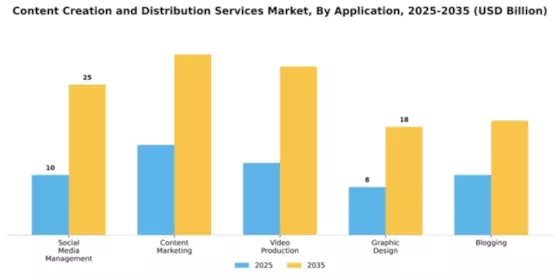
Content Marketing (Dominant) vs. Blogging (Emerging)
Content Marketing remains a dominant force in the content creation landscape, characterized by its strategic approach to delivering valuable and relevant content to attract and retain a defined audience. This application effectively integrates various formats such as articles, videos, infographics, and social media posts, allowing brands to position themselves as industry leaders while also fostering customer loyalty. Meanwhile, Blogging is becoming an emerging trend within the sector, especially as businesses seek authentic and personal ways to connect with their users. Blogging not only contributes to search engine optimization efforts but also enables brands to share insights, engage audiences, and establish thought leadership, making it a valuable tool in a comprehensive content strategy.
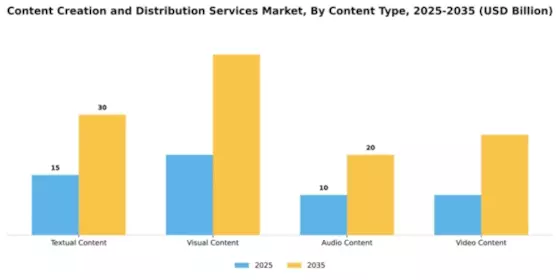
In the Content Creation and Distribution Services Market, Small Enterprises hold the largest share, primarily due to their increasing adoption of digital marketing strategies and social media platforms to enhance their outreach. They rely on cost-effective and efficient content distribution services to maximize their online presence, leveraging limited resources to compete with larger organizations. Meanwhile, Large Enterprises, having substantial budgets for technology and manpower, secure a significant portion of the market as well due to their established brands and extensive distribution networks.
Small Enterprises (Dominant) vs. Large Enterprises (Emerging)
Small Enterprises are characterized by their agility and ability to quickly adapt to market trends, making them dominant players in the content creation space. They typically utilize affordable tools and services to create impactful content tailored to their audiences. On the other hand, Large Enterprises, while currently seen as emerging in this segment, are expanding their presence by adopting innovative strategies and incorporating advanced technologies in content distribution. Their scale allows for reaching wider audiences, though their adaptation to rapidly evolving digital landscapes is crucial for maintaining competitiveness.
The Content Creation and Distribution Services Market exhibits a diverse range of content types, with textual content leading in market share. This segment benefits significantly from established platforms leveraging blogs, articles, and premium written content to attract consumers. Visual content follows closely, appealing to audiences through imagery and infographics. Audio and video content are growing in their contributions, with video emerging as the fastest-growing segment in this market.
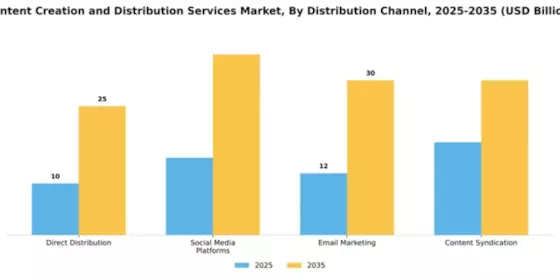
Textual Content: Dominant vs. Video Content: Emerging
Textual content remains the dominant force in the Content Creation and Distribution Services Market, offering a wealth of information and branding opportunities. It caters to businesses seeking to establish authority through well-researched articles and engaging narratives. Conversely, video content is emerging rapidly, capitalizing on consumer preferences for dynamic and visually compelling content. As streaming services and social media platforms integrated video capabilities expand, the demand for high-quality video content continues to rise. Brands are increasingly investing in video marketing to enhance customer engagement, making it one of the most promising segments in the industry.
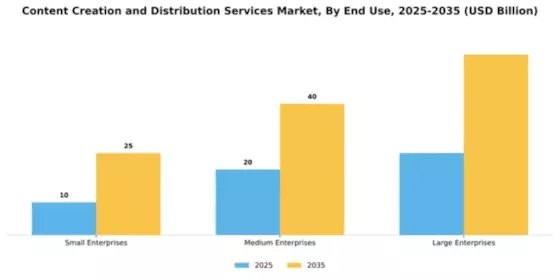
In the Content Creation and Distribution Services Market, the distribution of market share among different channels showcases the varying preferences of content creators and marketers. Direct Distribution remains the largest segment, offering brands an effective means to maintain control over their content and distribution strategy. Social Media Platforms, on the other hand, are rapidly gaining ground as a significant part of digital strategies, reflecting a shift towards audience engagement and networking in content distribution.
Direct Distribution (Dominant) vs. Social Media Platforms (Emerging)
Direct Distribution stands as the dominant approach within the Content Creation and Distribution Services Market, allowing brands to engage directly with their audience while keeping full control over their messaging and presentation. This channel fosters strong relationships between creators and consumers, ensuring brand integrity. Conversely, Social Media Platforms represent an emerging trend, gaining traction particularly among younger demographics. Their interactive nature enables vast reach and engagement, making them invaluable for brands aiming to expand awareness and virality of their content.
In the Content Creation and Distribution Services Market, Creative Services holds a substantial market share as it encompasses a wide array of offerings including graphic design, video production, and content marketing. This segment appeals significantly to brands seeking to enhance their visibility through innovative and visually appealing content. Meanwhile, Technical Services, while smaller in comparison, is rapidly gaining traction, driven by the increasing complexities of digital content distribution and the demand for specialized expertise to navigate these challenges.
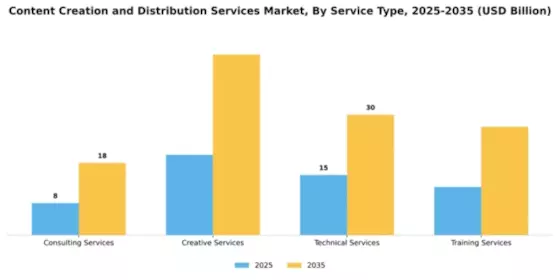
Creative Services: Dominant vs. Technical Services: Emerging
Creative Services stands out as the dominant segment in the Content Creation and Distribution Services Market, characterized by its ability to attract clients through compelling narratives and engaging visuals. This segment is increasingly incorporating data-driven strategies to tailor content and maximize audience engagement. Conversely, Technical Services is an emerging force within the market, focusing on the behind-the-scenes aspects like content management, analytics, and optimization to ensure seamless distribution. Agencies offering technical solutions are leveraging advanced technologies and tools to meet the growing expectations for efficiency and effectiveness in content delivery, making this segment attractive for brands aiming to enhance their operational capabilities.
Get more detailed insights about Content Creation and Distribution Services Market Request Free Sample
North America continues to lead the Content Creation and Distribution Services Market, holding a significant market share of 30.0 in 2024. The region's growth is driven by high demand for digital marketing solutions, increased internet penetration, and a robust startup ecosystem. Regulatory support for digital content and advertising further fuels this growth, making it a hotbed for innovation and investment in technology. The competitive landscape is dominated by key players such as Adobe, Canva, and HubSpot, which are headquartered in the US. These companies leverage advanced technologies to enhance user experience and streamline content distribution. Canada also plays a vital role, with firms like Hootsuite contributing to the region's dynamic market. The presence of these industry leaders ensures a continuous evolution of services tailored to meet diverse consumer needs.
Europe's Content Creation and Distribution Services Market is on the rise, with a market size of 15.0 in 2024. The region benefits from a diverse consumer base and increasing investments in digital marketing. Regulatory frameworks promoting digital innovation and data protection are key drivers of growth. The demand for localized content and multilingual services is also shaping the market, as businesses seek to engage with varied audiences across the continent. Leading countries like Germany, the UK, and France are at the forefront of this growth, hosting numerous startups and established firms in the content creation space. Companies such as Wix and Buffer are making significant strides in enhancing user engagement and content distribution. The competitive landscape is characterized by a mix of local and international players, fostering innovation and collaboration in the digital content arena.
The Asia-Pacific region is witnessing rapid growth in the Content Creation and Distribution Services Market, with a market size of 8.0 in 2024. Factors such as increasing internet usage, mobile penetration, and a young demographic are driving demand for digital content. Additionally, government initiatives promoting digital literacy and e-commerce are acting as catalysts for market expansion, creating a favorable environment for content creators and distributors. Countries like China, India, and Japan are leading the charge, with a burgeoning number of startups and established companies entering the market. The presence of global players alongside local firms fosters a competitive landscape that encourages innovation. Companies are increasingly focusing on mobile-first strategies to cater to the growing number of mobile users, ensuring that content is accessible and engaging across various platforms.
The Middle East and Africa region is gradually emerging in the Content Creation and Distribution Services Market, with a market size of 2.0 in 2024. The growth is primarily driven by increasing internet connectivity and mobile device usage. Governments are investing in digital infrastructure and promoting initiatives to enhance digital content creation, which is crucial for economic diversification and job creation in the region. Countries like South Africa and the UAE are leading the way, with a growing number of local startups and international companies entering the market. The competitive landscape is evolving, with a focus on localized content and services tailored to meet regional needs. As the market matures, there is a significant opportunity for innovation and collaboration among content creators and distributors.
The Content Creation and Distribution Services Market is characterized by a dynamic competitive landscape, driven by rapid technological advancements and evolving consumer preferences. Key players such as Adobe (US), Canva (US), and HubSpot (US) are at the forefront, each adopting distinct strategies to enhance their market positioning. Adobe (US) continues to innovate its Creative Cloud suite, focusing on integrating AI capabilities to streamline content creation processes. Canva (US), on the other hand, emphasizes user-friendly design tools and has expanded its offerings through strategic partnerships, enhancing accessibility for non-designers. HubSpot (US) is leveraging its CRM platform to provide comprehensive marketing solutions, thereby solidifying its role in content distribution and analytics. Collectively, these strategies contribute to a competitive environment that is increasingly focused on technological integration and user-centric solutions.In terms of business tactics, companies are increasingly localizing their services to cater to diverse markets, optimizing supply chains to enhance efficiency. The market appears moderately fragmented, with a mix of established players and emerging startups vying for market share. The collective influence of these key players shapes the competitive structure, as they continuously adapt to changing consumer demands and technological advancements.In November Adobe (US) announced the launch of its new AI-driven content generation tool, which aims to automate the creation of marketing materials. This strategic move is significant as it positions Adobe (US) to capitalize on the growing demand for efficiency in content production, potentially attracting a broader customer base seeking to streamline their marketing efforts. The integration of AI not only enhances productivity but also aligns with current trends towards digital transformation in the industry.In October Canva (US) expanded its partnership with various educational institutions, providing free access to its design tools for students and educators. This initiative is strategically important as it fosters brand loyalty among younger users, who may transition to paid services as they enter the workforce. By embedding itself within educational frameworks, Canva (US) is likely to secure a competitive advantage in the long term, as these users become accustomed to its platform.In December HubSpot (US) unveiled a new feature within its CRM that integrates social media analytics with content distribution metrics. This development is crucial as it allows businesses to gain deeper insights into the effectiveness of their content across various channels, thereby enhancing their marketing strategies. By providing a more holistic view of customer engagement, HubSpot (US) strengthens its position as a leader in the content distribution space.As of December the competitive trends in the Content Creation and Distribution Services Market are increasingly defined by digitalization, sustainability, and the integration of AI technologies. Strategic alliances are becoming more prevalent, as companies seek to enhance their service offerings and expand their market reach. Looking ahead, competitive differentiation is likely to evolve, shifting from price-based competition to a focus on innovation, technological advancements, and supply chain reliability. This transition underscores the importance of adaptability and forward-thinking strategies in maintaining a competitive edge.





The Content Creation and Distribution Services Market is projected to grow at a 7.35% CAGR from 2025 to 2035, driven by technological advancements and increasing digital content consumption.
New opportunities lie in:
By 2035, the market is expected to be robust, reflecting substantial growth and innovation.
| MARKET SIZE 2024 | 55.0(USD Billion) |
| MARKET SIZE 2025 | 59.04(USD Billion) |
| MARKET SIZE 2035 | 120.0(USD Billion) |
| COMPOUND ANNUAL GROWTH RATE (CAGR) | 7.35% (2025 - 2035) |
| REPORT COVERAGE | Revenue Forecast, Competitive Landscape, Growth Factors, and Trends |
| BASE YEAR | 2024 |
| Market Forecast Period | 2025 - 2035 |
| Historical Data | 2019 - 2024 |
| Market Forecast Units | USD Billion |
| Key Companies Profiled | Adobe (US), Canva (US), Wix (IL), HubSpot (US), Piktochart (US), Buffer (US), Hootsuite (CA), Sprout Social (US), Mailchimp (US) |
| Segments Covered | Application, End Use, Content Type, Distribution Channel, Service Type |
| Key Market Opportunities | Integration of artificial intelligence in content personalization enhances engagement in the Content Creation and Distribution Services Market. |
| Key Market Dynamics | Rising demand for personalized content drives innovation and competition in content creation and distribution services. |
| Countries Covered | North America, Europe, APAC, South America, MEA |
The market valuation reached 55.0 USD Billion in 2024.
The market is expected to grow to 120.0 USD Billion by 2035.
The market is projected to experience a CAGR of 7.35% from 2025 to 2035.
Key players include Adobe, Canva, Wix, HubSpot, Piktochart, Buffer, Hootsuite, Sprout Social, and Mailchimp.
By application, Social Media Management is valued at 25.0 USD Billion, while Content Marketing reaches 30.0 USD Billion.
Medium Enterprises are expected to account for 40.0 USD Billion, while Large Enterprises may reach 55.0 USD Billion.
The market segments include Textual Content valued at 30.0 USD Billion and Visual Content projected at 45.0 USD Billion.
Social Media Platforms are expected to generate 35.0 USD Billion, while Content Syndication may reach 30.0 USD Billion.
Creative Services are projected to be valued at 45.0 USD Billion, while Technical Services may reach 30.0 USD Billion.
The market's growth potential appears robust, with a projected increase in valuation from 55.0 USD Billion in 2024 to 120.0 USD Billion by 2035.


Kindly complete the form below to receive a free sample of this Report

“This is really good guys. Excellent work on a tight deadline. I will continue to use you going forward and recommend you to others. Nice job”


“Thanks. It’s been a pleasure working with you, please use me as reference with any other Intel employees.”


“Thanks for sending the report it gives us a good global view of the Betaïne market.”


“Thank you, this will be very helpful for OQS.”


“We found the report very insightful! we found your research firm very helpful. I'm sending this email to secure our future business.”


“I am very pleased with how market segments have been defined in a relevant way for my purposes (such as "Portable Freezers & refrigerators" and "last-mile"). In general the report is well structured. Thanks very much for your efforts.”


“I have been reading the first document or the study, ,the Global HVAC and FP market report 2021 till 2026. Must say, good info! I have not gone in depth at all parts, but got a good indication of the data inside!”


“We got the report in time, we really thank you for your support in this process. I also thank to all of your team as they did a great job.”


“The Automotive 48V ECU Components Procurement Intelligence Study” was a complex project, but the Market Research Future (MRFR) team handled it with quality, agility, and customer-centricity. They delivered all requested data on time and within the agreed scope. The team, including Shubhendra Anand and Rahul Gotadki, was always readily available to clarify questions and swiftly implement necessary adjustments, driving the project to a successful conclusion within a very demanding timeframe.
I would also like to specifically commend Akshay Agarwal for his responsiveness and support at every stage—from our initial inquiry on May 6th through to final delivery on June 18th. His dedication made the entire process seamless.”



