Coronary Artery Bypass Graft Market (2026 - 2035)

Coronary Artery Bypass Graft Market Research Report Information By Type (Off-Pump, On-Pump, Minimally Invasive Direct CABG, Endoscopic Vein Harvesting and Others), By Procedure (Single CABG Surgery, Double CABG Surgery, Triple CABG Surgery, Quadruple CABG Surgery and Others), By End-User (Hospitals, Cardiology Clinics, Research Institutes and Others), and By Region (North America, Europe, Asia-Pacific, And Rest Of The World) - Growth & Industry Forecast To 2035
ID: MRFR/MED/1678-HCR
80 Pages
Satyendra Maurya, Rahul Gotadki
Last Updated: July 13, 2026
Coronary Artery Bypass Graft Market
Market Size
Forecast Period2026-2035
CAGR (2026-2035)5.85%
2025 Market SizeUSD 18.65 Billion
2035 Market SizeUSD 32.93 Billion
Key Players
Medtronic plc
Getinge AB
LivaNova PLC
Terumo Corporation
Abbott Laboratories
Teleflex Incorporated
Opportunities
  • Robotic Total Arterial Revascularization Programs
  • Emerging-Market Cardiac Surgery Infrastructure
  • Bio-Engineered and Synthetic Graft Commercialization

Coronary Artery Bypass Graft Market Summary

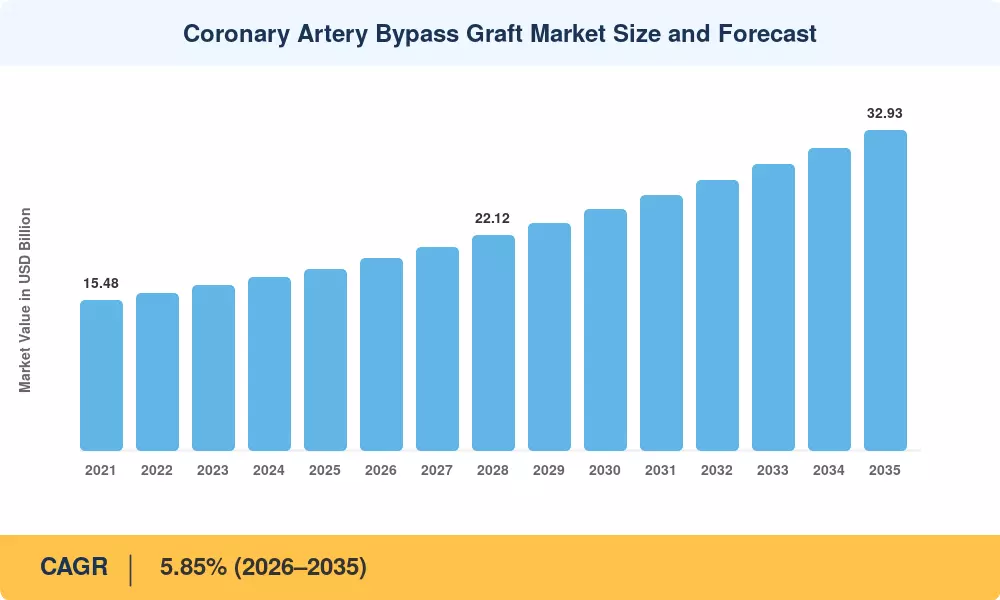
The Coronary Artery Bypass Graft Market reached USD 18.65 billion in 2025, positioned to enter its forecast cycle at USD 19.74 billion in 2026 and climb to USD 32.93 billion by 2035 at a compound annual growth rate of 5.85%. Two forces anchor this trajectory: the expanding pool of patients with multivessel coronary artery disease across aging G-20 populations, and bundled-payment reimbursement reforms in the United States and Western Europe that reward complete revascularization with fewer readmissions [1]. These structural catalysts keep surgical volumes resilient even as percutaneous coronary intervention absorbs lower-acuity single-vessel cases.

Technological transformation across the Coronary Artery Bypass Graft Market centers on the migration from conventional open-chest, cardiopulmonary-bypass-dependent procedures toward robotic-assisted and minimally invasive platforms. Intuitive Surgical and Medtronic have collectively committed over USD 1.2 billion in R&D capital toward next-generation surgical robotics since 2022, compressing average hospital length of stay from 7.2 days to below 4.5 days in early-adopter centers [2]. External stent devices that reinforce conduit durability are also gaining regulatory traction, with CE-mark clearances accelerating through 2024–2025.

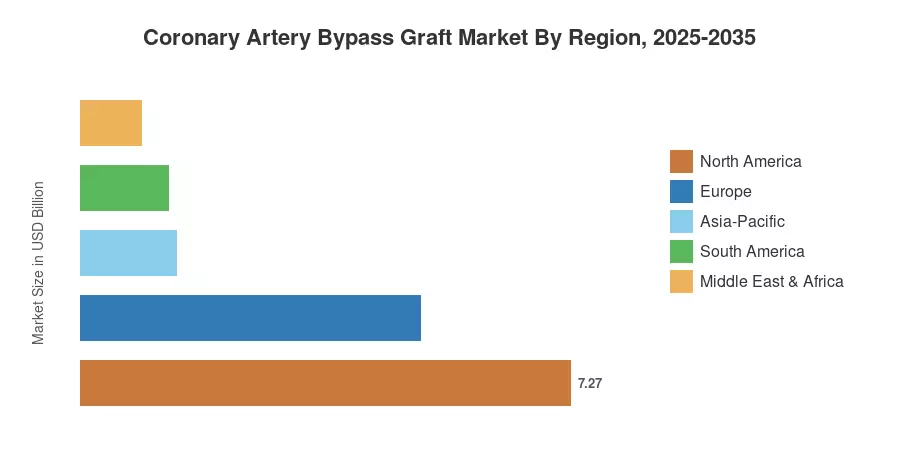
North America commanded approximately 39.0% of the Coronary Artery Bypass Graft Market in 2025, underpinned by Medicare procedural volumes and a dense network of high-volume cardiac surgery centers. Asia-Pacific is the fastest-growing region at a projected 7.6% CAGR through 2035, driven by expanding cardiac surgery infrastructure in China and India. Europe holds the second-largest position, contributing roughly 27% of global revenue on the back of national health system investment in hybrid operating theaters [3]. The decade ahead will reward device makers that pair hardware innovation with outcome-linked service contracts.


Key Report Takeaways

• By Procedure Type

  • On-pump surgery captured 58.2% of Coronary Artery Bypass Graft Market revenue in 2025, reflecting continued surgeon preference for arrested-heart techniques in complex multi-vessel cases.
  • Minimally invasive and robotic-assisted procedures are projected to expand at a 10.1% CAGR through 2035, as hospitals invest in platforms that reduce recovery time and readmission rates.

• By Product & Services

  • Heart positioners and tissue stabilizers led the product category with 28.5% of sales in 2025, essential to both on-pump and beating-heart techniques.
  • Endoscopic vessel-harvesting systems are forecast to post the fastest product-level growth at an 8.8% CAGR to 2035 within the Coronary Artery Bypass Graft Market.

• By Region

  • North America controlled 39.0% of geographic revenue in 2025, anchored by Medicare reimbursement and academic medical center volumes.
  • Asia-Pacific is projected to register the strongest regional expansion at a 7.6% CAGR over 2026–2035, fueled by rising cardiovascular disease prevalence and government hospital-building programs.


Coronary Artery Bypass Graft Market Size and Forecast (2021–2035)

Market sizing integrates bottom-up procedure volume modeling across 42 countries with top-down cross-validation against hospital discharge databases, device shipment records, and national cardiovascular registries. Historical figures draw from WHO Global Health Expenditure data and Society of Thoracic Surgeons (STS) Adult Cardiac Surgery Database submissions [4].
Coronary Artery Bypass Graft Market Size and Forecast
Our Impact
Enabled $4.3B Revenue Impact for Fortune 500 and Leading Multinationals
Partnering with 2000+ Global Organizations Each Year
30K+ Citations by Top-Tier Firms in the Industry

Driver Impact Analysis

Driver ~% Impact on CAGR Geographic Relevance Impact Timeline
Aging populations with multivessel CAD +1.4% Global Long-term (≥4 yr)
Bundled-payment reimbursement reform +0.9% North America, Europe Medium-term (2–4 yr)
Robotic and minimally invasive platform adoption +1.1% North America, Asia-Pacific Medium-term (2–4 yr)
External stent and graft longevity innovation +0.7% Global Long-term (≥4 yr)
Hybrid OR construction in emerging markets +0.8% Asia-Pacific, MEA Long-term (≥4 yr)
Multi-arterial grafting clinical evidence expansion +0.5% Europe, North America Short-term (≤2 yr)
Value-based care alignment favoring surgery over repeat PCI +0.6% North America Medium-term (2–4 yr)


Aging Populations and Rising Multivessel Coronary Disease

The United Nations projects that adults aged 65 and over will exceed 1.6 billion globally by 2050, with G-20 nations contributing 78% of that cohort [1]. High SYNTAX-score patients — those with complex three-vessel or left-main disease — carry a documented survival advantage with surgical revascularization compared with stenting. The ART Trial ten-year results published in The Lancet confirmed that bilateral internal mammary artery grafting reduced major adverse cardiac events by 14% versus single-artery approaches, strengthening the clinical case for surgery in aging populations with dense disease burden [10].

Bundled-Payment Reimbursement Reform

CMS's Bundled Payments for Care Improvement Advanced (BPCI-A) model now covers CABG episodes at over 340 participating US hospitals, incentivizing centers to reduce 90-day readmission rates below 12% [7]. Germany's Federal Joint Committee introduced analogous quality-linked reimbursement thresholds in 2024, tying DRG supplementary payments to composite measures that include graft patency at discharge. These payment structures favor complete revascularization strategies and multi-arterial grafting, directly increasing average procedure value within the Coronary Artery Bypass Graft Market.

Robotic and Minimally Invasive Platform Adoption

The global installed base of robotic cardiac surgery systems reached approximately 1,850 units by end-2024, with Intuitive Surgical's da Vinci platform commanding 62% share [2]. Robotic-assisted CABG reduces median ICU stay from 48 hours to 22 hours and compresses total hospitalization by 2.8 days, yielding estimated per-case savings of USD 8,400 for high-volume centers. The Coronary Artery Bypass Graft Market benefits directly as hospitals deploy capital expenditure budgets toward these platforms to attract referring cardiologists and improve quality scores.


Restraints Impact Analysis

Restraint impact estimates represent directional drag on CAGR and are derived from the same sensitivity framework described in Section 4. They should not be subtracted directly from the growth rate.

Restraint ~% Impact on CAGR Geographic Relevance Impact Timeline
PCI technology advances absorbing borderline-complexity cases –0.8% Global Long-term (≥4 yr)
Surgeon workforce shortages in cardiac surgery –0.6% Europe, Asia-Pacific Medium-term (2–4 yr)
High capital cost of robotic surgical systems –0.5% Emerging markets Short-term (≤2 yr)
Post-operative complication risks and medico-legal exposure –0.3% North America Long-term (≥4 yr)
Reimbursement compression in single-payer health systems –0.4% Europe, South America Medium-term (2–4 yr)


PCI Technology Encroachment

The latest-generation platforms have reported target-lesion revascularization rates below 3.5% at five years, indicating that drug-eluting stent technology is continuing to advance [12]. Although controversial, the EXCEL and NOBLE trials provided interventional cardiologists with clinical ammunition to treat left-main lesions percutaneously, thereby eroding a traditional surgical stronghold. The Coronary Artery Bypass Graft Market is currently experiencing persistent volume pressure due to the absorption of patients with intermediate SYNTAX scores between 23 and 32 by PCI.


Cardiac Surgeon Workforce Constraints

The European Association for Cardio-Thoracic Surgery reported a 19% decline in cardiac surgery training applications across EU-27 nations between 2018 and 2024 [13]. In India, the ratio of cardiac surgeons to population stands at approximately 1 per 600,000 citizens, creating bottlenecks that cap procedural volumes despite rising disease prevalence. Workforce limitations constrain capacity growth in the Coronary Artery Bypass Graft Market, particularly in tier-2 and tier-3 cities across Asia-Pacific.


Coronary Artery Bypass Graft Market Opportunities

Robotic Total Arterial Revascularization Programs

Hospitals that invest in robotic platforms capable of performing total arterial revascularization — combining bilateral internal mammary and radial artery grafts — can differentiate on clinical outcomes and command premium reimbursement. Early adopter networks in the US and Japan have demonstrated 30-day mortality rates below 0.4%, positioning these centers as referral magnets within the Coronary Artery Bypass Graft Market.

Emerging-Market Cardiac Surgery Infrastructure

The Ayushman Bharat program in India has extended cashless cardiac surgery coverage to more than 500 million citizens, while the National Health Commission of China has approved 140 new cardiac surgery centre licenses between 2023 and 2025 [9]. The Coronary Artery Bypass Graft Market's largest untapped procedural volume reservoir is represented by these government-backed capacity expansions.


Bio-Engineered and Synthetic Graft Commercialization

Tissue-engineered vascular grafts using decellularized scaffolds entered Phase III clinical trials in 2024, with Humacyte's acellular vessel reporting 24-month primary patency rates of 83% [8]. Successful commercialization would open a USD 2–3 billion addressable opportunity within the Coronary Artery Bypass Graft Market by eliminating the need for autologous vein harvesting in patients with inadequate conduit.

Outcome-Linked Service Contract Models

Device manufacturers are shifting from transactional hardware sales to multi-year service agreements that bundle disposables, maintenance, and performance guarantees. Getinge's "Cardio Partnership" model, which ties contract renewal to documented clinical throughput improvements, illustrates how recurring-revenue structures can stabilize margin profiles in the Coronary Artery Bypass Graft Market.

AI-Driven Surgical Planning and Data Monetization

Machine-learning algorithms that reconstruct coronary anatomy from CT angiography and recommend optimal graft configurations are moving from research prototypes to CE-marked commercial products. HeartFlow's AI-based FFR-CT platform processed over 350,000 cases by end-2024, and integration with surgical planning modules creates a new revenue stream for the Coronary Artery Bypass Graft Market ecosystem.


Coronary Artery Bypass Graft Market Future Outlook

Robotics and Autonomous Surgical Assistance

In the early 2030s, robotic cardiac surgery platforms will transition from surgeon-controlled telemanipulation to semi-autonomous task execution. Real-time AI-based tissue recognition is being integrated into the Hugo RAS system from Medtronic and the Ion platform from Intuitive. This technology is capable of autonomously guiding anastomosis suturing under the supervision of a surgeon [2]. The Coronary Artery Bypass Graft Market is expected to benefit from these capabilities, which are expected to reduce operative times by an estimated 25–35% and expand the pool of surgeons capable of performing complex procedures.


Precision Conduit Selection and Personalized Grafting

Precision conduit selection will be facilitated by advancements in computational fluid dynamics and patient-specific coronary modelling, which will be customized to the unique hemodynamic profiles of each patient. It is anticipated that by 2030, AI platforms that incorporate preoperative CT, intraoperative transit-time flow measurement, and machine-learning patency prediction will decrease five-year graft failure rates by 18–22% [18]. Coronary Artery Bypass Graft Market procedural complexity and per-case device utilization will increase as a result of this transition to personalized grafting strategies.


Sustainability and Supply-Chain Resilience

Single-use surgical device consumption in cardiac surgery generates approximately 25 kg of waste per procedure [19]. By 2028, EU Medical Device Regulation sustainability annexes are expected to mandate carbon footprint disclosure for Class III devices, pushing manufacturers to invest in reprocessable instrument designs and closed-loop sterilization systems. The Coronary Artery Bypass Graft Market's leading device companies are already piloting refurbishment programs for stabilizer and retractor platforms.

Value-Based Contracting and Outcome-Linked Procurement

The transition from fee-for-service to value-based cardiac surgery reimbursement will accelerate through 2035, with CMS, NHS England, and Japan's MHLW all signaling outcome-linked payment expansion [7]. Hospitals that demonstrate superior risk-adjusted mortality and five-year event-free survival rates will command premium reimbursement tiers, concentrating the Coronary Artery Bypass Graft Market's procedural volumes at fewer, higher-quality centers and driving consolidation among device suppliers.


Coronary Artery Bypass Graft Market Segmentation

By Procedure Type

Segment Key Metric Primary Demand Driver
On-Pump CABG 58.2% share (2025) Surgeon training infrastructure and complex multivessel cases
Off-Pump CABG USD 5.68 Billion (2025) Beating-heart benefits in high-risk patients
Minimally Invasive & Robotic CABG 10.1% CAGR (2026–2035) Hospital capital investment in robotic platforms


On-pump CABG remains the procedural backbone of the Coronary Artery Bypass Graft Market, favored for its reproducibility in cases requiring four or more distal anastomoses. Cardiopulmonary bypass provides a still, bloodless operative field that simplifies technically demanding anastomoses on posterior and lateral coronary targets. Minimally invasive and robotic approaches are gaining traction in single- and double-vessel cases, with centers reporting learning-curve stabilization after approximately 50 procedures per surgeon.

By Product and Services

Segment Key Metric Primary Demand Driver
Heart Positioners & Tissue Stabilizers 28.5% share (2025) Essential disposables for both surgical approaches
Cardiopulmonary Bypass Machines USD 3.94 Billion (2025) On-pump procedure dominance
Endoscopic Vessel-Harvesting Systems 8.8% CAGR (2026–2035) Reduced wound complications and faster recovery
Cannulae & Perfusion Accessories USD 2.24 Billion (2025) Procedure volume-linked consumable demand


Heart positioners and tissue stabilizers represent the largest product category in the Coronary Artery Bypass Graft Market because they serve both on-pump and off-pump techniques. Endoscopic vessel-harvesting systems are the fastest-growing product segment, driven by evidence that endoscopic radial artery and saphenous vein harvest reduces surgical-site infection rates by 55–65% compared with open techniques [20].

By Graft / Conduit Material

Segment Key Metric Primary Demand Driver
Saphenous Vein Grafts 66.1% share (2025) Universal availability and ease of harvest
Internal Mammary Artery Grafts USD 4.52 Billion (2025) Superior long-term patency evidence
Radial Artery Grafts 6.7% CAGR (2026–2035) RADIAL trial ten-year outcomes favoring arterial conduits
Synthetic & Bio-Engineered Grafts 9.3% CAGR (2026–2035) Patients with inadequate autologous conduit


Autologous saphenous vein remains the most widely used conduit in the Coronary Artery Bypass Graft Market due to its universal availability, though ten-year patency rates of 50–60% remain a clinical limitation. Synthetic and bio-engineered grafts represent the fastest-growing conduit category, driven by Phase III clinical progress from Humacyte and Xeltis, which are developing off-the-shelf acellular vessels designed to be remodeled by the patient's own cells [8].

By Surgery Complexity

Segment Key Metric Primary Demand Driver
Single Bypass USD 2.43 Billion (2025) Isolated LAD disease in younger patients
Double Bypass 22.4% share (2025) Two-vessel CAD with preserved LV function
Triple Bypass 32.7% share (2025) Three-vessel disease — most common indication
Quadruple-and-Higher Bypass 10.0% CAGR (2026–2035) Complex diffuse disease in diabetic populations


Triple bypass procedures represent the most common surgical complexity tier in the Coronary Artery Bypass Graft Market, reflecting the prevalence of three-vessel coronary artery disease as the dominant surgical indication. Quadruple-and-higher bypass operations are the fastest-growing complexity segment, propelled by rising diabetes prevalence that drives diffuse, multi-territory coronary disease requiring extensive revascularization.

By End User

Segment Key Metric Primary Demand Driver
Hospitals 68.4% share (2025) Established cardiac surgery programs and ICU infrastructure
Ambulatory Surgical Centers 8.1% CAGR (2026–2035) Cost efficiency and minimally invasive technique migration
Cardiac Specialty Centers USD 2.45 Billion (2025) Dedicated cardiovascular facilities with high case volumes


Hospitals dominate the end-user landscape of the Coronary Artery Bypass Graft Market, as traditional CABG requires ICU post-operative monitoring and on-site perfusion team support. Ambulatory surgical centers represent the fastest-growing site of care as minimally invasive techniques enable same-day or next-day discharge pathways for selected low-risk single-vessel cases.


Regional Market Share Analysis

Region Key Metric (2025) Primary Investment Themes
North America 39.0% revenue share Bundled payments, robotic adoption, multi-arterial grafting
Europe USD 5.04 Billion Hybrid OR buildout, quality-linked DRGs, training programs
Asia-Pacific 7.6% CAGR (2026–2035) Government hospital licensing, rising CVD prevalence
South America USD 1.31 Billion Public health system expansion, cardiovascular screening
Middle East & Africa 4.8% CAGR (2026–2035) Medical tourism, sovereign health fund investment
Total USD 18.65 Billion

The Coronary Artery Bypass Graft Market exhibits a regionally differentiated growth pattern, with mature Western markets driving procedure value while emerging economies contribute volume expansion.


North America

Country Key Metric Key Driver
United States 78.5% of regional share Medicare BPCI-A CABG episodes
Canada USD 1.08 Billion (2025) Provincial cardiac surgery wait-time targets
Mexico 5.9% CAGR (2026–2035) IMSS hospital expansion and medical tourism


The United States accounts for the overwhelming majority of North American Coronary Artery Bypass Graft Market revenue, with STS data recording approximately 165,000 isolated CABG procedures annually across 1,100 credentialed centers [4]. CMS bundled-payment incentives and the 2024 ACC/AHA guidelines reinforcing surgical superiority in three-vessel disease have solidified volume stability, while capital deployment toward robotic platforms concentrates at high-volume academic centers.

Europe

Country Key Metric Key Driver
Germany 29.4% of regional share Quality-linked DRG reimbursement reform
United Kingdom USD 0.72 Billion (2025) NHS long-term plan cardiac surgery investment
France 5.3% CAGR (2026–2035) University hospital robotics adoption
Italy USD 0.51 Billion (2025) Regional center-of-excellence consolidation
Spain 4.9% CAGR (2026–2035) Public-private partnership operating theater builds
Nordic Countries USD 0.38 Billion (2025) Integrated outcomes registries driving best-practice adoption
Russia 5.7% CAGR (2026–2035) Federal cardiovascular center network expansion
Rest of Europe USD 0.63 Billion (2025) EU structural fund co-financing for cardiac infrastructure


Germany leads the European Coronary Artery Bypass Graft Market, with the German Heart Surgery Report documenting roughly 42,000 CABG procedures annually across 78 certified cardiac centers [15]. The Federal Joint Committee's 2024 reimbursement reforms, which tie supplementary DRG payments to composite quality measures including 30-day mortality and graft patency, are nudging hospitals toward multi-arterial grafting and enhanced recovery protocols.

Asia-Pacific

Country Key Metric Key Driver
China 31.8% of regional share National Health Commission center licensing
India 8.4% CAGR (2026–2035) Ayushman Bharat cashless cardiac surgery coverage
Japan USD 1.12 Billion (2025) Aging population and robotic surgery reimbursement
South Korea 6.1% CAGR (2026–2035) K-CABG registry and national insurance coverage
ASEAN USD 0.48 Billion (2025) Medical tourism and private hospital investment
Rest of Asia-Pacific 6.5% CAGR (2026–2035) Cardiovascular disease awareness programs


Asia-Pacific represents the fastest-growing regional opportunity in the Coronary Artery Bypass Graft Market. China's cardiovascular surgery volume grew at an estimated 11% annually between 2020 and 2024, driven by the National Health Commission's approval of 140 new cardiac surgery center licenses and provincial government subsidies for hybrid operating room construction [9]. India's Ayushman Bharat expansion is projected to enable an additional 85,000 CABG-eligible patients per year to access surgical revascularization by 2028.

South America

Country Key Metric Key Driver
Brazil 62.3% of regional share SUS public health system cardiac surgery network
Argentina USD 0.21 Billion (2025) University hospital capacity and training programs
Rest of South America 5.4% CAGR (2026–2035) Regional cardiovascular screening expansion


Brazil dominates the South American Coronary Artery Bypass Graft Market through the Unified Health System (SUS), which funds cardiac surgery at approximately 180 accredited centers nationally [16]. Chronic underfunding and waiting-list pressures remain persistent challenges, though São Paulo state's 2024 investment of BRL 1.8 billion in cardiac infrastructure signals a capacity-building inflection.

Middle East & Africa

Country Key Metric Key Driver
Saudi Arabia 33.5% of regional share Vision 2030 healthcare infrastructure investment
UAE USD 0.18 Billion (2025) Medical tourism and private hospital premiumization
South Africa 5.2% CAGR (2026–2035) Public-private cardiac surgery partnerships
Egypt USD 0.11 Billion (2025) Universal health insurance phased rollout
Rest of MEA 4.3% CAGR (2026–2035) International NGO-funded cardiac surgery missions


Saudi Arabia anchors the Middle East & Africa Coronary Artery Bypass Graft Market, with Vision 2030's healthcare pillar allocating SAR 65 billion toward hospital construction and medical equipment procurement through 2030 [17]. The Cleveland Clinic Abu Dhabi and King Faisal Specialist Hospital serve as regional referral hubs, attracting cross-border cardiac surgery patients from across the GCC and North Africa.


Coronary Artery Bypass Graft Market By Region, 2025-2035

Competitive Benchmarking

The Coronary Artery Bypass Graft Market exhibits medium concentration, with the top five players holding an estimated 42–48% combined revenue share. The Herfindahl-Hirschman Index sits in the 800–1,200 range, reflecting a competitive field where device specialization — rather than broad product portfolios — drives positioning. Innovation cycles in stabilizers, harvesting systems, and perfusion technology create opportunities for mid-cap specialists alongside diversified medtech conglomerates.

Company Est. Revenue Share Range Key Offerings Strategic Positioning
Medtronic plc ~11–14% Perfusion systems, surgical robotics (Hugo RAS), cannulae Broad cardiac surgery ecosystem integrator
Getinge AB (Maquet) ~8–11% Cardiopulmonary bypass machines, heart-lung machines, stabilizers CPB market leader with service-contract model
LivaNova PLC ~7–10% Heart-lung machines, oxygenators, perfusion tubing sets Perfusion technology specialist
Terumo Corporation ~6–9% Oxygenators, cannulae, cardioplegia delivery systems Asia-Pacific stronghold with disposables focus
Abbott Laboratories ~5–8% Vascular closure, hemodynamic monitoring, diagnostic imaging Integrated diagnostics-to-intervention continuum
Teleflex Incorporated ~4–6% Surgical retractors, cannulae, ligation systems Specialized surgical access portfolio
Edwards Lifesciences ~3–5% Hemodynamic monitoring, cardioplegia cannulae Critical-care monitoring adjacency
Boston Scientific ~3–5% Cardiac imaging, coronary diagnostic tools Cross-referral pathway from cath lab to OR
Karl Storz SE ~2–4% Endoscopic vessel-harvesting systems, thoracoscopic instruments Endoscopy and minimally invasive specialist
Intuitive Surgical ~2–4% da Vinci robotic surgical system, Ion platform Robotic-assisted cardiac surgery pioneer


Recent News & Developments

  • Medtronic plc (September 2024): Received FDA 510(k) clearance for the Hugo RAS cardiac surgery module, expanding the platform's indication set to include internal mammary artery harvesting for CABG procedures [2].


  • CMS (January 2024): Expanded the BPCI-A model to include isolated CABG episodes at an additional 120 US hospitals, bringing total participating centers to 342 and reinforcing bundled-payment alignment with surgical quality [7].
  • Terumo Corporation (November 2023): Acquired NovaBiomedical's perfusion monitoring division for USD 285 million, strengthening its intraoperative blood-gas and anticoagulation monitoring portfolio for cardiac surgery suites [22].


  • European Commission (May 2023): Published updated Medical Device Regulation implementing rules that accelerated conformity assessment timelines for Class III cardiac surgical devices by an average of four months [24].


Coronary Artery Bypass Graft Market Report Scope

Parameter Detail
Market Scope Global Coronary Artery Bypass Graft Market — devices, consumables, and services
Study Period 2021–2035
CAGR (Forecast) 5.85% (2026–2035)
Base Year Market Size USD 18.65 Billion (2025)
Forecast Endpoint USD 32.93 Billion (2035)
Fastest Growing Segment Minimally Invasive & Robotic CABG (Procedure Type); Synthetic & Bio-Engineered Grafts (Conduit Material)
Companies Profiled 10 (Medtronic, Getinge, LivaNova, Terumo, Abbott, Teleflex, Edwards Lifesciences, Boston Scientific, Karl Storz, Intuitive Surgical)
Valuation Currency USD Billion


FAQs

How does graft patency influence long-term device replacement revenue in this market?
Internal mammary artery grafts maintain 90%+ patency at ten years, while saphenous vein grafts decline to 50–60%, driving repeat revascularization and secondary device utilization. Conduit durability directly shapes the installed-base replacement cycle for harvesting and perfusion consumables [10].
What credentialing standards must hospitals meet to offer robotic-assisted CABG?
Most accreditation bodies require a minimum annual volume of 50 robotic cardiac cases and proctored training certification for each operating surgeon. Facilities must also maintain dedicated perfusion and robotic-support teams on-call around the clock [4].
How do hybrid coronary revascularization strategies affect device purchasing patterns?
Hybrid procedures combine robotic mammary artery grafting with percutaneous stenting of non-LAD vessels in a single hospitalization. This approach increases per-case device spend by approximately 40% compared with standalone PCI [11].
What role do external stent devices play in improving CABG outcomes?
External stents constrain vein graft dilation, reducing intimal hyperplasia and improving one-year patency by an estimated 15–20%. Regulatory clearances in Europe and clinical trials in the US are expanding their commercial runway [8].
How do training pipeline shortages influence competitive dynamics among device suppliers?
Fewer graduating cardiac surgeons intensify competition for high-volume centers, pushing device companies toward value-added training academies and simulation partnerships. Vendors offering comprehensive proctoring programs gain preferential formulary positioning [13].
What procurement models are hospitals adopting for cardiac surgery consumables?
Group purchasing organizations increasingly negotiate multi-year, volume-committed contracts bundling stabilizers, cannulae, and harvesting kits. Sole-source agreements now represent roughly 35% of US hospital cardiac surgery procurement [14].
How does the shift toward ambulatory cardiac surgery reshape distribution logistics?
Ambulatory centers require smaller-footprint equipment and just-in-time disposable delivery models. Distributors serving these sites invest in regional micro-warehousing to guarantee two-hour replenishment windows [7].    
Author
Author
Author Profile
Satyendra Maurya LinkedIn
Research Analyst
An accomplished research analyst with high proficiency in market forecasting, data visualization, competitive benchmarking, and others. He holds a pronounced track record in research and consulting projects for sectors such as life sciences, medical devices, and healthcare IT. His capabilities in qualitative and quantitative analysis have resulted in positive client outcomes. Working on niche market trends, opportunities, sales, and forecasted value is part of his skill set.
Co-Author
Co-Author Profile
Rahul Gotadki LinkedIn
Research Manager
He holds an experience of about 9+ years in Market Research and Business Consulting, working under the spectrum of Life Sciences and Healthcare domains. Rahul conceptualizes and implements a scalable business strategy and provides strategic leadership to the clients. His expertise lies in market estimation, competitive intelligence, pipeline analysis, customer assessment, etc.

Research Approach


Secondary Research

The secondary research process involved comprehensive analysis of regulatory databases, peer-reviewed cardiovascular journals, clinical publications, and authoritative cardiac health organizations. Key sources included the US Food & Drug Administration (FDA) Center for Devices and Radiological Health, European Medicines Agency (EMA) Medical Device Regulations, National Institutes of Health (NIH) National Heart, Lung, and Blood Institute (NHLBI), Centers for Disease Control and Prevention (CDC) Heart Disease Statistics, World Health Organization (WHO) Cardiovascular Disease Database, American College of Cardiology (ACC) National Cardiovascular Data Registry (NCDR), Society of Thoracic Surgeons (STS) Adult Cardiac Surgery Database, European Association for Cardio-Thoracic Surgery (EACTS) Registry Data, American Heart Association (AHA) Statistical Updates, ClinicalTrials.gov for surgical intervention studies, EU Eurostat Healthcare Statistics, OECD Health Statistics, and national cardiovascular registries from key markets including Japan's JCVSD and the UK National Adult Cardiac Surgery Audit.

These sources were employed to gather data on the prevalence of cardiovascular disease, the regulatory approval pathways for cardiac surgical devices, clinical outcomes studies, demographic risk factors, and competitive landscape analysis for on-pump systems, off-pump technologies, minimally invasive direct CABG (MIDCAB) equipment, and endoscopic vein harvesting (EVH) devices. Additionally, CABG procedure statistics were gathered.


Primary Research

Qualitative and quantitative insights were obtained by interviewing supply-side and demand-side stakeholders during the primary research process. The supply-side sources consisted of CEOs, VPs of Cardiac Surgery Business Units, regulatory affairs chiefs, R&D directors, and commercial directors from manufacturers of bypass grafts, heart-lung machines, surgical staplers, EVH systems, and cardiac surgical instruments. The demand-side sources included procurement leads from tertiary care hospitals, cardiac surgery centers, academic medical centers, and specialized cardiology clinics, as well as chief of cardiac surgery, cardiothoracic surgeons, interventional cardiologists, perfusionists, and OR administrators. Market segmentation was validated across surgical techniques (off-pump vs. on-pump), product development pipelines for anastomosis assist devices and robotic surgical systems were confirmed, and insights on hospital adoption patterns for minimally invasive techniques, bundled payment models, and surgical graft material preferences (saphenous vein vs. internal mammary artery vs. radial artery) were extracted through primary research.

Primary Respondent Breakdown:

By Designation: C-level Primaries (32%), Director Level (30%), Others (38%)

By Region: North America (32%), Europe (30%), Asia-Pacific (28%), Rest of World (10%)


Market Size Estimation

Revenue mapping and volume analysis of the CABG procedure were employed to determine the global market valuation. The methodology comprised the following:

The identification of over 50 key manufacturers in North America, Europe, Asia-Pacific, and Latin America spanning cardiac surgical devices, perfusion apparatus, and graft technologies

The following is a product mapping of on-pump CABG systems, off-pump coronary artery bypass (OPCAB) devices, minimally invasive direct CABG (MIDCAB) apparatus, endoscopic vein harvesting (EVH) systems, anastomosis assist devices, and surgical graft materials (autologous and synthetic).

Examination of the annual revenues that have been reported and modeled for the cardiac surgery and coronary bypass portfolios

Manufacturers that account for 75-80% of the global CABG device market share in 2024 are included in the coverage.

Segment-specific valuations for hospitals, cardiology clinics, and research institutes are derived through extrapolation using bottom-up (procedure volume × ASP by country for single, double, triple, and quadruple bypass surgeries) and top-down (manufacturer revenue validation against STS and EACTS registry data) approaches.

Download Free Sample

Kindly complete the form below to receive a free sample of this Report

Download PDF ×

We do not share your information with anyone. However, we may send you emails based on your report interest from time to time. You may contact us at any time to opt-out.
















