Corporate Taxation and Legal Services Market

Corporate Taxation and Legal Services Market Research Report By Industry (Financial Services, Manufacturing, Technology, Healthcare), By Client Type (Corporations, Small And Medium Enterprises, Non-Profit Organizations, Individuals), By Service Type (Tax Compliance, Tax Advisory, Tax Planning, Transfer Pricing), By Engagement Model (Retainer, Project-Based, Consultative, Outsourced) And By Region (North America, Europe, Asia-Pacific, And Rest Of The World) – Market Forecast Till 2035.

Forecast Period
2025 - 2035
CAGR
3.75%
2024 Market Size
$ 200 Billion
2035 Market Size
$ 300 Billion
Professional Services ● Updated March 30, 2026 Report ID: MRFR/PS/64572-HCR | Pages: 200 | Author: Rahul Gotadki, Garvit Vyas

Corporate Taxation and Legal Services Market Summary

As per MRFR analysis, the Corporate Taxation and Legal Services Market was estimated at 200.0 USD Billion in 2024. The Corporate Taxation and Legal Services industry is projected to grow from 207.5 in 2025 to 300.0 by 2035, exhibiting a compound annual growth rate (CAGR) of 3.75% during the forecast period 2025 - 2035.

Key Market Trends & Highlights

The Corporate Taxation and Legal Services Market is experiencing a dynamic shift driven by technological advancements and regulatory changes.

  • Digital transformation is reshaping tax services, enhancing efficiency and accuracy in compliance processes.
  • Increased regulatory scrutiny is compelling corporations to adopt more robust tax strategies, particularly in North America.
  • Globalization and cross-border transactions are driving demand for transfer pricing services, especially among small and medium enterprises in the Asia-Pacific region.
  • Evolving tax regulations and technological advancements are key drivers propelling growth in tax compliance and transfer pricing segments.

Market Size & Forecast

2024 Market Size 200.0 (USD Billion)
2035 Market Size 300.0 (USD Billion)
CAGR (2025 - 2035) 3.75%

Major Players

Deloitte (US), PwC (GB), EY (GB), KPMG (NL), Baker McKenzie (US), Clifford Chance (GB), Skadden, Arps, Slate, Meagher & Flom (US), Latham & Watkins (US), Linklaters (GB), Freshfields Bruckhaus Deringer (GB)

Our Impact

Enabled $4.3B Revenue Impact for Fortune 500 and Leading Multinationals

Partnering with 2000+ Global Organizations Each Year

30K+ Citations by Top-Tier Firms in the Industry

Corporate Taxation and Legal Services Market Drivers

Changing Business Models

The Corporate Taxation and Legal Services Market is adapting to changing business models, particularly with the rise of the gig economy and digital platforms. As traditional business structures evolve, so too do the tax implications associated with them. Companies are increasingly seeking legal advice to understand how these new models affect their tax obligations and compliance requirements. This shift is prompting a demand for innovative tax solutions tailored to the unique challenges posed by these emerging business practices. The market is expected to respond to this trend by offering specialized services that address the complexities of taxation in a rapidly changing economic landscape.

Evolving Tax Regulations

The Corporate Taxation and Legal Services Market is currently experiencing a dynamic shift due to evolving tax regulations. Governments are increasingly revising tax codes to enhance compliance and revenue generation. For instance, the introduction of new tax laws in various jurisdictions has necessitated businesses to seek expert legal services to navigate these complexities. This trend is reflected in the rising demand for corporate tax advisors, as companies strive to align their operations with the latest regulatory requirements. The market for corporate taxation services is projected to grow at a compound annual growth rate of approximately 5% over the next five years, driven by the need for compliance and strategic tax planning.

Cross-Border Transactions

The rise in cross-border transactions is significantly influencing the Corporate Taxation and Legal Services Market. As businesses expand their operations internationally, they encounter a myriad of tax implications that require expert legal guidance. The complexity of international tax laws necessitates a thorough understanding of various jurisdictions, making legal services indispensable for companies engaged in global trade. This trend is underscored by the increasing volume of mergers and acquisitions across borders, which often involve intricate tax considerations. Consequently, the demand for corporate tax advisors with expertise in international taxation is likely to grow, further propelling the market.

Technological Advancements

Technological advancements are reshaping the Corporate Taxation and Legal Services Market, as firms increasingly adopt digital tools to enhance efficiency and accuracy in tax compliance. Automation and artificial intelligence are being integrated into tax processes, allowing for real-time data analysis and reporting. This shift not only reduces the risk of human error but also streamlines the overall tax preparation process. As a result, legal service providers are investing in technology to offer innovative solutions to their clients. The market is witnessing a surge in demand for tech-savvy tax professionals who can leverage these tools effectively, indicating a potential growth trajectory for the industry.

Increased Focus on Sustainability

The Corporate Taxation and Legal Services Market is witnessing a heightened focus on sustainability and corporate social responsibility. Companies are increasingly recognizing the importance of sustainable practices, which often intersect with tax strategies. For instance, tax incentives for environmentally friendly initiatives are prompting businesses to seek legal advice on how to optimize their tax positions while adhering to sustainability goals. This trend is likely to drive demand for specialized legal services that can navigate the complexities of tax regulations related to sustainability. As more firms prioritize sustainability, the market for corporate taxation services is expected to expand, reflecting a shift in corporate priorities.

Market Segment Insights

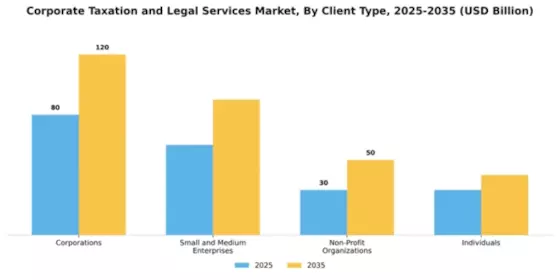
By Service Type: Tax Compliance (Largest) vs. Transfer Pricing (Fastest-Growing)

In the Corporate Taxation and Legal Services Market, the Tax Compliance segment holds the largest share as it is a fundamental requirement for businesses operating in various jurisdictions. This segment includes services like preparing tax returns and ensuring adherence to local tax laws, which are essential for mitigating risks and liabilities. Meanwhile, Tax Advisory and Tax Planning also contribute significantly but do not match the prominence of Tax Compliance. Transfer Pricing, although smaller in market share, has gained significant traction among multinational corporations navigating complex international tax regulations, showing a robust growth trajectory.
Corporate Taxation and Legal Services Market Segment Image 0

Tax Compliance (Dominant) vs. Transfer Pricing (Emerging)

The Tax Compliance segment stands out as the dominant force within the Corporate Taxation and Legal Services Market, driven by the necessity for businesses to remain compliant with ever-evolving tax regulations. Its focus on accurate reporting and adherence to government mandates ensures that companies avoid penalties and enhance operational efficiency. Conversely, Transfer Pricing represents an emerging segment characterized by increasing complexity in cross-border transactions and the need for strategic alignment amongst global operations. This segment caters to companies seeking to optimize their tax strategies while mitigating risks associated with international dealings, thereby highlighting its rapidly growing importance in an interconnected economic landscape.
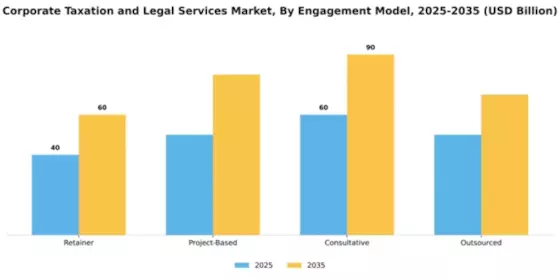
By Client Type: Corporations (Largest) vs. Small and Medium Enterprises (Fastest-Growing)

Corporate Taxation and Legal Services Market Segment Image 1

In the Corporate Taxation and Legal Services Market, the distribution of market share among client types reveals that corporations hold the largest portion. This dominance stems from their extensive legal and taxation requirements, which necessitate specialized services to navigate complex regulations. Small and Medium Enterprises (SMEs), while holding a smaller share in comparison, exhibit significant potential due to their increasing need for tailored legal solutions as they grow and expand their operations. The growth trends within this segment are largely driven by the rising number of SMEs looking for professional legal assistance to comply with evolving taxation laws and regulations. Corporations continue to invest heavily in legal services to mitigate risks associated with compliance and regulatory changes. Meanwhile, SMEs are embracing technology-driven solutions and integrated services that enable them to access legal expertise more affordably and efficiently, marking their emergence as a vital force in the market.

Corporations: Dominant vs. Non-Profit Organizations: Emerging

Corporations, being the dominant client type in the Corporate Taxation and Legal Services Market, often require complex and sophisticated legal frameworks to address a myriad of issues, including mergers, acquisitions, and compliance with international laws. Their substantial financial resources enable them to engage high-caliber legal experts and firms. In contrast, non-profit organizations represent an emerging segment characterized by unique legal needs such as compliance with charitable regulations and the necessity for tax-exempt statuses. This segment has garnered increasing attention due to the growing emphasis on social responsibility and the importance of legal support to navigate complex regulations. As both segments evolve, the demand for specialized legal services continues to rise, creating opportunities for tailored solutions in the Corporate Taxation and Legal Services Market.

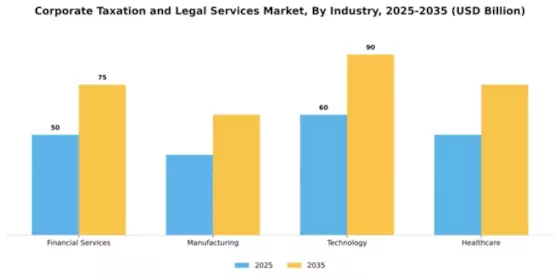
By Industry: Financial Services (Largest) vs. Technology (Fastest-Growing)

The Corporate Taxation and Legal Services Market exhibits a diverse landscape among its industry segments, with Financial Services leading in market share. This segment benefits from robust regulatory requirements and the complex nature of tax legislation affecting financial operations. In contrast, the Technology sector is gaining ground, fueled by rapid digital transformation and increasing demand for specialized legal services to navigate new regulations governing tech companies. Growth trends indicate a dynamic shift towards Technology, which is emerging as the fastest-growing segment. The rise of fintech and digital enterprises is prompting a demand for tailored legal solutions that address unique challenges in compliance and taxation. Moreover, as healthcare and manufacturing sectors adopt technologies, they further drive growth in legal services to adjust to changing tax laws and technological impacts.
Corporate Taxation and Legal Services Market Segment Image 2

Financial Services: Tax Compliance (Dominant) vs. Technology: Regulatory Innovation (Emerging)

The Financial Services sector remains the dominant force in legal services due to its stringent compliance requirements and complex tax obligations. Companies within this segment often face diverse challenges from mergers, acquisitions, and international operations, necessitating comprehensive legal strategies. On the other hand, the Technology sector represents an emerging market in legal services, driven by innovative regulatory needs arising from the digital economy. As tech firms navigate data protection laws and e-commerce regulations, the demand for specialized legal advice in taxation has surged, establishing a vital connection between technology and legal framework adaptability. These two segments exhibit contrasting requirements, where Financial Services focus on established compliance, and Technology thrives on innovation and agility.
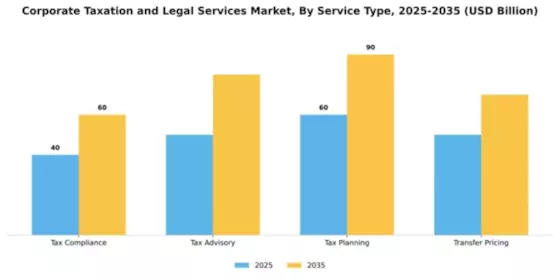
By Engagement Model: Retainer (Largest) vs. Project-Based (Fastest-Growing)

Corporate Taxation and Legal Services Market Segment Image 3

The Corporate Taxation and Legal Services Market reveals a diverse engagement model landscape, with the retainer model dominating the sector due to its stability and long-term relationships fostered between firms and clients. Retainers provide a predictable revenue stream for legal service providers, allowing them to allocate resources effectively while ensuring clients have consistent access to expert legal counsel. In contrast, the project-based model, known for its flexibility, is rapidly gaining traction, particularly among startups and small businesses seeking specialized legal assistance without long-term commitments.

Consultative (Dominant) vs. Outsourced (Emerging)

In the Corporate Taxation and Legal Services Market, the consultative engagement model stands out as the dominant force, characterized by tailored advice that addresses specific client needs in a dynamic regulatory landscape. This model thrives on understanding the intricacies of individual businesses, creating value through personalized legal strategies that align with client objectives. On the other hand, the outsourced model is emerging as a viable alternative for firms looking to optimize operations and reduce costs. As companies increasingly seek efficiency, outsourcing legal tasks allows firms to focus on core activities while still receiving expert support, positioning this model as a rising contender in the market.

Get more detailed insights about Corporate Taxation and Legal Services Market Request Free Sample

Key Players and Competitive Insights

The Corporate Taxation and Legal Services Market is characterized by a dynamic competitive landscape, driven by the increasing complexity of global tax regulations and the demand for compliance and advisory services. Major players such as Deloitte (US), PwC (GB), and EY (GB) are strategically positioned to leverage their extensive networks and technological capabilities. Deloitte (US) focuses on digital transformation and innovation, enhancing its service delivery through advanced analytics and AI. Meanwhile, PwC (GB) emphasizes partnerships and collaborations, particularly in the realm of sustainability and ESG compliance, which are becoming critical for corporate clients. EY (GB) is also investing heavily in technology, aiming to streamline tax processes and improve client engagement through digital platforms. Collectively, these strategies not only enhance their competitive edge but also shape the market dynamics by setting higher standards for service delivery and client expectations.The market structure appears moderately fragmented, with a mix of large multinational firms and specialized boutique firms. Key players employ various business tactics, such as localizing services to meet regional regulatory requirements and optimizing their supply chains to enhance efficiency. This competitive structure allows for a diverse range of offerings, catering to different client needs while fostering innovation and collaboration among firms.In November Deloitte (US) announced a strategic partnership with a leading fintech company to develop a new tax compliance platform that integrates blockchain technology. This move is significant as it positions Deloitte at the forefront of technological innovation in tax services, potentially streamlining compliance processes for clients and reducing the risk of errors. The integration of blockchain could enhance transparency and security, which are increasingly important in the current regulatory environment.In October PwC (GB) launched a new initiative aimed at helping clients navigate the complexities of international tax reform. This initiative focuses on providing tailored advisory services that address the unique challenges posed by evolving tax laws across jurisdictions. The strategic importance of this initiative lies in its potential to solidify PwC's reputation as a thought leader in tax advisory, thereby attracting new clients seeking expert guidance in a rapidly changing landscape.In September EY (GB) expanded its global tax services by acquiring a boutique firm specializing in transfer pricing. This acquisition is likely to enhance EY's capabilities in a niche area that is increasingly scrutinized by tax authorities worldwide. By bolstering its expertise in transfer pricing, EY positions itself to offer more comprehensive solutions to multinational clients, thereby strengthening its competitive position in the market.As of December the Corporate Taxation and Legal Services Market is witnessing trends such as digitalization, sustainability, and AI integration, which are reshaping competitive dynamics. Strategic alliances are becoming more prevalent, as firms recognize the need to collaborate to enhance service offerings and meet client demands. Looking ahead, competitive differentiation is expected to evolve, with a shift from price-based competition to a focus on innovation, technology, and supply chain reliability. Firms that can effectively leverage these trends will likely gain a competitive advantage in an increasingly complex market.


Key Companies in the Corporate Taxation and Legal Services Market include

Future Outlook

Corporate Taxation and Legal Services Market Future Outlook

The Corporate Taxation and Legal Services Market is projected to grow at a 3.75% CAGR from 2025 to 2035, driven by regulatory changes, digital transformation, and increasing globalization.

New opportunities lie in:

  • Development of AI-driven tax compliance software solutions. Expansion of cross-border legal advisory services. Implementation of blockchain for secure transaction documentation.

By 2035, the market is expected to be robust, reflecting sustained growth and innovation.

Market Segmentation

Corporate Taxation and Legal Services Market Industry Outlook

  • Financial Services
  • Manufacturing
  • Technology
  • Healthcare

Corporate Taxation and Legal Services Market Client Type Outlook

  • Corporations
  • Small and Medium Enterprises
  • Non-Profit Organizations
  • Individuals

Corporate Taxation and Legal Services Market Service Type Outlook

  • Tax Compliance
  • Tax Advisory
  • Tax Planning
  • Transfer Pricing

Corporate Taxation and Legal Services Market Engagement Model Outlook

  • Retainer
  • Project-Based
  • Consultative
  • Outsourced

Report Scope

MARKET SIZE 2024 200.0(USD Billion)
MARKET SIZE 2025 207.5(USD Billion)
MARKET SIZE 2035 300.0(USD Billion)
COMPOUND ANNUAL GROWTH RATE (CAGR) 3.75% (2025 - 2035)
REPORT COVERAGE Revenue Forecast, Competitive Landscape, Growth Factors, and Trends
BASE YEAR 2024
Market Forecast Period 2025 - 2035
Historical Data 2019 - 2024
Market Forecast Units USD Billion
Key Companies Profiled Deloitte (US), PwC (GB), EY (GB), KPMG (NL), Baker McKenzie (US), Clifford Chance (GB), Skadden, Arps, Slate, Meagher & Flom (US), Latham & Watkins (US), Linklaters (GB), Freshfields Bruckhaus Deringer (GB)
Segments Covered Service Type, Client Type, Industry, Engagement Model
Key Market Opportunities Integration of artificial intelligence in compliance and advisory services enhances efficiency in the Corporate Taxation and Legal Services Market.
Key Market Dynamics Evolving regulatory frameworks and technological advancements reshape competitive dynamics in the Corporate Taxation and Legal Services Market.
Countries Covered North America, Europe, APAC, South America, MEA

Table of Contents

  1. 1 SECTION I: EXECUTIVE SUMMARY AND KEY HIGHLIGHTS
    1. 1.1 EXECUTIVE SUMMARY
      1. 1.1.1 Market Overview
      2. 1.1.2 Key Findings
      3. 1.1.3 Market Segmentation
      4. 1.1.4 Competitive Landscape
      5. 1.1.5 Challenges and Opportunities
      6. 1.1.6 Future Outlook
  2. 2 SECTION II: SCOPING, METHODOLOGY AND MARKET STRUCTURE
    1. 2.1 MARKET INTRODUCTION
      1. 2.1.1 Definition
      2. 2.1.2 Scope of the study
        1. 2.1.2.1 Research Objective
        2. 2.1.2.2 Assumption
        3. 2.1.2.3 Limitations
    2. 2.2 RESEARCH METHODOLOGY
      1. 2.2.1 Overview
      2. 2.2.2 Data Mining
      3. 2.2.3 Secondary Research
      4. 2.2.4 Primary Research
        1. 2.2.4.1 Primary Interviews and Information Gathering Process
        2. 2.2.4.2 Breakdown of Primary Respondents
      5. 2.2.5 Forecasting Model
      6. 2.2.6 Market Size Estimation
        1. 2.2.6.1 Bottom-Up Approach
        2. 2.2.6.2 Top-Down Approach
      7. 2.2.7 Data Triangulation
      8. 2.2.8 Validation
  3. 3 SECTION III: QUALITATIVE ANALYSIS
    1. 3.1 MARKET DYNAMICS
      1. 3.1.1 Overview
      2. 3.1.2 Drivers
      3. 3.1.3 Restraints
      4. 3.1.4 Opportunities
    2. 3.2 MARKET FACTOR ANALYSIS
      1. 3.2.1 Value chain Analysis
      2. 3.2.2 Porter's Five Forces Analysis
        1. 3.2.2.1 Bargaining Power of Suppliers
        2. 3.2.2.2 Bargaining Power of Buyers
        3. 3.2.2.3 Threat of New Entrants
        4. 3.2.2.4 Threat of Substitutes
        5. 3.2.2.5 Intensity of Rivalry
      3. 3.2.3 COVID-19 Impact Analysis
        1. 3.2.3.1 Market Impact Analysis
        2. 3.2.3.2 Regional Impact
        3. 3.2.3.3 Opportunity and Threat Analysis
  4. 4 SECTION IV: QUANTITATIVE ANALYSIS
    1. 4.1 Industrial Automation & Equipment, BY Service Type (USD Billion)
      1. 4.1.1 Tax Compliance
      2. 4.1.2 Tax Advisory
      3. 4.1.3 Tax Planning
      4. 4.1.4 Transfer Pricing
    2. 4.2 Industrial Automation & Equipment, BY Client Type (USD Billion)
      1. 4.2.1 Corporations
      2. 4.2.2 Small and Medium Enterprises
      3. 4.2.3 Non-Profit Organizations
      4. 4.2.4 Individuals
    3. 4.3 Industrial Automation & Equipment, BY Industry (USD Billion)
      1. 4.3.1 Financial Services
      2. 4.3.2 Manufacturing
      3. 4.3.3 Technology
      4. 4.3.4 Healthcare
    4. 4.4 Industrial Automation & Equipment, BY Engagement Model (USD Billion)
      1. 4.4.1 Retainer
      2. 4.4.2 Project-Based
      3. 4.4.3 Consultative
      4. 4.4.4 Outsourced
    5. 4.5 Industrial Automation & Equipment, BY Region (USD Billion)
      1. 4.5.1 North America
        1. 4.5.1.1 US
        2. 4.5.1.2 Canada
      2. 4.5.2 Europe
        1. 4.5.2.1 Germany
        2. 4.5.2.2 UK
        3. 4.5.2.3 France
        4. 4.5.2.4 Russia
        5. 4.5.2.5 Italy
        6. 4.5.2.6 Spain
        7. 4.5.2.7 Rest of Europe
      3. 4.5.3 APAC
        1. 4.5.3.1 China
        2. 4.5.3.2 India
        3. 4.5.3.3 Japan
        4. 4.5.3.4 South Korea
        5. 4.5.3.5 Malaysia
        6. 4.5.3.6 Thailand
        7. 4.5.3.7 Indonesia
        8. 4.5.3.8 Rest of APAC
      4. 4.5.4 South America
        1. 4.5.4.1 Brazil
        2. 4.5.4.2 Mexico
        3. 4.5.4.3 Argentina
        4. 4.5.4.4 Rest of South America
      5. 4.5.5 MEA
        1. 4.5.5.1 GCC Countries
        2. 4.5.5.2 South Africa
        3. 4.5.5.3 Rest of MEA
  5. 5 SECTION V: COMPETITIVE ANALYSIS
    1. 5.1 Competitive Landscape
      1. 5.1.1 Overview
      2. 5.1.2 Competitive Analysis
      3. 5.1.3 Market share Analysis
      4. 5.1.4 Major Growth Strategy in the Industrial Automation & Equipment
      5. 5.1.5 Competitive Benchmarking
      6. 5.1.6 Leading Players in Terms of Number of Developments in the Industrial Automation & Equipment
      7. 5.1.7 Key developments and growth strategies
        1. 5.1.7.1 New Product Launch/Service Deployment
        2. 5.1.7.2 Merger & Acquisitions
        3. 5.1.7.3 Joint Ventures
      8. 5.1.8 Major Players Financial Matrix
        1. 5.1.8.1 Sales and Operating Income
        2. 5.1.8.2 Major Players R&D Expenditure. 2023
    2. 5.2 Company Profiles
      1. 5.2.1 Deloitte (US)
        1. 5.2.1.1 Financial Overview
        2. 5.2.1.2 Products Offered
        3. 5.2.1.3 Key Developments
        4. 5.2.1.4 SWOT Analysis
        5. 5.2.1.5 Key Strategies
      2. 5.2.2 PwC (GB)
        1. 5.2.2.1 Financial Overview
        2. 5.2.2.2 Products Offered
        3. 5.2.2.3 Key Developments
        4. 5.2.2.4 SWOT Analysis
        5. 5.2.2.5 Key Strategies
      3. 5.2.3 EY (GB)
        1. 5.2.3.1 Financial Overview
        2. 5.2.3.2 Products Offered
        3. 5.2.3.3 Key Developments
        4. 5.2.3.4 SWOT Analysis
        5. 5.2.3.5 Key Strategies
      4. 5.2.4 KPMG (NL)
        1. 5.2.4.1 Financial Overview
        2. 5.2.4.2 Products Offered
        3. 5.2.4.3 Key Developments
        4. 5.2.4.4 SWOT Analysis
        5. 5.2.4.5 Key Strategies
      5. 5.2.5 Baker McKenzie (US)
        1. 5.2.5.1 Financial Overview
        2. 5.2.5.2 Products Offered
        3. 5.2.5.3 Key Developments
        4. 5.2.5.4 SWOT Analysis
        5. 5.2.5.5 Key Strategies
      6. 5.2.6 Clifford Chance (GB)
        1. 5.2.6.1 Financial Overview
        2. 5.2.6.2 Products Offered
        3. 5.2.6.3 Key Developments
        4. 5.2.6.4 SWOT Analysis
        5. 5.2.6.5 Key Strategies
      7. 5.2.7 Skadden, Arps, Slate, Meagher & Flom (US)
        1. 5.2.7.1 Financial Overview
        2. 5.2.7.2 Products Offered
        3. 5.2.7.3 Key Developments
        4. 5.2.7.4 SWOT Analysis
        5. 5.2.7.5 Key Strategies
      8. 5.2.8 Latham & Watkins (US)
        1. 5.2.8.1 Financial Overview
        2. 5.2.8.2 Products Offered
        3. 5.2.8.3 Key Developments
        4. 5.2.8.4 SWOT Analysis
        5. 5.2.8.5 Key Strategies
      9. 5.2.9 Linklaters (GB)
        1. 5.2.9.1 Financial Overview
        2. 5.2.9.2 Products Offered
        3. 5.2.9.3 Key Developments
        4. 5.2.9.4 SWOT Analysis
        5. 5.2.9.5 Key Strategies
      10. 5.2.10 Freshfields Bruckhaus Deringer (GB)
        1. 5.2.10.1 Financial Overview
        2. 5.2.10.2 Products Offered
        3. 5.2.10.3 Key Developments
        4. 5.2.10.4 SWOT Analysis
        5. 5.2.10.5 Key Strategies
    3. 5.3 Appendix
      1. 5.3.1 References
      2. 5.3.2 Related Reports
  6. 6 LIST OF FIGURES
    1. 6.1 MARKET SYNOPSIS
    2. 6.2 NORTH AMERICA MARKET ANALYSIS
    3. 6.3 US MARKET ANALYSIS BY SERVICE TYPE
    4. 6.4 US MARKET ANALYSIS BY CLIENT TYPE
    5. 6.5 US MARKET ANALYSIS BY INDUSTRY
    6. 6.6 US MARKET ANALYSIS BY ENGAGEMENT MODEL
    7. 6.7 CANADA MARKET ANALYSIS BY SERVICE TYPE
    8. 6.8 CANADA MARKET ANALYSIS BY CLIENT TYPE
    9. 6.9 CANADA MARKET ANALYSIS BY INDUSTRY
    10. 6.10 CANADA MARKET ANALYSIS BY ENGAGEMENT MODEL
    11. 6.11 EUROPE MARKET ANALYSIS
    12. 6.12 GERMANY MARKET ANALYSIS BY SERVICE TYPE
    13. 6.13 GERMANY MARKET ANALYSIS BY CLIENT TYPE
    14. 6.14 GERMANY MARKET ANALYSIS BY INDUSTRY
    15. 6.15 GERMANY MARKET ANALYSIS BY ENGAGEMENT MODEL
    16. 6.16 UK MARKET ANALYSIS BY SERVICE TYPE
    17. 6.17 UK MARKET ANALYSIS BY CLIENT TYPE
    18. 6.18 UK MARKET ANALYSIS BY INDUSTRY
    19. 6.19 UK MARKET ANALYSIS BY ENGAGEMENT MODEL
    20. 6.20 FRANCE MARKET ANALYSIS BY SERVICE TYPE
    21. 6.21 FRANCE MARKET ANALYSIS BY CLIENT TYPE
    22. 6.22 FRANCE MARKET ANALYSIS BY INDUSTRY
    23. 6.23 FRANCE MARKET ANALYSIS BY ENGAGEMENT MODEL
    24. 6.24 RUSSIA MARKET ANALYSIS BY SERVICE TYPE
    25. 6.25 RUSSIA MARKET ANALYSIS BY CLIENT TYPE
    26. 6.26 RUSSIA MARKET ANALYSIS BY INDUSTRY
    27. 6.27 RUSSIA MARKET ANALYSIS BY ENGAGEMENT MODEL
    28. 6.28 ITALY MARKET ANALYSIS BY SERVICE TYPE
    29. 6.29 ITALY MARKET ANALYSIS BY CLIENT TYPE
    30. 6.30 ITALY MARKET ANALYSIS BY INDUSTRY
    31. 6.31 ITALY MARKET ANALYSIS BY ENGAGEMENT MODEL
    32. 6.32 SPAIN MARKET ANALYSIS BY SERVICE TYPE
    33. 6.33 SPAIN MARKET ANALYSIS BY CLIENT TYPE
    34. 6.34 SPAIN MARKET ANALYSIS BY INDUSTRY
    35. 6.35 SPAIN MARKET ANALYSIS BY ENGAGEMENT MODEL
    36. 6.36 REST OF EUROPE MARKET ANALYSIS BY SERVICE TYPE
    37. 6.37 REST OF EUROPE MARKET ANALYSIS BY CLIENT TYPE
    38. 6.38 REST OF EUROPE MARKET ANALYSIS BY INDUSTRY
    39. 6.39 REST OF EUROPE MARKET ANALYSIS BY ENGAGEMENT MODEL
    40. 6.40 APAC MARKET ANALYSIS
    41. 6.41 CHINA MARKET ANALYSIS BY SERVICE TYPE
    42. 6.42 CHINA MARKET ANALYSIS BY CLIENT TYPE
    43. 6.43 CHINA MARKET ANALYSIS BY INDUSTRY
    44. 6.44 CHINA MARKET ANALYSIS BY ENGAGEMENT MODEL
    45. 6.45 INDIA MARKET ANALYSIS BY SERVICE TYPE
    46. 6.46 INDIA MARKET ANALYSIS BY CLIENT TYPE
    47. 6.47 INDIA MARKET ANALYSIS BY INDUSTRY
    48. 6.48 INDIA MARKET ANALYSIS BY ENGAGEMENT MODEL
    49. 6.49 JAPAN MARKET ANALYSIS BY SERVICE TYPE
    50. 6.50 JAPAN MARKET ANALYSIS BY CLIENT TYPE
    51. 6.51 JAPAN MARKET ANALYSIS BY INDUSTRY
    52. 6.52 JAPAN MARKET ANALYSIS BY ENGAGEMENT MODEL
    53. 6.53 SOUTH KOREA MARKET ANALYSIS BY SERVICE TYPE
    54. 6.54 SOUTH KOREA MARKET ANALYSIS BY CLIENT TYPE
    55. 6.55 SOUTH KOREA MARKET ANALYSIS BY INDUSTRY
    56. 6.56 SOUTH KOREA MARKET ANALYSIS BY ENGAGEMENT MODEL
    57. 6.57 MALAYSIA MARKET ANALYSIS BY SERVICE TYPE
    58. 6.58 MALAYSIA MARKET ANALYSIS BY CLIENT TYPE
    59. 6.59 MALAYSIA MARKET ANALYSIS BY INDUSTRY
    60. 6.60 MALAYSIA MARKET ANALYSIS BY ENGAGEMENT MODEL
    61. 6.61 THAILAND MARKET ANALYSIS BY SERVICE TYPE
    62. 6.62 THAILAND MARKET ANALYSIS BY CLIENT TYPE
    63. 6.63 THAILAND MARKET ANALYSIS BY INDUSTRY
    64. 6.64 THAILAND MARKET ANALYSIS BY ENGAGEMENT MODEL
    65. 6.65 INDONESIA MARKET ANALYSIS BY SERVICE TYPE
    66. 6.66 INDONESIA MARKET ANALYSIS BY CLIENT TYPE
    67. 6.67 INDONESIA MARKET ANALYSIS BY INDUSTRY
    68. 6.68 INDONESIA MARKET ANALYSIS BY ENGAGEMENT MODEL
    69. 6.69 REST OF APAC MARKET ANALYSIS BY SERVICE TYPE
    70. 6.70 REST OF APAC MARKET ANALYSIS BY CLIENT TYPE
    71. 6.71 REST OF APAC MARKET ANALYSIS BY INDUSTRY
    72. 6.72 REST OF APAC MARKET ANALYSIS BY ENGAGEMENT MODEL
    73. 6.73 SOUTH AMERICA MARKET ANALYSIS
    74. 6.74 BRAZIL MARKET ANALYSIS BY SERVICE TYPE
    75. 6.75 BRAZIL MARKET ANALYSIS BY CLIENT TYPE
    76. 6.76 BRAZIL MARKET ANALYSIS BY INDUSTRY
    77. 6.77 BRAZIL MARKET ANALYSIS BY ENGAGEMENT MODEL
    78. 6.78 MEXICO MARKET ANALYSIS BY SERVICE TYPE
    79. 6.79 MEXICO MARKET ANALYSIS BY CLIENT TYPE
    80. 6.80 MEXICO MARKET ANALYSIS BY INDUSTRY
    81. 6.81 MEXICO MARKET ANALYSIS BY ENGAGEMENT MODEL
    82. 6.82 ARGENTINA MARKET ANALYSIS BY SERVICE TYPE
    83. 6.83 ARGENTINA MARKET ANALYSIS BY CLIENT TYPE
    84. 6.84 ARGENTINA MARKET ANALYSIS BY INDUSTRY
    85. 6.85 ARGENTINA MARKET ANALYSIS BY ENGAGEMENT MODEL
    86. 6.86 REST OF SOUTH AMERICA MARKET ANALYSIS BY SERVICE TYPE
    87. 6.87 REST OF SOUTH AMERICA MARKET ANALYSIS BY CLIENT TYPE
    88. 6.88 REST OF SOUTH AMERICA MARKET ANALYSIS BY INDUSTRY
    89. 6.89 REST OF SOUTH AMERICA MARKET ANALYSIS BY ENGAGEMENT MODEL
    90. 6.90 MEA MARKET ANALYSIS
    91. 6.91 GCC COUNTRIES MARKET ANALYSIS BY SERVICE TYPE
    92. 6.92 GCC COUNTRIES MARKET ANALYSIS BY CLIENT TYPE
    93. 6.93 GCC COUNTRIES MARKET ANALYSIS BY INDUSTRY
    94. 6.94 GCC COUNTRIES MARKET ANALYSIS BY ENGAGEMENT MODEL
    95. 6.95 SOUTH AFRICA MARKET ANALYSIS BY SERVICE TYPE
    96. 6.96 SOUTH AFRICA MARKET ANALYSIS BY CLIENT TYPE
    97. 6.97 SOUTH AFRICA MARKET ANALYSIS BY INDUSTRY
    98. 6.98 SOUTH AFRICA MARKET ANALYSIS BY ENGAGEMENT MODEL
    99. 6.99 REST OF MEA MARKET ANALYSIS BY SERVICE TYPE
    100. 6.100 REST OF MEA MARKET ANALYSIS BY CLIENT TYPE
    101. 6.101 REST OF MEA MARKET ANALYSIS BY INDUSTRY
    102. 6.102 REST OF MEA MARKET ANALYSIS BY ENGAGEMENT MODEL
    103. 6.103 KEY BUYING CRITERIA OF INDUSTRIAL AUTOMATION & EQUIPMENT
    104. 6.104 RESEARCH PROCESS OF MRFR
    105. 6.105 DRO ANALYSIS OF INDUSTRIAL AUTOMATION & EQUIPMENT
    106. 6.106 DRIVERS IMPACT ANALYSIS: INDUSTRIAL AUTOMATION & EQUIPMENT
    107. 6.107 RESTRAINTS IMPACT ANALYSIS: INDUSTRIAL AUTOMATION & EQUIPMENT
    108. 6.108 SUPPLY / VALUE CHAIN: INDUSTRIAL AUTOMATION & EQUIPMENT
    109. 6.109 INDUSTRIAL AUTOMATION & EQUIPMENT, BY SERVICE TYPE, 2024 (% SHARE)
    110. 6.110 INDUSTRIAL AUTOMATION & EQUIPMENT, BY SERVICE TYPE, 2024 TO 2035 (USD Billion)
    111. 6.111 INDUSTRIAL AUTOMATION & EQUIPMENT, BY CLIENT TYPE, 2024 (% SHARE)
    112. 6.112 INDUSTRIAL AUTOMATION & EQUIPMENT, BY CLIENT TYPE, 2024 TO 2035 (USD Billion)
    113. 6.113 INDUSTRIAL AUTOMATION & EQUIPMENT, BY INDUSTRY, 2024 (% SHARE)
    114. 6.114 INDUSTRIAL AUTOMATION & EQUIPMENT, BY INDUSTRY, 2024 TO 2035 (USD Billion)
    115. 6.115 INDUSTRIAL AUTOMATION & EQUIPMENT, BY ENGAGEMENT MODEL, 2024 (% SHARE)
    116. 6.116 INDUSTRIAL AUTOMATION & EQUIPMENT, BY ENGAGEMENT MODEL, 2024 TO 2035 (USD Billion)
    117. 6.117 BENCHMARKING OF MAJOR COMPETITORS
  7. 7 LIST OF TABLES
    1. 7.1 LIST OF ASSUMPTIONS
  8. 7.1.1
    1. 7.2 North America MARKET SIZE ESTIMATES; FORECAST
      1. 7.2.1 BY SERVICE TYPE, 2025-2035 (USD Billion)
      2. 7.2.2 BY CLIENT TYPE, 2025-2035 (USD Billion)
      3. 7.2.3 BY INDUSTRY, 2025-2035 (USD Billion)
      4. 7.2.4 BY ENGAGEMENT MODEL, 2025-2035 (USD Billion)
    2. 7.3 US MARKET SIZE ESTIMATES; FORECAST
      1. 7.3.1 BY SERVICE TYPE, 2025-2035 (USD Billion)
      2. 7.3.2 BY CLIENT TYPE, 2025-2035 (USD Billion)
      3. 7.3.3 BY INDUSTRY, 2025-2035 (USD Billion)
      4. 7.3.4 BY ENGAGEMENT MODEL, 2025-2035 (USD Billion)
    3. 7.4 Canada MARKET SIZE ESTIMATES; FORECAST
      1. 7.4.1 BY SERVICE TYPE, 2025-2035 (USD Billion)
      2. 7.4.2 BY CLIENT TYPE, 2025-2035 (USD Billion)
      3. 7.4.3 BY INDUSTRY, 2025-2035 (USD Billion)
      4. 7.4.4 BY ENGAGEMENT MODEL, 2025-2035 (USD Billion)
    4. 7.5 Europe MARKET SIZE ESTIMATES; FORECAST
      1. 7.5.1 BY SERVICE TYPE, 2025-2035 (USD Billion)
      2. 7.5.2 BY CLIENT TYPE, 2025-2035 (USD Billion)
      3. 7.5.3 BY INDUSTRY, 2025-2035 (USD Billion)
      4. 7.5.4 BY ENGAGEMENT MODEL, 2025-2035 (USD Billion)
    5. 7.6 Germany MARKET SIZE ESTIMATES; FORECAST
      1. 7.6.1 BY SERVICE TYPE, 2025-2035 (USD Billion)
      2. 7.6.2 BY CLIENT TYPE, 2025-2035 (USD Billion)
      3. 7.6.3 BY INDUSTRY, 2025-2035 (USD Billion)
      4. 7.6.4 BY ENGAGEMENT MODEL, 2025-2035 (USD Billion)
    6. 7.7 UK MARKET SIZE ESTIMATES; FORECAST
      1. 7.7.1 BY SERVICE TYPE, 2025-2035 (USD Billion)
      2. 7.7.2 BY CLIENT TYPE, 2025-2035 (USD Billion)
      3. 7.7.3 BY INDUSTRY, 2025-2035 (USD Billion)
      4. 7.7.4 BY ENGAGEMENT MODEL, 2025-2035 (USD Billion)
    7. 7.8 France MARKET SIZE ESTIMATES; FORECAST
      1. 7.8.1 BY SERVICE TYPE, 2025-2035 (USD Billion)
      2. 7.8.2 BY CLIENT TYPE, 2025-2035 (USD Billion)
      3. 7.8.3 BY INDUSTRY, 2025-2035 (USD Billion)
      4. 7.8.4 BY ENGAGEMENT MODEL, 2025-2035 (USD Billion)
    8. 7.9 Russia MARKET SIZE ESTIMATES; FORECAST
      1. 7.9.1 BY SERVICE TYPE, 2025-2035 (USD Billion)
      2. 7.9.2 BY CLIENT TYPE, 2025-2035 (USD Billion)
      3. 7.9.3 BY INDUSTRY, 2025-2035 (USD Billion)
      4. 7.9.4 BY ENGAGEMENT MODEL, 2025-2035 (USD Billion)
    9. 7.10 Italy MARKET SIZE ESTIMATES; FORECAST
      1. 7.10.1 BY SERVICE TYPE, 2025-2035 (USD Billion)
      2. 7.10.2 BY CLIENT TYPE, 2025-2035 (USD Billion)
      3. 7.10.3 BY INDUSTRY, 2025-2035 (USD Billion)
      4. 7.10.4 BY ENGAGEMENT MODEL, 2025-2035 (USD Billion)
    10. 7.11 Spain MARKET SIZE ESTIMATES; FORECAST
      1. 7.11.1 BY SERVICE TYPE, 2025-2035 (USD Billion)
      2. 7.11.2 BY CLIENT TYPE, 2025-2035 (USD Billion)
      3. 7.11.3 BY INDUSTRY, 2025-2035 (USD Billion)
      4. 7.11.4 BY ENGAGEMENT MODEL, 2025-2035 (USD Billion)
    11. 7.12 Rest of Europe MARKET SIZE ESTIMATES; FORECAST
      1. 7.12.1 BY SERVICE TYPE, 2025-2035 (USD Billion)
      2. 7.12.2 BY CLIENT TYPE, 2025-2035 (USD Billion)
      3. 7.12.3 BY INDUSTRY, 2025-2035 (USD Billion)
      4. 7.12.4 BY ENGAGEMENT MODEL, 2025-2035 (USD Billion)
    12. 7.13 APAC MARKET SIZE ESTIMATES; FORECAST
      1. 7.13.1 BY SERVICE TYPE, 2025-2035 (USD Billion)
      2. 7.13.2 BY CLIENT TYPE, 2025-2035 (USD Billion)
      3. 7.13.3 BY INDUSTRY, 2025-2035 (USD Billion)
      4. 7.13.4 BY ENGAGEMENT MODEL, 2025-2035 (USD Billion)
    13. 7.14 China MARKET SIZE ESTIMATES; FORECAST
      1. 7.14.1 BY SERVICE TYPE, 2025-2035 (USD Billion)
      2. 7.14.2 BY CLIENT TYPE, 2025-2035 (USD Billion)
      3. 7.14.3 BY INDUSTRY, 2025-2035 (USD Billion)
      4. 7.14.4 BY ENGAGEMENT MODEL, 2025-2035 (USD Billion)
    14. 7.15 India MARKET SIZE ESTIMATES; FORECAST
      1. 7.15.1 BY SERVICE TYPE, 2025-2035 (USD Billion)
      2. 7.15.2 BY CLIENT TYPE, 2025-2035 (USD Billion)
      3. 7.15.3 BY INDUSTRY, 2025-2035 (USD Billion)
      4. 7.15.4 BY ENGAGEMENT MODEL, 2025-2035 (USD Billion)
    15. 7.16 Japan MARKET SIZE ESTIMATES; FORECAST
      1. 7.16.1 BY SERVICE TYPE, 2025-2035 (USD Billion)
      2. 7.16.2 BY CLIENT TYPE, 2025-2035 (USD Billion)
      3. 7.16.3 BY INDUSTRY, 2025-2035 (USD Billion)
      4. 7.16.4 BY ENGAGEMENT MODEL, 2025-2035 (USD Billion)
    16. 7.17 South Korea MARKET SIZE ESTIMATES; FORECAST
      1. 7.17.1 BY SERVICE TYPE, 2025-2035 (USD Billion)
      2. 7.17.2 BY CLIENT TYPE, 2025-2035 (USD Billion)
      3. 7.17.3 BY INDUSTRY, 2025-2035 (USD Billion)
      4. 7.17.4 BY ENGAGEMENT MODEL, 2025-2035 (USD Billion)
    17. 7.18 Malaysia MARKET SIZE ESTIMATES; FORECAST
      1. 7.18.1 BY SERVICE TYPE, 2025-2035 (USD Billion)
      2. 7.18.2 BY CLIENT TYPE, 2025-2035 (USD Billion)
      3. 7.18.3 BY INDUSTRY, 2025-2035 (USD Billion)
      4. 7.18.4 BY ENGAGEMENT MODEL, 2025-2035 (USD Billion)
    18. 7.19 Thailand MARKET SIZE ESTIMATES; FORECAST
      1. 7.19.1 BY SERVICE TYPE, 2025-2035 (USD Billion)
      2. 7.19.2 BY CLIENT TYPE, 2025-2035 (USD Billion)
      3. 7.19.3 BY INDUSTRY, 2025-2035 (USD Billion)
      4. 7.19.4 BY ENGAGEMENT MODEL, 2025-2035 (USD Billion)
    19. 7.20 Indonesia MARKET SIZE ESTIMATES; FORECAST
      1. 7.20.1 BY SERVICE TYPE, 2025-2035 (USD Billion)
      2. 7.20.2 BY CLIENT TYPE, 2025-2035 (USD Billion)
      3. 7.20.3 BY INDUSTRY, 2025-2035 (USD Billion)
      4. 7.20.4 BY ENGAGEMENT MODEL, 2025-2035 (USD Billion)
    20. 7.21 Rest of APAC MARKET SIZE ESTIMATES; FORECAST
      1. 7.21.1 BY SERVICE TYPE, 2025-2035 (USD Billion)
      2. 7.21.2 BY CLIENT TYPE, 2025-2035 (USD Billion)
      3. 7.21.3 BY INDUSTRY, 2025-2035 (USD Billion)
      4. 7.21.4 BY ENGAGEMENT MODEL, 2025-2035 (USD Billion)
    21. 7.22 South America MARKET SIZE ESTIMATES; FORECAST
      1. 7.22.1 BY SERVICE TYPE, 2025-2035 (USD Billion)
      2. 7.22.2 BY CLIENT TYPE, 2025-2035 (USD Billion)
      3. 7.22.3 BY INDUSTRY, 2025-2035 (USD Billion)
      4. 7.22.4 BY ENGAGEMENT MODEL, 2025-2035 (USD Billion)
    22. 7.23 Brazil MARKET SIZE ESTIMATES; FORECAST
      1. 7.23.1 BY SERVICE TYPE, 2025-2035 (USD Billion)
      2. 7.23.2 BY CLIENT TYPE, 2025-2035 (USD Billion)
      3. 7.23.3 BY INDUSTRY, 2025-2035 (USD Billion)
      4. 7.23.4 BY ENGAGEMENT MODEL, 2025-2035 (USD Billion)
    23. 7.24 Mexico MARKET SIZE ESTIMATES; FORECAST
      1. 7.24.1 BY SERVICE TYPE, 2025-2035 (USD Billion)
      2. 7.24.2 BY CLIENT TYPE, 2025-2035 (USD Billion)
      3. 7.24.3 BY INDUSTRY, 2025-2035 (USD Billion)
      4. 7.24.4 BY ENGAGEMENT MODEL, 2025-2035 (USD Billion)
    24. 7.25 Argentina MARKET SIZE ESTIMATES; FORECAST
      1. 7.25.1 BY SERVICE TYPE, 2025-2035 (USD Billion)
      2. 7.25.2 BY CLIENT TYPE, 2025-2035 (USD Billion)
      3. 7.25.3 BY INDUSTRY, 2025-2035 (USD Billion)
      4. 7.25.4 BY ENGAGEMENT MODEL, 2025-2035 (USD Billion)
    25. 7.26 Rest of South America MARKET SIZE ESTIMATES; FORECAST
      1. 7.26.1 BY SERVICE TYPE, 2025-2035 (USD Billion)
      2. 7.26.2 BY CLIENT TYPE, 2025-2035 (USD Billion)
      3. 7.26.3 BY INDUSTRY, 2025-2035 (USD Billion)
      4. 7.26.4 BY ENGAGEMENT MODEL, 2025-2035 (USD Billion)
    26. 7.27 MEA MARKET SIZE ESTIMATES; FORECAST
      1. 7.27.1 BY SERVICE TYPE, 2025-2035 (USD Billion)
      2. 7.27.2 BY CLIENT TYPE, 2025-2035 (USD Billion)
      3. 7.27.3 BY INDUSTRY, 2025-2035 (USD Billion)
      4. 7.27.4 BY ENGAGEMENT MODEL, 2025-2035 (USD Billion)
    27. 7.28 GCC Countries MARKET SIZE ESTIMATES; FORECAST
      1. 7.28.1 BY SERVICE TYPE, 2025-2035 (USD Billion)
      2. 7.28.2 BY CLIENT TYPE, 2025-2035 (USD Billion)
      3. 7.28.3 BY INDUSTRY, 2025-2035 (USD Billion)
      4. 7.28.4 BY ENGAGEMENT MODEL, 2025-2035 (USD Billion)
    28. 7.29 South Africa MARKET SIZE ESTIMATES; FORECAST
      1. 7.29.1 BY SERVICE TYPE, 2025-2035 (USD Billion)
      2. 7.29.2 BY CLIENT TYPE, 2025-2035 (USD Billion)
      3. 7.29.3 BY INDUSTRY, 2025-2035 (USD Billion)
      4. 7.29.4 BY ENGAGEMENT MODEL, 2025-2035 (USD Billion)
    29. 7.30 Rest of MEA MARKET SIZE ESTIMATES; FORECAST
      1. 7.30.1 BY SERVICE TYPE, 2025-2035 (USD Billion)
      2. 7.30.2 BY CLIENT TYPE, 2025-2035 (USD Billion)
      3. 7.30.3 BY INDUSTRY, 2025-2035 (USD Billion)
      4. 7.30.4 BY ENGAGEMENT MODEL, 2025-2035 (USD Billion)
    30. 7.31 PRODUCT LAUNCH/PRODUCT DEVELOPMENT/APPROVAL
  9. 7.31.1
    1. 7.32 ACQUISITION/PARTNERSHIP
  10. 7.32.1

FAQs

What is the current valuation of the Corporate Taxation and Legal Services Market?

The market valuation reached 200.0 USD Billion in 2024.

What is the projected market size for the Corporate Taxation and Legal Services Market by 2035?

The market is expected to grow to 300.0 USD Billion by 2035.

What is the expected CAGR for the Corporate Taxation and Legal Services Market from 2025 to 2035?

The market is anticipated to experience a CAGR of 3.75% during the forecast period.

Which service type segment is projected to have the highest valuation in 2035?

Tax Planning is likely to reach a valuation of 90.0 USD Billion by 2035.

How do corporations compare to small and medium enterprises in terms of market valuation?

Corporations are projected to account for 120.0 USD Billion, surpassing small and medium enterprises at 90.0 USD Billion by 2035.

What role do key players like Deloitte and PwC play in the market?

Key players such as Deloitte and PwC are instrumental in shaping market trends and service offerings.

Which industry segment is expected to show significant growth in the Corporate Taxation and Legal Services Market?

The Technology sector is projected to grow to 90.0 USD Billion by 2035, indicating substantial demand.

What engagement model is anticipated to dominate the market by 2035?

The Consultative engagement model is expected to reach 90.0 USD Billion, leading the market.

How does the market for non-profit organizations compare to that of individuals?

The market for non-profit organizations is projected to reach 50.0 USD Billion, while individuals are expected to account for 40.0 USD Billion by 2035.

What are the implications of the projected growth for legal service providers?

The projected growth suggests that legal service providers may need to adapt their strategies to meet increasing demand across various segments.

Author
Author
Author Profile
Rahul Gotadki LinkedIn
Research Manager
He holds an experience of about 9+ years in Market Research and Business Consulting, working under the spectrum of Life Sciences and Healthcare domains. Rahul conceptualizes and implements a scalable business strategy and provides strategic leadership to the clients. His expertise lies in market estimation, competitive intelligence, pipeline analysis, customer assessment, etc.
Co-Author
Co-Author Profile
Garvit Vyas LinkedIn
Vice President - Operations
Garvit Vyas is a Research Analyst with experience in working across multiple industry domains in the market research sector. Over the past four years, he has been actively involved in analyzing diverse markets, gathering industry insights, and contributing to the development of comprehensive research reports. His work includes studying market trends, evaluating competitive landscapes, and supporting data-driven business insights. In the early phase of his career, Garvit worked on cross-domain research projects, which helped him build a strong foundation in market analysis, data interpretation, and industry intelligence across various sectors. Later, he transitioned into the Quality Control (QC) function, where he focuses on reviewing and refining research reports and marketing collaterals to ensure accuracy, consistency, and high editorial standards. His responsibilities include validating research data, improving report structure, and maintaining the overall quality of published content. Garvit is committed to maintaining strong research integrity and delivering reliable insights that support informed business decision-making.
Share::
Request Free Sample
Download Free Sample

Kindly complete the form below to receive a free sample of this Report

Share::
Request Free Sample
Download PDF ×

We do not share your information with anyone. However, we may send you emails based on your report interest from time to time. You may contact us at any time to opt-out.