Download Free Sample
Kindly complete the form below to receive a free sample of this Report
Cosmetics Personal Care Store Market Size, Share, Industry Trend & Analysis Research Report: By Product Type (Skincare, Haircare, Makeup, Fragrance, Personal Hygiene), By Consumer Type (Men, Women, Children, Teenagers), By Sales Channel (Online, Offline, Direct Sales, Distributors), By Formulation (Organic, Chemical, Natural, Synthetic) and By Regional (North America, Europe, South America, Asia Pacific, Middle East and Africa) - Forecast to 2035.
As per Market Research Future analysis, the Cosmetics Personal Care Store Market was estimated at 485.32 USD Billion in 2024. The Cosmetics Personal Care Store industry is projected to grow from 498.38 USD Billion in 2025 to 649.89 USD Billion by 2035, exhibiting a compound annual growth rate (CAGR) of 2.69% during the forecast period 2025 - 2035
The Cosmetics Personal Care Store Market is experiencing a dynamic shift towards sustainability and personalization, driven by evolving consumer preferences.
| 2024 Market Size | 485.32 (USD Billion) |
| 2035 Market Size | 649.89 (USD Billion) |
| CAGR (2025 - 2035) | 2.69% |
The Cosmetics Personal Care Store Market is currently experiencing a dynamic evolution, driven by shifting consumer preferences and an increasing emphasis on sustainability. As individuals become more conscious of the ingredients in their personal care products, there is a noticeable shift towards natural and organic formulations. This trend is not merely a passing phase; it appears to be reshaping the entire landscape of the market. Retailers are responding by expanding their offerings to include a wider range of eco-friendly products, which may enhance their appeal to environmentally aware consumers. Furthermore, the rise of e-commerce platforms is transforming how consumers access these products, allowing for greater convenience and variety. In addition to the focus on sustainability, the Cosmetics Personal Care Store Market is witnessing a surge in demand for personalized beauty solutions. Consumers are increasingly seeking products tailored to their unique skin types and preferences. This trend suggests that brands may need to invest in innovative technologies and data analytics to better understand consumer needs. As the market continues to evolve, it is likely that the integration of technology will play a crucial role in shaping future offerings, ensuring that retailers remain competitive in an ever-changing environment.
There is a growing emphasis on eco-friendly products within the Cosmetics Personal Care Store Market. Consumers are increasingly prioritizing brands that utilize natural ingredients and sustainable packaging. This trend indicates a shift towards environmentally responsible purchasing decisions.
The demand for customized beauty solutions is on the rise. Consumers are seeking products that cater specifically to their individual needs, which suggests that brands may need to adopt more personalized marketing strategies to remain relevant.
The growth of online shopping is significantly impacting the Cosmetics Personal Care Store Market. As consumers increasingly turn to digital platforms for their purchases, retailers are likely to enhance their online presence and improve user experience to capture this market segment.
The increasing awareness of health and wellness among consumers appears to be a pivotal driver for the Cosmetics Personal Care Store Market. As individuals become more conscious of the ingredients in their personal care products, there is a growing demand for natural and organic cosmetics. This trend is reflected in market data, which indicates that the organic personal care segment is projected to grow at a compound annual growth rate of over 10% in the coming years. Consumers are actively seeking products that are free from harmful chemicals, which has led to a surge in brands that emphasize clean beauty. Consequently, the Cosmetics Personal Care Store Market is witnessing a shift towards transparency in ingredient sourcing and formulation, as brands strive to meet the evolving preferences of health-conscious shoppers.
The growing emphasis on sustainability and ethical consumerism is increasingly shaping the Cosmetics Personal Care Store Market. Consumers are becoming more discerning about the environmental impact of their purchases, leading to a demand for eco-friendly and ethically sourced products. Brands that prioritize sustainable practices, such as using recyclable packaging and cruelty-free ingredients, are likely to resonate with environmentally conscious shoppers. Market data indicates that the sustainable beauty market is projected to reach a value of over 13 billion in the next few years, highlighting the potential for growth in this sector. As consumers align their purchasing decisions with their values, the Cosmetics Personal Care Store Market must adapt to these expectations by integrating sustainability into their product offerings and corporate practices.
The rising acceptance of male grooming and personal care products is emerging as a significant driver for the Cosmetics Personal Care Store Market. Traditionally, the cosmetics market has been predominantly female-oriented; however, recent trends indicate a shift as more men seek grooming products tailored to their needs. This includes skincare, haircare, and cosmetic products designed specifically for men. Market data suggests that the male grooming segment is expected to grow at a rate of approximately 6% annually, reflecting changing societal norms and increased awareness of personal appearance among men. As a result, the Cosmetics Personal Care Store Market is adapting to this demand by expanding product lines and marketing strategies to cater to the evolving preferences of male consumers.
The role of social media and beauty influencers in shaping consumer preferences is a notable driver for the Cosmetics Personal Care Store Market. Platforms such as Instagram and TikTok have become essential marketing tools for brands, allowing them to reach a wider audience and engage with consumers directly. Influencers often showcase products through tutorials and reviews, which can lead to increased brand awareness and sales. Market data indicates that products endorsed by influencers can experience a sales increase of up to 20% within a short period. This trend highlights the importance of digital marketing strategies in the Cosmetics Personal Care Store Market, as brands strive to leverage social media to connect with younger consumers who are more likely to trust recommendations from influencers over traditional advertising.
Technological innovations in product formulation and manufacturing processes are significantly influencing the Cosmetics Personal Care Store Market. Advances in biotechnology and materials science have enabled the development of more effective and sustainable products. For instance, the incorporation of artificial intelligence in product recommendations and personalized skincare solutions is becoming increasingly prevalent. Market data suggests that the use of AI in beauty retail could enhance customer engagement and satisfaction, potentially increasing sales by up to 30%. Furthermore, the rise of augmented reality applications allows consumers to virtually try products before purchasing, thereby enhancing the shopping experience. These technological advancements not only improve product efficacy but also align with the modern consumer's desire for personalized and interactive shopping experiences within the Cosmetics Personal Care Store Market.
The Cosmetics Personal Care Store Market is predominantly driven by the Skincare segment, which holds the largest market share compared to other categories. This segment comprises various products such as moisturizers, serums, and cleansers that cater to the diverse needs of consumers seeking beauty and health. Haircare closely follows, showcasing robust growth as consumers invest more in hair treatments and styling products, positioning it as the fastest-growing segment within the market.
Skincare (Dominant) vs. Haircare (Emerging)
Skincare remains the dominant segment in the Cosmetics Personal Care Store Market, characterized by a wide range of products that address different skin concerns. This segment captivates consumers by promoting health and wellness through innovative formulations and natural ingredients. Concurrently, the Haircare segment is emerging rapidly, fueled by the surge in demand for specialized products, such as organic shampoos and conditioners. The haircare market is adapting to consumer preferences for eco-friendly solutions and personalized hair care, thereby capturing the attention of both existing and new customers.
In the Cosmetics Personal Care Store Market, the consumer type segment shows a diverse distribution among men, women, children, and teenagers. Currently, women dominate this segment, accounting for the largest share due to their extensive engagement with cosmetic products across various categories. Men, children, and teenagers collectively hold the remaining market share, with teenagers increasingly contributing to market growth through their evolving beauty and grooming preferences.
Growth trends in this segment are primarily influenced by changing consumer behaviors and increased awareness of personal care among all demographics. While women continue to drive the market with established buying patterns, teenagers represent the fastest-growing group as they integrate beauty routines into their daily lives. The rising influence of social media and beauty influencers has further strengthened the market presence of this younger demographic, shaping trends and driving innovation in product offerings.
Women: Dominant vs. Teenagers: Emerging
Women remain the dominant consumer type in the Cosmetics Personal Care Store Market, significantly influencing product trends, preferences, and marketing strategies. Their buying decisions are often guided by brand loyalty and a desire for high-quality products that cater to their specific beauty needs. The product assortment for women is extensive, ranging from skincare to color cosmetics, and this segment has benefited from ongoing innovation in formulations and packaging. On the other hand, teenagers represent an emerging subgroup characterized by their affinity for vibrant marketing and on-trend products that resonate with their social media culture. Brands are increasingly targeting this demographic with affordable beauty solutions and bold marketing campaigns, recognizing the potential for long-term brand loyalty as teenagers transition into adulthood.
In the Cosmetics Personal Care Store Market, the sales channel distribution reveals a significant preference for online purchasing, which holds the largest share. The convenience and accessibility of e-commerce platforms have led to a surge in online sales, driven by factors such as the proliferation of smartphones and improved internet connectivity. Offline channels, however, also maintain a strong presence as consumers enjoy the tactile experience of testing products before purchase, contributing to a balanced market landscape.
Emerging growth trends indicate that while online channels remain dominant, offline sales are witnessing rapid growth due to evolving consumer preferences. Many retailers are enhancing their in-store experiences by integrating technology, offering personalized consultations, and providing exclusive in-store promotions. This hybrid approach caters to a diverse consumer base, ensuring robust growth across both channels in the Cosmetics Personal Care Store Market.
Online (Dominant) vs. Offline (Emerging)
Within the Cosmetics Personal Care Store Market, the online sales channel stands out as the dominant force, characterized by its expansive reach and the ability to cater to consumer demands through convenience. Online platforms enable brands to showcase their full product range and leverage data analytics to personalize shopping experiences. Conversely, offline sales channels are emerging with renewed vigor, adapting to trends such as experiential shopping, where brands focus on creating engaging in-store experiences to attract and retain customers. This duality in sales channels illustrates the evolving dynamics of consumer behavior and the strategic approaches businesses are adopting to thrive in a competitive environment.
In the Cosmetics Personal Care Store Market, formulation types play an essential role in shaping consumer preferences and market trends. The organic segment holds the largest market share, driven by a rising demand for eco-friendly and sustainable products. Consumers are increasingly inclined to choose organic formulations, which are perceived as safer and healthier options compared to chemical alternatives. Meanwhile, the natural formulation segment is gaining momentum as more consumers move towards products that are free from synthetic ingredients, driving its rapid growth in recent years.
Growth trends in the formulation segment indicate a shift towards more natural and organic options. Factors such as heightened awareness about personal health and the environmental impact of products are influencing buying decisions. The rising trend of 'clean beauty' is prompting brands to invest more in organic and natural formulations, offering consumers transparency in ingredient sourcing. Additionally, millennials and Gen Z consumers, who prioritize sustainability, are propelling the demand for innovative and environmentally friendly personal care solutions, further solidifying the position of organic and natural formulations in the market.
Organic (Dominant) vs. Chemical (Emerging)
The organic formulation segment is characterized by its commitment to natural ingredients sourced from sustainable practices, appealing to health-conscious consumers. As the dominant force in the Cosmetics Personal Care Store Market, organic products are often perceived as safer, leading to stronger brand loyalty among consumers. In contrast, the chemical formulation segment, although considered an emerging category, continues to evolve with the integration of innovative synthetic ingredients that enhance product efficacy. While chemical formulations traditionally dominated the market, the increasing demand for transparency and the growing skepticism surrounding synthetic components have led brands to innovate; thus, enabling chemical products to adapt and attract a new base of consumers looking for effectiveness without sacrificing safety.
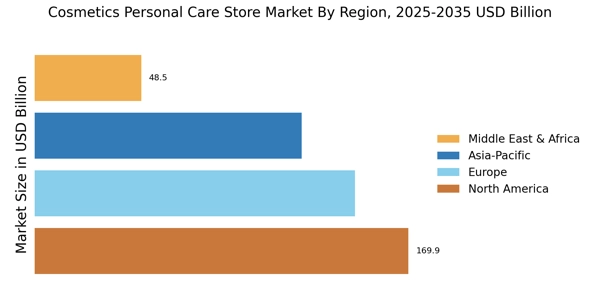
The Cosmetics Personal Care Store Market has shown substantial development across its regional segmentation, with North America taking the lead, valued at 150.0 USD Billion in 2024 and projected to reach 190.0 USD Billion by 2035, indicating its majority holding in the market. Europe follows closely, showcasing significant potential with a value of 130.0 USD Billion in 2024, escalating to 160.0 USD Billion in 2035.
The APAC region, equally poised for growth, matched Europe's valuation in 2024 and is expected to reach 180.0 USD Billion by 2035, reflecting a robust demand for personal care products driven by rising disposable incomes and changing beauty standards. In contrast, South America represents a smaller yet vital segment, starting at 40.0 USD Billion in 2024 and rising to 50.0 USD Billion by 2035, highlighting emerging market opportunities. Meanwhile, the MEA region, valued at 35.32 USD Billion in 2024, is expected to see significant growth, reaching 70.0 USD Billion by 2035, showcasing growing consumer awareness and demand for cosmetics.
Collectively, these regions contribute diverse opportunities and challenges within the Cosmetics Personal Care Store Market, indicating a dynamic landscape influenced by cultural trends, economic factors, and consumer preferences.
The Cosmetics Personal Care Store Market is characterized by intense competition as a diverse range of brands and products vie for consumer attention. The market is dynamic and constantly evolving due to changing consumer preferences, technological advancements, and the introduction of innovative products. Brands are increasingly focusing on establishing a strong online presence while also enhancing the customer experience in physical retail spaces. The competitive landscape encompasses both well-established multinational corporations and emerging local players. As sustainability and ethical practices gain prominence among consumers, companies are adjusting their strategies to meet these expectations through eco-friendly products and transparent sourcing.
The influence of social media and influencer marketing further enhances the competitive environment, pushing brands to creatively engage their target audience. Procter and Gamble have established a formidable presence in the Cosmetics Personal Care Store Market, known for its extensive portfolio of trusted brands that cater to various personal care needs. The company leverages strong research and development capabilities, ensuring that it remains at the forefront of innovation in product formulation and technology. Procter and Gamble's commitment to quality and consumer satisfaction is reflected in its ability to maintain customer loyalty, leading to consistent sales growth within the cosmetics sector.
Moreover, the brand's strategic partnerships and marketing initiatives enable it to reach a broad audience while capitalizing on emerging trends in cosmetics, such as clean beauty and personalized skincare solutions. Procter and Gamble's significant market share is further supported by its effective distribution channels, both online and offline, ensuring product availability to consumers worldwide. Beiersdorf has carved out a distinctive position within the Cosmetics Personal Care Store Market by emphasizing skin care as its core focus.
The company's product lines are renowned for their high efficacy and dermatological credentials, which resonate well with consumers seeking reliable and effective personal care solutions. Beiersdorf's commitment to research and innovation is evident in its development of advanced formulations that cater to diverse skin types and concerns. The brand has strategically invested in sustainability initiatives, which enhance its appeal to the increasingly conscientious consumer. Beiersdorf's ability to adapt to market trends, coupled with strong brand equity, has solidified its standing in the personal care segment.
By prioritizing customer-centric approaches and enhancing its product distribution networks, Beiersdorf continues to thrive in the competitive landscape of cosmetics and personal care.


The Cosmetics Personal Care Store Market has witnessed significant developments recently, driven by evolving consumer preferences and sustainability trends. Companies like Unilever and L'Oreal are increasingly focusing on eco-friendly products, with Unilever aiming for all of its plastic packaging to be recyclable by 2025. Meanwhile, Procter and Gamble has intensified its efforts on consumer engagement through digital platforms, enhancing personalized shopping experiences.
In terms of mergers and acquisitions, Beiersdorf has acquired several niche skincare brands to strengthen its market position, while Estée Lauder completed the acquisition of Dr. Jart+, highlighting its strategy to diversify its product offerings. The market valuation of companies such as Avon and Revlon continues to grow, influenced by accelerating demand for high-quality personal care products amidst the rise of e-commerce, with both brands leveraging online platforms to reach broader audiences. This increasing focus on innovation and sustainability is reshaping the landscape, creating new opportunities and challenges within the cosmetics sector.
The ongoing shifts reflect a dynamic industry responsive to both consumer needs and broader market trends, underscoring the importance of strategic planning for industry players like Johnson & Johnson and Coty.
The Cosmetics Personal Care Store Market is projected to grow at a 2.69% CAGR from 2025 to 2035, driven by increasing consumer demand for personalized products and sustainable practices.
New opportunities lie in:
By 2035, the market is expected to achieve robust growth, reflecting evolving consumer preferences and innovative strategies.
| MARKET SIZE 2024 | 485.32(USD Billion) |
| MARKET SIZE 2025 | 498.38(USD Billion) |
| MARKET SIZE 2035 | 649.89(USD Billion) |
| COMPOUND ANNUAL GROWTH RATE (CAGR) | 2.69% (2025 - 2035) |
| REPORT COVERAGE | Revenue Forecast, Competitive Landscape, Growth Factors, and Trends |
| BASE YEAR | 2024 |
| Market Forecast Period | 2025 - 2035 |
| Historical Data | 2019 - 2024 |
| Market Forecast Units | USD Billion |
| Key Companies Profiled | L'Oreal (FR), Procter & Gamble (US), Unilever (GB), Estée Lauder (US), Coty (US), Shiseido (JP), Revlon (US), Avon (GB), Mary Kay (US) |
| Segments Covered | Product Type, Consumer Type, Sales Channel, Formulation, Regional |
| Key Market Opportunities | Integration of sustainable packaging solutions to meet evolving consumer preferences in the Cosmetics Personal Care Store Market. |
| Key Market Dynamics | Rising consumer demand for sustainable products drives innovation and competition in the Cosmetics Personal Care Store Market. |
| Countries Covered | North America, Europe, APAC, South America, MEA |
The market valuation reached 485.32 USD Billion in 2024.
The market is expected to grow to 649.89 USD Billion by 2035.
The expected CAGR during the forecast period is 2.69%.
Skincare, with a valuation of 195.0 USD Billion, appears to be the leading segment.
The women's segment is projected to reach 350.0 USD Billion, indicating strong demand.
The offline sales channel is expected to generate between 242.66 and 324.0 USD Billion.
Chemical formulations are projected to reach 200.0 USD Billion, suggesting a dominant presence.
Key players include L'Oreal, Procter & Gamble, and Unilever, among others.
The haircare segment is expected to grow to between 115.0 and 145.0 USD Billion.
Organic products are projected to reach 80.0 USD Billion, while synthetic products may reach 209.89 USD Billion.



Kindly complete the form below to receive a free sample of this Report

“This is really good guys. Excellent work on a tight deadline. I will continue to use you going forward and recommend you to others. Nice job”


“Thanks. It’s been a pleasure working with you, please use me as reference with any other Intel employees.”


“Thanks for sending the report it gives us a good global view of the Betaïne market.”


“Thank you, this will be very helpful for OQS.”


“We found the report very insightful! we found your research firm very helpful. I'm sending this email to secure our future business.”


“I am very pleased with how market segments have been defined in a relevant way for my purposes (such as "Portable Freezers & refrigerators" and "last-mile"). In general the report is well structured. Thanks very much for your efforts.”


“I have been reading the first document or the study, ,the Global HVAC and FP market report 2021 till 2026. Must say, good info! I have not gone in depth at all parts, but got a good indication of the data inside!”


“We got the report in time, we really thank you for your support in this process. I also thank to all of your team as they did a great job.”


“The Automotive 48V ECU Components Procurement Intelligence Study” was a complex project, but the Market Research Future (MRFR) team handled it with quality, agility, and customer-centricity. They delivered all requested data on time and within the agreed scope. The team, including Shubhendra Anand and Rahul Gotadki, was always readily available to clarify questions and swiftly implement necessary adjustments, driving the project to a successful conclusion within a very demanding timeframe.
I would also like to specifically commend Akshay Agarwal for his responsiveness and support at every stage—from our initial inquiry on May 6th through to final delivery on June 18th. His dedication made the entire process seamless.”



