×
Request Free Sample ×

Kindly complete the form below to receive a free sample of this Report

* Please use a valid business email

Leading companies partner with us for data-driven Insights

clients tt-cursor
Hero Background

COVID19 Impact FMCG Industry

ID: MRFR/CG/8041-HCR
100 Pages
Snehal Singh
October 2025

COVID-19 Outbreak Impact on FMCG Industry

Share:
Download PDF ×

We do not share your information with anyone. However, we may send you emails based on your report interest from time to time. You may contact us at any time to opt-out.

COVID19 Impact FMCG Industry Infographic
Purchase Options

COVID19 Impact FMCG Industry Summary

As per MRFR analysis, the COVID-19 Impact on the FMCG Industry was estimated at 11900.0 USD Million in 2024. The COVID19 Impact FMCG industry is projected to grow from 12635.0 USD Million in 2025 to 22600.0 USD Million by 2035, exhibiting a compound annual growth rate (CAGR) of 6.2 during the forecast period 2025 - 2035.

Key Market Trends & Highlights

The FMCG industry is currently experiencing transformative shifts driven by evolving consumer preferences and market dynamics.

  • E-commerce expansion continues to reshape the retail landscape, particularly in North America, where online sales dominate.
  • Health and hygiene focus remains paramount, influencing purchasing decisions across both food and beverages and health and wellness segments.
  • Sustainability awareness is gaining traction, especially in the Asia-Pacific region, as consumers increasingly prioritize eco-friendly products.
  • Market drivers such as supply chain resilience and health-conscious consumer behavior are significantly shaping the industry's trajectory.

Market Size & Forecast

2024 Market Size 11900000.0 (USD Million)
2035 Market Size 22600000.0 (USD Million)
CAGR (2025 - 2035) 6.2%

Major Players

Procter & Gamble (US), Unilever (GB), Nestle (CH), PepsiCo (US), Coca-Cola (US), Mondelez International (US), Danone (FR), Reckitt Benckiser (GB), Kraft Heinz (US)

COVID19 Impact FMCG Industry Trends

The COVID-19 Impact on the FMCG Industry has undergone substantial transformations, driven by shifts in consumer behavior and supply chain dynamics. As the world adapts to new realities, the industry witnesses a marked increase in demand for essential goods, particularly in health and hygiene categories. This surge is accompanied by a growing emphasis on e-commerce platforms, as consumers increasingly prefer online shopping for convenience and safety. Retailers and manufacturers are compelled to innovate and enhance their digital presence to meet these evolving preferences, which may lead to a more competitive landscape. Moreover, sustainability has emerged as a pivotal consideration within the COVID19 Impact FMCG Industry. Consumers are becoming more conscious of their purchasing decisions, favoring brands that demonstrate environmental responsibility. This trend suggests that companies must not only focus on product quality but also on sustainable practices throughout their supply chains. As the industry continues to navigate these changes, it appears that adaptability and responsiveness will be crucial for long-term success, potentially reshaping the future of the FMCG sector.

E-commerce Expansion

The COVID19 Impact FMCG Industry is experiencing a notable shift towards online shopping. Consumers are increasingly opting for e-commerce platforms, driven by the need for convenience and safety. This trend compels retailers to enhance their digital strategies and invest in technology to cater to the growing demand for online services.

Health and Hygiene Focus

In the wake of the pandemic, there is a heightened emphasis on health and hygiene products within the COVID19 Impact FMCG Industry. Consumers are prioritizing items that promote well-being, leading to increased sales in categories such as sanitizers, disinfectants, and personal care products. This shift indicates a long-term change in consumer priorities.

Sustainability Awareness

Sustainability has become a critical factor influencing consumer choices in the COVID19 Impact FMCG Industry. Shoppers are increasingly seeking brands that demonstrate environmental responsibility. This trend suggests that companies must integrate sustainable practices into their operations to align with consumer expectations and enhance brand loyalty.

COVID19 Impact FMCG Industry Drivers

E-commerce Growth

The Global Covid19 Impact Fmcg Industry 9519Market Overview Industry experiences a notable shift towards e-commerce platforms as consumers increasingly prefer online shopping. In 2024, the industry is projected to reach 350 USD Billion, driven by the convenience and accessibility of digital retail. This trend is particularly pronounced in urban areas where consumers seek quick and safe shopping options. The rise of mobile commerce and the proliferation of digital payment solutions further enhance this growth. As more consumers adapt to online purchasing, the industry is likely to see sustained growth, with e-commerce becoming a dominant channel for FMCG sales.

Supply Chain Resilience

The Global Covid19 Impact Fmcg Industry 9519Market Overview Industry is compelled to enhance supply chain resilience in response to disruptions experienced during previous crises. Companies are investing in technology and logistics to ensure a more robust supply chain capable of withstanding future challenges. This focus on resilience not only mitigates risks but also improves operational efficiency. As firms adopt advanced analytics and automation, they can better predict demand and manage inventory. This strategic shift is essential for maintaining competitiveness in a rapidly evolving market landscape, ultimately supporting the industry's growth trajectory.

Health and Wellness Trends

The Global Covid19 Impact Fmcg Industry 9519Market Overview Industry is significantly influenced by the rising consumer focus on health and wellness. As individuals become more health-conscious, there is an increasing demand for organic, natural, and functional food products. This shift is reflected in the market, with consumers seeking products that offer health benefits, such as immunity boosters and nutritional supplements. The industry's response includes the introduction of innovative products that cater to these preferences, potentially leading to a market size of 600 USD Billion by 2035. This trend indicates a long-term transformation in consumer behavior towards healthier choices.

Sustainability Initiatives

The Global Covid19 Impact Fmcg Industry 9519Market Overview Industry is witnessing a growing emphasis on sustainability and eco-friendly practices. Consumers are increasingly aware of environmental issues and are opting for brands that demonstrate a commitment to sustainable sourcing and packaging. This trend is likely to shape product development and marketing strategies, as companies strive to align with consumer values. The industry's adaptation to sustainability could enhance brand loyalty and attract environmentally conscious consumers, thereby contributing to the projected CAGR of 5.02% from 2025 to 2035. This shift may redefine competitive dynamics within the FMCG sector.

Changing Consumer Preferences

The Global Covid19 Impact Fmcg Industry 9519Market Overview Industry is adapting to rapidly changing consumer preferences, particularly among younger demographics. Millennials and Gen Z consumers prioritize convenience, quality, and brand transparency, influencing their purchasing decisions. This demographic shift is prompting companies to innovate and diversify their product offerings, ensuring alignment with consumer expectations. As brands respond to these preferences, they may experience increased market share and customer loyalty. The industry's ability to adapt to these evolving preferences is crucial for sustaining growth and maintaining relevance in a competitive market.
Market Segment Insights

By Product Type: Food and Beverages (Largest) vs. Health and Wellness (Fastest-Growing)

In the COVID19 Impact FMCG Industry, the distribution of market shares across product types reveals that Food and Beverages have emerged as the largest contributor to the market, reflecting stable consumer reliance on essential goods during the pandemic. Following closely behind, Personal Care and Household Care products have also gained notable shares, driven by heightened hygiene awareness. Meanwhile, Health and Wellness products have swiftly captured the attention of health-conscious consumers seeking immunity boosters and wellness solutions, marking a significant shift in purchase behavior. Growth trends in the segment have been significantly influenced by the pandemic, which has catalyzed a surge in demand for Health and Wellness products. With consumers becoming more health-aware, there is an evident shift towards preventative healthcare, reflected in the rapid growth of this segment. The convenience of online shopping and the increased focus on self-care have further fueled this growth, making Health and Wellness the fastest-growing segment, while Food and Beverages maintain their dominance as a staple in grocery purchases.

Food and Beverages: Dominant vs. Health and Wellness: Emerging

Food and Beverages have long been the cornerstone of the FMCG industry, especially highlighted during the COVID19 pandemic as consumers flocked to secure essentials. This segment not only benefits from established brand loyalty but also encompasses a broad range of products that appeal to different taste preferences and dietary needs. On the other hand, Health and Wellness has emerged as a dynamic force within the FMCG landscape. Driven by a global shift toward healthier lifestyles, this segment includes supplements, organic products, and functional foods that are increasingly prioritized by health-conscious consumers. The COVID-19 pandemic has accelerated this change as individuals gravitate towards products that promise enhanced well-being, creating fertile ground for innovation and market growth.

By Distribution Channel: Online Retail (Largest) vs. Supermarkets (Fastest-Growing)

The distribution channel segment in the COVID19 Impact FMCG Industry has seen a significant shift, with online retail claiming the largest market share. According to recent trends, online platforms have emerged as the preferred shopping method for consumers seeking safety and convenience during and after the pandemic. In contrast, supermarkets have sustained a strong presence, adapting their offerings to include more online shopping options, resulting in increased operational efficiency and customer satisfaction. As consumer behavior continues to evolve, the fastest-growing segment is undoubtedly supermarkets. They are expanding their digital integration while enhancing in-store experiences. This dual approach not only caters to the immediate demands of health-conscious shoppers but also fosters loyalty and brand engagement, significantly contributing to their growth trajectory post-pandemic.

Online Retail: Dominant vs. Supermarkets: Emerging

In the context of the COVID19 Impact FMCG Industry, online retail has established itself as the dominant distribution channel, primarily due to safety concerns and the convenience it offers. Consumers prefer shopping from home, which has led to rapid growth and innovation in e-commerce platforms. Conversely, supermarkets, while traditionally dominant in the brick-and-mortar space, are emerging as a significant player in the online segment. They are enhancing their digital strategies and improving supply chain efficiencies, positioning themselves to capture both online and in-store customers. The adaptability of supermarkets, along with their focus on convenience, speaks to the changing shopping habits influenced by the pandemic.

By Consumer Demographics: Age Group (Largest) vs. Health Consciousness (Fastest-Growing)

In the COVID19 Impact FMCG Industry, the distribution of market share among consumer demographics reveals notable insights. Age group segmentation shows that younger consumers, particularly those aged 18-34, constitute the largest segment, showcasing a significant preference for online shopping and health-oriented products. Conversely, the health-conscious demographic, while smaller, is rapidly gaining traction as consumers prioritize wellness and hygiene in their purchasing decisions. Growth trends indicate a strong shift towards health-conscious choices as the COVID-19 pandemic has heightened awareness of personal health and safety. This shift is driving innovation in FMCG products, with companies introducing more organic, natural, and clean-label items to cater to the evolving consumer preferences. The focus on health consciousness indicates a promising trajectory as brands adjust to meet these emerging needs within the market.

Age Group (Dominant) vs. Health Consciousness (Emerging)

The age group segment is currently the dominant force in the COVID19 Impact FMCG Industry, with younger consumers leading the charge towards innovative purchasing habits influenced by the pandemic. This demographic is characterized by their tech-savviness and inclination towards online platforms for grocery and FMCG purchases. In contrast, the health consciousness segment is emerging as a key player, driven by a growing awareness of health issues exacerbated by the pandemic. Consumers are increasingly seeking out products that offer health benefits, such as immunity boosters and sanitizing solutions. Brands are responding by enhancing their product lines to include healthier options, significantly altering the market landscape.

Get more detailed insights about COVID19 Impact FMCG Industry

Regional Insights

North America : Market Leader in FMCG

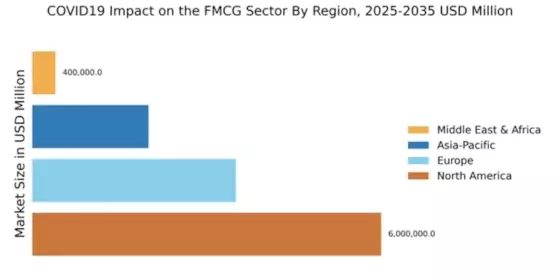
North America continues to lead the FMCG market, holding a significant share of 6000000.0 in 2024. The region's growth is driven by increased consumer demand for essential goods, accelerated by the COVID-19 pandemic. Regulatory support for e-commerce and supply chain resilience has further bolstered market dynamics, allowing companies to adapt swiftly to changing consumer behaviors. The focus on health and hygiene products has also surged, reflecting a shift in consumer priorities. The competitive landscape is characterized by major players such as Procter & Gamble, PepsiCo, and Coca-Cola, which dominate the market with innovative product offerings. The U.S. remains the largest contributor, supported by a robust retail infrastructure and a strong distribution network. Companies are increasingly investing in sustainability and digital transformation to meet evolving consumer expectations, ensuring their continued leadership in the FMCG sector.

Europe : Resilient Market Dynamics

Europe's FMCG market, valued at 3500000.0, has shown resilience despite the challenges posed by the COVID-19 pandemic. The region's growth is fueled by a shift towards online shopping and increased demand for health-conscious products. Regulatory frameworks promoting sustainability and consumer protection have also played a crucial role in shaping market trends. The emphasis on local sourcing and transparency is driving innovation in product offerings, catering to evolving consumer preferences. Leading countries such as Germany, France, and the UK are at the forefront of this market, with key players like Unilever and Nestle leveraging their strong brand equity. The competitive landscape is marked by a mix of established brands and emerging startups, all vying for market share. The focus on digital transformation and sustainability initiatives is expected to further enhance the region's market dynamics, ensuring continued growth in the FMCG sector.

Asia-Pacific : Emerging Market Potential

The Asia-Pacific region, with a market size of 2000000.0, is witnessing rapid growth in the FMCG sector, driven by urbanization and rising disposable incomes. The COVID-19 pandemic has accelerated the demand for essential goods, with consumers increasingly prioritizing health and hygiene products. Regulatory support for e-commerce and digital payments has further facilitated market expansion, allowing companies to reach a broader audience and adapt to changing consumer needs. Countries like China and India are leading the charge, with significant contributions from local and international players. Companies such as Nestle and Reckitt Benckiser are expanding their footprints, focusing on innovation and localized product offerings. The competitive landscape is dynamic, with a mix of traditional retailers and online platforms vying for market share. As consumer preferences evolve, the region is poised for sustained growth in the FMCG sector.

Middle East and Africa : Growth Amid Challenges

The Middle East and Africa (MEA) region, with a market size of 400000.0, is navigating through challenges while showing resilience in the FMCG sector. The COVID-19 pandemic has highlighted the importance of essential goods, driving demand for food and hygiene products. Regulatory initiatives aimed at enhancing supply chain efficiency and consumer protection are fostering a more stable market environment. The region's diverse consumer base is increasingly leaning towards health-conscious and locally sourced products. Leading countries such as South Africa and the UAE are pivotal in this market, with key players like Danone and Coca-Cola adapting their strategies to meet local demands. The competitive landscape is evolving, with both multinational corporations and local brands striving for market presence. As the region continues to recover, the FMCG sector is expected to grow, driven by innovation and a focus on sustainability.

Key Players and Competitive Insights

The COVID19 Impact FMCG Industry is currently characterized by a dynamic competitive landscape, driven by evolving consumer preferences and heightened demand for health and wellness products. Major players such as Procter & Gamble (US), Unilever (GB), and Nestle (CH) are strategically positioning themselves through innovation and digital transformation. Procter & Gamble (US) has focused on enhancing its product portfolio with health-oriented offerings, while Unilever (GB) emphasizes sustainability in its supply chain. Nestle (CH) is leveraging its global reach to expand into emerging markets, thereby shaping a competitive environment that prioritizes adaptability and consumer-centric strategies.

Key business tactics within the industry include localizing manufacturing and optimizing supply chains to enhance resilience. The market structure appears moderately fragmented, with several key players exerting substantial influence. This fragmentation allows for niche players to emerge, yet the collective strength of major companies like PepsiCo (US) and Coca-Cola (US) ensures that they maintain a significant foothold in the market. Their ability to adapt to changing consumer demands and preferences is crucial in this competitive landscape.

In November 2025, PepsiCo (US) announced a strategic partnership with a leading health technology firm to develop personalized nutrition solutions. This move is indicative of PepsiCo's commitment to innovation and reflects a broader trend towards health-conscious consumerism. By integrating technology into its product offerings, PepsiCo aims to enhance customer engagement and drive sales in a market increasingly focused on wellness.

In October 2025, Unilever (GB) launched a new line of eco-friendly personal care products, reinforcing its sustainability agenda. This initiative not only aligns with consumer expectations for environmentally responsible products but also positions Unilever as a leader in sustainable practices within the FMCG sector. The strategic importance of this launch lies in its potential to attract environmentally conscious consumers, thereby expanding Unilever's market share.

In September 2025, Nestle (CH) expanded its operations in Southeast Asia by acquiring a local health food brand. This acquisition is significant as it allows Nestle to tap into the growing demand for health-oriented products in emerging markets. The strategic move underscores Nestle's focus on diversifying its portfolio and enhancing its competitive edge in a rapidly evolving market.

As of December 2025, current competitive trends are increasingly defined by digitalization, sustainability, and the integration of AI technologies. Strategic alliances are becoming more prevalent, enabling companies to leverage shared resources and expertise. The competitive differentiation is likely to evolve from traditional price-based competition towards innovation, technology, and supply chain reliability. This shift suggests that companies must prioritize agility and responsiveness to consumer needs to thrive in the future.

Key Companies in the COVID19 Impact FMCG Industry market include

Future Outlook

COVID19 Impact FMCG Industry Future Outlook

The COVID19 Impact FMCG Industry is projected to grow at a 6.2% CAGR from 2024 to 2035, driven by digital transformation, evolving consumer preferences, and sustainability initiatives.

New opportunities lie in:

  • Expansion of e-commerce platforms for direct-to-consumer sales.
  • Development of health-focused product lines targeting immunity and wellness.
  • Implementation of sustainable packaging solutions to enhance brand loyalty.

By 2035, the market is expected to be robust, driven by innovation and consumer-centric strategies.

Market Segmentation

COVID19 Impact FMCG Industry Product Type Outlook

  • Personal Care
  • Household Care
  • Food and Beverages
  • Health and Wellness
  • Pet Care

COVID19 Impact FMCG Industry Distribution Channel Outlook

  • Online Retail
  • Supermarkets
  • Convenience Stores
  • Pharmacies
  • Direct Sales

COVID19 Impact FMCG Industry Consumer Demographics Outlook

  • Age Group
  • Income Level
  • Family Size
  • Health Consciousness
  • Lifestyle Preferences

Report Scope

MARKET SIZE 202411900000.0(USD Million)
MARKET SIZE 202512635000.0(USD Million)
MARKET SIZE 203522600000.0(USD Million)
COMPOUND ANNUAL GROWTH RATE (CAGR)6.2% (2024 - 2035)
REPORT COVERAGERevenue Forecast, Competitive Landscape, Growth Factors, and Trends
BASE YEAR2024
Market Forecast Period2025 - 2035
Historical Data2019 - 2024
Market Forecast UnitsUSD Million
Key Companies ProfiledProcter & Gamble (US), Unilever (GB), Nestle (CH), PepsiCo (US), Coca-Cola (US), Mondelez International (US), Danone (FR), Reckitt Benckiser (GB), Kraft Heinz (US)
Segments CoveredProduct Type, Distribution Channel, Consumer Demographics
Key Market OpportunitiesIncreased demand for health-oriented products and sustainable packaging in the COVID19 Impact FMCG Industry.
Key Market DynamicsShifts in consumer behavior and supply chain disruptions reshape the competitive landscape of the Fast-Moving Consumer Goods industry.
Countries CoveredNorth America, Europe, APAC, South America, MEA

Leave a Comment

Download Free Sample

Kindly complete the form below to receive a free sample of this Report

Compare Licence

×
Features License Type
Single User Multiuser License Enterprise User
Price $4,950 $5,950 $7,250
Maximum User Access Limit 1 User Upto 10 Users Unrestricted Access Throughout the Organization
Free Customization
Direct Access to Analyst
Deliverable Format
Platform Access
Discount on Next Purchase 10% 15% 15%
Printable Versions