Cranial Clamp Market
Cranial Clamp Market Summary
As per Market Research Future analysis, the Cranial Clamp Market Size was estimated at 0.75 USD Billion in 2024. The Cranial Clamp industry is projected to grow from USD 0.7832 Billion in 2025 to USD 1.208 Billion by 2035, exhibiting a compound annual growth rate (CAGR) of 4.43% during the forecast period 2025 - 2035
Key Market Trends & Highlights
The Cranial Clamp Market is poised for growth driven by technological advancements and increasing healthcare investments.
- Technological advancements are enhancing the functionality and precision of cranial clamps, thereby improving surgical outcomes.
- The North American region remains the largest market, while the Asia-Pacific region is emerging as the fastest-growing market for cranial clamps.
- Neurosurgery continues to dominate the market, whereas the orthopedic surgery segment is witnessing rapid growth due to rising demand.
- Key market drivers include the rising incidence of neurological disorders and increasing investment in healthcare infrastructure.
Market Size & Forecast
| 2024 Market Size | 0.75 (USD Billion) |
| 2035 Market Size | 1.208 (USD Billion) |
| CAGR (2025 - 2035) | 4.43% |
Major Players
Medtronic (US), Stryker (US), B. Braun (DE), DePuy Synthes (US), Integra LifeSciences (US), Aesculap (DE), KLS Martin (DE), Mizuho OSI (US)
Cranial Clamp Market Trends
The Cranial Clamp Market is currently experiencing a notable evolution, driven by advancements in surgical technology and an increasing emphasis on patient safety. The demand for cranial clamps is likely influenced by the rising prevalence of neurological disorders, which necessitate precise surgical interventions. Furthermore, the integration of innovative materials and designs appears to enhance the functionality and reliability of these devices, thereby attracting a broader range of healthcare providers. As hospitals and surgical centers prioritize efficiency and effectiveness, the Cranial Clamp Market is poised for growth, reflecting a shift towards more sophisticated surgical solutions. In addition, the market landscape is characterized by a growing trend towards minimally invasive procedures. This shift may lead to the development of cranial clamps that are specifically designed to accommodate such techniques, potentially improving patient outcomes and reducing recovery times. Moreover, the increasing collaboration between manufacturers and healthcare professionals suggests a commitment to addressing the evolving needs of the surgical community. Overall, the Cranial Clamp Market seems to be on a trajectory of innovation and adaptation, aligning with broader trends in the medical device industry.
Technological Advancements
The Cranial Clamp Market is witnessing a surge in technological innovations, which enhance the precision and safety of surgical procedures. Manufacturers are increasingly focusing on developing clamps that incorporate advanced materials and ergonomic designs, potentially improving usability and patient outcomes.
Minimally Invasive Surgery
There is a discernible trend towards minimally invasive surgical techniques within the Cranial Clamp Market. This shift may drive the demand for specialized clamps that facilitate such procedures, thereby reducing patient trauma and expediting recovery.
Collaborative Development
The market is experiencing a growing trend of collaboration between device manufacturers and healthcare professionals. This partnership may lead to the creation of cranial clamps that better meet the specific needs of surgeons, ultimately enhancing surgical efficiency and effectiveness.
Cranial Clamp Market Drivers
Rising Incidence of Neurological Disorders
The increasing prevalence of neurological disorders, such as epilepsy, Parkinson's disease, and traumatic brain injuries, is a primary driver of the Cranial Clamp Market. As the number of patients requiring neurosurgical interventions rises, the demand for cranial clamps is expected to grow correspondingly. According to recent data, neurological disorders affect millions of individuals worldwide, leading to a surge in surgical procedures. This trend indicates a robust market potential for cranial clamps, as they are essential tools in ensuring the stability and safety of the surgical site during operations. The Cranial Clamp Market is likely to benefit from this growing patient population, as healthcare providers seek reliable and effective solutions to enhance surgical outcomes.
Regulatory Support for Surgical Innovations
Regulatory bodies are increasingly supporting innovations in surgical equipment, which is positively impacting the Cranial Clamp Market. Streamlined approval processes and favorable regulations for new medical devices are encouraging manufacturers to develop advanced cranial clamps. This regulatory support is crucial for fostering innovation and ensuring that healthcare providers have access to the latest technologies. As a result, the market is likely to see a surge in the introduction of new cranial clamp designs that enhance surgical efficiency and patient safety. The Cranial Clamp Market stands to benefit from this supportive regulatory environment, as it enables the rapid adoption of innovative solutions in neurosurgery.
Growing Awareness of Neurosurgical Procedures
The rising awareness of neurosurgical procedures among patients and healthcare professionals is contributing to the growth of the Cranial Clamp Market. As more individuals become informed about the benefits and advancements in neurosurgery, there is a corresponding increase in the number of patients seeking surgical interventions for neurological conditions. Educational campaigns and improved access to information are playing a crucial role in this trend. Consequently, healthcare providers are more likely to recommend cranial clamps as essential tools for ensuring successful surgical outcomes. This heightened awareness is expected to drive demand within the Cranial Clamp Market, as more patients opt for surgical solutions to address their neurological issues.
Technological Innovations in Surgical Equipment
Technological advancements in surgical equipment are significantly influencing the Cranial Clamp Market. Innovations such as improved materials, enhanced design features, and integration of digital technologies are making cranial clamps more efficient and user-friendly. For instance, the introduction of lightweight materials and ergonomic designs has improved the usability of these devices, thereby increasing their adoption in surgical settings. Furthermore, the incorporation of smart technologies, such as sensors and imaging systems, is expected to enhance the precision of cranial surgeries. As hospitals and surgical centers invest in state-of-the-art equipment, the demand for advanced cranial clamps is anticipated to rise, driving growth in the Cranial Clamp Market.
Increasing Investment in Healthcare Infrastructure
The expansion of healthcare infrastructure, particularly in emerging economies, is a significant driver for the Cranial Clamp Market. Governments and private entities are investing heavily in healthcare facilities to improve access to surgical services. This investment is likely to lead to an increase in the number of surgical procedures performed, thereby boosting the demand for cranial clamps. Recent reports indicate that healthcare spending is on the rise, with many countries prioritizing the development of advanced medical facilities. As a result, the Cranial Clamp Market is poised to experience growth, as more hospitals and surgical centers seek to equip themselves with the necessary tools for effective neurosurgical interventions.
Market Segment Insights
By Application: Neurosurgery (Largest) vs. Orthopedic Surgery (Fastest-Growing)
In the Cranial Clamp Market, the application segments are primarily divided into neurosurgery, orthopedic surgery, dental surgery, and radiotherapy. Neurosurgery captures the largest share due to the increasing prevalence of neurological disorders and the rising number of surgical procedures performed globally. Orthopedic surgery, while smaller, is rapidly gaining traction owing to advancements in surgical techniques and an aging population prone to orthopedic conditions.
Neurosurgery: Dominant vs. Orthopedic Surgery: Emerging
Neurosurgery is currently the dominant application segment in the Cranial Clamp Market, attributed to the critical need for precision in procedures like brain surgeries and biopsies. The segment benefits from continuous innovations in clamp designs that enhance stability and control during surgery. On the other hand, orthopedic surgery, though emerging, shows significant growth potential due to technological advancements in minimally invasive procedures. This evolving segment is increasingly acknowledged for its importance in trauma care and sports injuries, leading to an uptick in the demand for specialized cranial clamps.
By Material: Stainless Steel (Largest) vs. Titanium (Fastest-Growing)
The Cranial Clamp Market demonstrates a significant diversity in material distribution, with stainless steel leading the market as the most preferred material. Its robustness and reliability make it the top choice among healthcare professionals. Plastic and aluminum follow, catering to specific needs, while titanium is gaining traction as an alternative, especially in advanced surgical applications. This nuanced market share landscape reflects the varied preferences and requirements of users in different surgical environments. In terms of growth trends, titanium has emerged as the fastest-growing segment due to its biocompatibility and lightweight properties, appealing to medical professionals seeking innovative solutions. Stainless steel, although dominant, shows steady growth driven by its established reputation and preference. The rise in surgical procedures globally continues to drive demand for both materials, but the burgeoning interest in titanium points toward evolving market dynamics favoring newer materials with unique advantages.
Stainless Steel (Dominant) vs. Titanium (Emerging)
Stainless steel remains the dominant material in the Cranial Clamp Market owing to its strength, durability, and cost-effectiveness, which make it an established favorite among hospitals and surgical centers. This material is well-regarded for its ability to withstand repeated sterilization processes without compromising structural integrity, making it ideal for the medical environment. On the other hand, titanium is emerging rapidly in this sector, gaining popularity for its superior biocompatibility and lightweight nature, which enhances patient comfort during surgeries. While stainless steel continues to dominate market share, titanium's rising acceptance suggests a shift towards offering surgeons improved options that align with the increasing focus on patient-centered care.
By Design Type: Adjustable (Largest) vs. Fixed (Fastest-Growing)
In the Cranial Clamp Market, adjustable cranial clamps hold the largest share due to their versatility and adaptability for various surgical procedures. These clamps provide a customized fit for patients, leading to improved surgical outcomes and patient comfort. Fixed cranial clamps, while less flexible, maintain a significant market share and are preferred for their stability and reliability during procedures. Multi-axis clamps, although crucial for specific applications, capture a smaller segment of the market.
Adjustable (Dominant) vs. Multi-Axis (Emerging)
Adjustable cranial clamps are considered the dominant design type in the market, offering a unique combination of flexibility and stability that appeals to a wide range of surgical applications. These clamps allow for precise positioning and adjustments, which enhances the surgeon's ability to perform complex procedures safely. Multi-axis clamps are emerging as a specialized option that provides superior positioning capabilities, particularly in intricate surgeries. While still gaining traction, these clamps are characterized by their innovative design that allows for enhanced maneuverability and angle adjustments, making them increasingly valued in specific surgical scenarios.
By End Use: Hospitals (Largest) vs. Ambulatory Surgical Centers (Fastest-Growing)
In the Cranial Clamp Market, hospitals hold the largest market share, driven by the high volume of cranial surgeries performed in these facilities. This segment reflects the critical need for precise and reliable surgical equipment, leading hospitals to dominate the market. Meanwhile, ambulatory surgical centers are gaining traction, representing a growing segment in the market as they offer cost-effective alternatives for various procedures, including outpatient cranial surgeries.
Hospitals (Dominant) vs. Ambulatory Surgical Centers (Emerging)
Hospitals play a dominant role in the Cranial Clamp Market, as they are equipped with advanced technology and skilled personnel to perform complex neurosurgical procedures. Their substantial infrastructure and established reputation make them a preferred choice for patients requiring cranial clamps. On the other hand, ambulatory surgical centers are on the rise, characterized by their innovative service delivery and increasing patient preference for outpatient procedures. The agility of these centers allows for the implementation of modern medical practices, attracting more patients and driving the demand for cranial clamps. This shift in patient care settings indicates a dynamic change in market dynamics, positioning ambulatory surgical centers as an emerging force.
Regional Insights
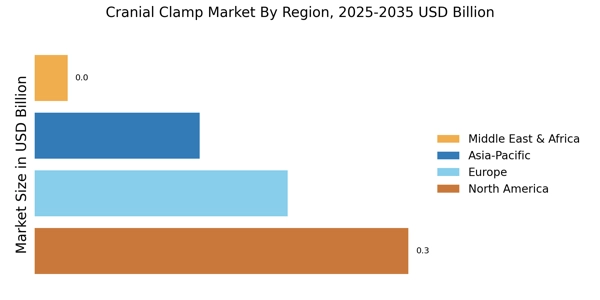
The Global Cranial Clamp Market exhibits notable regional variances, with a total market valuation of 0.75 USD Billion in 2024, expected to increase to 1.2 USD Billion by 2035. North America dominates this market, holding a valuation of 0.3 USD Billion in 2024, reflecting strong demand for advanced medical equipment in healthcare facilities. Europe follows, valued at 0.2 USD Billion in 2024, indicating significant market activity driven by technological innovations and rising surgical procedures.
The APAC region, valued at 0.15 USD Billion in 2024, is emerging due to increasing investments in healthcare infrastructure and rising patient populations.South America and MEA regions are smaller markets, valued at 0.05 USD Billion each in 2024, but their growth is bolstered by improving healthcare access and economic development.
The segmentation within the Global Cranial Clamp Market showcases North America's majority holding, primarily due to its advanced medical technologies and well-established healthcare systems, making it a key player in the overall industry dynamics. The market's growth is influenced by trends such as technological advancements, rising incidences of neurosurgical procedures, and a growing geriatric population across regions, presenting considerable opportunities for stakeholders within this segment.
Key Players and Competitive Insights
Key Companies in the Cranial Clamp Market include
Industry Developments
- Q3 2025: FDA Approval of DORO LUCENT Skull Clamp Announced The DORO LUCENT skull clamp, a next-generation cranial fixation device, received FDA approval, enabling its commercial launch in the United States for neurosurgical procedures.
Future Outlook
Cranial Clamp Market Future Outlook
The Cranial Clamp Market is projected to grow at a 4.43% CAGR from 2025 to 2035, driven by technological advancements, increasing surgical procedures, and rising demand for precision in neurosurgery.
New opportunities lie in:
- Development of advanced cranial clamp designs for minimally invasive surgeries.
- Expansion into emerging markets with tailored product offerings.
- Partnerships with hospitals for exclusive supply agreements and training programs.
By 2035, the Cranial Clamp Market is expected to achieve robust growth, solidifying its position in the global healthcare landscape.
Market Segmentation
Cranial Clamp Market End Use Outlook
- Hospitals
- Ambulatory Surgical Centers
- Research Institutes
Cranial Clamp Market Material Outlook
- Stainless Steel
- Plastic
- Titanium
- Aluminum
Cranial Clamp Market Application Outlook
- Neurosurgery
- Orthopedic Surgery
- Dental Surgery
- Radiotherapy
Cranial Clamp Market Design Type Outlook
- Adjustable
- Fixed
- Multi-Axis
Report Scope
| MARKET SIZE 2024 | 0.75(USD Billion) |
| MARKET SIZE 2025 | 0.7832(USD Billion) |
| MARKET SIZE 2035 | 1.208(USD Billion) |
| COMPOUND ANNUAL GROWTH RATE (CAGR) | 4.43% (2025 - 2035) |
| REPORT COVERAGE | Revenue Forecast, Competitive Landscape, Growth Factors, and Trends |
| BASE YEAR | 2024 |
| Market Forecast Period | 2025 - 2035 |
| Historical Data | 2019 - 2024 |
| Market Forecast Units | USD Billion |
| Key Companies Profiled | Medtronic (US), Stryker (US), B. Braun (DE), DePuy Synthes (US), Integra LifeSciences (US), Aesculap (DE), KLS Martin (DE), Mizuho OSI (US) |
| Segments Covered | Application, Material, Design Type, End Use, Regional |
| Key Market Opportunities | Integration of advanced imaging technologies enhances precision in the Cranial Clamp Market. |
| Key Market Dynamics | Rising demand for advanced surgical tools drives innovation and competition in the cranial clamp market. |
| Countries Covered | North America, Europe, APAC, South America, MEA |
FAQs
What is the projected market valuation of the Cranial Clamp Market by 2035?
The Cranial Clamp Market is projected to reach a valuation of 1.208 USD Billion by 2035.
What was the market valuation of the Cranial Clamp Market in 2024?
In 2024, the Cranial Clamp Market was valued at 0.75 USD Billion.
What is the expected CAGR for the Cranial Clamp Market during the forecast period 2025 - 2035?
The expected CAGR for the Cranial Clamp Market during the forecast period 2025 - 2035 is 4.43%.
Which companies are considered key players in the Cranial Clamp Market?
Key players in the Cranial Clamp Market include Medtronic, Stryker, B. Braun, DePuy Synthes, Integra LifeSciences, Aesculap, KLS Martin, and Mizuho OSI.
What are the main application segments of the Cranial Clamp Market?
The main application segments include Neurosurgery, Orthopedic Surgery, Dental Surgery, and Radiotherapy.
How did the Neurosurgery segment perform in terms of market valuation in 2024?
The Neurosurgery segment was valued at 0.3 USD Billion in 2024 and is expected to grow to 0.5 USD Billion.
What materials are predominantly used in the production of cranial clamps?
The predominant materials used include Stainless Steel, Plastic, Titanium, and Aluminum.
What is the market valuation for the Adjustable design type in the Cranial Clamp Market?
The Adjustable design type was valued at 0.225 USD Billion in 2024 and is projected to reach 0.384 USD Billion.
Which end-use segment holds the largest market share in the Cranial Clamp Market?
The Hospitals segment holds the largest market share, valued at 0.375 USD Billion in 2024.
What is the projected growth for the Ambulatory Surgical Centers segment by 2035?
The Ambulatory Surgical Centers segment is expected to grow from 0.225 USD Billion in 2024 to 0.372 USD Billion by 2035.
Kindly complete the form below to receive a free sample of this Report
Customer Stories
“This is really good guys. Excellent work on a tight deadline. I will continue to use you going forward and recommend you to others. Nice job”
“Thanks. It’s been a pleasure working with you, please use me as reference with any other Intel employees.”
“Thanks for sending the report it gives us a good global view of the Betaïne market.”
“Thank you, this will be very helpful for OQS.”
“We found the report very insightful! we found your research firm very helpful. I'm sending this email to secure our future business.”
“I am very pleased with how market segments have been defined in a relevant way for my purposes (such as "Portable Freezers & refrigerators" and "last-mile"). In general the report is well structured. Thanks very much for your efforts.”
“I have been reading the first document or the study, ,the Global HVAC and FP market report 2021 till 2026. Must say, good info! I have not gone in depth at all parts, but got a good indication of the data inside!”
“We got the report in time, we really thank you for your support in this process. I also thank to all of your team as they did a great job.”