Download Free Sample
Kindly complete the form below to receive a free sample of this Report
Cut Flower Market Size, Share, Industry Trend & Analysis Research Report By Flower Type (Roses, Carnations, Lilies, Tulips, Chrysanthemums, Gerbera, Orchids, Sunflowers, Daffodils), By Cultivation Method (Greenhouse, Open Field, Hydroponic), By Distribution Channel (Wholesalers, Retailers, Online, Direct-to-Consumer), By End User (Florists, Event Planners, Home Decor, Gifts) and By Regional (North America, Europe, South America, Asia Pacific, Middle East and Africa) - Forecast to 2035
As per MRFR analysis, the Cut Flower Market Size was estimated at 37.7 USD Billion in 2024. The Cut Flower industry is projected to grow from 39.6 USD Billion in 2025 to 64.64 USD Billion by 2035, exhibiting a compound annual growth rate (CAGR) of 5.02% during the forecast period 2025 - 2035.
The Cut Flower Market is experiencing a dynamic shift towards sustainability and e-commerce growth.
| 2024 Market Size | 37.7 (USD Billion) |
| 2035 Market Size | 64.64 (USD Billion) |
| CAGR (2025 - 2035) | 5.02% |
The Cut Flower Market is witnessing a notable shift towards sustainability, with consumers increasingly favoring eco-friendly practices. This trend encourages businesses to adopt environmentally responsible sourcing and production methods. Sustainability initiatives are also influencing the cut flower packaging market, with increased adoption of recyclable, biodegradable, and temperature-controlled packaging solutions. The growth of the cuttings flower & garden market indirectly supports the cut flower industry by strengthening commercial flower cultivation, improving plant quality, and ensuring a steady supply of high-yield varieties for florists and event-driven demand.
The rise of online shopping platforms is reshaping the Cut Flower Market, providing consumers with greater convenience and accessibility. This shift may compel traditional retailers to innovate their sales approaches.
There is a growing trend of incorporating flowers into everyday life, extending beyond special occasions. This shift suggests a potential for consistent demand throughout the year, influencing market dynamics.
The Global cut flower Market Industry is poised for substantial growth, with projections indicating a compound annual growth rate (CAGR) of 5.02% from 2025 to 2035. This growth trajectory is supported by various factors, including increasing consumer demand, the rise of e-commerce, and sustainability trends. The market is expected to reach a value of 64.6 USD Billion by 2035, reflecting the industry's adaptability and resilience. As businesses continue to innovate and respond to changing consumer preferences, the market's expansion appears promising, suggesting a vibrant future for stakeholders across the cut flower supply chain.
The Global Cut Flower Market Industry is positively influenced by rising disposable incomes across various regions. As consumers have more financial flexibility, they are more inclined to spend on luxury items, including flowers for personal use and gifting. This trend is particularly evident in emerging markets, where economic growth is leading to an increase in consumer spending. The willingness to invest in premium floral products is expected to drive market growth, with projections indicating a market value of 64.6 USD Billion by 2035. This increase in disposable income is likely to enhance the overall market landscape, encouraging innovation and diversification in product offerings.
The rise of e-commerce platforms is transforming the Global Cut Flower Market Industry, enabling consumers to purchase flowers conveniently from their homes. Online flower delivery services have gained traction, particularly among younger demographics who prioritize convenience and accessibility. This shift is evidenced by the increasing number of online floral retailers and the expansion of traditional florists into digital spaces. The ease of ordering flowers online, coupled with same-day delivery options, appeals to consumers, thus driving sales. As e-commerce continues to flourish, it is projected to play a crucial role in the market's growth, potentially increasing overall sales figures significantly.
The Global Cut Flower Market Industry experiences a notable increase in demand for floral arrangements, particularly for events such as weddings, corporate functions, and holidays. This trend is driven by a cultural shift towards personalization in celebrations, where consumers seek unique and aesthetically pleasing floral designs. In 2024, the market is valued at approximately 37.7 USD Billion, reflecting the rising consumer preference for high-quality flowers. As the industry evolves, florists and suppliers are adapting to these preferences by offering customized arrangements, thereby enhancing customer satisfaction and loyalty. This growing demand is expected to contribute significantly to the market's expansion.
Technological advancements in cultivation techniques are significantly impacting the Global Cut Flower Market Industry. Innovations such as hydroponics, automated growing systems, and advanced breeding techniques are enhancing flower quality and yield. These technologies enable growers to produce flowers that meet consumer demands for freshness and longevity. Additionally, the integration of data analytics and precision agriculture allows for more efficient resource management, reducing waste and costs. As these technologies become more accessible, they are likely to drive productivity and profitability within the industry, contributing to sustained growth and competitiveness in the global market.
Sustainability has emerged as a pivotal driver within the Global Cut Flower Market Industry, as consumers become more environmentally conscious. The demand for sustainably sourced flowers is on the rise, prompting growers to adopt eco-friendly practices. This includes organic farming methods, reduced pesticide use, and sustainable packaging solutions. As a result, many florists are now highlighting their commitment to sustainability, which resonates with consumers seeking to make responsible purchasing decisions. This trend not only enhances brand loyalty but also positions businesses favorably in a competitive market. The industry's shift towards sustainability is likely to shape its future trajectory.
The cut flower market is significantly influenced by the application of flowers, with bouquets commanding the largest share. Bouquets are widely popular for various occasions, from weddings to birthdays, contributing greatly to overall sales. Arrangements, on the other hand, are quickly gaining traction, driven by consumer demand for creativity in floral displays. As trends shift towards personalized flowers for home décor, the demand for arrangements is on the rise, signaling a shift in consumer preferences.
Bouquets: Dominant vs. Arrangements: Emerging
In the cut flower market, bouquets are considered the dominant application due to their versatility and wide acceptance across different customer segments. They are often purchased for special occasions, driven by emotional connections and traditions. As the largest segment, bouquets benefit from established brand recognition and consumer habits. In contrast, arrangements are emerging as a popular choice, especially among millennials seeking unique and artistic expressions in floral designs. This transition is fueled by social media influences and the growing trend of home decoration with flowers, attracting a younger demographic.
In the Cut Flower Market, the distribution among end-use segments showcases that retail holds the largest share. Retail outlets, including supermarkets and floral shops, significantly drive consumption due to convenience and accessibility for consumers. Other segments like wholesale and event planning also contribute to market dynamics, but their shares are comparatively smaller. Online sales, on the other hand, have started gaining traction, especially as consumer preferences shift towards e-commerce, providing a seamless shopping experience for fresh flowers at their fingertips.
Retail: Predominant vs. Online Sales: Emerging
Retail remains the predominant segment in the Cut Flower Market, characterized by its vast network of physical stores including supermarkets, florists, and dedicated flower shops. These outlets cater to a diverse customer base, providing everything from seasonal bouquets to special event arrangements. The convenience of access and the ability to select fresh blooms physically reinforce its dominant position. Conversely, online sales are emerging as a significant force driven by changing consumer behaviors, fueled by the growing trend of e-commerce. With the advent of subscription services and direct-to-consumer platforms, online sales offer a modern alternative, enabling customers to order flowers effortlessly and have them delivered directly to their homes.
In the cut flower market, roses hold the largest market share, renowned for their timeless appeal and emotional significance, particularly in occasions such as weddings and anniversaries. Following closely, tulips are emerging with a notable share, bringing bright colors and variety into the market. Lilies, chrysanthemums, and orchids also contribute to the bouquet of choices available, but they tend to cater to more specific consumer preferences, often highlighting seasonal trends.
Roses (Dominant) vs. Tulips (Emerging)
Roses dominate the cut flower market due to their widespread popularity and association with love and romance. They are available in a myriad of colors and sizes, making them a versatile choice for various occasions, from celebrations to condolences. In contrast, tulips are rapidly emerging as a favorite, especially in spring. Their wide array of colors and unique shapes appeal to consumers seeking freshness and vibrancy, particularly in floral arrangements. The increasing trend of seasonal flower purchasing and the rise of online floral vendors have certainly bolstered the visibility and demand for tulips. Both segments indicate promising potential in the evolving cut flower market.
In the Cut Flower Market, distribution channels play a pivotal role in shaping sales strategies. E-commerce dominates the segment due to its convenience and the rising trend of online shopping, capturing significant market share. Direct sales and wholesale markets follow closely, providing traditional avenues for purchasing, while supermarkets serve as major outlets for consumers seeking fresh cut flowers. Specialty stores, although smaller in share, cater to niche customer segments with unique offerings. The growth trends in the distribution channel segment are driven by changing consumer preferences and technological advancements. E-commerce is rapidly expanding as consumers appreciate the convenience of online ordering, while specialty stores are gaining traction due to their personalized experience and quality. As more consumers turn to online platforms for purchasing cut flowers, the dynamics of the market distribution are evolving, leading to a robust competitive landscape.
E-commerce (Dominant) vs. Specialty Stores (Emerging)
E-commerce has emerged as a dominant force in the Cut Flower Market, allowing consumers to purchase a wide variety of flowers from the comfort of their homes. This channel benefits from technological advancements, offering personalized shopping experiences and quick delivery options that appeal to a broad audience. On the other hand, specialty stores are seen as an emerging segment, attracting consumers with unique varieties and a focus on quality. These stores often provide a curated selection of flowers and expert advice, fostering customer loyalty. While e-commerce caters to the convenience-driven consumer, specialty stores appeal to those seeking distinction, resulting in a diverse marketplace where both segments can thrive through tailored approaches.
In the Cut Flower Market, the segment of seasonality highlights distinct peaks during significant occasions, with Valentine's Day taking the lead as the largest share, driven by traditional gifting. Mother's Day follows closely and is recognized as the fastest-growing segment, capturing the hearts of consumers seeking meaningful floral tributes. Other notable occasions, such as Christmas, Wedding Season, and Graduation, also contribute to seasonal demand, yet they command comparatively less market share. Drivers for growth in the Cut Flower Market seasonality segment include changing consumer preferences, cultural shifts towards gift-giving, and heightened marketing efforts that target specific holidays. Valentine's Day remains a benchmark for floral sales, while Mother's Day is quickly gaining momentum. The trend is supported by e-commerce adoption and personalized floral offerings that resonate with consumers' emotional connections to these occasions.
Valentine's Day: Dominant vs. Graduation: Emerging
Valentine's Day stands out as the dominant force in the seasonality segment of the Cut Flower Market, characterized by its longstanding tradition of gifting roses, particularly red ones, which symbolize love and passion. This day sees a surge in demand for not just flowers but intricate arrangements that convey heartfelt messages. In contrast, Graduation as an emerging segment is witnessing growing consumer engagement, as families celebrate educational achievements with floral gifts. It is marked by a variety of colorful blooms that convey joy and pride, as well as a shift towards personalized bouquets that reflect the individual’s academic journey. As more individuals recognize the significance of celebrations like graduations, this segment is poised for notable expansion.
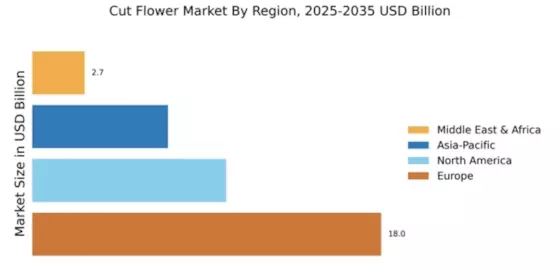
The North American cut flower market is projected to reach $10.0 billion by December 2025, driven by increasing consumer demand for online flower delivery services and a growing trend towards sustainable floral practices. Regulatory support for local growers and eco-friendly initiatives are also contributing to market growth. The rise in gifting occasions and special events further fuels demand, making this region a vibrant hub for floral commerce. Leading the market are the United States and Canada, with key players like Teleflora, 1-800-Flowers, and FTD Companies dominating the landscape. The competitive environment is characterized by a mix of traditional florists and innovative online platforms. The presence of major auction houses like Aalsmeer Flower Auction in the Netherlands also influences supply chains, ensuring a diverse range of products for consumers.
Europe holds the largest market share in the cut flower sector, valued at $18.0 billion in 2024. The region benefits from a rich tradition of floriculture, supported by favorable regulations and a strong emphasis on sustainability. Demand is driven by both local consumption and exports, with a growing preference for organic and locally sourced flowers. The European market is also witnessing innovations in logistics and supply chain management, enhancing product availability. Countries like the Netherlands, Germany, and the UK are at the forefront of this market, with key players such as Dümmen Orange and FloraHolland leading the way. The competitive landscape is robust, with a mix of large-scale producers and niche florists. The Netherlands, in particular, is known for its advanced auction systems, which streamline the distribution of flowers across Europe. "The European cut flower market is characterized by its commitment to quality and sustainability," European Commission report states.
The Asia-Pacific cut flower market is valued at $7.0 billion, showing significant growth potential driven by urbanization and rising disposable incomes. The demand for cut flowers is increasing in urban areas, where consumers are becoming more inclined to purchase flowers for home decor and gifting. Regulatory frameworks are evolving to support local growers, enhancing the market's sustainability and competitiveness. Leading countries in this region include Japan, China, and Australia, where traditional floral practices are blending with modern retail approaches. The competitive landscape features both local florists and international players, creating a dynamic market environment. Companies like Bloom & Wild and Interflora are expanding their reach, catering to the growing demand for online flower delivery services, which is reshaping consumer purchasing behavior.
The Middle East and Africa cut flower market is valued at $2.7 billion, with significant growth opportunities driven by increasing urbanization and a rising middle class. The demand for cut flowers is growing, particularly in urban centers where gifting and home decoration trends are on the rise. Regulatory support for local agriculture is fostering a more sustainable floral industry, encouraging local production and reducing reliance on imports. Countries like South Africa and Kenya are leading the market, with a focus on both local consumption and export opportunities. The competitive landscape is evolving, with local growers and international companies vying for market share. The presence of key players like FleuraMetz is enhancing the region's floral offerings, while innovations in logistics are improving distribution channels. "The floral industry in Africa is poised for significant growth as consumer preferences evolve," states a report from the African Development Bank.
The Cut Flower Market is characterized by a dynamic competitive landscape, driven by factors such as consumer preferences for fresh and sustainable products, alongside the increasing demand for online flower delivery services. Key players like Dümmen Orange (NL), FloraHolland (NL), and Bloom & Wild (GB) are strategically positioned to leverage these trends. Dümmen Orange (NL) focuses on innovation in breeding and genetics, enhancing product offerings to meet evolving consumer tastes. FloraHolland (NL), as a major auction platform, emphasizes digital transformation to streamline operations and improve market access for growers. Meanwhile, Bloom & Wild (GB) has carved a niche in the subscription model, appealing to a younger demographic seeking convenience and personalization in floral gifting.The business tactics employed by these companies reflect a concerted effort to optimize supply chains and localize manufacturing where feasible. The market structure appears moderately fragmented, with a mix of large-scale operators and smaller, specialized firms. This fragmentation allows for diverse offerings but also intensifies competition among key players, who must continuously innovate to maintain market share.
In November Dümmen Orange (NL) announced a partnership with a leading tech firm to develop an AI-driven platform aimed at enhancing supply chain efficiency. This strategic move is likely to bolster their operational capabilities, enabling better forecasting and inventory management, which could lead to reduced waste and improved profitability. Such initiatives underscore the importance of technology in driving competitive advantage within the market.
In October Bloom & Wild (GB) launched a new eco-friendly packaging initiative, aligning with growing consumer demand for sustainable practices. This action not only enhances their brand image but also positions them favorably among environmentally conscious consumers, potentially increasing market share in a competitive landscape increasingly focused on sustainability.
In September FloraHolland (NL) expanded its digital auction platform to include real-time bidding features, enhancing transparency and accessibility for growers and buyers alike. This innovation is indicative of a broader trend towards digitalization in the market, facilitating more efficient transactions and fostering a more competitive environment.
As of December the Cut Flower Market is witnessing significant trends such as digitalization, sustainability, and the integration of AI technologies. Strategic alliances among key players are shaping the competitive landscape, fostering innovation and enhancing supply chain reliability. The shift from price-based competition to a focus on technological advancement and sustainable practices is likely to define future competitive differentiation, as companies strive to meet the evolving expectations of consumers.


The Cut Flower is projected to grow at a 5.02% CAGR from 2025 to 2035, driven by increasing consumer demand and innovative distribution channels.
New opportunities lie in:
By 2035, the cut flower market is expected to achieve robust growth, reflecting evolving consumer preferences and technological advancements.
| MARKET SIZE 2024 | 37.7(USD Billion) |
| MARKET SIZE 2025 | 39.6(USD Billion) |
| MARKET SIZE 2035 | 64.64(USD Billion) |
| COMPOUND ANNUAL GROWTH RATE (CAGR) | 5.02% (2025 - 2035) |
| REPORT COVERAGE | Revenue Forecast, Competitive Landscape, Growth Factors, and Trends |
| BASE YEAR | 2024 |
| Market Forecast Period | 2025 - 2035 |
| Historical Data | 2019 - 2024 |
| Market Forecast Units | USD Billion |
| Key Companies Profiled | Dümmen Orange (NL), FloraHolland (NL), FleuraMetz (DE), Interflora (GB), Teleflora (US), Bloom & Wild (GB), 1-800-Flowers (US), FTD Companies (US), Aalsmeer Flower Auction (NL) |
| Segments Covered | Application, End Use, Flower Type, Distribution Channel |
| Key Market Opportunities | Growing consumer preference for sustainable and locally sourced flowers in the Cut Flower Market. |
| Key Market Dynamics | Rising consumer preference for sustainable sourcing drives innovation and competition in the cut flower market. |
| Countries Covered | North America, Europe, APAC, South America, MEA |
The overall market valuation of the Cut Flower Market was 37.7 USD Billion in 2024.



Kindly complete the form below to receive a free sample of this Report

“This is really good guys. Excellent work on a tight deadline. I will continue to use you going forward and recommend you to others. Nice job”


“Thanks. It’s been a pleasure working with you, please use me as reference with any other Intel employees.”


“Thanks for sending the report it gives us a good global view of the Betaïne market.”


“Thank you, this will be very helpful for OQS.”


“We found the report very insightful! we found your research firm very helpful. I'm sending this email to secure our future business.”


“I am very pleased with how market segments have been defined in a relevant way for my purposes (such as "Portable Freezers & refrigerators" and "last-mile"). In general the report is well structured. Thanks very much for your efforts.”


“I have been reading the first document or the study, ,the Global HVAC and FP market report 2021 till 2026. Must say, good info! I have not gone in depth at all parts, but got a good indication of the data inside!”


“We got the report in time, we really thank you for your support in this process. I also thank to all of your team as they did a great job.”


“The Automotive 48V ECU Components Procurement Intelligence Study” was a complex project, but the Market Research Future (MRFR) team handled it with quality, agility, and customer-centricity. They delivered all requested data on time and within the agreed scope. The team, including Shubhendra Anand and Rahul Gotadki, was always readily available to clarify questions and swiftly implement necessary adjustments, driving the project to a successful conclusion within a very demanding timeframe.
I would also like to specifically commend Akshay Agarwal for his responsiveness and support at every stage—from our initial inquiry on May 6th through to final delivery on June 18th. His dedication made the entire process seamless.”



