×
Request Free Sample ×

Kindly complete the form below to receive a free sample of this Report

* Please use a valid business email

Leading companies partner with us for data-driven Insights

clients tt-cursor
Hero Background

Cutaneous B-cell Lymphoma Treatment Market

ID: MRFR/LS/10630-HCR
128 Pages
Rahul Gotadki
October 2025

Cutaneous B-cell Lymphoma Treatment Market Research Report Information By Type (Radiation Therapy, Chemotherapy, Monoclonal Antibodies and Others (Corticosteroids, Interferons, etc.), By End-user (Hospitals, Speciality Clinics and Others) And By Region (North America, Europe, Asia-Pacific, And Rest Of The World) –Market Forecast Till 2035

Share:
Download PDF ×

We do not share your information with anyone. However, we may send you emails based on your report interest from time to time. You may contact us at any time to opt-out.

Cutaneous B-cell Lymphoma Treatment Market Infographic
Purchase Options

Cutaneous B-cell Lymphoma Treatment Market Summary

As per MRFR analysis, the Cutaneous B-cell Lymphoma Treatment Market was estimated at 1403.77 USD Million in 2024. The Cutaneous B-cell Lymphoma Treatment industry is projected to grow from 1508.02 USD Million in 2025 to 2755.15 USD Million by 2035, exhibiting a compound annual growth rate (CAGR) of 6.28 during the forecast period 2025 - 2035.

Key Market Trends & Highlights

The Cutaneous B-cell Lymphoma Treatment Market is experiencing a transformative shift towards innovative therapies and personalized approaches.

  • The market is witnessing a rise in targeted therapies, reflecting a broader trend towards precision medicine.
  • Immunotherapy remains the largest segment, driven by its effectiveness in treating various stages of cutaneous B-cell lymphoma.
  • The Asia-Pacific region is emerging as the fastest-growing market, fueled by increasing healthcare investments and awareness.
  • Key market drivers include the rising incidence rates of cutaneous B-cell lymphoma and advancements in treatment modalities, which are propelling growth in both North America and Asia-Pacific.

Market Size & Forecast

2024 Market Size 1403.77 (USD Million)
2035 Market Size 2755.15 (USD Million)
CAGR (2025 - 2035) 6.28%

Major Players

Roche (CH), Merck & Co. (US), Bristol-Myers Squibb (US), Novartis (CH), Gilead Sciences (US), Amgen (US), Eli Lilly and Company (US), Sanofi (FR), AstraZeneca (GB)

Cutaneous B-cell Lymphoma Treatment Market Trends

The Cutaneous B-cell Lymphoma Treatment Market is currently experiencing notable developments, driven by advancements in therapeutic options and a growing understanding of the disease. As research progresses, there is an increasing focus on targeted therapies and immunotherapies, which appear to offer improved outcomes for patients. The integration of personalized medicine into treatment protocols suggests a shift towards more tailored approaches, potentially enhancing efficacy and minimizing adverse effects. Furthermore, the rising incidence of cutaneous B-cell lymphoma is prompting healthcare providers to seek innovative solutions, thereby expanding the market landscape. In addition, the Cutaneous B-cell Lymphoma Treatment Market is witnessing a surge in clinical trials aimed at evaluating new treatment modalities. This trend indicates a commitment to exploring novel agents and combinations that may yield better results. Collaboration between pharmaceutical companies and research institutions seems to be fostering an environment conducive to rapid advancements. As awareness of cutaneous B-cell lymphoma increases, it is likely that patient advocacy groups will play a crucial role in driving demand for effective therapies, ultimately shaping the future of this market.

Rise of Targeted Therapies

The Cutaneous B-cell Lymphoma Treatment Market is seeing a significant rise in the development and adoption of targeted therapies. These treatments focus on specific molecular targets associated with the disease, potentially leading to more effective and less toxic options for patients. As research continues to unveil the underlying mechanisms of cutaneous B-cell lymphoma, the market is likely to expand with innovative therapies that offer improved outcomes.

Growth of Immunotherapy

Immunotherapy is emerging as a pivotal trend within the Cutaneous B-cell Lymphoma Treatment Market. This approach harnesses the body's immune system to combat cancer cells, showing promise in enhancing patient responses. The increasing number of clinical trials exploring various immunotherapeutic agents suggests a robust interest in this area, which may redefine treatment paradigms in the near future.

Emphasis on Personalized Medicine

The Cutaneous B-cell Lymphoma Treatment Market is gradually shifting towards personalized medicine, which tailors treatment strategies based on individual patient characteristics. This trend indicates a move away from one-size-fits-all approaches, potentially leading to more effective and safer treatment options. As genomic profiling and biomarker identification advance, the market may witness a transformation in how therapies are developed and administered.

Cutaneous B-cell Lymphoma Treatment Market Drivers

Market Growth Projections

The Global Cutaneous B-cell Lymphoma Treatment Market Industry is projected to experience substantial growth in the coming years. With an estimated market value of 1250 USD Million in 2024, the industry is on track to reach approximately 2750 USD Million by 2035. This growth trajectory suggests a compound annual growth rate of 7.43% from 2025 to 2035. Such projections indicate a robust demand for innovative treatment options and highlight the increasing focus on addressing the needs of patients suffering from cutaneous B-cell lymphoma. The anticipated growth underscores the importance of ongoing research and development efforts in this field.

Rising Awareness and Education

The Global Cutaneous B-cell Lymphoma Treatment Market Industry is benefiting from increased awareness and education regarding skin cancers. Campaigns aimed at educating both healthcare professionals and the general public about the signs and symptoms of cutaneous B-cell lymphoma are gaining traction. This heightened awareness leads to earlier diagnosis and treatment, which is crucial for improving patient outcomes. As more individuals seek medical advice upon noticing symptoms, the demand for effective treatments is likely to rise. This trend may contribute to a compound annual growth rate of 7.43% from 2025 to 2035, reflecting the industry's potential for sustained growth.

Supportive Regulatory Environment

A supportive regulatory environment plays a pivotal role in the Global Cutaneous B-cell Lymphoma Treatment Market Industry. Regulatory bodies are increasingly facilitating the approval of new therapies, which encourages pharmaceutical companies to invest in research and development. Streamlined processes for clinical trials and expedited review pathways for promising treatments are becoming more common. This regulatory support not only accelerates the availability of innovative therapies but also instills confidence in investors and stakeholders. As a result, the market is likely to see a surge in new product launches, further driving growth and enhancing treatment options for patients.

Advancements in Treatment Modalities

Innovations in treatment modalities are a crucial driver for the Global Cutaneous B-cell Lymphoma Treatment Market Industry. Recent developments in targeted therapies and immunotherapies have shown promising results in managing cutaneous B-cell lymphoma. For instance, the introduction of monoclonal antibodies has improved patient outcomes significantly. As these therapies become more widely adopted, they are likely to enhance the overall efficacy of treatment regimens. This shift towards more effective therapies is expected to propel the market, with estimates indicating a growth trajectory that could see the industry valued at 2750 USD Million by 2035. The ongoing research and development efforts further underscore the potential for market expansion.

Emerging Markets and Global Expansion

Emerging markets are becoming increasingly relevant in the Global Cutaneous B-cell Lymphoma Treatment Market Industry. Regions such as Asia-Pacific and Latin America are witnessing a rise in healthcare expenditure and improved access to medical services. This expansion is creating new opportunities for pharmaceutical companies to introduce their products in these markets. As healthcare infrastructure improves, the demand for effective treatments is expected to grow. This trend may lead to a broader global footprint for companies operating in the cutaneous B-cell lymphoma space, potentially increasing market share and revenue streams.

Increasing Incidence of Cutaneous B-cell Lymphoma

The Global Cutaneous B-cell Lymphoma Treatment Market Industry is experiencing growth due to the rising incidence of cutaneous B-cell lymphoma. Epidemiological studies indicate that the prevalence of this condition is increasing, particularly in older populations. As awareness of skin cancers grows, more cases are being diagnosed, leading to a higher demand for effective treatment options. This trend is expected to contribute significantly to the market, with projections suggesting that the industry could reach approximately 1250 USD Million by 2024. The increasing number of patients necessitates advancements in treatment modalities, thereby driving innovation and investment in the sector.
Market Segment Insights

By Treatment Type: Immunotherapy (Largest) vs. Targeted Therapy (Fastest-Growing)

In the Cutaneous B-cell Lymphoma Treatment Market, the distribution of treatment types reveals that Immunotherapy holds the largest market share among the options available. This segment has gained traction due to its enhancing effectiveness and ability to harness the body's immune system to fight cancer cells. Following closely is Chemotherapy, which has been a long-standing choice; however, its usage is gradually diminishing as patients lean towards less toxic alternatives. Radiation Therapy also plays a role but is less favored compared to modern approaches. The growth trends within this segment are largely driven by advancements in research and technology aimed at improving patient outcomes. Immunotherapy is experiencing significant popularity due to its potential for lasting responses and fewer side effects compared to traditional therapies. Targeted Therapy, marked as the fastest-growing segment, is gaining attention for its personalized approach towards treatment, enabling better targeting of cancerous cells without harming healthy tissues. The increase in clinical trials and strong regulatory support for new therapies are solidifying their market presence.

Immunotherapy (Dominant) vs. Targeted Therapy (Emerging)

Immunotherapy has established itself as the dominant force in the treatment of Cutaneous B-cell Lymphoma due to its ability to improve patient survival rates through innovative mechanisms that boost the immune system. This approach has gained recognition for its efficacy and minimal side effects, making it preferable among patients and healthcare providers. In contrast, Targeted Therapy, while emerging and showing rapid growth, focuses on specific molecular targets associated with cancer. This precision medicine approach offers hope for better treatment outcomes as it aims to disrupt crucial pathways within cancer cells. Research into these therapies continues to evolve, with Targeted Therapy being sought after for its promising results and the potential to complement existing treatment modalities.

By Disease Stage: Localized Stage (Largest) vs. Advanced Stage (Fastest-Growing)

The Cutaneous B-cell Lymphoma Treatment Market demonstrates a diverse distribution of disease stages, with the Localized Stage being the largest segment. This stage encompasses patients with limited disease who typically respond well to treatment, which contributes to its substantial market share. The Advanced Stage, while smaller in terms of overall share, represents a significant portion of patients requiring more intensive therapy, driving the expansion of treatment options in this category. Recurrent Stage patients, though distinctive in their need for novel therapies, impact the market dynamics to a lesser degree compared to the other two segments.

Localized Stage (Dominant) vs. Advanced Stage (Emerging)

The Localized Stage is characterized by its prevalence in patients diagnosed early, leading to effective interventions and higher healing rates. This segment benefits from established treatment protocols that encourage patient adherence and minimize treatment resistance. In contrast, the Advanced Stage involves more complex cases, where patients often experience multi-focal lesions and require advanced therapeutic approaches, including systemic therapies and novel agents. The emerging emphasis on personalized medicine within this stage is reshaping treatment strategies, catering to diverse patient needs and promising improved outcomes. Additionally, research into targeted therapies is expected to fuel growth within this segment, positioning it as a pivotal area in the market.

By Patient Demographics: Age Group (Largest) vs. Socioeconomic Status (Fastest-Growing)

In the Cutaneous B-cell Lymphoma Treatment Market, the patient demographics play a crucial role in shaping the landscape of treatment protocols. The age group, particularly the older population, constitutes the largest segment due to the higher incidence of skin-related lymphomas among seniors. Meanwhile, socioeconomic status is emerging as a rapidly growing segment, with increasing accessibility and education resulting in a higher awareness of treatments among lower-income populations, thereby broadening market participation.

Age Group (Dominant) vs. Gender (Emerging)

The age group remains the dominant demographic in the Cutaneous B-cell Lymphoma Treatment Market, primarily due to the prevalence of the disease in older adults—often linked to prolonged skin exposure and immune challenges. This demographic's response to treatment options such as chemotherapy and targeted therapies shapes prescribing patterns. Conversely, gender is an emerging focus, with studies suggesting variances in treatment responses and preferences between males and females. Understanding these differences can aid in tailoring therapies and improving patient outcomes in a heterogeneous patient base.

By Administration Route: Topical (Largest) vs. Systemic (Fastest-Growing)

In the Cutaneous B-cell Lymphoma Treatment Market, the Administration Route segment showcases a distinct distribution among its values. The Topical administration method leads the market, primarily due to its ease of use and targeted action on localized lesions. Following this, the Intralesional route offers an effective alternative but holds a smaller share compared to Topical. Systemic treatments, while currently less prevalent, are on the rise, driven by increased awareness and advancements in systemic therapies that address widespread disease more effectively.

Topical (Dominant) vs. Systemic (Emerging)

Topical treatments, being the dominant methodology for Cutaneous B-cell Lymphoma, are favored due to their localized delivery and minimal side effects, contributing to patient compliance and preference. On the other hand, Systemic treatments, although categorized as emerging, are capturing attention for their potential to treat more extensive forms of the disease. As clinical trials continue to validate systemic options, their growing effectiveness and the introduction of novel biologics are projected to elevate their market presence, enhancing treatment accessibility and patient outcomes.

By Healthcare Setting: Hospital (Largest) vs. Home Care (Fastest-Growing)

In the Cutaneous B-cell Lymphoma Treatment Market, the distribution of market share among healthcare settings reveals hospitals as the largest segment, predominantly due to their comprehensive resources and facilities dedicated to treatment. Outpatient clinics also play a vital role in managing patients with this condition, offering specialized services in a more accessible environment. Home care settings are becoming increasingly prominent, providing patients with convenient treatment options, particularly for those seeking to avoid the hospital environment during their recovery.

Outpatient Clinics (Dominant) vs. Home Care (Emerging)

Outpatient clinics stand out as the dominant setting for the treatment of Cutaneous B-cell Lymphoma, given their ability to deliver focused and specialized care while ensuring efficiency in patient management. These facilities are equipped to handle a wide range of treatments, offering both infusion therapies and follow-up care within a streamlined system. On the other hand, home care is emerging as a significant trend in this market, driven by patient preferences for comfort and convenience. The shift towards home care is supported by advancements in telemedicine and portable treatment options, appealing to patients who wish to receive care in their familiar environment, while still benefiting from professional medical guidance.

Get more detailed insights about Cutaneous B-cell Lymphoma Treatment Market

Regional Insights

North America : Market Leader in Treatment

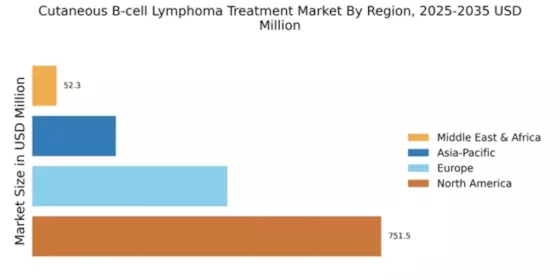
North America is poised to maintain its leadership in the Cutaneous B-cell Lymphoma treatment market, with a market size of $751.51M in 2025. Key growth drivers include advanced healthcare infrastructure, increasing awareness of skin cancers, and a robust pipeline of innovative therapies. Regulatory support from agencies like the FDA further catalyzes market expansion, ensuring timely access to new treatments for patients. The United States stands out as the primary market, driven by significant investments from leading pharmaceutical companies such as Roche, Merck & Co., and Bristol-Myers Squibb. The competitive landscape is characterized by a focus on research and development, with these companies leading the charge in novel therapies. The presence of established healthcare systems and reimbursement frameworks also enhances market accessibility and growth potential.

Europe : Emerging Market Dynamics

Europe's Cutaneous B-cell Lymphoma treatment market is projected to reach $420.0M by 2025, driven by increasing incidences of skin cancers and a growing emphasis on early diagnosis and treatment. Regulatory frameworks across the EU are evolving to support innovative therapies, enhancing patient access to cutting-edge treatments. The region's commitment to healthcare improvement is evident in various national health policies aimed at cancer treatment. Leading countries such as Germany, France, and the UK are at the forefront of this market, with significant contributions from key players like Novartis and Gilead Sciences. The competitive landscape is marked by collaborations between pharmaceutical companies and healthcare providers, fostering innovation and improving treatment outcomes. The presence of well-established healthcare systems further supports the market's growth trajectory.

Asia-Pacific : Rapidly Growing Market

The Asia-Pacific region is witnessing a burgeoning market for Cutaneous B-cell Lymphoma treatment, projected to reach $180.0M by 2025. Key growth drivers include rising awareness of skin cancer, increasing healthcare expenditure, and a growing population. Regulatory bodies in countries like Japan and Australia are enhancing frameworks to facilitate quicker approvals for new therapies, thereby boosting market growth. Countries such as Japan, China, and Australia are leading the charge in this market, with a competitive landscape that includes both local and international players. Companies like Amgen and Eli Lilly are making significant inroads, focusing on innovative treatment options. The increasing collaboration between governments and private sectors is also fostering a conducive environment for market expansion, ensuring that patients have access to necessary treatments.

Middle East and Africa : Emerging Healthcare Landscape

The Middle East and Africa region is gradually emerging in the Cutaneous B-cell Lymphoma treatment market, with a projected size of $52.26M by 2025. Key growth drivers include increasing healthcare investments, rising awareness of skin cancers, and the establishment of specialized treatment centers. Regulatory bodies are beginning to implement frameworks that support the introduction of innovative therapies, enhancing patient access to necessary treatments. Countries like South Africa and the UAE are leading the market, with a competitive landscape that includes both local and international pharmaceutical companies. The presence of key players such as Sanofi and AstraZeneca is crucial in driving market growth. Collaborative efforts between governments and healthcare providers are essential in improving treatment accessibility and outcomes for patients in this region.

Key Players and Competitive Insights

The Cutaneous B-cell Lymphoma Treatment Market is currently characterized by a dynamic competitive landscape, driven by a confluence of innovation, strategic partnerships, and a growing emphasis on personalized medicine. Major players such as Roche (CH), Merck & Co. (US), and Bristol-Myers Squibb (US) are at the forefront, each adopting distinct strategies to enhance their market presence. Roche (CH) focuses on leveraging its robust R&D capabilities to develop novel therapies, while Merck & Co. (US) emphasizes strategic collaborations to expand its treatment portfolio. Bristol-Myers Squibb (US) appears to be concentrating on integrating advanced technologies into its clinical trials, thereby streamlining the drug development process. Collectively, these strategies not only enhance their competitive positioning but also contribute to a more fragmented yet innovative market environment.

In terms of business tactics, companies are increasingly localizing manufacturing and optimizing supply chains to enhance efficiency and reduce costs. The market structure is moderately fragmented, with several key players exerting influence over various segments. This fragmentation allows for a diverse range of treatment options, catering to the specific needs of patients while fostering competition among the leading firms.

In November 2025, Roche (CH) announced the initiation of a pivotal clinical trial for a new targeted therapy aimed at advanced Cutaneous B-cell Lymphoma. This strategic move underscores Roche's commitment to innovation and its focus on addressing unmet medical needs. The trial's outcomes could potentially reshape treatment paradigms and solidify Roche's leadership in the market.

Similarly, in October 2025, Merck & Co. (US) entered into a partnership with a biotech firm to co-develop a novel immunotherapy for Cutaneous B-cell Lymphoma. This collaboration is indicative of Merck's strategy to enhance its therapeutic offerings through synergistic alliances, which may accelerate the development timeline and broaden its market reach.

In September 2025, Bristol-Myers Squibb (US) launched a digital platform aimed at improving patient engagement and adherence to treatment protocols. This initiative reflects the growing trend of digital transformation within the healthcare sector, positioning the company to better meet the needs of patients and healthcare providers alike.

As of December 2025, the competitive trends in the Cutaneous B-cell Lymphoma Treatment Market are increasingly defined by digitalization, sustainability, and the integration of artificial intelligence (AI) into clinical practices. Strategic alliances are becoming more prevalent, facilitating knowledge sharing and resource optimization among companies. Looking ahead, competitive differentiation is likely to evolve from traditional price-based competition to a focus on innovation, technological advancements, and supply chain reliability, thereby enhancing the overall value proposition for patients and healthcare systems.

Key Companies in the Cutaneous B-cell Lymphoma Treatment Market market include

Future Outlook

Cutaneous B-cell Lymphoma Treatment Market Future Outlook

The Cutaneous B-cell Lymphoma Treatment Market is projected to grow at a 6.28% CAGR from 2024 to 2035, driven by advancements in therapies, increasing awareness, and rising incidence rates.

New opportunities lie in:

  • Development of targeted therapies for specific patient demographics.
  • Expansion of telemedicine services for remote patient monitoring.
  • Investment in personalized medicine approaches to enhance treatment efficacy.

By 2035, the market is expected to achieve substantial growth, reflecting evolving treatment paradigms and increased patient access.

Market Segmentation

Cutaneous B-cell Lymphoma Treatment Market Disease Stage Outlook

  • Localized Stage
  • Advanced Stage
  • Recurrent Stage

Cutaneous B-cell Lymphoma Treatment Market Treatment Type Outlook

  • Chemotherapy
  • Radiation Therapy
  • Immunotherapy
  • Targeted Therapy

Cutaneous B-cell Lymphoma Treatment Market Healthcare Setting Outlook

  • Hospital
  • Outpatient Clinic
  • Home Care

Cutaneous B-cell Lymphoma Treatment Market Administration Route Outlook

  • Topical
  • Intralesional
  • Systemic

Cutaneous B-cell Lymphoma Treatment Market Patient Demographics Outlook

  • Age Group
  • Gender
  • Socioeconomic Status

Report Scope

MARKET SIZE 20241403.77(USD Million)
MARKET SIZE 20251508.02(USD Million)
MARKET SIZE 20352755.15(USD Million)
COMPOUND ANNUAL GROWTH RATE (CAGR)6.28% (2024 - 2035)
REPORT COVERAGERevenue Forecast, Competitive Landscape, Growth Factors, and Trends
BASE YEAR2024
Market Forecast Period2025 - 2035
Historical Data2019 - 2024
Market Forecast UnitsUSD Million
Key Companies ProfiledRoche (CH), Merck & Co. (US), Bristol-Myers Squibb (US), Novartis (CH), Gilead Sciences (US), Amgen (US), Eli Lilly and Company (US), Sanofi (FR), AstraZeneca (GB)
Segments CoveredTreatment Type, Disease Stage, Patient Demographics, Administration Route, Healthcare Setting
Key Market OpportunitiesAdvancements in targeted therapies and immunotherapies enhance treatment options in the Cutaneous B-cell Lymphoma Treatment Market.
Key Market DynamicsRising demand for targeted therapies drives innovation and competition in the Cutaneous B-cell Lymphoma Treatment Market.
Countries CoveredNorth America, Europe, APAC, South America, MEA

Leave a Comment

FAQs

How much is the Cutaneous B-cell lymphoma treatment market?

The Cutaneous B-cell Lymphoma Treatment Market size was valued at USD XX Billion in 2022.

What is the growth rate of the Cutaneous B-cell lymphoma treatment market?

The global market is projected to grow at a CAGR of XX% during the forecast period, 2023-2032.

Which region held the largest market share in the Cutaneous B-cell lymphoma treatment market?

North America had the largest share in the global market

Who are the key players in the Cutaneous B-cell lymphoma treatment market?

The key players in the market are Kite Pharma, Genentech, Inc., Novartis AG, Epizyme, Inc., NanoString Technologies, Inc., Amgen Inc., Johnson & Johnson Services, Inc. and other plaers.

Which type led the cutaneous B-cell lymphoma treatment market?

The chemotherapy category dominated the market in 2022.

Which end-user had the largest market share in the cutaneous B-cell lymphoma treatment market?

The hospitals had the largest share in the global market.

Download Free Sample

Kindly complete the form below to receive a free sample of this Report

Compare Licence

×
Features License Type
Single User Multiuser License Enterprise User
Price $4,950 $5,950 $7,250
Maximum User Access Limit 1 User Upto 10 Users Unrestricted Access Throughout the Organization
Free Customization
Direct Access to Analyst
Deliverable Format
Platform Access
Discount on Next Purchase 10% 15% 15%
Printable Versions