Dairy Ingredients Market (2026 - 2035)

Dairy Ingredients Market Size, Share, Industry Trend & Analysis Research Report By Product Type (Milk Powders, Milk Protein Concentrates and Isolates, Whey Ingredients, Others), By Nature (Conventional, Organic), By Application (Food and Beverages, Sport/Performance Nutrition, Baby Food and Infant Formula, Animal Feed, Pharmaceutical, Personal Care and Cosmetics, Others), By Geography (North America, Europe, Asia-Pacific, South America, Middle East & Africa) - Forecast to 2035
ID: MRFR/FnB/1276-CR
200 Pages
Snehal Singh
Last Updated: July 06, 2026
Dairy Ingredients Market
Market Size
Forecast Period2026-2035
CAGR (2026-2035)4.03%
2025 Market SizeUSD 67.26 Billion
2035 Market SizeUSD 99.72 Billion
Key Players
Fonterra Co-operative Group
FrieslandCampina
Dairy Farmers of America
Arla Foods
Glanbia plc
Kerry Group
Opportunities
  • Precision Fermentation and Bioactive Ingredient Development
  • Emerging Market Dairy Infrastructure Expansion
  • Clean-Label and Transparency-Driven Reformulation

Dairy Ingredients Market Summary

The Dairy Ingredients Market reached an estimated value of USD 67.26 Billion in 2025, with the sector projected to grow from USD 69.87 Billion in 2026 to USD 99.72 Billion by 2035, registering a CAGR of 4.03% across the forecast period. Rising global protein consumption, underpinned by public health campaigns promoting dairy-based nutrition and government food security stockpiling programs valued at over USD 14 Billion collectively, continues to anchor growth in the Dairy Ingredients Market. The World Bank's updated Food Security Action Plan and the EU's Farm to Fork Strategy have both reinforced procurement commitments for powdered and concentrated dairy ingredients, ensuring steady institutional demand through the decade [2].

Processing technology across the Dairy Ingredients Market is evolving rapidly. Conventional batch pasteurization and open-vat evaporation systems are giving way to continuous-flow membrane filtration, automated spray-drying towers, and precision fermentation platforms. Capital expenditure in next-generation dairy processing exceeded USD 5.8 Billion globally in 2024, according to industry estimates, with major cooperatives commissioning plants capable of producing specialty powders at 30% lower energy intensity [3]. These investments are compressing production costs while lifting output purity standards — a shift that favors large-scale, vertically integrated operators.

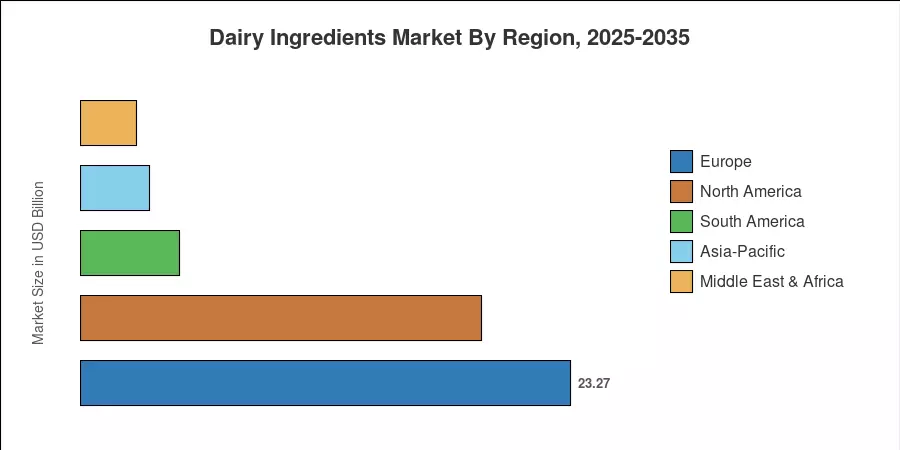
Europe commands the largest share of the Dairy Ingredients Market at approximately 34.6% of 2025 revenue, supported by stringent Codex Alimentarius compliance and an extensive cold-chain infrastructure across Western Europe. Asia-Pacific represents the fastest-growing region at a projected 4.88% CAGR, fueled by rising middle-class protein demand in India and China and favorable dairy development policies across ASEAN nations [4]. North America holds the second-largest position with roughly 28.3% share, driven by strong sports nutrition and infant formula manufacturing bases. As functional food innovation accelerates and emerging economies deepen dairy value chains, the Dairy Ingredients Market is poised for sustained expansion through 2035.


Key Report Takeaways

• By Product Type

  • Milk Powders captured an estimated 63.8% of the Dairy Ingredients Market revenue in 2025, reflecting persistent demand from reconstituted beverage and bakery sectors.
  • Whey Ingredients are projected to expand at a 4.35% CAGR through 2035, driven by sports nutrition and clinical nutrition applications.

• By Nature

  • Conventional ingredients held approximately 83.5% of the Dairy Ingredients Market in 2025.
  • Organic dairy ingredients are forecast to grow at a 5.30% CAGR over 2026–2035, reflecting premium consumer willingness-to-pay trends.

• By Application

  • Food and Beverages represented roughly 47.7% of total demand within the Dairy Ingredients Market in 2025.
  • Baby Food and Infant Formula applications are expected to register a 4.82% CAGR through 2035.

• By Region

  • Europe retained approximately 34.6% of the Dairy Ingredients Market share in 2025.
  • Asia-Pacific is forecast to grow at a 4.88% CAGR, the highest among all regions.


Market Size and Forecast (2021–2035)

The Dairy Ingredients Market sizing model integrates bottom-up revenue analysis from over 200 dairy processors globally, validated against top-down macroeconomic indicators including FAO milk production statistics, USDA trade data, and Eurostat dairy output figures [5]. Historical values reflect reported industry revenues; forecast values apply calibrated compound annual growth assumptions across product, nature, application, and geographic segments.
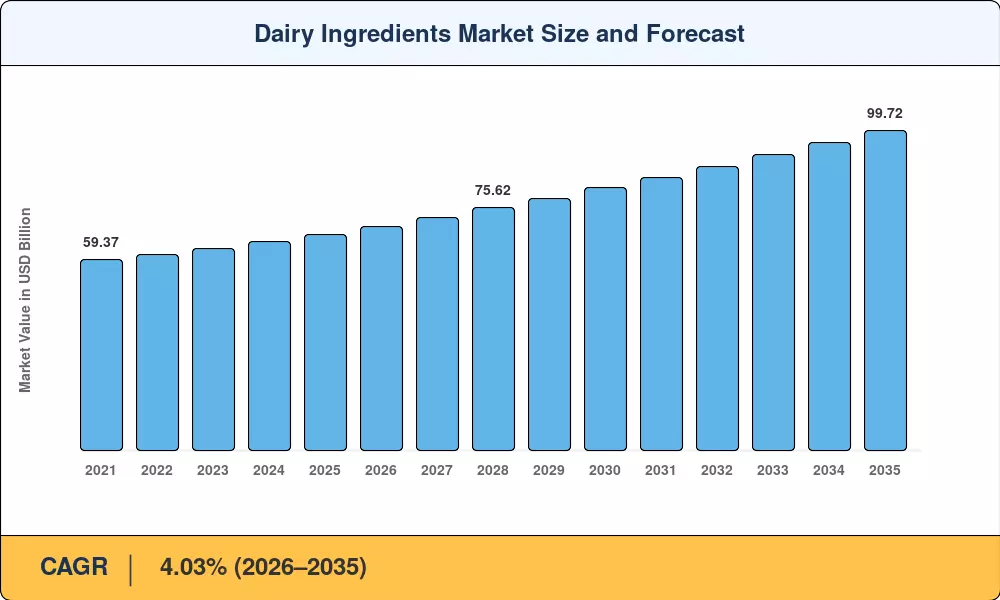
Dairy Ingredients Market Size and Forecast
Our Impact
Enabled $4.3B Revenue Impact for Fortune 500 and Leading Multinationals
Partnering with 2000+ Global Organizations Each Year
30K+ Citations by Top-Tier Firms in the Industry

Driver Impact Analysis

Driver ~% Impact on CAGR Geographic Relevance Impact Timeline
Rising protein consumption patterns +0.9% Global Long-term (≥4 yr)
Infant formula demand expansion +0.7% Asia-Pacific, MEA Medium-term (2–4 yr)
Sports and clinical nutrition growth +0.6% North America, Europe Medium-term (2–4 yr)
Membrane filtration technology adoption +0.5% Europe, North America Short-term (≤2 yr)
Government food security programs +0.4% Asia-Pacific, South America Long-term (≥4 yr)
Functional food product innovation +0.4% Global Medium-term (2–4 yr)
E-commerce dairy product distribution +0.3% Asia-Pacific Short-term (≤2 yr)


Rising Protein Consumption Patterns

Global per-capita protein intake has increased by approximately 12% over the past decade, with dairy-derived proteins capturing a disproportionate share of that growth owing to their complete amino acid profiles and digestibility scores. The WHO's updated Dietary Protein Guidelines (2024) recommend 0.83 g/kg body weight as a minimum, pushing food manufacturers to reformulate products with higher dairy protein inclusion rates. In China alone, per-capita liquid milk consumption rose from 36.1 kg to an estimated 42.5 kg between 2019 and 2024, translating directly into higher demand for powdered and concentrated dairy ingredients used in reconstituted beverages and processed foods [4].

Infant Formula Demand Expansion

Birth-rate recovery trends in Southeast Asia and Sub-Saharan Africa, together with increased mother employment engagement, are expected to propel global baby formula production levels above 1.6 million tons per year by 2030 [9]. Codex Alimentarius Standard 72-1981 and its 2023 version specify minimum whey-to-casein ratios, lactose content, and vitamin fortification, all of which require high-purity dairy ingredients as feedstock. The Dairy Ingredients Market benefits directly from formula producers' transition to milk protein concentrate ingredient specifications that match these demanding compositional standards.

Advanced Processing Technology Adoption

Membrane filtration technologies, such as ultrafiltration, microfiltration, and nanofiltration, now account for more than 40% of new dairy processing capacity added in Europe and North America [3]. These technologies allow for the continual separation of proteins, lactose, and minerals at ambient temperatures, conserving bioactivity that heat-based techniques deplete. Fonterra's USD 290 million advanced ingredient facility in Studholme, New Zealand, will be commissioned in 2024, demonstrating the capital commitment driving this technological change [7]. For the Dairy Ingredients Market, these investments result in higher-margin specialty powders with consistent functional qualities.

Government Food Security Programs

India's National Dairy Plan Phase II allocated INR 17,600 Crore (approximately USD 2.1 Billion) toward milk procurement infrastructure and powder processing capacity between 2022 and 2028 [2]. Brazil's PRONAF dairy credit line similarly channels subsidized financing toward small-scale dairy cooperatives seeking to install spray-drying equipment. These programs directly expand the addressable supply base for the Dairy Ingredients Market while reducing raw milk waste rates in developing economies by an estimated 15–20%.


Restraints Impact Analysis

The restraint estimates below reflect directional drag on Dairy Ingredients Market growth and are derived from scenario modeling rather than deterministic subtraction from the CAGR.

Restraint ~% Impact on CAGR Geographic Relevance Impact Timeline
Raw milk price volatility −0.5% Global Short-term (≤2 yr)
Plant-based alternative competition −0.4% North America, Europe Long-term (≥4 yr)
Environmental and emissions regulations −0.3% Europe, Oceania Medium-term (2–4 yr)
Trade barriers and tariff instability −0.3% Global Medium-term (2–4 yr)
Lactose intolerance prevalence −0.2% Asia-Pacific Long-term (≥4 yr)


Raw Milk Price Volatility

Global raw milk prices fluctuated by more than 35% between 2021 and 2023, owing to feed-cost inflation, drought circumstances in major producing countries, and geopolitical interruptions to trade corridors [6]. The GDT (Global Dairy Trade) pricing index for whole milk powder ranged between USD 2,800 and USD 4,200 per tonne throughout the same time period. These swings reduce processor margins and cause planning uncertainty for ingredient buyers with fixed-price contracts. The Dairy Ingredients Market absorbs volatility in an uneven manner, with smaller processors experiencing disproportionate margin pressure.

Plant-Based Alternative Competition

Oat-, soy-, and pea-based protein components will account for around 8% of the total protein ingredient category in North America by 2024, up from 4.5% in 2020 [14]. While dairy products continue to perform well in applications requiring emulsification, foaming, and heat stability, a perception shift among health-conscious customers, particularly those aged 18 to 35, poses substitution risk in the Dairy products Market. Major consumer packaged goods businesses have committed to mixed dairy-plant formulations, which partially balance but also dilute demand for pure dairy ingredients.

Environmental Regulations

The EU Methane Regulation (2024/XXX) and New Zealand's agricultural emissions pricing framework impose direct cost implications on dairy farming operations, with pass-through effects reaching ingredient manufacturers through higher farmgate prices [11]. Lifecycle assessments indicate that producing one kilogram of whole milk powder generates approximately 10.5 kg CO₂-equivalent, making the Dairy Ingredients Market a regulatory focal point in decarbonization strategies across food supply chains.


Dairy Ingredients Market Opportunities

Precision Fermentation and Bioactive Ingredient Development

Precision fermentation technology enables the production of dairy-identical proteins — including beta-lactoglobulin and casein — without traditional animal agriculture. Venture capital investment in fermentation-derived dairy ingredients exceeded USD 1.2 Billion between 2022 and 2024 [17]. The Dairy Ingredients Market stands to benefit as hybrid formulations combining traditional and fermentation-derived ingredients address both cost and sustainability concerns.

Emerging Market Dairy Infrastructure Expansion

Sub-Saharan Africa and South Asia together represent over 2.5 billion consumers with per-capita dairy ingredient consumption below 3 kg annually [2]. Government-backed cold-chain investments in Ethiopia, Kenya, Bangladesh, and Myanmar are creating new processing corridors that will expand the addressable Dairy Ingredients Market in these regions.

Clean-Label and Transparency-Driven Reformulation

Consumer demand for recognizable ingredient lists is driving reformulation across bakery, confectionery, and ready-meal categories. Dairy ingredients — perceived as natural and minimally processed — are displacing synthetic emulsifiers, stabilizers, and protein isolates in these applications [12]. The Dairy Ingredients Market is well-positioned to capture volume, as over 60% of European food launches in 2024 carried clean-label claims.

Clinical and Medical Nutrition Expansion

The global medical nutrition segment is projected to exceed USD 55 Billion by 2030, with dairy-based protein modules forming the backbone of enteral feeding solutions and oral nutritional supplements. An aging global population — the UN projects 1.4 billion people aged 60+ by 2030 — creates structural demand growth for high-quality dairy ingredients designed for geriatric nutrition applications.

Digital Supply Chain and Ingredient Traceability Platforms

Blockchain-enabled traceability platforms are emerging as a value differentiator across the Dairy Ingredients Market, enabling buyers to verify origin, processing conditions, and quality certifications in real time [13]. Early-mover cooperatives in the Netherlands and Denmark have reported 5–8% price premiums on fully traceable ingredient shipments.


Dairy Ingredients Market Future Outlook

Automation and AI-Driven Plant Operations

Smart factory deployments across the Dairy Ingredients Market are expected to reduce production costs by 12–18% by 2030, as real-time sensor networks, predictive maintenance algorithms, and automated quality control systems replace manual sampling protocols [3]. Fonterra and FrieslandCampina have both announced digital twin programs for their largest processing facilities, targeting zero-defect powder output with 99.5% uptime.

Sustainability and Carbon-Neutral Ingredient Branding

Life-cycle carbon labeling will become a commercial differentiator in the Dairy Ingredients Market by the late 2020s. The Science Based Targets initiative (SBTi) reported that 38 of the world's 50 largest dairy companies had committed to validated decarbonization pathways as of 2024 [11]. Carbon-neutral whey protein and carbon-inseted milk powder product lines are expected to command 8–12% price premiums in European and North American retail channels.

Regulatory Harmonization and Trade Liberalization

Codex Alimentarius revisions scheduled for 2027–2028 aim to harmonize compositional standards for milk powders and protein concentrates across 189 member nations [8]. The Dairy Ingredients Market stands to gain from reduced non-tariff barriers and streamlined import certification processes, particularly for Asia-Pacific and African markets that currently face complex multi-agency approval requirements.

Convergence with Personalized Nutrition

Advances in nutrigenomics and consumer data analytics are enabling mass customization of dairy-based nutritional formulations. By 2032, an estimated 15% of premium dairy ingredient shipments will be tailored to specific functional profiles — high-calcium for bone-health applications, high-lactoferrin for immune support, or low-lactose for digestive tolerance [16]. The Dairy Ingredients Market will increasingly segment along functional specification lines rather than traditional commodity grades.


Dairy Ingredients Market Segmentation

By Product Type

Segment Key Metric Primary Demand Driver
Milk Powders ~63.8% market share (2025) Reconstituted beverages, bakery, and food aid
Milk Protein Concentrates and Isolates 4.35% CAGR Sports nutrition and clinical applications
Whey Ingredients USD 9.45 Billion (2025) Infant formula and functional foods
Others (Casein, Lactose, Butter Derivatives) ~8.2% market share (2025) Pharmaceutical excipients and confectionery


Milk Powders remain the volumetric backbone of the Dairy Ingredients Market, encompassing whole milk powder, skim milk powder, and fat-filled variants used across food manufacturing, hospitality, and institutional feeding programs. The segment's dominance reflects both the commodity nature of powder trade and the sheer scale of reconstituted dairy beverage consumption in Asia and Africa, where fresh milk cold-chain limitations drive powder-based solutions.

Whey Ingredients have emerged as the highest-growth product category within the Dairy Ingredients Market, propelled by the global sports nutrition boom and clinical evidence supporting whey protein's superior leucine content and muscle protein synthesis rates. Cheese-producing regions in Europe and North America generate millions of tonnes of liquid whey annually, and the valorization of this once-discarded byproduct into isolates, hydrolysates, and demineralized whey powder has transformed the economics of cheese manufacturing.

By Nature

Segment Key Metric Primary Demand Driver
Conventional ~83.5% market share (2025) Cost efficiency and scale availability
Organic 5.30% CAGR (2026–2035) Premium consumer demand and clean-label trends


Conventional dairy ingredients continue to dominate the Dairy Ingredients Market on price-performance considerations, though organic lines are closing the gap as pasture-based farming practices scale across New Zealand, Ireland, and Denmark. The organic segment's premium — typically 25–40% above conventional equivalents — is sustained by retailer private-label commitments and regulatory support, including the EU Organic Action Plan [8].

By Application

Segment Key Metric Primary Demand Driver
Food and Beverages ~47.7% share (2025) Reformulation and protein fortification
Sport/Performance Nutrition USD 7.85 Billion (2025) Fitness culture and supplement demand
Baby Food and Infant Formula 4.82% CAGR Birth-rate trends and safety regulations
Animal Feed ~6.3% share (2025) Young animal nutrition programs
Pharmaceutical 3.65% CAGR Excipient and bioactive applications
Personal Care and Cosmetics USD 1.12 Billion (2025) Dairy-derived peptide skincare
Others ~3.8% share (2025) Industrial and technical applications


Food and Beverages represents the largest downstream outlet for the Dairy Ingredients Market, spanning bakery improvers, confectionery fillings, reconstituted milks, processed cheese, yogurt bases, and ice cream mixes. Baby Food and Infant Formula stands as the fastest-growing application segment, with regulatory tightening around ingredient sourcing transparency and amino acid profile mandates creating high barriers to entry that favor established dairy ingredient suppliers [9].


Regional Market Share Analysis

Region Key Metric Primary Investment Themes
North America ~28.3% market share (2025) Sports nutrition, infant formula manufacturing
Europe ~34.6% market share (2025) Quality compliance, organic conversion
Asia-Pacific 4.88% CAGR (2026–2035) Capacity building, import substitution
South America USD 4.71 Billion (2025) Cooperative modernization, export growth
Middle East & Africa 3.95% CAGR (2026–2035) Food security stockpiling, import reliance
Total USD 67.26 Billion (2025)

The Dairy Ingredients Market exhibits distinct regional growth profiles shaped by milk production capacity, regulatory frameworks, and downstream demand composition.


North America

Country Key Metric Key Driver
US ~72% of regional revenue Whey processing capacity leadership
Canada 4.15% CAGR Dairy innovation cluster growth
Mexico USD 1.89 Billion (2025) Processed food sector expansion


The US dairy ingredient processing infrastructure is among the most advanced globally, with Wisconsin and California housing over 200 specialized plants producing powders, concentrates, and isolates for domestic and export markets [7]. Canada's Dairy Innovation Program, funded at CAD 420 Million over five years, targets value-added ingredient manufacturing, while Mexico's rising processed food consumption drives double-digit import growth in the Dairy Ingredients Market for functional powders.

Europe

Country Key Metric Key Driver
Germany ~19% of regional share Industrial bakery and confectionery demand
UK 3.85% CAGR Post-Brexit supply chain restructuring
France USD 3.42 Billion (2025) Cheese byproduct valorization
Italy ~11% of regional share Specialty whey for infant formula
Spain 4.10% CAGR Export-oriented powder production
Nordic Countries USD 2.15 Billion (2025) Organic and grass-fed premiumization
Russia ~8% of regional share Domestic substitution mandates
Rest of Europe 3.72% CAGR Eastern European capacity expansion


European regulatory standards — including EU Regulation 853/2004 and subsequent amendments — establish the highest compositional and microbiological benchmarks for dairy ingredients globally [8]. Germany and France together account for over 30% of European output in the Dairy Ingredients Market, with both countries investing in whey valorization technologies that convert cheese-making byproducts into high-value protein isolates and galacto-oligosaccharide prebiotics.

Asia-Pacific

Country Key Metric Key Driver
China ~34% of regional share Infant formula self-sufficiency push
India 5.12% CAGR National Dairy Plan infrastructure
Japan USD 3.18 Billion (2025) Geriatric and clinical nutrition
South Korea 4.25% CAGR Functional beverage innovation
ASEAN ~12% of regional share Urbanization and retail modernization
Rest of Asia-Pacific 4.40% CAGR Emerging dairy belt development


The Dairy Ingredients Market in Asia-Pacific is shaped by two structural forces: China's regulatory overhaul of infant formula standards following the 2008 melamine crisis — which mandated domestic sourcing of key ingredients — and India's cooperative-driven White Revolution legacy that now channels over 200 million litres of milk daily into organized processing [4].

South America

Country Key Metric Key Driver
Brazil ~52% of regional revenue Domestic confectionery and bakery
Argentina 4.30% CAGR Export-grade powder production
Rest of South America USD 0.98 Billion (2025) Smallholder cooperative growth


Brazil's dairy ingredient processing sector is consolidating rapidly, with the top five processors controlling approximately 40% of output in the Dairy Ingredients Market [15]. Argentina's competitive farmgate costs position it as a significant powder exporter to North Africa and the Middle East.

Middle East & Africa

Country Key Metric Key Driver
Saudi Arabia ~28% of regional share Government food reserve programs
UAE 4.45% CAGR Re-export and trading hub function
South Africa USD 0.85 Billion (2025) Domestic infant nutrition demand
Egypt ~15% of regional share Population-driven consumption growth
Rest of MEA 3.60% CAGR Import dependency and aid programs


The Dairy Ingredients Market in MEA is overwhelmingly import-dependent, with the region sourcing approximately 75% of its dairy powder and concentrate requirements from Europe, Oceania, and the US [2]. Saudi Arabia's National Transformation Program allocates significant funding toward strategic dairy powder reserves as part of its food sovereignty agenda.


Dairy Ingredients Market By Region, 2025-2035

Competitive Benchmarking

The Dairy Ingredients Market exhibits medium concentration, with the top five players collectively holding an estimated 32–38% of global revenue. The Herfindahl-Hirschman Index (HHI) is estimated in the 600–900 range, indicating a moderately fragmented competitive structure where cooperative-owned processors compete alongside publicly listed multinationals and regional specialists [7].

Company Est. Revenue Share Range Key Offerings for Dairy Ingredients Market Strategic Positioning
Fonterra Co-operative Group ~8–11% Whole/skim milk powders, whey proteins, MPC Global cooperative with an integrated supply chain from farm to ingredient
FrieslandCampina ~6–9% Specialty powders, caseinates, infant-grade lactose Innovation-led European cooperative with strong Asian distribution
Dairy Farmers of America ~5–7% Bulk powders, butter derivatives, cheese ingredients US cooperative leveraging the domestic milk pool scale
Arla Foods ~4–6% Organic powders, whey concentrates, functional blends Nordic cooperative with leading organic and sustainability credentials
Glanbia plc ~4–6% Whey protein isolates, hydrolysates, MPC Performance nutrition specialist with US and European processing
Kerry Group ~3–5% Dairy-based taste systems, protein solutions Technology-led ingredient solutions across multiple food categories
Lactalis Group ~3–5% Industrial powders, cheese ingredients, butter oils Largest private dairy group with a global manufacturing footprint
Saputo Inc. ~2–4% Cheese byproduct ingredients, whey powders North American leader with an expanding international presence
Amul (GCMMF) ~2–4% Skim milk powder, ghee-based ingredients, whole milk powder India's largest cooperative is driving domestic ingredient self-sufficiency
Ingredion Incorporated ~1–3% Dairy-adjacent texturizers, protein-starch systems Cross-category ingredient platform with dairy blending capabilities


Recent News & Developments


  • FrieslandCampina (January 2025): Launched Vivinal GOS Syrup 75, a next-generation galacto-oligosaccharide prebiotic derived from lactose, targeting the infant formula and digestive health segments of the Dairy Ingredients Market [12].


  • Dairy Farmers of America (June 2024): Entered a strategic partnership with a leading infant formula manufacturer to supply certified non-GMO milk protein concentrate from its Kansas processing hub [9].


Dairy Ingredients Market Report Scope

Parameter Detail
Market Scope Global Dairy Ingredients Market across Product Type, Nature, Application, and Geography
Study Period 2021–2035
CAGR (Forecast Period) 4.03% (2026–2035)
Base Year Market Size USD 67.26 Billion (2025)
Forecast Endpoint USD 99.72 Billion (2035)
Fastest Growing Segment Organic (by Nature); Baby Food and Infant Formula (by Application)
Companies Profiled Fonterra, FrieslandCampina, DFA, Arla, Glanbia, Kerry, Lactalis, Saputo, Amul, Ingredion
Valuation Currency USD Billion


FAQs

How do dairy ingredient buyers mitigate raw milk price volatility in long-term contracts?
Buyers typically use GDT auction-linked pricing formulas with quarterly adjustment mechanisms and volume-tiered rebate structures [6]. Forward-purchase agreements covering 6–12 months of supply help stabilize procurement budgets.
What functional advantages do dairy proteins hold over plant-based alternatives in food formulation?
Dairy proteins deliver superior gelation, emulsification, and foaming performance due to their globular structure and amphiphilic properties [14]. These attributes make substitution difficult in applications like infant formula and processed cheese.
Which certifications should procurement teams prioritize when sourcing for the Dairy Ingredients Market?
FSSC 22000, Halal, and Kosher certifications cover the broadest export eligibility [8]. Organic and non-GMO project verification adds premium positioning capability.
How does precision fermentation affect traditional dairy ingredient pricing?
Fermentation-derived proteins currently cost 3–5x more than conventional equivalents, limiting them to premium niches [17]. Costs are expected to reach parity in select protein fractions by 2032.
What role does the Dairy Ingredients Market play in global food aid logistics?
Milk powder's extended shelf life and nutrient density make it a staple in WFP and USAID commodity baskets [2]. Annual aid-related procurement exceeds 400,000 tonnes globally.
How are carbon labeling requirements reshaping competitive positioning in the Dairy Ingredients Market?
EU and UK carbon disclosure mandates are creating first-mover advantages for processors with verified low-emission supply chains [11]. Buyers increasingly factor carbon intensity into qualification criteria.
What quality control challenges arise when scaling organic dairy ingredient production for the Dairy Ingredients Market?
Maintaining consistent protein content across seasonal pasture variations remains the primary technical hurdle [8]. Automated compositional monitoring systems are addressing this gap.    
Author
Author
Author Profile
Snehal Singh LinkedIn
Manager - Research
High acumen in analyzing complex macro & micro markets with more than 6 years of work experience in the field of market research. By implementing her analytical skills in forecasting and estimation into market research reports, she has expertise in Packaging, Construction, and Equipment domains. She handles a team size of 20-25 resources and ensures smooth running of the projects, associated marketing activities, and client servicing.
Download Free Sample

Kindly complete the form below to receive a free sample of this Report

Download PDF ×

We do not share your information with anyone. However, we may send you emails based on your report interest from time to time. You may contact us at any time to opt-out.
















