Download Free Sample
Kindly complete the form below to receive a free sample of this Report
Dialysis Equipment MRO Services Market Size, Share and Trends Analysis Research Report Information By End Use (Hospitals, Dialysis Centers, Home Care, Long-term Care Facilities), By Application (Preventive Maintenance, Corrective Maintenance, Predictive Maintenance, Calibration Services), By Service Type (Repair Services, Installation Services, Training Services, Consultation Services), By Customer Type (Public Healthcare Providers, Private Healthcare Providers, Non-Profit Organizations, Government Agencies), By Equipment Type (Hemodialysis Machines, Peritoneal Dialysis Machines, Dialysis Chairs, Water Treatment Systems), And By Region (North America, Europe, Asia-Pacific, And Rest Of The World) – Market Forecast Till 2035
As per MRFR analysis, the Dialysis Equipment MRO Services Market was estimated at 12.0 USD Billion in 2024. The dialysis equipment MRO services industry is projected to grow from 12.68 USD Billion in 2025 to 22.0 USD Billion by 2035, exhibiting a compound annual growth rate (CAGR) of 5.66% during the forecast period 2025 - 2035.
The Dialysis Equipment MRO Services Market is experiencing a dynamic shift towards technological integration and customized solutions.
| 2024 Market Size | 12.0 (USD Billion) |
| 2035 Market Size | 22.0 (USD Billion) |
| CAGR (2025 - 2035) | 5.66% |
Fresenius Medical Care (DE), DaVita Inc. (US), Baxter International Inc. (US), Nipro Corporation (JP), Medtronic plc (IE), Asahi Kasei Medical Co., Ltd. (JP), Dialysis Clinic, Inc. (US), Kawasumi Laboratories, Inc. (JP), Gambro (SE)
Our Impact
Enabled $4.3B Revenue Impact for Fortune 500 and Leading Multinationals
Partnering with 2000+ Global Organizations Each Year
30K+ Citations by Top-Tier Firms in the Industry
The Dialysis Equipment MRO Services Market is currently experiencing a notable evolution, driven by the increasing demand for efficient maintenance, repair, and operations services. This market appears to be influenced by the growing prevalence of chronic kidney diseases, which necessitate the use of dialysis equipment. As healthcare facilities strive to enhance patient outcomes, the focus on reliable and well-maintained equipment becomes paramount. Furthermore, advancements in technology are likely to play a crucial role in shaping service offerings, as providers seek to integrate innovative solutions that improve operational efficiency and reduce downtime. In addition, the competitive landscape of the Dialysis Equipment MRO Services Market seems to be intensifying, with various players vying for market share. This competition may lead to the development of tailored service packages that cater to the specific needs of healthcare providers. Moreover, regulatory compliance and quality assurance are becoming increasingly critical, as stakeholders prioritize safety and efficacy in service delivery. Overall, the market appears poised for growth, driven by a combination of technological advancements, increasing demand for quality services, and a focus on patient-centered care.
The Dialysis Equipment MRO Services Market is witnessing a trend towards the integration of advanced technologies. This includes the adoption of predictive maintenance tools and IoT-enabled devices that facilitate real-time monitoring of equipment performance. Such innovations may enhance service efficiency and minimize unexpected equipment failures.
There is a growing inclination towards customized service solutions within the Dialysis Equipment MRO Services Market. Providers are increasingly offering tailored maintenance packages that address the unique requirements of healthcare facilities. This trend suggests a shift from one-size-fits-all approaches to more personalized service offerings.
The emphasis on regulatory compliance is becoming more pronounced in the Dialysis Equipment MRO Services Market. Stakeholders are prioritizing adherence to safety standards and quality assurance protocols. This focus indicates a broader commitment to ensuring that services meet stringent regulatory requirements, thereby enhancing patient safety.
The rising incidence of chronic kidney diseases is a primary driver for the Dialysis Equipment MRO Services Market. As the number of patients requiring dialysis continues to grow, healthcare facilities are compelled to ensure that their dialysis equipment is maintained to the highest standards. According to recent statistics, the prevalence of end-stage renal disease is projected to increase significantly, necessitating reliable MRO services to support the operational efficiency of dialysis machines. This trend indicates a robust demand for maintenance, repair, and operational services, as healthcare providers seek to enhance patient outcomes while managing costs effectively. The Dialysis Equipment MRO Services Market is thus positioned to expand in response to these healthcare demands.
The stringent regulatory environment surrounding healthcare equipment is a critical factor influencing the Dialysis Equipment MRO Services Market. Compliance with health and safety regulations is essential for healthcare facilities, and failure to adhere to these standards can result in severe penalties. As a result, there is a growing emphasis on regular maintenance and servicing of dialysis equipment to meet regulatory requirements. The Dialysis Equipment MRO Services Market must ensure that service providers are well-versed in compliance protocols, thereby fostering trust and reliability among healthcare providers. This focus on regulatory adherence is likely to drive demand for MRO services in the sector.
Technological innovations in dialysis equipment are reshaping the Dialysis Equipment MRO Services Market. The introduction of advanced dialysis machines equipped with smart technology and automation features necessitates specialized maintenance and repair services. As these machines become more complex, the need for skilled technicians who can perform MRO services effectively is paramount. The market for dialysis equipment is expected to grow, with estimates suggesting a compound annual growth rate that reflects the increasing reliance on sophisticated technology. Consequently, the Dialysis Equipment MRO Services Market must adapt to these advancements, ensuring that service providers are equipped with the necessary expertise to maintain cutting-edge equipment.
The aging population is a notable driver of the Dialysis Equipment MRO Services Market. As individuals age, the likelihood of developing chronic health conditions, including kidney diseases, increases. This demographic shift is accompanied by rising healthcare expenditures, as older adults typically require more medical interventions, including dialysis. The demand for reliable MRO services is expected to rise in tandem with this demographic trend, as healthcare facilities strive to provide adequate care for an aging population. The Dialysis Equipment MRO Services Market is thus poised for growth, driven by the intersection of demographic changes and increased healthcare spending.
The ongoing quest for cost-effective healthcare solutions is a significant driver for the Dialysis Equipment MRO Services Market. Healthcare providers are increasingly focused on optimizing operational costs while maintaining high-quality patient care. MRO services play a crucial role in extending the lifespan of dialysis equipment, thereby reducing the need for costly replacements. As healthcare budgets tighten, the emphasis on efficient resource management becomes more pronounced. The Dialysis Equipment MRO Services Market is likely to benefit from this trend, as providers seek to implement strategies that enhance equipment reliability and performance without incurring excessive expenses.
In the Dialysis Equipment MRO Services Market, the application segment showcases distinct distribution characteristics among various maintenance types. Preventive Maintenance leads significantly in market share, attributed to healthcare providers' increasing focus on minimizing downtime and extending the life cycle of dialysis equipment. Corrective Maintenance, while currently smaller in market share, is on the rise due to the growing need for immediate repair services in response to faults that disrupt patient treatment.
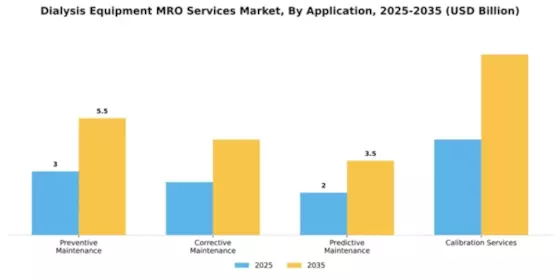
Maintenance: Preventive (Dominant) vs. Corrective (Emerging)
Preventive Maintenance has emerged as the dominant force in the Dialysis Equipment MRO Services Market, driven by the proactive strategies healthcare facilities adopt to ensure operational efficiency and compliance with regulatory standards. This focus provides regular checks and maintenance, significantly reducing failure rates and associated costs. In contrast, Corrective Maintenance serves as an emerging player, increasingly necessary in addressing urgent repairs. As equipment malfunctions can lead to critical treatment delays, the demand for corrective services is accelerating, making it vital for service providers to balance their offerings across both maintenance strategies, ensuring reliability and patient safety.
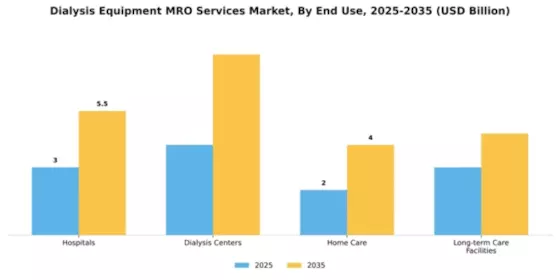
The Dialysis Equipment MRO Services Market exhibits notable segmentation by end use, primarily dominated by Dialysis Centers which capture a substantial share of the market. Hospitals also contribute significantly due to their wide range of patient-care services but do not outpace the specialized services offered by Dialysis Centers. Home Care and Long-term Care Facilities represent smaller yet vital portions of the market, catering to patients seeking convenient and personalized care options outside traditional settings.
Dialysis Centers (Dominant) vs. Home Care (Emerging)
Dialysis Centers are characterized by their specialized focus on delivering comprehensive renal care, attracting a larger patient base due to their advanced facilities and dedicated resources. They offer a variety of dialysis modalities, ensuring high-quality patient outcomes. In contrast, the Home Care segment is marked by its adaptability and growing appeal among patients desiring autonomy in their treatment. This shift towards home-based care is fueled by advancements in technology and an increasing emphasis on patient-centered approaches, making home care a rapidly emerging sector within the Dialysis Equipment MRO services.
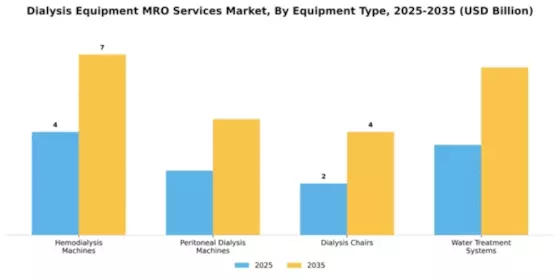
In the Dialysis Equipment MRO Services Market, Hemodialysis Machines hold the largest share due to their extensive adoption in hospitals and outpatient facilities. These machines are integral to the treatment of chronic kidney disease, thereby maintaining a strong demand. In comparison, Peritoneal Dialysis Machines, while traditionally smaller in market share, are witnessing accelerated growth as more patients prefer home-based therapies that offer convenience and autonomy. This shift is beginning to reshape the competitive landscape of the market, presenting new opportunities for manufacturers. As more healthcare providers look to implement efficient treatment options, the growth of Peritoneal Dialysis Machines is driven by increasing awareness of the benefits of home dialysis. Furthermore, technological advancements are enabling enhancements in these machines, making them more user-friendly. As a result, we are seeing an uptick in the adoption of these systems among patients who are seeking alternative treatment modalities, marking a significant shift in customer preferences in the dialysis sector.
Hemodialysis Machines (Dominant) vs. Dialysis Chairs (Emerging)
Hemodialysis Machines are the cornerstone of the Dialysis Equipment MRO Services Market, known for their reliability and efficacy in treating kidney failure. They dominate the market due to their capable performance and extensive installation in medical facilities worldwide. However, Dialysis Chairs are emerging as a critical segment, providing patients comfort during treatment sessions. Dialysis Chairs are increasingly being viewed as essential equipment in improving patient experience, which is paramount in facilities offering dialysis services. Innovations in chair ergonomics, adjustability, and integrated technology are enhancing their appeal among healthcare providers. While Hemodialysis Machines continue to hold a significant position in terms of volume, the rising focus on patient-centric care is paving the way for Dialysis Chairs to capture a more substantial share of the market.
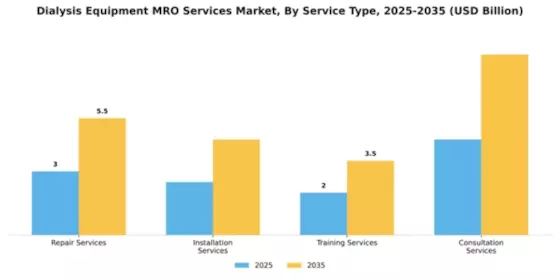
In the Dialysis Equipment MRO Services Market, the service type segment is dominated by repair services, which hold the largest share due to the critical need for maintaining and optimizing dialysis equipment functionality. Installation services are the next key player, growing rapidly as healthcare facilities expand their dialysis capabilities to meet increasing patient demands. Consultation and training services, while important, have a smaller market presence but play essential roles in ensuring sustainable operations and staff proficiency. Growth trends indicate that the installation services segment is experiencing the fastest growth as new technologies in dialysis equipment emerge, requiring specialized installation expertise. Moreover, as healthcare providers seek to enhance patient outcomes, they are increasingly investing in training services to equip their teams with the necessary skills. The demand for consultation services is also rising as facilities look to optimize their service offerings and efficiency in operations, driving further growth in the market.
Repair Services (Dominant) vs. Training Services (Emerging)
Repair services position themselves as the dominant service in the Dialysis Equipment MRO Services Market due to the immediate and essential need for maintaining equipment functionality and reducing downtime. These services are crucial in ensuring the reliability of dialysis machinery, which directly impacts patient health outcomes. The extensive experience and expertise required for these services foster strong relationships between providers and healthcare facilities, resulting in recurring contracts. On the other hand, training services are emerging as a critical component of the segment, spurred by the need for ongoing education in the rapidly evolving landscape of medical technology. Training programs are essential not only for equipment usage but also for compliance with safety standards, creating a significant opportunity for growth as healthcare organizations prioritize staff competence in enhancing overall service quality.
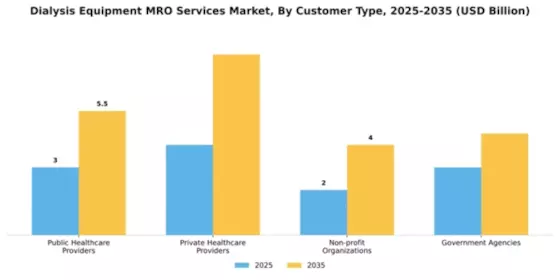
In the Dialysis Equipment MRO Services Market, public healthcare providers hold the largest share, significantly shaping the market landscape. They benefit from stable funding and government-backed initiatives, ensuring consistent demand for dialysis equipment services. Private healthcare providers, however, are catching up rapidly, fueled by the increasing privatization of healthcare and rising patient expectations for quality care. Their share growth is notable, driven by investments in high-quality care and advanced technologies.
Public Healthcare Providers (Dominant) vs. Private Healthcare Providers (Emerging)
Public healthcare providers dominate the Dialysis Equipment MRO Services Market, characterized by their substantial infrastructure and government support. They play a crucial role in increasing access to necessary medical care for populations in need, ensuring reliable service provision. Conversely, private healthcare providers are emerging as a vigorous force in this space, propelled by their capability to invest in cutting-edge technologies and personalized services. Their flexibility and focus on patient satisfaction enable them to capture significant market interest and are indicative of changing healthcare dynamics. As both sectors evolve, collaboration between public and private sectors may enhance service delivery and patient outcomes.
Get more detailed insights about Dialysis Equipment MRO Services Market Request Free Sample
North America is poised to maintain its leadership in the Dialysis Equipment MRO Services Market, holding a significant market share of 6.0 in 2024. The region's growth is driven by an aging population, increasing prevalence of chronic kidney diseases, and advancements in healthcare technology. Regulatory support and reimbursement policies further catalyze demand, ensuring a robust market environment for service providers. The competitive landscape in North America is characterized by major players such as Fresenius Medical Care, DaVita Inc., and Baxter International. These companies leverage innovative technologies and extensive service networks to enhance patient care. The U.S. remains the largest market, supported by a well-established healthcare infrastructure and a high demand for dialysis services, ensuring continued growth in the sector.
Europe's Dialysis Equipment MRO Services Market is projected to grow, with a market size of 3.0 in 2024. Key growth drivers include an increasing number of patients requiring dialysis, advancements in medical technology, and supportive healthcare policies. The region benefits from a strong regulatory framework that encourages innovation and ensures quality standards, fostering a conducive environment for market expansion. Leading countries such as Germany, France, and the UK are at the forefront of this market, with significant investments in healthcare infrastructure. Major players like Fresenius Medical Care and Baxter International are actively expanding their operations in Europe, enhancing service delivery and patient outcomes. The competitive landscape is evolving, with a focus on improving efficiency and patient care through technological advancements.
The Asia-Pacific region is witnessing significant growth in the Dialysis Equipment MRO Services Market, with a market size of 2.4 in 2024. This growth is driven by rising healthcare expenditures, increasing awareness of chronic kidney diseases, and a growing aging population. Governments in the region are implementing policies to enhance healthcare access, which is expected to further boost demand for dialysis services and equipment maintenance. Countries like Japan, China, and India are leading the market, with a growing number of dialysis centers and increasing investments from key players such as Nipro Corporation and Asahi Kasei Medical. The competitive landscape is becoming more dynamic, with local and international companies striving to capture market share through innovative solutions and improved service delivery, ensuring better patient care.
The Middle East and Africa region presents a nascent yet promising market for Dialysis Equipment MRO Services, with a market size of 0.6 in 2024. The growth in this region is primarily driven by increasing healthcare investments, a rising prevalence of kidney diseases, and a growing awareness of dialysis treatment options. Governments are focusing on improving healthcare infrastructure, which is expected to enhance service delivery in the coming years. Countries like South Africa and the UAE are emerging as key players in the dialysis market, with investments from both local and international companies. The competitive landscape is evolving, with a focus on establishing more dialysis centers and improving access to quality care. Key players are beginning to recognize the potential in this region, leading to increased competition and innovation in service offerings.
The Dialysis Equipment MRO Services Market is characterized by a competitive landscape that is increasingly shaped by innovation, strategic partnerships, and a focus on operational efficiency. Key players such as Fresenius Medical Care (Germany), DaVita Inc. (US), and Baxter International Inc. (US) are at the forefront, each employing distinct strategies to enhance their market positioning. Fresenius Medical Care (Germany) emphasizes technological advancements in dialysis equipment, aiming to improve patient outcomes through enhanced service offerings. Meanwhile, DaVita Inc. (US) focuses on expanding its service network, thereby increasing accessibility to its MRO services. Baxter International Inc. (US) appears to be concentrating on sustainability initiatives, which may resonate well with the growing demand for environmentally responsible healthcare solutions. Collectively, these strategies contribute to a dynamic competitive environment, where innovation and service quality are paramount.The market structure is moderately fragmented, with a mix of established players and emerging companies vying for market share. Key business tactics include localizing manufacturing to reduce costs and optimize supply chains, which is particularly relevant in the context of global supply chain disruptions. The influence of major players is significant, as their operational strategies often set benchmarks for industry standards, thereby shaping the overall market dynamics.In November Fresenius Medical Care (Germany) announced a partnership with a leading technology firm to develop AI-driven predictive maintenance solutions for dialysis equipment. This strategic move is likely to enhance operational efficiency and reduce downtime, thereby improving service delivery. The integration of AI into MRO services could potentially revolutionize how equipment maintenance is approached, allowing for more proactive rather than reactive strategies.In October DaVita Inc. (US) expanded its service offerings by acquiring a regional MRO service provider, which is expected to bolster its market presence in underserved areas. This acquisition not only enhances DaVita's operational capabilities but also aligns with its strategy to increase patient access to quality dialysis services. Such expansions may indicate a trend towards consolidation in the market, as companies seek to strengthen their foothold through strategic acquisitions.In September Baxter International Inc. (US) launched a new line of eco-friendly dialysis equipment, reflecting its commitment to sustainability. This initiative is likely to appeal to healthcare providers increasingly focused on reducing their environmental impact. By prioritizing sustainable practices, Baxter may differentiate itself in a competitive market that is progressively leaning towards eco-conscious solutions.As of December the Dialysis Equipment MRO Services Market is witnessing trends that emphasize digitalization, sustainability, and the integration of advanced technologies such as AI. Strategic alliances are becoming more prevalent, as companies recognize the value of collaboration in enhancing service offerings and operational efficiencies. Looking ahead, competitive differentiation is expected to evolve, with a shift from price-based competition to a focus on innovation, technological advancements, and supply chain reliability. This transition may redefine how companies position themselves in the market, ultimately benefiting patients through improved service quality and accessibility.



The Dialysis Equipment MRO Services Market is projected to grow at a 5.66% CAGR from 2025 to 2035, driven by technological advancements, increasing patient populations, and rising healthcare expenditures.
New opportunities lie in:
By 2035, the market is expected to be robust, reflecting sustained growth and innovation.
| MARKET SIZE 2024 | 12.0(USD Billion) |
| MARKET SIZE 2025 | 12.68(USD Billion) |
| MARKET SIZE 2035 | 22.0(USD Billion) |
| COMPOUND ANNUAL GROWTH RATE (CAGR) | 5.66% (2025 - 2035) |
| REPORT COVERAGE | Revenue Forecast, Competitive Landscape, Growth Factors, and Trends |
| BASE YEAR | 2024 |
| Market Forecast Period | 2025 - 2035 |
| Historical Data | 2019 - 2024 |
| Market Forecast Units | USD Billion |
| Key Companies Profiled | Fresenius Medical Care (DE), DaVita Inc. (US), Baxter International Inc. (US), Nipro Corporation (JP), Medtronic plc (IE), Asahi Kasei Medical Co., Ltd. (JP), Dialysis Clinic, Inc. (US), Kawasumi Laboratories, Inc. (JP), Gambro (SE) |
| Segments Covered | Application, End Use, Equipment Type, Service Type, Customer Type |
| Key Market Opportunities | Integration of advanced predictive maintenance technologies enhances efficiency in the Dialysis Equipment MRO Services Market. |
| Key Market Dynamics | Rising demand for efficient maintenance solutions drives innovation and competition in the Dialysis Equipment MRO Services market. |
| Countries Covered | North America, Europe, APAC, South America, MEA |
The market valuation of the Dialysis Equipment MRO Services Market was 12.0 USD Billion in 2024.
The market is projected to reach 22.0 USD Billion by 2035.
The expected CAGR for the market during the forecast period 2025 - 2035 is 5.66%.
Key players in the market include Fresenius Medical Care, DaVita Inc., Baxter International Inc., and Nipro Corporation.
The main segments by application include Preventive Maintenance, Corrective Maintenance, Predictive Maintenance, and Calibration Services.
The Preventive Maintenance segment is valued at approximately 5.5 USD Billion in 2025.
The projected valuation for Dialysis Centers is expected to reach 8.0 USD Billion by 2035.
The market includes Hemodialysis Machines, Peritoneal Dialysis Machines, Dialysis Chairs, and Water Treatment Systems.
Services offered include Repair Services, Installation Services, Training Services, and Consultation Services.
Public Healthcare Providers are projected to see a market valuation of 5.5 USD Billion by 2035.



Kindly complete the form below to receive a free sample of this Report

“This is really good guys. Excellent work on a tight deadline. I will continue to use you going forward and recommend you to others. Nice job”


“Thanks. It’s been a pleasure working with you, please use me as reference with any other Intel employees.”


“Thanks for sending the report it gives us a good global view of the Betaïne market.”


“Thank you, this will be very helpful for OQS.”


“We found the report very insightful! we found your research firm very helpful. I'm sending this email to secure our future business.”


“I am very pleased with how market segments have been defined in a relevant way for my purposes (such as "Portable Freezers & refrigerators" and "last-mile"). In general the report is well structured. Thanks very much for your efforts.”


“I have been reading the first document or the study, ,the Global HVAC and FP market report 2021 till 2026. Must say, good info! I have not gone in depth at all parts, but got a good indication of the data inside!”


“We got the report in time, we really thank you for your support in this process. I also thank to all of your team as they did a great job.”


“The Automotive 48V ECU Components Procurement Intelligence Study” was a complex project, but the Market Research Future (MRFR) team handled it with quality, agility, and customer-centricity. They delivered all requested data on time and within the agreed scope. The team, including Shubhendra Anand and Rahul Gotadki, was always readily available to clarify questions and swiftly implement necessary adjustments, driving the project to a successful conclusion within a very demanding timeframe.
I would also like to specifically commend Akshay Agarwal for his responsiveness and support at every stage—from our initial inquiry on May 6th through to final delivery on June 18th. His dedication made the entire process seamless.”



