×
Request Free Sample ×

Kindly complete the form below to receive a free sample of this Report

* Please use a valid business email

Leading companies partner with us for data-driven Insights

clients tt-cursor
Hero Background

Diammonium Hydrogen Phosphate Market

ID: MRFR/CnM/8376-HCR
100 Pages
Chitranshi Jaiswal
October 2025

Diammonium Hydrogen Phosphate Market Research Report By Application (Fertilizers, Food Additives, Industrial Applications, Animal Feed, Pharmaceuticals), By Form (Granular, Powder, Liquid), By End Use (Agriculture, Food Processing, Pharmaceutical Industry, Chemical Manufacturing), By Distribution Channel (Direct Sales, Online Sales, Retail) and By Regional (North America, Europe, South America, Asia Pacific, Middle East and Africa) - Forecast to 2035

Share:
Download PDF ×

We do not share your information with anyone. However, we may send you emails based on your report interest from time to time. You may contact us at any time to opt-out.

Diammonium Hydrogen Phosphate Market Infographic
Purchase Options

Diammonium Hydrogen Phosphate Market Summary

As per MRFR analysis, the Diammonium Hydrogen Phosphate Market Size was estimated at 3420.77 USD Million in 2024. The Diammonium Hydrogen Phosphate industry is projected to grow from 3558.02 USD Million in 2025 to 5272.82 USD Million by 2035, exhibiting a compound annual growth rate (CAGR) of 4.01 during the forecast period 2025 - 2035.

Key Market Trends & Highlights

The Diammonium Hydrogen Phosphate Market is poised for growth driven by sustainable practices and technological advancements.

  • North America remains the largest market for Diammonium Hydrogen Phosphate, primarily due to its extensive agricultural sector.
  • The Asia-Pacific region is emerging as the fastest-growing market, fueled by increasing agricultural productivity and demand.
  • The fertilizer segment dominates the market, while the food additive segment is experiencing rapid growth due to rising health consciousness.
  • Key market drivers include the rising demand for fertilizers and a shift towards organic farming, supported by government initiatives.

Market Size & Forecast

2024 Market Size 3420.77 (USD Million)
2035 Market Size 5272.82 (USD Million)
CAGR (2025 - 2035) 4.01%

Major Players

Nutrien Ltd (CA), Yara International ASA (NO), Mosaic Company (US), OCP Group (MA), PhosAgro (RU), ICL Group Ltd (IL), K+S AG (DE), Coromandel International Ltd (IN), Haifa Group (IL)

Diammonium Hydrogen Phosphate Market Trends

The Diammonium Hydrogen Phosphate Market is currently experiencing a notable evolution, driven by various factors that influence its demand and supply dynamics. This compound, primarily utilized as a fertilizer, plays a crucial role in enhancing agricultural productivity. As global populations continue to rise, the need for efficient agricultural practices becomes increasingly pressing. Consequently, the market is witnessing a shift towards sustainable farming methods, which often incorporate Diammonium Hydrogen Phosphate due to its nutrient-rich profile. Furthermore, the growing awareness of soil health and fertility management is propelling the adoption of this compound among farmers and agricultural enterprises. In addition to agricultural applications, the Diammonium Hydrogen Phosphate Market is also seeing interest from the food and beverage sector, where it serves as a food additive and pH regulator. This diversification of applications suggests a broader market potential, as industries seek to optimize their processes and products. Moreover, advancements in production technologies may enhance the efficiency and sustainability of Diammonium Hydrogen Phosphate manufacturing, potentially leading to increased availability and reduced environmental impact. Overall, the market appears poised for growth, with various sectors recognizing the benefits of this versatile compound.

Sustainable Agriculture Practices

The trend towards sustainable agriculture is gaining momentum, with farmers increasingly adopting practices that prioritize environmental health. Diammonium Hydrogen Phosphate is becoming a preferred choice due to its ability to provide essential nutrients while minimizing ecological footprints. This shift reflects a broader commitment to sustainable food production.

Diversification of Applications

Diammonium Hydrogen Phosphate is finding new applications beyond traditional fertilizers. Its role as a food additive and pH regulator in the food and beverage industry is expanding. This diversification indicates a growing recognition of the compound's versatility and potential benefits across various sectors.

Technological Advancements in Production

Innovations in production technologies are likely to enhance the efficiency of Diammonium Hydrogen Phosphate manufacturing. These advancements may lead to improved sustainability and reduced costs, making the compound more accessible to a wider range of industries and applications.

Diammonium Hydrogen Phosphate Market Drivers

Global Trade Dynamics

The Global Diammonium Hydrogen Phosphate Market Industry is significantly affected by global trade dynamics, including import and export trends. Countries that are major producers of this compound often engage in international trade to meet the demands of regions with high agricultural activity. Fluctuations in trade policies, tariffs, and international relations can impact the availability and pricing of diammonium hydrogen phosphate. As nations strive for self-sufficiency in food production, the interplay between domestic production and global trade will shape market conditions. This aspect of the industry underscores the importance of monitoring geopolitical developments and trade agreements.

Rising Demand for Fertilizers

The Global Diammonium Hydrogen Phosphate Market Industry experiences a surge in demand driven by the agricultural sector's need for effective fertilizers. As global food production intensifies to meet the needs of a growing population, the utilization of diammonium hydrogen phosphate as a key nutrient source becomes increasingly vital. In 2024, the market is projected to reach 3.42 USD Billion, reflecting the essential role of this compound in enhancing crop yields. Additionally, the anticipated compound annual growth rate of 4.02% from 2025 to 2035 indicates a sustained interest in this fertilizer, further solidifying its position in agricultural practices worldwide.

Government Initiatives and Support

Government policies and initiatives aimed at boosting agricultural productivity play a crucial role in the Global Diammonium Hydrogen Phosphate Market Industry. Many countries are implementing programs that promote the use of fertilizers to enhance food security and agricultural output. These initiatives often include subsidies for farmers, educational campaigns on best practices, and investments in agricultural research. Such support not only encourages the adoption of diammonium hydrogen phosphate but also fosters a favorable regulatory environment for its production and distribution. As a result, the market is likely to benefit from these governmental efforts, contributing to its projected growth.

Increasing Awareness of Soil Health

The Global Diammonium Hydrogen Phosphate Market Industry is influenced by a growing awareness of soil health among farmers and agricultural stakeholders. As the importance of maintaining soil fertility becomes more recognized, the demand for high-quality fertilizers, including diammonium hydrogen phosphate, rises. This compound is known for its ability to enhance nutrient availability and improve soil structure, which are critical for sustainable farming. The increasing focus on organic and sustainable farming practices further drives this trend, as farmers seek to optimize their yields while minimizing environmental impact. This shift in mindset is expected to bolster the market's growth in the coming years.

Technological Advancements in Production

Innovations in the manufacturing processes of diammonium hydrogen phosphate contribute significantly to the Global Diammonium Hydrogen Phosphate Market Industry. Enhanced production techniques not only improve efficiency but also reduce costs, making this fertilizer more accessible to farmers globally. For instance, the adoption of precision agriculture technologies allows for more targeted application of fertilizers, maximizing their effectiveness. As the industry evolves, these advancements are likely to support the market's growth trajectory, with projections indicating a market value of 5.27 USD Billion by 2035. This evolution reflects a broader trend towards sustainable agricultural practices that prioritize both productivity and environmental stewardship.
Market Segment Insights

By Application: Fertilizer (Largest) vs. Food Additive (Fastest-Growing)

In the Diammonium Hydrogen Phosphate Market, the application segment showcases significant diversity in use cases, with fertilizers dominating the majority share. Fertilizers, being the primary application, leverage diammonium hydrogen phosphate due to its rich nutrient content, which is vital for plant growth. In contrast, food additives, while holding a smaller share, are rapidly gaining traction due to increasing consumer demand for processed foods enriched with essential nutrients. This dynamic creates a robust balance in the application segment, highlighting the vast utility of diammonium hydrogen phosphate across various sectors.

Fertilizer (Dominant) vs. Animal Feed (Emerging)

Fertilizer remains the dominant application of diammonium hydrogen phosphate, cementing its position as a critical input in the agricultural sector. Its effectiveness in enhancing crop yields by providing essential phosphorous and nitrogen makes it indispensable for farmers. On the other hand, animal feed is an emerging application that is witnessing heightened interest. The incorporation of diammonium hydrogen phosphate in animal nutrition supports better growth rates and overall animal health, thus catering to the rising demand for high-quality animal proteins. As the livestock industry continues to expand globally, the animal feed segment is poised for substantial growth, offering a complementary avenue for diammonium hydrogen phosphate utilization.

By End Use: Agriculture (Largest) vs. Pharmaceuticals (Fastest-Growing)

The Diammonium Hydrogen Phosphate (DAP) market exhibits a diverse distribution among its key end-use segments. The agriculture sector stands out as the largest, driven by its essential role in crop fertilization. In contrast, the food industry and chemical manufacturing also share significant portions of the market, catering to the demand for food additives and various chemical products. Finally, pharmaceuticals, while having a smaller market share, are gaining attention due to their increasing reliance on DAP in drug formulation and development processes.

Agriculture: Dominant vs. Pharmaceuticals: Emerging

Agriculture has emerged as the dominant end-use segment for Diammonium Hydrogen Phosphate, primarily due to its critical application as a fertilizer that enhances crop yields and promotes healthy plant growth. This segment benefits from a stable demand base and is closely linked to global food production strategies. Conversely, the pharmaceuticals segment is characterized as emerging, fueled by advancements in drug formulations that utilize DAP for its bioavailability and effectiveness. While currently smaller in size, this segment's growth is driven by increasing investments in healthcare and pharmaceutical innovations, indicating a significant potential for expansion in the coming years.

By Form: Granular (Largest) vs. Powder (Fastest-Growing)

In the Diammonium Hydrogen Phosphate Market, the form segment is predominantly characterized by granular products, which hold the largest share due to their widespread application in bulk fertilizers. Their ease of handling and efficacy in enhancing soil nutrient content contribute to their preferred status among agricultural producers. Meanwhile, the powder form has gained traction and is considered the fastest-growing segment, particularly in specialty chemical applications, due to its versatility and compatibility with various formulations.

Granular (Dominant) vs. Powder (Emerging)

Granular diammonium hydrogen phosphate is the dominant form in the market, favored for its efficiency in soil application and long-lasting effects on crop yields. Its bulk storage and transportation advantages make it a preferred choice for large-scale agricultural operations. In contrast, the powdered form is emerging rapidly, appealing to sectors requiring fine particle sizes for quick dissolution and precise application rates. Its flexibility in blending with other nutrients and its growing use in industrial applications position it as a key player in the market's future.

By Purity Level: High Purity (Largest) vs. Standard Purity (Fastest-Growing)

In the Diammonium Hydrogen Phosphate (DAP) market, the purity level segment reflects a diverse distribution among three main categories: High Purity, Standard Purity, and Technical Grade. High Purity DAP holds the largest share due to its extensive use in premium fertilizer formulations and specialized applications. On the contrary, Standard Purity DAP is also essential for various agricultural and industrial applications and is gradually capturing a growing market share, especially in emerging economies where agricultural demands are surging. The growth trends in the purity level segment are primarily driven by increasing agricultural productivity and the need for high-quality fertilizers. High Purity DAP is bolstered by its superior nutrient content, making it favorable for high-value crops. On the other hand, Standard Purity DAP, due to its cost-effectiveness, has gained traction, especially among mid-scale and small-scale farmers who are looking for reliable yet affordable fertilizer solutions. This dynamic presents a competitive landscape where both purity levels can coexist and thrive according to market needs.

High Purity (Dominant) vs. Standard Purity (Emerging)

High Purity DAP is characterized by its refined chemical composition, making it a preferred choice for high-grade agricultural applications, particularly in horticulture and specialty crops. Its dominance in the market is supported by increasing demands for precise nutrient formulations and its role in enhancing crop yields. Meanwhile, Standard Purity DAP is considered an emerging segment that caters to broader agricultural practices. Its rising popularity is attributed to its affordability and versatility in various agricultural settings, providing farmers with a balanced nutrient profile needed for staple crops. While High Purity retains its edge within niche markets, Standard Purity is progressively carving out its role by appealing to cost-sensitive segments, thus contributing to the overall growth of the DAP market.

Get more detailed insights about Diammonium Hydrogen Phosphate Market

Regional Insights

North America : Stable Growth Environment

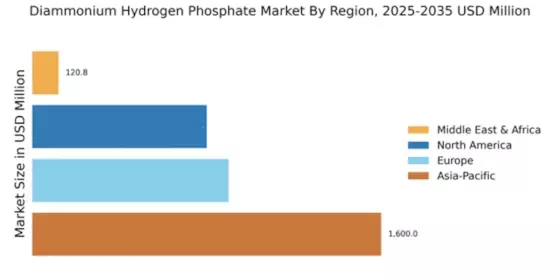
The North American Diammonium Hydrogen Phosphate market is projected to reach $600.0 million by December 2025, driven by increasing agricultural productivity and sustainable farming practices. Regulatory support for fertilizers and crop yield enhancement is fostering demand, particularly in the U.S. and Canada. The region's focus on innovation in agricultural technologies is also a significant growth driver, ensuring a steady market trajectory. Leading countries in this region include the U.S. and Canada, where major players like Nutrien Ltd and Mosaic Company dominate the market. The competitive landscape is characterized by a mix of established firms and emerging players, all vying for market share. The presence of key players ensures a robust supply chain, catering to the growing demand for high-quality fertilizers in the agricultural sector.

Europe : Diverse Market Dynamics

Europe's Diammonium Hydrogen Phosphate market is expected to reach $800.0 million by December 2025, fueled by increasing agricultural demands and stringent regulations promoting sustainable practices. The EU's Green Deal and Farm to Fork strategy are pivotal in shaping market dynamics, encouraging the adoption of eco-friendly fertilizers. This regulatory framework is expected to enhance market growth and sustainability in the region. Germany, France, and the Netherlands are leading countries in this market, with significant contributions from companies like K+S AG and Yara International ASA. The competitive landscape is marked by innovation and collaboration among key players, focusing on developing advanced fertilizers. The presence of established firms ensures a stable supply chain, meeting the rising demand for efficient agricultural solutions.

Asia-Pacific : Dominant Market Leader

The Asia-Pacific region is the largest market for Diammonium Hydrogen Phosphate, projected to reach $1,800.0 million by December 2025. The region's growth is driven by rapid agricultural expansion, increasing food demand, and government initiatives promoting fertilizer use. Countries like China and India are at the forefront, implementing policies to enhance agricultural productivity and ensure food security, significantly boosting market demand. China and India are the leading countries in this market, with major players like Yara International ASA and Coromandel International Ltd actively participating. The competitive landscape is characterized by a mix of local and international firms, all striving to capture market share. The presence of key players ensures a robust supply chain, catering to the diverse needs of the agricultural sector in this rapidly growing region.

Middle East and Africa : Emerging Market Potential

The Middle East and Africa's Diammonium Hydrogen Phosphate market is projected to reach $220.77 million by December 2025, driven by increasing agricultural activities and the need for food security. The region's diverse agricultural landscape and government initiatives to boost local production are key growth drivers. Additionally, the rising awareness of sustainable farming practices is expected to enhance market dynamics in the coming years. Leading countries in this region include South Africa and Morocco, where companies like OCP Group and PhosAgro are making significant contributions. The competitive landscape is evolving, with both local and international players vying for market share. The presence of key players ensures a steady supply of fertilizers, addressing the growing demand in the agricultural sector.

Key Players and Competitive Insights

The Diammonium Hydrogen Phosphate Market is characterized by a competitive landscape that is increasingly shaped by innovation, sustainability, and strategic partnerships. Key players such as Nutrien Ltd (CA), Yara International ASA (NO), and Mosaic Company (US) are actively pursuing strategies that enhance their market positioning. Nutrien Ltd (CA) focuses on expanding its product portfolio through technological advancements, while Yara International ASA (NO) emphasizes sustainable agricultural practices to meet the growing demand for eco-friendly fertilizers. Mosaic Company (US) is leveraging its extensive distribution network to optimize supply chain efficiencies, thereby enhancing its competitive edge. Collectively, these strategies contribute to a dynamic market environment where innovation and sustainability are paramount.

The business tactics employed by these companies reflect a concerted effort to localize manufacturing and optimize supply chains. The market structure appears moderately fragmented, with several key players exerting influence over regional markets. This fragmentation allows for a diverse range of products and services, catering to varying customer needs. The collective influence of these major players fosters a competitive atmosphere that encourages continuous improvement and adaptation to market demands.

In November 2025, Yara International ASA (NO) announced a partnership with a leading agricultural technology firm to develop precision farming solutions. This strategic move is likely to enhance Yara's product offerings by integrating advanced data analytics into its fertilizer application processes. Such innovations may not only improve crop yields but also align with the growing emphasis on sustainable farming practices, positioning Yara as a leader in the eco-friendly segment of the market.

In October 2025, Nutrien Ltd (CA) unveiled a new initiative aimed at reducing greenhouse gas emissions across its production facilities. This initiative underscores Nutrien's commitment to sustainability and may serve to attract environmentally conscious consumers. By investing in cleaner technologies, Nutrien is likely to enhance its brand reputation while also complying with increasingly stringent environmental regulations.

In September 2025, Mosaic Company (US) expanded its operations in South America by acquiring a local fertilizer manufacturer. This acquisition is expected to bolster Mosaic's market presence in the region, allowing for greater distribution capabilities and improved access to local markets. Such strategic expansions are indicative of Mosaic's intent to capitalize on emerging market opportunities and strengthen its competitive position.

As of December 2025, the competitive trends within the Diammonium Hydrogen Phosphate Market are increasingly defined by digitalization, sustainability, and the integration of artificial intelligence. Strategic alliances are becoming more prevalent, as companies recognize the value of collaboration in driving innovation. The shift from price-based competition to a focus on technological advancements and supply chain reliability is evident. Moving forward, competitive differentiation will likely hinge on the ability to innovate and adapt to evolving market conditions, with a strong emphasis on sustainable practices and advanced technologies.

Key Companies in the Diammonium Hydrogen Phosphate Market market include

Industry Developments

Recent developments in the Diammonium Hydrogen Phosphate Market indicate a steady growth trajectory influenced by rising agricultural demand and a focus on nutrient-rich fertilizers. Key players such as OCP Group, EuroChem, and Nutrien are expanding their production capabilities to meet the increasing need for DAP in various regions, particularly in Asia and Africa. Companies like Mosaic Company and Yara International are also innovating their product offerings to enhance nutrient efficiency, which has become a significant trend in sustainable agriculture practices.

Additionally, PhosAgro and CF Industries are exploring strategic collaborations to enhance their market presence and operational efficiency, which is essential for staying competitive. Recent acquisitions have been limited, but companies are showing increased interest in mergers to consolidate their positions. With the market valuation continuing to rise, driven by global food security initiatives and environmental concerns, organizations such as K+S AG and Ravensdown are aligning their business strategies to leverage growth opportunities. This dynamic environment is shaping a competitive landscape as companies aim to strengthen distribution networks and innovate their product lines in response to shifting market needs.

Future Outlook

Diammonium Hydrogen Phosphate Market Future Outlook

The Diammonium Hydrogen Phosphate Market is projected to grow at a 4.01% CAGR from 2024 to 2035, driven by increasing agricultural demand and advancements in fertilizer technology.

New opportunities lie in:

  • Expansion into emerging markets with tailored fertilizer solutions.
  • Development of eco-friendly production processes to attract sustainability-focused clients.
  • Investment in precision agriculture technologies to enhance nutrient delivery efficiency.

By 2035, the market is expected to solidify its position as a key player in the global fertilizer industry.

Market Segmentation

Diammonium Hydrogen Phosphate Market Form Outlook

  • Granular
  • Powder
  • Liquid

Diammonium Hydrogen Phosphate Market End Use Outlook

  • Agriculture
  • Food Industry
  • Chemical Manufacturing
  • Pharmaceuticals

Diammonium Hydrogen Phosphate Market Application Outlook

  • Fertilizer
  • Food Additive
  • Animal Feed
  • Pharmaceuticals

Diammonium Hydrogen Phosphate Market Purity Level Outlook

  • High Purity
  • Standard Purity
  • Technical Grade

Report Scope

MARKET SIZE 20243420.77(USD Million)
MARKET SIZE 20253558.02(USD Million)
MARKET SIZE 20355272.82(USD Million)
COMPOUND ANNUAL GROWTH RATE (CAGR)4.01% (2024 - 2035)
REPORT COVERAGERevenue Forecast, Competitive Landscape, Growth Factors, and Trends
BASE YEAR2024
Market Forecast Period2025 - 2035
Historical Data2019 - 2024
Market Forecast UnitsUSD Million
Key Companies ProfiledNutrien Ltd (CA), Yara International ASA (NO), Mosaic Company (US), OCP Group (MA), PhosAgro (RU), ICL Group Ltd (IL), K+S AG (DE), Coromandel International Ltd (IN), Haifa Group (IL)
Segments CoveredApplication, End Use, Form, Purity Level
Key Market OpportunitiesGrowing demand for sustainable fertilizers enhances opportunities in the Diammonium Hydrogen Phosphate Market.
Key Market DynamicsRising demand for sustainable fertilizers drives innovation and competition in the Diammonium Hydrogen Phosphate market.
Countries CoveredNorth America, Europe, APAC, South America, MEA

Leave a Comment

FAQs

What is the projected CAGR for the Diammonium Hydrogen Phosphate Market from 2025 to 2034?

Diammonium Hydrogen Phosphate Market is projected to grow at a CAGR of 4.01% during the forecast period, 2025-2035

Which region is anticipated to have the largest market share in the Diammonium Hydrogen Phosphate Market by 2035?

North America is anticipated to have the largest market share, valued at 1.45 USD Billion in 2035.

What will be the market value of the Fertilizers application segment in 2035?

The Fertilizers application segment is projected to reach a market value of 2.1 USD Billion in 2035.

Who are the major competitors in the Diammonium Hydrogen Phosphate Market?

Major players in the Diammonium Hydrogen Phosphate Market include OCP Group, EuroChem, and Mosaic Company.

What will be the market size for the APAC region in 2035?

The market size for the APAC region is expected to be 1.55 USD Billion in 2035.

What is the projected market value for Food Additives application in 2035?

The Food Additives application segment is projected to reach a market value of 0.9 USD Billion in 2035.

What is the anticipated market size of the Animal Feed application by 2035?

The anticipated market size for the Animal Feed application is expected to be 0.6 USD Billion by 2035.

What will be the market value for Industrial Applications in 2035?

The market value for Industrial Applications is expected to be 0.7 USD Billion in 2035.

What are the expected challenges for the Diammonium Hydrogen Phosphate Market?

The expected challenges for the Diammonium Hydrogen Phosphate Market include fluctuating raw material prices and regulatory pressures.

Download Free Sample

Kindly complete the form below to receive a free sample of this Report

Compare Licence

×
Features License Type
Single User Multiuser License Enterprise User
Price $4,950 $5,950 $7,250
Maximum User Access Limit 1 User Upto 10 Users Unrestricted Access Throughout the Organization
Free Customization
Direct Access to Analyst
Deliverable Format
Platform Access
Discount on Next Purchase 10% 15% 15%
Printable Versions