Download Free Sample
Kindly complete the form below to receive a free sample of this Report
Digital Advertising and Programmatic Buying Services Market Research Report By End Use (Retail, Automotive, Healthcare, Travel, Entertainment), By Technology (Artificial Intelligence, Machine Learning, Data Analytics, Blockchain, Cloud Computing), By Application (Display Advertising, Search Advertising, Social Media Advertising, Video Advertising, Email Advertising), By Service Type (Programmatic Display, Programmatic Video, Programmatic Audio, Programmatic Social, Programmatic Search), By Pricing Model (Cost Per Click, Cost Per Impression, Cost Per Acquisition, Cost Per Engagement, Cost Per Lead) And By Region (North America, Europe, Asia-Pacific, And Rest Of The World) – Market Forecast Till 2035.
As per MRFR analysis, the Digital Advertising and Programmatic Buying Services Market was estimated at 550.0 USD Billion in 2024. The market is projected to grow from 570.62 USD Billion in 2025 to 825.0 USD Billion by 2035, exhibiting a compound annual growth rate (CAGR) of 3.75% during the forecast period 2025 - 2035.
The Digital Advertising and Programmatic Buying Services Market is experiencing dynamic growth driven by technological advancements and evolving consumer preferences.
| 2024 Market Size | 550.0 (USD Billion) |
| 2035 Market Size | 825.0 (USD Billion) |
| CAGR (2025 - 2035) | 3.75% |
Google (US), Facebook (US), Amazon (US), Adobe (US), The Trade Desk (US), Verizon Media (US), Criteo (FR), MediaMath (US), AppNexus (US), Sizmek (US)
Our Impact
Enabled $4.3B Revenue Impact for Fortune 500 and Leading Multinationals
Partnering with 2000+ Global Organizations Each Year
30K+ Citations by Top-Tier Firms in the Industry
The Digital Advertising and Programmatic Buying Services Market is currently experiencing a transformative phase, characterized by rapid technological advancements and evolving consumer behaviors. As businesses increasingly recognize the necessity of digital presence, the demand for programmatic solutions appears to be on the rise. This shift is driven by the need for more efficient ad placements and the ability to target specific audiences with precision. Furthermore, the integration of artificial intelligence and machine learning technologies into advertising strategies seems to enhance the effectiveness of campaigns, allowing for real-time adjustments and improved return on investment. Moreover, privacy regulations and consumer data protection concerns are reshaping the landscape of digital advertising. Companies are adapting to these changes by prioritizing transparency and ethical data usage, which may foster greater trust among consumers. The emergence of new platforms and channels for advertising, including social media and mobile applications, indicates a diversification of strategies within the market. As the Digital Advertising and Programmatic Buying Services Market continues to evolve, stakeholders must remain agile and responsive to these trends to maintain competitive advantage and drive growth.
The Digital Advertising and Programmatic Buying Services Market is witnessing a heightened emphasis on personalized advertising experiences. Advertisers are leveraging data analytics to create tailored content that resonates with individual preferences, thereby enhancing engagement and conversion rates. This trend suggests a shift from generic messaging to more targeted approaches, which may lead to improved customer satisfaction.
The incorporation of advanced technologies, such as artificial intelligence and machine learning, is becoming increasingly prevalent in the Digital Advertising and Programmatic Buying Services Market. These technologies enable advertisers to optimize campaigns in real-time, analyze consumer behavior more effectively, and automate various processes. This trend indicates a move towards more sophisticated advertising strategies that can adapt to changing market dynamics.
As concerns regarding data privacy intensify, the Digital Advertising and Programmatic Buying Services Market is placing greater importance on compliance with regulations. Advertisers are adopting transparent practices and prioritizing consumer consent in data collection efforts. This trend reflects a broader industry shift towards ethical advertising, which may enhance brand reputation and foster consumer trust.
The Digital Advertising and Programmatic Buying Services Market is witnessing a substantial shift towards mobile advertising. With the proliferation of smartphones and mobile devices, advertisers are increasingly allocating budgets to mobile platforms. Recent statistics indicate that mobile advertising accounts for over 70 percent of total digital ad spending, reflecting a significant trend in consumer behavior. This shift is further fueled by the rise of mobile applications and social media platforms, which provide advertisers with unique opportunities to engage users in real-time. As mobile usage continues to grow, programmatic buying services are adapting to optimize ad placements across various mobile channels, ensuring that advertisers can effectively reach their target audiences wherever they are.
The Digital Advertising and Programmatic Buying Services Market is being transformed by the emergence of artificial intelligence (AI) technologies. AI is enabling advertisers to analyze vast amounts of data and automate decision-making processes, leading to more efficient ad placements and improved targeting strategies. Recent studies suggest that AI-driven programmatic buying can enhance campaign performance by optimizing bidding strategies and predicting consumer behavior. This technological advancement not only streamlines the advertising process but also allows for real-time adjustments based on performance metrics. As AI continues to evolve, its integration into programmatic buying services is likely to become a standard practice, further enhancing the effectiveness of digital advertising campaigns.
The Digital Advertising and Programmatic Buying Services Market is experiencing a notable increase in demand for targeted advertising solutions. Advertisers are increasingly seeking to reach specific demographics and consumer segments, which has led to a surge in programmatic buying capabilities. According to recent data, targeted advertising can yield conversion rates that are significantly higher than traditional methods, with some estimates suggesting a potential increase of up to 50 percent. This trend is driven by the need for advertisers to maximize their return on investment while minimizing wasted ad spend. As a result, programmatic buying platforms are evolving to offer more sophisticated targeting options, enabling advertisers to deliver personalized messages to the right audience at the right time.
The Digital Advertising and Programmatic Buying Services Market is increasingly influenced by regulatory changes and the need for compliance with data privacy laws. As governments around the world implement stricter regulations regarding consumer data usage, advertisers must adapt their strategies to ensure compliance. This shift has led to a growing demand for programmatic buying services that prioritize transparency and data protection. Recent reports indicate that companies investing in compliant advertising practices are likely to gain a competitive edge, as consumers become more aware of their data rights. As the regulatory landscape continues to evolve, the ability to navigate these changes will be essential for success in the digital advertising space.
The Digital Advertising and Programmatic Buying Services Market is benefiting from increased investment in digital marketing initiatives. Businesses are recognizing the importance of establishing a robust online presence, leading to a surge in digital ad spending. Recent data indicates that digital marketing budgets have grown by over 20 percent in the past year alone, as companies seek to leverage the advantages of programmatic buying. This influx of investment is driving innovation within the industry, as new tools and platforms emerge to meet the evolving needs of advertisers. Consequently, the competitive landscape is becoming more dynamic, with programmatic buying services playing a crucial role in helping brands achieve their marketing objectives.
In the Digital Advertising and Programmatic Buying Services Market, Display Advertising holds the largest market share among various applications, being a well-established method for reaching wide audiences. This segment benefits from its visual nature, enabling brands to communicate effectively with potential consumers through eye-catching graphics and strategic placements across platforms. Video Advertising, although currently a smaller segment, is rapidly gaining traction, showcasing the evolution of consumer preferences toward engaging video content, thus attracting increased investments from advertisers. Growth trends in the Digital Advertising sector indicate that Video Advertising is experiencing the fastest growth, largely driven by changing consumer behaviors and the proliferation of video-sharing platforms. Brands are increasingly recognizing the importance of integrating various formats, notably emphasizing dynamic and interactive content alongside traditional advertising methods. This shift highlights an evolving landscape where users seek more engaging and personalized advertising experiences, prompting advertisers to adapt and innovate continually.
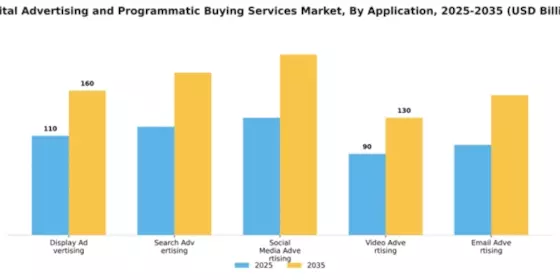
Display Advertising (Dominant) vs. Social Media Advertising (Emerging)
Display Advertising serves as a cornerstone of the Digital Advertising ecosystem, offering extensive reach and proven effectiveness in brand visibility. It is characterized by its ability to deliver visually appealing ads across various platforms, targeting specific demographics based on extensive data analytics. In contrast, Social Media Advertising is an emerging force, leveraging the vast user bases of platforms like Facebook, Instagram, and Twitter. This segment is marked by its interactive nature and the capacity for precise audience targeting, making it ideal for engagement-driven campaigns. As brands increasingly seek to capture consumer attention in cluttered digital spaces, Social Media Advertising provides innovative tools for direct interaction, positioning itself as a crucial complement to the established Display Advertising.
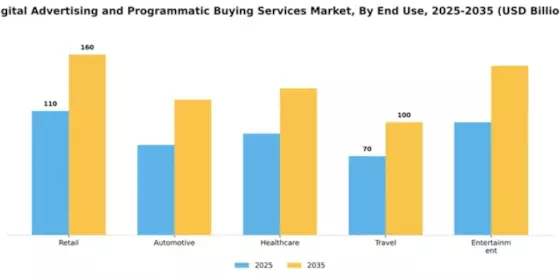
In the Digital Advertising and Programmatic Buying Services Market, the distribution of market share among end-use segments reveals Retail as the dominant player due to its extensive reliance on digital marketing strategies to drive consumer engagement and sales. Coupled with a significant online shopping trend, retailers invest heavily in programmatic advertising to target specific customer demographics and optimize their marketing expenditures effectively. Conversely, Automotive, while currently smaller, is emerging as a vital contender, leveraging digital advertising for brand positioning and consumer outreach as the industry transitions toward electric vehicles and advanced driver-assistance systems. Growth trends within the end-use segment indicate substantial shifts, particularly for Automotive, which is rapidly adapting to the changing landscape with increased investment in digital channels. The rise of digital media consumption and mobile accessibility is fueling this growth, prompting automotive brands to engage in targeted advertising campaigns across multiple platforms. The ongoing evolution of technology and consumer preferences enhances the effectiveness of programmatic buying, making it an attractive option for both established and emerging players across various industries, notably Automotive and Healthcare, which are also seeing rapid advancements in their digital advertising strategies.
Retail (Dominant) vs. Entertainment (Emerging)
Within the Digital Advertising and Programmatic Buying Services Market, Retail stands out as the dominant segment, characterized by its robust allocation of budgets towards digital marketing initiatives and a comprehensive understanding of consumer behavior. Retailers utilize data analytics and targeted advertising to reach audiences effectively, often employing personalization tactics that enhance customer experience and conversion rates. On the other hand, Entertainment is categorized as an emerging segment, leveraging programmatic buying to capture the attention of a diverse user base in a rapidly changing media landscape. This segment benefits from innovative storytelling and high engagement rates, attracting advertisers looking to exploit the growing consumption of digital content across various platforms, including streaming services and social media.
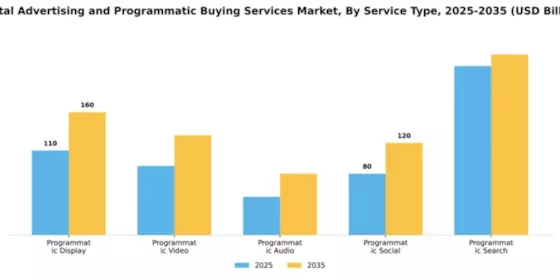
In the Digital Advertising and Programmatic Buying Services Market, Programmatic Display leads the service types with a substantial share as it continues to dominate overall ad spending. It is leveraged by advertisers due to its robust targeting capabilities and visibility across various digital platforms, ensuring brand messages reach the right audience effectively. Programmatic Video follows closely, capturing a significant yet smaller portion of the market; however, it is rapidly gaining traction as streaming services and online video consumption soar, making it a crucial channel for advertisers seeking impactful engagements.
Programmatic Display: Dominant vs. Programmatic Video: Emerging
Programmatic Display has established itself as the dominant force in digital advertising due to its widespread applicability and effectiveness in reaching audience segments. It enables advertisers to run banner ads across multiple websites, driving significant traffic and brand awareness. On the other hand, Programmatic Video is emerging as a vital channel, especially as video content consumption grows on platforms like social media and streaming services. Its engaging format allows for storytelling and deeper audience connection, catering to the shifting preferences of consumers towards video content.
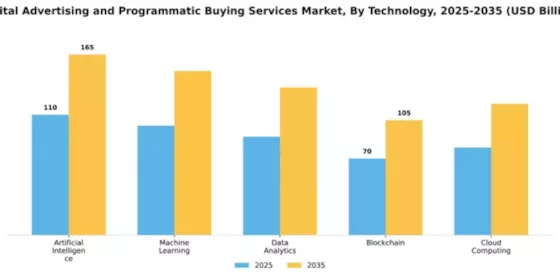
In the Digital Advertising and Programmatic Buying Services Market, Artificial Intelligence (AI) holds the largest market share due to its widespread adoption across various advertising platforms. This technology enables marketers to analyze consumer behavior, target audiences more effectively, and optimize campaigns, making it a cornerstone of digital strategies. On the other hand, Machine Learning (ML) is emerging as the fastest-growing segment. Marketers increasingly leverage ML algorithms to make data-driven decisions in real-time, which enhances ad placements and overall campaign efficiency. As demand for personalized advertising continues to rise, the growth of AI and ML is being propelled by advancements in technology and increasing data availability. Businesses are investing heavily in AI-driven capabilities to gain a competitive edge, while ML is gaining traction due to its ability to learn from patterns and improve over time. The convergence of these technologies is set to redefine how digital advertising is approached, making them integral to future marketing strategies.
Artificial Intelligence: Dominant vs. Machine Learning: Emerging
Artificial Intelligence in digital advertising serves as a dominant force, enabling robust targeting, content personalization, and campaign optimization, thus revolutionizing how brands connect with consumers. Its ability to process vast amounts of data in real-time allows advertisers to tailor their messaging effectively. In contrast, Machine Learning is an emerging segment, offering powerful tools for predictive analytics and automated decision-making processes. Marketers are increasingly relying on ML to adapt to changing consumer behaviors and preferences. Combined with AI, ML is transforming campaign strategies by providing deeper insights and fostering a more agile advertising approach. Together, these technologies are laying the groundwork for a more innovative and responsive digital advertising landscape.
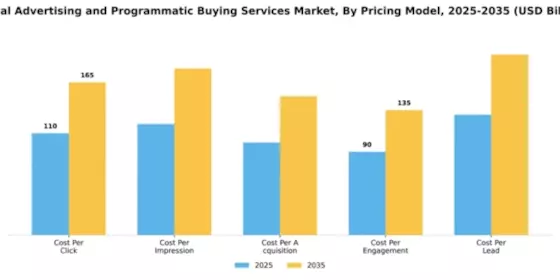
In the Digital Advertising and Programmatic Buying Services Market, cost per click (CPC) remains the largest pricing model used by advertisers, accounting for a substantial portion of the total market share. This model allows marketers to pay only when a user clicks on their ad, making it a performance-driven pricing strategy that has widespread adoption across various industries. In contrast, cost per acquisition (CPA) is gaining traction as an emerging model because it directly ties the cost to the conversion of potential customers, allowing for better budget management and accountability.
CPC (Dominant) vs. CPA (Emerging)
Cost per click (CPC) is a dominant pricing model in digital advertising, particularly favored by businesses targeting immediate website traffic and lead generation. Advertisers using CPC strategically invest in keyword optimization to maximize clicks while efficiently managing their ad spend. In contrast, cost per acquisition (CPA) is rapidly emerging, reflecting a trend towards accountability and result-driven strategies. Advertisers adopting CPA focus on achieving specific conversions, such as sales or sign-ups, rather than merely clicks. This model is particularly appealing in industries where customer acquisition costs are critical, aligning promotional budgets with tangible business outcomes.
Get more detailed insights about Digital Advertising and Programmatic Buying Services Market Request Free Sample
North America continues to lead the Digital Advertising and Programmatic Buying Services Market, holding a significant market share of 275.0. The region's growth is driven by high internet penetration, advanced technology adoption, and a robust advertising ecosystem. Regulatory support for digital innovation and data privacy is also a key catalyst, fostering a competitive environment for advertisers and tech companies alike. The United States is the primary player in this market, with major companies like Google, Facebook, and Amazon driving innovation and investment. The competitive landscape is characterized by a mix of established giants and emerging startups, all vying for market share. The presence of key players such as Adobe and The Trade Desk further solidifies North America's position as a hub for digital advertising services.
Europe's Digital Advertising and Programmatic Buying Services Market is experiencing significant growth, with a market size of 150.0. The region benefits from a diverse consumer base and increasing digital media consumption. Regulatory frameworks, such as GDPR, are shaping the landscape, ensuring data protection while promoting transparency in advertising practices, which is crucial for consumer trust and engagement. Leading countries like the UK, Germany, and France are at the forefront of this growth, with a competitive landscape featuring both local and international players. Companies like Criteo and MediaMath are making strides in programmatic buying, while tech giants continue to invest heavily in the region. The combination of innovation and regulatory support positions Europe as a key player in The Digital Advertising and Programmatic Buying Services.
The Asia-Pacific region is witnessing a rapid expansion in the Digital Advertising and Programmatic Buying Services Market, with a market size of 100.0. Factors such as increasing smartphone penetration, a young population, and rising internet usage are driving demand. Additionally, local regulations are evolving to support digital advertising while ensuring consumer privacy, creating a conducive environment for growth. Countries like China, India, and Japan are leading this surge, with a mix of The Digital Advertising and Programmatic Buying Services share. The presence of companies like AppNexus and Sizmek highlights the competitive landscape, as they adapt to regional preferences and consumer behavior. The region's dynamic market is characterized by innovation and a focus on mobile advertising, making it a key area for future growth.
The Middle East and Africa (MEA) region is emerging as a new frontier in the Digital Advertising and Programmatic Buying Services Market, with a market size of 25.0. The growth is fueled by increasing internet access, mobile device usage, and a young demographic eager for digital content. Governments are also recognizing the importance of digital advertising, leading to supportive policies that encourage investment in this sector. Countries like South Africa, UAE, and Nigeria are at the forefront of this digital transformation, with a growing number of local and international players entering the market. The competitive landscape is evolving, with companies adapting to local cultures and preferences. This region presents unique opportunities for growth, particularly in mobile and social media advertising, as businesses seek to engage with a digitally-savvy audience.
The Digital Advertising and Programmatic Buying Services Market is currently characterized by intense competition and rapid evolution, driven by technological advancements and shifting consumer behaviors. Major players such as Google (US), Facebook (US), and Amazon (US) are at the forefront, leveraging their vast data ecosystems to enhance targeting and personalization capabilities. Google (US) continues to innovate with its advertising solutions, focusing on integrating AI to optimize ad placements and improve user engagement. Meanwhile, Facebook (US) emphasizes community-driven advertising, utilizing its social media platforms to foster deeper connections between brands and consumers. Amazon (US) is strategically expanding its advertising services, capitalizing on its e-commerce dominance to offer unique insights into consumer purchasing behavior, thereby enhancing its programmatic offerings.The market structure appears moderately fragmented, with a mix of established giants and emerging players. Key tactics employed by these companies include localized advertising strategies and supply chain optimization to enhance service delivery. The collective influence of these major players shapes a competitive landscape where agility and innovation are paramount. As companies strive to differentiate themselves, the focus on data-driven decision-making and customer-centric approaches becomes increasingly evident.In November Google (US) announced the launch of its new AI-driven advertising platform, which aims to streamline ad creation and targeting processes. This strategic move is likely to enhance the efficiency of ad campaigns, allowing advertisers to reach their desired audiences more effectively. The introduction of this platform underscores Google's commitment to maintaining its leadership position in the market by harnessing cutting-edge technology to meet evolving client needs.In October Facebook (US) unveiled a partnership with several leading brands to enhance its advertising capabilities through augmented reality (AR). This initiative is expected to provide advertisers with innovative tools to create immersive ad experiences, potentially increasing user engagement and conversion rates. By integrating AR into its advertising strategy, Facebook (US) appears to be positioning itself as a pioneer in the realm of interactive advertising, which could redefine consumer interactions with brands.In September Amazon (US) expanded its advertising services by introducing a new suite of tools designed for small and medium-sized enterprises (SMEs). This strategic initiative aims to democratize access to advanced advertising solutions, enabling SMEs to compete more effectively in the digital landscape. By catering to this segment, Amazon (US) not only broadens its customer base but also reinforces its commitment to fostering innovation and inclusivity in the advertising space.As of December the competitive trends within the Digital Advertising and Programmatic Buying Services Market are increasingly defined by digitalization, sustainability, and the integration of AI technologies. Strategic alliances among key players are shaping the landscape, fostering collaboration that enhances service offerings and market reach. Looking ahead, competitive differentiation is likely to evolve from traditional price-based competition to a focus on innovation, technological advancements, and supply chain reliability. This shift suggests that companies will need to prioritize not only cost efficiency but also the development of unique, value-added services to maintain a competitive edge.


The Digital Advertising and Programmatic Buying Services Market is projected to grow at a 3.75% CAGR from 2025 to 2035, driven by technological advancements and increasing digital media consumption.
New opportunities lie in:
By 2035, the market is expected to solidify its position as a leader in digital marketing innovation.
| MARKET SIZE 2024 | 550.0(USD Billion) |
| MARKET SIZE 2025 | 570.62(USD Billion) |
| MARKET SIZE 2035 | 825.0(USD Billion) |
| COMPOUND ANNUAL GROWTH RATE (CAGR) | 3.75% (2025 - 2035) |
| REPORT COVERAGE | Revenue Forecast, Competitive Landscape, Growth Factors, and Trends |
| BASE YEAR | 2024 |
| Market Forecast Period | 2025 - 2035 |
| Historical Data | 2019 - 2024 |
| Market Forecast Units | USD Billion |
| Key Companies Profiled | Google (US), Facebook (US), Amazon (US), Adobe (US), The Trade Desk (US), Verizon Media (US), Criteo (FR), MediaMath (US), AppNexus (US), Sizmek (US) |
| Segments Covered | Application, End Use, Service Type, Technology, Pricing Model |
| Key Market Opportunities | Integration of artificial intelligence enhances targeting precision in the Digital Advertising and Programmatic Buying Services Market. |
| Key Market Dynamics | Rising demand for personalized advertising drives innovation in programmatic buying technologies and competitive market strategies. |
| Countries Covered | North America, Europe, APAC, South America, MEA |
The projected market valuation for the Digital Advertising and Programmatic Buying Services Market in 2035 is 825.0 USD Billion.
The overall market valuation for the Digital Advertising and Programmatic Buying Services Market was 550.0 USD Billion in 2024.
The expected CAGR for the Digital Advertising and Programmatic Buying Services Market during the forecast period 2025 - 2035 is 3.75%.
Key players in the market include Google, Facebook, Amazon, and Adobe, among others.
By 2035, the Programmatic Search segment is projected to have the highest valuation, estimated between 220.0 and 235.0 USD Billion.
The Social Media Advertising segment is expected to grow to between 130.0 and 200.0 USD Billion by 2035.
The projected valuation for Programmatic Video advertising by 2035 is expected to range from 90.0 to 130.0 USD Billion.
The Artificial Intelligence technology segment is anticipated to see significant growth, projected to reach between 110.0 and 165.0 USD Billion by 2035.
The expected valuation for the Cost Per Lead pricing model by 2035 is projected to be between 130.0 and 195.0 USD Billion.
The Healthcare end-use segment is anticipated to grow to between 90.0 and 130.0 USD Billion by 2035.


Kindly complete the form below to receive a free sample of this Report

“This is really good guys. Excellent work on a tight deadline. I will continue to use you going forward and recommend you to others. Nice job”


“Thanks. It’s been a pleasure working with you, please use me as reference with any other Intel employees.”


“Thanks for sending the report it gives us a good global view of the Betaïne market.”


“Thank you, this will be very helpful for OQS.”


“We found the report very insightful! we found your research firm very helpful. I'm sending this email to secure our future business.”


“I am very pleased with how market segments have been defined in a relevant way for my purposes (such as "Portable Freezers & refrigerators" and "last-mile"). In general the report is well structured. Thanks very much for your efforts.”


“I have been reading the first document or the study, ,the Global HVAC and FP market report 2021 till 2026. Must say, good info! I have not gone in depth at all parts, but got a good indication of the data inside!”


“We got the report in time, we really thank you for your support in this process. I also thank to all of your team as they did a great job.”


“The Automotive 48V ECU Components Procurement Intelligence Study” was a complex project, but the Market Research Future (MRFR) team handled it with quality, agility, and customer-centricity. They delivered all requested data on time and within the agreed scope. The team, including Shubhendra Anand and Rahul Gotadki, was always readily available to clarify questions and swiftly implement necessary adjustments, driving the project to a successful conclusion within a very demanding timeframe.
I would also like to specifically commend Akshay Agarwal for his responsiveness and support at every stage—from our initial inquiry on May 6th through to final delivery on June 18th. His dedication made the entire process seamless.”



