×
Request Free Sample ×

Kindly complete the form below to receive a free sample of this Report

* Please use a valid business email

Leading companies partner with us for data-driven Insights

clients tt-cursor
Hero Background

Dried Fruit Market

ID: MRFR/FnB/3078-CR
110 Pages
Sakshi Gupta
February 2021

Dried Fruits Market Research Report Information By Type (Apricots, Figs, Dates, Raisins, Berries, and Others), By Application (Bakery and Confectionery, Dairy and Frozen Desserts, Breakfast Cereals, Beverages, Sweet and Savory Snacks, and Others), And By Region (North America, Europe, Asia-Pacific, And Rest Of The World) – Market Forecast Till 2030

Share:
Download PDF ×

We do not share your information with anyone. However, we may send you emails based on your report interest from time to time. You may contact us at any time to opt-out.

Dried Fruit Market Infographic
Purchase Options

Dried Fruit Market Summary

As per MRFR analysis, the Dried Fruit Market Size was estimated at 8.06 USD Billion in 2024. The Dried Fruit industry is projected to grow from 8.51 USD Billion in 2025 to 14.82 USD Billion by 2035, exhibiting a compound annual growth rate (CAGR) of 5.7 during the forecast period 2025 - 2035.

Key Market Trends & Highlights

The Dried Fruit Market is experiencing a robust growth trajectory driven by health trends and evolving consumer preferences.

  • The market is increasingly influenced by a health and wellness focus, particularly in North America, which remains the largest market.
  • Convenience and portability are becoming paramount, with dried fruits serving as ideal snacks for on-the-go consumers.
  • Sustainability and ethical sourcing practices are gaining traction, especially in the Asia-Pacific region, which is the fastest-growing market.
  • Health consciousness and the snackification trend are major drivers, propelling the popularity of dried fruits and dried berries among health food enthusiasts.

Market Size & Forecast

2024 Market Size 8.06 (USD Billion)
2035 Market Size 14.82 (USD Billion)
CAGR (2025 - 2035) 5.7%

Major Players

Sun-Maid Growers of California (US), Dole Food Company (US), Ocean Spray Cranberries (US), Mariani Packing Company (US), Bergin Fruit and Nut Company (US), Sunkist Growers (US), Royal Nut Company (AU), Nutty & Fruity (US), Tropical Foods (US)

Dried Fruit Market Trends

The Dried Fruit Market is currently experiencing a notable transformation, driven by evolving consumer preferences and increasing health consciousness. As individuals become more aware of the nutritional benefits associated with dried fruits, there is a discernible shift towards incorporating these products into daily diets. This trend is further amplified by the growing demand for convenient and portable snack options, which dried fruits readily fulfill. Additionally, the market is witnessing a rise in innovative product offerings, including organic and exotic varieties, catering to diverse palates and dietary needs. Moreover, the Dried Fruit Market is influenced by the expansion of distribution channels, particularly through e-commerce platforms. This shift allows consumers greater access to a wider range of products, enhancing their purchasing experience. Retailers are also adapting to these changes by emphasizing product quality and sustainability, which resonates with environmentally conscious consumers. As the market continues to evolve, it appears poised for sustained growth, reflecting broader trends in health and wellness, convenience, and sustainability.

Health and Wellness Focus

The Dried Fruit Market is increasingly aligned with the health and wellness movement. Consumers are gravitating towards products that offer nutritional benefits, such as vitamins, minerals, and antioxidants. This trend suggests a growing preference for natural snacks that contribute positively to overall health.

Convenience and Portability

There is a rising demand for convenient snack options, and dried fruits fit this need perfectly. Their lightweight and non-perishable nature makes them an ideal choice for on-the-go consumption. This trend indicates a shift in consumer behavior towards snacks that are easy to carry and consume.

Sustainability and Ethical Sourcing

Sustainability is becoming a critical factor in purchasing decisions within the Dried Fruit Market. Consumers are increasingly seeking products that are ethically sourced and produced with minimal environmental impact. This trend highlights a growing awareness of the importance of sustainable practices in food production.

Dried Fruit Market Drivers

Market Growth Projections

The Global Dried Fruits Industry is projected to experience substantial growth in the coming years. With a market value expected to reach 7.21 USD Billion in 2024, the industry is poised for a remarkable expansion, potentially reaching 20.5 USD Billion by 2035. This growth corresponds to a compound annual growth rate (CAGR) of 9.94% from 2025 to 2035. Such projections indicate a robust demand for dried fruits, driven by various factors including health trends, convenience, and culinary versatility. As the market evolves, stakeholders may need to adapt their strategies to capitalize on these growth opportunities.

Convenience and Portability

The convenience and portability of dried fruits significantly contribute to their popularity in the Global Dried Fruits Industry. As busy lifestyles become more prevalent, consumers increasingly seek snacks that are easy to carry and consume on-the-go. Dried fruits, which require no preparation and have a long shelf life, fit this need perfectly. This trend is particularly pronounced among working professionals and students who prefer quick, nutritious snacks. The market's growth trajectory suggests that by 2035, it could reach 20.5 USD Billion, driven by the demand for convenient food options. This shift indicates a potential for innovation in packaging and product offerings to cater to this consumer preference.

Rising Health Consciousness

The increasing awareness of health and wellness among consumers appears to be a primary driver for the Global Dried Fruits Industry. As individuals seek healthier snacking alternatives, dried fruits are often perceived as nutritious options rich in vitamins, minerals, and antioxidants. This trend is particularly evident in regions such as North America and Europe, where consumers are more inclined to choose natural snacks over processed ones. The market is projected to reach 7.21 USD Billion in 2024, reflecting this shift towards healthier eating habits. Consequently, the demand for dried fruits is likely to grow, as they align with the health-centric lifestyle that many consumers are adopting.

Diverse Culinary Applications

The versatility of dried fruits in various culinary applications serves as a significant driver for the Global Dried Fruits Industry. These fruits can be incorporated into a wide range of dishes, from salads and baked goods to savory meals and snacks. This adaptability appeals to both home cooks and professional chefs, fostering a growing interest in dried fruits. For instance, dried cranberries and apricots are often used in salads and desserts, while raisins are popular in savory dishes. As culinary trends evolve, the demand for diverse and innovative uses of dried fruits is likely to increase, further propelling market growth.

Expansion of Distribution Channels

The expansion of distribution channels plays a crucial role in enhancing the accessibility of dried fruits within the Global Dried Fruits Industry. Retailers are increasingly recognizing the potential of dried fruits, leading to their presence in supermarkets, health food stores, and online platforms. This broadening of availability allows consumers to easily purchase dried fruits, contributing to increased sales. The rise of e-commerce has particularly transformed how consumers access these products, with online grocery shopping becoming more prevalent. As distribution networks continue to expand, the market is expected to benefit from improved consumer access, which may drive growth in the coming years.

Growing Demand for Organic Products

The growing demand for organic products is emerging as a significant driver in the Global Dried Fruits Industry. Consumers are increasingly seeking organic dried fruits, which are perceived as healthier and more environmentally friendly. This trend is particularly strong among health-conscious consumers who prioritize organic certifications and sustainable farming practices. As a result, producers are adapting their offerings to meet this demand, leading to an increase in the availability of organic dried fruits. This shift may contribute to the overall market growth, as consumers are willing to pay a premium for organic options, thereby enhancing profitability for producers.

Market Segment Insights

By Application: Snacking (Largest) vs. Health Foods (Fastest-Growing)

The dried fruit market is witnessing dynamic shifts across its application segments, with snacking leading as the largest segment. It capitalizes on the high demand for convenient and healthy snack options, appealing to both health-conscious consumers and those seeking indulgent treats. Following snacking is the culinary segment, which remains significant due to its versatile use in various cuisines. Other segments like baking and confectionery also contribute steadily, showcasing a diverse consumption landscape within the dried fruit market. Growth trends indicate a strong surge in health foods as an emerging segment, driven by rising awareness of nutritious diets and the demand for clean-label products. This shift is fueled by consumers' preference for natural and organic ingredients in their health regimens. As the industry adapts to changing consumer preferences, dried fruits are becoming increasingly integrated into everyday culinary practices, thus enhancing their appeal across multiple applications.

Snacking (Dominant) vs. Health Foods (Emerging)

Snacking stands as the dominant application in the dried fruit market, largely due to its ability to cater to the growing preference for on-the-go, healthier snack alternatives. As convenience becomes a key consumer driver, dried fruits are often packaged for easy consumption, appealing to busy lifestyles. Conversely, health foods have emerged as a rapidly growing category, tapping into the health and wellness trend. As more consumers prioritize their nutrition, they seek nutrient-dense options like dried fruits to incorporate into their diets. This fusion of snack indulgence and health consciousness allows both segments to thrive, offering opportunities for innovative product development and cross-promotional strategies.

By Product Type: Dried Fruits (Largest) vs. Dried Berries (Fastest-Growing)

The Dried Fruit Market showcases varied product segments, with Dried Fruits holding a significant share due to their popularity and standard usage in diets. Following closely are Dried Berries, which have seen rising consumer demand due to their health benefits. Other segments, such as Dried Nuts and Dried Vegetables, contribute to the diversity of the market, but Dried Fruits remain the staple product of preference among consumers. Dried Herbs also find their place in niche markets, indicating a less widespread yet notable presence in the overall share distribution.

Dried Fruits (Dominant) vs. Dried Berries (Emerging)

Dried Fruits are often regarded as the dominant force in the Dried Fruit Market, leveraging their versatility in the culinary space, from snacks to ingredient uses in meals. They appeal to a wide demographic, promoting health-conscious choices among consumers. On the other hand, Dried Berries represent an emerging trend in the market, fueled by their superfood status and assimilation into health and wellness narratives. Their growth is attributed to increased awareness about their antioxidant properties and multiple applications in smoothies, salads, and baking. The synergy between these two segments enhances market dynamics, offering consumers a diverse array of nutritious options.

By Distribution Channel: Supermarkets (Largest) vs. Online Retail (Fastest-Growing)

In the Dried Fruit Market, supermarkets hold the largest share among distribution channels, providing a significant platform for dried fruit products due to their extensive reach and established logistics. Online retail has emerged as a crucial player, capturing a growing segment of consumers seeking convenience and variety, thereby steadily increasing its market share. Health food stores, specialty stores, and wholesale distribution also contribute to the market, catering to niche demands and specialized customer bases.

Supermarkets: Dominant vs. Online Retail: Emerging

Supermarkets dominate the distribution landscape for dried fruits, offering a wide selection and convenience to consumers. Their ability to stock diverse brands alongside private labels gives them a significant competitive advantage. Conversely, online retail is rapidly emerging, driven by a growing shift towards e-commerce and consumer preference for home delivery services. This channel appeals particularly to younger, health-conscious consumers who seek easy access to organic and specialty dried fruit varieties. Specialty stores also play an important role by targeting health-focused shoppers, while wholesalers facilitate distribution to other retail channels, indicating a well-rounded market structure.

By Packaging Type: Pouches (Largest) vs. Resealable Bags (Fastest-Growing)

In the dried fruit market, packaging type plays a crucial role in consumer preference and product shelf-life. Bulk packaging leads in market share, catering to wholesalers and retailers by providing cost-effective solutions for large quantities. Retail packaging follows, aimed at end consumers and leveraging brand visibility on store shelves. Pouches have captured significant market attention due to their convenience and functionality, while glass jars and resealable bags offer alternatives that appeal to niche markets, driven by specific consumer needs.

Pouches (Dominant) vs. Resealable Bags (Emerging)

Pouches have emerged as the dominant packaging type in the dried fruit market, thanks to their lightweight, flexible nature, and ability to preserve freshness without the need for excessive preservatives. They cater well to modern consumers seeking convenience and portability, making them highly popular among on-the-go snackers. In contrast, resealable bags are gaining traction as an emerging contender, offering the dual benefit of easy storage and portion control. Their user-friendly design promotes reuse and reduces waste, aligning with sustainability trends. Both packaging types exhibit strong market positions, with pouches currently appealing to a wider audience, while resealable bags are appealing to a growing segment that prioritizes sustainability and ease of use.

By End User: Households (Largest) vs. Food Service Industry (Fastest-Growing)

The dried fruit market is significantly influenced by the end user segment, with households accounting for the largest share. This segment thrives on the increasing consumer demand for healthy snacks and natural foods. In contrast, the food service industry, which includes restaurants and catering services, is rapidly gaining traction and is recognized as the fastest-growing segment. This is primarily due to the rising trend of incorporating dried fruits in various culinary dishes and beverages, thus enhancing the overall flavor profile. As consumers are leaning towards healthier alternatives in dining, the inclusion of dried fruits in menus is becoming more prevalent. The growth trends for this segment are propelled by various factors, including the increasing awareness of the health benefits associated with dried fruits, such as higher fiber content and essential vitamins. Additionally, the rise in e-commerce and an emphasis on convenience have contributed to the growing popularity of dried fruits among the millennial population. As more restaurants begin to highlight the nutritional benefits in their offerings, the food service segment is likely to see continued expansion, driven by changing consumer preferences and innovation in product offerings.

Households (Dominant) vs. Food Service Industry (Emerging)

Households represent the dominant segment in the dried fruit market, fueled by a surge in consumer health consciousness and the shift towards snacking on more nutritious options. As families increasingly prioritize health and wellness, dried fruits have become a popular choice due to their convenience and versatility as on-the-go snacks. Brands are capitalizing on this demand by introducing a variety of dried fruit products that cater to diverse tastes and preferences. Moreover, attractive packaging and marketing strategies are enhancing the appeal of dried fruits in supermarkets and online platforms. On the other hand, the food service industry is emerging as a significant segment due to its dynamic approach to incorporating dried fruits into menus. The rise in gourmet dining experiences and the demand for unique flavor profiles in food and beverages are driving chefs and caterers to experiment with dried fruits. This includes their incorporation in salads, desserts, and even main courses, offering a delightful twist on traditional dishes. As health trends continue to reshape consumer expectations, the food service industry is expected to increasingly integrate dried fruits into their culinary offerings, further broadening their market share.

Get more detailed insights about Dried Fruit Market

Regional Insights

North America : Market Leader in Dried Fruits

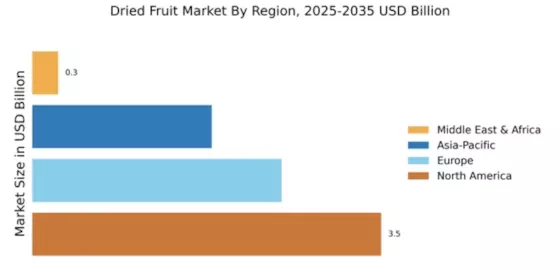
North America continues to lead the dried fruit market, holding a significant share of 3.5 billion in 2024. The growth is driven by increasing health consciousness among consumers, leading to a surge in demand for nutritious snacks. Regulatory support for organic farming and food safety standards further catalyzes market expansion. The region's robust distribution networks and innovative product offerings also contribute to its market leadership. The United States is the primary player in this region, with key companies like Sun-Maid Growers of California and Dole Food Company dominating the landscape. The competitive environment is characterized by a mix of established brands and emerging players, all vying for market share. The presence of diverse product lines, including organic and specialty dried fruits, enhances consumer choice and drives sales, solidifying North America's position as a market powerhouse.

Europe : Growing Demand for Healthy Snacks

Europe's dried fruit market is valued at 2.5 billion, reflecting a growing trend towards healthy snacking options. Factors such as increasing awareness of the health benefits of dried fruits and a shift towards plant-based diets are driving this growth. Regulatory frameworks promoting organic products and sustainability are also pivotal in shaping market dynamics. The region is witnessing a rise in demand for premium and organic dried fruit products, catering to health-conscious consumers. Leading countries in this market include Germany, France, and the UK, where consumer preferences are shifting towards natural and minimally processed foods. The competitive landscape features established brands alongside local producers, enhancing product diversity. Companies like Ocean Spray Cranberries and Mariani Packing Company are key players, focusing on innovation and quality to capture market share. The European market is poised for continued growth as consumer trends evolve.

Asia-Pacific : Emerging Market Potential

The Asia-Pacific dried fruit market, valued at 1.8 billion, is rapidly expanding, driven by rising disposable incomes and changing dietary habits. Consumers are increasingly seeking convenient and healthy snack options, which is propelling the demand for dried fruits. Regulatory initiatives aimed at improving food safety and quality standards are also contributing to market growth. The region's diverse culinary traditions further enhance the appeal of dried fruits in various food applications. Countries like China, India, and Australia are leading the market, with a mix of local and international players. The competitive landscape is characterized by both large-scale producers and small-scale artisans, offering a wide range of products. Key players such as Royal Nut Company and Nutty & Fruity are focusing on product innovation and sustainability to meet consumer demands. The Asia-Pacific market is set for significant growth as health trends continue to influence purchasing behavior.

Middle East and Africa : Untapped Market Potential

The Middle East and Africa dried fruit market, valued at 0.26 billion, is in its nascent stages but shows promising growth potential. Factors such as increasing urbanization, rising health awareness, and a shift towards healthier snacking options are driving demand. Regulatory support for food safety and quality standards is also enhancing market conditions. The region's unique climate allows for the cultivation of diverse dried fruits, further supporting market growth. Leading countries include South Africa and the UAE, where consumer preferences are evolving towards natural and organic products. The competitive landscape is gradually developing, with both local and international players entering the market. Companies are focusing on product diversification and quality to capture the growing consumer interest in dried fruits. The Middle East and Africa market is poised for growth as health trends gain traction among consumers.

Key Players and Competitive Insights

The Dried Fruit Market is currently characterized by a dynamic competitive landscape, driven by increasing consumer demand for healthy snacks and the growing trend towards plant-based diets. Key players such as Sun-Maid Growers of California (US), Dole Food Company (US), and Ocean Spray Cranberries (US) are strategically positioning themselves through innovation and regional expansion. These companies are not only enhancing their product offerings but are also focusing on sustainability initiatives, which appear to resonate well with environmentally conscious consumers. The collective strategies of these firms contribute to a moderately fragmented market structure, where competition is intensifying as companies seek to differentiate themselves through quality and brand loyalty.

In terms of business tactics, companies are increasingly localizing manufacturing to reduce supply chain vulnerabilities and optimize logistics. This approach is particularly relevant in the context of fluctuating global trade dynamics. The market structure remains moderately fragmented, with several key players exerting influence over pricing and distribution channels. The presence of both large corporations and smaller niche players creates a competitive environment where innovation and customer engagement are paramount.

In November 2025, Dole Food Company (US) announced a partnership with a leading health food retailer to launch a new line of organic dried fruits. This strategic move is likely aimed at capturing the growing segment of health-conscious consumers who prioritize organic products. By aligning with a reputable retailer, Dole Food Company may enhance its market visibility and strengthen its brand positioning in the organic segment.

In October 2025, Ocean Spray Cranberries (US) unveiled a new sustainability initiative focused on reducing water usage in its production processes. This initiative not only reflects the company's commitment to environmental stewardship but also positions it favorably among consumers who are increasingly prioritizing sustainability in their purchasing decisions. Such actions may enhance brand loyalty and attract a broader customer base.

In September 2025, Sun-Maid Growers of California (US) launched a digital marketing campaign aimed at promoting the health benefits of dried fruits. This campaign leverages social media platforms to engage younger consumers, potentially expanding its market reach. The emphasis on digital transformation indicates a shift towards more interactive and personalized marketing strategies, which could be crucial in capturing the attention of a tech-savvy demographic.

As of December 2025, the Dried Fruit Market is witnessing trends that emphasize digitalization, sustainability, and the integration of AI in supply chain management. Strategic alliances are becoming increasingly important, as companies collaborate to enhance their product offerings and market reach. The competitive landscape is evolving, with a noticeable shift from price-based competition to a focus on innovation, technology, and supply chain reliability. This evolution suggests that companies that prioritize these aspects may gain a competitive edge in the future.

Key Companies in the Dried Fruit Market market include

Industry Developments

In February 2024, Ocean Spray Cranberries, Inc. announced a new range of mixed dry fruits targeting people looking for functional food. The snacks consist of cranberries and some mix of blueberries and cherries while adding some vitamins and antioxidants to make it more appealing to healthy eaters.

In January 2024, Traina Foods’s Marketing Director announced their new dried fruit partnership with a European distributor to help them penetrate their target market in Europe. This move is expected to make their sun-dried products more accessible to grocers as well as foodservice operators in that region.

In December 2023, Paradise Fruits Solutions introduced new range of dried fruit mixes to be used in cereals and other food products. These mixes are expected to improve taste and texture of the study product but maintain their nutritional content.

In November 2023, Mariani Packing Company announced major plans to commercialize updated drying technology which would be aimed at enhancing the quality and durability of their dried fruit. The technology focuses on efficiency and still provide proper texture and flavor.

In October 2023, Jain Farm Fresh Foods Ltd, a major exporter based in India, announced the increase of dried fruits in its exports starting with mangoes and bananas to capture the fast-growing need for tropical dried fruits all over the world.

In August 2023, Table Top Grapes an Australian company, released its first-ever certified organic sultanas and raisins, aiming for the high-end dried fruit market.

In July 2023, Nutra Fig, a company based in California, launched dried figs chips emphasizing on them being a low-calorie snack and healthier substitute for ordinary chips while offering rich minerals and fibers.

In June 2023, Turkish dried fruit exporters reported high exports to Asia due to more customers willing to buy more health benefiting products like figs and apricots and the high consumption of dried fruits in traditional Asian sweets.

Future Outlook

Dried Fruit Market Future Outlook

The Dried Fruit Market is projected to grow at a 5.7% CAGR from 2024 to 2035, driven by increasing health consciousness, demand for convenience foods, and innovative product offerings.

New opportunities lie in:

  • Expansion into emerging markets with tailored product lines
  • Development of organic and premium dried fruit segments
  • Investment in e-commerce platforms for direct consumer sales

By 2035, the Dried Fruit Market is expected to achieve robust growth and diversification.

Market Segmentation

Dried Fruit Market End User Outlook

  • Households
  • Food Service Industry
  • Retailers
  • Manufacturers
  • Catering Services

Dried Fruit Market Application Outlook

  • Snacking
  • Baking
  • Culinary
  • Health Foods
  • Confectionery

Dried Fruit Market Product Type Outlook

  • Dried Fruits
  • Dried Berries
  • Dried Nuts
  • Dried Vegetables
  • Dried Herbs

Dried Fruit Market Packaging Type Outlook

  • Bulk Packaging
  • Retail Packaging
  • Resealable Bags
  • Glass Jars
  • Pouches

Dried Fruit Market Distribution Channel Outlook

  • Supermarkets
  • Online Retail
  • Health Food Stores
  • Specialty Stores
  • Wholesale

Report Scope

MARKET SIZE 2024 8.06(USD Billion)
MARKET SIZE 2025 8.51(USD Billion)
MARKET SIZE 2035 14.82(USD Billion)
COMPOUND ANNUAL GROWTH RATE (CAGR) 5.7% (2024 - 2035)
REPORT COVERAGE Revenue Forecast, Competitive Landscape, Growth Factors, and Trends
BASE YEAR 2024
Market Forecast Period 2025 - 2035
Historical Data 2019 - 2024
Market Forecast Units USD Billion
Key Companies Profiled Sun-Maid Growers of California (US), Dole Food Company (US), Ocean Spray Cranberries (US), Mariani Packing Company (US), Bergin Fruit and Nut Company (US), Sunkist Growers (US), Royal Nut Company (AU), Nutty & Fruity (US), Tropical Foods (US)
Segments Covered Application, Product Type, Distribution Channel, Packaging Type, End User
Key Market Opportunities Growing consumer preference for healthy snacks drives innovation in the Dried Fruit Market.
Key Market Dynamics Rising consumer demand for healthy snacks drives innovation and competition in the dried fruit market.
Countries Covered North America, Europe, APAC, South America, MEA

Market Highlights

Author
Sakshi Gupta
Research Analyst Level II

I have about two years of experience working in the consumer goods and retail industries and I am a biotech graduate.A tech-savvy analytically focused professional with a strong capabilities in identification, concept generation, and strategy evaluation. I can produce data-driven solutions while fusing unusual viewpoints with original concepts. I have been extensively working on business case studies, competitive & comparative analyses, and strategic reports. My primary areas of experience include client management, financial analysis, supply chain evaluation, market entry strategy evaluation, and estimating and forecasting market size.

Leave a Comment

FAQs

How much is the Dried Fruits market?

The Dried Fruits market size was valued at USD 6.28 Billion in 2021.

What is the growth rate of the Dried Fruits market?

The Dried Fruits market is projected to grow at a CAGR of 5.70% during the forecast period, 2022-2030.

Which region held the largest market share in the Dried Fruits market?

Europe had the largest share in the Dried Fruits market.

Who are the key players in the Dried Fruits market?

The key players in the market are National Raisin Company (US), Kiantama Oy (Finland), Red River Foods Incorporated (US), Traina Foods (US), Sunbeam Foods Pty Ltd (Australia), Dole Food Company Inc (US), Sun-Maid Growers of California (US), Lion Raisins Inc (US), Paradise Fruits (Germany), and Bergin Fruit and Nut Company Inc. (US).

Which type led the Dried Fruits market?

The Raisin category dominated the market in 2021.

Which Application had the largest market share in the market?

The bakery base had the largest share of the market for Dried Fruits.

Download Free Sample

Kindly complete the form below to receive a free sample of this Report

Compare Licence

×
Features License Type
Single User Multiuser License Enterprise User
Price $4,950 $5,950 $7,250
Maximum User Access Limit 1 User Upto 10 Users Unrestricted Access Throughout the Organization
Free Customization
Direct Access to Analyst
Deliverable Format
Platform Access
Discount on Next Purchase 10% 15% 15%
Printable Versions