×
Hero Background
English
Chinese
French
Japanese
Korean
German
Spanish

Dynamic Glazing Market Analysis

ID: MRFR/CnM/2705-HCR
145 Pages
Chitranshi Jaiswal
October 2025

Dynamic Glazing Market Research Report Information by Technology (Polymer Dispersed Liquid Crystals (PDLC), Suspended Particle Device, Photochromic, Thermochromic, Electrochromic), By Application (Day Lighting Performance, Glare Control, Energy Savings, Heat Gain), By End-Use (Residential, Commercial, Transportation and Others) and By Region – Forecast To 2035

Share:
Download PDF ×

We do not share your information with anyone. However, we may send you emails based on your report interest from time to time. You may contact us at any time to opt-out.

Dynamic Glazing Market Infographic
Purchase Options

Market Analysis

In-depth Analysis of Dynamic Glazing Market Industry Landscape

The dynamic glazing market operates within a dynamic framework influenced by various factors that shape supply, demand, and pricing dynamics. Dynamic glazing, also known as smart or switchable glass, is a technologically advanced glass product that can change its properties in response to external stimuli such as light, heat, or electricity. One of the primary drivers of market dynamics is the increasing demand for energy-efficient and sustainable building solutions. Dynamic glazing offers benefits such as solar heat control, glare reduction, and daylight harvesting, making it a popular choice for green building projects and energy-efficient building designs. Factors such as energy regulations, environmental concerns, and the need for improved indoor comfort drive demand for dynamic glazing in the construction industry.

The products used in construction activities that can change the properties of performance automatically is known as dynamic glazing product. The windows and doors, which are dynamically glazed, change their performance automatically to respond to environmental signals or control. Dynamic glazing is used to darken the interior piece of glass electrochromic technology.

Supply dynamics in the dynamic glazing market are influenced by factors such as manufacturing capabilities, technological advancements, and raw material availability. Dynamic glazing products are manufactured using specialized glass coatings, lamination techniques, and electrochromic or photochromic materials that enable them to change their properties in response to external stimuli. Manufacturing capabilities, including production capacity, process efficiency, and quality control measures, play a crucial role in shaping supply dynamics by determining the ability of manufacturers to meet market demand. Moreover, advancements in glass coating technologies, smart materials, and manufacturing processes contribute to product innovation and expanding the range of available dynamic glazing solutions.

Market dynamics are further influenced by factors such as regulatory standards, building design trends, and technological innovations. Regulatory standards related to energy efficiency, building codes, and environmental sustainability influence market dynamics by setting requirements for building materials and construction practices. Building design trends, such as the increasing adoption of green building principles, daylighting strategies, and passive solar design, drive demand for dynamic glazing solutions that can enhance energy performance and occupant comfort. Additionally, technological innovations in smart glass technologies, such as electrochromic, photochromic, or thermochromic glazing systems, contribute to product advancements and market growth.

Pricing dynamics in the dynamic glazing market are influenced by a combination of factors including manufacturing costs, technological advancements, competitive pressures, and market demand-supply dynamics. Manufacturing costs for dynamic glazing products, including materials, processing, and assembly expenses, directly impact pricing decisions for manufacturers. Technological advancements in smart glass technologies and manufacturing processes contribute to cost reduction and efficiency improvements, influencing pricing strategies adopted by market players. Competitive pressures within the industry, driven by factors such as market concentration, brand reputation, and product differentiation, also influence pricing dynamics. Moreover, demand-supply imbalances, fluctuations in raw material prices, and changes in construction activity levels can exert short-term pressures on prices.

Environmental considerations and sustainability trends are increasingly shaping market dynamics in the dynamic glazing industry. With growing awareness of environmental issues and sustainability goals, stakeholders across the value chain are prioritizing the use of energy-efficient and environmentally friendly building materials. Dynamic glazing products contribute to energy savings, indoor comfort improvements, and daylight utilization, aligning with sustainability objectives in the construction industry. Additionally, certification programs promoting green building materials and government incentives for energy-efficient building solutions further influence market dynamics by shaping consumer preferences and industry standards.
Author
Chitranshi Jaiswal
Research Analyst Level I

In her 3 years of experience in the market research field, she has handled critical cross-domain projects. She has an in-depth knowledge of market estimation & analysis, problem-solving, primary as well as secondary research, and team management.She holds an engineering degree and is an MBA professional from a well-known university, capable of evaluating the market and competitive conditions. An exceptional strategist with excellent communication skills and a passion for delivering cutting-edge & practical insights for the market. Proficient in multi-tasking, and can successfully deal with competing demands, while maintaining complete confidentiality. Generated business through active client and project development, networking, and high-quality responses. Her knowledge and skills have helped in making solid business decisions, securing funding from investors, and avoiding business failures.

Leave a Comment

FAQs

What is dynamic glazing and in which all applications it is used in (industrial applications)?

Dynamic glazing products possess the ability to change performance properties. These products are used in construction activities; for instance, the dynamic glazed windows and doors can automatically respond or control environmental signals.

At what CAGR is the dynamic glazing market projected to grow in the forecast period (2024-2035)?

Dynamic Glazing Market is projected to be worth USD 4630 Million by 2035, registering a CAGR of 6.2% during the forecast period (2025 - 2035).

What is the leading segment in the dynamic glazing market?

All segments of the dynamic glazing market are showing impressive rise; however, on the basis of technology, the sub-segment - thermochromic is expected to grow significantly during the forecast period. Among end-users, the sub-segment commercial is expected to grow exponentially.

What are the key driving forces behind the growth of the global dynamic glazing market?

Benefits that dynamic glazing materials can offer, such as the reduction in consumption and hence the cost of energy and promoting a sustainable design for the building infrastructure.

Who are the top players in the global dynamic glazing market?

Beautex Industries Pvt. Ltd (India), Guardian Industries (US), Corning Inc. (US), Research Frontiers, Inc. (US), Saint-Gobain SA (France), Pleotint LLC (US), GPD Group (US), PPG Industries, Inc. (US), Nippon Sheet Glass Co., Ltd.(Japan), and GlasNovations, Ltd. (UK) are some of the players leading the global dynamic glazing market.

Market Summary

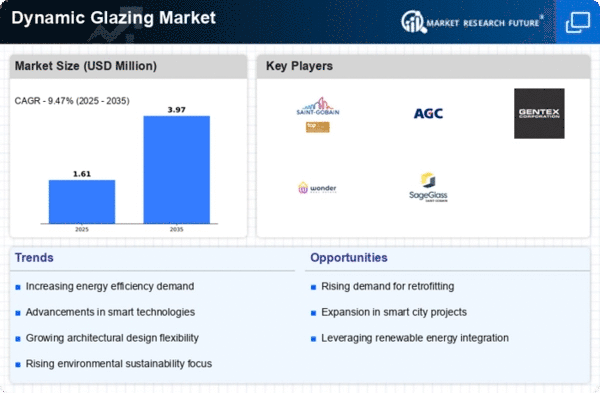
As per MRFR analysis, the Dynamic Glazing Market Size was estimated at 1.47 USD Million in 2024. The Dynamic Glazing industry is projected to grow from 1.61 in 2025 to 3.97 by 2035, exhibiting a compound annual growth rate (CAGR) of 9.47 during the forecast period 2025 - 2035.

Key Market Trends & Highlights

The Dynamic Glazing Market is poised for substantial growth driven by technological advancements and sustainability initiatives.

  • North America remains the largest market for dynamic glazing, reflecting a robust demand in both residential and commercial sectors.
  • The Asia-Pacific region is emerging as the fastest-growing market, fueled by increasing urbanization and infrastructure development.
  • The residential segment continues to dominate, while the commercial segment is experiencing rapid growth due to smart building trends.
  • Technological advancements and a strong sustainability focus are key drivers propelling the dynamic glazing market forward.

Market Size & Forecast

2024 Market Size 1.47 (USD Million)
2035 Market Size 3.97 (USD Million)
CAGR (2025 - 2035) 9.47%
Largest Regional Market Share in 2024 North America

Major Players

<p>Saint-Gobain (FR), AGC Inc. (JP), Gentex Corporation (US), View Inc. (US), SageGlass (US), Soladigm (US), EControl-Glas (DE), Glass Apps (US), NanoTech Coatings (US)</p>

Market Trends

The Dynamic Glazing Market is currently experiencing a notable transformation, driven by advancements in technology and increasing awareness of energy efficiency. This sector encompasses a variety of products that adjust their light transmission properties in response to environmental conditions. As sustainability becomes a priority for both consumers and businesses, the demand for dynamic glazing solutions is likely to rise. These products not only enhance aesthetic appeal but also contribute to energy savings, making them attractive for a range of applications, including commercial buildings and residential properties. Moreover, the integration of smart technologies into dynamic glazing systems appears to be a significant trend. These innovations enable real-time adjustments based on weather conditions, thereby optimizing indoor comfort and reducing reliance on artificial lighting and heating. As urbanization continues to grow, the need for energy-efficient building solutions is expected to escalate, further propelling the Dynamic Glazing Market forward. Stakeholders in this industry may need to adapt to evolving consumer preferences and regulatory frameworks that favor sustainable practices, ensuring they remain competitive in a rapidly changing landscape.

Technological Advancements

Recent innovations in materials and manufacturing processes are enhancing the performance of dynamic glazing products. These advancements allow for improved responsiveness to environmental changes, thereby increasing energy efficiency and user comfort.

Sustainability Focus

There is a growing emphasis on sustainable building practices, which is driving demand for dynamic glazing solutions. These products contribute to reduced energy consumption and lower carbon footprints, aligning with global sustainability goals.

Smart Integration

The incorporation of smart technologies into dynamic glazing systems is becoming increasingly prevalent. This trend enables automated adjustments based on real-time data, enhancing user experience and energy management.

Dynamic Glazing Market Market Drivers

Technological Advancements

Technological innovations play a pivotal role in the expansion of the Global Dynamic Glazing Market Industry. Recent advancements in materials and manufacturing processes have led to the development of more efficient and responsive dynamic glazing products. For instance, the integration of smart technologies allows for real-time adjustments to light and heat, enhancing user comfort and energy savings. As these technologies evolve, they are likely to attract more investments and applications across various sectors. The anticipated growth from 2024 to 2035, with a projected market size of 6.25 USD Billion, indicates that ongoing research and development will continue to drive market dynamics.

Growing Demand for Energy Efficiency

The Global Dynamic Glazing Market Industry experiences a notable surge in demand driven by the increasing emphasis on energy efficiency in buildings. As energy costs rise, both residential and commercial sectors are seeking solutions that reduce energy consumption. Dynamic glazing technologies, which adjust their tint based on sunlight exposure, offer a promising solution. In 2024, the market is projected to reach 3.49 USD Billion, reflecting a growing trend towards sustainable building practices. This shift is further supported by government incentives aimed at promoting energy-efficient technologies, suggesting a robust future for dynamic glazing as a key component in energy-efficient architecture.

Diverse Applications Across Various Sectors

The versatility of dynamic glazing technologies contributes to their expanding presence in the Global Dynamic Glazing Market Industry. These products find applications in a wide range of sectors, including residential, commercial, and automotive industries. For example, dynamic glazing is increasingly utilized in skyscrapers to enhance energy efficiency and aesthetic appeal. Additionally, the automotive sector is adopting these technologies to improve passenger comfort and vehicle efficiency. This diverse applicability not only broadens the market scope but also encourages innovation and competition among manufacturers, indicating a dynamic future for the industry.

Rising Awareness of Indoor Environmental Quality

There is a growing recognition of the importance of indoor environmental quality (IEQ) in the Global Dynamic Glazing Market Industry. Enhanced IEQ is linked to occupant health, productivity, and overall well-being, prompting architects and builders to integrate dynamic glazing solutions into their designs. These technologies help regulate natural light and temperature, thereby improving comfort levels within buildings. As awareness of IEQ continues to rise, the demand for dynamic glazing is expected to increase, further propelling market growth. This trend aligns with the broader movement towards healthier living and working environments, suggesting a promising outlook for the dynamic glazing sector.

Regulatory Support for Sustainable Building Practices

The Global Dynamic Glazing Market Industry benefits significantly from regulatory frameworks that promote sustainable building practices. Governments worldwide are increasingly implementing stringent building codes and standards aimed at reducing carbon footprints. These regulations often encourage the adoption of dynamic glazing technologies, which contribute to energy savings and improved indoor environments. As a result, the market is likely to see accelerated growth, with a compound annual growth rate of 5.45% projected from 2025 to 2035. This regulatory support not only enhances market viability but also aligns with global sustainability goals, fostering a conducive environment for dynamic glazing adoption.

Market Segment Insights

By Application: Residential (Largest) vs. Commercial (Fastest-Growing)

<p>The dynamic glazing market is witnessing diverse application segments, with the residential sector holding the largest share due to increasing demand for energy-efficient buildings and smart home technologies. This sector's desire for greater comfort and aesthetic appeal is driving significant interest in dynamic glazing solutions, contributing to its dominant position in the market. In contrast, the commercial segment serves as the fastest-growing, fueled by an upswing in construction activities and heightened awareness of sustainable building practices. As businesses seek to enhance energy performance, dynamic glazing is being increasingly integrated into new office designs and renovations.</p>

<p>Residential (Dominant) vs. Commercial (Emerging)</p>

<p>The residential application of dynamic glazing stands out as the dominant segment in the market, driven by consumer preferences for energy savings and modern aesthetics. Homeowners are increasingly opting for technologically advanced glazing options that provide benefits such as reduced heat loss and enhanced natural light. On the other hand, the commercial segment is seen as an emerging powerhouse with rapid growth potential. Businesses are adopting dynamic glazing solutions to meet building regulations while simultaneously improving occupant comfort and reducing energy costs. The focus on sustainability and energy-efficient designs is propelling this segment forward, making it a key area of investment for manufacturers.</p>

By Technology: Electrochromic (Largest) vs. Photochromic (Fastest-Growing)

<p>In the dynamic glazing market, the technology segment is predominantly led by electrochromic solutions. This category is well-established, with a significant market share attributed to its widespread applications in architectural and automotive sectors. Meanwhile, photochromic technology, although smaller in market share, is quickly gaining traction due to its unique ability to automatically adjust tint levels in response to light exposure, making it appealing for energy-efficient solutions. The growth trends within the technology segment indicate a shift towards more sustainable and energy-saving technologies. Electrochromic technology continues to thrive, driven by demand for smart buildings that prioritize energy efficiency and comfort. Photochromic technology is emerging as a strong competitor, particularly as innovations reduce production costs and enhance responsiveness, positioning it as a strong player in the evolving dynamic glazing market.</p>

<p>Electrochromic (Dominant) vs. Thermochromic (Emerging)</p>

<p>Electrochromic technology is the dominant force in the dynamic glazing market, known for its ability to change transparency and absorbance when an electrical charge is applied. It serves a broad range of applications, from architectural facades to automotive windows, providing energy efficiency and user comfort. In contrast, thermochromic technology is an emerging segment that changes opacity in response to temperature changes. Despite being less established, its potential for innovation in energy management and aesthetic adjustments is notable. As builders and architects seek versatile glazing solutions, thermochromic technology is positioned to capitalize on trends towards smart and adaptive environments, potentially broadening its application scope in the coming years.</p>

By End Use: Building Facades (Largest) vs. Automotive Glazing (Fastest-Growing)

<p>In the Dynamic Glazing Market, the End Use segment is primarily dominated by Building Facades, which captures a significant share due to increased demand for energy-efficient and aesthetically pleasing exteriors. Other segments like Windows and Skylights also contribute to the market but at lesser scales. Automotive Glazing, although smaller currently, is rapidly gaining traction thanks to innovations in vehicle design and performance requirements.</p>

<p>Building Facades (Dominant) vs. Automotive Glazing (Emerging)</p>

<p>Building Facades are characterized by their essential role in enhancing the energy efficiency and overall aesthetics of buildings. This segment benefits from stringent building codes and increased consumer preference for sustainable architecture. On the other hand, Automotive Glazing represents an emerging trend, driven by advancements in smart glass technologies and growing demand for improved vehicular comfort and safety features. The integration of dynamic glazing in vehicles not only enhances aesthetics but also contributes to better thermal management and light control, aligning with the increasing focus on sustainable transport solutions.</p>

Get more detailed insights about Dynamic Glazing Market Research Report - Forecast to 2035

Regional Insights

North America : Market Leader in Dynamic Glazing

North America is poised to maintain its leadership in the dynamic glazing market, holding a significant market share of 74% in 2024. The growth is driven by increasing demand for energy-efficient solutions and stringent building regulations promoting sustainable construction. The region's focus on innovation and technological advancements further fuels market expansion, with a notable rise in smart building projects and green initiatives. The United States stands as the largest contributor, with key players like Saint-Gobain, Gentex Corporation, and View Inc. leading the charge. The competitive landscape is characterized by continuous R&D investments and strategic partnerships aimed at enhancing product offerings. As the market evolves, the presence of advanced technologies and a robust supply chain will continue to support North America's dominance in the dynamic glazing sector.

Europe : Emerging Market with Growth Potential

Europe is witnessing a significant transformation in the dynamic glazing market, with a market share of 40% as of 2024. The region's growth is propelled by increasing environmental awareness and regulatory frameworks aimed at reducing carbon footprints. Initiatives such as the EU's Green Deal are catalyzing investments in energy-efficient technologies, making dynamic glazing a preferred choice for modern architecture. Leading countries like Germany, France, and the UK are at the forefront of this market evolution, with key players such as AGC Inc. and EControl-Glas driving innovation. The competitive landscape is marked by collaborations between manufacturers and technology firms to enhance product capabilities. As the demand for sustainable building solutions rises, Europe is set to become a pivotal player in The Dynamic Glazing.

Asia-Pacific : Rapid Growth in Emerging Markets

The Asia-Pacific region is emerging as a significant player in the dynamic glazing market, holding a market share of 25% in 2024. The growth is driven by rapid urbanization, increasing disposable incomes, and a rising demand for energy-efficient buildings. Government initiatives promoting green building standards and sustainable construction practices are further catalyzing market expansion in this region. Countries like China, Japan, and India are leading the charge, with key players such as AGC Inc. and NanoTech Coatings actively participating in the market. The competitive landscape is characterized by a mix of local and international firms, fostering innovation and technological advancements. As the region continues to develop, the dynamic glazing market is expected to witness substantial growth, driven by both residential and commercial sectors.

Middle East and Africa : Emerging Market with Untapped Potential

The Middle East and Africa region is gradually emerging in the dynamic glazing market, with a market share of 8% as of 2024. The growth is primarily driven by increasing investments in infrastructure and a growing emphasis on energy efficiency in building designs. Government initiatives aimed at promoting sustainable construction practices are also contributing to the market's development in this region. Countries like the UAE and South Africa are leading the way, with key players such as Glass Apps and Soladigm making significant inroads. The competitive landscape is evolving, with both local and international companies vying for market share. As urbanization accelerates and the demand for modern building solutions rises, the dynamic glazing market in the Middle East and Africa is poised for growth, presenting numerous opportunities for stakeholders.

Key Players and Competitive Insights

The Dynamic Glazing Market is currently characterized by a competitive landscape that is both innovative and rapidly evolving. Key growth drivers include increasing demand for energy-efficient building solutions, advancements in smart glass technology, and a heightened focus on sustainability. Major players such as Saint-Gobain (France), AGC Inc. (Japan), and View Inc. (US) are strategically positioned to leverage these trends. Saint-Gobain (France) emphasizes innovation through its extensive R&D investments, while AGC Inc. (Japan) focuses on expanding its product portfolio to include more sustainable options. View Inc. (US) is heavily invested in digital transformation, enhancing its smart glass offerings to cater to the growing demand for integrated building solutions. Collectively, these strategies shape a competitive environment that is increasingly focused on technological advancement and sustainability.

In terms of business tactics, companies are localizing manufacturing to reduce lead times and optimize supply chains, which is crucial in a market that is moderately fragmented. This localization not only enhances responsiveness to regional demands but also mitigates risks associated with global supply chain disruptions. The competitive structure is influenced by the collective actions of key players, who are increasingly collaborating to enhance their market positions while also competing on innovation and product differentiation.

In November 2025, View Inc. (US) announced a strategic partnership with a leading architectural firm to develop a new line of smart windows designed specifically for commercial buildings. This collaboration is significant as it aligns with the growing trend towards smart building technologies, potentially increasing View's market share in the commercial sector. The partnership is expected to enhance product visibility and drive sales through innovative design solutions that meet modern architectural demands.

In October 2025, AGC Inc. (Japan) launched a new range of dynamic glazing products that utilize advanced nanotechnology to improve energy efficiency. This launch is pivotal as it not only showcases AGC's commitment to sustainability but also positions the company as a leader in the high-performance glazing segment. The integration of nanotechnology is likely to attract environmentally conscious consumers and businesses, further solidifying AGC's competitive edge.

In September 2025, Saint-Gobain (France) completed the acquisition of a regional glazing manufacturer, which is expected to enhance its production capabilities and expand its market reach in Europe. This acquisition is strategically important as it allows Saint-Gobain to streamline operations and respond more effectively to local market needs, thereby strengthening its overall competitive position in the dynamic glazing sector.

As of December 2025, current competitive trends are heavily influenced by digitalization, sustainability, and the integration of AI technologies. Strategic alliances are becoming increasingly common, as companies recognize the value of collaboration in driving innovation and enhancing product offerings. Looking ahead, competitive differentiation is likely to evolve from traditional price-based competition to a focus on technological innovation, reliability in supply chains, and sustainable practices. This shift indicates a market that is not only responsive to consumer demands but also proactive in addressing global challenges.

Key Companies in the Dynamic Glazing Market market include

Industry Developments

In the year 2021, dynamic Glass has broadcasted the achievement of Colorado Window Systems, Inc., a leading glazing and glass service provider, in a deal that will cover Dynamic Glass' facility capabilities across Colorado. CWS was recognized in 2003 and has developed an intense reputation for providing unusual quality and service to Colorado's premier general contractors for low-rise and mid-commercial projects. The company provides new resident and construction development services mostly across the retail, office, healthcare, flying, government, and education sectors.

Report Overview 

Future Outlook

Dynamic Glazing Market Future Outlook

<p>The Dynamic Glazing Market is projected to grow at a 9.47% CAGR from 2024 to 2035, driven by advancements in energy efficiency, sustainability, and smart building technologies.</p>

New opportunities lie in:

  • <p>Integration of dynamic glazing in smart home systems</p>
  • <p>Development of energy-efficient retrofitting solutions</p>
  • <p>Expansion into emerging markets with tailored products</p>

<p>By 2035, the market is expected to achieve substantial growth, driven by innovation and increasing demand.</p>

Market Segmentation

Dynamic Glazing Market End Use Outlook

  • Building Facades
  • Windows
  • Skylights
  • Doors
  • Automotive Glazing

Dynamic Glazing Market Technology Outlook

  • Electrochromic
  • Photochromic
  • Thermochromic
  • Liquid Crystal
  • Suspended Particle

Dynamic Glazing Market Application Outlook

  • Residential
  • Commercial
  • Automotive
  • Aerospace
  • Marine

Report Scope

MARKET SIZE 20241.47(USD Million)
MARKET SIZE 20251.61(USD Million)
MARKET SIZE 20353.97(USD Million)
COMPOUND ANNUAL GROWTH RATE (CAGR)9.47% (2024 - 2035)
REPORT COVERAGERevenue Forecast, Competitive Landscape, Growth Factors, and Trends
BASE YEAR2024
Market Forecast Period2025 - 2035
Historical Data2019 - 2024
Market Forecast UnitsUSD Million
Key Companies ProfiledSaint-Gobain (FR), AGC Inc. (JP), Gentex Corporation (US), View Inc. (US), SageGlass (US), Soladigm (US), EControl-Glas (DE), Glass Apps (US), NanoTech Coatings (US)
Segments CoveredApplication, Technology, End Use
Key Market OpportunitiesIntegration of smart technologies enhances energy efficiency in the Dynamic Glazing Market.
Key Market DynamicsTechnological advancements and regulatory changes drive the adoption of dynamic glazing in energy-efficient building designs.
Countries CoveredNorth America, Europe, APAC, South America, MEA

FAQs

What is dynamic glazing and in which all applications it is used in (industrial applications)?

Dynamic glazing products possess the ability to change performance properties. These products are used in construction activities; for instance, the dynamic glazed windows and doors can automatically respond or control environmental signals.

At what CAGR is the dynamic glazing market projected to grow in the forecast period (2024-2035)?

Dynamic Glazing Market is projected to be worth USD 4630 Million by 2035, registering a CAGR of 6.2% during the forecast period (2025 - 2035).

What is the leading segment in the dynamic glazing market?

All segments of the dynamic glazing market are showing impressive rise; however, on the basis of technology, the sub-segment - thermochromic is expected to grow significantly during the forecast period. Among end-users, the sub-segment commercial is expected to grow exponentially.

What are the key driving forces behind the growth of the global dynamic glazing market?

Benefits that dynamic glazing materials can offer, such as the reduction in consumption and hence the cost of energy and promoting a sustainable design for the building infrastructure.

Who are the top players in the global dynamic glazing market?

Beautex Industries Pvt. Ltd (India), Guardian Industries (US), Corning Inc. (US), Research Frontiers, Inc. (US), Saint-Gobain SA (France), Pleotint LLC (US), GPD Group (US), PPG Industries, Inc. (US), Nippon Sheet Glass Co., Ltd.(Japan), and GlasNovations, Ltd. (UK) are some of the players leading the global dynamic glazing market.

  1. Executive
    1. Summary
  2. Research Methodology
    1. Scope of the Study
      1. Research Objective
      2. Assumptions
    2. Definition
    3. Limitations
    4. Research Process
      1. Primary Research
    5. Secondary Research
    6. Market size
    7. Estimation
    8. Forecast Model
    9. Market Dynamics
    10. Market Drivers
    11. Market Inhibitors
    12. Supply/Value Chain Analysis
    13. Porter’s
    14. Five Forces Analysis
  3. Global Dynamic Glazing
  4. Market, By Technology
    1. Polymer Dispersed
    2. Liquid Crystals (PDLC)
    3. Suspended Particle Device
    4. Photochromic
    5. Thermochromic
    6. Electrochromic
  5. Global Dynamic Glazing Market, By Application
    1. Day lighting performance
    2. Glare Control
    3. Energy Savings
    4. Heat Gain
  6. Global Dynamic Glazing Market, By
    1. End-user
    2. Residential
    3. Commercial
    4. Transportation
    5. Others
  7. Regional
    1. Market Analysis
    2. Introduction
    3. North America
      1. U.S.
    4. Canada
    5. Europe
      1. U.K
      2. France
      3. Germany
      4. Rest of Europe
    6. Spain
    7. Asia-Pacific
      1. Japan
      2. India
      3. Rest
    8. China
    9. of Asia-Pacific
    10. Rest of the World
  8. Competitive
    1. Analysis
    2. Introduction
    3. Competitive Scenario
      1. Market Development
      2. Product/Service Benchmarking
    4. Market Share Analysis
    5. Analysis
    6. Guardian Industries (U.S)
      1. Overview
      2. Product
      3. Strategy
    7. /Service Offering
    8. Beautex Industries Pvt. Ltd (India)
      1. Product /Service
      2. Strategy
      3. Overview
      4. Product /Service Offering
      5. Strategy
    9. Overview
    10. Offering
    11. Corning Inc. (U.S.)
    12. Saint-Gobain
      1. Overview
      2. Product /Service Offering
    13. S.A(France)
    14. Strategy
    15. Research Frontiers,
      1. Overview
      2. Product /Service Offering
    16. Inc.(U.S)
    17. Strategy
    18. Research Frontiers,
      1. Overview
      2. Product /Service Offering
    19. Inc.(U.S)
    20. Strategy
    21. PPG Industries, Inc.(U.S)
      1. Overview
      2. Strategy
    22. Product /Service Offering
    23. GPD Group (U.S.)
      1. Product /Service
      2. Strategy
    24. Overview
    25. Offering
    26. Nippon Sheet Glass Co., Ltd.(Japan)
      1. Product /Service
      2. Strategy
    27. Overview
    28. Offering
    29. GlasNovations, Ltd. (U.K)
      1. Product /Service Offering
      2. Strategy
    30. Overview
    31. LIST OF
    32. TABLES
  9. GLOBAL DYNAMIC GLAZING MARKET,
    1. BY TECHNOLOGY
  10. GLOBAL DYNAMIC GLAZING MARKET, BY APPLICATION
  11. GLOBAL DYNAMIC GLAZING MARKET, BY END-USER
  12. GLOBAL DYNAMIC GLAZING MARKET, BY REGIONS
    1. TABLE
  13. NORTH AMERICA DYNAMIC GLAZING MARKET, BY TECHNOLOGY
    1. TABLE
  14. NORTH AMERICA DYNAMIC GLAZING MARKET, BY APPLICATION
    1. TABLE
  15. NORTH AMERICA DYNAMIC GLAZING MARKET, BY END-USER
    1. TABLE
  16. U.S. DYNAMIC GLAZING MARKET, BY TECHNOLOGY
    1. TABLE 9
  17. U.S. DYNAMIC GLAZING MARKET, BY APPLICATION
  18. U.S.
  19. DYNAMIC GLAZING MARKET, BY END-USER
  20. CANADA
  21. DYNAMIC GLAZING MARKET, BY TECHNOLOGY
  22. CANADA DYNAMIC
  23. GLAZING MARKET, BY APPLICATION
  24. CANADA DYNAMIC GLAZING
  25. MARKET, BY END-USER
  26. EUROPE DYNAMIC GLAZING
  27. MARKET, BY TECHNOLOGY
  28. EUROPE DYNAMIC GLAZING MARKET,
    1. BY APPLICATION
  29. EUROPE DYNAMIC GLAZING MARKET, BY
    1. END-USER
  30. GERMANY DYNAMIC GLAZING MARKET, BY
    1. TECHNOLOGY
  31. GERMANY DYNAMIC GLAZING MARKET, BY APPLICATION
  32. GERMANY DYNAMIC GLAZING MARKET, BY END-USER
  33. FRANCE DYNAMIC GLAZING MARKET, BY TECHNOLOGY
    1. TABLE
  34. FRANCE DYNAMIC GLAZING MARKET, BY APPLICATION
    1. TABLE 22
  35. FRANCE DYNAMIC GLAZING MARKET, BY END-USER
    1. TABLE 23
  36. U.K. DYNAMIC GLAZING MARKET, BY TECHNOLOGY
  37. U.K.
  38. DYNAMIC GLAZING MARKET, BY APPLICATION
  39. U.K. DYNAMIC
  40. GLAZING MARKET, BY END-USER
  41. REST OF EUROPE
  42. DYNAMIC GLAZING MARKET, BY TECHNOLOGY
  43. REST OF EUROPE
  44. DYNAMIC GLAZING MARKET, BY APPLICATION
  45. REST OF EUROPE
  46. DYNAMIC GLAZING MARKET, BY END-USER
  47. ASIA-PACIFIC
  48. DYNAMIC GLAZING MARKET, BY TECHNOLOGY
  49. ASIA-PACIFIC
  50. DYNAMIC GLAZING MARKET, BY APPLICATION
  51. ASIA-PACIFIC
  52. DYNAMIC GLAZING MARKET, BY END-USER
  53. ROW DYNAMIC
  54. GLAZING MARKET, BY TECHNOLOGY
  55. ROW DYNAMIC GLAZING
  56. MARKET, BY APPLICATION
  57. ROW DYNAMIC GLAZING MARKET,
    1. BY END-USER  
  58. LIST OF FIGURES
    1. FIGURE 1
  59. RESEARCH METHODOLOGY
  60. GLOBAL DYNAMIC GLAZING
    1. MARKET: BY TECHNOLOGY (%)
  61. GLOBAL DYNAMIC GLAZING
    1. MARKET: BY APPLICATION (%)
  62. GLOBAL DYNAMIC GLAZING
    1. MARKET: BY END-USER (%)
  63. GLOBAL DYNAMIC GLAZING MARKET:
    1. BY REGION
  64. NORTH AMERICA DYNAMIC GLAZING MARKET,
    1. BY TECHNOLOGY (%)
  65. NORTH AMERICA DYNAMIC GLAZING
  66. MARKET, BY APPLICATION (%)
  67. NORTH AMERICA DYNAMIC
  68. GLAZING MARKET, BY END-USER (%)
  69. EUROPE DYNAMIC GLAZING
  70. MARKET, BY TECHNOLOGY (%)
  71. EUROPE DYNAMIC GLAZING
  72. MARKET, BY APPLICATION (%)
  73. EUROPE DYNAMIC GLAZING
  74. MARKET, BY END-USER (%)
  75. ASIA-PACIFIC DYNAMIC GLAZING
  76. MARKET, BY TECHNOLOGY (%)
  77. ASIA-PACIFIC DYNAMIC
  78. GLAZING MARKET, BY APPLICATION (%)
  79. ASIA-PACIFIC
  80. DYNAMIC GLAZING MARKET, BY END-USER (%)
  81. ROW DYNAMIC
  82. GLAZING MARKET, BY TECHNOLOGY (%)
  83. ROW DYNAMIC GLAZING
  84. MARKET, BY APPLICATION (%)
  85. ROW DYNAMIC GLAZING
  86. MARKET, BY END-USER (%)

Dynamic Glazing Market Segmentation

Market Segmentation Overview

  • Detailed segmentation data will be available in the full report
  • Comprehensive analysis by multiple parameters
  • Regional and country-level breakdowns
  • Market size forecasts by segment
Infographic

Free Sample Request

Kindly complete the form below to receive a free sample of this Report

Get Free Sample

Customer Strories

Compare Licence

×
Features License Type
Single User Multiuser License Enterprise User
Price $4,950 $5,950 $7,250
Maximum User Access Limit 1 User Upto 10 Users Unrestricted Access Throughout the Organization
Free Customization
Direct Access to Analyst
Deliverable Format
Platform Access
Discount on Next Purchase 10% 15% 15%
Printable Versions