×
Request Free Sample ×

Kindly complete the form below to receive a free sample of this Report

* Please use a valid business email

Leading companies partner with us for data-driven Insights

clients tt-cursor
Hero Background

Electronically Scanned Array Market

ID: MRFR/AD/5271-HCR
100 Pages
Sejal Akre
October 2025

Electronically Scanned Array Market Research Report by Type (Active, Passive), by Range (Short, Medium, Long) , by End-use (Airborne, Naval, Land), and Region - Global Forecast to 2035

Share:
Download PDF ×

We do not share your information with anyone. However, we may send you emails based on your report interest from time to time. You may contact us at any time to opt-out.

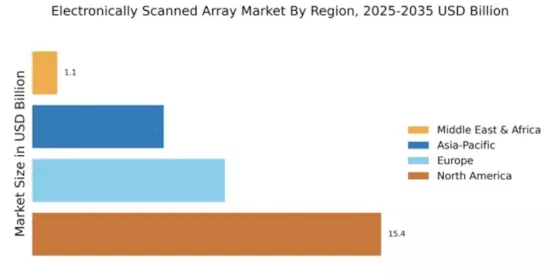
Electronically Scanned Array Market Infographic
Purchase Options

Electronically Scanned Array Market Summary

As per MRFR analysis, the Electronically Scanned Array Market Size was estimated at 30.8 USD Billion in 2024. The Electronically Scanned Array industry is projected to grow from 32.5 in 2025 to 56.0 by 2035, exhibiting a compound annual growth rate (CAGR) of 5.59 during the forecast period 2025 - 2035.

Key Market Trends & Highlights

The Electronically Scanned Array Market is poised for substantial growth driven by technological advancements and increasing military investments.

  • North America remains the largest market for electronically scanned arrays, primarily due to heightened military investment.
  • The Asia-Pacific region is emerging as the fastest-growing market, fueled by expanding commercial applications and technological integration.
  • The military segment dominates the market, while the automotive segment is experiencing rapid growth, particularly in active electronically scanned arrays.
  • Key market drivers include rising demand for advanced radar systems and increased investment in aerospace and defense, particularly in response to growing focus on homeland security.

Market Size & Forecast

2024 Market Size 30.8 (USD Billion)
2035 Market Size 56.0 (USD Billion)
CAGR (2025 - 2035) 5.59%

Major Players

Northrop Grumman (US), Raytheon Technologies (US), Lockheed Martin (US), Thales Group (FR), BAE Systems (GB), Leonardo S.p.A. (IT), Harris Corporation (US), Elbit Systems (IL), General Dynamics (US)

Electronically Scanned Array Market Trends

The Electronically Scanned Array Market is currently experiencing a transformative phase, driven by advancements in radar technology and increasing demand for sophisticated communication systems. This market encompasses a variety of applications, including defense, aerospace, and telecommunications, where the need for precise and reliable data transmission is paramount. As industries evolve, the integration of electronically scanned arrays into various platforms is becoming more prevalent, suggesting a shift towards enhanced operational capabilities. Furthermore, the growing emphasis on automation and smart technologies appears to be propelling the adoption of these systems, as they offer improved performance and efficiency compared to traditional methods. In addition, the Electronically Scanned Array Market is likely to benefit from ongoing research and development efforts aimed at enhancing the functionality and versatility of these systems. Emerging trends indicate a focus on miniaturization and cost reduction, which could make electronically scanned arrays more accessible to a broader range of applications. As the market continues to expand, collaboration between technology providers and end-users may foster innovation, leading to the development of next-generation solutions that address evolving challenges in various sectors. Overall, the future of the Electronically Scanned Array Market appears promising, with numerous opportunities for growth and advancement on the horizon.

Increased Military Investment

The Electronically Scanned Array Market is witnessing heightened investment from military sectors worldwide. This trend is driven by the necessity for advanced surveillance and targeting systems, which are crucial for modern defense strategies. As nations prioritize national security, the demand for sophisticated radar systems is likely to escalate, fostering innovation and development in this field.

Integration with AI Technologies

There is a growing trend towards the integration of artificial intelligence within the Electronically Scanned Array Market. This convergence aims to enhance data processing capabilities and improve decision-making processes. By leveraging AI, these systems can potentially analyze vast amounts of information in real-time, leading to more effective operational outcomes.

Expansion in Commercial Applications

The Electronically Scanned Array Market is gradually expanding into commercial sectors, including telecommunications and automotive industries. This diversification suggests a shift in focus, as businesses seek to utilize advanced radar technologies for applications such as traffic management and enhanced connectivity. The potential for growth in these areas indicates a broader acceptance of electronically scanned arrays beyond traditional uses.

Electronically Scanned Array Market Drivers

Defense Spending Growth

In recent years, there has been a notable increase in defense spending across various nations, significantly impacting the Global Electronically Scanned Array Industry. Countries are investing heavily in advanced military technologies, including electronically scanned arrays, to enhance their defense capabilities. For example, the United States and several NATO allies are prioritizing the modernization of their radar systems. This surge in defense budgets is expected to propel the market to an estimated 14.9 USD Billion by 2035, reflecting a compound annual growth rate of 6.78% from 2025 to 2035, as nations seek to maintain technological superiority.

Technological Advancements

The Global Electronically Scanned Array Industry is experiencing rapid technological advancements, particularly in radar and communication systems. Innovations in digital beamforming and signal processing are enhancing the capabilities of electronically scanned arrays. For instance, the integration of artificial intelligence in these systems is improving target detection and tracking accuracy. As a result, the market is projected to reach 7.23 USD Billion in 2024, driven by increased demand from defense and aerospace sectors. This trend indicates a growing reliance on sophisticated electronic systems for national security and surveillance applications.

Global Connectivity Initiatives

Global connectivity initiatives are significantly influencing the Global Electronically Scanned Array Industry. As nations strive to improve communication infrastructure, electronically scanned arrays are becoming integral to next-generation satellite and terrestrial communication systems. These systems facilitate high-speed data transmission and enhance connectivity in remote areas. For instance, countries investing in 5G networks are likely to incorporate electronically scanned arrays to support the required bandwidth and reliability. This trend underscores the importance of advanced communication technologies in fostering economic growth and social development, further driving the market's expansion.

Commercial Applications Expansion

The Global Electronically Scanned Array Industry is witnessing an expansion into commercial applications, which is diversifying its growth potential. Industries such as telecommunications and transportation are increasingly utilizing electronically scanned arrays for enhanced communication and navigation systems. For example, the aviation sector is adopting these technologies for air traffic control and collision avoidance systems. This trend not only broadens the market's scope but also fosters innovation in developing tailored solutions for specific industry needs. As commercial applications grow, the market is expected to benefit from increased investments and research initiatives aimed at optimizing electronically scanned array technologies.

Rising Demand for Surveillance Systems

The demand for advanced surveillance systems is a critical driver of the Global Electronically Scanned Array Industry. As security concerns escalate globally, governments and private sectors are increasingly adopting electronically scanned arrays for monitoring and reconnaissance purposes. These systems offer superior performance in detecting and tracking multiple targets simultaneously. For instance, urban areas are deploying these technologies for public safety and traffic management. This growing emphasis on surveillance is likely to contribute to the market's expansion, as stakeholders recognize the value of real-time data and situational awareness in various applications.

Market Segment Insights

By Application: Military (Largest) vs. Automotive (Fastest-Growing)

The Electronically Scanned Array Market has notable application segments, with Military leading in market share due to its critical need for advanced radar and communication functionalities. Following closely are Aerospace and Telecommunications, which capitalize on enhanced performance demands. Automotive and Consumer Electronics, while significant, have smaller shares, primarily catering to niche market segments within sensor and communication systems.

Military: Dominant vs. Automotive: Emerging

The Military application of electronically scanned arrays remains at the forefront, offering highly advanced radar capabilities crucial for defense operations. Key features include superior target tracking, electronic warfare, and enhanced situational awareness, making it indispensable in contemporary military strategy. On the other hand, the Automotive sector is rapidly emerging, driven by the increasing integration of advanced driver-assistance systems (ADAS) and autonomous vehicle technologies. Automotive applications augur well for electronically scanned arrays as they meet stringent safety and performance criteria, illustrating the industry's shift towards smarter, more connected vehicles.

By Technology: Phased Array (Largest) vs. Active Electronically Scanned Array (Fastest-Growing)

In the Electronically Scanned Array Market, Phased Array technology holds the largest share, benefitting from its established presence and significant adoption across various sectors. This segment is preferred for its ability to steer beams electronically, enhancing performance in radar and communication systems. In contrast, the Active Electronically Scanned Array represents the fastest-growing segment, driven by advancements in digital technologies and increasing demand for agile solutions in military and commercial applications. As industries continue to evolve, the growth of Active Electronically Scanned Arrays is fueled by their ability to provide enhanced functionality, quicker response times, and greater efficiency in signal processing. Their integration into next-generation systems is pivotal, as stakeholders seek systems that can adapt to diverse operational scenarios and improve overall performance metrics across platforms.

Phased Array: Dominant vs. Passive Electronically Scanned Array: Emerging

Phased Array technology remains dominant in the Electronically Scanned Array Market due to its proven reliability and versatility in applications such as aviation, marine, and ground-based radar systems. This technology utilizes multiple antennas to create a directional beam, allowing for rapid scanning without moving parts, which enhances durability and performance. On the other hand, Passive Electronically Scanned Arrays are emerging as a viable option, particularly in surveillance and reconnaissance. These systems utilize passive sensing techniques to detect and analyze signals, which is increasingly valuable in defense and intelligence operations. While they do not actively transmit signals, their ability to gather vast amounts of data without revealing positions makes them attractive for stealth applications.

By End Use: Radar Systems (Largest) vs. Surveillance Systems (Fastest-Growing)

In the Electronically Scanned Array Market, the distribution of market share among various end-use segments reveals that Radar Systems hold the largest share due to their extensive application in defense and civilian sectors. Communication Systems and Navigation Systems follow, while Surveillance Systems are increasingly gaining traction as security concerns rise globally. The shift towards advanced radar technologies and multifunctional systems is altering the dynamics of this market, favoring segments with robust technological capabilities.

Surveillance Systems: Radar Systems (Dominant) vs. Communication Systems (Emerging)

Radar Systems dominate the Electronically Scanned Array Market, primarily used in military and aviation applications due to their reliability and high accuracy. These systems provide detailed monitoring capabilities, which are crucial in defense and air traffic control. Communication Systems are emerging, focusing on real-time transmission and data collection across various platforms. Their adaptability in commercial sectors is driving growth, particularly as the need for secure and efficient communication increases. Meanwhile, Surveillance Systems are witnessing rapid growth due to heightened security needs, making them a vital component in urban development and smart city initiatives.

Get more detailed insights about Electronically Scanned Array Market

Key Players and Competitive Insights

The Electronically Scanned Array Market is characterized by a dynamic competitive landscape, driven by advancements in radar technology, increasing defense budgets, and the growing demand for sophisticated surveillance systems. Key players such as Northrop Grumman (US), Raytheon Technologies (US), and Thales Group (FR) are at the forefront, each adopting distinct strategies to enhance their market positioning. Northrop Grumman (US) focuses on innovation and technological advancements, particularly in developing next-generation radar systems, while Raytheon Technologies (US) emphasizes strategic partnerships and collaborations to expand its product offerings. Thales Group (FR) is actively pursuing regional expansion, particularly in Asia-Pacific, to tap into emerging markets, thereby shaping a competitive environment that is increasingly collaborative yet fiercely competitive.

In terms of business tactics, companies are localizing manufacturing and optimizing supply chains to enhance operational efficiency and reduce costs. The market structure appears moderately fragmented, with several key players exerting considerable influence. This fragmentation allows for a variety of competitive strategies, as companies seek to differentiate themselves through innovation and customer-centric solutions.

In November 2025, Northrop Grumman (US) announced a partnership with a leading technology firm to develop AI-driven radar systems aimed at enhancing target detection capabilities. This strategic move is likely to bolster Northrop Grumman's position in the market by integrating cutting-edge technology into its product line, thereby addressing the increasing demand for advanced surveillance solutions.

In October 2025, Raytheon Technologies (US) secured a contract worth $500 million to supply electronically scanned array systems to a major defense contractor. This contract not only underscores Raytheon's robust market presence but also highlights its ability to secure significant government contracts, which are crucial for sustaining growth in a competitive landscape.

In September 2025, Thales Group (FR) launched a new line of compact electronically scanned array systems designed for naval applications. This product launch is indicative of Thales's commitment to innovation and its strategic focus on diversifying its product portfolio to meet the specific needs of maritime defense, thus enhancing its competitive edge.

As of December 2025, current trends in the Electronically Scanned Array Market include a pronounced shift towards digitalization, sustainability, and the integration of AI technologies. Strategic alliances are increasingly shaping the competitive landscape, as companies recognize the value of collaboration in driving innovation. Looking ahead, competitive differentiation is expected to evolve, with a notable shift from price-based competition to a focus on technological innovation, reliability in supply chains, and the ability to deliver customized solutions that meet the unique demands of clients.

Key Companies in the Electronically Scanned Array Market market include

Industry Developments

  • Q2 2024: Raytheon delivers first AN/APG-79(V)4 AESA radar to U.S. Marine Corps Raytheon announced the delivery of its first AN/APG-79(V)4 Active Electronically Scanned Array Market (AESA) radar to the U.S. Marine Corps for integration into the F/A-18C/D Hornet fleet, marking a significant upgrade in radar capability for legacy aircraft.
  • Q2 2024: Lockheed Martin opens new advanced radar manufacturing facility in Syracuse, NY Lockheed Martin inaugurated a new state-of-the-art facility dedicated to the production of advanced electronically scanned array (AESA) radars, supporting both domestic and international defense contracts.
  • Q2 2024: Northrop Grumman wins $1.2 billion contract for next-generation AESA radar systems Northrop Grumman secured a $1.2 billion contract from the U.S. Department of Defense to supply next-generation AESA radar systems for integration into multiple air and missile defense platforms.
  • Q1 2024: Leonardo and Hensoldt announce partnership to co-develop new AESA radar for Eurofighter Typhoon Leonardo and Hensoldt revealed a strategic partnership to jointly develop a new AESA radar for the Eurofighter Typhoon, aiming to enhance the aircraft's detection and tracking capabilities for European air forces.
  • Q3 2024: Saab launches new X-band AESA radar for naval applications Saab introduced a new X-band AESA radar designed for naval vessels, offering improved target detection and tracking in challenging maritime environments.
  • Q2 2024: Elbit Systems secures $200 million contract to supply AESA radars to Asian air force Elbit Systems was awarded a $200 million contract to deliver advanced AESA radar systems to an undisclosed Asian air force, supporting the modernization of its fighter aircraft fleet.
  • Q1 2024: Thales unveils new scalable AESA radar platform for ground-based air defense Thales announced the launch of a scalable AESA radar platform designed for integration into ground-based air defense systems, offering enhanced multi-target tracking and electronic warfare resistance.
  • Q2 2024: BAE Systems wins UK Ministry of Defence contract for Tempest fighter AESA radar development BAE Systems received a contract from the UK Ministry of Defence to develop a next-generation AESA radar for the Tempest future combat air system, supporting the UK's advanced fighter program.
  • Q3 2024: Israel Aerospace Industries announces new AESA radar export deal with European customer Israel Aerospace Industries (IAI) signed a multi-million dollar agreement to export its latest AESA radar technology to a European defense customer, expanding its international radar footprint.
  • Q2 2024: Indra wins Spanish Air Force contract for AESA radar upgrade on F-18 fleet Indra was awarded a contract by the Spanish Air Force to upgrade the F-18 fighter fleet with new AESA radar systems, enhancing the aircraft's operational capabilities.
  • Q1 2024: Hanwha Systems launches new AESA radar for South Korea’s KF-21 fighter Hanwha Systems announced the official launch of its domestically developed AESA radar for integration into South Korea’s KF-21 Boramae fighter jet, marking a milestone in indigenous defense technology.
  • Q2 2024: General Dynamics Mission Systems opens new AESA radar R&D center in Massachusetts General Dynamics Mission Systems opened a new research and development center focused on advancing AESA radar technologies for military and commercial applications.

Future Outlook

Electronically Scanned Array Market Future Outlook

The Electronically Scanned Array Market is projected to grow at a 5.59% CAGR from 2024 to 2035, driven by advancements in radar technology and increasing defense expenditures.

New opportunities lie in:

  • Development of compact, multi-band radar systems for commercial applications.
  • Integration of AI algorithms for enhanced signal processing capabilities.
  • Expansion into emerging markets with tailored solutions for local defense needs.

By 2035, the Electronically Scanned Array Market is expected to achieve substantial growth and innovation.

Market Segmentation

Electronically Scanned Array Market End Use Outlook

  • Radar Systems
  • Communication Systems
  • Surveillance Systems
  • Navigation Systems

Electronically Scanned Array Market Technology Outlook

  • Phased Array
  • Digital Beamforming
  • Active Electronically Scanned Array
  • Passive Electronically Scanned Array

Electronically Scanned Array Market Application Outlook

  • Military
  • Aerospace
  • Telecommunications
  • Automotive
  • Consumer Electronics

Report Scope

MARKET SIZE 202430.8(USD Billion)
MARKET SIZE 202532.5(USD Billion)
MARKET SIZE 203556.0(USD Billion)
COMPOUND ANNUAL GROWTH RATE (CAGR)5.59% (2024 - 2035)
REPORT COVERAGERevenue Forecast, Competitive Landscape, Growth Factors, and Trends
BASE YEAR2024
Market Forecast Period2025 - 2035
Historical Data2019 - 2024
Market Forecast UnitsUSD Billion
Key Companies ProfiledNorthrop Grumman (US), Raytheon Technologies (US), Lockheed Martin (US), Thales Group (FR), BAE Systems (GB), Leonardo S.p.A. (IT), Harris Corporation (US), Elbit Systems (IL), General Dynamics (US)
Segments CoveredApplication, Technology, End Use
Key Market OpportunitiesAdvancements in radar technology enhance capabilities in defense and telecommunications within the Electronically Scanned Array Market.
Key Market DynamicsTechnological advancements drive demand for electronically scanned arrays in defense and telecommunications sectors, enhancing operational capabilities.
Countries CoveredNorth America, Europe, APAC, South America, MEA

Market Highlights

Author
Sejal Akre
Senior Research Analyst

She has over 5 years of rich experience, in market research and consulting providing valuable market insights to client. Hands on expertise in management consulting, and extensive knowledge in domain including ICT, Automotive & Transportation and Aerospace & Defense. She is skilled in Go-to market strategy, industry analysis, market sizing, in depth company profiling, competitive intelligence & benchmarking and value chain amongst others.

Leave a Comment

FAQs

What CAGR is the Space Electronically Scanned Array Market anticipated during the peroid?

Electronically Scanned Array Market Expected to Grow at 6.78% by 2035

What are the firms in the electronically scanned array market estimated to empower development in the coming period?

Saab AB (Sweden), Leonardo-Finmeccanica (Italy), Raytheon (U.S.) and Israel Aerospace Industries (Israel) are the creators of change in the market.

Which segment in the electronically scanned array market is estimated to show prolific growth in the forecast period?

The end-user segment is estimated to further the growth potential of the market.

Download Free Sample

Kindly complete the form below to receive a free sample of this Report

Compare Licence

×
Features License Type
Single User Multiuser License Enterprise User
Price $4,950 $5,950 $7,250
Maximum User Access Limit 1 User Upto 10 Users Unrestricted Access Throughout the Organization
Free Customization
Direct Access to Analyst
Deliverable Format
Platform Access
Discount on Next Purchase 10% 15% 15%
Printable Versions