×
Request Free Sample ×

Kindly complete the form below to receive a free sample of this Report

* Please use a valid business email

Leading companies partner with us for data-driven Insights

clients tt-cursor
Hero Background

Electrotherapy Market

ID: MRFR/Pharma/2294-CR
166 Pages
Kinjoll Dey
August 2021

Electrotherapy Market Research Report Information By Treatment Type (Extracorporeal Shock Wave Therapy, Interferential Current Therapy(IC), Magnetic Field Therapy, Ultrasound Therapy, Transcutaneous Electrical Nerve Stimulation (TENS) therapy, Micro- Current Therapy), By Device Type (Transcutaneous Electrical Neural Stimulation(TENS), Electronic Muscle Stimulator (EMS), Interferential Stimulator (IF), High Voltage Pulsed Galvanic Stimulator (HVPGS)), By Application (Pain Management, Neuromuscular Dysfunction, Urine and Fecal Incontinence, Ac... read more

Share:
Download PDF ×

We do not share your information with anyone. However, we may send you emails based on your report interest from time to time. You may contact us at any time to opt-out.

Electrotherapy Market Infographic
Purchase Options

Electrotherapy Market Summary

As per MRFR analysis, the Electrotherapy Market Size was estimated at 861.71 USD Million in 2024. The Electrotherapy industry is projected to grow from 894.63 USD Million in 2025 to 1301.55 USD Million by 2035, exhibiting a compound annual growth rate (CAGR) of 3.82 during the forecast period 2025 - 2035.

Key Market Trends & Highlights

The Electrotherapy Market is experiencing robust growth driven by technological advancements and increasing acceptance in various therapeutic applications.

  • Technological advancements are enhancing the efficacy and accessibility of electrotherapy devices in North America.
  • Personalized treatment approaches are becoming more prevalent, particularly in pain management and muscle stimulation segments.
  • Integration of electrotherapy into rehabilitation programs is gaining traction, especially in the Asia-Pacific region.
  • Rising prevalence of chronic pain conditions and growing awareness of electrotherapy are key drivers propelling market expansion.

Market Size & Forecast

2024 Market Size 861.71 (USD Million)
2035 Market Size 1301.55 (USD Million)
CAGR (2025 - 2035) 3.82%

Major Players

Medtronic (US), Boston Scientific (US), Abbott Laboratories (US), NeuroMetrix (US), Zynex Medical (US), Nuvectra (US), Halyard Health (US), Omron Healthcare (JP), Bioness (US)

Electrotherapy Market Trends

The Electrotherapy Market is currently experiencing a notable evolution, driven by advancements in technology and an increasing awareness of non-invasive treatment options. This market encompasses a variety of devices and techniques that utilize electrical stimulation to alleviate pain, promote healing, and enhance muscle function. As healthcare providers and patients alike seek alternatives to traditional pharmacological treatments, the demand for electrotherapy solutions appears to be on the rise. Furthermore, the integration of electrotherapy into rehabilitation programs suggests a growing recognition of its efficacy in improving patient outcomes. In addition, the Electrotherapy Market is witnessing a shift towards personalized treatment approaches. This trend is characterized by the development of devices that can be tailored to individual patient needs, thereby enhancing the overall effectiveness of therapy. The increasing prevalence of chronic pain conditions and musculoskeletal disorders further fuels the market's expansion. As research continues to validate the benefits of electrotherapy, it is likely that more healthcare professionals will incorporate these modalities into their practice, potentially leading to a broader acceptance and utilization of electrotherapy in various clinical settings.

Technological Advancements

Recent innovations in electrotherapy devices are enhancing treatment efficacy and patient experience. These advancements include the development of portable and user-friendly devices, which allow for greater accessibility and convenience in home care settings.

Personalized Treatment Approaches

The trend towards customized electrotherapy solutions is gaining traction, as healthcare providers increasingly recognize the importance of tailoring treatments to individual patient profiles. This approach may lead to improved therapeutic outcomes and patient satisfaction.

Integration into Rehabilitation Programs

Electrotherapy is becoming an integral component of rehabilitation protocols, particularly for patients recovering from surgery or injury. This integration suggests a growing acknowledgment of the role electrotherapy plays in facilitating recovery and enhancing functional mobility.

Electrotherapy Market Drivers

Growing Geriatric Population

The Global Electrotherapy Market Industry is significantly influenced by the increasing geriatric population, which is more susceptible to chronic ailments requiring effective management. As the global population ages, the demand for electrotherapy solutions is expected to rise, particularly for conditions such as arthritis and neuropathic pain. This demographic shift is likely to drive market growth, with projections indicating a compound annual growth rate (CAGR) of 5.11% from 2025 to 2035. Healthcare providers are increasingly recognizing the benefits of electrotherapy in improving the quality of life for elderly patients, thereby fostering a favorable environment for market expansion.

Rising Awareness of Non-Invasive Treatments

There is a growing awareness among patients and healthcare professionals regarding the benefits of non-invasive treatment options, which is propelling the Global Electrotherapy Market Industry forward. Patients are increasingly seeking alternatives to invasive procedures and long-term medication use, leading to a heightened interest in electrotherapy modalities. This trend is supported by educational initiatives and advocacy from healthcare organizations that emphasize the efficacy and safety of electrotherapy. As a result, the market is likely to witness increased adoption rates, contributing to its projected growth trajectory in the coming years.

Rising Demand for Pain Management Solutions

The Global Electrotherapy Market Industry is experiencing a notable surge in demand for effective pain management solutions. With an increasing prevalence of chronic pain conditions, the market is projected to reach 0.75 USD Billion in 2024. Electrotherapy Market devices, such as transcutaneous electrical nerve stimulation (TENS) units, are gaining traction among healthcare providers and patients alike. This trend is driven by the growing awareness of non-invasive treatment options that minimize reliance on pharmaceuticals. As healthcare systems globally prioritize pain management, the adoption of electrotherapy is likely to expand, contributing to the overall growth of the market.

Regulatory Support and Reimbursement Policies

Regulatory support and favorable reimbursement policies are crucial drivers of the Global Electrotherapy Market Industry. Governments and health authorities are increasingly recognizing the therapeutic benefits of electrotherapy, leading to the establishment of guidelines that facilitate its integration into standard treatment protocols. Additionally, reimbursement policies that cover electrotherapy devices and treatments enhance accessibility for patients, thereby encouraging adoption. This supportive regulatory environment is expected to bolster market growth, as more healthcare providers incorporate electrotherapy into their practice, ultimately contributing to the overall expansion of the industry.

Technological Advancements in Electrotherapy Devices

Technological innovations are playing a pivotal role in shaping the Global Electrotherapy Market Industry. The introduction of advanced electrotherapy devices, equipped with features such as wireless connectivity and user-friendly interfaces, enhances patient compliance and treatment efficacy. These advancements not only improve the functionality of devices but also broaden their application across various medical fields, including rehabilitation and sports medicine. As the market evolves, it is anticipated that the integration of artificial intelligence and machine learning will further optimize treatment protocols, potentially increasing the market size to 1.3 USD Billion by 2035.

Market Segment Insights

By Application: Pain Management (Largest) vs. Muscle Stimulation (Fastest-Growing)

In the Electrotherapy Market, Pain Management currently holds the largest share, being a primary focus for many therapeutic devices. This segment is widely adopted for both acute and chronic pain conditions, leading to a strong presence in the market. Following closely, Muscle Stimulation has emerged as a significant player, appealing particularly to sports medicine and rehabilitation sectors, capitalizing on the growing awareness of non-invasive therapeutic options.

Pain Management: Dominant vs. Muscle Stimulation: Emerging

Pain Management remains the dominant segment within the Electrotherapy Market due to its established therapeutic benefits in relieving chronic and acute pain, making it widely recognized among healthcare professionals. In contrast, Muscle Stimulation represents an emerging segment, gaining traction due to advancements in technology and increased acceptance in sports and rehabilitation settings. While Pain Management is utilized in various healthcare environments, Muscle Stimulation is often seen as a next-generation option, appealing to a younger demographic interested in performance enhancement and recovery solutions.

By Device Type: Transcutaneous Electrical Nerve Stimulation (Largest) vs. Pulsed Electromagnetic Field Therapy (Fastest-Growing)

The electrotherapy market is witnessing a diverse segmentation based on device types, with Transcutaneous Electrical Nerve Stimulation (TENS) leading in market share due to its iconic pain relief solutions. TENS devices hold the largest share, leveraging their widespread acceptance among healthcare practitioners and patients alike. Following TENS, Electrical Muscle Stimulation (EMS) and Interferential Current Therapy also contribute significantly, while Microcurrent Therapy and Pulsed Electromagnetic Field Therapy are gradually becoming notable players in the segment with innovative applications and therapeutic benefits. In recent years, growth in the electrotherapy market is driven by an increasing preference for non-invasive treatment modalities and technological advancements in device capabilities. The rise of portable, user-friendly electrotherapy devices has captivated a larger audience, especially for at-home therapies. Moreover, the aging global population and the prevalence of chronic pain disorders further stimulate demand, particularly for emerging therapies like Pulsed Electromagnetic Field Therapy, which is rapidly gaining traction for its efficacy in pain management and recovery enhancement.

Transcutaneous Electrical Nerve Stimulation (Dominant) vs. Pulsed Electromagnetic Field Therapy (Emerging)

Transcutaneous Electrical Nerve Stimulation (TENS) remains the dominant force in the electrotherapy market, celebrated for its efficacy in providing pain relief and enhancing the quality of life for chronic pain patients. Its affordability and ease of use have solidified TENS devices as essential tools in both clinical and home care settings. In contrast, Pulsed Electromagnetic Field Therapy is emerging as a novel option, gaining interest for its ability to target inflammatory conditions and promote recovery. Unlike TENS, which primarily focuses on pain modulation, Pulsed Electromagnetic Field Therapy works on a cellular level, making it appealing in various therapeutic applications. As awareness and research about the benefits of PEMF therapy grow, it is expected to capture a substantial market share, positioning itself as a strong competitor to more established forms of electrotherapy.

By End User: Hospitals (Largest) vs. Physiotherapy Clinics (Fastest-Growing)

The electrotherapy market showcases a diverse array of end users, with hospitals commanding the largest share. Their dominance is attributed to the comprehensive care they provide, leveraging electrotherapy devices for various treatments, particularly in pain management and rehabilitation. Physiotherapy clinics follow closely, often employing innovative techniques to rehabilitate patients, thus making them a significant player in the market as well. Home care settings, sports medicine facilities, and rehabilitation centers collectively contribute to the overall market dynamics but with lesser individual shares.

Rehabilitation Centers (Dominant) vs. Home Care Settings (Emerging)

Rehabilitation centers represent a dominant force in the electrotherapy market, utilizing advanced electrotherapy modalities to enhance patient recovery processes. Their structured environment, equipped with specialized staff and technology, supports patients recovering from surgeries and serious conditions. In contrast, home care settings are emerging as an important segment, appealing to patients seeking convenient therapy options at home. These settings leverage portable electrotherapy devices that enable continued care outside traditional clinical environments. This shift reflects growing consumer preferences for home-based therapies, driven by technological advancements.

Get more detailed insights about Electrotherapy Market

Regional Insights

North America : Market Leader in Electrotherapy

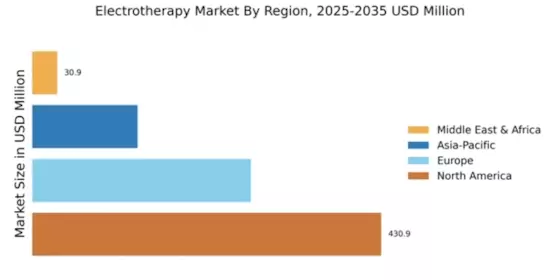
North America continues to lead the electrotherapy market, holding a significant share of 430.86 million in 2024. The growth is driven by increasing prevalence of chronic pain conditions, advancements in technology, and supportive regulatory frameworks. The demand for non-invasive treatment options is rising, further propelling market expansion. Regulatory bodies are actively promoting the use of electrotherapy devices, enhancing patient access and safety standards. The competitive landscape in North America is robust, featuring key players such as Medtronic, Boston Scientific, and Abbott Laboratories. These companies are investing heavily in R&D to innovate and improve their product offerings. The U.S. remains the largest market, supported by a well-established healthcare infrastructure and high healthcare expenditure. The presence of leading manufacturers ensures a steady supply of advanced electrotherapy solutions, catering to diverse patient needs.

Europe : Emerging Market with Growth Potential

Europe's electrotherapy market is valued at 270.0 million, reflecting a growing interest in alternative therapies. The region is witnessing an increase in the adoption of electrotherapy devices due to rising awareness about pain management and rehabilitation. Regulatory support from the European Medicines Agency (EMA) is facilitating market growth by ensuring safety and efficacy of electrotherapy products, thus boosting consumer confidence. Leading countries in this region include Germany, France, and the UK, where healthcare systems are increasingly integrating electrotherapy into treatment protocols. The competitive landscape features both established players and emerging startups, fostering innovation. Companies like Omron Healthcare and Bioness are making significant strides, enhancing their market presence through strategic partnerships and product launches. This dynamic environment is expected to drive further growth in the coming years.

Asia-Pacific : Rapidly Growing Market Segment

The Asia-Pacific electrotherapy market, valued at 130.0 million, is experiencing rapid growth driven by increasing healthcare expenditure and rising awareness of chronic pain management. Countries like China and India are witnessing a surge in demand for electrotherapy devices, supported by government initiatives aimed at improving healthcare access. The region's regulatory bodies are also becoming more proactive in approving innovative therapies, which is expected to further stimulate market growth. The competitive landscape is evolving, with both local and international players vying for market share. Companies such as NeuroMetrix and Zynex Medical are expanding their footprint in this region, leveraging partnerships and distribution networks. The growing middle-class population and increasing disposable income are contributing to the rising adoption of advanced electrotherapy solutions, making Asia-Pacific a key market for future investments.

Middle East and Africa : Emerging Market with Challenges

The Middle East and Africa electrotherapy market is valued at 30.85 million, characterized by emerging opportunities amidst various challenges. The region is gradually recognizing the benefits of electrotherapy, driven by increasing incidences of chronic diseases and a growing focus on pain management solutions. However, regulatory hurdles and limited healthcare infrastructure pose significant challenges to market growth. Efforts are being made to enhance healthcare systems, which could facilitate the adoption of electrotherapy devices. Countries like South Africa and the UAE are leading the way in adopting electrotherapy technologies, supported by government initiatives aimed at improving healthcare access. The competitive landscape is still developing, with a mix of local and international players. Companies are focusing on educating healthcare professionals and patients about the benefits of electrotherapy, which is crucial for market penetration and growth in this region.

Key Players and Competitive Insights

The Electrotherapy Market is currently characterized by a dynamic competitive landscape, driven by technological advancements and an increasing demand for non-invasive treatment options. Key players such as Medtronic (US), Boston Scientific (US), and Abbott Laboratories (US) are at the forefront, focusing on innovation and strategic partnerships to enhance their market presence. Medtronic (US) emphasizes its commitment to research and development, aiming to introduce cutting-edge electrotherapy devices that cater to a diverse range of medical conditions. Meanwhile, Boston Scientific (US) has been actively pursuing mergers and acquisitions to expand its product portfolio and market reach, thereby strengthening its competitive position. Abbott Laboratories (US) appears to be leveraging digital transformation initiatives to improve patient engagement and streamline operations, which collectively shapes a competitive environment that is increasingly reliant on technological innovation and strategic collaborations.

In terms of business tactics, companies are localizing manufacturing and optimizing supply chains to enhance operational efficiency and reduce costs. The Electrotherapy Market is moderately fragmented, with several key players exerting considerable influence. This competitive structure allows for a variety of strategies to coexist, fostering an environment where innovation and customer-centric approaches are paramount.

In November 2025, Medtronic (US) announced the launch of a new line of wearable electrotherapy devices designed for chronic pain management. This strategic move is significant as it not only expands Medtronic's product offerings but also aligns with the growing trend towards personalized healthcare solutions. The introduction of these devices is expected to enhance patient outcomes and solidify Medtronic's position as a leader in the electrotherapy space.

In October 2025, Boston Scientific (US) completed the acquisition of a smaller electrotherapy firm specializing in neuromodulation technologies. This acquisition is likely to bolster Boston Scientific's capabilities in the neuromodulation segment, allowing for a more comprehensive approach to pain management. The integration of innovative technologies from the acquired firm could enhance Boston Scientific's competitive edge and market share.

In September 2025, Abbott Laboratories (US) launched a new digital platform aimed at improving the management of electrotherapy devices. This platform is designed to facilitate real-time monitoring and data analytics, which could significantly enhance patient adherence to treatment protocols. Abbott's focus on digital solutions reflects a broader trend in the market towards integrating technology with traditional therapeutic approaches, potentially leading to improved patient outcomes and satisfaction.

As of December 2025, the Electrotherapy Market is witnessing trends such as digitalization, sustainability, and the integration of artificial intelligence (AI) into treatment protocols. Strategic alliances among key players are increasingly shaping the competitive landscape, fostering innovation and enhancing product offerings. The shift from price-based competition to a focus on technological advancement and supply chain reliability is evident, suggesting that future competitive differentiation will hinge on the ability to innovate and deliver superior patient experiences.

Key Companies in the Electrotherapy Market market include

Industry Developments

February 2024: Enovis, a medical technology business focused on innovation, announced the release of two new products: Intelect Legend 2 and Intelect Transport 2. These products are part of Enovis Recovery Sciences' Chattanooga electrotherapy portfolio and the firm's wide range of rehabilitation solutions. The American Physical Therapy Association's (APTA) Combined Sections Meeting, scheduled for February 15-17, 2024 in Boston, will showcase these cutting-edge innovations. Both Legend 2 and Transport 2 are driven by VMS, a Chattanooga exclusive waveform. The configuration of this waveform facilitates enhanced muscular contractions, reduced patient discomfort, and diminished neural exhaustion.

The selection of waveform is crucial in determining the therapeutic results in the field of electrical muscle stimulation. The VMS waveform, characterized by its distinctive alternating frequency pattern, provides numerous advantages compared to conventional waveforms.

July 2021: the Penn Brain Science, Translation, Innovation, and Modulation (brainSTIM) Center was established. This center is unique in the region as it brings together a team of prominent neuroscientists, neurologists, psychiatrists, psychologists, and engineers from the University of Pennsylvania. The primary focus of the center is to utilize neuromodulation techniques to study, restore, and improve human brain function.

The center will serve as a focal point for the advancement of novel therapies that employ neuromodulation, which involves the direct application of electrical signals or magnets to the brain, with the aim of reestablishing, reconfiguring, and reinstating brain function in individuals afflicted with diverse neurologic conditions such as dementia and stroke, as well as psychiatric disorders like anxiety. The facility employs several neuromodulation techniques, such as transcranial magnetic stimulation (TMS) and transcranial electrical stimulation (tES).

By integrating these technologies with sophisticated imaging methods, such as structural and functional magnetic resonance imaging, specialists can investigate crucial connections between brain structure and function that are fundamental to human cognition and neural activity.

January 2021:The WaveWriter Alpha is a portfolio of spinal cord stimulator (SCS) devices from Boston Scientific Corporation that combines therapeutic choices for individualized pain alleviation.

November 2020:DJO Global is a medical device company that manufactures a variety of orthopedic products for pain management, rehabilitation, and physical therapy join hands with XPO Logistics (US) and opened a distribution center in Dallas and Texas.
Future Outlook

Electrotherapy Market Future Outlook

The Electrotherapy Market is projected to grow at a 3.82% CAGR from 2024 to 2035, driven by technological advancements, increasing healthcare expenditure, and rising demand for pain management solutions.

New opportunities lie in:

  • Development of portable electrotherapy devices for home use
  • Integration of telehealth services with electrotherapy solutions
  • Expansion into emerging markets with tailored product offerings

By 2035, the Electrotherapy Market is expected to achieve substantial growth and innovation.

Market Segmentation

Electrotherapy Market End User Outlook

  • Hospitals
  • Physiotherapy Clinics
  • Home Care Settings
  • Sports Medicine Facilities
  • Rehabilitation Centers

Electrotherapy Market Application Outlook

  • Pain Management
  • Muscle Stimulation
  • Rehabilitation
  • Wound Healing
  • Neuromuscular Reeducation

Electrotherapy Market Device Type Outlook

  • Transcutaneous Electrical Nerve Stimulation
  • Electrical Muscle Stimulation
  • Interferential Current Therapy
  • Microcurrent Therapy
  • Pulsed Electromagnetic Field Therapy

Report Scope

MARKET SIZE 2024861.71(USD Million)
MARKET SIZE 2025894.63(USD Million)
MARKET SIZE 20351301.55(USD Million)
COMPOUND ANNUAL GROWTH RATE (CAGR)3.82% (2024 - 2035)
REPORT COVERAGERevenue Forecast, Competitive Landscape, Growth Factors, and Trends
BASE YEAR2024
Market Forecast Period2025 - 2035
Historical Data2019 - 2024
Market Forecast UnitsUSD Million
Key Companies ProfiledMedtronic (US), Boston Scientific (US), Abbott Laboratories (US), NeuroMetrix (US), Zynex Medical (US), Nuvectra (US), Halyard Health (US), Omron Healthcare (JP), Bioness (US)
Segments CoveredApplication, Device Type, End User
Key Market OpportunitiesIntegration of advanced wearable devices enhances patient engagement in the Electrotherapy Market.
Key Market DynamicsRising demand for non-invasive pain management solutions drives innovation and competition in the electrotherapy market.
Countries CoveredNorth America, Europe, APAC, South America, MEA

Market Highlights

Author
Kinjoll Dey
Research Analyst Level I

He is an extremely curious individual currently working in Healthcare and Medical Devices Domain. Kinjoll is comfortably versed in data centric research backed by healthcare educational background. He leverages extensive data mining and analytics tools such as Primary and Secondary Research, Statistical Analysis, Machine Learning, Data Modelling. His key role also involves Technical Sales Support, Client Interaction and Project management within the Healthcare team. Lastly, he showcases extensive affinity towards learning new skills and remain fascinated in implementing them.

Leave a Comment

FAQs

What is the projected growth of the Electrotherapy market?

The Electrotherapy market is the expected increase in total market value of 1.3 USD billion over a defined forecast period 2025–2035. It is driven by factors such as demand trends, technological advances, regulatory changes, and geographic expansion.

What is the size of the Electrotherapy market?

Electrotherapy market size was valued at approximately 0.86 billion USD in 2024. This figure will reach 1.3 billion USD covering all regions (America, Europe, Asia, MEA and ROW), focusing its segments / services / distribution channels till 2035.

What is the CAGR of the Electrotherapy market?

Electrotherapy market is expected to grow at a CAGR of 3.82% between 2025 and 2035.

How much will the Electrotherapy market be worth by 2035?

Electrotherapy market is expected to be worth of 1.3 billion USD, reflecting growth driven by usage, technology and global demands by the end of 2035.

How will the Electrotherapy market perform over the next 10 years?

Over the next 10 years the Electrotherapy market is expected to shift from usd billion 0.86 to 1.3 billion USD, led by adoption of advanced tech, demographic trends, regulatory approvals, with potential headwinds from 2025 to 2035.

Which region held the largest market share in the electrotherapy market?

North America had the largest share in the global market.

Download Free Sample

Kindly complete the form below to receive a free sample of this Report

Compare Licence

×
Features License Type
Single User Multiuser License Enterprise User
Price $4,950 $5,950 $7,250
Maximum User Access Limit 1 User Upto 10 Users Unrestricted Access Throughout the Organization
Free Customization
Direct Access to Analyst
Deliverable Format
Platform Access
Discount on Next Purchase 10% 15% 15%
Printable Versions