EU Melanoma Therapeutics Market
EU Melanoma Therapeutics Market Summary
As per Market Research Future analysis, the Europe Melanoma Therapeutics Market was estimated at 1.25 USD Billion in 2024. The melanoma therapeutics industry is projected to grow from USD 1.46 Billion in 2025 to USD 6.898 Billion by 2035, exhibiting a compound annual growth rate (CAGR) of 16.8% during the forecast period 2025 - 2035
Key Market Trends & Highlights
The Europe Melanoma Therapeutics Market is experiencing a transformative shift towards innovative treatment modalities.
- The rise of immunotherapy continues to dominate the market, establishing itself as the largest segment in melanoma therapeutics.
- Personalized medicine integration is becoming increasingly prevalent, enhancing treatment efficacy and patient outcomes.
- Collaborative research initiatives are fostering advancements in targeted therapies, which are emerging as the fastest-growing segment.
- The increasing incidence of melanoma and advancements in targeted therapies are driving market growth, supported by rising awareness and regulatory backing for innovative treatments.
Market Size & Forecast
| 2024 Market Size | 1.25 (USD Billion) |
| 2035 Market Size | 6.898 (USD Billion) |
| CAGR (2025 - 2035) | 16.8% |
Major Players
Bristol Myers Squibb (US), Merck & Co (US), Roche (CH), Novartis (CH), Amgen (US), Sanofi (FR), Eli Lilly and Company (US), Regeneron Pharmaceuticals (US), GSK (GB)
EU Melanoma Therapeutics Market Trends
The Europe Melanoma Therapeutics Market is currently experiencing a dynamic evolution, driven by advancements in treatment modalities and a growing understanding of melanoma biology. Innovative therapies, particularly immunotherapies and targeted treatments, are gaining traction among healthcare providers and patients alike. This shift is largely attributed to the increasing incidence of melanoma across Europe, prompting a heightened focus on effective therapeutic options. Furthermore, the integration of personalized medicine into treatment protocols appears to enhance patient outcomes, as therapies are tailored to individual genetic profiles. In addition, the regulatory landscape is evolving, with European health authorities actively facilitating the approval of novel therapeutics. This trend suggests a more favorable environment for pharmaceutical companies to introduce groundbreaking treatments. Collaborations between academic institutions and industry players are also on the rise, fostering research and development initiatives that could lead to the discovery of new therapeutic agents. Overall, the Europe Melanoma Therapeutics Market seems poised for substantial growth, driven by innovation and a commitment to improving patient care.
Rise of Immunotherapy
The Europe Melanoma Therapeutics Market is witnessing a notable increase in the adoption of immunotherapy. This approach harnesses the body's immune system to combat melanoma, offering a promising alternative to traditional treatments. As research continues to unveil the mechanisms of immune response, therapies such as checkpoint inhibitors are becoming more prevalent, potentially leading to improved survival rates for patients.
Personalized Medicine Integration
There is a growing trend towards the integration of personalized medicine within the Europe Melanoma Therapeutics Market. Tailoring treatments based on individual genetic profiles allows for more effective and targeted therapies. This shift not only enhances treatment efficacy but also minimizes adverse effects, thereby improving the overall patient experience.
Collaborative Research Initiatives
Collaborative efforts between academic institutions and pharmaceutical companies are increasingly shaping the landscape of the Europe Melanoma Therapeutics Market. These partnerships aim to accelerate research and development of novel therapies, fostering innovation. Such collaborations may lead to breakthroughs in treatment options, ultimately benefiting patients and healthcare providers alike.
EU Melanoma Therapeutics Market Drivers
Increasing Incidence of Melanoma
The rising incidence of melanoma across Europe is a pivotal driver for the Europe Melanoma Therapeutics Market. Recent statistics indicate that melanoma cases have surged, with an estimated 200,000 new cases reported annually in Europe. This alarming trend necessitates the development and availability of effective therapeutic options. As awareness of skin cancer increases, more individuals are seeking early diagnosis and treatment, thereby propelling market growth. The heightened focus on melanoma prevention and treatment strategies is likely to stimulate research and development efforts, leading to innovative therapies. Consequently, the growing patient population is expected to drive demand for advanced melanoma therapeutics, thereby shaping the landscape of the Europe Melanoma Therapeutics Market.
Advancements in Targeted Therapies
The emergence of targeted therapies represents a transformative shift in the Europe Melanoma Therapeutics Market. These therapies, designed to specifically target cancer cells while sparing healthy tissue, have shown promising results in clinical trials. For instance, BRAF and MEK inhibitors have gained traction, demonstrating improved survival rates among patients with specific genetic mutations. The market for targeted therapies is projected to expand significantly, with estimates suggesting a compound annual growth rate of over 15% in the coming years. This growth is driven by ongoing research and the increasing number of approved targeted agents, which are likely to enhance treatment options for melanoma patients. As a result, the integration of targeted therapies into clinical practice is expected to reshape treatment paradigms within the Europe Melanoma Therapeutics Market.
Growing Investment in Cancer Research
The surge in investment for cancer research is a crucial driver for the Europe Melanoma Therapeutics Market. Governments and private organizations are increasingly allocating funds to support innovative research initiatives aimed at understanding melanoma biology and developing novel therapies. In 2025, it is estimated that research funding for melanoma will exceed 500 million euros across Europe, reflecting a commitment to combating this aggressive form of skin cancer. This influx of capital is likely to facilitate collaborations between academic institutions and pharmaceutical companies, fostering the development of cutting-edge treatments. As a result, the enhanced research landscape is expected to yield breakthroughs in melanoma therapeutics, ultimately benefiting patients and driving market growth.
Rising Awareness and Education Campaigns
The increasing awareness of melanoma and skin cancer prevention is a vital driver for the Europe Melanoma Therapeutics Market. Public health campaigns aimed at educating individuals about the risks associated with UV exposure and the importance of early detection are gaining momentum. These initiatives are likely to lead to higher rates of skin examinations and earlier diagnoses, which can significantly impact treatment outcomes. As awareness grows, more patients are likely to seek therapeutic options, thereby driving market demand. Furthermore, educational programs targeting healthcare professionals are expected to enhance the quality of care provided to melanoma patients. This heightened awareness and education are anticipated to contribute positively to the growth trajectory of the Europe Melanoma Therapeutics Market.
Regulatory Support for Innovative Therapies
Regulatory bodies in Europe are increasingly supportive of innovative therapies, which serves as a significant driver for the Europe Melanoma Therapeutics Market. Initiatives such as the European Medicines Agency's (EMA) accelerated approval pathways are designed to expedite the review process for promising new treatments. This regulatory environment encourages pharmaceutical companies to invest in the development of novel melanoma therapies, as they can bring products to market more swiftly. The potential for faster access to innovative treatments is likely to enhance patient outcomes and satisfaction, thereby increasing the overall demand for melanoma therapeutics. Consequently, the supportive regulatory framework is expected to play a vital role in shaping the future of the Europe Melanoma Therapeutics Market.
Market Segment Insights
By Product: Immunotherapy (Largest) vs. Targeted Therapy (Fastest-Growing)
In the European melanoma therapeutics market, the product segment showcases a competitive landscape among chemotherapy, immunotherapy, targeted therapy, and radiation therapy. Immunotherapy holds the largest market share due to its effectiveness and acceptance by healthcare providers, capitalizing on innovative treatments like checkpoint inhibitors and personalized medicine. In contrast, targeted therapy is rapidly gaining traction as more patients seek tailored approaches to their treatment plans, reflecting an increasing demand for precision medicine centric solutions.
Therapeutics: Immunotherapy (Dominant) vs. Targeted Therapy (Emerging)
Immunotherapy is recognized as the dominant player in the Europe melanoma therapeutics market, with its roots deeply embedded in groundbreaking advancements that have provided effective treatment avenues for patients. This approach focuses on harnessing the body’s immune system to fight melanoma, often resulting in prolonged survival rates. Meanwhile, targeted therapy is emerging swiftly, distinguished by its ability to selectively target cancer cells while sparing healthy tissue. This therapy aligns well with the growing trend towards personalization in treatment options, catering to the unique genetic makeup of tumors, thus attracting attention from both oncologists and patients alike.
By Drug Type: Branded Drugs (Largest) vs. Generic Drugs (Fastest-Growing)
In the Europe Melanoma Therapeutics Market, Branded Drugs hold the dominant market share, being widely recognized for their efficacy and safety profiles. These drugs are primarily backed by extensive clinical evidence and robust marketing strategies, which fortify their position in the therapeutic landscape. Conversely, Generic Drugs, while trailing in market share, are steadily capturing attention due to their cost-effectiveness and increasing acceptance among healthcare providers and patients.
Branded Drugs (Dominant) vs. Generic Drugs (Emerging)
Branded Drugs constitute the mainstay of the melanoma therapeutics segment, offering established treatments with significant clinical validation. Their brands are often synonymous with quality, leading to a strong consumer trust and loyalty. In contrast, Generic Drugs represent an emerging segment that is gaining traction due to their affordability and improved accessibility. As healthcare systems progressively emphasize cost containment, the appeal of Generic Drugs increases, creating a competitive push that challenges the established dominance of Branded Drugs. This dynamic signifies a transformative period in the melanoma therapeutics market.
Regional Insights
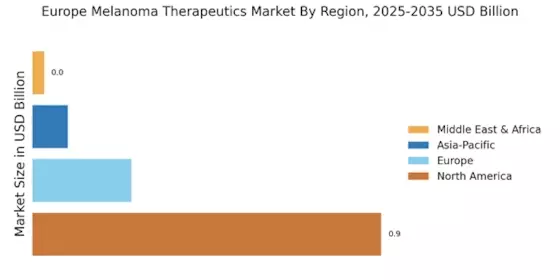
North America : Leading Innovation and Research
The North American melanoma therapeutics market is driven by advanced research, high healthcare expenditure, and a growing prevalence of melanoma. The U.S. holds the largest market share at approximately 70%, followed by Canada at around 15%. Regulatory support from agencies like the FDA accelerates the approval of innovative therapies, enhancing market growth. Increasing awareness and early detection initiatives further boost demand for effective treatments. Key players such as Bristol Myers Squibb, Merck & Co, and Amgen dominate the competitive landscape, leveraging their strong R&D capabilities. The presence of numerous clinical trials and collaborations with academic institutions fosters innovation. The market is characterized by a focus on immunotherapy and targeted therapies, with companies continuously striving to improve patient outcomes and expand their product portfolios.
Europe : Expanding Therapeutic Options
The European melanoma therapeutics market is experiencing significant growth, driven by increasing melanoma incidence and advancements in treatment options. Germany and France are the largest markets, holding approximately 30% and 20% market shares, respectively. Regulatory frameworks, such as the European Medicines Agency's guidelines, facilitate the introduction of novel therapies, enhancing patient access to effective treatments. The rising focus on personalized medicine is also a key growth driver. Leading countries like the UK, Italy, and Spain contribute to the competitive landscape, with major players such as Roche, Novartis, and Sanofi actively involved. The market is characterized by a mix of established therapies and emerging treatments, with a strong emphasis on immunotherapy. Collaborative efforts between pharmaceutical companies and research institutions are fostering innovation, ensuring a steady pipeline of new therapies to meet the growing demand.
Asia-Pacific : Emerging Market Potential
The Asia-Pacific melanoma therapeutics market is on the rise, driven by increasing awareness of skin cancer and improving healthcare infrastructure. Countries like Australia and Japan are leading the market, with Australia holding approximately 25% of the share due to its high melanoma incidence rates. The region is witnessing a shift towards advanced treatment options, supported by regulatory bodies that are streamlining approval processes for new therapies. The competitive landscape features both local and international players, with companies like GSK and Eli Lilly making significant inroads. The focus on research and development is growing, with an emphasis on targeted therapies and immunotherapies. As healthcare access improves, the demand for effective melanoma treatments is expected to rise, presenting substantial growth opportunities for stakeholders in the region.
Middle East and Africa : Untapped Market Potential
The Middle East and Africa melanoma therapeutics market is still in its nascent stages, with significant growth potential driven by increasing awareness and healthcare improvements. Countries like South Africa and the UAE are leading the market, holding approximately 20% and 15% shares, respectively. The region faces challenges such as limited access to advanced therapies, but ongoing investments in healthcare infrastructure are expected to enhance treatment availability and patient outcomes. The competitive landscape is evolving, with both multinational and local companies exploring opportunities in the melanoma therapeutics space. Key players are beginning to establish a presence, focusing on education and awareness campaigns to drive demand. As regulatory frameworks improve, the market is poised for growth, with a focus on innovative treatment options to address the rising incidence of melanoma.
Key Players and Competitive Insights
Key Companies in the EU Melanoma Therapeutics Market include
Industry Developments
January 2022: Pfizer Inc. received approval for CIBINQO (abrocitinib) from the US Food and Drug Administration (FDA). This once-daily oral drug is part of the Janus kinase 1 (JAK1) inhibitor class and is used for individuals with moderate-to-severe atopic dermatitis (AD) that is refractory.
January 2022: FDA approved Immunocore's KIMMTRAK (tebentafusp-tebn). This drug is intended to treat metastatic or incurable uveal melanoma, providing a potentially effective treatment alternative in the battle against this difficult malignancy.
August 2022: Japan approved Tagrisso, an AstraZeneca product, as an adjuvant treatment for individuals with epidermal growth.
Future Outlook
EU Melanoma Therapeutics Market Future Outlook
The Europe Melanoma Therapeutics Market is projected to grow at a 16.8% CAGR from 2025 to 2035, driven by advancements in immunotherapy, increasing incidence rates, and enhanced diagnostic techniques.
New opportunities lie in:
- Development of personalized medicine platforms for targeted therapies. Expansion of telehealth services for remote patient monitoring. Investment in AI-driven drug discovery to expedite therapeutic development.
By 2035, the market is expected to be robust, driven by innovation and increased patient access.
Market Segmentation
EU Melanoma Therapeutics Market Product Outlook
- Chemotherapy
- Immunotherapy
- Targeted Therapy
- Radiation Therapy
EU Melanoma Therapeutics Market Drug Type Outlook
- Branded Drugs
- Generic Drugs
Report Scope
| MARKET SIZE 2024 | 1.25(USD Billion) |
| MARKET SIZE 2025 | 1.46(USD Billion) |
| MARKET SIZE 2035 | 6.898(USD Billion) |
| COMPOUND ANNUAL GROWTH RATE (CAGR) | 16.8% (2025 - 2035) |
| REPORT COVERAGE | Revenue Forecast, Competitive Landscape, Growth Factors, and Trends |
| BASE YEAR | 2024 |
| Market Forecast Period | 2025 - 2035 |
| Historical Data | 2019 - 2024 |
| Market Forecast Units | USD Billion |
| Key Companies Profiled | Bristol Myers Squibb (US), Merck & Co (US), Roche (CH), Novartis (CH), Amgen (US), Sanofi (FR), Eli Lilly and Company (US), Regeneron Pharmaceuticals (US), GSK (GB) |
| Segments Covered | Product, Drug Type, Region |
| Key Market Opportunities | Emergence of novel immunotherapies and targeted therapies enhances treatment options in the Europe Melanoma Therapeutics Market. |
| Key Market Dynamics | Rising demand for targeted therapies drives innovation and competition in the Europe Melanoma Therapeutics Market. |
| Countries Covered | North America, Europe, APAC, South America, MEA |
FAQs
What is the current valuation of the Europe Melanoma Therapeutics Market?
The market valuation was 1.25 USD Billion in 2024.
What is the projected market size for the Europe Melanoma Therapeutics Market by 2035?
The projected valuation for 2035 is 6.898 USD Billion.
What is the expected CAGR for the Europe Melanoma Therapeutics Market during the forecast period?
The expected CAGR for the market from 2025 to 2035 is 16.8%.
Which product segments are included in the Europe Melanoma Therapeutics Market?
The product segments include Chemotherapy, Immunotherapy, Targeted Therapy, and Radiation Therapy.
What were the revenue figures for Immunotherapy in 2024?
Immunotherapy generated revenues of 0.5 USD Billion in 2024.
How do branded drugs compare to generic drugs in the Europe Melanoma Therapeutics Market?
Branded drugs accounted for 0.75 USD Billion, while generic drugs accounted for 0.5 USD Billion in 2024.
Who are the key players in the Europe Melanoma Therapeutics Market?
What is the revenue range for Targeted Therapy in the Europe Melanoma Therapeutics Market?
Targeted Therapy is projected to range from 0.3 to 1.5 USD Billion.
What is the expected growth trend for Radiation Therapy in the coming years?
Radiation Therapy is expected to grow from 0.2 USD Billion to 1.0 USD Billion by 2035.
How does the market's growth potential impact investment opportunities?
The robust growth potential, indicated by a projected CAGR of 16.8%, suggests lucrative investment opportunities in the market.
Research Approach
Secondary Research
The secondary research process involved comprehensive analysis of regulatory databases, peer-reviewed medical journals, clinical publications, oncology registries, and authoritative health organizations. Key sources included the European Medicines Agency (EMA), European Commission Health and Food Safety Directorate (DG SANTE), European Cancer Information System (ECIS/EUROCARE), International Agency for Research on Cancer (IARC/WHO), European Society for Medical Oncology (ESMO), European Association of Dermato-Oncology (EADO), European Organisation for Research and Treatment of Cancer (EORTC), European Cancer Organisation (ECO), National Cancer Registration and Analysis Service (NCRAS/UK), Institut National du Cancer (INCa/France), Deutsches Zentrum für Krebsforschung (DKFZ/Germany), Agenzia Italiana del Farmaco (AIFA), Agenzia Española de Medicamentos y Productos Sanitarios (AEMPS), European Centre for Disease Prevention and Control (ECDC), OECD Health Statistics, Eurostat Healthcare Database, and national cancer registries from key EU markets. These sources were used to collect melanoma incidence and mortality statistics, regulatory approval data (including EMA PRIME designations and accelerated assessments), clinical safety and efficacy studies, healthcare reimbursement policies, patient access programs, and competitive landscape analysis for chemotherapy agents, immunotherapy (checkpoint inhibitors, interleukins), targeted therapy (BRAF/MEK inhibitors), and radiation therapy modalities.
Primary Research
Qualitative and quantitative insights were obtained by interviewing supply-side and demand-side stakeholders during the primary research process. The supply-side sources consisted of Chief Medical Officers, VPs of Oncology R&D, Heads of Regulatory Affairs for Immuno-Oncology, and Commercial Directors from pharmaceutical manufacturers, biotechnology firms, and oncology-focused CMOs/CDMOs. There were a variety of demand-side sources, including medical oncologists, dermatologic oncologists, surgical oncologists, hospital pharmacy directors, oncology procurement leaders from comprehensive cancer centers, university hospitals, and specialized melanoma treatment units. Primary research validated treatment protocol segmentation, confirmed clinical pipeline timelines, and collected insights on the reimbursement landscape, biosimilar penetration dynamics, combination therapy pricing strategies, and immunotherapy adoption patterns across EU member states.
Primary Respondent Breakdown:
By Designation: C-level Primaries (32%), Director Level (30%), Others (38%)
By Region: Western Europe (Germany, France, UK) (40%), Southern Europe (Italy, Spain) (22%), Northern Europe (Sweden, Denmark, Norway, Luxembourg) (20%), Central Europe (Austria, Rest of Europe) (18%)
Market Size Estimation
European market valuation was derived through revenue mapping and treatment volume analysis. The methodology included:
Identification of 35+ key pharmaceutical and biotechnology manufacturers across Western Europe, Northern Europe, Southern Europe, and Central Europe
Product mapping across chemotherapy (dacarbazine, temozolomide), immunotherapy (anti-PD-1, anti-CTLA-4, combination regimens), targeted therapy (BRAF inhibitors, MEK inhibitors), and radiation therapy (external beam, brachytherapy) categories
Analysis of reported and modeled annual revenues specific to melanoma therapeutic portfolios, including branded originator drugs and generic/biosimilar alternatives
Coverage of manufacturers representing 75-80% of EU market share in 2024
Extrapolation using bottom-up (treatment cycles × ASP by country, adjusted for reimbursement variations) and top-down (manufacturer revenue validation) approaches to derive segment-specific valuations for immunotherapy (largest segment), targeted therapy (fastest-growing segment), chemotherapy, and radiation therapy
Kindly complete the form below to receive a free sample of this Report
Customer Stories
“This is really good guys. Excellent work on a tight deadline. I will continue to use you going forward and recommend you to others. Nice job”
“Thanks. It’s been a pleasure working with you, please use me as reference with any other Intel employees.”
“Thanks for sending the report it gives us a good global view of the Betaïne market.”
“Thank you, this will be very helpful for OQS.”
“We found the report very insightful! we found your research firm very helpful. I'm sending this email to secure our future business.”
“I am very pleased with how market segments have been defined in a relevant way for my purposes (such as "Portable Freezers & refrigerators" and "last-mile"). In general the report is well structured. Thanks very much for your efforts.”
“I have been reading the first document or the study, ,the Global HVAC and FP market report 2021 till 2026. Must say, good info! I have not gone in depth at all parts, but got a good indication of the data inside!”
“We got the report in time, we really thank you for your support in this process. I also thank to all of your team as they did a great job.”