×
Request Free Sample ×

Kindly complete the form below to receive a free sample of this Report

* Please use a valid business email

Leading companies partner with us for data-driven Insights

clients tt-cursor
Hero Background

Europe Canned Tuna Market

ID: MRFR/FnB/42893-HCR
128 Pages
Snehal Singh
October 2025

Europe Canned Tuna Market Research Report By Type (Skipjack Tuna, Yellowfin Tuna, Albacore Tuna, Others) and By Distribution Channel (Store-Based, Non-Store-Based)-Forecast to 2035

Share:
Download PDF ×

We do not share your information with anyone. However, we may send you emails based on your report interest from time to time. You may contact us at any time to opt-out.

Europe Canned Tuna Market Infographic
Purchase Options

Europe Canned Tuna Market Summary

As per MRFR analysis, the Europe canned tuna market Size was estimated at 5.8 USD Million in 2024. The Europe canned tuna market is projected to grow from 6.09 USD Million in 2025 to 10.02 USD Million by 2035, exhibiting a compound annual growth rate (CAGR) of 5.1% during the forecast period 2025 - 2035.

Key Market Trends & Highlights

The Europe canned tuna market is experiencing a shift towards sustainability and health-conscious offerings.

  • Germany remains the largest market for canned tuna, driven by a strong consumer preference for sustainable seafood options.
  • The UK is emerging as the fastest-growing region, with increasing demand for innovative flavors and convenient meal solutions.
  • Health-conscious offerings are gaining traction, as consumers seek nutritious and convenient food choices that align with their lifestyles.
  • Market drivers such as rising demand for convenient food options and sustainability initiatives in seafood sourcing are shaping the future of the canned tuna market.

Market Size & Forecast

2024 Market Size 5.8 (USD Million)
2035 Market Size 10.02 (USD Million)
CAGR (2025 - 2035) 5.1%

Major Players

Thai Union Group (TH), Bumble Bee Foods (US), Starkist Co. (US), Ocean Brands (CA), Chicken of the Sea (US), Crown Prince (US), Genova Seafood (CA), Mitsubishi Corporation (JP)

Europe Canned Tuna Market Trends

The canned tuna market is currently experiencing a dynamic phase characterized by evolving consumer preferences and increasing demand for sustainable seafood options. As awareness regarding environmental issues rises, consumers are gravitating towards products that are certified as sustainable. This shift is prompting manufacturers to adopt responsible sourcing practices, which may enhance their market positioning. Additionally, the convenience factor associated with canned tuna continues to appeal to busy consumers, leading to a steady increase in sales across various retail channels. The market appears to be adapting to these trends, with innovations in packaging and product offerings that cater to health-conscious individuals. Moreover, the canned tuna market is witnessing a diversification of flavors and product types, which seems to attract a broader audience. The introduction of premium and gourmet options indicates a potential shift in consumer spending habits, as individuals are willing to pay more for high-quality products. This trend may also reflect a growing interest in culinary experiences, where consumers seek unique and flavorful options. Overall, the market is poised for growth, driven by sustainability, convenience, and innovation, suggesting a promising outlook for stakeholders in the industry.

Sustainability Focus

There is a notable emphasis on sustainable sourcing within the canned tuna market. Consumers increasingly prefer products that are certified by recognized environmental organizations, which encourages manufacturers to adopt responsible fishing practices.

Flavor Diversification

The market is experiencing a trend towards diverse flavor profiles and product variations. This diversification caters to evolving consumer tastes and preferences, potentially attracting a wider demographic.

Health-Conscious Offerings

An increasing number of consumers are prioritizing health and wellness, leading to a rise in demand for canned tuna products that are low in sodium and free from preservatives. This trend indicates a shift towards healthier eating habits.

Europe Canned Tuna Market Drivers

Innovative Packaging Solutions

The canned tuna market in Europe is witnessing a trend towards innovative packaging solutions that enhance product appeal and convenience. Manufacturers are increasingly adopting packaging designs that prioritize sustainability, such as recyclable materials and reduced plastic usage. In 2025, it is anticipated that 30% of consumers will prefer products with eco-friendly packaging. This shift not only aligns with consumer preferences but also addresses environmental concerns. Additionally, advancements in packaging technology, such as easy-open lids and portion-controlled sizes, cater to the growing demand for convenience. The canned tuna market is likely to benefit from these innovations, as they enhance the overall consumer experience. Brands that invest in attractive and functional packaging are expected to capture a larger market share, appealing to environmentally conscious consumers while meeting their needs for convenience.

Rising Demand for Convenient Food Options

The canned tuna market in Europe experiences a notable increase in demand for convenient food solutions. Busy lifestyles and the growing trend of on-the-go eating contribute to this shift. Consumers are increasingly seeking quick meal options that require minimal preparation. Canned tuna, being a ready-to-eat product, aligns perfectly with this demand. In 2025, the convenience food sector is projected to grow by approximately 4.5%, indicating a robust market for canned tuna. This trend is particularly pronounced among younger demographics, who prioritize convenience without compromising on nutrition. As a result, the canned tuna market is likely to benefit from this evolving consumer behavior, leading to innovative product offerings that cater to the need for speed and ease in meal preparation.

Expansion of Retail Channels and E-commerce

The canned tuna market in Europe is experiencing a transformation due to the expansion of retail channels and the rise of e-commerce. Traditional grocery stores are increasingly complemented by online platforms, allowing consumers to access a wider variety of canned tuna products. In 2025, online grocery sales are projected to account for 15% of total food sales in Europe. This shift is particularly advantageous for niche brands that may not have a strong presence in physical stores. The convenience of online shopping, coupled with the ability to compare products and prices, enhances consumer choice in the canned tuna market. Retailers are also investing in better supply chain logistics to ensure product availability, which is likely to further stimulate market growth. As e-commerce continues to flourish, the canned tuna market is poised for significant expansion.

Increased Awareness of Nutritional Benefits

The canned tuna market in Europe is witnessing a surge in consumer awareness regarding the nutritional advantages of tuna. Rich in protein, omega-3 fatty acids, and essential vitamins, canned tuna is increasingly recognized as a healthy dietary choice. Recent studies indicate that nearly 70% of consumers consider nutritional value when purchasing canned products. This heightened awareness is driving sales in the canned tuna market, as health-conscious individuals seek out products that contribute to a balanced diet. Furthermore, the European Food Safety Authority emphasizes the importance of omega-3 fatty acids for heart health, further validating the appeal of canned tuna. As consumers become more informed, the demand for high-quality, nutritious canned tuna products is expected to rise, potentially leading to increased market share for brands that prioritize health benefits.

Sustainability Initiatives in Seafood Sourcing

The canned tuna market in Europe is increasingly influenced by sustainability initiatives aimed at responsible seafood sourcing. Consumers are becoming more discerning about the environmental impact of their food choices, leading to a demand for sustainably sourced products. In 2025, it is estimated that 50% of consumers will prioritize sustainability when purchasing canned goods. This trend compels manufacturers in the canned tuna market to adopt eco-friendly practices, such as using certified sustainable fishing methods. Brands that transparently communicate their sustainability efforts are likely to gain a competitive edge. Additionally, regulatory bodies in Europe are implementing stricter guidelines on fishing practices, further pushing the industry towards sustainable solutions. As a result, the canned tuna market is expected to evolve, with a growing emphasis on environmentally responsible sourcing and production.
Market Segment Insights

By Type: Skipjack Tuna (Largest) vs. Yellowfin Tuna (Fastest-Growing)

The canned tuna market in Europe is predominantly driven by Skipjack Tuna, which holds the largest market share due to its widespread availability and preference among consumers for its flavor and sustainability. Skipjack Tuna accounts for a significant portion of total sales, making it the most competitive segment in this market. Yellowfin Tuna, while not as dominant, has been gaining traction among health-conscious consumers who seek high-quality protein sources, thus capturing an increasing share of the market. Growth trends in the canned tuna segment are largely influenced by consumer awareness around sustainability and nutritional value. Yellowfin Tuna is emerging as a fast-growing alternative, driven by innovative marketing strategies highlighting its health benefits. Furthermore, the rise of eco-friendly packaging and responsible sourcing practices are fostering demand for diverse tuna options, catering to an informed customer base that prioritizes both quality and environmental impact.

Skipjack Tuna: Dominant vs. Yellowfin Tuna: Emerging

Skipjack Tuna is considered the cornerstone of the canned tuna segment, known for its robust flavor and lower price point, making it a staple choice for many households across various demographics in Europe. In contrast, Yellowfin Tuna is becoming an emerging favorite, particularly among younger consumers who are more health-conscious and willing to pay a premium for quality. Its firm texture and rich flavor profile provide a gourmet appeal, further enhanced by its nutritional benefits, such as high omega-3 fatty acid content. Both segments are characterized by their unique qualities, with Skipjack Tuna leveraging its established position against Yellowfin Tuna's growing popularity driven by current food trends favoring premium and health-focused offerings.

By Distribution Channel: Store-Based (Largest) vs. Non-Store-Based (Fastest-Growing)

The distribution channel segment in the canned tuna market exhibits a clear dominance of store-based sales, which capture the majority of market share due to established consumer shopping habits and extensive retail networks. Stores offer product accessibility and a tactile shopping experience that influences purchase decisions. Meanwhile, non-store-based channels, although currently with a smaller share, are gaining traction rapidly, driven by the increasing popularity of online shopping and e-commerce platforms. Growth trends indicate that the non-store-based segment is witnessing the fastest expansion in the distribution channels. Factors such as changing consumer behaviors towards convenience and the adoption of technology in retailing are propelling this growth. The COVID-19 pandemic has catalyzed the shift towards online shopping, positioning non-store-based channels to capitalize on this growing trend, while store-based channels continue to adapt to maintain their consumer base.

Store-Based (Dominant) vs. Non-Store-Based (Emerging)

Store-based distribution channels remain dominant in the canned tuna sector, characterized by their robust presence in supermarkets, hypermarkets, and specialty stores. This dominance is attributed to effective merchandising strategies, promotional activities, and direct consumer engagement, which significantly influence purchasing behavior. On the other hand, non-store-based channels, comprising online retailers and direct-to-consumer platforms, are emerging rapidly, appealing to tech-savvy consumers who prioritize convenience and fast delivery options. The rise of this segment is supported by an increase in mobile commerce and enhanced logistics capabilities, suggesting a shift in market dynamics where both segments will continue to coexist increasingly.

Get more detailed insights about Europe Canned Tuna Market

Regional Insights

Germany : Strong Demand and Consumption Trends

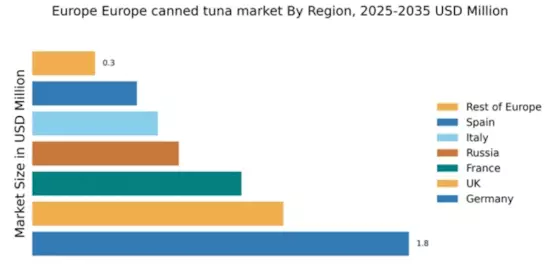
Germany holds a dominant market share of 1.8 in the European canned tuna sector, driven by increasing health consciousness and a shift towards convenient meal options. The demand for sustainably sourced products is rising, supported by government initiatives promoting responsible fishing practices. Regulatory frameworks ensure high quality and safety standards, while robust logistics and distribution networks facilitate market access and growth.

UK : Health-Conscious Consumers Drive Demand

The UK canned tuna market, with a share of 1.2, is witnessing a shift towards sustainable and ethically sourced products. Consumer preferences are evolving, with a notable increase in demand for organic and low-sodium options. Government policies are increasingly focused on sustainability, encouraging local sourcing and eco-friendly packaging, which are pivotal in shaping market dynamics.

France : Diverse Consumption Patterns Emerge

France, holding a market share of 1.0, showcases a unique blend of traditional and modern consumption patterns. The demand for canned tuna is bolstered by its integration into French cuisine, particularly in salads and sandwiches. Regulatory support for quality assurance and food safety is strong, while urban areas like Paris and Lyon are key consumption hubs driving growth.

Russia : Increasing Demand for Convenience Foods

Russia's canned tuna market, with a share of 0.7, is on the rise, driven by urbanization and changing lifestyles. The demand for convenient meal solutions is increasing, particularly in major cities like Moscow and St. Petersburg. Government initiatives aimed at improving food safety and quality standards are enhancing consumer confidence in canned products, fostering market growth.

Italy : Strong Cultural Affinity for Seafood

Italy, with a market share of 0.6, has a deep-rooted culinary tradition that embraces canned tuna. The product is a staple in Italian households, often used in pasta dishes and salads. Regulatory frameworks support high-quality standards, while local brands compete with international players like Thai Union and Bumble Bee Foods, ensuring a vibrant market landscape.

Spain : High Consumption Rates and Trends

Spain's canned tuna market, holding a share of 0.5, reflects the Mediterranean diet's influence, with high consumption rates among consumers. The demand is driven by traditional recipes and a growing trend towards healthy eating. Government regulations ensure product quality, while key cities like Barcelona and Madrid serve as major consumption centers, fostering a competitive environment.

Rest of Europe : Varied Consumption Across Regions

The Rest of Europe, with a market share of 0.3, encompasses a variety of smaller markets with distinct preferences. Demand for canned tuna varies widely, influenced by local culinary traditions and health trends. Regulatory policies differ by country, impacting market dynamics. Key players like Ocean Brands and Chicken of the Sea are expanding their reach in these diverse markets.

Europe Canned Tuna Market Regional Image

Key Players and Competitive Insights

The canned tuna market in Europe exhibits a competitive landscape characterized by a blend of established players and emerging brands, driven by factors such as sustainability, consumer health consciousness, and innovative product offerings. Major companies like Thai Union Group (TH), Bumble Bee Foods (US), and Starkist Co. (US) are at the forefront, each adopting distinct strategies to enhance their market presence. Thai Union Group (TH) emphasizes sustainability through its commitment to responsible sourcing and eco-friendly packaging, which resonates with the growing consumer demand for environmentally conscious products. Meanwhile, Bumble Bee Foods (US) focuses on product diversification, introducing new flavors and formats to cater to evolving consumer preferences, thereby enhancing its competitive edge. Starkist Co. (US) leverages digital transformation initiatives to optimize its supply chain and improve customer engagement, indicating a shift towards technology-driven operations.

The business tactics employed by these companies reflect a strategic focus on localizing manufacturing and optimizing supply chains to enhance efficiency and reduce costs. The market structure appears moderately fragmented, with a mix of large multinational corporations and smaller regional players. This fragmentation allows for a dynamic competitive environment where key players can influence market trends through innovation and strategic partnerships.

In October 2025, Thai Union Group (TH) announced a partnership with a leading European retailer to launch a new line of sustainably sourced canned tuna products. This collaboration not only strengthens Thai Union's market position but also aligns with the increasing consumer demand for transparency and sustainability in food sourcing. The strategic importance of this move lies in its potential to enhance brand loyalty and capture a larger market share in the premium segment.

In September 2025, Bumble Bee Foods (US) unveiled a new marketing campaign aimed at promoting its health-oriented product range, which includes low-sodium and high-protein options. This initiative is significant as it addresses the rising health consciousness among consumers, positioning Bumble Bee as a leader in the health-focused segment of the canned tuna market. The campaign is likely to attract a broader customer base, particularly among health-conscious consumers.

In August 2025, Starkist Co. (US) launched an innovative online platform that allows consumers to customize their canned tuna orders, including flavor and packaging options. This strategic move reflects Starkist's commitment to enhancing customer experience through digitalization. By offering personalized products, Starkist may strengthen customer loyalty and differentiate itself in a competitive market.

As of November 2025, the competitive trends in the canned tuna market are increasingly defined by digitalization, sustainability, and the integration of advanced technologies such as AI in supply chain management. Strategic alliances among key players are shaping the landscape, fostering innovation and collaboration. The shift from price-based competition to a focus on innovation, technology, and supply chain reliability is evident, suggesting that companies that prioritize these aspects will likely achieve a competitive advantage in the evolving market.

Key Companies in the Europe Canned Tuna Market market include

Industry Developments

The Europe Canned Tuna Market has witnessed significant developments recently, particularly concerning sustainability and sourcing practices amid growing consumer demand for environmentally friendly products. Companies such as Thai Union Group and John West are focusing on increasing transparency in their supply chains, emphasizing responsible fishing practices. In September 2023, Prince S.A. announced the launch of a new product line featuring sustainably sourced tuna, aligning with EU regulations regarding sustainable fisheries. Additionally, the market has experienced increased competition, with Ceres Media and Starkist Co. investing in innovative packaging solutions to enhance product shelf life and reduce environmental impact.

In August 2023, Friedrichs expanded its product offerings by acquiring a minority stake in a seafood processing company, aiming to enhance distribution networks across Europe. Companies like Bumble Bee Foods and Garavilla are also exploring potential collaborations to bolster market reach. Over the past two to three years, there have been notable trends in consumer preferences shifting towards healthier and more sustainable food options, leading to forecasted growth in the canned tuna sector's valuation and contributing positively to the overall seafood industry in Europe.

Future Outlook

Europe Canned Tuna Market Future Outlook

The Canned Tuna Market is projected to grow at a 5.1% CAGR from 2024 to 2035, driven by rising health consciousness, convenience, and sustainable sourcing practices.

New opportunities lie in:

  • Expansion of premium product lines targeting health-conscious consumers.
  • Investment in eco-friendly packaging solutions to enhance brand image.
  • Development of ready-to-eat meal kits featuring canned tuna for busy lifestyles.

By 2035, the market is expected to solidify its position as a leader in the seafood sector.

Market Segmentation

Europe Canned Tuna Market Type Outlook

  • Skipjack Tuna
  • Yellowfin Tuna
  • Albacore Tuna
  • Others

Europe Canned Tuna Market Distribution Channel Outlook

  • Store-Based
  • Non-Store-Based

Report Scope

MARKET SIZE 20245.8(USD Million)
MARKET SIZE 20256.09(USD Million)
MARKET SIZE 203510.02(USD Million)
COMPOUND ANNUAL GROWTH RATE (CAGR)5.1% (2024 - 2035)
REPORT COVERAGERevenue Forecast, Competitive Landscape, Growth Factors, and Trends
BASE YEAR2024
Market Forecast Period2025 - 2035
Historical Data2019 - 2024
Market Forecast UnitsUSD Million
Key Companies Profiled["Thai Union Group (TH)", "Bumble Bee Foods (US)", "Starkist Co. (US)", "Ocean Brands (CA)", "Chicken of the Sea (US)", "Crown Prince (US)", "Genova Seafood (CA)", "Mitsubishi Corporation (JP)"]
Segments CoveredType, Distribution Channel
Key Market OpportunitiesGrowing demand for sustainable sourcing and eco-friendly packaging in the canned tuna market.
Key Market DynamicsRising consumer preference for sustainable sourcing drives innovation and competition in the canned tuna market.
Countries CoveredGermany, UK, France, Russia, Italy, Spain, Rest of Europe

Leave a Comment

FAQs

What is the expected market size of the Europe Canned Tuna Market in 2024?

The Europe Canned Tuna Market is expected to be valued at 2826.89 million USD in 2024.

What will be the projected market size for the Europe Canned Tuna Market by 2035?

By 2035, the Europe Canned Tuna Market is anticipated to reach a valuation of 4707.55 million USD.

What is the expected CAGR for the Europe Canned Tuna Market from 2025 to 2035?

The expected compound annual growth rate for the Europe Canned Tuna Market from 2025 to 2035 is 4.745%.

Which type of canned tuna is projected to have the largest market share in 2024?

Skipjack Tuna is projected to have the largest market share with a value of 1150.0 million USD in 2024.

What is the estimated market value for Yellowfin Tuna in the Europe Canned Tuna Market in 2035?

The estimated market value for Yellowfin Tuna is expected to be 1500.0 million USD in 2035.

Who are the key players in the Europe Canned Tuna Market?

Key players include Prince S.A., John West, Starkist Co, and Thai Union Group.

What is the market value of Albacore Tuna in the Europe Canned Tuna Market for the year 2024?

The market value of Albacore Tuna is projected to be 450.0 million USD in 2024.

What opportunities exist for growth in the Europe Canned Tuna Market?

There are significant opportunities in expanding sustainable sourcing and product innovation within the market.

What challenges might affect the growth of the Europe Canned Tuna Market?

Challenges may include regulatory pressures and sustainability concerns impacting production practices.

How has the competitive landscape influenced the market size in the Europe Canned Tuna Market?

A competitive landscape with major brands has propelled innovation, impacting the overall market size positively.

Download Free Sample

Kindly complete the form below to receive a free sample of this Report

Compare Licence

×
Features License Type
Single User Multiuser License Enterprise User
Price $4,950 $5,950 $7,250
Maximum User Access Limit 1 User Upto 10 Users Unrestricted Access Throughout the Organization
Free Customization
Direct Access to Analyst
Deliverable Format
Platform Access
Discount on Next Purchase 10% 15% 15%
Printable Versions