×
Hero Background
English
Chinese
French
Japanese
Korean
German
Spanish

Fertility Drug Surgery Market Size

ID: MRFR/Pharma/6119-HCR
90 Pages
Rahul Gotadki
October 2025

Fertility Drug and Surgery Market Research Report, by Underlying Cause (Male and Female), Drugs (Clomiphene Citrate, Letrozole), Procedures (Hysteroscopy, Laparoscopy, Robotic Laparoscopy), and End User (Fertility Clinics) — Global Forecast till 2035

Share:
Download PDF ×

We do not share your information with anyone. However, we may send you emails based on your report interest from time to time. You may contact us at any time to opt-out.

Fertility Drug Surgery Market Infographic
Purchase Options

Fertility Drug Surgery Size

Fertility Drug Surgery Market Growth Projections and Opportunities

The fertility drug and surgery market is profoundly impacted by the rising prevalence of infertility. As infertility rates continue to increase globally due to various factors such as lifestyle changes, delayed pregnancies, and medical conditions, the demand for fertility interventions, including drugs and surgeries, experiences a parallel surge. Advances in ART, including in vitro fertilization (IVF) and intrauterine insemination (IUI), drive the fertility drug and surgery market. Improved success rates and the development of innovative techniques contribute to the overall growth of the market as couples seek effective fertility solutions. Societal norms and life-style choices, which result in delayed child bearing are also contributory factors of age related infertility. The use of the fertility drug and surgery market focuses on treating people with age related challenges thus highlighting the intervention in later reproductive periods. The dynamics of the market are greatly determined by regulatory approvals for fertility drugs and surgical procedures. Regulatory standards and the approval process influence market access for pharmaceutical firms as well as surgical equipment manufacturers determining competitive environment. The growth of fertility treatments in the entire world enhances market development. Greater accessibility to fertility clinics, more advanced treatments and a wider range of fertility drugs and surgical options in various regions improve the market reach resulting into attracting patients from diverse sections. Financial factors are very important in the choices relating to fertility treatment. The provision of insurance coverage and financial support programs for fertility treatments impact patient decisions, thus contributing to the market demand for fertility drugs and surgeries. Accepting and utilizing fertility drugs as well as surgeries is influenced by cultural or societal attitudes. The changing societal attitudes and heightened awareness could drive greater acceptance of fertility interventions, which will favourably impact the growth in market. Male infertility has been gaining the attention of market towards developing drugs and surgical interventions to diagnose male reproductive problems. In response to increased public awareness on the issue of male infertility, this market provides specialized solutions not only for men but also women with possible reproductive disorders. Associations between pharmaceutical firms, fertility centers and healthcare services are behind the market’s structure. Partnerships support research initiatives, expansion of new treatment options as well as overall progress in the field fertility care.

Medical tourism in the field of fertility treatment affects market dynamics. Patients may travel to countries with advanced fertility clinics and favorable regulatory environments, influencing the demand for specific fertility drugs and surgical procedures in those regions.

Fertility Drug Surgery Market Size Graph
Author
Rahul Gotadki
Assistant Manager

He holds an experience of about 7+ years in Market Research and Business Consulting, working under the spectrum of Life Sciences and Healthcare domains. Rahul conceptualizes and implements a scalable business strategy and provides strategic leadership to the clients. His expertise lies in market estimation, competitive intelligence, pipeline analysis, customer assessment, etc. In addition to the above, his other responsibility includes strategic tracking of high growth markets & advising clients on the potential areas of focus they could direct their business initiatives

Leave a Comment

Market Summary

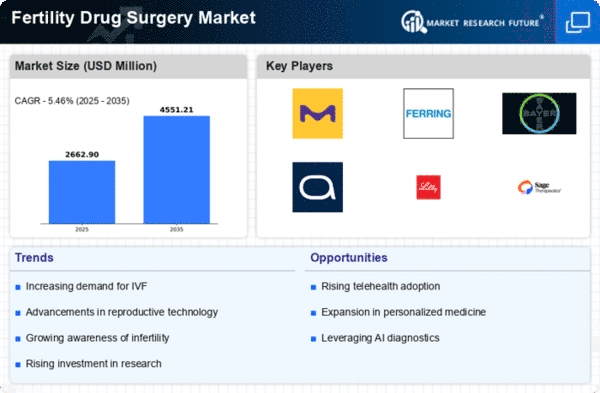
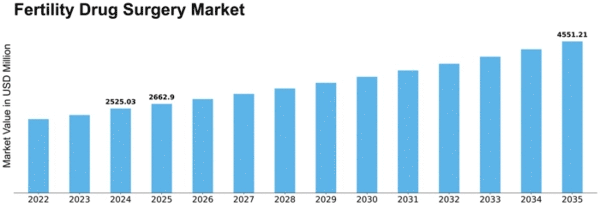
As per MRFR analysis, the Fertility Drug Surgery Market Size was estimated at 2525.03 USD Million in 2024. The Fertility Drug Surgery industry is projected to grow from 2691.83 USD Million in 2025 to 4551.21 USD Million by 2035, exhibiting a compound annual growth rate (CAGR) of 5.46 during the forecast period 2025 - 2035.

Key Market Trends & Highlights

The Fertility Drug Surgery Market is experiencing robust growth driven by technological advancements and increasing acceptance of fertility treatments.

  • Technological advancements are enhancing the efficacy and safety of fertility drug surgeries, particularly in North America.
  • Increased awareness and acceptance of fertility treatments are contributing to market expansion in the Asia-Pacific region.
  • In Vitro Fertilization remains the largest segment, while Intracytoplasmic Sperm Injection is emerging as the fastest-growing segment.
  • Rising infertility rates and government support for fertility treatments are key drivers propelling market growth.

Market Size & Forecast

2024 Market Size 2525.03 (USD Million)
2035 Market Size 4551.21 (USD Million)
CAGR (2025 - 2035) 5.46%
Largest Regional Market Share in 2024 North America

Major Players

<p>Merck KGaA (DE), Ferring Pharmaceuticals (CH), Bayer AG (DE), AbbVie Inc. (US), Eli Lilly and Company (US), Hologic, Inc. (US), SAGE Therapeutics (US), Iovance Biotherapeutics, Inc. (US)</p>

Market Trends

The Fertility Drug Surgery Market is currently experiencing a notable evolution, driven by advancements in medical technology and an increasing awareness of reproductive health. As more individuals seek solutions for infertility, the demand for innovative treatments is on the rise. This market encompasses a range of surgical procedures and pharmaceutical interventions aimed at enhancing fertility outcomes. The integration of minimally invasive techniques and personalized medicine appears to be reshaping the landscape, offering patients more effective and less invasive options. Furthermore, the growing acceptance of fertility treatments across various demographics suggests a shift in societal attitudes towards reproductive health, potentially expanding the market's reach. In addition, the Fertility Drug Surgery Market is likely to benefit from ongoing research and development efforts. Pharmaceutical companies and healthcare providers are increasingly collaborating to create new drugs and surgical techniques that address the complexities of infertility. This collaborative approach may lead to improved success rates and patient satisfaction. Moreover, the rise of telemedicine and digital health solutions could enhance access to fertility services, making it easier for individuals to seek help. Overall, the Fertility Drug Surgery Market is poised for growth, driven by innovation, changing societal norms, and a commitment to improving reproductive health outcomes.

Technological Advancements

The Fertility Drug Surgery Market is witnessing a surge in technological innovations that enhance treatment efficacy. Minimally invasive surgical techniques and advanced imaging technologies are becoming more prevalent, allowing for precise interventions with reduced recovery times. These advancements not only improve patient outcomes but also attract a broader patient base seeking effective solutions.

Increased Awareness and Acceptance

There is a growing awareness regarding reproductive health issues, leading to a more open dialogue about infertility. This shift in societal attitudes encourages individuals to seek fertility treatments without stigma. As acceptance increases, the Fertility Drug Surgery Market is likely to expand, catering to a diverse range of patients.

Collaborative Research Initiatives

The Fertility Drug Surgery Market is benefiting from collaborative efforts between pharmaceutical companies and healthcare providers. These partnerships focus on developing new drugs and surgical techniques tailored to individual patient needs. Such initiatives may enhance treatment options and improve overall success rates in fertility interventions.

Fertility Drug Surgery Market Market Drivers

Rising Infertility Rates

The Global Fertility Drug and Surgery Market Industry experiences a notable increase in demand due to rising infertility rates worldwide. Factors such as delayed childbearing, lifestyle changes, and environmental influences contribute to this trend. In 2024, the market is valued at 2.19 USD Billion, reflecting the growing need for fertility treatments. As more individuals and couples seek assistance, the industry is likely to expand further. The increasing awareness and acceptance of fertility treatments also play a crucial role in driving market growth, as more people recognize the options available to them.

Market Growth Projections

The Global Fertility Drug and Surgery Market Industry is projected to experience substantial growth in the coming years. With a market value of 2.19 USD Billion in 2024, it is expected to reach 4.58 USD Billion by 2035, reflecting a compound annual growth rate (CAGR) of 6.94% from 2025 to 2035. This growth is indicative of the increasing prevalence of infertility, advancements in medical technology, and rising awareness of fertility treatments. As the market evolves, stakeholders are likely to explore new opportunities and innovations to meet the growing demand for fertility solutions.

Increased Awareness and Education

The Global Fertility Drug and Surgery Market Industry benefits from heightened awareness and education regarding fertility issues. Campaigns aimed at educating the public about reproductive health and available treatments have led to a greater understanding of infertility. This increased awareness encourages individuals to seek help sooner, thereby driving demand for fertility drugs and surgical interventions. Furthermore, healthcare providers are increasingly incorporating fertility education into routine care, which may lead to earlier diagnoses and treatment. As awareness continues to grow, the market is likely to see sustained growth in the coming years.

Advancements in Medical Technology

Technological innovations significantly impact the Global Fertility Drug and Surgery Market Industry. The development of advanced reproductive technologies, such as in vitro fertilization (IVF) and intracytoplasmic sperm injection (ICSI), enhances treatment efficacy and success rates. These advancements not only improve patient outcomes but also attract more individuals seeking fertility solutions. The integration of artificial intelligence and machine learning in fertility treatments is also emerging, potentially streamlining processes and personalizing care. As these technologies continue to evolve, they are expected to drive market growth and expand access to fertility services.

Government Initiatives and Support

Government initiatives and support play a pivotal role in shaping the Global Fertility Drug and Surgery Market Industry. Many countries are implementing policies to promote reproductive health and provide financial assistance for fertility treatments. These initiatives may include subsidies, tax incentives, and funding for research in reproductive medicine. Such support not only alleviates the financial burden on individuals seeking fertility treatments but also encourages healthcare providers to expand their services. As governments recognize the importance of addressing infertility, the market is expected to benefit from increased funding and resources.

Growing Demand for Personalized Medicine

The Global Fertility Drug and Surgery Market Industry is witnessing a shift towards personalized medicine, which tailors treatments to individual patient needs. This trend is driven by advancements in genetic testing and biomarker identification, allowing for more targeted and effective fertility treatments. By understanding the unique genetic and hormonal profiles of patients, healthcare providers can develop customized treatment plans that enhance success rates. The growing demand for personalized approaches in healthcare is likely to propel the fertility market forward, as patients increasingly seek tailored solutions to their reproductive challenges.

Market Segment Insights

By Application: In Vitro Fertilization (Largest) vs. Intracytoplasmic Sperm Injection (Fastest-Growing)

<p>In the Fertility Drug Surgery Market, the application segment is predominantly led by In Vitro Fertilization (IVF), which accounts for the largest market share. IVF is widely recognized as a critical component in fertility treatments, making it the go-to option for many couples facing infertility issues. Following IVF, Intracytoplasmic Sperm Injection (ICSI) has emerged as a significant player, gaining traction due to its effectiveness in male infertility cases. These two applications dominate the market landscape, while Ovulation Induction and Surgical Sperm Retrieval play complementary roles in the overall treatment process. Growth trends within the application segment are being driven by technological advancements and increasing awareness about fertility treatments. The rising incidence of infertility and changing societal norms surrounding family planning are pushing more individuals and couples to seek these services. Moreover, the surge in research focused on improving fertility treatments, coupled with favorable reimbursement policies, is likely to bolster the adoption of IVF and ICSI, further solidifying their positions in the market.</p>

<p>In Vitro Fertilization (Dominant) vs. Intracytoplasmic Sperm Injection (Emerging)</p>

<p>In Vitro Fertilization (IVF) remains the dominant force in the fertility landscape due to its established efficacy and extensive clinical acceptance. IVF is designed for couples struggling with infertility and has benefitted from decades of clinical research and technological refinement, cementing its reputation as a reliable fertility solution. Conversely, Intracytoplasmic Sperm Injection (ICSI) has rapidly emerged as a critical adjunct to IVF, particularly for male infertility issues where sperm quality is compromised. While IVF enjoys widespread recognition and utilization, ICSI is gaining momentum, primarily driven by its ability to enhance fertilization rates. Both applications serve complementary roles, with IVF providing a broad approach to fertility and ICSI offering specialized assistance to address specific fertility challenges.</p>

By Drug Type: Gonadotropins (Largest) vs. Clomiphene Citrate (Fastest-Growing)

<p>In the Fertility Drug Surgery Market, the distribution of market share among drug types reflects a complex interplay of efficacy and preference. Gonadotropins have established themselves as the largest segment due to their direct role in stimulating ovarian function, making them a popular choice among fertility specialists. Meanwhile, Clomiphene Citrate has gained significant traction, particularly among patients seeking less invasive treatment options, highlighting a shift in patient preferences towards non-invasive therapies.</p>

<p>Gonadotropins (Dominant) vs. Clomiphene Citrate (Emerging)</p>

<p>Gonadotropins dominate the Fertility Drug Surgery Market thanks to their effectiveness in inducing ovulation and facilitating assisted reproductive technologies. This segment includes FSH and LH preparations, which are crucial in treating conditions like hypogonadism and polycystic ovary syndrome. In contrast, Clomiphene Citrate, while considered an emerging therapy, has seen rapid adoption owing to its oral administration and favorable side-effect profile. Patients increasingly favor Clomiphene due to its simplicity and lower costs, driving its growth in this dynamic market.</p>

By End User: Fertility Clinics (Largest) vs. Hospitals (Fastest-Growing)

<p>The Fertility Drug Surgery Market is primarily divided into three significant segments: Hospitals, Fertility Clinics, and Research Institutions. Among these, Fertility Clinics hold the largest market share due to their specialized services, accessibility, and comprehensive care tailored to individuals seeking fertility treatments. Hospitals are also key players, providing a range of healthcare services but with a broader focus compared to the niche market of fertility clinics. Research Institutions, while crucial for advancing medical knowledge, capture a smaller portion of the overall market.</p>

<p>Fertility Clinics (Dominant) vs. Hospitals (Emerging)</p>

<p>Fertility Clinics are at the forefront of the Fertility Drug Surgery Market, characterized by their specialized approach to reproductive health and their ability to provide personalized treatment plans. They often adopt the latest technology and techniques, which cater specifically to fertility issues, thus making them the dominant players in this segment. Hospitals, while traditionally seen as general healthcare providers, are experiencing a surge in their fertility services, thereby emerging as significant contributors in the market. With increasing patient referrals and collaborations with fertility specialists, hospitals are positioning themselves as critical centers for both surgical procedures and comprehensive fertility care. This dynamic positioning suggests a growing integration of fertility services within broader hospital settings.</p>

By Route of Administration: Oral (Largest) vs. Injectable (Fastest-Growing)

<p>In the Fertility Drug Surgery Market, the distribution of the route of administration shows that the oral segment commands the largest share, primarily due to its convenient usage and patient preference. Oral medications, such as clomiphene citrate, have been widely accepted, benefiting from vast marketing and education efforts directed at physicians and patients alike. On the other hand, injectable medications are gaining traction as they offer highly targeted therapy with quicker onset of action, resulting in a growing market interest. The trend in the fertility drug surgery market indicates a shift towards injectable routes, which are becoming the fastest-growing segment. This is attributed to the rising demand for personalized reproductive therapies and advancements in drug development that improve efficacy and reduce side effects. Additionally, the increasing prevalence of infertility, coupled with the growing awareness and acceptance of fertility treatments, is positively influencing the growth in injectables. The convenience and effectiveness of these newer injectable drugs are enticing patients and practitioners alike to prefer this administration route, driving its popularity and market growth.</p>

<p>Oral (Dominant) vs. Injectable (Emerging)</p>

<p>The oral route of administration remains the dominant method in the fertility drug surgery market due to its ease of use and widespread acceptance. Medications such as clomiphene citrate not only offer convenience but also have a detailed history of efficacy. Patients often prefer oral medications due to the lower complexity involved in their use. Conversely, the injectable segment is emerging rapidly, with products such as gonadotropins showing significant potential. Injectable formulations are being researched and developed to enhance outcomes in fertility treatments, leading to a rising trend among healthcare providers to prescribe these more potent options. The competitive landscape indicates that while oral medications continue to hold the largest market share, injectables are anticipated to capture a larger segment of the market in the near future, supported by ongoing innovation and changing patient preferences.</p>

By Patient Demographics: Age Group (Largest) vs. Gender (Fastest-Growing)

<p>In the Fertility Drug Surgery Market, the patient demographics segment reveals a clear dominance of age groups, with those aged 30-39 comprising the largest percentage of patients seeking fertility treatments. This age bracket benefits from a combination of biological factors and social dynamics, making it a primary target for fertility drug manufacturers and healthcare providers. In contrast, the gender demographic showcases a growing trend, with men increasingly seeking fertility treatments alongside women, reflecting a shift in societal norms and awareness concerning male infertility. Growth in the patient demographics segment is largely driven by the increasing prevalence of infertility issues, coupled with changing attitudes towards reproductive health. The rise in late pregnancies, particularly among women aged 35 and above, has prompted a significant focus on targeted fertility treatments. Concurrently, the male demographic is witnessing a surge in attention, as discussions around male infertility garner heightened awareness, thus expanding the market reach for fertility interventions.</p>

<p>Age Group (Dominant) vs. Gender (Emerging)</p>

<p>The age group of 30-39 years is the dominant demographic in the fertility drug surgery market, primarily because this age range is where many individuals and couples typically face the most challenges with fertility. This group is often well-informed and financially stable, enhancing their engagement with fertility treatments. Conversely, the gender demographic is emerging as a focal point in this market, with an increasing number of men seeking assistance for fertility-related issues. This shift is indicative of greater societal acknowledgment of male infertility, leading to more targeted marketing efforts and treatment options for men. The increasing prevalence of lifestyle factors affecting male fertility, along with improved diagnostic tools, contributes to this growing segment.</p>

Get more detailed insights about Fertility Drug and Surgery Market Research Report – Global Forecast till 2035

Regional Insights

North America : Leading Market for Fertility Solutions

North America is poised to maintain its leadership in the Fertility Drug Surgery Market, holding a significant market size of $1260.0M. Key growth drivers include increasing infertility rates, advancements in reproductive technologies, and supportive government policies. The region's robust healthcare infrastructure and high disposable income further fuel demand for fertility treatments, making it a focal point for innovation and investment in this sector. The competitive landscape in North America is characterized by the presence of major players such as AbbVie Inc., Merck KGaA, and Hologic, Inc. The U.S. stands out as the leading country, accounting for the majority of the market share. The regulatory environment is favorable, with agencies like the FDA ensuring the safety and efficacy of fertility drugs, thus enhancing consumer confidence and market growth.

Europe : Emerging Market with Growth Potential

Europe's Fertility Drug Surgery Market is projected to grow significantly, with a market size of $750.0M. Key drivers include rising awareness of fertility issues, increasing healthcare expenditure, and the implementation of supportive regulations across various countries. The European Union's initiatives to improve reproductive health services are also contributing to market growth, making it a vital region for fertility solutions. Leading countries in this region include Germany, France, and the UK, where the presence of established pharmaceutical companies like Bayer AG and Ferring Pharmaceuticals enhances competition. The market is characterized by a mix of local and international players, fostering innovation and diverse treatment options. The European Medicines Agency plays a crucial role in regulating fertility drugs, ensuring high standards of safety and efficacy.

Asia-Pacific : Rapidly Growing Fertility Market

The Asia-Pacific region is witnessing a rapid expansion in the Fertility Drug Surgery Market, with a market size of $400.0M. Factors driving this growth include increasing urbanization, changing lifestyles, and a rise in infertility rates. Additionally, government initiatives aimed at enhancing reproductive health services are creating a conducive environment for market growth, making this region a focal point for investment in fertility treatments. Countries like China and India are leading the charge, with a growing number of healthcare facilities and increasing awareness of fertility issues. The competitive landscape is evolving, with both local and international players vying for market share. Key players such as SAGE Therapeutics and Iovance Biotherapeutics are making significant inroads, contributing to the region's dynamic market environment.

Middle East and Africa : Emerging Market with Unique Challenges

The Middle East and Africa (MEA) region is gradually emerging in the Fertility Drug Surgery Market, with a market size of $115.03M. Key growth drivers include increasing awareness of fertility treatments, rising disposable incomes, and government initiatives aimed at improving healthcare access. However, challenges such as cultural stigmas and varying regulatory frameworks can hinder market growth, necessitating tailored approaches to address these issues. Countries like South Africa and the UAE are leading the market, with a growing number of fertility clinics and healthcare facilities. The competitive landscape is characterized by a mix of local and international players, striving to meet the unique needs of the region. The World Health Organization emphasizes the importance of reproductive health services, which is crucial for fostering market growth in this region.

Key Players and Competitive Insights

The Fertility Drug Surgery Market is characterized by a dynamic competitive landscape, driven by increasing infertility rates and advancements in reproductive technologies. Key players such as Merck KGaA (DE), Ferring Pharmaceuticals (CH), and AbbVie Inc. (US) are strategically positioned to leverage innovation and partnerships to enhance their market presence. Merck KGaA (DE) focuses on expanding its product portfolio through research and development, while Ferring Pharmaceuticals (CH) emphasizes strategic collaborations to enhance its therapeutic offerings. AbbVie Inc. (US) is actively pursuing mergers and acquisitions to bolster its capabilities in reproductive health, thereby shaping a competitive environment that prioritizes innovation and strategic growth.

In terms of business tactics, companies are increasingly localizing manufacturing and optimizing supply chains to enhance operational efficiency. The market appears moderately fragmented, with several key players exerting influence over various segments. This fragmentation allows for diverse strategies, enabling companies to cater to specific regional needs while maintaining competitive pricing and product availability.

In November 2025, Merck KGaA (DE) announced a partnership with a leading biotechnology firm to develop a novel fertility drug aimed at improving success rates in assisted reproductive technologies. This collaboration is expected to enhance Merck's research capabilities and accelerate the development of innovative solutions, positioning the company as a leader in the fertility drug segment. The strategic importance of this partnership lies in its potential to expand Merck's market share and reinforce its commitment to addressing infertility challenges.

In October 2025, Ferring Pharmaceuticals (CH) launched a new digital platform designed to provide personalized treatment plans for patients undergoing fertility treatments. This initiative reflects Ferring's commitment to integrating technology into patient care, potentially improving treatment outcomes and patient satisfaction. By leveraging digital tools, Ferring aims to differentiate itself in a competitive market, enhancing its appeal to both healthcare providers and patients.

In September 2025, AbbVie Inc. (US) completed the acquisition of a smaller biotech firm specializing in reproductive health solutions. This strategic move is anticipated to enhance AbbVie's product pipeline and expand its reach in the fertility drug market. The acquisition underscores AbbVie's focus on innovation and its intent to strengthen its position in a rapidly evolving landscape.

As of December 2025, current trends in the Fertility Drug Surgery Market indicate a shift towards digitalization, sustainability, and the integration of artificial intelligence in treatment protocols. Strategic alliances are increasingly shaping the competitive landscape, fostering innovation and collaboration among key players. Looking ahead, competitive differentiation is likely to evolve from traditional price-based competition to a focus on technological advancements, innovative solutions, and reliable supply chains, thereby enhancing overall market resilience.

Key Companies in the Fertility Drug Surgery Market market include

Industry Developments

Future Outlook

Fertility Drug Surgery Market Future Outlook

<p>The Fertility Drug Surgery Market is projected to grow at a 5.46% CAGR from 2024 to 2035, driven by technological advancements, increasing infertility rates, and rising awareness.</p>

New opportunities lie in:

  • <p>Development of personalized fertility drug regimens</p>
  • <p>Expansion of telehealth services for fertility consultations</p>
  • <p>Investment in AI-driven fertility treatment platforms</p>

<p>By 2035, the market is expected to be robust, reflecting substantial growth and innovation.</p>

Market Segmentation

Fertility Drug Surgery Market End User Outlook

  • Hospitals
  • Fertility Clinics
  • Research Institutions

Fertility Drug Surgery Market Drug Type Outlook

  • Gonadotropins
  • Clomiphene Citrate
  • Aromatase Inhibitors
  • Progesterone

Fertility Drug Surgery Market Application Outlook

  • In Vitro Fertilization
  • Intracytoplasmic Sperm Injection
  • Ovulation Induction
  • Surgical Sperm Retrieval

Fertility Drug Surgery Market Patient Demographics Outlook

  • Age Group
  • Gender
  • Infertility Type

Fertility Drug Surgery Market Route of Administration Outlook

  • Oral
  • Injectable
  • Intranasal

Report Scope

MARKET SIZE 20242525.03(USD Million)
MARKET SIZE 20252691.83(USD Million)
MARKET SIZE 20354551.21(USD Million)
COMPOUND ANNUAL GROWTH RATE (CAGR)5.46% (2024 - 2035)
REPORT COVERAGERevenue Forecast, Competitive Landscape, Growth Factors, and Trends
BASE YEAR2024
Market Forecast Period2025 - 2035
Historical Data2019 - 2024
Market Forecast UnitsUSD Million
Key Companies ProfiledMerck KGaA (DE), Ferring Pharmaceuticals (CH), Bayer AG (DE), AbbVie Inc. (US), Eli Lilly and Company (US), Hologic, Inc. (US), SAGE Therapeutics (US), Iovance Biotherapeutics, Inc. (US)
Segments CoveredApplication, Drug Type, End User, Route of Administration, Patient Demographics
Key Market OpportunitiesAdvancements in minimally invasive techniques enhance patient outcomes in the Fertility Drug Surgery Market.
Key Market DynamicsRising demand for innovative fertility treatments drives competition and regulatory scrutiny in the fertility drug surgery market.
Countries CoveredNorth America, Europe, APAC, South America, MEA

FAQs

  1. Definition
    1. Scope of the Study
      1. Research Objective
      2. Assumptions
      3. Limitations
    2. Overview
    3. Primary Research
    4. Secondary Research
    5. Market Size Estimation
    6. Drivers
    7. Restraints
    8. Opportunities
    9. Porter’s Five Forces Analysis
      1. Bargaining Power of Suppliers
      2. Bargaining Power of Buyers
      3. Threat of New Entrants
      4. Threat of Substitutes
      5. Intensity of Rivalry
    10. Value Chain Analysis
  2. Chapter 6. Global Fertility Drug and Surgery Market, by Underlying Cause
    1. Overview
    2. Male
    3. Female
  3. Chapter 7. Global Fertility Drug and Surgery Market, by Drugs
    1. Overview
    2. Clomiphene Citrate
    3. Letrozole
    4. Serophene
    5. Hormone Treatment
    6. Gonadotrophins
    7. Aromatase Inhibitors
    8. Estrogen Receptor Modulators
    9. Dopamine Agonists
    10. Metformin Hydrochloride
    11. Others
  4. Chapter 8. Global Fertility Drug and Surgery Market, by Procedures
    1. Overview
    2. Hysteroscopy
    3. Laparoscopy and Robotic Laparoscopy
    4. Laparotomy/Open Surgery
    5. Egg Retrieval
    6. Varicocelectomy
    7. Vasectomy Reversal
    8. Sperm Retrieval
  5. Chapter 9. Global Fertility Drug and Surgery Market, by End Users
    1. Overview
    2. Fertility Clinics
    3. Hospitals
    4. Clinical Research Institutes
    5. Others
  6. Chapter 10. Global Fertility Drug and Surgery Market, by Region
    1. Introduction
    2. Americas
      1. North America
      2. Latin America
    3. Europe
      1. Western Europe
      2. Eastern Europe
    4. Asia-Pacific
      1. Japan
      2. China
      3. India
      4. Australia
      5. South Korea
      6. Rest of Asia-Pacific
    5. Middle East & Africa
      1. Middle East
      2. Africa
    6. Chapter 11. Company Landscape
    7. Introduction
    8. Market Share Analysis
    9. Chapter 12. Company Profiles
    10. Eli Lilly
      1. Company Overview
      2. Product Overview
      3. Financials Overview
      4. Key Developments
      5. SWOT Analysis
    11. Baxter Healthcare Corporation
    12. Ferring Pharmaceuticals, Inc.
    13. Merck & Co. Pharmaceutical Company
    14. Noven Pharmaceuticalorganon, Inc.
    15. Janssen Pharmaceuticals Inc.
    16. Personal Products Company
    17. Pfizer, Inc.
    18. Procter & Gamble Pharmaceuticals
    19. Emd Serono, Inc.
    20. Others
    21. Chapter 13 Appendix
  7. LIST OF TABLES
  8. GLOBAL FERTILITY DRUG AND SURGERY MARKET SYNOPSIS, 2020–2027
  9. GLOBAL FERTILITY DRUG AND SURGERY MARKET ESTIMATES AND FORECAST, 2020–2027 (USD MILLION)
  10. GLOBAL FERTILITY DRUG AND SURGERY MARKET, BY UNDERLYING CAUSE, 2020–2027 (USD MILLION)
  11. GLOBAL FERTILITY DRUG AND SURGERY MARKET, BY DRUGS, 2020–2027 (USD MILLION)
  12. GLOBAL FERTILITY DRUG AND SURGERY MARKET, BY PROCEDURES, 2020–2027 (USD MILLION)
  13. GLOBAL FERTILITY DRUG AND SURGERY MARKET, BY END USERS, 2020–2027 (USD MILLION)
  14. GLOBAL FERTILITY DRUG AND SURGERY MARKET, BY REGION, 2020–2027(USD MILLION)
  15. NORTH AMERICA: FERTILITY DRUG AND SURGERY MARKET, BY UNDERLYING CAUSE, 2020–2027 (USD MILLION)
  16. NORTH AMERICA: FERTILITY DRUG AND SURGERY MARKET, BY DRUGS, 2020–2027 (USD MILLION)
  17. NORTH AMERICA: FERTILITY DRUG AND SURGERY MARKET, BY PROCEDURES, 2020–2027 (USD MILLION)
  18. NORTH AMERICA: FERTILITY DRUG AND SURGERY MARKET, BY END USERS, 2020–2027 (USD MILLION)
  19. NORTH AMERICA: FERTILITY DRUG AND SURGERY MARKET, BY REGION, 2020–2027 (USD MILLION)
  20. US: FERTILITY DRUG AND SURGERY MARKET, BY UNDERLYING CAUSE, 2020–2027 (USD MILLION)
  21. US: FERTILITY DRUG AND SURGERY MARKET, BY DRUGS, 2020–2027 (USD MILLION)
  22. US: FERTILITY DRUG AND SURGERY MARKET, BY PROCEDURES, 2020–2027 (USD MILLION)
  23. US: FERTILITY DRUG AND SURGERY MARKET, BY END USERS, 2020–2027 (USD MILLION)
  24. US: FERTILITY DRUG AND SURGERY MARKET, BY REGION, 2020–2027 (USD MILLION)
  25. CANADA: FERTILITY DRUG AND SURGERY MARKET, BY UNDERLYING CAUSE, 2020–2027 (USD MILLION)
  26. CANADA: FERTILITY DRUG AND SURGERY MARKET, BY DRUGS, 2020–2027 (USD MILLION)
  27. CANADA: FERTILITY DRUG AND SURGERY MARKET, BY PROCEDURES, 2020–2027 (USD MILLION)
  28. CANADA: FERTILITY DRUG AND SURGERY MARKET, BY END USERS, 2020–2027 (USD MILLION)
  29. CANADA: FERTILITY DRUG AND SURGERY MARKET, BY REGION, 2020–2027 (USD MILLION)
  30. SOUTH AMERICA: FERTILITY DRUG AND SURGERY MARKET, BY UNDERLYING CAUSE, 2020–2027 (USD MILLION)
  31. SOUTH AMERICA: FERTILITY DRUG AND SURGERY MARKET, BY DRUGS, 2020–2027 (USD MILLION)
  32. SOUTH AMERICA: FERTILITY DRUG AND SURGERY MARKET, BY PROCEDURES, 2020–2027 (USD MILLION)
  33. SOUTH AMERICA: FERTILITY DRUG AND SURGERY MARKET, BY END USERS, 2020–2027 (USD MILLION)
  34. SOUTH AMERICA: FERTILITY DRUG AND SURGERY MARKET, BY REGION, 2020–2027 (USD MILLION)
  35. EUROPE: FERTILITY DRUG AND SURGERY MARKET, BY UNDERLYING CAUSE, 2020–2027 (USD MILLION)
  36. EUROPE: FERTILITY DRUG AND SURGERY MARKET, BY DRUGS, 2020–2027 (USD MILLION)
  37. EUROPE: FERTILITY DRUG AND SURGERY MARKET, BY PROCEDURES, 2020–2027 (USD MILLION)
  38. EUROPE: FERTILITY DRUG AND SURGERY MARKET, BY END USERS, 2020–2027 (USD MILLION)
  39. EUROPE: FERTILITY DRUG AND SURGERY MARKET, BY REGION, 2020–2027 (USD MILLION)
  40. WESTERN EUROPE: FERTILITY DRUG AND SURGERY MARKET, BY UNDERLYING CAUSE, 2020–2027 (USD MILLION)
  41. WESTERN EUROPE FERTILITY DRUG AND SURGERY MARKET, BY DRUGS, 2020–2027 (USD MILLION)
  42. WESTERN EUROPE: FERTILITY DRUG AND SURGERY MARKET, BY PROCEDURES, 2020–2027 (USD MILLION)
  43. WESTERN EUROPE: FERTILITY DRUG AND SURGERY MARKET, BY END USERS, 2020–2027 (USD MILLION)
  44. WESTERN EUROPE: FERTILITY DRUG AND SURGERY MARKET, BY REGION, 2020–2027 (USD MILLION)
  45. EASTERN EUROPE: FERTILITY DRUG AND SURGERY MARKET, BY UNDERLYING CAUSE, 2020–2027 (USD MILLION)
  46. EASTERN EUROPE FERTILITY DRUG AND SURGERY MARKET, BY DRUGS, 2020–2027 (USD MILLION)
  47. EASTERN EUROPE: FERTILITY DRUG AND SURGERY MARKET, BY PROCEDURES, 2020–2027 (USD MILLION)
  48. EASTERN EUROPE: FERTILITY DRUG AND SURGERY MARKET, BY END USERS, 2020–2027 (USD MILLION)
  49. EASTERN EUROPE: FERTILITY DRUG AND SURGERY MARKET, BY REGION, 2020–2027 (USD MILLION)
  50. ASIA-PACIFIC: FERTILITY DRUG AND SURGERY MARKET, BY UNDERLYING CAUSE, 2020–2027 (USD MILLION)
  51. ASIA-PACIFIC FERTILITY DRUG AND SURGERY MARKET, BY DRUGS, 2020–2027 (USD MILLION)
  52. ASIA-PACIFIC: FERTILITY DRUG AND SURGERY MARKET, BY PROCEDURES, 2020–2027 (USD MILLION)
  53. ASIA-PACIFIC: FERTILITY DRUG AND SURGERY MARKET, BY END USERS, 2020–2027 (USD MILLION)
  54. ASIA-PACIFIC: FERTILITY DRUG AND SURGERY MARKET, BY REGION, 2020–2027 (USD MILLION)
  55. MIDDLE EAST & AFRICA: FERTILITY DRUG AND SURGERY MARKET, BY UNDERLYING CAUSE, 2020–2027 (USD MILLION)
  56. MIDDLE EAST & AFRICA FERTILITY DRUG AND SURGERY MARKET, BY DRUGS, 2020–2027 (USD MILLION)
  57. MIDDLE EAST & AFRICA: FERTILITY DRUG AND SURGERY MARKET, BY PROCEDURES, 2020–2027 (USD MILLION)
  58. MIDDLE EAST & AFRICA: FERTILITY DRUG AND SURGERY MARKET, BY END USERS, 2020–2027 (USD MILLION)
  59. MIDDLE EAST & AFRICA: FERTILITY DRUG AND SURGERY MARKET, BY REGION, 2020–2027 (USD MILLION)
  60. LIST OF FIGURES
  61. RESEARCH PROCESS
  62. SEGMENTATION FOR GLOBAL FERTILITY DRUG AND SURGERY MARKET
  63. MARKET DYNAMICS FOR GLOBAL FERTILITY DRUG AND SURGERY MARKET
  64. GLOBAL FERTILITY DRUG AND SURGERY MARKET SHARE, BY UNDERLYING CAUSE, 2020 (%)
  65. GLOBAL FERTILITY DRUG AND SURGERY MARKET, BY DRUGS, 2020 (%)
  66. GLOBAL FERTILITY DRUG AND SURGERY MARKET SHARE, BY PROCEDURES, 2020 (%)
  67. GLOBAL FERTILITY DRUG AND SURGERY MARKET SHARE, BY END USERS, 2020 (%)
  68. GLOBAL FERTILITY DRUG AND SURGERY MARKET SHARE, BY REGION, 2020 (%)
  69. NORTH AMERICA: FERTILITY DRUG AND SURGERY MARKET SHARE, BY COUNTRY, 2020 (%)
  70. EUROPE: FERTILITY DRUG AND SURGERY MARKET SHARE, BY COUNTRY, 2020 (%)
  71. ASIA-PACIFIC: FERTILITY DRUG AND SURGERY MARKET SHARE, BY COUNTRY, 2020 (%)
  72. MIDDLE EAST & AFRICA: FERTILITY DRUG AND SURGERY MARKET SHARE, BY COUNTRY, 2020 (%)
  73. GLOBAL FERTILITY DRUG AND SURGERY MARKET: COMPANY SHARE ANALYSIS, 2020 (%)
  74. NOVARTIS AG: KEY FINANCIALS
  75. NOVARTIS AG: SEGMENTAL REVENUE
  76. NOVARTIS AG: GEOGRAPHICAL REVENUE
  77. BAXTER HEALTHCARE CORPORATION: KEY FINANCIALS
  78. BAXTER HEALTHCARE CORPORATION: SEGMENTAL REVENUE
  79. BAXTER HEALTHCARE CORPORATION: GEOGRAPHICAL REVENUE
  80. FERRING PHARMACEUTICALS, INC.: KEY FINANCIALS
  81. FERRING PHARMACEUTICALS, INC.: SEGMENTAL REVENUE
  82. FERRING PHARMACEUTICALS, INC.: GEOGRAPHICAL REVENUE
  83. MERCK & CO. PHARMACEUTICAL COMPANY: KEY FINANCIALS
  84. MERCK & CO. PHARMACEUTICAL COMPANY: SEGMENTAL REVENUE
  85. MERCK & CO. PHARMACEUTICAL COMPANY: GEOGRAPHICAL REVENUE
  86. NOVEN PHARMACEUTICALORGANON, INC.: KEY FINANCIALS
  87. NOVEN PHARMACEUTICALORGANON, INC.: SEGMENTAL REVENUE
  88. NOVEN PHARMACEUTICALORGANON, INC.: GEOGRAPHICAL REVENUE
  89. JANSSEN PHARMACEUTICALS INC.: KEY FINANCIALS
  90. JANSSEN PHARMACEUTICALS INC.: SEGMENTAL REVENUE
  91. JANSSEN PHARMACEUTICALS INC.: GEOGRAPHICAL REVENUE
  92. PERSONAL PRODUCTS COMPANY: KEY FINANCIALS
  93. PERSONAL PRODUCTS COMPANY: SEGMENTAL REVENUE
  94. PERSONAL PRODUCTS COMPANY: GEOGRAPHICAL REVENUE
  95. PFIZER, INC.: KEY FINANCIALS
  96. PFIZER, INC.: SEGMENTAL REVENUE
  97. PFIZER, INC.: GEOGRAPHICAL REVENUE
  98. PROCTER & GAMBLE PHARMACEUTICALS: KEY FINANCIALS
  99. PROCTER & GAMBLE PHARMACEUTICALS: SEGMENTAL REVENUE
  100. PROCTER & GAMBLE PHARMACEUTICALS: GEOGRAPHICAL REVENUE
  101. EMD SERONO, INC.: KEY FINANCIALS
  102. EMD SERONO, INC.: SEGMENTAL REVENUE
  103. EMD SERONO, INC.: GEOGRAPHICAL REVENUE

Fertility Drug and Surgery Market Segmentation

Market Segmentation Overview

  • Detailed segmentation data will be available in the full report
  • Comprehensive analysis by multiple parameters
  • Regional and country-level breakdowns
  • Market size forecasts by segment
Infographic

Free Sample Request

Kindly complete the form below to receive a free sample of this Report

Get Free Sample

Customer Strories

Compare Licence

×
Features License Type
Single User Multiuser License Enterprise User
Price $4,950 $5,950 $7,250
Maximum User Access Limit 1 User Upto 10 Users Unrestricted Access Throughout the Organization
Free Customization
Direct Access to Analyst
Deliverable Format
Platform Access
Discount on Next Purchase 10% 15% 15%
Printable Versions