Download Free Sample
Kindly complete the form below to receive a free sample of this Report
Financial Planning Services Market Research Report By Client Type (Individual Clients, Corporate Clients, Non-Profit Organizations, High Net Worth Individuals), By Service Type (Investment Planning, Retirement Planning, Tax Planning, Estate Planning, Insurance Planning), By Advisory Model (Fee-Only, Commission-Based, Fee-Based, Robo-Advisory), By Regulatory Framework (Registered Investment Advisors, Certified Financial Planners, Chartered Financial Analysts), By Service Delivery Channel (In-Person Consultation, Online Consultation, Hybrid Model) And By Region (North America, Europe, Asia-Pacific, And Rest Of The World) – Market Forecast Till 2035.
As per MRFR analysis, the Financial Planning Services Market Size was estimated at 800.0 USD Billion in 2024. The Financial Planning Services industry is projected to grow from 830.0 in 2025 to 1200.0 by 2035, exhibiting a compound annual growth rate (CAGR) of 3.75% during the forecast period 2025 - 2035.
The Financial Planning Services Market is experiencing a transformative shift towards digitalization and holistic approaches.
| 2024 Market Size | 800.0 (USD Billion) |
| 2035 Market Size | 1200.0 (USD Billion) |
| CAGR (2025 - 2035) | 3.75% |
Fidelity Investments (US), Charles Schwab (US), Vanguard Group (US), Morgan Stanley (US), Edward Jones (US), Ameriprise Financial (US), Raymond James (US), LPL Financial (US), TIAA (US)
Our Impact
Enabled $4.3B Revenue Impact for Fortune 500 and Leading Multinationals
Partnering with 2000+ Global Organizations Each Year
30K+ Citations by Top-Tier Firms in the Industry
The Financial Planning Services Market is currently experiencing a transformative phase, characterized by evolving consumer expectations and technological advancements. As individuals increasingly seek personalized financial solutions, service providers are adapting their offerings to meet these demands. The integration of digital tools and platforms is reshaping how financial planning services are delivered, allowing for greater accessibility and efficiency. Furthermore, the growing awareness of the importance of financial literacy is prompting a shift towards more educational approaches in service delivery, fostering a more informed client base. In addition, the Financial Planning Services Market appears to be influenced by demographic changes, with younger generations showing a preference for holistic financial planning that encompasses not only investment strategies but also lifestyle goals. This trend suggests a potential for service providers to diversify their offerings, incorporating elements such as wellness and sustainability into their financial advice. As the market continues to evolve, the emphasis on transparency and ethical practices is likely to gain traction, reflecting a broader societal shift towards responsible financial management.
The Financial Planning Services Market is witnessing a significant shift towards digitalization. Service providers are increasingly adopting advanced technologies to enhance client engagement and streamline operations. This trend includes the use of artificial intelligence and data analytics to offer tailored financial advice, thereby improving the overall client experience.
There is a growing inclination among consumers for comprehensive financial planning that addresses various aspects of their lives. This trend indicates a movement away from traditional investment-focused services towards a more integrated approach that considers personal goals, lifestyle choices, and long-term aspirations.
The Financial Planning Services Market is seeing a heightened focus on educating clients about financial concepts and strategies. This trend reflects a broader societal recognition of the need for financial literacy, leading service providers to incorporate educational resources and workshops into their offerings.
The Financial Planning Services Market is witnessing a heightened emphasis on financial literacy among consumers. As individuals become more informed about personal finance, they increasingly seek professional guidance to make sound financial decisions. Educational initiatives and resources aimed at improving financial literacy have gained traction, with studies showing that financially literate individuals are more likely to engage with financial planners. This trend is particularly evident among younger generations, who prioritize financial education and seek to understand investment options, retirement planning, and debt management. Consequently, financial planners are adapting their services to cater to this demand, offering workshops and resources that enhance clients' financial knowledge. This shift not only benefits consumers but also positions the Financial Planning Services Market for growth as more individuals recognize the value of professional financial advice.
The Financial Planning Services Market experiences a notable surge in demand for retirement planning services. As populations age, particularly in developed regions, individuals seek comprehensive strategies to secure their financial futures. According to recent data, approximately 30% of adults aged 50 and above express concerns about their retirement savings. This demographic shift drives financial planners to offer tailored solutions that address unique retirement needs, including investment strategies, tax planning, and estate management. The growing awareness of the importance of retirement savings further propels this trend, as individuals recognize the necessity of professional guidance to navigate complex financial landscapes. Consequently, the Financial Planning Services Market is likely to expand as more clients seek expert assistance in preparing for retirement.
The Financial Planning Services Market is increasingly influenced by the growing interest in sustainable investing. As consumers become more environmentally and socially conscious, they seek financial planners who can guide them in aligning their investments with their values. Recent surveys indicate that over 70% of millennials express a preference for sustainable investment options, which has prompted financial planners to incorporate environmental, social, and governance (ESG) criteria into their advisory services. This trend not only reflects a shift in consumer priorities but also presents financial planners with the opportunity to attract a new client base. By offering sustainable investment strategies, the Financial Planning Services Market can potentially expand its reach and relevance in an evolving market landscape.
The Financial Planning Services Market is significantly impacted by evolving regulatory frameworks and compliance requirements. Governments worldwide are increasingly implementing regulations aimed at protecting consumers and ensuring transparency in financial services. For instance, recent legislation mandates that financial planners disclose potential conflicts of interest and adhere to fiduciary standards. These changes compel financial planning firms to enhance their compliance protocols, which may involve investing in training and technology to meet regulatory demands. While these requirements may pose challenges, they also present opportunities for firms to differentiate themselves by demonstrating their commitment to ethical practices. As the regulatory landscape continues to evolve, the Financial Planning Services Market must adapt, potentially leading to increased trust and credibility among consumers.
Technological innovations significantly influence the Financial Planning Services Market, reshaping how financial planners interact with clients and manage portfolios. The integration of artificial intelligence, machine learning, and data analytics enables financial advisors to provide personalized services more efficiently. For instance, robo-advisors have emerged as a cost-effective alternative for clients seeking automated investment management. Recent statistics indicate that the adoption of digital tools in financial planning has increased by over 40% in the past two years. This trend not only enhances client engagement but also streamlines operational processes for financial planners. As technology continues to evolve, the Financial Planning Services Market is poised for further transformation, potentially attracting a broader client base that values convenience and accessibility.
In the Financial Planning Services Market, Investment Planning holds a significant share as the dominant segment, driven by a strong demand for asset management and financial advisory services. This segment typically attracts a wide range of clientele, from individual investors to institutional clients looking for tailored investment strategies to enhance their financial portfolios. Meanwhile, Retirement Planning is emerging as a critical focus area, reflecting the increasing importance of preparing for financial security in retirement, especially among younger generations.
Investment Planning (Dominant) vs. Retirement Planning (Emerging)
Investment Planning is characterized by its comprehensive strategies aimed at asset allocation, risk management, and portfolio diversification, catering to a diverse clientele including individuals, families, and corporations. With the financial landscape continuously evolving, investment planners must stay updated on market trends and investment opportunities to provide sound advice. On the other hand, Retirement Planning is rapidly gaining traction due to the aging population and shifting retirement paradigms, with individuals seeking expert guidance on pension funds, social security, and retirement savings plans. This growing emphasis on future financial security positions Retirement Planning as an essential service, particularly as people increasingly prioritize a comfortable retirement.
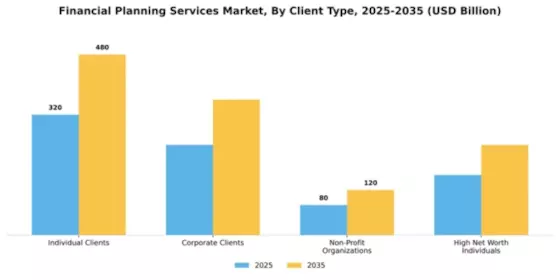
The Financial Planning Services Market is characterized by distinct client types, with Individual Clients holding the largest share of the market. This segment has been a staple in the industry, driven by the need for personalized financial guidance, retirement planning, and asset management. Corporate Clients come next, focusing on strategic financial planning to drive business growth and enhance employee benefit programs. Non-Profit Organizations also represent a significant portion, requiring specialized financial advice to manage donations and fund allocation efficiently. High Net Worth Individuals, while a smaller segment, have been rapidly gaining traction due to their unique financial needs and complex asset management requirements.
Individual Clients (Dominant) vs. High Net Worth Individuals (Emerging)
Individual Clients dominate the Financial Planning Services Market as their continuous need for tailored financial strategies ensures consistent demand. This segment typically encompasses a broad base of consumers, including those seeking basic investment advice and comprehensive retirement plans. In contrast, High Net Worth Individuals represent an emerging but increasingly important segment, characterized by their significant assets and sophisticated financial requirements. These clients often seek specialized services, such as tax planning, estate management, and wealth preservation, leading to a surge in targeted financial products and personalized services. As wealth concentration grows, firms are increasingly prioritizing this segment to capitalize on the changing landscape of financial planning.
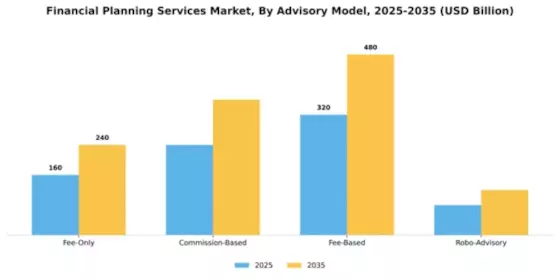
The Financial Planning Services Market showcases a variety of advisory models, with Fee-Only advisors holding the largest market share. This model emphasizes transparency and fee disclosure, appealing to clients seeking clear-cut pricing structures. Commission-Based models, while still significant, continue to decline in preference, as consumers favor fee structures that eliminate potential conflicts of interest. Fee-Based services, combining elements of both commission and fees, also maintain a notable presence on the market. Growth trends within this segment reveal a strong lean towards Robo-Advisory services. Driven by technological advancements and a younger demographic's preference for intuitive digital solutions, Robo-Advisory is rapidly emerging. This model offers comprehensive portfolio management at lower costs, establishing itself as an attractive alternative for tech-savvy clients seeking tailored financial solutions without the typical advisor overhead.
Fee-Only (Dominant) vs. Robo-Advisory (Emerging)
The Fee-Only advisory model remains dominant in the Financial Planning Services Market, recognized for its client-centric approach and straightforward pricing structure. Clients appreciate the lack of commission-driven recommendations, fostering greater trust and transparency. This model is particularly favored by affluent clients and those looking for personalized financial advice without potential conflicts of interest. In contrast, Robo-Advisory services are emerging as a compelling alternative, particularly appealing to younger investors who prefer automated solutions and lower fees. These platforms utilize algorithms to manage client portfolios, providing a cost-effective and efficient means of financial management. While Fee-Only advisors offer personalized relationships, Robo-Advisors are capturing market share by catering to a tech-oriented demographic.
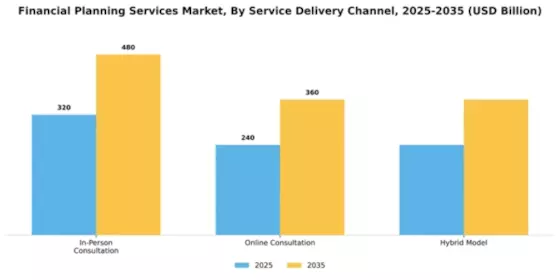
In the Financial Planning Services Market, the service delivery channels are segmented into In-Person Consultation, Online Consultation, and Hybrid Models. Currently, In-Person Consultation holds the largest market share, appealing to clients who prioritize personal interactions with advisors for their financial needs. Conversely, the hybrid model, which combines both in-person and digital engagement, is swiftly gaining traction, reflecting the evolving preferences of a more tech-savvy client base. As financial planning continues to adapt to changing consumer behavior, the growth of the hybrid model underscores the demand for flexible service delivery. Clients are increasingly interested in the convenience of online consultation, yet they also value the reassurance of in-person meetings. The drive towards digital solutions, enhanced remote communication technologies, and the increasing acceptance of online consultations are key factors contributing to the hybrid model's rapid expansion in the market.
In-Person Consultation (Dominant) vs. Online Consultation (Emerging)
In-Person Consultation remains the dominant service delivery channel in the Financial Planning Services Market, characterized by its personalized approach that fosters trust and enduring client-advisor relationships. Many clients seeking financial advice prefer face-to-face meetings, as they enable richer discussions and immediate clarifications. This model is particularly significant for complex financial matters requiring deeper engagement, often appealing to older demographics who are less inclined towards digital platforms. On the other hand, Online Consultation is an emerging channel gaining ground among younger clients who appreciate convenience and accessibility. The rise of technology has made it easier for clients to meet with advisors virtually, expanding the geographical reach of financial planning services. While slower in adoption among certain demographics, the online consultation process is being enhanced steadily through user-friendly platforms and video conferencing tools, establishing it as a viable alternative to traditional methods.
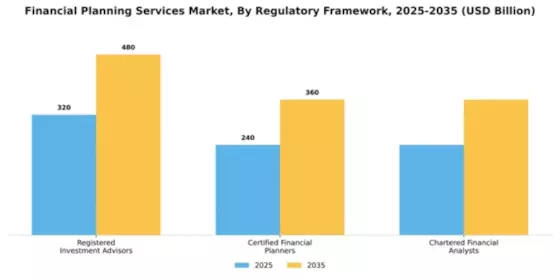
In the Financial Planning Services Market, the Registered Investment Advisors (RIAs) hold the largest market share, capitalizing on their ability to manage assets and provide personalized investment advice tailored to individual client needs. Certified Financial Planners (CFPs), however, are gaining considerable traction, particularly as more consumers seek certified professionals for guidance on comprehensive financial planning, which includes investments, retirement, and estate planning. The Chartered Financial Analysts (CFAs) segment represents a smaller but significant portion, primarily involved in investment and portfolio management but does not command the same breadth of consumer engagement compared to RIAs and CFPs. The growth trends in this segment are driven by an increasing demand for personalized financial services, particularly as consumers navigate complex financial landscapes. The rise of digital platforms enabling RIAs to connect with clients has strengthened their foothold in the market. Meanwhile, the demand for certified expertise among CFPs continues to rise as people become more financially aware and seek structured, educational advice for long-term wealth management. This trend is further fueled by an aging population looking for retirement solutions, thus providing a fertile growth environment for financial planners.
Registered Investment Advisors (Dominant) vs. Certified Financial Planners (Emerging)
Registered Investment Advisors (RIAs) play a dominant role in the Financial Planning Services Market due to their regulatory oversight, which instills trust and credibility among clients. RIAs are adept at providing tailored investment strategies based on individual client circumstances, and this personalized approach is highly valued in today's market. They cater to a diverse clientele, ranging from individual investors to institutional entities, which further solidifies their market position. On the other hand, Certified Financial Planners (CFPs) represent an emerging segment focused on holistic financial planning, encompassing not just investments but also retirement planning, tax strategies, and estate planning. The demand for CFPs is rapidly increasing as consumers seek integrated financial solutions. Their certification and adherence to ethical standards have enhanced their reputation, positioning them as key players in meeting the growing needs of clients seeking comprehensive financial guidance.
Get more detailed insights about Financial Planning Services Market Request Free Sample
North America continues to lead the Financial Planning Services market, holding a significant share of 400.0. The region's growth is driven by increasing consumer awareness, a rise in disposable incomes, and a growing demand for personalized financial solutions. Regulatory support, including initiatives to enhance financial literacy, further catalyzes market expansion. The presence of established financial institutions and a robust technological infrastructure also contribute to this growth. The competitive landscape in North America is characterized by major players such as Fidelity Investments, Charles Schwab, and Vanguard Group. These firms leverage advanced technology and customer-centric approaches to capture market share. The U.S. remains the largest market, with a strong focus on retirement planning and investment advisory services. The ongoing trend towards digital financial services is reshaping the industry, making it more accessible to a broader audience.
Europe's Financial Planning Services market is poised for growth, with a market size of 250.0. Factors such as an aging population, increasing wealth management needs, and regulatory frameworks promoting transparency are driving demand. The European Union's initiatives to enhance consumer protection and financial literacy are also significant catalysts for market expansion. As consumers seek tailored financial solutions, the demand for advisory services is expected to rise. Leading countries in this region include Germany, the UK, and France, where established financial institutions are adapting to changing consumer preferences. Key players like Morgan Stanley and Edward Jones are expanding their services to meet the diverse needs of clients. The competitive landscape is evolving, with a focus on digital transformation and sustainable investment strategies, positioning Europe as a dynamic player in the global market.
The Asia-Pacific region is witnessing rapid growth in the Financial Planning Services market, with a size of 130.0. Key drivers include rising disposable incomes, increasing financial literacy, and a growing middle class seeking investment opportunities. Regulatory bodies are also promoting financial inclusion, which is expected to further boost demand for financial planning services. The region's diverse economic landscape presents unique opportunities for tailored financial solutions. Countries like China, India, and Australia are leading the charge, with a mix of traditional and digital financial service providers. Companies such as Ameriprise Financial and Raymond James are expanding their footprint in this region, adapting to local market needs. The competitive landscape is characterized by innovation and a focus on technology-driven solutions, making financial planning more accessible to a broader audience.
The Middle East and Africa region, with a market size of 20.0, presents emerging opportunities in Financial Planning Services. Factors such as economic diversification, increasing wealth among the affluent, and a growing awareness of financial planning are driving market growth. Regulatory frameworks are evolving to support financial services, enhancing consumer trust and participation in the market. The region's unique demographic trends also contribute to the rising demand for financial advisory services. Leading countries include South Africa and the UAE, where financial institutions are increasingly focusing on wealth management and investment advisory services. The presence of key players is growing, with firms adapting their offerings to meet local needs. The competitive landscape is characterized by a mix of traditional and fintech companies, driving innovation and accessibility in financial planning services.
The Financial Planning Services Market is characterized by a dynamic competitive landscape, driven by increasing consumer demand for personalized financial solutions and the integration of advanced technologies. Key players such as Fidelity Investments (US), Charles Schwab (US), and Vanguard Group (US) are strategically positioned to leverage their extensive resources and technological capabilities. Fidelity Investments (US) focuses on enhancing its digital platforms to provide clients with seamless access to financial planning tools, while Charles Schwab (US) emphasizes a client-centric approach, offering a range of services tailored to individual needs. Vanguard Group (US), known for its low-cost investment options, continues to innovate in the realm of robo-advisory services, thereby shaping the competitive environment through a commitment to cost efficiency and accessibility.The market structure appears moderately fragmented, with a mix of large firms and smaller niche players. Key business tactics include localizing services to meet regional demands and optimizing digital channels for client engagement. The collective influence of these major players fosters a competitive atmosphere where innovation and customer service are paramount, compelling firms to continuously adapt their strategies to maintain market relevance.In November Fidelity Investments (US) announced a partnership with a leading fintech company to enhance its AI-driven financial planning tools. This strategic move is likely to bolster Fidelity's position in the market by providing clients with more personalized and efficient financial advice, thereby addressing the growing demand for technology-driven solutions. The integration of AI into their services may also streamline operations and reduce costs, enhancing overall client satisfaction.In October Charles Schwab (US) launched a new initiative aimed at expanding its financial literacy programs for underserved communities. This initiative not only reflects Schwab's commitment to social responsibility but also positions the company as a leader in promoting financial education. By investing in community outreach, Schwab may strengthen its brand loyalty and attract a broader client base, ultimately contributing to its long-term growth strategy.In September Vanguard Group (US) introduced a suite of sustainable investment options, aligning with the increasing consumer preference for environmentally responsible investing. This strategic action is indicative of Vanguard's responsiveness to market trends and its commitment to providing clients with investment choices that reflect their values. By expanding its offerings in sustainable finance, Vanguard is likely to enhance its competitive edge and appeal to a growing demographic of socially conscious investors.As of December the Financial Planning Services Market is witnessing a pronounced shift towards digitalization, with firms increasingly adopting AI and data analytics to enhance service delivery. Strategic alliances are becoming more prevalent, as companies recognize the value of collaboration in driving innovation and expanding service offerings. The competitive differentiation is expected to evolve, moving away from traditional price-based competition towards a focus on technological innovation, client experience, and supply chain reliability. Firms that can effectively integrate these elements into their business models are likely to thrive in this rapidly changing landscape.






The Financial Planning Services Market is projected to grow at a 3.75% CAGR from 2025 to 2035, driven by technological advancements, increasing consumer awareness, and regulatory changes.
New opportunities lie in:
By 2035, the market is expected to be robust, reflecting sustained growth and innovation.
| MARKET SIZE 2024 | 800.0(USD Billion) |
| MARKET SIZE 2025 | 830.0(USD Billion) |
| MARKET SIZE 2035 | 1200.0(USD Billion) |
| COMPOUND ANNUAL GROWTH RATE (CAGR) | 3.75% (2025 - 2035) |
| REPORT COVERAGE | Revenue Forecast, Competitive Landscape, Growth Factors, and Trends |
| BASE YEAR | 2024 |
| Market Forecast Period | 2025 - 2035 |
| Historical Data | 2019 - 2024 |
| Market Forecast Units | USD Billion |
| Key Companies Profiled | Fidelity Investments (US), Charles Schwab (US), Vanguard Group (US), Morgan Stanley (US), Edward Jones (US), Ameriprise Financial (US), Raymond James (US), LPL Financial (US), TIAA (US) |
| Segments Covered | Service Type, Client Type, Advisory Model, Service Delivery Channel, Regulatory Framework |
| Key Market Opportunities | Integration of artificial intelligence to enhance personalized financial planning services. |
| Key Market Dynamics | Rising demand for personalized financial strategies drives innovation and competition in the Financial Planning Services Market. |
| Countries Covered | North America, Europe, APAC, South America, MEA |
The Financial Planning Services Market was valued at 800.0 USD Billion in 2024.
The market is projected to reach 1200.0 USD Billion by 2035.
The expected CAGR for the Financial Planning Services Market from 2025 to 2035 is 3.75%.
Key players include Fidelity Investments, Charles Schwab, Vanguard Group, and Morgan Stanley, among others.
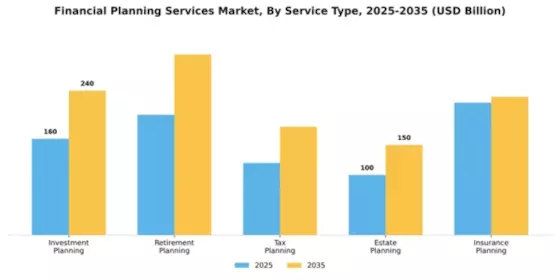
The primary service types include Investment Planning, Retirement Planning, Tax Planning, Estate Planning, and Insurance Planning.
The market segments by client type into Individual Clients, Corporate Clients, Non-Profit Organizations, and High Net Worth Individuals.
The prevalent advisory models include Fee-Only, Commission-Based, Fee-Based, and Robo-Advisory.
Service delivery channels include In-Person Consultation, Online Consultation, and Hybrid Model.
The market is governed by Registered Investment Advisors, Certified Financial Planners, and Chartered Financial Analysts.
The valuation range for Investment Planning services is between 160.0 and 240.0 USD Billion.


Kindly complete the form below to receive a free sample of this Report

“This is really good guys. Excellent work on a tight deadline. I will continue to use you going forward and recommend you to others. Nice job”


“Thanks. It’s been a pleasure working with you, please use me as reference with any other Intel employees.”


“Thanks for sending the report it gives us a good global view of the Betaïne market.”


“Thank you, this will be very helpful for OQS.”


“We found the report very insightful! we found your research firm very helpful. I'm sending this email to secure our future business.”


“I am very pleased with how market segments have been defined in a relevant way for my purposes (such as "Portable Freezers & refrigerators" and "last-mile"). In general the report is well structured. Thanks very much for your efforts.”


“I have been reading the first document or the study, ,the Global HVAC and FP market report 2021 till 2026. Must say, good info! I have not gone in depth at all parts, but got a good indication of the data inside!”


“We got the report in time, we really thank you for your support in this process. I also thank to all of your team as they did a great job.”


“The Automotive 48V ECU Components Procurement Intelligence Study” was a complex project, but the Market Research Future (MRFR) team handled it with quality, agility, and customer-centricity. They delivered all requested data on time and within the agreed scope. The team, including Shubhendra Anand and Rahul Gotadki, was always readily available to clarify questions and swiftly implement necessary adjustments, driving the project to a successful conclusion within a very demanding timeframe.
I would also like to specifically commend Akshay Agarwal for his responsiveness and support at every stage—from our initial inquiry on May 6th through to final delivery on June 18th. His dedication made the entire process seamless.”



