Market Growth Projections
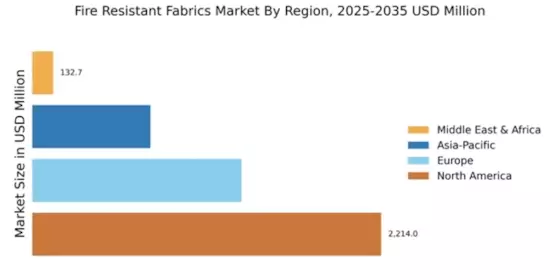
The Global Fire-Resistant Fabrics Market Industry is projected to experience substantial growth over the next decade. With an anticipated market value of 4.42 USD Billion in 2024, the industry is expected to expand significantly, reaching approximately 10.4 USD Billion by 2035. This growth trajectory suggests a robust compound annual growth rate (CAGR) of 8.13% from 2025 to 2035. The increasing adoption of fire-resistant materials across various sectors, coupled with advancements in technology and heightened safety regulations, is likely to contribute to this positive outlook. The market's expansion reflects the growing recognition of the importance of fire safety in diverse applications.
Increasing Safety Regulations
The Global Fire-Resistant Fabrics Market Industry is experiencing growth driven by stringent safety regulations across various sectors, including construction, automotive, and aerospace. Governments worldwide are implementing more rigorous standards to protect workers and consumers from fire hazards. For instance, the National Fire Protection Association has established codes that necessitate the use of fire-resistant materials in buildings. This regulatory environment is expected to propel the market, as companies seek compliance to avoid penalties and enhance safety. As a result, the market is projected to reach 4.42 USD Billion in 2024, reflecting the increasing emphasis on safety and risk management.
Growing Awareness of Fire Safety
There is a notable increase in awareness regarding fire safety among consumers and industries, which is positively impacting the Global Fire-Resistant Fabrics Market Industry. Educational campaigns and training programs are being implemented to inform individuals and organizations about the importance of fire-resistant materials in preventing fire-related incidents. This heightened awareness is leading to greater investments in fire safety measures, including the procurement of fire-resistant clothing and materials. As a result, industries such as construction and manufacturing are prioritizing fire safety, which is expected to drive demand for fire-resistant fabrics in the coming years.
Expansion of the Aerospace Sector
The aerospace sector is another critical driver for the Global Fire-Resistant Fabrics Market Industry. With the increasing production of aircraft and the rising focus on passenger safety, the demand for fire-resistant materials in aircraft interiors and protective gear for crew members is surging. Regulatory bodies, such as the Federal Aviation Administration, mandate the use of fire-resistant materials in aircraft design and manufacturing. This requirement ensures that materials used in cabins and cockpit areas can withstand high temperatures and prevent fire spread. As the aerospace industry continues to grow, the demand for specialized fire-resistant fabrics is likely to increase, further bolstering the market.
Rising Demand from the Oil and Gas Sector
The oil and gas industry is a significant driver of the Global Fire-Resistant Fabrics Market Industry, as workers in this sector face high risks of fire and explosion. The need for protective clothing made from fire-resistant fabrics is paramount to ensure worker safety. Companies are increasingly investing in high-quality fire-resistant gear to comply with safety regulations and protect their workforce. This trend is evident in the growing adoption of flame-resistant uniforms and protective gear, which are essential for operations in hazardous environments. As the industry continues to expand, the demand for fire-resistant fabrics is expected to rise, further contributing to market growth.
Technological Advancements in Fabric Production
Innovations in textile technology are significantly influencing the Global Fire-Resistant Fabrics Market Industry. Advanced manufacturing processes, such as the development of new fiber blends and treatments, enhance the performance of fire-resistant fabrics. For example, the introduction of nanotechnology in fabric treatment has improved the durability and effectiveness of fire-resistant materials. These advancements not only increase the market appeal but also meet the growing demand for high-performance textiles in industries like oil and gas, where exposure to fire hazards is prevalent. Consequently, the market is anticipated to grow at a CAGR of 8.13% from 2025 to 2035, reaching an estimated 10.4 USD Billion by 2035.