Author

Snehal Singh

Co-Author

Food Waste Composting Machine Market Size, Share, Industry Trend & Analysis Research Report By Capacity (Small-scale (less than 1 ton/day), Medium-scale (1-5 tons/day), Large-scale (more than 5 tons/day)), By Composting Method (Aerobic Composting, Anaerobic Composting), By Purpose (Industrial, Commercial, Residential), By Waste Type (Food Waste Only, Food Waste and Yard Waste, Food Waste and Other Organic Waste) and By Regional (North America, Europe, South America, Asia Pacific, Middle East and Africa) - Forecast to 2035
As per Market Research Future analysis, the Food Waste Composting Machine Market was estimated at 1.745 USD Billion in 2024. The Food Waste Composting Machine industry is projected to grow from 1.827 USD Billion in 2025 to 2.896 USD Billion by 2035, exhibiting a compound annual growth rate (CAGR) of 4.71% during the forecast period 2025 - 2035. North America holds the largest share of the global Food Waste Composting Machine Market at approximately 34%, driven by stringent government regulations promoting sustainable waste management, rising awareness of environmental benefits of composting, and strong adoption across commercial and residential sectors. The United States is the leading country within North America, capturing approximately 20% of the global Food Waste Composting Machine Market share, supported by robust R&D investment, strong industry infrastructure, and growing mandates for food waste diversion across states and municipalities. Small capacity composting machines (1 ton/day) dominate the Food Waste Composting Machine Market as the largest capacity segment, holding the highest share (33%) in 2025 due to their affordability, ease of use, and suitability for households, small businesses, and community-level waste management programs.
The Food Waste Composting Machine Market is experiencing robust growth driven by technological advancements and increasing consumer demand for sustainable solutions.
| 2024 Market Size | 1.745 (USD Billion) |
| 2035 Market Size | 2.896 (USD Billion) |
| CAGR (2025 - 2035) | 4.71% |
Waste Management Inc (US), Veolia Environnement SA (FR), Republic Services Inc (US), BioHiTech Global Inc (US), Green Mountain Technologies Inc (US), Earth Machine Inc (US), Compost Systems GmbH (AT), Aerobic Digestion Technologies (US), Organic Waste Systems (BE)
Our Impact
Enabled $4.3B Revenue Impact for Fortune 500 and Leading Multinationals
Partnering with 2000+ Global Organizations Each Year
30K+ Citations by Top-Tier Firms in the Industry
The Food Waste Composting Machine Market is currently experiencing a notable transformation driven by increasing environmental awareness and the need for sustainable waste management solutions. As urbanization accelerates, municipalities and households alike are seeking efficient methods to reduce organic waste. This shift is prompting a surge in demand for composting machines that can process food scraps and other biodegradable materials. The market appears to be evolving with innovations in technology, making these machines more user-friendly and effective. Furthermore, the integration of smart features, such as monitoring systems and automated processes, seems to enhance the appeal of these products, catering to a broader audience. In addition to technological advancements, regulatory frameworks are becoming more supportive of composting initiatives. Governments are implementing policies that encourage waste diversion from landfills, which may further stimulate the Food Waste Composting Machine Market. This regulatory push, combined with rising consumer interest in sustainability, indicates a promising outlook for the industry. As more individuals and organizations recognize the benefits of composting, the market is likely to expand, fostering a culture of environmental responsibility and resource conservation. The future of the Food Waste Composting Machine Market appears bright, with potential for growth and innovation in the coming years.
The Food Waste Composting Machine Market is witnessing a wave of technological innovations. New models are being developed with enhanced efficiency and user-friendly features. These advancements may include automated processes, smart monitoring systems, and energy-efficient designs, making composting more accessible to a wider audience.
Government policies are increasingly favoring sustainable waste management practices. Regulations that promote composting and organic waste diversion from landfills are likely to bolster the Food Waste Composting Machine Market. This supportive environment encourages both consumers and businesses to adopt composting solutions.
There is a growing awareness among consumers regarding the environmental impact of food waste. This heightened consciousness is driving demand for composting machines as individuals seek to contribute to sustainability efforts. The Food Waste Composting Machine Market is thus positioned to benefit from this trend.
The Food Waste Composting Machine Market is also benefiting from economic incentives and cost savings associated with composting practices. Many businesses and municipalities are discovering that investing in composting machines can lead to significant reductions in waste disposal costs. By diverting organic waste from landfills, entities can lower their tipping fees and reduce overall waste management expenses. Additionally, compost produced from food waste can be utilized in landscaping and agriculture, providing a cost-effective alternative to chemical fertilizers. Recent analyses suggest that organizations implementing composting solutions can achieve a return on investment within a few years, making it an attractive option. This economic rationale is likely to drive further adoption within the Food Waste Composting Machine Market, as stakeholders seek to balance environmental responsibility with financial viability.
Innovations in waste management practices are reshaping the Food Waste Composting Machine Market. As cities and communities seek more effective ways to manage organic waste, new composting technologies and methodologies are emerging. For example, community composting initiatives and decentralized composting systems are gaining traction, allowing for localized processing of food waste. This approach not only reduces transportation costs but also fosters community engagement and education around waste reduction. Furthermore, advancements in machine design, such as compact and mobile composters, are making it easier for households and small businesses to participate in composting efforts. These innovations indicate a shift towards more sustainable waste management practices, which are likely to enhance the growth trajectory of the Food Waste Composting Machine Market.
The Food Waste Composting Machine Market is significantly influenced by regulatory support and environmental policies aimed at reducing waste and promoting sustainability. Governments are increasingly implementing regulations that encourage composting as a viable waste management solution. For instance, many regions have established mandates for organic waste diversion from landfills, which directly boosts the demand for composting machines. Recent statistics suggest that regions with stringent waste management policies have seen a marked increase in composting machine sales, as businesses and municipalities seek compliance. This regulatory landscape not only fosters growth in the Food Waste Composting Machine Market but also aligns with broader environmental goals, such as reducing greenhouse gas emissions and promoting circular economy practices.
The Food Waste Composting Machine Market is experiencing a surge in technological advancements that enhance efficiency and effectiveness. Innovations such as aerobic digestion and anaerobic digestion technologies are being integrated into composting machines, allowing for faster decomposition of organic waste. These advancements not only reduce the time required for composting but also improve the quality of the end product. According to recent data, the adoption of smart composting systems, which utilize IoT technology for monitoring and management, is on the rise. This trend indicates a shift towards more automated and user-friendly solutions, appealing to both commercial and residential users. As technology continues to evolve, the Food Waste Composting Machine Market is likely to see increased investment and interest from various sectors, including agriculture, food service, and municipal waste management.
Consumer awareness regarding sustainability and environmental impact is driving growth in the Food Waste Composting Machine Market. As individuals and businesses become more conscious of their ecological footprint, there is a growing demand for solutions that facilitate waste reduction and resource recovery. Surveys indicate that a significant percentage of consumers are willing to invest in composting machines as part of their commitment to sustainable living. This trend is particularly evident in urban areas, where space-efficient composting solutions are sought after. The increasing popularity of organic gardening and local food movements further fuels this demand, as consumers recognize the benefits of composting for soil health and food production. Consequently, the Food Waste Composting Machine Market is poised for expansion, catering to a more environmentally aware consumer base.
In the Food Waste Composting Machine Market, the capacity segment showcases a diverse range of product offerings, with large capacity machines taking the lead in market share. These machines cater to bigger organizations and industrial setups, enabling them to process significant amounts of food waste efficiently. Meanwhile, medium capacity machines are gaining traction, appealing to mid-sized operations that require a balance between capacity and compactness, thus commanding an increasing share of the market.
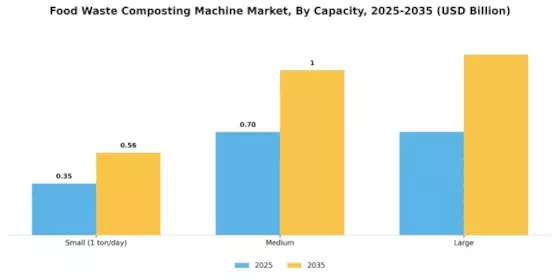
Large (Dominant) vs. Medium (Emerging)
Large capacity food waste composting machines are characterized by their ability to handle over 5 tons of waste per day, making them ideal for large restaurants, hotels, and municipalities. Their dominance in the market is driven by the increasing focus on sustainability and waste management among large-scale operations. Conversely, medium capacity machines, designed for 1 to 5 tons per day processing, are emerging as a preferred solution for medium-sized enterprises. Companies investing in these models benefit from reduced operational costs and improved waste management efficiency. The growth in this segment is fueled by rising environmental concerns and the push for localized composting solutions.
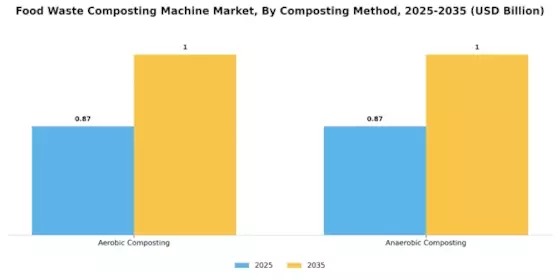
In the Food Waste Composting Machine Market, Aerobic Composting holds the largest market share among the composting methods. Its efficiency and effectiveness in breaking down organic waste in the presence of oxygen have made it the preferred choice in residential and commercial settings. Aerobic composting systems contribute significantly to reducing food waste while promoting sustainable practices. On the other hand, Anaerobic Composting is gaining traction as the fastest-growing segment. This method, which takes place without oxygen, is becoming increasingly popular for its ability to produce biogas alongside compost, appealing to eco-conscious consumers and businesses alike.
Composting Method: Aerobic (Dominant) vs. Anaerobic (Emerging)
Aerobic Composting is characterized by its reliance on oxygen to decompose organic matter, resulting in a faster breakdown process and higher-quality compost. This method is widely adopted due to its ability to efficiently manage large volumes of food waste, making it a dominant force in the Food Waste Composting Machine Market. Conversely, Anaerobic Composting is an emerging player that operates without oxygen, producing biogas as a byproduct. This dual advantage appeals to industries seeking to harness renewable energy while simultaneously managing waste. As environmental policies strengthen and the push for sustainability grows, both methods are poised for growth, with Aerobic Composting leading and Anaerobic Composting capturing increasing interest from businesses and municipalities alike.
In the Food Waste Composting Machine Market, the purpose segments are distinctly categorized into Industrial, Commercial, and Residential applications. The Residential segment holds the largest market share, driven by increased consumer awareness and environmental concerns. Households are increasingly integrating composting machines into their kitchens, contributing to significant growth in this sector. Meanwhile, the Industrial segment is witnessing rapid expansion as businesses seek sustainable waste management solutions, thus attracting investment and innovation to meet growing demand.
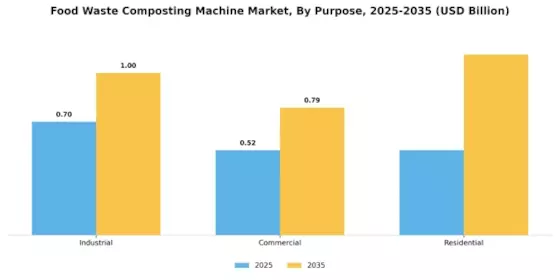
Residential (Dominant) vs. Industrial (Emerging)
The Residential segment is dominant in the Food Waste Composting Machine Market, characterized by a rising trend of home composting initiatives that emphasize sustainability. Consumers are increasingly purchasing home units due to convenience and eco-consciousness, thus propelling this segment forward. Conversely, the Industrial segment is emerging with heightened focus on large-scale solutions for waste management, driven by legislative mandates and a push for corporate sustainability. This segment is marked by innovative technology and efficiency, catering to commercial establishments looking to reduce carbon footprints while enhancing waste recycling processes.
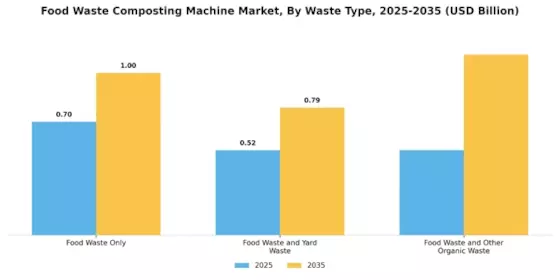
In the Food Waste Composting Machine Market, the distribution of waste types reveals that the 'Food Waste Only' segment commands the largest share, driven by rising consumer awareness and the sustainability agenda. Meanwhile, the 'Food Waste and Yard Waste' segment is emerging as the fastest-growing category as municipalities increasingly recognize the need for comprehensive waste solutions, integrating organic materials for enhanced compost quality and efficacy. As a result, insurance growth prospects are forthcoming for manufacturers providing multi-functional composting machines.
Food Waste Only (Dominant) vs. Food Waste and Other Organic Waste (Emerging)
The 'Food Waste Only' segment is characterized by its dominance stemming from a strong consumer focus on reducing food waste. These machines are typically designed for households and commercial establishments focusing solely on food scraps, ensuring efficient decomposition tailored for kitchen waste. In contrast, the 'Food Waste and Other Organic Waste' segment is emerging due to a growing trend towards sustainability, where composting solutions accommodate a broader spectrum of organic materials, including garden debris. This trend is gaining traction as consumers and businesses alike seek multifunctional machines that promote environmental responsibility.
Get more detailed insights about Food Waste Composting Machine Market Request Free Sample
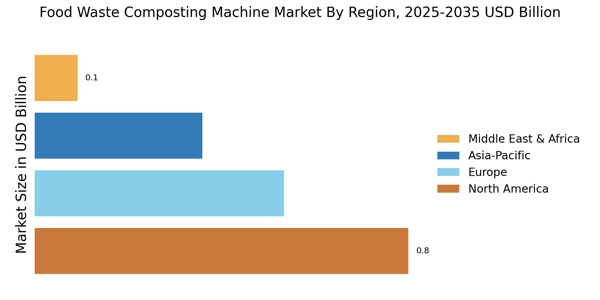
North America is witnessing significant growth in the food waste composting machine market, driven by increasing awareness of sustainability and stringent regulations on waste management. The region holds approximately 45% of the global market share, making it the largest market. The U.S. leads this growth, supported by government initiatives promoting composting and waste reduction, while Canada follows closely with a growing emphasis on environmental policies. The competitive landscape is dominated by key players such as Waste Management Inc, Republic Services Inc, and BioHiTech Global Inc. These companies are innovating to enhance their product offerings and expand their market reach. The presence of advanced technologies and a robust infrastructure for waste management further bolster the market. As municipalities and businesses adopt composting solutions, the demand for efficient machines is expected to rise significantly.
Europe is rapidly advancing in the food waste composting machine market, driven by stringent EU regulations aimed at reducing landfill waste and promoting circular economy practices. The region accounts for approximately 30% of the global market share, with Germany and France being the largest contributors. The European Green Deal and various national policies are catalyzing investments in composting technologies, enhancing market growth and sustainability efforts. Leading countries like Germany, France, and the Netherlands are at the forefront of adopting innovative composting solutions. The competitive landscape features companies such as Veolia Environnement SA and Compost Systems GmbH, which are leveraging technology to improve efficiency and reduce environmental impact. The presence of supportive regulations and a strong focus on sustainability are driving the market forward, making Europe a key player in the global composting landscape.
Asia-Pacific is emerging as a significant player in the food waste composting machine market, driven by rapid urbanization and increasing awareness of waste management practices. The region holds approximately 20% of the global market share, with countries like China and India leading the charge. Government initiatives aimed at reducing food waste and promoting composting are acting as key growth drivers, fostering a favorable environment for market expansion. China is investing heavily in waste management infrastructure, while India is witnessing a surge in demand for composting solutions due to its growing population and urban challenges. The competitive landscape includes local and international players, with companies like Organic Waste Systems and Aerobic Digestion Technologies making strides in the market. As awareness of environmental issues grows, the demand for efficient composting machines is expected to rise significantly in this region.
The Middle East and Africa region is gradually recognizing the importance of food waste composting machines, driven by increasing urbanization and a growing focus on sustainable waste management practices. The region holds approximately 5% of the global market share, with countries like South Africa and the UAE leading the way. Government initiatives aimed at promoting recycling and composting are beginning to take shape, creating opportunities for market growth. In South Africa, local municipalities are implementing composting programs to manage organic waste effectively. The competitive landscape is still developing, with a mix of local and international players entering the market. Companies are focusing on innovative solutions to address the unique challenges of waste management in this region. As awareness of sustainability grows, the demand for composting machines is expected to increase, paving the way for future growth.
The Food Waste Composting Machine Market is currently characterized by a dynamic competitive landscape, driven by increasing environmental awareness and regulatory pressures aimed at reducing food waste. Key players such as Waste Management Inc (US), Veolia Environnement SA (FR), and BioHiTech The Food Waste Composting Machine Market through strategic initiatives focused on innovation and sustainability. Waste Management Inc (US) has positioned itself as a leader by investing in advanced composting technologies and expanding its service offerings to include organic waste management solutions. Meanwhile, Veolia Environnement SA (FR) emphasizes its commitment to circular economy principles, integrating waste-to-energy solutions with composting processes, thereby enhancing its operational efficiency and market reach. These strategies collectively foster a competitive environment that prioritizes sustainable practices and technological advancements.The business tactics employed by these companies reflect a concerted effort to optimize supply chains and localize manufacturing processes. The market appears moderately fragmented, with a mix of established players and emerging startups vying for market share. This competitive structure allows for diverse approaches to food waste management, with larger firms leveraging economies of scale while smaller entities often focus on niche markets or innovative solutions. The collective influence of these key players is significant, as they drive industry standards and consumer expectations regarding sustainability and efficiency.In August BioHiTech Global Inc (US) announced the launch of a new line of composting machines designed specifically for urban environments, which is expected to enhance their market penetration in densely populated areas. This strategic move not only addresses the growing demand for localized waste management solutions but also aligns with the company's broader goal of promoting sustainable practices in urban settings. The introduction of these machines could potentially reshape the competitive dynamics by attracting new customers who prioritize eco-friendly waste disposal options.In September Veolia Environnement SA (FR) entered into a partnership with a leading technology firm to develop AI-driven composting systems that optimize the composting process through real-time data analytics. This collaboration signifies a pivotal shift towards digital transformation within the industry, as it enhances operational efficiency and reduces processing times. The integration of AI technology may provide Veolia with a competitive edge, allowing for more precise control over composting conditions and improved end-product quality.In October Waste Management Inc (US) unveiled a new initiative aimed at increasing community engagement in composting practices through educational programs and incentives. This initiative reflects a growing trend towards community-based solutions in waste management, fostering a sense of responsibility among consumers. By actively involving communities, Waste Management Inc (US) not only enhances its brand reputation but also cultivates a loyal customer base that is increasingly aware of the importance of sustainable waste practices.As of October the competitive trends within the Food Waste Composting Machine Market are increasingly defined by digitalization, sustainability, and the integration of advanced technologies such as AI. Strategic alliances are becoming more prevalent, as companies recognize the value of collaboration in enhancing their service offerings and operational capabilities. Looking ahead, it is likely that competitive differentiation will evolve from traditional price-based competition to a focus on innovation, technological advancements, and supply chain reliability. This shift underscores the importance of adaptability and forward-thinking strategies in navigating the complexities of the modern waste management landscape.


The Food Waste Composting Machine Market is projected to grow at a 4.71% CAGR from 2025 to 2035, driven by increasing environmental regulations, urbanization, and technological advancements.
New opportunities lie in:
By 2035, the market is expected to be robust, driven by innovation and strategic partnerships.
| MARKET SIZE 2024 | 1.745(USD Billion) |
| MARKET SIZE 2025 | 1.827(USD Billion) |
| MARKET SIZE 2035 | 2.896(USD Billion) |
| COMPOUND ANNUAL GROWTH RATE (CAGR) | 4.71% (2025 - 2035) |
| REPORT COVERAGE | Revenue Forecast, Competitive Landscape, Growth Factors, and Trends |
| BASE YEAR | 2024 |
| Market Forecast Period | 2025 - 2035 |
| Historical Data | 2019 - 2024 |
| Market Forecast Units | USD Billion |
| Key Companies Profiled | Waste Management Inc (US), Veolia Environnement SA (FR), Republic Services Inc (US), BioHiTech Global Inc (US), Green Mountain Technologies Inc (US), Earth Machine Inc (US), Compost Systems GmbH (AT), Aerobic Digestion Technologies (US), Organic Waste Systems (BE) |
| Segments Covered | Capacity, Composting Method, Purpose, Waste Type, Regional |
| Key Market Opportunities | Growing consumer demand for sustainable waste management solutions drives innovation in the Food Waste Composting Machine Market. |
| Key Market Dynamics | Rising consumer awareness drives demand for innovative food waste composting machines amid regulatory support for sustainable waste management. |
| Countries Covered | North America, Europe, APAC, South America, MEA |
The market valuation was 1.745 USD Billion in 2024.


The secondary research process involved comprehensive analysis of regulatory databases, environmental policy documents, waste management publications, and authoritative sustainability organizations. Key sources included the US Environmental Protection Agency (EPA), European Environment Agency (EEA), Food and Agriculture Organization of the United Nations (FAO), United Nations Environment Programme (UNEP), World Bank Climate Change Knowledge Portal, Organisation for Economic Co-operation and Development (OECD) Environment Statistics, US Composting Council (USCC), European Compost Network (ECN), International Solid Waste Association (ISWA), National Waste & Recycling Association (NWRA), National Renewable Energy Laboratory (NREL), US Department of Agriculture (USDA), EU Circular Economy Action Plan Database, Eurostat Waste Statistics, National Bureau of Statistics of China, Ministry of Environment, Forest and Climate Change (India), Japan Ministry of the Environment, and municipal waste management authority reports from key markets. These sources were used to collect waste generation statistics, regulatory compliance data, composting technology studies, sustainability trends, and market landscape analysis for aerobic composting systems, anaerobic digestion technologies, small-scale residential units, medium-scale commercial systems, and large-scale industrial composting solutions.
In order to gather both qualitative and quantitative insights, supply-side and demand-side stakeholders were interviewed during the primary research process. CEOs, VPs of Engineering, heads of Sustainability & ESG, and commercial directors from producers of food waste composting machines, waste management service providers, and environmental technology OEMs were examples of supply-side sources. Sustainability officials, facilities managers, procurement leads from hotel chains, retail supermarket operators, municipal waste management departments, educational institutions, healthcare facilities, and residential real estate developers were examples of demand-side suppliers. Primary research verified product development schedules, validated market segmentation across capacity tiers (small-scale <1 ton/day, medium-scale 1-5 tons/day, large-scale >5 tons/day), and collected data on pricing tactics, technology adoption trends, and regulatory compliance dynamics.
Primary Respondent Breakdown:
By Designation: C-level Primaries (32%), Director Level (30%), Others (38%)
By Region: North America (38%), Europe (25%), Asia-Pacific (28%), Rest of World (9%)
Global market valuation was derived through revenue mapping and equipment deployment analysis. The methodology included:
Identification of 50+ key manufacturers across North America, Europe, Asia-Pacific, and Latin America
Product mapping across aerobic composting, anaerobic composting, and hybrid systems by capacity segments (small-scale residential, medium-scale commercial, large-scale industrial)
Analysis of reported and modeled annual revenues specific to food waste composting machine portfolios
Coverage of manufacturers representing 72-78% of global market share in 2024
Extrapolation using bottom-up (unit shipments × ASP by country/segment) and top-down (manufacturer revenue validation) approaches to derive segment-specific valuations across Industrial, Commercial, and Residential end-use categories, as well as waste type segments (Food Waste Only, Food Waste and Yard Waste, Food Waste and Other Organic Waste)
This methodology mirrors your original format while adapting to the specific segments of the food waste composting machine market: Capacity (Small-scale <1 ton/day, Medium-scale 1-5 tons/day, Large-scale >5 tons/day), Composting Method (Aerobic, Anaerobic), Purpose (Industrial, Commercial, Residential), and Waste Type (Food Waste Only, Food Waste and Yard Waste, Food Waste and Other Organic Waste).
Kindly complete the form below to receive a free sample of this Report

“This is really good guys. Excellent work on a tight deadline. I will continue to use you going forward and recommend you to others. Nice job”


“Thanks. It’s been a pleasure working with you, please use me as reference with any other Intel employees.”


“Thanks for sending the report it gives us a good global view of the Betaïne market.”


“Thank you, this will be very helpful for OQS.”


“We found the report very insightful! we found your research firm very helpful. I'm sending this email to secure our future business.”


“I am very pleased with how market segments have been defined in a relevant way for my purposes (such as "Portable Freezers & refrigerators" and "last-mile"). In general the report is well structured. Thanks very much for your efforts.”


“I have been reading the first document or the study, ,the Global HVAC and FP market report 2021 till 2026. Must say, good info! I have not gone in depth at all parts, but got a good indication of the data inside!”


“We got the report in time, we really thank you for your support in this process. I also thank to all of your team as they did a great job.”


“The Automotive 48V ECU Components Procurement Intelligence Study” was a complex project, but the Market Research Future (MRFR) team handled it with quality, agility, and customer-centricity. They delivered all requested data on time and within the agreed scope. The team, including Shubhendra Anand and Rahul Gotadki, was always readily available to clarify questions and swiftly implement necessary adjustments, driving the project to a successful conclusion within a very demanding timeframe.
I would also like to specifically commend Akshay Agarwal for his responsiveness and support at every stage—from our initial inquiry on May 6th through to final delivery on June 18th. His dedication made the entire process seamless.”



