×
Request Free Sample ×

Kindly complete the form below to receive a free sample of this Report

* Please use a valid business email

Leading companies partner with us for data-driven Insights

clients tt-cursor
Hero Background

Fruit Tea Market

ID: MRFR/FnB/7139-HCR
90 Pages
Snehal Singh
October 2025

Fruit Tea Market Research Report Information by Type (Lemon, Raspberry, Cranberry, Apple, Peach, Blends and others), Category (Conventional and Organic), Form (Tea Bags, Loose Leaf and others), Distribution Channel (Store-Based {Hypermarkets and Supermarkets, Specialty Stores and others} and Non-Store-Based) and Region (North America, Europe, Asia-Pacific and Rest of the World) - Forecast till 2030

Share:
Download PDF ×

We do not share your information with anyone. However, we may send you emails based on your report interest from time to time. You may contact us at any time to opt-out.

Fruit Tea Market Infographic
Purchase Options

Fruit Tea Market Summary

As per MRFR analysis, the Fruit Tea Market Size was estimated at 3.12 USD Million in 2024. The Fruit Tea industry is projected to grow from 3.33 in 2025 to 5.62 by 2035, exhibiting a compound annual growth rate (CAGR) of 5.46 during the forecast period 2025 - 2035.

Key Market Trends & Highlights

The Fruit Tea Market is experiencing robust growth driven by health trends and innovative flavors.

  • The North American market remains the largest, driven by a strong health and wellness focus among consumers.
  • Asia-Pacific is the fastest-growing region, with increasing demand for diverse flavor profiles in fruit teas.
  • Herbal tea continues to dominate the market, while green tea is emerging as the fastest-growing segment.
  • Health consciousness and sustainability trends are key drivers propelling the market forward.

Market Size & Forecast

2024 Market Size 3.12 (USD Million)
2035 Market Size 5.62 (USD Million)
CAGR (2025 - 2035) 5.46%

Major Players

Unilever (GB), Nestle (CH), PepsiCo (US), Coca-Cola (US), Tata Global Beverages (IN), Dilmah (LK), Twinings (GB), Harney & Sons (US), Stash Tea (US)

Fruit Tea Market Trends

The Fruit Tea Market is currently experiencing a notable transformation, driven by evolving consumer preferences and an increasing awareness of health benefits associated with fruit-infused beverages. As individuals become more health-conscious, there is a growing inclination towards natural and organic products, which fruit teas often embody. This shift is reflected in the rising demand for beverages that not only provide hydration but also offer nutritional advantages. Additionally, the market is witnessing a surge in innovative flavors and blends, appealing to diverse palates and enhancing the overall drinking experience. The integration of exotic fruits and unique combinations is likely to attract a broader audience, further propelling market growth. Moreover, the Fruit Tea Market is characterized by a dynamic landscape where sustainability plays a crucial role. Consumers are increasingly favoring brands that prioritize eco-friendly practices, from sourcing ingredients to packaging. This trend suggests a potential shift towards more sustainable production methods, which could reshape the industry in the coming years. As the market continues to evolve, it appears that the intersection of health, flavor innovation, and sustainability will define the future trajectory of fruit tea consumption, making it a vibrant segment within the broader beverage industry.

Health and Wellness Focus

The Fruit Tea Market is increasingly influenced by a growing emphasis on health and wellness. Consumers are actively seeking beverages that contribute positively to their well-being, leading to a preference for natural ingredients and functional benefits. This trend indicates a shift towards products that not only quench thirst but also support overall health.

Flavor Innovation

Innovation in flavor profiles is a prominent trend within the Fruit Tea Market. Manufacturers are experimenting with unique fruit combinations and exotic ingredients to create distinctive offerings. This approach not only caters to adventurous consumers but also enhances the appeal of fruit teas, potentially attracting a wider audience.

Sustainability Initiatives

Sustainability is becoming a key consideration for consumers in the Fruit Tea Market. There is a noticeable preference for brands that adopt eco-friendly practices, from sourcing to packaging. This trend suggests that companies may need to prioritize sustainable methods to meet consumer expectations and remain competitive.

Fruit Tea Market Drivers

Growing Health Consciousness

The increasing awareness regarding health and wellness among consumers appears to be a significant driver for the Global Fruit Tea Industry. As individuals seek healthier beverage alternatives, fruit tea, known for its antioxidant properties and potential health benefits, gains popularity. This trend is reflected in the projected market value of 1.92 USD Billion in 2024, indicating a robust demand for fruit-infused beverages. Consumers are increasingly opting for natural ingredients, which fruit teas offer, thus potentially contributing to the industry's growth. The shift towards healthier lifestyles suggests that the Global Fruit Tea Industry may continue to expand as more individuals prioritize their well-being.

Market Segment Insights

By Product Type: Herbal Tea (Largest) vs. Green Tea (Fastest-Growing)

In the Fruit Tea Market, Herbal Tea currently holds the largest market share due to its diverse flavor profiles that appeal to a broad demographic. Green Tea closely follows, carving out a significant niche as health-conscious consumers increasingly seek its antioxidant benefits. Black Tea and White Tea contribute to the market, but their shares are comparatively smaller. The varied preferences among consumers have led to distinct positioning of these product types in the marketplace. Growth trends indicate that Green Tea is emerging as the fastest-growing segment within the Fruit Tea Market, driven by a rising awareness of its health benefits and versatility in beverage applications. Herbal Tea, while dominant, continues to innovate with new flavors and blends to capture the interests of diverse consumer segments. The growth in demand for natural and organic options further supports the expansion of these segments as consumers lean towards healthier lifestyle choices.

Herbal Tea (Dominant) vs. Black Tea (Emerging)

Herbal Tea remains the dominant force in the Fruit Tea Market, renowned for its wide variety of flavors, natural ingredients, and aromatic profiles. It caters largely to consumers seeking caffeine-free alternatives blended with health benefits, making it especially popular among wellness enthusiasts. On the other hand, Black Tea is considered an emerging player, gaining traction due to its robust flavors and potential health benefits such as improved heart health and metabolism support. While Herbal Tea commands a larger following, Black Tea's resurgence is attributed to cultural shifts and increased awareness of its unique offerings. The competition between these two segments reflects evolving consumer preferences towards more diverse tea experiences.

By Distribution Channel: Supermarkets (Largest) vs. Online Retail (Fastest-Growing)

In the Fruit Tea Market, supermarkets hold a significant share of the distribution channel segment, serving as the primary purchasing avenue for consumers. Their widespread presence and established supply chains enable easy access to consumers, leading to substantial sales volumes. In contrast, online retail is rapidly gaining traction, appealing to a younger, tech-savvy demographic that prefers the convenience of purchasing groceries from home. This shift indicates a changing landscape in consumer behavior towards online platforms, particularly as brands enhance their digital presence and online shopping experience.

Supermarkets: Dominant vs. Online Retail: Emerging

Supermarkets represent the dominant distribution channel in the Fruit Tea Market, attracting a large customer base through their extensive variety, promotional offers, and in-store visibility. Their ability to provide a wide range of fruit tea options makes them a preferred choice for consumers looking for convenience and variety. Conversely, online retail is emerging as a crucial channel, especially among younger consumers who favor online shopping experiences. The growth of e-commerce platforms, improved delivery logistics, and personalized marketing strategies contribute to its increasing popularity. Online retail is effectively tapping into niche markets, offering specialized and organic fruit tea products that cater to health-conscious customers, thus reshaping the competitive landscape.

By Consumer Type: Health Conscious (Largest) vs. Young Adults (Fastest-Growing)

In the Fruit Tea Market, the distribution of market share among the consumer types is notably diverse. The 'Health Conscious' segment commands a significant portion, reflecting the rising awareness of health benefits associated with fruit teas. This segment comprises consumers who prioritize wellness, opting for products that are perceived as healthy and natural. In contrast, the 'Young Adults' segment is emerging rapidly, characterized by younger consumers seeking trendy and unique flavors, often influenced by social media and lifestyle choices. As the market evolves, growth trends reveal that the 'Young Adults' segment is becoming one of the fastest-growing demographics in the Fruit Tea Market. This increase is driven by a shift in consumer preferences towards convenient, flavorful, and health-oriented beverages. Furthermore, active marketing strategies targeting this age group, along with innovative product offerings, are contributing to the ongoing expansion of this segment, leading to a vibrant market landscape for fruit tea products aimed at younger consumers.

Health Conscious (Dominant) vs. Young Adults (Emerging)

The 'Health Conscious' consumer segment in the Fruit Tea Market is characterized by individuals focused on the nutritional value and health benefits of their beverage choices. Typically featuring organic ingredients and enhanced flavors, these products appeal strongly to consumers aiming to integrate healthier options into their daily diets. This segment’s dominance stems from an increasing trend of health awareness, where these consumers are motivated by the perceived benefits of antioxidants, vitamins, and natural ingredients found in fruit teas. On the other hand, the 'Young Adults' segment represents a fresh, emerging demographic, driven largely by trends and social media influence. Young adults are drawn to the innovative flavors and unique branding of fruit teas, making them a growing force in the market. Their preference for experiences over products means that they seek out brands that offer exciting flavor combinations and sustainable practices, driving rapid growth within this segment.

By Flavor Profile: Citrus (Largest) vs. Berry (Fastest-Growing)

In the Fruit Tea Market, the flavor profile segment showcases a dynamic distribution of preferences among consumers. Citrus flavors, including lemon, orange, and lime, dominate the market due to their refreshing taste and versatility, capturing a significant share of the market. Berry flavors, comprising strawberries, blueberries, and raspberries, have gained considerable attention, indicating a rising trend as more consumers seek bold, fruity experiences over their traditional beverage choices, thus sharing the market space effectively with citrus options. Growth trends in the fruit tea flavor segment are notable, with berry flavors emerging as the fastest-growing choice among health-conscious consumers. This surge is driven by the increasing demand for natural ingredients and antioxidant-rich options. Citrus flavors maintain their stronghold due to their classic appeal and the rising trend of citrus-infused beverages. The fusion of these flavors in innovative products is expected to further boost the segment's growth in the coming years.

Citrus (Dominant) vs. Floral (Emerging)

Citrus flavors hold a dominant position in the Fruit Tea Market, recognized for their refreshing characteristics and significant consumer preference. Typical flavors such as orange and lemon not only enhance the taste profile but also align with the trend of enhancing beverages with natural zest. On the other hand, floral flavors like hibiscus and chamomile are emerging as a popular choice, appealing particularly to the wellness-focused demographic. These flavors introduce unique aroma and taste profiles that set them apart from traditional fruit tea variants. The increasing popularity of floral flavors is supported by a growing interest in herbal alternatives and aromatic experiences. The health benefits linked to these floral infusions also contribute significantly to their expanding market presence.

By Packaging Type: Tea Bags (Largest) vs. Ready-to-Drink (Fastest-Growing)

In the Fruit Tea Market, the packaging type plays a significant role in consumer preferences and market dynamics. Currently, tea bags hold a substantial share, favored for their convenience and ease of use, appealing to busy consumers seeking quick brewing options. Loose leaf is also popular among enthusiasts who value quality and flavor, but its market share is smaller compared to tea bags. Ready-to-drink fruit tea is gaining traction as more consumers opt for on-the-go refreshment, contributing to its growth alongside the steady demand for pouches that provide portion control and freshness.

Tea Bags: Dominant vs. Ready-to-Drink: Emerging

Tea bags remain the dominant packaging type in the Fruit Tea Market, capturing the attention of consumers due to their convenience and ease of use. They appeal to a wide range of buyers, from casual drinkers to tea aficionados. In contrast, the ready-to-drink segment is emerging rapidly, fueled by the growing trend of health-conscious consumers preferring convenient, flavorful beverages. The ready-to-drink options attract those seeking hassle-free consumption without sacrificing quality. This combination of dominance from tea bags and the rapid rise of ready-to-drink formats creates a dynamic landscape in the fruit tea sector.

Get more detailed insights about Fruit Tea Market

Regional Insights

North America : Growing Health Consciousness

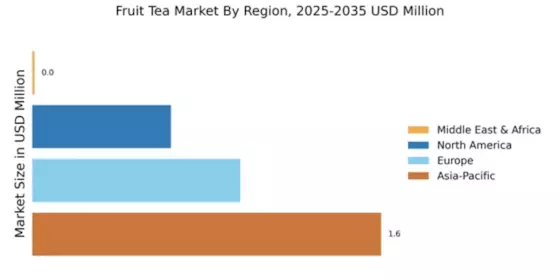
The North American fruit tea market is witnessing significant growth, driven by increasing health consciousness among consumers. With a market size of $0.62 billion, the demand for natural and organic beverages is on the rise. Regulatory support for health claims on packaging is also a catalyst for market expansion, encouraging brands to innovate and diversify their offerings. The trend towards healthier lifestyles is expected to further boost sales in this segment. Leading the market are the United States and Canada, where major players like PepsiCo and Coca-Cola are investing in product development and marketing strategies. The competitive landscape is characterized by a mix of established brands and emerging players, all vying for consumer attention. The presence of key players such as Unilever and Nestle enhances market dynamics, ensuring a diverse range of fruit tea options for consumers.

Europe : Diverse Flavors and Preferences

Europe's fruit tea market, valued at $0.93 billion, is thriving due to diverse consumer preferences and a growing inclination towards herbal and fruit-infused beverages. The region benefits from stringent regulations that promote quality and safety, ensuring that products meet high standards. This regulatory environment fosters innovation, encouraging brands to explore unique flavor combinations and health benefits, thus driving market growth. Countries like Germany, the UK, and France are at the forefront of this market, with a strong presence of key players such as Twinings and Harney & Sons. The competitive landscape is vibrant, with both local and international brands competing for market share. The emphasis on sustainability and ethical sourcing is also shaping consumer choices, making it essential for brands to align with these values to capture the growing market segment.

Asia-Pacific : Leading Global Market Share

The Asia-Pacific region is the largest market for fruit tea, boasting a market size of $1.56 billion. This growth is fueled by rising disposable incomes, urbanization, and a shift towards healthier beverage options. The increasing popularity of fruit tea among younger consumers, coupled with supportive government policies promoting health and wellness, is driving demand. The region's diverse tea culture also plays a significant role in the market's expansion. Countries like China, India, and Japan are leading the charge, with major players such as Tata Global Beverages and Dilmah capitalizing on local preferences. The competitive landscape is marked by a mix of traditional tea brands and innovative new entrants, all striving to capture the attention of health-conscious consumers. The presence of established brands ensures a robust supply chain and product availability across various retail channels.

Middle East and Africa : Emerging Market Potential

The Middle East and Africa region, while currently small with a market size of $0.01 billion, presents significant growth potential for the fruit tea market. The increasing awareness of health benefits associated with fruit teas is driving demand, particularly among urban populations. Regulatory frameworks are gradually evolving to support the introduction of new beverage products, which is expected to catalyze market growth in the coming years. Countries like South Africa and Kenya are beginning to see a rise in fruit tea consumption, with local brands emerging to meet this demand. The competitive landscape is still developing, with opportunities for both local and international players to establish a foothold. As consumer preferences shift towards healthier options, the market is poised for expansion, attracting investments and innovation in product offerings.

Key Players and Competitive Insights

The Fruit Tea Market is currently characterized by a dynamic competitive landscape, driven by evolving consumer preferences towards healthier beverage options and innovative flavor profiles. Major players such as Unilever (GB), Nestle (CH), and Tata Global Beverages (IN) are strategically positioning themselves through product diversification and regional expansion. Unilever (GB) has focused on enhancing its portfolio with organic and functional fruit teas, while Nestle (CH) emphasizes sustainability in sourcing ingredients, thereby appealing to environmentally conscious consumers. Tata Global Beverages (IN) is leveraging its strong distribution network to penetrate emerging markets, which collectively shapes a competitive environment that is increasingly focused on health and sustainability.

Key business tactics within the Fruit Tea Market include localizing manufacturing and optimizing supply chains to enhance efficiency and reduce costs. The market structure appears moderately fragmented, with a mix of established brands and emerging players. This fragmentation allows for a variety of consumer choices, while the collective influence of key players drives innovation and market growth.

In November 2025, Unilever (GB) announced a partnership with a leading organic fruit supplier to enhance its product line with sustainably sourced ingredients. This strategic move not only strengthens Unilever's commitment to sustainability but also positions the company to capture a growing segment of health-conscious consumers who prioritize organic products. The partnership is likely to enhance brand loyalty and market share in the competitive landscape.

In October 2025, Tata Global Beverages (IN) launched a new line of fruit teas infused with adaptogenic herbs, targeting the wellness market. This initiative reflects a growing trend towards functional beverages that offer health benefits beyond hydration. By tapping into the wellness trend, Tata Global Beverages (IN) is poised to attract a niche audience, potentially increasing its market presence and consumer engagement.

In September 2025, Nestle (CH) unveiled a digital marketing campaign aimed at promoting its fruit tea products through social media platforms. This campaign leverages influencer partnerships to reach younger demographics, indicating a shift towards digitalization in marketing strategies. By engaging with consumers through digital channels, Nestle (CH) is likely to enhance brand visibility and foster a community around its products.

As of December 2025, current competitive trends in the Fruit Tea Market include a pronounced focus on digitalization, sustainability, and the integration of AI in product development and marketing. Strategic alliances are increasingly shaping the landscape, allowing companies to pool resources and expertise. Looking ahead, competitive differentiation is expected to evolve from traditional price-based competition to a focus on innovation, technology, and supply chain reliability, as companies strive to meet the demands of a more discerning consumer base.

Key Companies in the Fruit Tea Market market include

Future Outlook

Fruit Tea Market Future Outlook

The Fruit Tea Market is projected to grow at a 5.46% CAGR from 2024 to 2035, driven by health trends, innovative flavors, and sustainable sourcing.

New opportunities lie in:

  • Expansion into ready-to-drink fruit tea segments
  • Development of organic and functional fruit tea blends
  • Partnerships with health-focused retailers for exclusive product lines

By 2035, the Fruit Tea Market is expected to achieve robust growth, reflecting evolving consumer preferences.

Market Segmentation

Fruit Tea Market Product Type Outlook

  • Herbal Tea
  • Green Tea
  • Black Tea
  • White Tea

Fruit Tea Market Consumer Type Outlook

  • Health Conscious
  • Young Adults
  • Working Professionals
  • Tea Enthusiasts

Fruit Tea Market Flavor Profile Outlook

  • Citrus
  • Berry
  • Tropical
  • Floral

Fruit Tea Market Packaging Type Outlook

  • Loose Leaf
  • Tea Bags
  • Ready-to-Drink
  • Pouches

Fruit Tea Market Distribution Channel Outlook

  • Supermarkets
  • Online Retail
  • Specialty Stores
  • Convenience Stores

Report Scope

MARKET SIZE 20243.12(USD Million)
MARKET SIZE 20253.33(USD Million)
MARKET SIZE 20355.62(USD Million)
COMPOUND ANNUAL GROWTH RATE (CAGR)5.46% (2024 - 2035)
REPORT COVERAGERevenue Forecast, Competitive Landscape, Growth Factors, and Trends
BASE YEAR2024
Market Forecast Period2025 - 2035
Historical Data2019 - 2024
Market Forecast UnitsUSD Million
Key Companies ProfiledUnilever (GB), Nestle (CH), PepsiCo (US), Coca-Cola (US), Tata Global Beverages (IN), Dilmah (LK), Twinings (GB), Harney & Sons (US), Stash Tea (US)
Segments CoveredProduct Type, Distribution Channel, Consumer Type, Flavor Profile, Packaging Type
Key Market OpportunitiesGrowing consumer preference for health-conscious beverages drives innovation in the Fruit Tea Market.
Key Market DynamicsRising consumer preference for health-oriented beverages drives innovation and competition in the fruit tea market.
Countries CoveredNorth America, Europe, APAC, South America, MEA

Market Highlights

Author
Snehal Singh
Assistant Manager - Research

High acumen in analyzing complex macro & micro markets with more than 6 years of work experience in the field of market research. By implementing her analytical skills in forecasting and estimation into market research reports, she has expertise in Packaging, Construction, and Equipment domains. She handles a team size of 20-25 resources and ensures smooth running of the projects, associated marketing activities, and client servicing.

Leave a Comment

FAQs

At what CAGR is the Fruit Tea Market projected to grow during the forecast period?

Fruit Tea Market projected to grow at a 8.10% CAGR between 2022-2030.

Which region is expected to lead the Fruit Tea Market?

North America is expected to lead the Fruit Tea Market.

What will be the value of the Fruit Tea Market during the forecast period?

Fruit Tea Market is predicted to touch USD 2.34 billion by 2030.

What are the key factors driving the Fruit Tea Market?

Demand for organic fruit tea and innovative flavors are the key factors driving the Fruit Tea Market.

Which factors may limit the Fruit Tea Market growth?

High price and rising consumption of coffee may limit the Fruit Tea Market growth.

Download Free Sample

Kindly complete the form below to receive a free sample of this Report

Compare Licence

×
Features License Type
Single User Multiuser License Enterprise User
Price $4,950 $5,950 $7,250
Maximum User Access Limit 1 User Upto 10 Users Unrestricted Access Throughout the Organization
Free Customization
Direct Access to Analyst
Deliverable Format
Platform Access
Discount on Next Purchase 10% 15% 15%
Printable Versions