Download Free Sample
Kindly complete the form below to receive a free sample of this Report
GCC Biotechnology Pharmaceutical Services Outsourced Market Research Report: Size, Share, Trend Analysis By Service (Consulting, Auditing & Assessment, Regulatory Affairs, Product Maintenance, Product Design & Development, Product Testing & Validation, Training & Education, Others) and By End-use (Pharmaceutical, Biotechnology) - Growth Outlook & Industry Forecast 2025 To 2035
As per Market Research Future analysis, the GCC biotechnology pharmaceutical services outsourcing market size was estimated at 2147.71 USD Million in 2024. The GCC biotechnology pharmaceutical-services-outsources market is projected to grow from 2256.6 USD Million in 2025 to 3700.0 USD Million by 2035, exhibiting a compound annual growth rate (CAGR) of 5.0% during the forecast period 2025 - 2035
The GCC biotechnology pharmaceutical-services-outsources market is experiencing robust growth driven by innovation and increasing healthcare demands.
| 2024 Market Size | 2147.71 (USD Million) |
| 2035 Market Size | 3700.0 (USD Million) |
| CAGR (2025 - 2035) | 5.07% |
Thermo Fisher Scientific (US), AbbVie (US), Roche (CH), Amgen (US), GSK (GB), Novartis (CH), Bristol-Myers Squibb (US), Merck & Co. (US), Sanofi (FR)
Our Impact
Enabled $4.3B Revenue Impact for Fortune 500 and Leading Multinationals
Partnering with 2000+ Global Organizations Each Year
30K+ Citations by Top-Tier Firms in the Industry
The biotechnology pharmaceutical-services-outsources market is currently experiencing notable growth, driven by increasing demand for innovative therapies and advanced drug development processes. The region's investment in research and development, coupled with supportive government policies, appears to foster a conducive environment for biotechnology firms. Furthermore, the rising prevalence of chronic diseases necessitates the need for efficient pharmaceutical services, which may lead to a surge in outsourcing activities. As a result, companies are likely to seek partnerships with specialized service providers to enhance their operational efficiency and reduce costs. In addition, the biotechnology pharmaceutical-services-outsources market is witnessing a shift towards personalized medicine and biologics. This trend suggests that stakeholders are increasingly focusing on tailored therapies that cater to individual patient needs. The integration of cutting-edge technologies, such as artificial intelligence and big data analytics, could further streamline drug discovery and development processes. Overall, the market's trajectory indicates a promising future, characterized by innovation and collaboration among various players in the biotechnology ecosystem.
The biotechnology pharmaceutical-services-outsources market is seeing a significant increase in the demand for biologics. This trend is driven by the growing recognition of biologics as effective treatment options for various diseases. As a result, companies are likely to invest more in the development and production of biologic therapies, which may lead to an expansion of outsourcing services to meet this demand.
There is a noticeable shift towards personalized medicine within the biotechnology pharmaceutical-services-outsources market. This approach emphasizes the development of tailored therapies that address the unique genetic makeup of individual patients. Consequently, service providers may need to adapt their offerings to support the growing need for customized drug development and testing.
The biotechnology pharmaceutical-services-outsources market is characterized by a trend of increased collaboration among stakeholders. Companies are forming strategic partnerships with contract research organizations and other service providers to enhance their capabilities. This collaborative approach may facilitate faster drug development timelines and improve overall efficiency in the market.
Healthcare expenditure in the GCC region is on the rise, driven by increasing population health needs and a growing emphasis on advanced medical treatments. The biotechnology pharmaceutical-services-outsources market is likely to benefit from this trend, as governments allocate more resources to healthcare infrastructure and services. In 2025, healthcare spending in the GCC is projected to reach approximately $200 billion, with a significant portion directed towards biopharmaceutical innovations. This increase in funding may lead to greater demand for biotechnology services, as healthcare providers seek to incorporate cutting-edge therapies into their treatment protocols.
The biotechnology pharmaceutical-services-outsources market benefits from supportive regulatory frameworks established by GCC governments. These frameworks aim to foster innovation and ensure the safety and efficacy of biopharmaceutical products. For example, the Saudi Food and Drug Authority (SFDA) has implemented guidelines that facilitate the approval process for new biologics, thereby reducing time-to-market. This regulatory environment encourages investment in biotechnology, as companies are more likely to engage in research and development activities when they perceive a clear pathway to regulatory approval. Consequently, the biotechnology pharmaceutical-services-outsources market is poised for growth as regulatory bodies continue to adapt to the evolving landscape of biopharmaceuticals.
The biotechnology pharmaceutical-services-outsources market is significantly influenced by the rising incidence of chronic diseases in the GCC region. Conditions such as diabetes, cardiovascular diseases, and cancer are becoming increasingly prevalent, necessitating the development of innovative therapeutic solutions. The World Health Organization (WHO) indicates that chronic diseases account for over 70% of deaths in the region, highlighting the urgent need for effective treatments. This growing health crisis is likely to drive demand for biopharmaceutical products and services, as healthcare systems seek to address these challenges through advanced biotechnology solutions.
Investment in research and development (R&D) within the biotechnology pharmaceutical-services-outsources market is intensifying, as companies recognize the importance of innovation in maintaining competitive advantage. In the GCC, R&D spending in the biotechnology sector has seen a notable increase, with estimates suggesting a growth rate of around 15% annually. This focus on R&D is essential for developing new therapies and improving existing ones, particularly in the face of evolving health challenges. As companies prioritize R&D, the biotechnology pharmaceutical-services-outsources market is expected to expand, driven by the continuous introduction of novel biopharmaceutical products.
The biotechnology pharmaceutical-services-outsources market is experiencing a surge in technological advancements, particularly in areas such as gene editing and synthetic biology. These innovations are enhancing the efficiency and effectiveness of drug development processes. For instance, CRISPR technology has revolutionized genetic engineering, allowing for precise modifications that can lead to novel therapeutic solutions. In the GCC region, investments in biotechnology research and development have increased, with funding reaching approximately $1 billion in recent years. This influx of capital is likely to accelerate the growth of the biotechnology pharmaceutical-services-outsources market, as companies leverage cutting-edge technologies to streamline operations and improve product offerings.
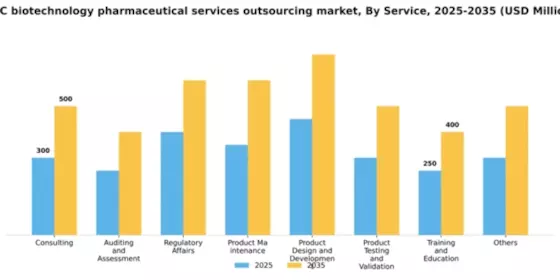
In the GCC biotechnology pharmaceutical-services-outsources market, the service segment is largely dominated by Consulting, which accounts for a significant share of the market. This is followed by Regulatory Affairs and Product Design and Development segments. Other services such as Auditing and Assessment, Product Maintenance, and Product Testing and Validation also contribute, but to a lesser extent. Training and Education, while currently smaller, is witnessing a sharp increase in demand driven by the growing need for skilled professionals in biotechnology.
Growth trends in the service segment are driven by increasing investments in biotechnology and pharmaceutical research and development. The push towards more stringent regulatory compliance and the need for advanced product testing further fuel demand for services, particularly in Training and Education which is rapidly becoming essential. Innovations and technological advancements are also promoting service improvement and expansion, thereby enhancing overall market growth.
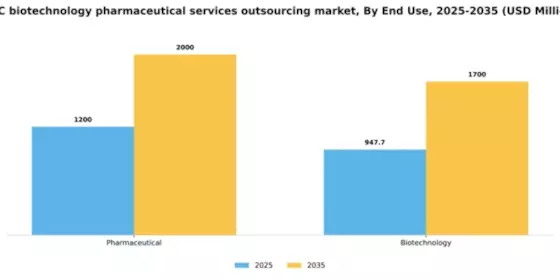
Consulting (Dominant) vs. Training and Education (Emerging)
Consulting services are the backbone of the GCC biotechnology pharmaceutical-services-outsources market, providing crucial advice and strategic direction for companies navigating regulatory frameworks and operational challenges. This segment is characterized by its established client base and expertise in various biotechnology functions, ensuring high demand for ongoing consulting engagements. Conversely, Training and Education services are emerging as key players in the market, responding to an urgent need for workforce development. As the biotechnology sector rapidly evolves, the emphasis on specialized training programs is gaining traction, aimed at equipping professionals with the skills needed for new technologies and methodologies. This dual dynamic positions Consulting as a dominant force while Training and Education showcases significant potential for growth.
In the GCC biotechnology pharmaceutical-services-outsources market, the distribution of market share reveals that the pharmaceutical segment holds the largest share, driven by consistent demand for innovative drug solutions. Conversely, the biotechnology segment, while smaller in market share, is gaining traction due to advancements in personalized medicine and biopharmaceuticals, attracting significant investment.
The growth trends in the pharmaceuticals sector are propelled by an aging population and increasing prevalence of chronic diseases, leading to higher demand for therapeutic drugs. On the other hand, the biotechnology segment is witnessing rapid growth driven by technological advancements, research institutions, and public-private partnerships aimed at accelerating drug development processes, making it one of the fastest-growing segments within the market.
Health: Pharmaceutical (Dominant) vs. Biotechnology (Emerging)
The pharmaceutical segment is characterized by established companies with robust supply chains, focusing on the development and distribution of large volume, small molecule drugs. These companies enjoy economies of scale and have extensive distribution networks, making them dominant players in the market. Meanwhile, the biotechnology segment represents emerging opportunities, with a focus on biologics, monoclonal antibodies, and gene therapies. These biopharmaceutical firms are often smaller and more agile, allowing them to rapidly innovate and respond to market needs, although they face challenges such as regulatory hurdles and high production costs. As the industry evolves, both segments are positioned to complement each other, driving overall market progress.
Get more detailed insights about GCC Biotechnology Pharmaceutical Services Outsources Market Request Free Sample
The biotechnology pharmaceutical-services-outsources market is currently characterized by a dynamic competitive landscape, driven by innovation, strategic partnerships, and regional expansion. Key players such as Thermo Fisher Scientific (US), AbbVie (US), and Roche (CH) are actively shaping the market through their distinct operational focuses. For instance, Thermo Fisher Scientific (US) emphasizes innovation in laboratory services and bioprocessing technologies, which positions it as a leader in providing comprehensive solutions to biopharmaceutical companies. AbbVie (US), on the other hand, is concentrating on expanding its therapeutic portfolio through strategic acquisitions and collaborations, thereby enhancing its market presence. Roche (CH) is leveraging its strong R&D capabilities to drive advancements in personalized medicine, which is increasingly becoming a focal point in the industry. Collectively, these strategies contribute to a competitive environment that is both collaborative and fiercely competitive, as companies seek to differentiate themselves through technological advancements and service offerings. In terms of business tactics, companies are increasingly localizing manufacturing and optimizing supply chains to enhance operational efficiency and responsiveness to market demands. The market structure appears moderately fragmented, with several key players holding substantial market shares while also allowing for the presence of smaller, specialized firms. This fragmentation enables a diverse range of services and innovations, fostering a competitive atmosphere where collaboration and competition coexist. In October 2025, Thermo Fisher Scientific (US) announced a strategic partnership with a leading regional biotechnology firm to enhance its bioprocessing capabilities in the GCC. This collaboration is expected to streamline operations and improve access to advanced biomanufacturing technologies, thereby positioning Thermo Fisher as a pivotal player in the region's biopharmaceutical landscape. The strategic importance of this partnership lies in its potential to accelerate innovation and meet the growing demand for biopharmaceutical products. In September 2025, AbbVie (US) completed the acquisition of a local biotech company specializing in gene therapy. This move is likely to bolster AbbVie's research capabilities and expand its therapeutic offerings, particularly in the field of rare diseases. The acquisition underscores AbbVie's commitment to enhancing its portfolio through targeted investments, which may provide a competitive edge in a rapidly evolving market. In August 2025, Roche (CH) launched a new digital platform aimed at integrating AI-driven analytics into its drug development processes. This initiative is expected to enhance the efficiency of clinical trials and improve patient outcomes by leveraging data-driven insights. The strategic significance of this digital transformation reflects Roche's commitment to staying at the forefront of innovation in the biotechnology sector. As of November 2025, current competitive trends indicate a strong emphasis on digitalization, sustainability, and the integration of AI technologies within the biotechnology pharmaceutical-services-outsources market. Strategic alliances are increasingly shaping the landscape, as companies recognize the value of collaboration in driving innovation and enhancing service delivery. Looking ahead, competitive differentiation is likely to evolve, with a shift from price-based competition to a focus on innovation, technological advancements, and supply chain reliability. This transition suggests that companies that prioritize these elements will be better positioned to thrive in an increasingly complex and competitive environment.




Recent developments in the GCC Biotechnology Pharmaceutical Services Outsourced Market reflect a dynamic landscape influenced by strategic mergers and acquisitions. Notably, AstraZeneca announced its acquisition of a regional biotech company in August 2023 to enhance its research capabilities and product pipeline in the GCC, a move aimed at bolstering its local presence.
In July 2023, Merck and Co expanded its partnership with local research institutions to drive innovation in biotechnology, showcasing a growing commitment to the region’s pharmaceutical ecosystem. Additionally, Gilead Sciences reported an increase in market valuation due to successful product launches, significantly impacting its competitive positioning in the GCC.
Furthermore, GlaxoSmithKline has invested in a new production facility in the UAE, which is expected to boost production capacity and streamline operations. Over the past two to three years, the market has seen robust growth driven by increased demand for advanced biopharmaceutical services, regulatory support from GCC governments, and rising healthcare investments.
Notable events include the establishment of a biotechnology innovation hub in Qatar in September 2022, aimed at fostering collaboration among biotech firms. Overall, these developments underscore the GCC’s evolving role in the global biotechnology landscape.
The Biotechnology Pharmaceutical Services Outsources Market is projected to grow at a 5.07% CAGR from 2025 to 2035, driven by technological advancements and increasing demand for personalized medicine.
New opportunities lie in:
By 2035, the market is expected to achieve robust growth, driven by innovation and strategic partnerships.
| MARKET SIZE 2024 | 2147.71(USD Million) |
| MARKET SIZE 2025 | 2256.6(USD Million) |
| MARKET SIZE 2035 | 3700.0(USD Million) |
| COMPOUND ANNUAL GROWTH RATE (CAGR) | 5.07% (2025 - 2035) |
| REPORT COVERAGE | Revenue Forecast, Competitive Landscape, Growth Factors, and Trends |
| BASE YEAR | 2024 |
| Market Forecast Period | 2025 - 2035 |
| Historical Data | 2019 - 2024 |
| Market Forecast Units | USD Million |
| Key Companies Profiled | Thermo Fisher Scientific (US), AbbVie (US), Roche (CH), Amgen (US), GSK (GB), Novartis (CH), Bristol-Myers Squibb (US), Merck & Co. (US), Sanofi (FR) |
| Segments Covered | Service, End Use |
| Key Market Opportunities | Emerging biomanufacturing technologies enhance efficiency in the biotechnology pharmaceutical-services-outsources market. |
| Key Market Dynamics | Rising demand for biotechnology pharmaceutical services driven by regulatory changes and technological advancements in the GCC region. |
| Countries Covered | GCC |
The overall market valuation was $2147.71 Million in 2024.
The projected valuation for 2035 is $3700.0 Million.
The expected CAGR during the forecast period 2025 - 2035 is 5.07%.
Key players include Thermo Fisher Scientific, AbbVie, Roche, Amgen, GSK, Novartis, Bristol-Myers Squibb, Merck & Co., and Sanofi.
The valuation range for the pharmaceutical segment was between $1200.0 Million and $2000.0 Million.
The biotechnology segment had a valuation range of $947.71 Million to $1700.0 Million.
Key service segments include Consulting, Auditing and Assessment, Regulatory Affairs, Product Maintenance, Product Design and Development, Product Testing and Validation, and Training and Education.
The valuation range for the Regulatory Affairs service segment was between $400.0 Million and $600.0 Million.
The market is expected to grow steadily, reaching a valuation of $3700.0 Million by 2035.
The product design and development segment had a valuation range of $450.0 Million to $700.0 Million in 2024.


Kindly complete the form below to receive a free sample of this Report

“This is really good guys. Excellent work on a tight deadline. I will continue to use you going forward and recommend you to others. Nice job”


“Thanks. It’s been a pleasure working with you, please use me as reference with any other Intel employees.”


“Thanks for sending the report it gives us a good global view of the Betaïne market.”


“Thank you, this will be very helpful for OQS.”


“We found the report very insightful! we found your research firm very helpful. I'm sending this email to secure our future business.”


“I am very pleased with how market segments have been defined in a relevant way for my purposes (such as "Portable Freezers & refrigerators" and "last-mile"). In general the report is well structured. Thanks very much for your efforts.”


“I have been reading the first document or the study, ,the Global HVAC and FP market report 2021 till 2026. Must say, good info! I have not gone in depth at all parts, but got a good indication of the data inside!”


“We got the report in time, we really thank you for your support in this process. I also thank to all of your team as they did a great job.”


“The Automotive 48V ECU Components Procurement Intelligence Study” was a complex project, but the Market Research Future (MRFR) team handled it with quality, agility, and customer-centricity. They delivered all requested data on time and within the agreed scope. The team, including Shubhendra Anand and Rahul Gotadki, was always readily available to clarify questions and swiftly implement necessary adjustments, driving the project to a successful conclusion within a very demanding timeframe.
I would also like to specifically commend Akshay Agarwal for his responsiveness and support at every stage—from our initial inquiry on May 6th through to final delivery on June 18th. His dedication made the entire process seamless.”



