×
Request Free Sample ×

Kindly complete the form below to receive a free sample of this Report

* Please use a valid business email

Leading companies partner with us for data-driven Insights

clients tt-cursor
Hero Background

GCC Iot Data Management Market

ID: MRFR/ICT/58916-HCR
200 Pages
Aarti Dhapte
October 2025

GCC IoT Data Management Market Research Report By Category (Solution, Services) and By Organization Size (Large Enterprises, Small & Medium Enterprises)-Forecast to 2035

Share:
Download PDF ×

We do not share your information with anyone. However, we may send you emails based on your report interest from time to time. You may contact us at any time to opt-out.

GCC Iot Data Management Market Infographic
Purchase Options

GCC Iot Data Management Market Summary

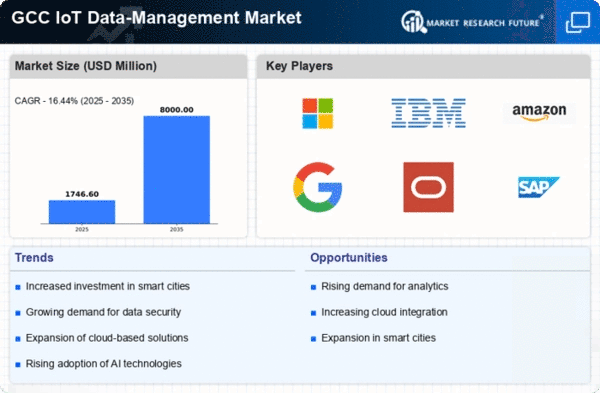
As per MRFR analysis, the GCC IoT Data-Management Market Size was estimated at 1500.0 USD Million in 2024. The GCC iot data-management market is projected to grow from 1746.6 USD Million in 2025 to 8000.0 USD Million by 2035, exhibiting a compound annual growth rate (CAGR) of 16.44% during the forecast period 2025 - 2035.

Key Market Trends & Highlights

The GCC IoT Data-Management Market is poised for substantial growth driven by technological advancements and regulatory frameworks.

  • The largest segment in the GCC IoT data-management market is cloud-based solutions, which are experiencing rapid adoption.
  • AI and machine learning integration is becoming increasingly prevalent, enhancing data processing capabilities.
  • The fastest-growing segment is real-time analytics, reflecting the rising demand for immediate data insights.
  • Key market drivers include the surge in IoT device deployment and the expansion of smart city initiatives.

Market Size & Forecast

2024 Market Size 1500.0 (USD Million)
2035 Market Size 8000.0 (USD Million)
CAGR (2025 - 2035) 16.44%

Major Players

Microsoft (US), IBM (US), Amazon (US), Google (US), Oracle (US), SAP (DE), Cisco (US), Siemens (DE), Honeywell (US)

GCC Iot Data Management Market Trends

The IoT Data-Management Market is currently experiencing notable growth, driven by the increasing adoption of IoT technologies across various sectors in the GCC region. Organizations are recognizing the value of data generated by connected devices, leading to enhanced decision-making processes and operational efficiencies. As businesses strive to harness the potential of real-time data analytics, the demand for robust data management solutions is on the rise. This trend is further supported by government initiatives aimed at fostering digital transformation and innovation within the region. Moreover, the emphasis on data security and privacy is becoming increasingly paramount. With the proliferation of IoT devices, concerns regarding data breaches and unauthorized access are prevalent. Consequently, stakeholders in the iot data-management market are prioritizing the implementation of advanced security measures to protect sensitive information. This focus on safeguarding data integrity is likely to shape the future landscape of the market, as organizations seek to build trust with their customers and comply with regulatory requirements. As the GCC continues to evolve as a technology hub, the iot data-management market is poised for sustained growth, driven by both technological advancements and regulatory frameworks that support innovation.

Increased Focus on Data Security

As the iot data-management market expands, there is a heightened emphasis on data security. Organizations are investing in advanced security protocols to protect sensitive information from potential breaches. This trend is driven by the need to comply with regulatory standards and to maintain customer trust.

Integration of AI and Machine Learning

The integration of artificial intelligence and machine learning technologies into data management solutions is becoming more prevalent. These technologies enable organizations to analyze vast amounts of data efficiently, leading to improved insights and decision-making capabilities.

Government Initiatives Supporting Digital Transformation

Government initiatives in the GCC region are actively promoting digital transformation across various sectors. These initiatives are likely to enhance the adoption of IoT technologies, thereby driving the demand for effective data management solutions.

GCC Iot Data Management Market Drivers

Surge in IoT Device Deployment

The rapid deployment of IoT devices across various sectors is a significant catalyst for the IoT Data-Management Market. The GCC region is witnessing a surge in the number of connected devices, with estimates suggesting that the number of IoT devices could reach 50 billion globally by 2030. This proliferation generates vast amounts of data that require effective management and analysis. As organizations deploy more IoT devices, the demand for comprehensive data management solutions is likely to increase, driving growth in the iot data-management market. Companies are compelled to adopt innovative strategies to handle the complexities associated with large-scale IoT data.

Expansion of Smart City Initiatives

The proliferation of smart city initiatives in the GCC is significantly influencing the IoT Data-Management Market. Governments are investing heavily in infrastructure that integrates IoT technologies to enhance urban living. For instance, the UAE has allocated over $1 billion for smart city projects, which necessitate robust data management systems to handle the influx of data generated by connected devices. This trend is expected to create a substantial demand for innovative data management solutions, as cities strive to optimize resources and improve citizen services. Consequently, the iot data-management market is poised for growth as municipalities seek to implement effective data strategies.

Rising Demand for Real-Time Analytics

The increasing need for real-time analytics is a pivotal driver in the IoT Data-Management Market. Organizations across various sectors in the GCC are recognizing the value of immediate data insights for decision-making. This demand is projected to grow, with the market for real-time analytics expected to reach approximately $10 billion by 2026. Companies are investing in advanced data management solutions to harness the power of real-time data, enabling them to respond swiftly to market changes and operational challenges. As a result, the iot data-management market is likely to experience substantial growth, driven by the necessity for timely and actionable insights.

Growing Regulatory Compliance Requirements

The evolving landscape of regulatory compliance is a crucial driver for the IoT Data-Management Market. In the GCC, organizations are facing increasing pressure to adhere to data protection regulations, such as the UAE's Data Protection Law. Compliance with these regulations necessitates robust data management practices to ensure data integrity and security. As companies strive to meet these requirements, they are likely to invest in advanced data management solutions that facilitate compliance. This trend is expected to bolster the iot data-management market, as businesses seek to mitigate risks associated with non-compliance.

Increased Adoption of Cloud-Based Solutions

The shift towards cloud-based solutions is transforming the IoT Data-Management Market. Organizations in the GCC are increasingly adopting cloud technologies to manage their IoT data more efficiently. This transition is driven by the need for scalability, flexibility, and cost-effectiveness. According to recent estimates, the cloud computing market in the region is anticipated to grow at a CAGR of 20% through 2025. As businesses migrate to the cloud, the demand for sophisticated data management tools that can seamlessly integrate with cloud platforms is likely to rise, thereby propelling the growth of the iot data-management market.


Market Segment Insights

By Category: Solutions (Largest) vs. Services (Fastest-Growing)

The GCC iot data-management market is characterized by a robust distribution of market shares between the Solutions and Services segments. Solutions capture the largest portion of the market, due to their integral role in data processing and management infrastructure. Services, while smaller in share, are growing rapidly as organizations seek external expertise and scalable options to enhance their IoT initiatives. This dynamic delineates a clear divide in how companies prefer to approach their data strategies in the region. Looking forward, the growth trends in the GCC iot data-management market indicate that Services are on a steep upward trajectory, fueled by increasing digital transformation and investment in IoT technologies. Companies are increasingly outsourcing their data management to specialists, leading to a surge in demand for cloud-based services and consulting. The dual push of technological advancements and the need for agility in operations positions the Services segment as the fastest-growing entity within the market, while Solutions continue to provide a solid foundation for organizations to build their IoT capabilities.

Solutions (Dominant) vs. Services (Emerging)

Solutions are positioned as the dominant segment in the GCC iot data-management market, offering a comprehensive suite of tools and technologies aimed at effective data collection, storage, and processing. Their established presence is evident as organizations increasingly prioritize in-house solutions to maintain control over their IoT frameworks. In contrast, Services are the emerging segment that captures growing attention due to their ability to provide flexible and expert-driven support to organizations. Services encompass a variety of offerings, including consulting, maintenance, and cloud services that allow businesses to leverage external resources. This shift signifies a balance between self-sufficiency through Solutions and the agility afforded by Services, driving a diverse approach to scalable IoT data management.

By Organization Size: Large Enterprises (Largest) vs. Small & Medium Enterprises (Fastest-Growing)

In the GCC iot data-management market, the distribution of market share between large enterprises and small & medium enterprises showcases a diverse landscape. Large enterprises command a significant portion of the market, due to their extensive resources, established infrastructures, and the flexibility to invest in advanced data management solutions. Meanwhile, small & medium enterprises represent a growing segment, gaining traction as they adopt IoT solutions tailored to their needs, thus contributing to market dynamism. Recent growth trends indicate that small & medium enterprises are on a rapid uptick in the GCC iot data-management market. These enterprises are increasingly leveraging cloud-based solutions, which provide them with agility and cost-effectiveness. Various factors, including government initiatives to promote digital transformation and the decreasing costs of IoT technology, are driving this growth. The result is a vibrant ecosystem where smaller businesses can compete effectively, accelerating their contributions to the overall market expansion.

Large Enterprises (Dominant) vs. Small & Medium Enterprises (Emerging)

Large enterprises typically dominate the GCC iot data-management market due to their ability to implement comprehensive IoT strategies, enabling them to optimize operations and improve efficiency. Their significant investment capabilities allow for the integration of advanced technologies that can handle vast volumes of data. On the other hand, small & medium enterprises, while emerging, are quickly adapting to the IoT landscape by adopting affordable solutions that enhance their operational capabilities. This segment often benefits from niche market approaches and tailored IoT applications that meet specific business needs, positioning them as crucial players in the market's evolution.

Get more detailed insights about GCC Iot Data Management Market

Key Players and Competitive Insights

The iot data-management market is currently characterized by a dynamic competitive landscape, driven by rapid technological advancements and increasing demand for data-driven decision-making across various sectors. Key players such as Microsoft (US), IBM (US), and Amazon (US) are at the forefront, leveraging their extensive resources and expertise to enhance their market positions. Microsoft (US) focuses on integrating artificial intelligence (AI) into its data management solutions, thereby facilitating more efficient data processing and analytics. IBM (US), on the other hand, emphasizes its hybrid cloud capabilities, allowing businesses to manage data across multiple environments seamlessly. Amazon (US) continues to expand its cloud services, providing scalable solutions that cater to diverse customer needs, which collectively shapes a competitive environment that is increasingly reliant on innovation and technological integration.

In terms of business tactics, companies are increasingly localizing their operations to better serve regional markets, optimizing supply chains to enhance efficiency and reduce costs. The market structure appears moderately fragmented, with several key players exerting considerable influence. This fragmentation allows for a variety of solutions and services, fostering competition that drives innovation and customer choice.

In October 2025, Microsoft (US) announced a strategic partnership with a leading telecommunications provider to enhance its IoT data management capabilities. This collaboration aims to integrate advanced connectivity solutions with Microsoft's Azure platform, thereby improving data accessibility and real-time analytics for businesses. The strategic importance of this partnership lies in its potential to create a more robust ecosystem for IoT applications, positioning Microsoft (US) as a leader in the market.

In September 2025, IBM (US) launched a new suite of AI-driven data management tools designed specifically for the manufacturing sector. This initiative reflects IBM's commitment to digital transformation and its focus on providing tailored solutions that address industry-specific challenges. The introduction of these tools is likely to enhance operational efficiency and data utilization, reinforcing IBM's competitive edge in the market.

In August 2025, Amazon (US) expanded its IoT data management services by introducing a new pricing model that allows customers to pay only for the data they use. This move is indicative of Amazon's strategy to attract small and medium-sized enterprises (SMEs) by lowering entry barriers. The flexibility of this pricing model could significantly increase customer adoption and retention, further solidifying Amazon's position in the market.

As of November 2025, current trends in the iot data-management market include a strong emphasis on digitalization, sustainability, and AI integration. Strategic alliances are increasingly shaping the competitive landscape, enabling companies to pool resources and expertise to deliver innovative solutions. Looking ahead, competitive differentiation is expected to evolve, with a shift from price-based competition towards a focus on innovation, technology, and supply chain reliability. This transition suggests that companies that prioritize these aspects will likely emerge as leaders in the market.

Key Companies in the GCC Iot Data Management Market market include

Industry Developments

The GCC IoT Data Management Market has seen significant activity recently, prominently with companies like SAP, Cisco, and Dell Technologies investing in enhanced data management capabilities to support the region's digital transformation initiatives. In September 2023, SAP announced collaborations with local firms to develop IoT solutions aimed at improving efficiency across various sectors, including manufacturing and healthcare.

Cisco, in collaboration with local telecom providers, launched a new IoT security strategy focused on boosting data protection measures in critical infrastructure. Meanwhile, Hewlett Packard Enterprise unveiled its advanced data analytics platform to help GCC businesses harness large datasets effectively.

Additionally, in March 2023, Schneider Electric completed the acquisition of a regional IoT start-up, enhancing its EcoStruxure platform's capabilities for smart buildings. Growth in the market valuation for these companies has been propelled by increased government investments and ambitious smart city projects within the GCC, especially in Saudi Arabia and the UAE, which are pushing for IoT adoption across various industries. Recent reports indicate a growing emphasis on sustainable IoT solutions, aligning with the GCC's green economy goals over the past two to three years.

Future Outlook

GCC Iot Data Management Market Future Outlook

The IoT Data Management Market is projected to grow at a 16.44% CAGR from 2024 to 2035, driven by increased data generation, cloud adoption, and advanced analytics.

New opportunities lie in:

  • Development of AI-driven data analytics platforms for real-time insights.
  • Integration of IoT data management with blockchain for enhanced security.
  • Creation of tailored data management solutions for specific industry verticals.

By 2035, the market is expected to be robust, driven by innovation and strategic partnerships.

Market Segmentation

GCC Iot Data Management Market Category Outlook

  • Solutions
  • Services

GCC Iot Data Management Market Organization Size Outlook

  • Large Enterprises
  • Small & Medium Enterprises

Report Scope

MARKET SIZE 20241500.0(USD Million)
MARKET SIZE 20251746.6(USD Million)
MARKET SIZE 20358000.0(USD Million)
COMPOUND ANNUAL GROWTH RATE (CAGR)16.44% (2024 - 2035)
REPORT COVERAGERevenue Forecast, Competitive Landscape, Growth Factors, and Trends
BASE YEAR2024
Market Forecast Period2025 - 2035
Historical Data2019 - 2024
Market Forecast UnitsUSD Million
Key Companies Profiled["Microsoft (US)", "IBM (US)", "Amazon (US)", "Google (US)", "Oracle (US)", "SAP (DE)", "Cisco (US)", "Siemens (DE)", "Honeywell (US)"]
Segments CoveredCategory, Organization Size
Key Market OpportunitiesIntegration of advanced analytics and AI in the iot data-management market enhances decision-making capabilities.
Key Market DynamicsRising demand for real-time analytics drives innovation in IoT data management solutions across the region.
Countries CoveredGCC

Leave a Comment

FAQs

What is the expected value of the GCC IoT Data Management Market in 2024?

The GCC IoT Data Management Market is expected to be valued at 802.2 million USD in 2024.

What will be the anticipated market size by 2035?

By 2035, the market is anticipated to reach a value of 4800.4 million USD.

What is the expected CAGR for the GCC IoT Data Management Market between 2025 and 2035?

The expected CAGR for the market from 2025 to 2035 is 17.662%.

Which category is projected to dominate the GCC IoT Data Management Market by 2035?

By 2035, the Solutions category is projected to be valued at 1920.0 million USD.

How large is the Services segment expected to be in 2024?

The Services segment of the GCC IoT Data Management Market is expected to be valued at 481.2 million USD in 2024.

What are some of the key players in the GCC IoT Data Management Market?

Major players in the market include SAP, Cisco, and Microsoft among others.

What is the expected market growth rate for the Solutions segment from 2024 to 2035?

The Solutions segment is expected to grow from 321.0 million USD in 2024 to 1920.0 million USD by 2035.

What opportunities are driving growth in the GCC IoT Data Management Market?

Opportunities such as increased adoption of IoT technologies and the need for data analytics are driving growth.

How does the regional landscape affect the GCC IoT Data Management Market?

The regional landscape is influenced by the proliferation of smart city projects and digital transformation initiatives.

What are some challenges that the GCC IoT Data Management Market may face?

Challenges may include data privacy concerns and integration of diverse systems within IoT ecosystems.

Download Free Sample

Kindly complete the form below to receive a free sample of this Report

Compare Licence

×
Features License Type
Single User Multiuser License Enterprise User
Price $4,950 $5,950 $7,250
Maximum User Access Limit 1 User Upto 10 Users Unrestricted Access Throughout the Organization
Free Customization
Direct Access to Analyst
Deliverable Format
Platform Access
Discount on Next Purchase 10% 15% 15%
Printable Versions