Increased Focus on Regulatory Compliance
The laboratory informatics market is witnessing a heightened focus on regulatory compliance within the GCC. Laboratories are under constant pressure to adhere to stringent regulations set forth by health authorities and international standards. This compliance necessitates the implementation of comprehensive informatics solutions that can ensure data integrity, traceability, and security. As a result, laboratories are increasingly investing in informatics systems that facilitate compliance with regulations such as ISO and GLP. The market is projected to expand as laboratories recognize the importance of maintaining compliance to avoid penalties and ensure quality assurance. This trend is likely to drive a growth rate of around 9% in the laboratory informatics market over the coming years.
Growing Emphasis on Collaborative Research
The laboratory informatics market is benefiting from a growing emphasis on collaborative research initiatives across the GCC. As research institutions and laboratories seek to enhance their collaborative efforts, the demand for informatics solutions that support data sharing and communication is increasing. These systems enable researchers to access and analyze shared data seamlessly, fostering innovation and accelerating research outcomes. The laboratory informatics market is expected to see a growth trajectory of approximately 11% as collaborative research becomes more prevalent. This trend highlights the importance of informatics solutions in facilitating partnerships and enhancing the overall research ecosystem in the region.
Rising Demand for Data Management Solutions
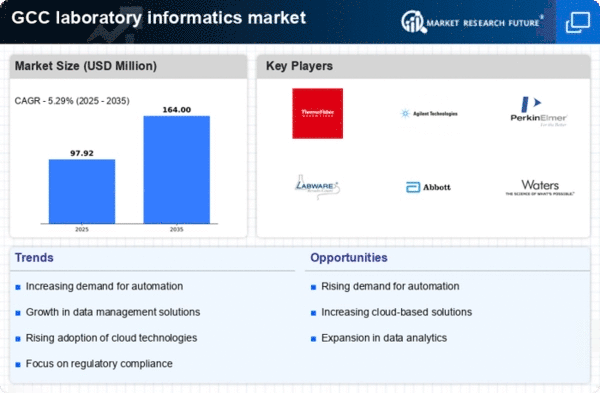
The laboratory informatics market is experiencing a notable surge in demand for advanced data management solutions across the GCC region. This trend is driven by the increasing volume of data generated in laboratories, necessitating efficient systems for data storage, retrieval, and analysis. As laboratories strive to enhance operational efficiency, the adoption of sophisticated data management tools is becoming essential. Reports indicate that the market for laboratory informatics solutions is projected to grow at a CAGR of approximately 10% over the next five years, reflecting the critical need for effective data handling. Furthermore, regulatory compliance requirements are pushing laboratories to invest in robust data management systems, thereby propelling the growth of the laboratory informatics market in the GCC.
Expansion of Biobanking and Genomic Research
The expansion of biobanking and genomic research is significantly impacting the laboratory informatics market in the GCC. As the region invests in personalized medicine and advanced genomic studies, the need for sophisticated informatics solutions to manage biological samples and genomic data is becoming critical. Laboratories are increasingly adopting informatics systems that can handle large datasets and ensure the secure storage and retrieval of sensitive information. This trend is projected to drive the laboratory informatics market with an anticipated growth rate of 10% in the next few years. The integration of informatics in biobanking and genomic research is essential for advancing scientific discovery and improving healthcare outcomes.
Technological Advancements in Laboratory Equipment
Technological advancements in laboratory equipment are significantly influencing the laboratory informatics market in the GCC. Innovations such as automated systems, high-throughput screening, and advanced analytical instruments are enhancing laboratory capabilities. These advancements not only improve the accuracy and speed of laboratory processes but also facilitate the integration of informatics solutions. As laboratories adopt cutting-edge technologies, the need for compatible informatics systems becomes increasingly apparent. The laboratory informatics market is expected to benefit from this trend, with an estimated growth rate of 12% in the next few years. This growth is indicative of the laboratories' commitment to leveraging technology for improved outcomes and operational efficiency.













Leave a Comment