×
Request Free Sample ×

Kindly complete the form below to receive a free sample of this Report

* Please use a valid business email

Leading companies partner with us for data-driven Insights

clients tt-cursor
Hero Background

GCC Wlan Market

ID: MRFR/ICT/60939-HCR
200 Pages
Aarti Dhapte
October 2025

GCC WLAN Market Research Report By Application (Residential, Commercial, Industrial, Public Sector, Education), By Product Type (Access Points, Controllers, Hotspots, Repeaters, Antennas), By Connectivity Technology (Wi-Fi 5, Wi-Fi 6, Wi-Fi 6E, Wi-Fi 7, Mesh Networking) and By End Use (Small and Medium Enterprises, Large Enterprises, Home Users, Government, Hospitality)- Forecast to 2035

Share:
Download PDF ×

We do not share your information with anyone. However, we may send you emails based on your report interest from time to time. You may contact us at any time to opt-out.

GCC Wlan Market Infographic
Purchase Options

GCC Wlan Market Summary

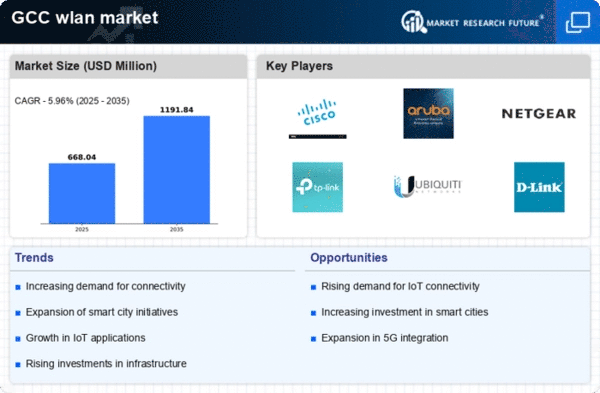
As per MRFR analysis, the GCC wlan market Size was estimated at 630.46 USD Million in 2024. The wlan market is projected to grow from 668.04 USD Million in 2025 to 1191.84 USD Million by 2035, exhibiting a compound annual growth rate (CAGR) of 5.96% during the forecast period 2025 - 2035.

Key Market Trends & Highlights

The GCC WLAN market is experiencing robust growth driven by technological advancements and increasing connectivity demands.

  • The adoption of advanced technologies is reshaping the GCC WLAN market landscape.
  • Government initiatives and investments are significantly boosting infrastructure development in the region.
  • The enterprise segment remains the largest, while the residential segment is the fastest-growing in terms of WLAN deployment.
  • Key market drivers include the growing demand for high-speed connectivity and the expansion of smart cities.

Market Size & Forecast

2024 Market Size 630.46 (USD Million)
2035 Market Size 1191.84 (USD Million)
CAGR (2025 - 2035) 5.96%

Major Players

Cisco Systems (US), Aruba Networks (US), Netgear (US), TP-Link (CN), Ubiquiti Networks (US), D-Link (TW), Huawei Technologies (CN), Zebra Technologies (US)

GCC Wlan Market Trends

The wlan market in the GCC region is currently experiencing a dynamic evolution, driven by the increasing demand for high-speed internet connectivity and the proliferation of smart devices. As businesses and consumers alike seek seamless connectivity, the market is adapting to meet these needs through advancements in technology and infrastructure. The rise of smart cities and the Internet of Things (IoT) is further propelling the demand for robust wireless networks, leading to significant investments in the sector. Additionally, government initiatives aimed at enhancing digital infrastructure are likely to play a crucial role in shaping the future landscape of the wlan market. Moreover, the competitive landscape is intensifying as various players strive to capture market share. This competition is fostering innovation, with companies exploring new technologies such as Wi-Fi 6 and beyond, which promise improved performance and efficiency. The emphasis on security and reliability is also becoming paramount, as organizations prioritize secure connections to protect sensitive data. Overall, the wlan market in the GCC appears poised for substantial growth, driven by technological advancements and a commitment to enhancing connectivity across the region.

Adoption of Advanced Technologies

The wlan market is witnessing a notable shift towards the adoption of advanced technologies, such as Wi-Fi 6 and mesh networking solutions. These innovations are designed to enhance connectivity, providing faster speeds and improved coverage. As businesses and consumers increasingly rely on high-performance networks, the demand for these technologies is expected to rise, potentially transforming user experiences.

Government Initiatives and Investments

Government initiatives aimed at improving digital infrastructure are playing a pivotal role in the wlan market. Investments in broadband expansion and smart city projects are likely to drive growth, as authorities recognize the importance of reliable connectivity for economic development. Such initiatives may lead to enhanced collaboration between public and private sectors, fostering innovation.

Focus on Security and Reliability

As the reliance on wireless networks grows, the emphasis on security and reliability within the wlan market is becoming increasingly critical. Organizations are prioritizing secure connections to safeguard sensitive information, leading to the development of advanced security protocols. This focus on protection may influence purchasing decisions, as consumers and businesses seek trustworthy solutions.

GCC Wlan Market Drivers

Expansion of Smart Cities

The development of smart cities across the GCC is a crucial factor influencing the wlan market. Governments in the region are investing heavily in smart city initiatives, which integrate technology into urban planning and infrastructure. This includes the deployment of advanced wireless networks to support various applications such as traffic management, public safety, and environmental monitoring. The wlan market is expected to benefit from these initiatives, as the demand for seamless connectivity increases. Reports indicate that investments in smart city projects could reach up to $100 billion by 2030, creating substantial opportunities for wlan market players to provide the necessary infrastructure.

Emergence of 5G Technology

The rollout of 5G technology in the GCC region is poised to revolutionize the wlan market. With its promise of ultra-fast speeds and low latency, 5G is expected to enhance wireless connectivity significantly. This technological advancement will likely drive the demand for wlan solutions that can leverage 5G capabilities. As telecommunications companies invest in 5G infrastructure, the wlan market is anticipated to experience substantial growth. Analysts predict that the adoption of 5G could lead to a 40% increase in wireless data traffic, further emphasizing the need for advanced wlan technologies to support this new era of connectivity.

Rising Mobile Data Traffic

The surge in mobile data traffic in the GCC region is a significant driver for the wlan market. With the increasing adoption of smartphones and mobile applications, data consumption has escalated dramatically. Recent statistics suggest that mobile data traffic in the region is projected to grow by over 50% annually, necessitating the enhancement of wireless networks. This trend compels service providers to upgrade their wlan market offerings to accommodate the growing demand for mobile connectivity. As a result, investments in wlan technologies are likely to rise, enabling providers to deliver faster and more reliable services to consumers and businesses.

Increased Focus on Digital Transformation

The ongoing digital transformation across various sectors in the GCC is a vital driver for the wlan market. Organizations are increasingly adopting digital solutions to enhance operational efficiency and customer engagement. This shift necessitates robust wireless networks capable of supporting cloud services, remote work, and real-time data analytics. As businesses invest in digital infrastructure, the demand for advanced wlan solutions is expected to rise. Industry reports indicate that the digital transformation market in the GCC could reach $30 billion by 2025, highlighting the potential for growth in the wlan market as companies seek to modernize their operations.

Growing Demand for High-Speed Connectivity

The increasing demand for high-speed internet connectivity in the GCC region is a primary driver for the wlan market. As businesses and consumers alike seek faster and more reliable internet services, the wlan market is experiencing significant growth. According to recent data, the demand for high-speed broadband connections has surged by approximately 30% in urban areas, prompting service providers to enhance their wireless infrastructure. This trend is further fueled by the proliferation of smart devices and IoT applications, which require robust wireless networks. Consequently, the wlan market is likely to expand as companies invest in advanced technologies to meet these connectivity needs.


Market Segment Insights

GCC WLAN Market Segment Insights

GCC WLAN Market Segment Insights

WLAN Market Application Insights

WLAN Market Application Insights

The GCC WLAN Market exhibits diverse applications across various sectors, highlighting its critical role in supporting economic growth and technological advancement within the region. Each segment plays a specific role, contributing to the overall development of the WLAN industry. The residential application stands out as a key area, driven by the increasing demand for high-speed internet connectivity and improved home automation systems, which reflect consumer preferences for smart home technologies. Meanwhile, the commercial sector is experiencing significant adoption of WLAN solutions, driven by the need for efficient communication and enhanced productivity in workplaces. This growth is reinforced by the expansion of businesses in the GCC, necessitating reliable and secure network infrastructures to support operations.

In addition, the industrial application of WLAN technology plays a pivotal role in modernizing operations across manufacturing and logistics sectors in the GCC. Companies are increasingly integrating wireless solutions for real-time monitoring and process automation, improving operational efficiency and minimizing downtime. The public sector also leverages WLAN capabilities to enhance public services and connectivity in government buildings and facilities, promoting smarter governance. Educational institutions are another vital segment, embracing WLAN technologies to facilitate digital learning environments and improve access to educational resources for students. 

This trend reflects the GCC's commitment to fostering innovation in education and preparing the workforce for a digital future. Overall, the various applications within the GCC WLAN Market are influenced by advancements in technology, increasing connectivity demands, and an emphasis on enhancing productivity across sectors, thereby representing a significant driver of market growth and evolution. 

The importance of each application underscores its contributions to the broader economic landscape, with increasing investment and adoption trends anticipated to solidify their roles in the region's technological narrative. The GCC’s strategic initiatives in technology and infrastructure development further bolster these segments, highlighting opportunities for companies to innovate and expand their offerings to meet emerging consumer and organizational needs.

WLAN Market Product Type Insights

WLAN Market Product Type Insights

The GCC WLAN Market has been witnessing growth in various product types, each playing a crucial role in shaping the industry's landscape. Access Points are vital as they enable seamless connectivity for a multitude of devices, satisfying the rising demand for reliable internet access in both commercial and residential settings. Controllers serve as the backbone of WLAN networks, managing data traffic and ensuring efficient communication, making them essential for large-scale implementations. Hotspots are increasingly popular in public spaces, catering to the need for accessible internet in urban areas across the GCC, thereby encouraging greater digital engagement.

Repeaters are important for extending the coverage area and enhancing signal strength, especially in expansive environments, while antennas create the necessary connection across varying distances, optimizing network performance. Together, these product types cater to escalating data consumption trends driven by increased mobile device usage and the proliferation of IoT devices in the GCC, stimulating an environment ripe for technological advancements. As organizations continue focusing on digital transformation, the relevance of each product type becomes apparent, emphasizing the importance of a robust WLAN infrastructure in driving economic growth and connectivity throughout the region.

WLAN Market Connectivity Technology Insights

WLAN Market Connectivity Technology Insights

The Connectivity Technology segment within the GCC WLAN Market showcases a significant shift towards advanced wireless communication solutions, reflecting the increasing demand for high-speed internet and seamless connectivity. This landscape is primarily dominated by technological advancements in Wi-Fi standards, including Wi-Fi 5, Wi-Fi 6, Wi-Fi 6E, and the emerging Wi-Fi 7, each designed to enhance network efficiency and capacity. Wi-Fi 6 is particularly noteworthy as it addresses the challenges of high-density environments, which are prevalent in the GCC region's urban settings and commercial hubs.

Mesh Networking technologies have also gained traction as they provide comprehensive coverage, eliminating dead zones in large areas, which is critical for businesses and smart city initiatives. The GCC's focus on digital transformation and smart infrastructure, coupled with government investments in technology, is propelling the adoption of these connectivity solutions. Furthermore, the increasing prevalence of IoT devices amplifies the significance of these WLAN technologies in delivering uninterrupted connectivity, thus supporting a robust digital economy across the GCC member states.Overall, the Connectivity Technology segment represents a vital component of the evolving wireless ecosystem, underscoring the region's commitment to enhancing communication and connectivity standards for both businesses and consumers.

WLAN Market End Use Insights

WLAN Market End Use Insights

The GCC WLAN Market is diverse, with significant emphasis on various end use categories, each playing a crucial role in driving market dynamics. Small and Medium Enterprises (SMEs) emerged as key drivers within the market, focusing on adopting WLAN technologies to enhance operational efficiency and streamline communication. Large Enterprises utilize advanced WLAN solutions to support their extensive network requirements and foster collaboration among teams, benefiting efficiently from increased bandwidth and connectivity. Home Users continue to demand reliable and high-speed wireless solutions as digital activities surge, particularly in the wake of remote work trends and online education.

The Government sector increasingly seeks robust WLAN systems for secure communication and public service efficiency, as recognized during initiatives aimed at boosting digital infrastructure in the region. Meanwhile, the Hospitality industry relies heavily on high-capacity WLAN networks to provide seamless guest experiences, critical in maintaining competitiveness in a region known for its tourism and hospitality offerings. The GCC WLAN Market segmentation thus highlights the various important demands for wireless connectivity across sectors, underscoring the key trends that drive growth, including the need for enhanced mobile connectivity and the integration of smart technologies, while also addressing potential challenges such as cybersecurity risks and infrastructure limitations.

Get more detailed insights about GCC Wlan Market

Key Players and Competitive Insights

The wlan market exhibits a dynamic competitive landscape characterized by rapid technological advancements and increasing demand for high-speed connectivity across the GCC region. Key players such as Cisco Systems (US), Aruba Networks (US), and Huawei Technologies (CN) are at the forefront, leveraging innovation and strategic partnerships to enhance their market positions. Cisco Systems (US) focuses on integrating advanced security features into its wlan solutions, thereby addressing growing concerns over cybersecurity. Meanwhile, Aruba Networks (US) emphasizes its commitment to cloud-based solutions, which aligns with the increasing trend towards digital transformation in enterprises. Huawei Technologies (CN) continues to expand its footprint through aggressive pricing strategies and localized manufacturing, which may enhance its competitive edge in the region.

The business tactics employed by these companies reflect a concerted effort to optimize supply chains and localize production. The market structure appears moderately fragmented, with several players vying for market share, yet dominated by a few key firms that significantly influence pricing and innovation. This competitive environment fosters a climate of continuous improvement and adaptation, as companies strive to meet the evolving needs of consumers and businesses alike.

In September 2025, Cisco Systems (US) announced a strategic partnership with a leading telecommunications provider in the GCC to enhance its wlan offerings. This collaboration aims to integrate next-generation wireless technologies, potentially positioning Cisco as a leader in providing robust and secure connectivity solutions. The strategic importance of this partnership lies in its potential to expand Cisco's market reach and reinforce its commitment to innovation in the region.

In October 2025, Aruba Networks (US) launched a new line of wlan products designed specifically for smart cities, focusing on IoT integration and enhanced user experiences. This move is indicative of Aruba's strategy to tap into the burgeoning smart city initiative across the GCC, which may drive significant demand for advanced wlan solutions. The launch not only showcases Aruba's innovative capabilities but also aligns with regional government initiatives aimed at digital transformation.

In August 2025, Huawei Technologies (CN) unveiled a new manufacturing facility in the GCC, aimed at localizing production of its wlan devices. This strategic action is likely to reduce lead times and enhance supply chain reliability, which is crucial in a market that demands rapid deployment of technology. By establishing a local presence, Huawei may also mitigate geopolitical risks and strengthen its competitive position in the region.

As of November 2025, the wlan market is increasingly defined by trends such as digitalization, sustainability, and the integration of AI technologies. Strategic alliances among key players are shaping the competitive landscape, fostering innovation and collaboration. The shift from price-based competition to a focus on technological advancement and supply chain reliability is evident, suggesting that future differentiation will hinge on the ability to deliver innovative solutions that meet the complex demands of consumers and businesses alike.

Key Companies in the GCC Wlan Market market include

Industry Developments

The GCC WLAN Market has seen significant developments recently, reflecting a rapid technological transformation and demand for efficient connectivity solutions. In October 2023, DLink Corporation launched advanced Wi-Fi 6 solutions aimed at enhancing user experiences in smart homes and businesses across the GCC region. Similarly, Aruba Networks continues to expand its footprint with new partnerships focusing on enterprise-grade Wi-Fi offerings tailored for the GCC's growing demand in healthcare and education sectors. 

Additionally, Cisco Systems has been strengthening its market presence through strategic initiatives aimed at providing enhanced cybersecurity and connectivity solutions in the region. The period from 2021 to 2023 has seen notable market growth, driven by an increasing number of public and private investments in smart city initiatives, which significantly influences WLAN deployment across various sectors. 

Although there have not been high-profile merger and acquisition activities reported in the GCC specifically related to the key players in the WLAN market during this time, the ongoing development and deployment of technologies reflect a competitive and evolving landscape, likely impacting overall market valuations positively as organizations seek to upgrade their infrastructure for future demands.


Future Outlook

GCC Wlan Market Future Outlook

The wlan market is projected to grow at a 5.96% CAGR from 2024 to 2035, driven by increasing demand for high-speed connectivity and IoT integration.

New opportunities lie in:

  • Development of advanced mesh networking solutions for urban areas.
  • Expansion of WLAN services in smart city projects.
  • Integration of AI-driven analytics for network optimization.

By 2035, the wlan market is expected to achieve substantial growth, reflecting evolving connectivity needs.

Market Segmentation

GCC Wlan Market End Use Outlook

  • Small and Medium Enterprises
  • Large Enterprises
  • Home Users
  • Government
  • Hospitality

GCC Wlan Market Application Outlook

  • Residential
  • Commercial
  • Industrial
  • Public Sector
  • Education

GCC Wlan Market Product Type Outlook

  • Access Points
  • Controllers
  • Hotspots
  • Repeaters
  • Antennas

GCC Wlan Market Connectivity Technology Outlook

  • Wi-Fi 5
  • Wi-Fi 6
  • Wi-Fi 6E
  • Wi-Fi 7
  • Mesh Networking

Report Scope

MARKET SIZE 2024 630.46(USD Million)
MARKET SIZE 2025 668.04(USD Million)
MARKET SIZE 2035 1191.84(USD Million)
COMPOUND ANNUAL GROWTH RATE (CAGR) 5.96% (2024 - 2035)
REPORT COVERAGE Revenue Forecast, Competitive Landscape, Growth Factors, and Trends
BASE YEAR 2024
Market Forecast Period 2025 - 2035
Historical Data 2019 - 2024
Market Forecast Units USD Million
Key Companies Profiled ["Cisco Systems (US)", "Aruba Networks (US)", "Netgear (US)", "TP-Link (CN)", "Ubiquiti Networks (US)", "D-Link (TW)", "Huawei Technologies (CN)", "Zebra Technologies (US)"]
Segments Covered Application, Product Type, Connectivity Technology, End Use
Key Market Opportunities Integration of advanced security protocols in wireless networks to enhance user trust and compliance.
Key Market Dynamics Rising demand for high-speed connectivity drives innovation and competition in the WLAN market across the GCC region.
Countries Covered GCC

Leave a Comment

FAQs

What is the expected market size of the GCC WLAN Market in 2024?

The GCC WLAN Market is expected to be valued at 370.44 million USD in 2024.

What will be the market size of the GCC WLAN Market by 2035?

By 2035, the GCC WLAN Market is projected to reach a value of 892.0 million USD.

What is the expected CAGR for the GCC WLAN Market from 2025 to 2035?

The expected CAGR for the GCC WLAN Market from 2025 to 2035 is 8.317%.

Which application segment has the highest market value in 2024 within the GCC WLAN Market?

The Commercial application segment has the highest market value in 2024, valued at 110.0 million USD.

What will the Residential application segment value be by 2035 in the GCC WLAN Market?

The Residential application segment is expected to be valued at 210.0 million USD by 2035.

Who are the major players in the GCC WLAN Market?

Major players in the GCC WLAN Market include DLink Corporation, Cisco Systems, and Aruba Networks.

What is the value of the Industrial application segment in 2024 for the GCC WLAN Market?

The Industrial application segment is valued at 60.0 million USD in 2024 within the GCC WLAN Market.

How much is the Public Sector application segment projected to grow by 2035?

The Public Sector application segment is projected to grow to 110.0 million USD by 2035.

What is the market value for the Education application segment in 2024?

The Education application segment is valued at 60.44 million USD in the GCC WLAN Market as of 2024.

What are the anticipated growth drivers for the GCC WLAN Market?

The anticipated growth drivers for the GCC WLAN Market include increasing connectivity demand and infrastructure development.

Download Free Sample

Kindly complete the form below to receive a free sample of this Report

Compare Licence

×
Features License Type
Single User Multiuser License Enterprise User
Price $4,950 $5,950 $7,250
Maximum User Access Limit 1 User Upto 10 Users Unrestricted Access Throughout the Organization
Free Customization
Direct Access to Analyst
Deliverable Format
Platform Access
Discount on Next Purchase 10% 15% 15%
Printable Versions