Aging Population Growth
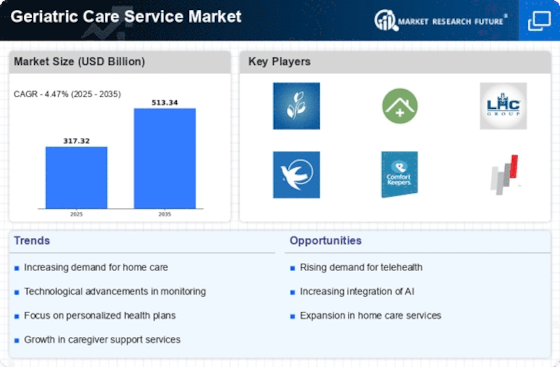
The aging population is a primary driver of the Geriatric Care Service Market. As life expectancy increases, the number of individuals aged 65 and older is projected to rise significantly. According to demographic studies, this age group is expected to double by 2050, leading to an increased demand for specialized care services. This demographic shift necessitates a robust infrastructure to support the unique health needs of older adults, thereby propelling the growth of the geriatric care sector. The Geriatric Care Service Market must adapt to accommodate this expanding population, which may include enhancing service offerings and increasing workforce training to ensure quality care.
Chronic Disease Prevalence
The prevalence of chronic diseases among the elderly is a critical factor influencing the Geriatric Care Service Market. Conditions such as diabetes, heart disease, and arthritis are increasingly common in older adults, necessitating ongoing medical attention and specialized care. Reports indicate that nearly 80% of older adults have at least one chronic condition, which drives the demand for comprehensive geriatric care services. This trend compels healthcare providers to develop tailored care plans that address the complexities of managing multiple chronic conditions, thereby expanding the scope and scale of the Geriatric Care Service Market.
Policy and Regulatory Support
Policy and regulatory support play a pivotal role in shaping the Geriatric Care Service Market. Governments are increasingly recognizing the need for comprehensive care solutions for the aging population, leading to the implementation of supportive policies and funding initiatives. These measures may include incentives for healthcare providers to offer geriatric services, as well as regulations that ensure quality standards in care delivery. Such support not only encourages the establishment of new services but also enhances the sustainability of existing ones. As policies evolve to better address the needs of older adults, the Geriatric Care Service Market is likely to experience significant growth and transformation.
Increased Awareness of Mental Health
There is a growing recognition of the importance of mental health in the Geriatric Care Service Market. As society becomes more aware of the mental health challenges faced by older adults, there is an increasing demand for services that address these issues. Conditions such as depression and anxiety are prevalent among the elderly, often exacerbated by social isolation and physical health problems. The market is responding by integrating mental health services into geriatric care, which may include counseling, support groups, and medication management. This holistic approach to care is likely to enhance the overall well-being of older adults, thereby driving demand within the Geriatric Care Service Market.
Technological Advancements in Healthcare
Technological advancements are reshaping the Geriatric Care Service Market by enhancing the delivery of care. Innovations such as telehealth, remote monitoring, and electronic health records facilitate better communication between healthcare providers and patients. These technologies not only improve access to care but also enable more efficient management of health data, which is crucial for older adults with complex health needs. The integration of technology into geriatric care services is likely to streamline operations and improve patient outcomes, thus driving growth in the market. As technology continues to evolve, the Geriatric Care Service Market must remain agile to leverage these advancements effectively.






















Leave a Comment