Download Free Sample
Kindly complete the form below to receive a free sample of this Report
Germany Advanced Baby Monitors Market Research Report By Product Outlook (Stationary, Wearable) and By End-User Outlook (Home Care, Day Care, Others) - Growth & Industry Forecast 2025 To 2035
As per Market Research Future analysis, the Germany Advanced Baby Monitors Market size was estimated at 140.4 USD Million in 2024. The Advanced Baby-monitors market is projected to grow from 152.56 USD Million in 2025 to 350.0 USD Million by 2035, exhibiting a compound annual growth rate (CAGR) of 8.6% during the forecast period 2025 - 2035
The Germany advanced baby-monitors market is experiencing robust growth driven by technological advancements and rising parental concerns.
| 2024 Market Size | 140.4 (USD Million) |
| 2035 Market Size | 350.0 (USD Million) |
| CAGR (2025 - 2035) | 8.66% |
Nanit (US), Owlet (US), Motorola (US), Philips (NL), Angelcare (CA), Summer Infant (US), Babysense (IL), VTech (TW)
Our Impact
Enabled $4.3B Revenue Impact for Fortune 500 and Leading Multinationals
Partnering with 2000+ Global Organizations Each Year
30K+ Citations by Top-Tier Firms in the Industry
The Germany Advanced Baby Monitors Market is currently experiencing notable growth. This growth is driven by increasing parental awareness regarding child safety and technological advancements. In Germany, parents are increasingly seeking devices that offer enhanced features such as video monitoring, temperature sensors, and two-way communication. This trend reflects a broader shift towards smart home technology, where convenience and security are paramount. As families become more tech-savvy, the demand for sophisticated monitoring solutions continues to rise, suggesting a potential for innovation in product offerings. Moreover, the integration of artificial intelligence and machine learning into advanced baby-monitors is becoming more prevalent. These technologies enable features like sleep tracking and alerts for unusual sounds, which may provide parents with peace of mind. The market appears to be evolving to meet the needs of modern families, with a focus on user-friendly interfaces and seamless connectivity. As a result, manufacturers are likely to invest in research and development to enhance product capabilities, ensuring they remain competitive in this dynamic landscape.
The advanced baby-monitors market is witnessing a surge in the incorporation of smart technologies. Devices now often feature Wi-Fi connectivity, allowing parents to monitor their children remotely via smartphones. This trend indicates a shift towards more integrated solutions that enhance user experience and accessibility.
There is a growing emphasis on security within the advanced baby-monitors market. Parents are increasingly concerned about data privacy and the potential for unauthorized access to their devices. As a result, manufacturers are prioritizing robust encryption and secure connections to address these concerns.
The advanced baby-monitors market is evolving to include health monitoring features. Devices are now capable of tracking vital signs and sleep patterns, providing parents with valuable insights into their child's well-being. This trend suggests a broader understanding of the importance of health in child care.
In Germany, the advanced baby-monitors market is experiencing growth driven by increasing parental concerns regarding child safety and well-being. Parents are becoming more vigilant about monitoring their infants, particularly during sleep. This heightened awareness is leading to a surge in demand for advanced features such as video streaming, night vision, and two-way audio. According to recent data, approximately 70% of parents express a desire for enhanced monitoring capabilities, indicating a clear trend towards investing in advanced baby-monitor technology. This shift reflects a broader societal emphasis on child safety, which is likely to continue influencing purchasing decisions in the advanced baby-monitors market.
The advanced baby-monitors market in Germany is significantly influenced by rapid technological advancements. Innovations such as Wi-Fi connectivity, smartphone integration, and artificial intelligence are becoming standard features in new models. These technologies not only enhance functionality but also improve user experience, making monitoring more convenient for parents. For instance, the integration of AI allows for features like motion detection and alerts, which are increasingly sought after by consumers. As a result, the market is projected to grow at a CAGR of 15% over the next five years, driven by these technological enhancements that cater to modern parenting needs.
The shift towards e-commerce in Germany is another driver of the advanced baby-monitors market. With the increasing popularity of online shopping, parents are finding it more convenient to purchase baby-monitoring devices from the comfort of their homes. E-commerce platforms offer a wide range of options, competitive pricing, and customer reviews, which facilitate informed purchasing decisions. Recent statistics show that online sales of baby products have surged by 25% in the last year, indicating a strong preference for digital shopping. This trend is expected to continue, further propelling the advanced baby-monitors market as more consumers turn to online channels for their purchases.
Rising disposable incomes among German households are also benefiting the advanced baby-monitors market. As families experience financial growth, they are more inclined to invest in premium baby-monitoring solutions that offer advanced features. This trend is particularly evident in urban areas, where parents are willing to spend more on products that ensure their child's safety and comfort. Market analysis indicates that households with an income exceeding €60,000 are 40% more likely to purchase high-end baby monitors. This willingness to invest in quality products is likely to sustain growth in the advanced baby-monitors market.
User-friendly features are becoming a focal point in the advanced baby-monitors market, as manufacturers strive to meet the needs of tech-savvy parents. Features such as intuitive interfaces, easy setup processes, and mobile app compatibility are increasingly prioritized in product design. This emphasis on usability is crucial, as many parents seek devices that can be easily operated without extensive technical knowledge. Market Research Future suggests that products with user-friendly features see a 30% higher customer satisfaction rate, which in turn drives repeat purchases and brand loyalty. As a result, the focus on enhancing user experience is likely to remain a key driver in the advanced baby-monitors market.
In the Germany advanced baby-monitors market, the stationary segment holds a predominant share, appealing to parents seeking reliability and comprehensive features. Stationary monitors provide extensive functionalities, including video feed and environmental sensors, making them a preferred choice for many families. Conversely, wearable monitors are quickly gaining traction among modern parents who prioritize mobility and convenience in monitoring their babies. Growth trends indicate a shift towards innovative wearable technology, with manufacturers focusing on enhancing features that promote real-time health tracking and parental peace of mind. This emerging segment is driven by increasing consumer demand for smart devices that integrate seamlessly with mobile applications, thus allowing parents to stay connected with their infants virtually anywhere. Such trends suggest that while stationary monitors currently lead the market, wearable devices represent a dynamic opportunity for growth.
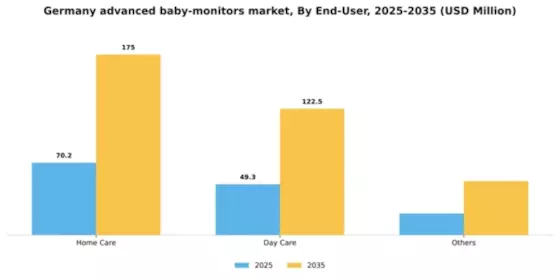
Stationary (Dominant) vs. Wearable (Emerging)
The stationary segment is characterized by its robust features, such as high-definition video, night vision, and long-range connectivity, making it a dominant player in the Germany advanced baby-monitors market. Parents often prefer stationary monitors for their reliability and comprehensive monitoring capabilities. On the other hand, wearable monitors appeal to tech-savvy parents who value portability and integrated monitoring solutions. Wearables are gaining popularity due to their convenience and potential health tracking features, such as temperature monitoring and sleep analysis. This trend reflects a broader shift towards smart technology in baby care, suggesting that while stationary monitors remain the preferred option today, the wearable segment shows significant promise for future expansion.
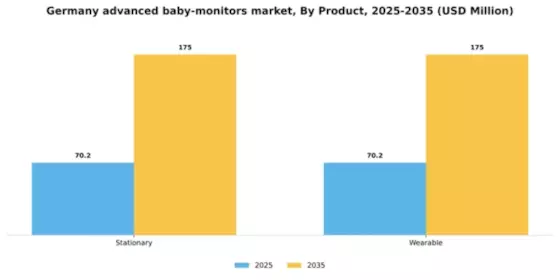
The Germany advanced baby-monitors market showcases a diverse distribution among its end-user segments, with 'Home Care' holding the largest share due to the rising number of households investing in advanced monitoring solutions for home use. In contrast, the 'Day Care' segment is rapidly expanding, driven by an increasing demand for childcare services and a growing focus on child safety and well-being within daycare environments. Growth trends indicate that while 'Home Care' benefits from continued consumer adoption among parents prioritizing safety and convenience, the 'Day Care' segment is emerging due to regulatory changes and heightened awareness of child supervision standards. Factors such as urbanization, increased work hours for parents, and technological advancements in monitoring solutions are propelling this segment forward, making it a crucial player in the overall market landscape.
Home Care (Dominant) vs. Day Care (Emerging)
The 'Home Care' segment stands as the dominant force in the Germany advanced baby-monitors market, characterized by a high adoption rate among parents who value peace of mind and innovation in child monitoring. This segment offers a variety of advanced features, including video streaming, night vision, and smart alerts, catering to the diverse needs of modern parents. On the other hand, the 'Day Care' segment is gaining traction as an emerging market, driven by a surge in demand for enhanced child supervision and safety measures in educational settings. This segment is leveraging technological advancements to improve monitoring capabilities, ensuring that childcare providers can offer a secure and nurturing environment for children, which in turn fuels its rapid growth.
Get more detailed insights about Germany Advanced Baby Monitors Market Request Free Sample
The advanced baby-monitors market in Germany is characterized by a dynamic competitive landscape, driven by technological advancements and evolving consumer preferences. Key players such as Nanit (US), Owlet (US), and Philips (NL) are at the forefront, each adopting distinct strategies to enhance their market presence. Nanit (US) focuses on innovation through its smart monitoring solutions that integrate AI and machine learning, while Owlet (US) emphasizes health monitoring features that appeal to health-conscious parents. Philips (NL), leveraging its extensive experience in consumer electronics, aims to expand its product line with enhanced connectivity features, thereby positioning itself as a comprehensive solution provider in the market. Collectively, these strategies contribute to a competitive environment that prioritizes technological sophistication and user-centric design.In terms of business tactics, companies are increasingly localizing manufacturing to reduce costs and improve supply chain efficiency. This approach is particularly relevant in a moderately fragmented market where smaller players also vie for market share. The collective influence of major companies shapes the market structure, as they set benchmarks for quality and innovation that smaller firms strive to meet. The competitive dynamics are further complicated by the need for compliance with stringent safety regulations, which necessitates ongoing investment in product development and quality assurance.
In October Nanit (US) announced a partnership with a leading pediatric health organization to enhance its product offerings with expert-backed health insights. This strategic move is likely to bolster consumer trust and expand its customer base, as parents increasingly seek products that provide not only monitoring capabilities but also actionable health information. The collaboration underscores the importance of integrating expert knowledge into consumer technology, potentially setting a new standard in the industry.
In September Owlet (US) launched a new subscription service that offers personalized health insights and recommendations based on real-time data collected from its monitors. This initiative appears to be a significant step towards creating a recurring revenue model, which could enhance customer loyalty and provide a steady income stream. By focusing on personalized experiences, Owlet (US) seems to be positioning itself as a leader in the health monitoring segment of the market.
In August Philips (NL) unveiled a new line of baby monitors that incorporate advanced AI features for enhanced security and user experience. This product launch not only reflects Philips' commitment to innovation but also indicates a strategic shift towards integrating smart home technology into baby monitoring solutions. By doing so, Philips (NL) is likely to attract tech-savvy consumers looking for seamless integration with their existing smart home ecosystems.
As of November the competitive trends in the advanced baby-monitors market are increasingly defined by digitalization, sustainability, and AI integration. Strategic alliances are becoming more prevalent, as companies recognize the value of collaboration in enhancing product offerings and market reach. Looking ahead, competitive differentiation is expected to evolve from traditional price-based competition to a focus on innovation, technology, and supply chain reliability. This shift suggests that companies that prioritize R&D and consumer engagement will likely emerge as leaders in this rapidly changing landscape.



Recent developments in the Germany Advanced Baby Monitors Market reveal a steady advancement in technology and consumer preference shifts. Companies such as VTech, Infant Optics, and Philips Avent are leading innovations focused on enhanced security and connectivity features, addressing parent concerns regarding infant safety. Currently, there are no reported mergers or acquisitions involving these significant players in the market, indicating a phase of individual growth strategies. The market has witnessed a growth in valuation due to an increased demand for smart baby monitoring solutions, which utilize app connectivity and advanced surveillance capabilities.
This trend reflects Germany's growing emphasis on IoT technology and smart home integration, as highlighted by several initiatives from the Federal Ministry for Economic Affairs and Energy. In the past couple of years, particularly in September 2021, the market noted a notable rise in demand following the pandemic, with parents seeking additional monitoring capabilities as they adapted to remote work situations. This has influenced product offerings, prompting brands like Motorola and Hatch to enhance their design and functionalities, catering to a more tech-savvy customer base.
The Advanced Baby Monitors Market is projected to grow at an 8.66% CAGR from 2025 to 2035. This growth is driven by technological advancements, increasing parental concerns, and rising disposable incomes.
New opportunities lie in:
By 2035, the market is expected to achieve substantial growth, driven by innovation and evolving consumer needs.
| MARKET SIZE 2024 | 140.4(USD Million) |
| MARKET SIZE 2025 | 152.56(USD Million) |
| MARKET SIZE 2035 | 350.0(USD Million) |
| COMPOUND ANNUAL GROWTH RATE (CAGR) | 8.66% (2025 - 2035) |
| REPORT COVERAGE | Revenue Forecast, Competitive Landscape, Growth Factors, and Trends |
| BASE YEAR | 2024 |
| Market Forecast Period | 2025 - 2035 |
| Historical Data | 2019 - 2024 |
| Market Forecast Units | USD Million |
| Key Companies Profiled | Nanit (US), Owlet (US), Motorola (US), Philips (NL), Angelcare (CA), Summer Infant (US), Babysense (IL), VTech (TW) |
| Segments Covered | Product, End-User |
| Key Market Opportunities | Integration of AI-driven features enhances safety and monitoring capabilities in the advanced baby-monitors market. |
| Key Market Dynamics | Rising consumer demand for smart features drives innovation in the advanced baby-monitors market. |
| Countries Covered | Germany |
The market valuation was $140.4 Million in 2024.
The projected market valuation is $350.0 Million by 2035.
The expected CAGR during the forecast period 2025 - 2035 is 8.66%.
Key players include Nanit, Owlet, Motorola, Philips, Angelcare, Summer Infant, Babysense, and VTech.
Both stationary and wearable segments had revenue figures of $70.2 Million to $175.0 Million in 2024.
The home care segment generated revenues between $70.2 Million and $175.0 Million in 2024.
The day care segment had revenues ranging from $49.3 Million to $122.5 Million in 2024.
The 'others' segment is projected to reach revenues between $21.0 Million and $52.5 Million by 2035.
While specific comparisons to other regions are not provided, the growth trajectory appears promising with a projected CAGR of 8.66%.
Factors such as technological advancements, increasing parental awareness, and the rising demand for safety features may influence market growth.



Kindly complete the form below to receive a free sample of this Report

“This is really good guys. Excellent work on a tight deadline. I will continue to use you going forward and recommend you to others. Nice job”


“Thanks. It’s been a pleasure working with you, please use me as reference with any other Intel employees.”


“Thanks for sending the report it gives us a good global view of the Betaïne market.”


“Thank you, this will be very helpful for OQS.”


“We found the report very insightful! we found your research firm very helpful. I'm sending this email to secure our future business.”


“I am very pleased with how market segments have been defined in a relevant way for my purposes (such as "Portable Freezers & refrigerators" and "last-mile"). In general the report is well structured. Thanks very much for your efforts.”


“I have been reading the first document or the study, ,the Global HVAC and FP market report 2021 till 2026. Must say, good info! I have not gone in depth at all parts, but got a good indication of the data inside!”


“We got the report in time, we really thank you for your support in this process. I also thank to all of your team as they did a great job.”


“The Automotive 48V ECU Components Procurement Intelligence Study” was a complex project, but the Market Research Future (MRFR) team handled it with quality, agility, and customer-centricity. They delivered all requested data on time and within the agreed scope. The team, including Shubhendra Anand and Rahul Gotadki, was always readily available to clarify questions and swiftly implement necessary adjustments, driving the project to a successful conclusion within a very demanding timeframe.
I would also like to specifically commend Akshay Agarwal for his responsiveness and support at every stage—from our initial inquiry on May 6th through to final delivery on June 18th. His dedication made the entire process seamless.”



