Download Free Sample
Kindly complete the form below to receive a free sample of this Report
Germany Chiral Chromatography Columns Market Research Report: Size, Share, Trend Analysis By Applications (Pharmaceuticals, Biotechnology, Food and Beverage, Environmental Analysis), By Material Type (Amino Acid Derivatives, Cyclodextrins, Cellulose Derivatives, Synthetic Polymers), By Column Type (Preparative Columns, Analytical Columns, Capillary Columns) and By End Use (Research Laboratories, Manufacturing Units, Quality Control Departments) - Growth Outlook & Industry Forecast 2025 To 2035
As per Market Research Future analysis, the Germany Chiral Chromatography Columns Market size was estimated at 205.09 USD Million in 2024. The Chiral Chromatography-columns market is projected to grow from 215.3 USD Million in 2025 to 350.0 USD Million by 2035, exhibiting a compound annual growth rate (CAGR) of 4.9% during the forecast period 2025 - 2035
The Germany chiral chromatography-columns market is poised for growth driven by technological advancements and increasing demand in pharmaceuticals.
| 2024 Market Size | 205.09 (USD Million) |
| 2035 Market Size | 350.0 (USD Million) |
| CAGR (2025 - 2035) | 4.98% |
Agilent Technologies (US), Thermo Fisher Scientific (US), Merck KGaA (DE), Chiral Technologies (US), Daicel Corporation (JP), Sigma-Aldrich (US), Phenomenex (US), Restek Corporation (US)
Our Impact
Enabled $4.3B Revenue Impact for Fortune 500 and Leading Multinationals
Partnering with 2000+ Global Organizations Each Year
30K+ Citations by Top-Tier Firms in the Industry
The Germany Chiral Chromatography Columns Market is experiencing notable developments, driven by the increasing demand for high-purity compounds in pharmaceuticals and biotechnology. The growing emphasis on drug safety and efficacy has led to a surge in the utilization of chiral chromatography techniques. This method is essential for the separation of enantiomers, which is crucial in the production of chiral drugs. Furthermore, advancements in technology and the introduction of innovative materials are enhancing the performance and efficiency of these columns, thereby attracting more users in various sectors. In addition, regulatory frameworks in Germany are becoming more stringent, necessitating the use of advanced analytical techniques for quality control. This trend is likely to propel the adoption of chiral chromatography-columns, as companies seek to comply with these regulations. The market appears to be influenced by the increasing collaboration between academic institutions and industry players, fostering research and development initiatives. As a result, the chiral chromatography-columns market is poised for growth, with potential opportunities emerging in niche applications such as food safety and environmental analysis.
Recent innovations in materials and design are enhancing the efficiency and selectivity of chiral chromatography-columns. These advancements are likely to improve separation processes, making them more effective for various applications.
Stricter regulations in the pharmaceutical and food industries are driving the demand for reliable analytical methods. This trend suggests that companies are increasingly adopting chiral chromatography-columns to meet compliance standards.
The collaboration between academic institutions and industry is fostering innovation in the chiral chromatography-columns market. Such partnerships are expected to lead to the development of new applications and improved methodologies.
Germany's biotechnology sector is witnessing rapid expansion, which is positively influencing the chiral chromatography-columns market. The country is recognized for its innovative biopharmaceuticals and bioprocessing technologies. In 2025, the biotechnology market in Germany is expected to grow at a CAGR of around 8%, leading to an increased requirement for chiral separation techniques. Chiral chromatography-columns play a crucial role in the purification of biologics and biosimilars, which are essential for therapeutic applications. As biopharmaceutical companies strive to develop new products, the demand for advanced chiral chromatography solutions is likely to rise, thereby propelling the growth of the chiral chromatography-columns market.
The chiral chromatography-columns market is experiencing a notable surge in demand, primarily driven by the pharmaceutical sector. As the country is home to numerous pharmaceutical companies, the need for efficient separation techniques to produce enantiomerically pure compounds is paramount. In 2025, the pharmaceutical industry in Germany is projected to reach a market value of approximately €50 billion, with a significant portion allocated to research and development. This growth necessitates advanced chiral chromatography solutions to ensure compliance with stringent quality standards. Consequently, the chiral chromatography-columns market is likely to benefit from this increasing demand, as companies seek to enhance their production capabilities and meet regulatory requirements.
Technological innovations in analytical techniques are significantly impacting the chiral chromatography-columns market. The introduction of high-performance liquid chromatography (HPLC) and ultra-high-performance liquid chromatography (UHPLC) has enhanced the efficiency and resolution of chiral separations. In 2025, the market for HPLC systems is projected to grow by approximately 12%, indicating a robust demand for advanced chromatography solutions. These advancements enable researchers and manufacturers to achieve faster and more accurate results, thereby improving productivity. As the need for precise analytical methods continues to rise, the chiral chromatography-columns market is likely to experience substantial growth, driven by the adoption of these cutting-edge technologies.
The chiral chromatography-columns market is also being influenced by a growing emphasis on environmental sustainability in Germany. As industries strive to reduce their ecological footprint, there is a shift towards greener analytical methods. This trend is particularly relevant in the context of chiral chromatography, where the development of environmentally friendly solvents and processes is gaining traction. In 2025, it is anticipated that around 30% of companies in the chemical and pharmaceutical sectors will adopt sustainable practices, which may include the use of chiral chromatography-columns that minimize waste and energy consumption. This shift could create new opportunities for manufacturers of chiral chromatography-columns, as they adapt to meet the evolving demands of environmentally conscious consumers.
Investment in research and development (R&D) is a critical driver for the chiral chromatography-columns market. With a strong emphasis on innovation, both public and private sectors are allocating substantial funds to R&D initiatives. In 2025, it is estimated that R&D spending in the chemical and pharmaceutical industries will exceed €10 billion, fostering advancements in separation technologies. This influx of investment is likely to stimulate the development of novel chiral chromatography-columns that cater to specific applications. As companies seek to enhance their competitive edge through innovative solutions, the chiral chromatography-columns market is expected to thrive, benefiting from the increased focus on R&D.
In the Germany chiral chromatography-columns market, the application segment is predominantly led by Pharmaceuticals, which holds the largest share. This sector benefits from the continual demand for precise separation techniques in drug development and quality control processes. Following closely is the Biotechnology sector, which, while smaller in share, is rapidly growing as biopharmaceutical innovations increase, necessitating advanced chromatographic solutions for protein purification and analysis. The growth trends in this market segment are significantly driven by advancements in analytical methodologies and the rising focus on quality assurance in various industries. With the increasing regulatory requirements for drug safety and efficacy, Pharmaceuticals is expected to maintain its dominant position. Meanwhile, Biotechnology is emerging as a vital area of expansion, propelled by the surge in biologics and biosimilars, leading to a heightened demand for efficient chiral chromatographic techniques for product development and characterization.
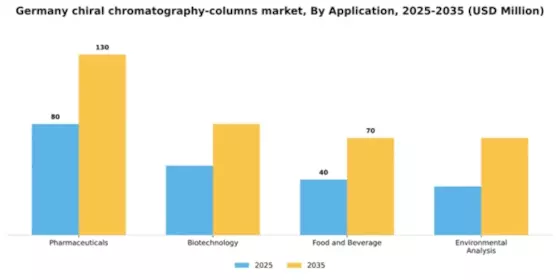
Pharmaceuticals (Dominant) vs. Biotechnology (Emerging)
Pharmaceuticals is the dominant application in the Germany chiral chromatography-columns market, characterized by its extensive use in drug formulation and analysis. The need for rigorous testing and compliance with regulatory standards bolsters this segment's preference for high-quality chromatography solutions. In contrast, Biotechnology represents an emerging field with significant growth potential, driven by innovations in genetic engineering and molecular biology. This segment prioritizes efficient separation processes for complex biological samples, thus necessitating advanced chiral columns. The dynamic evolution of biopharmaceutical products creates a unique niche within this market, underscoring the need for continuous development and specialization in chromatographic technologies.
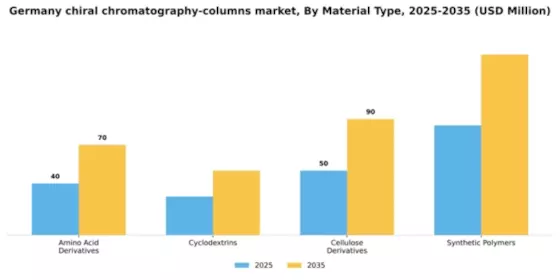
Within the Germany chiral chromatography-columns market, the distribution of market share among the material types is notably dominated by Amino Acid Derivatives, which hold a significant portion of the total market. Following this dominant segment are Cyclodextrins and Cellulose Derivatives, each possessing a respectable share. Synthetic Polymers, though smaller in comparison, are emerging rapidly, indicating a shifting preference in the analytical and preparative applications within the market. The growth trends within the Germany chiral chromatography-columns market are underscored by increasing demand for high-purity compounds, with Amino Acid Derivatives leading the charge due to their versatility and efficiency in separation processes. Conversely, the Synthetic Polymers segment is gaining traction as industries increasingly favor cost-effective and customizable materials for chromatographic applications. This paradigm shift is encouraged by technological advancements and an expanding range of applications, thus enhancing the segment's growth potential.
Amino Acid Derivatives (Dominant) vs. Synthetic Polymers (Emerging)
Amino Acid Derivatives are recognized as the dominant force within the Germany chiral chromatography-columns market, thanks to their proven effectiveness in diverse separation processes. This segment benefits from a strong base of established applications in pharmaceuticals and biotechnology, ensuring sustained demand. On the other hand, Synthetic Polymers represent an emerging trend, characterized by their adaptability and potential for innovation. As companies seek more flexible solutions, the ability of Synthetic Polymers to be tailored for specific applications is gaining attention, positioning them as a vital player for future developments in the chiral chromatography landscape. The interplay between these segments highlights a market that balances established strengths with new opportunities.
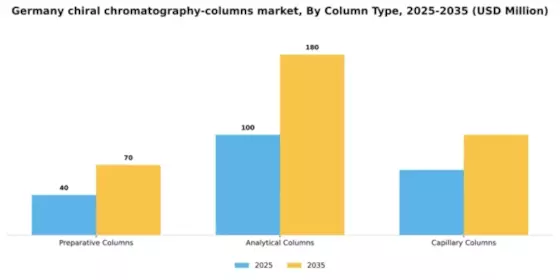
In the Germany chiral chromatography-columns market, the segment distribution reveals that preparative columns hold the largest market share, driven by their extensive applications in pharmaceutical and chemical industries. These columns are preferred for their ability to handle larger sample volumes, making them ideal for production environments. In contrast, analytical columns, while currently smaller in market share, are experiencing rapid growth due to the increasing demand for high-throughput analysis and quality control in laboratories. This shift is indicative of an evolving market focused on precision and efficiency. The growth of the analytical columns segment is primarily propelled by advancements in chromatography techniques and technology. As laboratories adopt more sophisticated methods for drug development and quality assurance, the need for analytical columns is expected to surge. Additionally, the integration of automation in analytical processes further boosts demand. This trend indicates a shift towards more efficient, accurate, and automated solutions within the sector, positioning analytical columns as a key growth driver in the coming years.
Preparative Columns (Dominant) vs. Analytical Columns (Emerging)
Preparative columns are characterized by their robust design and ability to handle large-scale separations, making them the go-to choice for production processes in the pharmaceutical and chemical sectors. Their dominant position is reinforced by the rising demand for bulk production and separation processes. In contrast, analytical columns serve a crucial role in laboratories, focusing on small sample volumes and high sensitivity analyses. As the need for precise measurements and thorough testing increases, analytical columns are emerging rapidly, supported by technological advancements that enhance their efficacy and ease of use. This dynamic indicates a transformative period for the market, where the synergy between these two column types will define future developments.
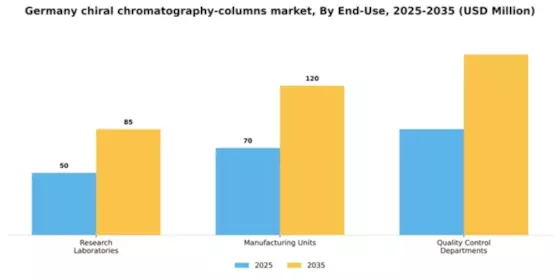
In the Germany chiral chromatography-columns market, the distribution of market share among the end-use segments reveals a dominant presence of research laboratories, accounting for the largest portion of market demand. This segment utilizes chiral chromatography for a range of applications, including drug development and academic research, which fuels its high consumption rates. Manufacturing units follow as another significant segment, contributing to the overall market share while leveraging chiral chromatography for quality assurance and process optimization. Growth trends within this segment indicate a robust increase in demand from manufacturing units, making it the fastest-growing end-use category. This surge can be attributed to the rising focus on quality control in pharmaceutical production and the increasing complexity of regulatory requirements. Additionally, research laboratories continue to innovate and expand their capabilities, maintaining their dominant position while driving demand across the market as a whole.
Research Laboratories (Dominant) vs. Manufacturing Units (Emerging)
Research laboratories are the dominant end-use segment in the chiral chromatography-columns market, characterized by their extensive application in various research and development activities. These laboratories invest in advanced chiral separation techniques to enhance drug development processes and improve analytical capabilities. On the other hand, manufacturing units are considered an emerging segment, rapidly expanding their utilization of chiral chromatography for quality control and compliance with stringent regulations. The growing need for efficient manufacturing processes that meet legal standards has made this segment increasingly relevant, with manufacturers recognizing the benefits of adopting innovative chromatography solutions to optimize product quality and regulatory adherence.
Get more detailed insights about Germany Chiral Chromatography Columns Market Request Free Sample
The chiral chromatography-columns market is characterized by a competitive landscape that is both dynamic and multifaceted. Key growth drivers include the increasing demand for pharmaceuticals, particularly in the development of enantiomerically pure compounds, and the rising emphasis on quality control in food and beverage industries. Major players such as Agilent Technologies (US), Thermo Fisher Scientific (US), and Merck KGaA (DE) are strategically positioned to leverage these trends. Agilent Technologies (US) focuses on innovation through advanced analytical solutions, while Thermo Fisher Scientific (US) emphasizes its extensive product portfolio and global reach. Merck KGaA (DE) is enhancing its operational focus on sustainability and digital transformation, which collectively shapes a competitive environment that is increasingly reliant on technological advancements and strategic partnerships.In terms of business tactics, companies are localizing manufacturing and optimizing supply chains to enhance efficiency and responsiveness to market demands. The market structure appears moderately fragmented, with a mix of established players and emerging companies. This fragmentation allows for a diverse range of offerings, yet the collective influence of key players like Sigma-Aldrich (US) and Phenomenex (US) is significant, as they drive innovation and set industry standards.
In October Agilent Technologies (US) announced the launch of a new line of chiral chromatography columns designed specifically for the pharmaceutical industry. This strategic move is likely to enhance their competitive edge by addressing the growing need for high-resolution separation techniques in drug development. The introduction of these columns is expected to bolster Agilent's market share and reinforce its reputation as a leader in analytical solutions.
In September Merck KGaA (DE) expanded its collaboration with a leading biotechnology firm to develop novel chiral separation technologies. This partnership is indicative of Merck's commitment to innovation and positions the company to capitalize on emerging trends in biopharmaceuticals. By aligning with biotechnology advancements, Merck is likely to enhance its product offerings and strengthen its market position.
In August Thermo Fisher Scientific (US) acquired a smaller firm specializing in chiral chromatography solutions. This acquisition is expected to broaden Thermo Fisher's capabilities and enhance its product portfolio, allowing for a more comprehensive approach to customer needs. The integration of this new technology could potentially lead to improved efficiencies and expanded market reach.
As of November current competitive trends in the chiral chromatography-columns market include a pronounced shift towards digitalization, sustainability, and the integration of artificial intelligence in analytical processes. Strategic alliances are increasingly shaping the landscape, as companies recognize the value of collaboration in driving innovation. Looking ahead, competitive differentiation is likely to evolve from traditional price-based competition to a focus on technological advancements, supply chain reliability, and innovative solutions that meet the specific needs of diverse industries.


The Germany Chiral Chromatography Columns Market has witnessed notable developments recently, primarily influenced by the increasing emphasis on high-quality pharmaceuticals and stringent regulations regarding drug purity. In August 2023, Pall Corporation announced advances in its chromatography solutions that are expected to enhance separation efficiency and are aimed at the biopharmaceutical sector. Meanwhile, Agilent Technologies introduced a new line of chiral columns designed for improved productivity in laboratories. In terms of acquisitions, in June 2023, Thermo Fisher Scientific completed the acquisition of a leading competitor, bolstering its market presence in Germany.
Such strategic moves reflect the intention of these key players, including Chiral Technologies and Merck KGaA, to expand their portfolio and technological capabilities. The market is projected to see significant growth due to rising investments in Research and Development and the ongoing demand for chiral separation in various industries, particularly in pharmaceuticals, food safety, and environmental testing. Additionally, the presence of regulatory bodies in Germany continues to drive innovation and quality assurance, shaping the future of the chiral chromatography landscape in the region.
The Chiral Chromatography Columns Market is projected to grow at 4.98% CAGR from 2025 to 2035, driven by advancements in pharmaceutical applications and increasing demand for enantiomeric purity.
New opportunities lie in:
By 2035, the market is expected to achieve robust growth, reflecting evolving industry needs.
| MARKET SIZE 2024 | 205.09(USD Million) |
| MARKET SIZE 2025 | 215.3(USD Million) |
| MARKET SIZE 2035 | 350.0(USD Million) |
| COMPOUND ANNUAL GROWTH RATE (CAGR) | 4.98% (2025 - 2035) |
| REPORT COVERAGE | Revenue Forecast, Competitive Landscape, Growth Factors, and Trends |
| BASE YEAR | 2024 |
| Market Forecast Period | 2025 - 2035 |
| Historical Data | 2019 - 2024 |
| Market Forecast Units | USD Million |
| Key Companies Profiled | Agilent Technologies (US), Thermo Fisher Scientific (US), Merck KGaA (DE), Chiral Technologies (US), Daicel Corporation (JP), Sigma-Aldrich (US), Phenomenex (US), Restek Corporation (US) |
| Segments Covered | Application, Material Type, Column Type, End-Use |
| Key Market Opportunities | Growing demand for chiral separation in pharmaceuticals drives innovation in chiral chromatography-columns market. |
| Key Market Dynamics | Rising demand for chiral chromatography-columns driven by stringent regulatory standards and advancements in pharmaceutical applications. |
| Countries Covered | Germany |
The market valuation was $205.09 Million in 2024.
The projected market size is $350.0 Million by 2035.
The expected CAGR during this period is 4.98%.
Key application segments include Pharmaceuticals ($130.0 Million), Biotechnology ($80.0 Million), Food and Beverage ($70.0 Million), and Environmental Analysis ($70.0 Million).
Leading material types include Synthetic Polymers ($140.0 Million), Cellulose Derivatives ($90.0 Million), Amino Acid Derivatives ($70.0 Million), and Cyclodextrins ($50.0 Million).
The prevalent column types are Analytical Columns ($180.0 Million), Capillary Columns ($100.0 Million), and Preparative Columns ($70.0 Million).
Key players include Agilent Technologies, Thermo Fisher Scientific, Merck KGaA, Chiral Technologies, Daicel Corporation, Sigma-Aldrich, Phenomenex, and Restek Corporation.
End-use sectors include Quality Control Departments ($145.0 Million), Manufacturing Units ($120.0 Million), and Research Laboratories ($85.0 Million).
While specific regional comparisons are not provided, the growth trajectory suggests a robust demand in Germany, particularly in pharmaceuticals and biotechnology.
Trends include increasing demand in pharmaceuticals and biotechnology, alongside advancements in column technology and material types.



Kindly complete the form below to receive a free sample of this Report

“This is really good guys. Excellent work on a tight deadline. I will continue to use you going forward and recommend you to others. Nice job”


“Thanks. It’s been a pleasure working with you, please use me as reference with any other Intel employees.”


“Thanks for sending the report it gives us a good global view of the Betaïne market.”


“Thank you, this will be very helpful for OQS.”


“We found the report very insightful! we found your research firm very helpful. I'm sending this email to secure our future business.”


“I am very pleased with how market segments have been defined in a relevant way for my purposes (such as "Portable Freezers & refrigerators" and "last-mile"). In general the report is well structured. Thanks very much for your efforts.”


“I have been reading the first document or the study, ,the Global HVAC and FP market report 2021 till 2026. Must say, good info! I have not gone in depth at all parts, but got a good indication of the data inside!”


“We got the report in time, we really thank you for your support in this process. I also thank to all of your team as they did a great job.”


“The Automotive 48V ECU Components Procurement Intelligence Study” was a complex project, but the Market Research Future (MRFR) team handled it with quality, agility, and customer-centricity. They delivered all requested data on time and within the agreed scope. The team, including Shubhendra Anand and Rahul Gotadki, was always readily available to clarify questions and swiftly implement necessary adjustments, driving the project to a successful conclusion within a very demanding timeframe.
I would also like to specifically commend Akshay Agarwal for his responsiveness and support at every stage—from our initial inquiry on May 6th through to final delivery on June 18th. His dedication made the entire process seamless.”



