Investment in Genomic Research
Germany's commitment to advancing genomic research is a pivotal driver for the genomics market. The government has allocated substantial funding to support research initiatives, with investments exceeding €500 million in recent years. This financial backing fosters innovation and collaboration among academic institutions, biotech firms, and healthcare providers. The establishment of research centers dedicated to genomics is likely to enhance the country's capabilities in genetic research and development. As a result, the genomics market is expected to benefit from breakthroughs in areas such as gene therapy and precision medicine. The collaborative environment created by these investments may lead to the development of novel genomic technologies, further propelling the market's growth in Germany.
Regulatory Framework Enhancements
The evolving regulatory landscape in Germany is shaping the genomics market by providing clearer guidelines for genomic testing and data usage. Recent updates to regulations are aimed at ensuring patient safety while promoting innovation in genomic technologies. These enhancements are likely to foster a more conducive environment for companies operating in the genomics market. By establishing robust frameworks for data protection and ethical considerations, the regulatory changes may encourage investment and research in genomics. As companies navigate these regulations, the market is expected to grow, with an emphasis on compliance and ethical practices, ultimately benefiting patients and healthcare providers alike.
Rising Demand for Genetic Testing
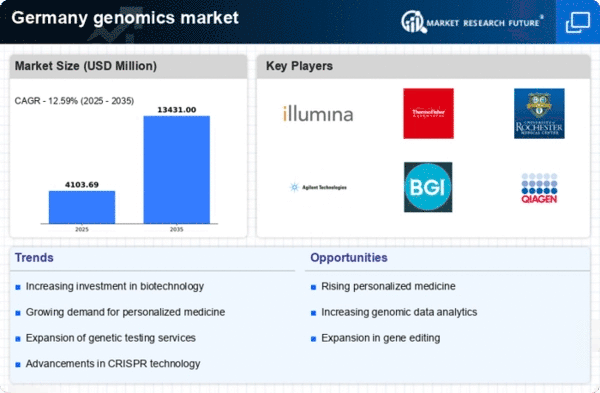
The increasing awareness of genetic testing among the German population is driving the genomics market. As individuals seek personalized health insights, the demand for genetic testing services has surged. In 2025, the market for genetic testing in Germany is projected to reach approximately €1.5 billion, reflecting a growth rate of around 10% annually. This trend is fueled by advancements in technology that make testing more accessible and affordable. Furthermore, the integration of genetic testing into routine healthcare practices is likely to enhance patient outcomes, thereby solidifying its role in the genomics market. As healthcare providers increasingly recommend genetic testing for various conditions, the market is expected to expand further, indicating a robust future for genetic testing services in Germany.
Growing Awareness of Rare Diseases
The increasing recognition of rare diseases in Germany is significantly influencing the genomics market. With approximately 7,000 rare diseases identified, many of which have genetic origins, there is a heightened demand for genomic solutions. The German healthcare system is adapting to this need by integrating genomic testing into diagnostic protocols for rare diseases. This shift is expected to drive market growth, as early diagnosis through genomic testing can lead to more effective treatments. In 2025, the market for rare disease diagnostics is anticipated to account for around 15% of the overall genomics market in Germany. This focus on rare diseases not only enhances patient care but also stimulates research and development in genomic technologies.
Technological Integration in Healthcare
The integration of advanced technologies into healthcare systems in Germany is a crucial factor propelling the genomics market. Innovations such as artificial intelligence and machine learning are being utilized to analyze genomic data more efficiently. This technological evolution is expected to enhance the accuracy of genomic analyses and facilitate the development of personalized treatment plans. In 2025, the market for AI-driven genomic solutions is projected to grow by approximately 20%, reflecting the increasing reliance on technology in healthcare. As healthcare providers adopt these technologies, the genomics market is likely to experience accelerated growth, driven by improved patient outcomes and streamlined processes.


















Leave a Comment