Download Free Sample
Kindly complete the form below to receive a free sample of this Report
Germany Post-Harvest Treatment Products Market Size, Share, Industry Trend & Analysis Research Report By Type (Cleaners, Coatings/Wax, Ethylene Blockers, Fungicides, Sprout Inhibitors, Others) and By Application (Fruits, Vegetables) - Forecast to 2035
As per Market Research Future analysis, the Germany Post Harvest Treatment Products Market size was estimated at 87.38 USD Million in 2024. The Post Harvest-treatment-products market is projected to grow from 92.31 USD Million in 2025 to 160.0 USD Million by 2035, exhibiting a compound annual growth rate (CAGR) of 5.6% during the forecast period 2025 - 2035
The Germany post-harvest treatment products market is experiencing a transformative shift towards sustainability and innovation.
| 2024 Market Size | 87.38 (USD Million) |
| 2035 Market Size | 160.0 (USD Million) |
| CAGR (2025 - 2035) | 5.65% |
BASF SE (DE), Syngenta AG (CH), FMC Corporation (US), Nufarm Limited (AU), UPL Limited (IN), ADAMA Agricultural Solutions Ltd. (IL), Nutrien Ltd. (CA), Corteva Agriscience (US)
Our Impact
Enabled $4.3B Revenue Impact for Fortune 500 and Leading Multinationals
Partnering with 2000+ Global Organizations Each Year
30K+ Citations by Top-Tier Firms in the Industry
The Germany Post Harvest Treatment Products Market is currently experiencing notable developments, driven by the increasing demand for food safety and quality. As consumers become more health-conscious, the emphasis on reducing food spoilage and extending shelf life has intensified. This trend is further supported by regulatory frameworks that promote the use of safe and effective treatment methods. Innovations in technology are also playing a crucial role, with advancements in natural and organic treatments gaining traction. These factors collectively contribute to a dynamic landscape where stakeholders are actively seeking solutions that align with consumer preferences and regulatory standards. In addition, the post harvest-treatment-products market is witnessing a shift towards sustainable practices. Stakeholders are increasingly aware of the environmental impact of traditional treatments, prompting a search for eco-friendly alternatives. This shift is likely to influence product development and marketing strategies, as companies aim to meet the growing demand for sustainable options. Overall, the market appears poised for growth, with a focus on safety, quality, and sustainability shaping its future trajectory.
There is a growing inclination towards organic post harvest treatments, as consumers seek healthier food options. This trend reflects a broader movement towards sustainability and environmental consciousness, influencing product offerings in the market.
Innovations in technology are transforming the post harvest-treatment-products market. New methods and equipment enhance the efficiency and effectiveness of treatments, allowing for better preservation of produce and reduced waste.
The emphasis on food safety is driving the need for compliance with stringent regulations. Stakeholders are increasingly focused on ensuring that post harvest treatments meet safety standards, which is shaping product development and market strategies.
Germany's strategic position in Europe presents substantial export opportunities for the post harvest-treatment-products market. As international trade in agricultural products expands, German producers are seeking to enhance the quality and shelf life of their exports. This is particularly relevant for fruits and vegetables, where the application of effective post-harvest treatments can significantly reduce losses during transportation. The export value of German agricultural products is projected to increase by 15% over the next five years, further stimulating the demand for post harvest-treatment-products. This trend indicates a growing recognition of the importance of quality assurance in maintaining competitive advantage in global markets.
Consumer awareness regarding food safety and quality is on the rise in Germany, which is positively influencing the post harvest-treatment-products market. Educational campaigns and information dissemination about the benefits of post-harvest treatments are leading to increased consumer demand for treated products. As consumers become more informed about the impact of post-harvest treatments on food quality and safety, they are more likely to choose products that have undergone these processes. This shift in consumer behavior is expected to drive market growth, as producers respond to the demand for higher quality and safer food options, thereby enhancing the overall market landscape.
The post harvest-treatment-products market in Germany is experiencing a notable surge in demand for fresh produce. Consumers are increasingly prioritizing the quality and safety of fruits and vegetables, leading to a heightened focus on effective post-harvest treatments. This trend is reflected in the market, where the value of post harvest-treatment-products is projected to reach approximately €500 million by 2026. The growing awareness of food safety and the desire for longer shelf life are driving producers to adopt advanced treatment solutions. Consequently, this increasing demand for fresh produce is a significant driver for the post harvest-treatment-products market, as stakeholders seek to enhance product quality and minimize losses during storage and transportation.
Sustainability initiatives are becoming increasingly prominent within the agricultural sector in Germany, influencing the post harvest-treatment-products market. Farmers and producers are adopting eco-friendly practices to reduce their environmental footprint, which includes the use of sustainable post-harvest treatments. This shift is supported by government policies promoting sustainable agriculture, which may lead to a 20% increase in the adoption of organic and biodegradable treatments by 2027. As consumers become more environmentally conscious, the demand for sustainable post harvest-treatment-products is likely to grow, compelling manufacturers to innovate and align their offerings with these sustainability goals.
The integration of advanced technologies within supply chains is significantly impacting the post harvest-treatment-products market in Germany. Innovations such as IoT, AI, and blockchain are enhancing traceability and efficiency in the handling of agricultural products. This technological advancement allows for better monitoring of storage conditions and treatment applications, potentially reducing spoilage rates by up to 30%. As supply chain stakeholders increasingly adopt these technologies, the demand for sophisticated post harvest-treatment-products is expected to rise, driving market growth. The ability to ensure product quality and safety through technology is becoming a crucial factor for producers in the competitive landscape.
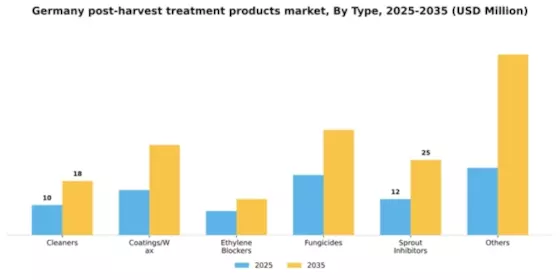
In the Germany post harvest-treatment-products market, the segment distribution reveals that fungicides hold a substantial market share, dominating the landscape due to their crucial role in preventing fungal diseases in stored produce. Cleaners and coatings/wax also contribute significantly, though they occupy a smaller portion of the overall market compared to fungicides. Ethylene blockers and sprout inhibitors are emerging segments, with ethylene blockers gaining attention for their effectiveness in prolonging shelf life by managing ripening processes. Growth trends in this segment are driven by increasing consumer awareness regarding food safety and quality. The rise in demand for organic and sustainably produced food products is further propelling the use of eco-friendly treatment options. As a result, the shift towards non-chemical alternatives such as ethylene blockers indicates a promising trajectory for these products, positioning them as vital players in the evolving Germany post harvest-treatment-products market.
Fungicides (Dominant) vs. Ethylene Blockers (Emerging)
Fungicides are recognized as the dominant force within the Germany post harvest-treatment-products market, primarily used for their efficacy in preventing crop losses due to fungal infections. Their robust performance and established application methods allow them to capture the largest share of the market. Conversely, ethylene blockers represent an emerging segment that is rapidly gaining traction, particularly as consumer preferences shift towards less chemical intervention methods. They function by inhibiting the natural ripening process, thereby extending the shelf life of fruits and vegetables. The growing trend towards sustainable agricultural practices is encouraging growers to adopt these innovative solutions, positioning ethylene blockers as a key area of growth and investment in the market.
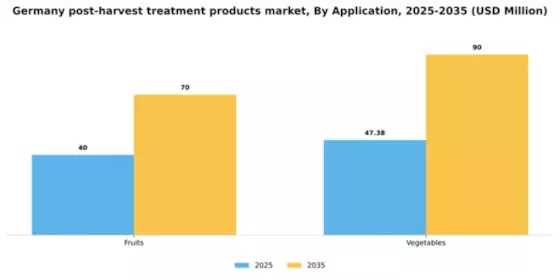
In the Germany post harvest-treatment-products market, the application of fruits holds a significant share, driven by the high demand for fresh produce and increasing consumer preferences for healthy diets. Fruits occupy a dominant position due to their essential role in the supply chain, with various post-harvest treatments ensuring quality preservation and reducing spoilage. On the other hand, vegetables are rapidly gaining traction, reflecting changing dietary habits and an increase in health awareness among consumers. This segment is expanding, though it currently comprises a smaller share compared to fruits. Growth trends in the application segment are influenced by several factors, including rising demand for organic products, advancements in post-harvest technologies, and increased investments in food safety measures. Additionally, the shift towards sustainable practices is compelling producers to adopt innovative treatment solutions to maintain the quality of fruits and vegetables during storage and transit. Overall, while the fruits segment dominates the market, the vegetables segment represents an emerging opportunity with significant growth potential.
Fruits (Dominant) vs. Vegetables (Emerging)
The fruits segment stands out as the dominant player in the Germany post harvest-treatment-products market. Its prominence is attributed to the essential need for effective treatments that enhance the longevity and visual appeal of fruits, addressing both quality and consumer expectations. Fruits typically require specialized handling and treatment techniques to mitigate spoilage and sustain freshness. Conversely, the vegetables segment is emerging with increasing recognition of health benefits associated with vegetable consumption. This segment is experiencing rapid growth as more consumers gravitate towards plant-based diets. Innovations in post-harvest practices and growing interest in organic vegetables position this segment favorably, even as it continues to find its footing in the market. Both segments highlight a trend toward greater quality assurance and consumer satisfaction.
Get more detailed insights about Germany Post Harvest Treatment Products Market Request Free Sample
The post harvest-treatment-products market in Germany is characterized by a competitive landscape that is increasingly shaped by innovation, sustainability, and strategic partnerships. Key players such as BASF SE (DE), Syngenta AG (CH), and FMC Corporation (US) are actively pursuing strategies that emphasize technological advancements and eco-friendly solutions. BASF SE (DE) focuses on developing biobased products that align with the growing demand for sustainable agricultural practices, while Syngenta AG (CH) is enhancing its digital platforms to provide farmers with data-driven insights for better crop management. FMC Corporation (US) is investing in research and development to create novel post-harvest solutions that minimize waste and extend shelf life, thereby addressing both consumer and regulatory pressures for sustainability.The business tactics employed by these companies include localizing manufacturing to reduce supply chain vulnerabilities and optimizing logistics to ensure timely delivery of products. The market structure appears moderately fragmented, with several players vying for market share, yet the collective influence of major companies is significant. This dynamic fosters a competitive environment where innovation and operational efficiency are paramount, as companies strive to differentiate themselves in a crowded marketplace.
In October BASF SE (DE) announced a partnership with a leading agricultural technology firm to develop a new line of biodegradable coatings for fruits and vegetables. This strategic move is likely to enhance BASF's product offerings while addressing environmental concerns related to plastic waste in agriculture. The collaboration underscores the importance of innovation in meeting consumer demands for sustainable solutions.
In September Syngenta AG (CH) launched a new digital platform aimed at providing farmers with real-time data analytics to optimize post-harvest processes. This initiative is expected to empower farmers with actionable insights, potentially leading to improved yield quality and reduced losses. By integrating technology into its offerings, Syngenta positions itself as a leader in the digital transformation of agriculture.
In August FMC Corporation (US) expanded its product portfolio by acquiring a niche player specializing in natural preservatives for post-harvest applications. This acquisition not only broadens FMC's market reach but also aligns with the increasing consumer preference for natural and organic products. Such strategic actions reflect a broader trend towards sustainability and health-consciousness in the agricultural sector.
As of November the competitive trends in the post harvest-treatment-products market are increasingly defined by digitalization, sustainability, and the integration of artificial intelligence. Strategic alliances are becoming more prevalent, as companies recognize the need to collaborate in order to innovate and meet evolving market demands. Looking ahead, competitive differentiation is likely to shift from traditional price-based strategies to a focus on technological innovation, supply chain reliability, and sustainable practices, thereby reshaping the landscape of the industry.
The Germany Post-Harvest Treatment Products Market has evolved recently, with key players such as Bayer and Syngenta focusing on innovative treatments aimed at reducing waste and increasing efficiency. In September 2023, AgroFresh Solutions announced a new product launch designed to extend the shelf life of fruits and vegetables, which has drawn significant interest from local distributors and farmers. Additionally, BASF has made advancements in biodegradable coatings that promise to enhance product longevity, thus aligning with sustainability goals.
Over the past few years, the market has seen increased growth driven by rising consumer demand for fresh produce and a focus on reducing food wastage, leading to an estimated market valuation increase of approximately 5% in 2022. Notably, in June 2023, Certis Europe expanded its operations in Germany by acquiring a local firm specializing in biological pest control, significantly enhancing its product portfolio. Such strategic mergers and product innovations are expected to further consolidate the market, with companies like FMC Corporation and UPL also exploring potential partnerships to enhance their market presence in Germany.
The Post Harvest Treatment Products Market in Germany is projected to grow at a 5.65% CAGR from 2025 to 2035, driven by technological advancements and increasing demand for food safety.
New opportunities lie in:
By 2035, the market is expected to achieve robust growth, driven by innovation and evolving consumer preferences.
| MARKET SIZE 2024 | 87.38(USD Million) |
| MARKET SIZE 2025 | 92.31(USD Million) |
| MARKET SIZE 2035 | 160.0(USD Million) |
| COMPOUND ANNUAL GROWTH RATE (CAGR) | 5.65% (2025 - 2035) |
| REPORT COVERAGE | Revenue Forecast, Competitive Landscape, Growth Factors, and Trends |
| BASE YEAR | 2024 |
| Market Forecast Period | 2025 - 2035 |
| Historical Data | 2019 - 2024 |
| Market Forecast Units | USD Million |
| Key Companies Profiled | BASF SE (DE), Syngenta AG (CH), FMC Corporation (US), Nufarm Limited (AU), UPL Limited (IN), ADAMA Agricultural Solutions Ltd. (IL), Nutrien Ltd. (CA), Corteva Agriscience (US) |
| Segments Covered | Type, Application |
| Key Market Opportunities | Adoption of innovative biopesticides enhances sustainability in the post harvest-treatment-products market. |
| Key Market Dynamics | Rising demand for sustainable post harvest-treatment-products driven by regulatory changes and consumer preferences in Germany. |
| Countries Covered | Germany |
The overall market valuation for post harvest-treatment-products was $87.38 Million in 2024.



Kindly complete the form below to receive a free sample of this Report

“This is really good guys. Excellent work on a tight deadline. I will continue to use you going forward and recommend you to others. Nice job”


“Thanks. It’s been a pleasure working with you, please use me as reference with any other Intel employees.”


“Thanks for sending the report it gives us a good global view of the Betaïne market.”


“Thank you, this will be very helpful for OQS.”


“We found the report very insightful! we found your research firm very helpful. I'm sending this email to secure our future business.”


“I am very pleased with how market segments have been defined in a relevant way for my purposes (such as "Portable Freezers & refrigerators" and "last-mile"). In general the report is well structured. Thanks very much for your efforts.”


“I have been reading the first document or the study, ,the Global HVAC and FP market report 2021 till 2026. Must say, good info! I have not gone in depth at all parts, but got a good indication of the data inside!”


“We got the report in time, we really thank you for your support in this process. I also thank to all of your team as they did a great job.”


“The Automotive 48V ECU Components Procurement Intelligence Study” was a complex project, but the Market Research Future (MRFR) team handled it with quality, agility, and customer-centricity. They delivered all requested data on time and within the agreed scope. The team, including Shubhendra Anand and Rahul Gotadki, was always readily available to clarify questions and swiftly implement necessary adjustments, driving the project to a successful conclusion within a very demanding timeframe.
I would also like to specifically commend Akshay Agarwal for his responsiveness and support at every stage—from our initial inquiry on May 6th through to final delivery on June 18th. His dedication made the entire process seamless.”



