Aging Population and Associated Health Issues
Germany's aging population is a significant driver of the vascular embolization market. As the demographic shifts towards older age groups, the prevalence of vascular diseases, such as aneurysms and arteriovenous malformations, is expected to rise. This demographic trend necessitates effective treatment options, thereby increasing the demand for vascular embolization procedures. According to recent statistics, approximately 20% of the German population is over 65 years old, a figure that is projected to grow. This demographic shift is likely to create a sustained demand for vascular embolization services, as older individuals are more susceptible to vascular complications, thereby propelling the market forward.
Technological Innovations in Embolization Devices
The vascular embolization market is significantly impacted by ongoing technological innovations in embolization devices. Manufacturers in Germany are investing in research and development to create advanced products that improve the precision and effectiveness of embolization procedures. Innovations such as bioresorbable materials and advanced imaging techniques are enhancing the safety and outcomes of these interventions. As a result, healthcare providers are increasingly adopting these new technologies, which is likely to drive market growth. The introduction of next-generation embolization devices is expected to contribute to a market expansion of approximately 15% by 2025, reflecting the critical role of technology in shaping the vascular embolization market.
Enhanced Awareness and Education on Vascular Health
There is a growing awareness regarding vascular health among the German population, which is positively influencing the vascular embolization market. Educational campaigns and initiatives by healthcare organizations are informing the public about the risks associated with vascular diseases and the benefits of early intervention. This increased awareness is leading to higher rates of diagnosis and treatment, including embolization procedures. As more patients seek treatment for vascular conditions, the market is expected to expand. In 2025, it is estimated that the market could grow by 10% due to these educational efforts, highlighting the importance of informed patient choices in driving market dynamics.
Increasing Demand for Minimally Invasive Procedures
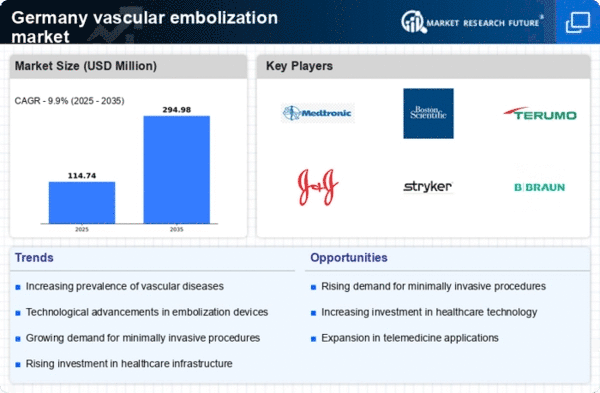
The vascular embolization market in Germany is experiencing a notable surge in demand for minimally invasive procedures. Patients increasingly prefer these techniques due to their reduced recovery times and lower risk of complications compared to traditional surgical methods. This shift in patient preference is supported by advancements in medical technology, which enhance the efficacy and safety of embolization procedures. As a result, healthcare providers are adopting these techniques more widely, contributing to market growth. In 2025, the market is projected to reach approximately €500 million, reflecting a compound annual growth rate (CAGR) of around 8%. This trend indicates a robust future for the vascular embolization market, driven by the desire for less invasive treatment options.
Supportive Regulatory Environment for Medical Devices
The regulatory environment in Germany is becoming increasingly supportive of innovations in the vascular embolization market. Regulatory bodies are streamlining approval processes for new medical devices, which encourages manufacturers to bring innovative products to market more quickly. This supportive framework not only fosters competition but also enhances the availability of advanced embolization solutions for healthcare providers. As a result, the market is likely to benefit from a wider range of treatment options, catering to diverse patient needs. By 2025, the vascular embolization market is projected to grow by 12%, driven by this favorable regulatory landscape that promotes innovation and accessibility.


















Leave a Comment