Growing Geriatric Population
The increasing geriatric population is a notable factor influencing the Global Breast Cancer Market Industry. As the global population ages, the incidence of breast cancer is expected to rise, given that age is a significant risk factor. By 2030, it is projected that the number of individuals aged 60 and older will surpass 1.4 billion. This demographic shift necessitates enhanced healthcare services and treatment options tailored to older patients. Consequently, the market is anticipated to experience robust growth, as healthcare systems adapt to meet the needs of this expanding population segment.
Government Support and Funding
Government initiatives and funding play a crucial role in shaping the Global Breast Cancer Market Industry. Various countries have implemented national cancer control programs aimed at reducing breast cancer mortality rates through improved access to screening and treatment. For instance, the National Breast Cancer Awareness Month in the United States has garnered significant funding for research and patient support. Such governmental support not only enhances public awareness but also fosters innovation in treatment options. As a result, the market is likely to benefit from sustained investments and policy support, further driving its expansion.
Increasing Incidence of Breast Cancer
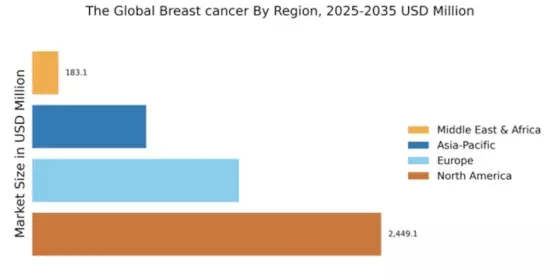
The Global Breast Cancer Market Industry is experiencing growth driven by the rising incidence of breast cancer worldwide. Statistics indicate that breast cancer remains the most commonly diagnosed cancer among women, with an estimated 2.3 million new cases reported in 2020. This alarming trend suggests that the demand for effective treatment options and early detection methods is likely to escalate. As awareness campaigns and screening programs expand, the market is projected to reach 25.1 USD Billion in 2024, reflecting a heightened focus on addressing this pressing health issue.
Advancements in Treatment Technologies
Innovations in treatment technologies are propelling the Global Breast Cancer Market Industry forward. The development of targeted therapies, immunotherapies, and personalized medicine has transformed the treatment landscape, offering patients more effective and less invasive options. For instance, the introduction of CDK4/6 inhibitors has shown promising results in improving patient outcomes. As these advancements continue to evolve, they are expected to contribute significantly to the market's growth, with projections indicating a market value of 40 USD Billion by 2035. This evolution in treatment modalities underscores the importance of ongoing research and development.
Rising Awareness and Screening Initiatives
Heightened awareness regarding breast cancer and the importance of early detection is a key driver for the Global Breast Cancer Market Industry. Public health campaigns and educational programs have successfully increased the number of women participating in regular screenings. For example, mammography rates have improved significantly in many regions, leading to earlier diagnoses and better survival rates. This increased awareness is likely to sustain the market's growth trajectory, as more women seek preventive measures and treatment options. Consequently, the industry is poised for a compound annual growth rate of 4.33% from 2025 to 2035.