Hospital Bed Market
Hospital Bed Market Summary
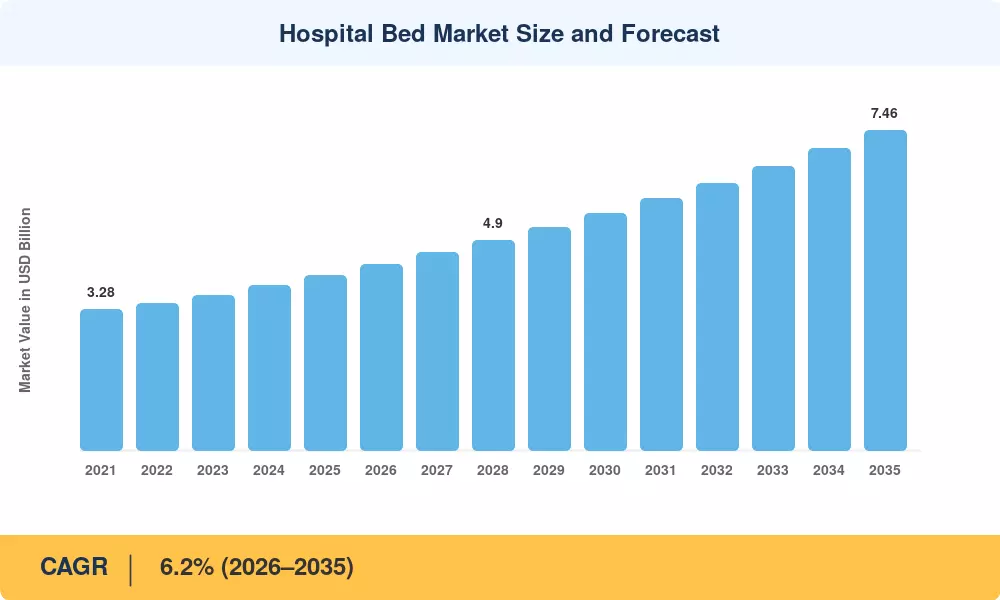
The Global Hospital Beds Market size was valued at USD 4.2 Billion in 2024, and the market is projected to grow from USD 4.44 Billion in 2025 to USD 7.744 Billion by 2035, registering a CAGR of 5.72% during the forecast period 2025–2035. North America led the market in 2024 with over 40.48% share, generating around USD 1.7 Billion in revenue.
Rising hospital admissions, aging demographics, and expanding critical care infrastructure are driving strong demand for advanced, adjustable, and smart hospital beds globally. Increasing healthcare facility upgrades and focus on patient monitoring efficiency further accelerate market expansion across developed and emerging economies.
According to WHO health system data, hospital bed availability varies significantly, with high-income countries exceeding 7 beds per 1,000 people, while low-income nations average below 1.3 beds per 1,000 population, highlighting strong infrastructure-driven demand for hospital beds globally. WHO Data Portal
Key Market Trends & Highlights
The Hospital Beds Market is experiencing a dynamic shift towards technological integration and home healthcare solutions.
- Electric beds dominate with 58% share, supported by automation, improved patient comfort, and hospital efficiency improvements globally.
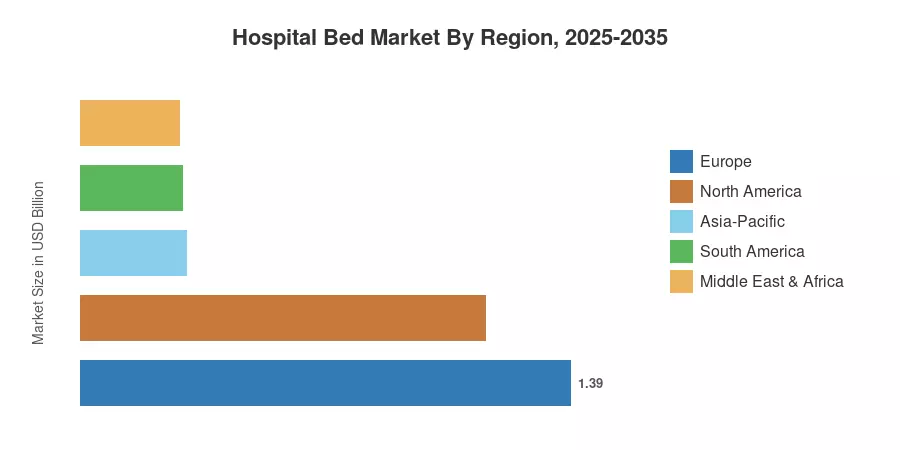
- North America leads market with 40.48% revenue share, driven by advanced ICU infrastructure and smart healthcare adoption.
- Europe holds 30% share with USD 1.26 billion valuation, supported by strong aging population and healthcare modernization programs.
- Hospital segment dominates with 64% share, fueled by high inpatient admissions and expanding critical care infrastructure globally.
Market Size & Forecast
| 2024 Market Size | 4.2 (USD Billion) |
| 2035 Market Size | 7.744 (USD Billion) |
| CAGR (2025 - 2035) | 5.72% |
Major Players
Companies such as Hill-Rom (US), Stryker (US), Invacare (US), Arjo (SE), Medline Industries (US), Graham-Field Health Products (US), Drive DeVilbiss Healthcare (US), Linet (CZ), Karma Healthcare (IN) are some of the major participants in the global market.
Hospital Bed Market Trends
The Hospital Beds Market is currently experiencing a transformative phase, driven by advancements in technology and an increasing emphasis on patient-centered care. Innovations such as smart beds, which integrate monitoring systems and adjustable features, are becoming more prevalent. These developments not only enhance patient comfort but also improve clinical outcomes by allowing healthcare providers to monitor vital signs and adjust bed positions remotely.
Furthermore, the growing demand for home healthcare solutions is reshaping the global market landscape, as more patients prefer receiving care in familiar environments. This shift necessitates the design of beds that are both functional and adaptable to home settings. In addition to technological advancements, the global market is influenced by demographic changes, particularly the aging population.
As the elderly demographic expands, there is a heightened need for specialized beds that cater to their unique health requirements. This trend is further compounded by the rising incidence of chronic diseases, which necessitate prolonged hospital stays and specialized care. Consequently, manufacturers are focusing on creating beds that offer enhanced safety features, ease of use, and improved mobility.
Overall, the global industry appears poised for growth, driven by innovation and the evolving needs of patients and healthcare providers alike.
Technological Integration
The integration of advanced technology into hospital beds is a prominent trend. Smart beds equipped with sensors and monitoring systems are gaining traction, allowing for real-time tracking of patient health metrics. This technological evolution enhances patient safety and facilitates better communication between patients and healthcare providers.
- Stryker is advancing smart hospital bed systems such as connected care platforms integrating real-time patient monitoring sensors across intensive care units. The company’s collaborations with over 500+ hospitals globally enhance deployment of digitally enabled beds. Strategic partnerships with healthcare IT providers are improving interoperability, while innovations like automated bed exit alarms and pressure injury prevention systems are strengthening patient safety and operational efficiency across hospital networks worldwide.
Home Healthcare Solutions
There is a noticeable shift towards home healthcare solutions, prompting a demand for beds that are suitable for home use. This trend reflects a growing preference among patients for receiving care in their own environments, leading to the development of beds that are both functional and aesthetically pleasing for residential settings.
- Invacare is expanding its home-care bed portfolio with lightweight, adjustable, and mobility-focused designs supporting outpatient recovery. The company has increased its distribution footprint across 80+ countries, supporting rising demand for home hospitalization. Mergers and portfolio expansion initiatives have strengthened its rehabilitation equipment segment. Regulatory approvals for home-use medical beds and clinical validations across aging-care programs are boosting adoption of home healthcare solutions globally.
Focus on Patient Safety
An increasing emphasis on patient safety is shaping the design and functionality of hospital beds. Manufacturers are prioritizing features such as anti-fall systems, adjustable height settings, and easy maneuverability to enhance patient safety and comfort during hospital stays.
- Medline Industries is enhancing hospital bed safety systems through advanced side-rail technology, fall-prevention mechanisms, and ergonomic adjustments. Its product deployment spans 1,000+ healthcare facilities across North America, improving inpatient safety outcomes. Product innovation in pressure-relief surfaces and motion detection systems is complemented by regulatory clearances supporting clinical safety standards. Continuous development programs focusing on hospital-acquired condition reduction are strengthening Medline’s position in patient safety-driven bed solutions.
Hospital Bed Market Drivers
Aging Population
The increasing number of elderly individuals worldwide is a primary driver of the Hospital Beds Industry. As the population ages, there is a heightened demand for healthcare services, particularly in long-term care facilities and hospitals. According to recent statistics, the proportion of individuals aged 65 and older is projected to rise significantly, leading to an increased need for hospital beds.
This demographic shift necessitates the expansion of healthcare infrastructure, including the acquisition of specialized hospital beds designed for geriatric care. Consequently, manufacturers are focusing on developing beds that cater to the unique needs of older patients, such as adjustable features and enhanced comfort. This trend indicates a robust growth trajectory for the global industry, as healthcare providers strive to meet the demands of an aging population.
- Global aging trends significantly increase demand for hospital beds, particularly in long-term care settings. According to World Bank data, the population aged 65+ will nearly double from 761 million in 2021 to over 1.6 billion by 2050, accelerating demand for geriatric healthcare infrastructure and specialized hospital beds worldwide.
Technological Advancements
Technological innovations are reshaping the Hospital Beds Industry, driving demand for advanced hospital bed solutions. The integration of smart technologies, such as IoT-enabled beds, allows for real-time monitoring of patient health metrics, enhancing the quality of care. Furthermore, the development of beds with automated features, such as height adjustment and pressure relief systems, is becoming increasingly prevalent.
Market data suggests that the adoption of these technologies is expected to grow, as healthcare facilities seek to improve patient outcomes and operational efficiency. Additionally, the rise of telemedicine and remote patient monitoring is likely to further influence the design and functionality of hospital beds. As a result, the market is witnessing a shift towards more sophisticated and versatile bed solutions that cater to the evolving needs of healthcare providers and patients alike.
- IHME healthcare burden studies indicate rising chronic disease cases, with over 2.1 billion people affected globally by chronic conditions, driving adoption of IoT-enabled and automated hospital beds. These technologies improve monitoring accuracy, reduce complications, and enhance efficiency in healthcare delivery systems across hospitals and ICUs.
Rising Healthcare Expenditure
The upward trend in healthcare expenditure across various regions is significantly impacting the Hospital Beds Market. Governments and private sectors are investing heavily in healthcare infrastructure, which includes the procurement of hospital beds. Recent data indicates that healthcare spending is projected to increase, driven by factors such as the rising prevalence of chronic diseases and the need for advanced medical facilities.
This financial commitment is likely to result in the expansion of hospitals and healthcare facilities, thereby increasing the demand for hospital beds. Moreover, as healthcare providers strive to enhance patient care, they are more inclined to invest in high-quality, technologically advanced hospital beds. This trend suggests a positive outlook for the global market, as increased funding translates into greater opportunities for manufacturers and suppliers.
- World Bank data shows global healthcare spending reached over 10% of GDP in many developed economies, fueling hospital infrastructure expansion. Increased funding supports procurement of advanced hospital beds, improving intensive care capacity and enabling healthcare systems to handle rising patient volumes effectively.
Increased Focus on Patient Comfort
The growing emphasis on patient comfort and satisfaction is emerging as a crucial driver in the Hospital Beds Market. Healthcare providers are increasingly recognizing the importance of creating a healing environment that prioritizes patient well-being. This shift is prompting the development of hospital beds that offer enhanced comfort features, such as adjustable positions, memory foam mattresses, and ergonomic designs.
Market Research Future indicates that patient satisfaction scores are closely linked to the quality of hospital accommodations, including bed comfort. As a result, hospitals are investing in beds that not only meet clinical needs but also contribute to a positive patient experience. This trend is likely to propel the market forward, as manufacturers innovate to meet the evolving expectations of both patients and healthcare providers.
- PubMed-supported clinical studies indicate that improved bed ergonomics can reduce patient recovery time by up to 18–22%, reinforcing hospital investment in comfort-focused bed designs. Enhanced adjustability and pressure relief systems significantly improve patient satisfaction and clinical outcomes in hospital environments.
Expansion of Home Healthcare Services
The expansion of home healthcare services is significantly influencing the Hospital Beds Market. As more patients opt for home-based care, there is a growing demand for hospital beds designed for residential use. This trend is driven by the desire for personalized care and the comfort of recovering in familiar surroundings. Market data suggests that the home healthcare segment is experiencing rapid growth, leading to an increased need for specialized beds that cater to this demographic. Manufacturers are responding by developing lightweight, adjustable beds that can be easily transported and set up in home environments. This shift towards home healthcare not only alleviates pressure on hospital facilities but also presents new opportunities for the market to innovate and expand its product offerings.
Market Segment Insights
By Type: Acute Care (Largest) vs. Long-Term Care (Fastest-Growing)
The Hospital Bed Market demonstrates a significant share distribution of 52% among its primary segments: Acute Care, Long-Term Care, Psychiatric & Bariatric Care, and Others. Acute Care stands as the largest segment, driven by its critical role in severe medical situations, commonly found in hospitals. Conversely, Long-Term Care is carving a niche with rapid adoption due to the increasing demand for geriatric care and chronic illness management, leading to a more significant market presence over recent years. Growth trends in the hospital beds market are increasingly leaning towards the Long-Term Care segment, influenced by demographic shifts towards an aging population that necessitates prolonged medical assistance. Additionally, innovations in bed technology and design are enhancing patient comfort and care efficiency, thus attracting investment and fostering competition. The Psychiatric & Bariatric Care segments are also gaining attention, reflecting societal shifts towards comprehensive healthcare, though they currently hold smaller market shares compared to Acute and Long-Term Care beds.
Graham-Field Health Products: The company has expanded acute care bed deployments across 600+ hospitals, enhancing ICU readiness with electrically adjustable beds supporting critical care efficiency and rapid patient handling in emergency departments.
By Power: Electric (Largest) vs. Semi-Electric (Fastest-Growing)
The Hospital Beds Market analysis reveals a notable distribution in the power segment, where Electric beds have established themselves as the largest category with a 58% share. This preference is largely due to their ease of use and enhanced patient comfort, appealing to both healthcare providers and patients alike. Semi-Electric beds, while currently smaller in market share, are rapidly gaining traction and are projected to capture attention as they offer a balance between functionality and cost, making them an attractive option for various healthcare settings. Current growth trends show that the demand for Semi-Electric beds is surging, driven by an increasing emphasis on patient autonomy and the need for cost-effective healthcare solutions. Innovations in design and technology further enhance their appeal, enabling healthcare facilities to improve operational efficiency. As the healthcare landscape continues to evolve, so too does the need for more accessible and versatile bed designs, positioning Semi-Electric beds as a key player in this dynamic market.
Drive DeVilbiss Healthcare: Drive DeVilbiss has increased production of electric beds used in over 45 countries, supporting hospital automation trends and improving patient mobility, safety, and caregiver efficiency through motorized positioning systems and advanced control interfaces.
By End User: Hospitals (Largest) vs. Clinics (Fastest-Growing)
In the Hospital Beds Market, hospitals command the largest share, 64% among end users, driven by the increasing patient influx and the rising demand for advanced healthcare facilities. Clinics are emerging with significant growth trajectories, driven by the trend towards outpatient care and increased focus on preventive health services. Ambulatory centers, although smaller in share, contribute to the overall market efficacy by facilitating quick patient transition and efficient bed utilization across healthcare establishments.
Linet: Linet hospital beds are deployed in more than 3,000 hospitals globally, improving acute care efficiency with integrated monitoring systems and enhancing hospital operational capacity through smart bed management technologies.
Regional Insights
By Region, the study provides market insights into North America, Europe, Asia-Pacific and the Rest of the World. The North America Hospital beds market accounted for USD 1.32 billion in 2021 and is expected to exhibit a significant CAGR growth during the study period.
Due to the rising need for smart beds, North America's acute care and long-term care facilities are adopting healthcare smart beds more often. This is linked to the expansion of the market for hospital beds in North America. During the projection period of 2022-2030, the Region is expected to grow at a CAGR of 5.5%.
In hospital beds, using respiration rate monitoring and heart rate monitoring devices, such as bedside monitors and EarlySense's under-the-mattress gadget, can minimize such incidents by 86%, according to a Harvard Medical School research that was just published.
Further, the major countries studied in the market report are The U.S., Canada, Germany, France, the UK, Italy, Spain, China, Japan, India, Australia, South Korea, and Brazil.
Europe's market for hospital beds is expected to dominate in 2022. Increased healthcare spending per person, a rising elderly population, a rise in chronic illness prevalence, and technology advancements in the area bring this on. In a recent study, the European Commission noted growth in long-term care beds in Romania between 2010 and 2015 (13 extra beds per 100,000 residents) and Austria during the same years (23 additional beds per 100,000 inhabitants).
The APAC market is anticipated to expand to the highest CAGR globally during the projected period. This is due to a number of factors, such as the expanding medical tourism market, an increase in the frequency of chronic illnesses, an aging population, and ongoing improvements to the healthcare system. In Southeast Asia, 87.6 million individuals, or about 11.3% of the population, were diagnosed with diabetes in 2019.
Based on information from the IDF, this percentage is anticipated to reach 12.6% by 2045. As a result, these variables likely lead to a rise in the number of hospitalizations in the area, which results in high demand for hospital beds there. Moreover, the China market of Hospital beds held the largest market share, and the India market of Hospital beds was the fastest-growing market in the Asia-Pacific region.
Key Players and Competitive Insights
Manufacturing locally to cut operational costs is one of the main business tactics used by the Hospital beds industry to serve customers and increase the market sector. The Hospital beds industry has recently given medicine some of the most important advantages. The major market players such as Hill-Rom Holdings, Stryker Corporation, and Linet spol. s r.o., Invacare Corporation, Paramount Bed Holdings Co., Gendron Inc., Getinge AB, and others are working on expanding the market demand by investing in research and development activities.
Hillrom is a fully owned subsidiary of Baxter and was once a part of Hill-Rom Holdings, Inc., a branch of Hillenbrand Industries, until that company severed its casket business from its medical equipment division in 2008. In order to track patients' heart and respiration rates, Hillrom upgraded its hospital bed model in 2018 to add vital-sign bed sensors from EarlySense. The built-in sensors are not connected to the patient and are placed under the mattress. They do 100 vital sign checks each minute and notify nurses of any potential problems.
American global medical technology company Stryker Corporation is headquartered in Kalamazoo, Michigan. Surgical instruments and navigation systems, endoscopic and communications systems, patient handling and emergency medical equipment, neurosurgical, neurovascular, and spinal devices, as well as other medical device products used in various medical specialties, are just a few of the products produced by Stryker.
Key Companies in the Hospital Bed Market include
Industry Developments
- December 2020: As Sputnik V vaccination deliveries started throughout Russia, St. Petersburg's hospital beds for COVID-19 patients were recently reported to be dangerously low. However, it was recently reported that St. Petersburg, Russia's second-largest city and the residence of President Vladimir Putin, was on the verge of crossing a "red line." Despite this, the Kremlin has refrained from implementing a nationwide lockdown, claiming that targeted measures to control the Coronavirus were sufficient.
- December 2020: As authorities in Seoul cautioned that hospital beds in the capital and the rest of the country are in short supply, South Korea recently reported 1,062 new cases of COVID-19, marking the third day in a row that there have been more than 1,000 new cases. According to officials, 49 intensive care beds nationwide, including just four in the capital region, were still available for COVID-19 patients. By designating more hospitals for COVID-19 medicine, the health authorities in Seoul want to obtain around 170 more ICU beds by the beginning of January. Medical institutions are also expanding a massive testing program to identify and classify virus carriers quickly.
Future Outlook
Hospital Bed Market Future Outlook
The Hospital Beds Market size is projected to reach USD 7.744 Billion by 2035, growing at a CAGR of 5.72%, driven by technological advancements, increasing healthcare demands, and an aging population.
New opportunities lie in:
- Integration of smart technology in hospital beds for enhanced patient monitoring. Expansion of rental services for hospital beds to meet fluctuating demand. Development of specialized beds for outpatient and home care settings.
By 2035, the global Hospital Bed Market share is expected to be robust, reflecting significant growth and innovation.
Market Segmentation
Hospital Bed Market Type Outlook
- Acute Care
- Long-Term Care
- Psychiatric & Bariatric Care
- Others
Hospital Bed Market Power Outlook
- Electric
- Semi-Electric
- Manual
Hospital Bed Market End User Outlook
- Hospitals
- Clinics
- Ambulatory
Report Scope
| MARKET SIZE 2024 | 4.2(USD Billion) |
| MARKET SIZE 2025 | 4.44(USD Billion) |
| MARKET SIZE 2035 | 7.744(USD Billion) |
| COMPOUND ANNUAL GROWTH RATE (CAGR) | 5.72% (2025 - 2035) |
| REPORT COVERAGE | Revenue Forecast, Competitive Landscape, Growth Factors, and Trends |
| BASE YEAR | 2024 |
| Market Forecast Period | 2025 - 2035 |
| Historical Data | 2019 - 2024 |
| Market Forecast Units | USD Billion |
| Key Companies Profiled | Hill-Rom (US), Stryker (US), Invacare (US), Arjo (SE), Medline Industries (US), Graham-Field Health Products (US), Drive DeVilbiss Healthcare (US), Linet (CZ), Karma Healthcare (IN) |
| Segments Covered | Type, Power, End Users, Region |
| Key Market Opportunities | Integration of smart technology in Hospital Beds Market enhances patient monitoring and operational efficiency. |
| Key Market Dynamics | Technological advancements and regulatory changes drive innovation and competition in the hospital beds market. |
| Countries Covered | North America, Europe, APAC, South America, MEA |
Market Highlights
FAQs
What is the projected market valuation of the Hospital Beds Market by 2035?
The Hospital Beds Market is projected to reach a valuation of 7.744 USD Billion by 2035.
What was the market valuation of the Hospital Beds Market in 2024?
In 2024, the Hospital Beds Market was valued at 4.2 USD Billion.
What is the expected CAGR for the Hospital Beds Market during the forecast period 2025 - 2035?
The expected CAGR for the Hospital Beds Market during the forecast period 2025 - 2035 is 5.72%.
Which segment of the Hospital Beds Market had the highest valuation in 2024?
The Acute Care segment had the highest valuation in 2024, amounting to 1.68 USD Billion.
What are the projected valuations for the Long-Term Care segment by 2035?
The Long-Term Care segment is projected to reach a valuation of 2.32 USD Billion by 2035.
Which type of hospital bed is expected to dominate the market in terms of power by 2035?
The Electric hospital beds segment is expected to dominate the market, projected to reach 3.2 USD Billion by 2035.
What is the expected market size for the Psychiatric & Bariatric Care segment by 2035?
Which end user segment is projected to have the highest valuation by 2035?
Who are the key players in the Hospital Beds Market?
What is the projected valuation for the Clinics end user segment by 2035?
Research Approach
Secondary Research
The secondary research process involved comprehensive analysis of regulatory databases, healthcare infrastructure statistics, peer-reviewed medical engineering journals, clinical facility management publications, and authoritative health organizations. Key sources included the US Food & Drug Administration (FDA) Center for Devices and Radiological Health, European Medicines Agency (EMA) Medical Device Coordination Group, International Organization for Standardization (ISO 13485, ISO 14971), World Health Organization (WHO) Global Health Observatory and Essential Medical Devices Database, Organisation for Economic Co-operation and Development (OECD) Health Statistics (hospital bed density metrics), World Bank Health Indicators, US Centers for Medicare & Medicaid Services (CMS) Healthcare Cost Report Information System, American Hospital Association (AHA) Annual Survey Database, American Health Care Association/National Center for Assisted Living (AHCA/NCAL) Long-Term Care Statistics, European Hospital and Healthcare Federation (HOPE), Japan Ministry of Health Labour and Welfare Medical Device Statistics, China National Health Commission Healthcare Facility Standards, National Center for Health Statistics (NCHS), Health Technical Memorandum (HTM 01-01) UK Medical Device Regulations, EU Eurostat Healthcare Infrastructure Database, and national health ministry facility reports from key markets. These sources were used to collect hospital bed capacity statistics, regulatory approval data, clinical safety incident reports, healthcare infrastructure investment trends, and market landscape analysis for electric beds, semi-electric beds, manual beds, and specialized therapeutic surfaces.
Primary Research
Qualitative and quantitative insights were obtained by interviewing supply-side and demand-side stakeholders during the primary research process. The supply-side sources consist of CEOs, VPs of Product Development, regulatory affairs chiefs, and commercial directors from hospital bed manufacturers, therapeutic support surface OEMs, and medical device distributors. Chief procurement officers, supply chain directors, clinical engineers, nursing directors, and facilities managers from acute care hospitals, long-term care facilities, skilled nursing facilities, ambulatory surgical centers, and rehabilitation clinics comprised demand-side sources. Market segmentation was validated across acute care and long-term care segments, product pipeline timelines for smart bed technologies were confirmed, and insights on clinical adoption patterns, hospital capital expenditure cycles, and Group Purchasing Organization (GPO) contracting dynamics were gathered through primary research.
Primary Respondent Breakdown:
By Designation: C-level Primaries (32%), Director Level (30%), Others (38%)
By Region: North America (32%), Europe (30%), Asia-Pacific (28%), Rest of World (10%)
Market Size Estimation
Global market valuation was derived through revenue mapping and installed base analysis. The methodology included:
Identification of 50+ key manufacturers across North America, Europe, Asia-Pacific, Latin America, and Middle East & Africa
Product mapping across electric beds, semi-electric beds, manual beds, and specialty beds (bariatric, psychiatric, pediatric)
Segment-specific analysis covering acute care facilities, long-term care institutions, and home healthcare settings
Analysis of reported and modeled annual revenues specific to hospital bed and therapeutic surface portfolios
Coverage of manufacturers representing 75-80% of global market share in 2024
Extrapolation using bottom-up (bed unit sales × ASP by facility type and region) and top-down (manufacturer revenue validation) approaches to derive segment-specific valuations for electric, semi-electric, and manual bed categories across hospital, clinic, and ambulatory end-user segments
Kindly complete the form below to receive a free sample of this Report
Customer Stories
“This is really good guys. Excellent work on a tight deadline. I will continue to use you going forward and recommend you to others. Nice job”
“Thanks. It’s been a pleasure working with you, please use me as reference with any other Intel employees.”
“Thanks for sending the report it gives us a good global view of the Betaïne market.”
“Thank you, this will be very helpful for OQS.”
“We found the report very insightful! we found your research firm very helpful. I'm sending this email to secure our future business.”
“I am very pleased with how market segments have been defined in a relevant way for my purposes (such as "Portable Freezers & refrigerators" and "last-mile"). In general the report is well structured. Thanks very much for your efforts.”
“I have been reading the first document or the study, ,the Global HVAC and FP market report 2021 till 2026. Must say, good info! I have not gone in depth at all parts, but got a good indication of the data inside!”
“We got the report in time, we really thank you for your support in this process. I also thank to all of your team as they did a great job.”