Download Free Sample
Kindly complete the form below to receive a free sample of this Report
Household Cleaning Tools Market Size, Share, Industry Trend & Analysis Research Report Information by Type (Cleaning Tool/ Brushes, Dustpans, Buckets, Dusters, Brooms, Others), By Price Range (Economy, Premium), And by Distribution Channel (Hypermarket/ Supermarket, Wholesaler, Specialty Store, Online) Forecast Till 2035
As per MRFR analysis, the Household Cleaning Tools Market Size was estimated at 60036.32 USD Million in 2024. The Household Cleaning Tools industry is projected to grow from 62479.8 in 2025 to 93109.75 by 2035, exhibiting a compound annual growth rate (CAGR) of 4.07% during the forecast period 2025 - 2035.
The Household Cleaning Tools Market is experiencing a transformative shift towards sustainability and technological integration.
| 2024 Market Size | 60036.32 (USD Million) |
| 2035 Market Size | 93109.75 (USD Million) |
| CAGR (2025 - 2035) | 4.07% |
The Household Cleaning Tools Market is currently experiencing a dynamic evolution, driven by changing consumer preferences and increasing awareness regarding hygiene. As households prioritize cleanliness, there is a noticeable shift towards innovative cleaning solutions that not only enhance efficiency but also promote sustainability. This market appears to be influenced by a growing demand for eco-friendly products, which suggests that manufacturers are likely to invest in research and development to create biodegradable and non-toxic cleaning tools. Furthermore, the rise of smart home technology may also play a pivotal role in shaping the future of this market, as consumers seek integrated solutions that simplify their cleaning routines. In addition, the ongoing trend of urbanization and the corresponding increase in smaller living spaces seem to drive the demand for compact and multifunctional cleaning tools. As consumers navigate limited storage options, products that combine various cleaning functions into a single tool are gaining traction. This trend indicates a potential shift in product design and marketing strategies, as companies may need to adapt to the evolving needs of urban dwellers. Overall, the Household Cleaning Tools Market is poised for growth, with a focus on innovation, sustainability, and adaptability to consumer lifestyles.
There is a growing emphasis on eco-friendly cleaning tools, as consumers become more conscious of their environmental impact. This trend suggests that manufacturers are likely to prioritize sustainable materials and production methods, potentially leading to a wider range of biodegradable and recyclable products.
The integration of technology into cleaning tools appears to be on the rise, with smart devices gaining popularity among consumers. This trend indicates a shift towards automated and connected cleaning solutions, which may enhance convenience and efficiency in household cleaning routines.
As urban living spaces become smaller, there is an increasing demand for cleaning tools that are both compact and multifunctional. This trend suggests that consumers are seeking products that maximize utility while minimizing storage requirements, prompting manufacturers to innovate in design and functionality.
The rise of e-commerce is transforming the Global Household Cleaning Tools Market Industry. Online shopping platforms provide consumers with easy access to a wide range of cleaning tools, often at competitive prices. This accessibility is particularly appealing to younger generations who prefer the convenience of online shopping. As e-commerce continues to expand, it is expected to play a significant role in driving market growth, contributing to the anticipated increase to 92.6 USD Billion by 2035. Retailers are likely to enhance their online presence, further facilitating consumer access to innovative cleaning solutions.
Sustainability is becoming a pivotal driver in the Global Household Cleaning Tools Market Industry. Consumers are increasingly seeking eco-friendly cleaning products and tools that minimize environmental impact. This shift is prompting manufacturers to innovate and develop biodegradable materials and sustainable production processes. As a result, the market is likely to witness a surge in demand for sustainable cleaning tools, which could contribute to the projected growth to 92.6 USD Billion by 2035. This trend aligns with global initiatives aimed at reducing carbon footprints and promoting sustainable living practices.
The Global Household Cleaning Tools Market Industry is experiencing a notable increase in consumer awareness regarding hygiene and cleanliness. This heightened consciousness is driven by a growing understanding of the importance of maintaining a clean living environment, particularly in urban areas. As consumers become more informed about the health implications of cleanliness, they are more inclined to invest in effective cleaning tools. This trend is reflected in the projected market value of 60.4 USD Billion in 2024, indicating a robust demand for innovative cleaning solutions that cater to these heightened expectations.
Technological advancements are significantly influencing the Global Household Cleaning Tools Market Industry. Innovations such as smart cleaning devices and automated tools are reshaping consumer expectations and preferences. For instance, robotic vacuum cleaners have gained popularity due to their convenience and efficiency. These advancements not only enhance cleaning effectiveness but also appeal to tech-savvy consumers. As the market evolves, the integration of technology is likely to drive growth, potentially contributing to a compound annual growth rate of 3.96% from 2025 to 2035, as consumers increasingly seek out high-tech cleaning solutions.
Urbanization is a critical factor impacting the Global Household Cleaning Tools Market Industry. As more individuals migrate to urban areas, the demand for efficient cleaning tools that accommodate fast-paced lifestyles is increasing. Urban dwellers often have limited time for household chores, leading to a preference for tools that offer convenience and effectiveness. This demographic shift is expected to drive market growth, with the industry projected to reach 60.4 USD Billion in 2024. Consequently, manufacturers are likely to focus on developing products that cater to the specific needs of urban consumers.
Within the Household Cleaning Tools Market, the application segment is primarily dominated by Floor Cleaning, which has established itself as the largest category due to its essential role in everyday cleaning routines. This segment's extensive range of tools, including mops, brooms, and vacuum cleaners, caters to diverse flooring types such as hardwood, tiles, and carpets, driving substantial demand among consumers. In contrast, Surface Cleaning is emerging rapidly, appealing to consumers seeking versatility and efficiency. This includes multi-surface cleaners and cloths designed for various materials, reflecting a growing awareness of cleanliness across multiple touchpoints in domestic environments.
Floor Cleaning: Dominant vs. Surface Cleaning: Emerging
Floor Cleaning remains the dominant application in the Household Cleaning Tools Market, characterized by a wide array of products that are tailored for specific floor types, ensuring thorough cleaning and maintenance. The growing trend toward maintaining hygienic living spaces has expanded the range of available floor cleaning solutions, including eco-friendly and high-efficiency options. Meanwhile, Surface Cleaning is categorized as an emerging segment, capturing market attention with innovative tools designed for ease of use on multiple surfaces. This segment benefits from rising consumer preferences for convenience and multifunctionality, making surface cleaning products an attractive choice for busy households seeking efficient and effective cleaning solutions.
In the Household Cleaning Tools Market, Vacuum Cleaners currently lead the product type segment, holding the largest market share among various cleaning tools. Following closely are Mops, which have made significant inroads in recent years. Brooms and Brushes maintain stable shares, while Spray Bottles, although essential, command a smaller segment overall. Consumers tend to prefer convenient and efficient cleaning tools, which reinforces this distribution of market shares.
Mops (Fastest-Growing) vs. Brooms (Dominant)
Mops have emerged as the fastest-growing product in this segment, driven by innovations such as microfiber technology and the increasing popularity of wet and steam mops. Their versatility for different surfaces contributes to their rapid adoption among households. In contrast, Brooms serve as the dominant choice, especially for outdoor and rough surface cleaning, owing to their simple design and effectiveness. Brooms maintain a strong presence in consumer preferences, thanks to their reliability and the wide array of options available, making them a staple in many homes.
In the Household Cleaning Tools Market, plastic holds the largest share among materials used, primarily due to its affordability, durability, and versatility. This segment dominates due to the widespread use of plastic in various cleaning implements like brushes, buckets, and spray bottles. Following plastic, microfiber is emerging rapidly, appealing to consumers seeking effective and environmentally friendly cleaning options. As awareness about sustainability grows, plastic's stronghold is being challenged by innovative materials such as microfiber, which provide superior cleaning capabilities without scratching surfaces.
Plastic (Dominant) vs. Microfiber (Emerging)
Plastic cleaning tools are characterized by their lightweight, resilience, and cost-effectiveness, making them staples in households worldwide. Products made from plastic can withstand harsh cleaning agents and are easy to maintain, contributing to their strong market position. Conversely, microfiber is quickly gaining traction due to its exceptional absorbency and cleaning efficiency. As a non-abrasive material, microfiber cleans without leaving streaks or scratches, appealing to environmentally conscious consumers. The demand for microfiber is growing, especially among those looking for sustainable alternatives, indicating that it may soon become as significant as plastic in household cleaning.
Within the Household Cleaning Tools Market, the segment distribution is prominently led by the Residential sector. This segment accounts for a significant portion of overall market share, reflecting the demand for cleaning solutions primarily driven by households. The rise of urbanization and the increasing awareness of hygiene standards among consumers in residential settings contribute greatly to its dominance. Moreover, the Residential segment encompasses a variety of tools, including mops, vacuum cleaners, and scrubbers, further solidifying its position in the market. Conversely, the Commercial segment is recognized as the fastest-growing end-user category. This surge is attributed to the escalating demand for cleaning tools in various commercial environments, prompted by strict sanitation regulations and heightened hygiene awareness post-pandemic. Businesses across sectors such as hospitality, retail, and office spaces are investing in effective cleaning solutions, driving the growth of this segment. As organizations prioritize cleanliness and safety, the Commercial segment is expected to expand rapidly in the upcoming years.
Residential (Dominant) vs. Institutional (Emerging)
The Residential segment stands as a dominant player within the Household Cleaning Tools Market, characterized by its extensive variety of cleaning tools tailored for home use. This segment thrives on brand loyalty and consumer preferences, with a wide range of products that enhance the cleaning experience, such as ergonomic designs and eco-friendly materials. On the other hand, the Institutional segment emerges as a promising market player, focusing on larger scale cleaning needs within institutions like schools and hospitals. This segment is gaining traction due to increasing regulations on hygiene and the need for efficient cleaning tools capable of meeting higher standards in institutional environments. The contrast between Residential's established presence and Institutional's growth potential indicates diverse opportunities within the market.
In the Household Cleaning Tools Market, the distribution channels are crucial for understanding consumer purchasing behavior. Online retail currently holds the largest market share, appealing to consumers' preference for convenience and a wide selection. Supermarkets also play a significant role, providing direct access to consumers and often featuring promotions that encourage impulse purchases. Specialty stores and direct sales channel, while important, account for a smaller share of the market as consumers increasingly rely on online shopping and supermarkets for their household cleaning needs.
Online Retail (Dominant) vs. Direct Sales (Emerging)
Online retail stands out in the Household Cleaning Tools Market as a dominant distribution channel due to its convenience, vast product range, and easy access to customer reviews. Consumers prefer this channel for its ability to compare multiple products quickly and receive them directly at their doorsteps. In contrast, direct sales, although emerging, face challenges in scaling operations and reaching a wider audience. Direct sales often rely on personal relationships and demonstrations, making it less accessible for mass consumer adoption. However, this channel can foster a strong community among loyal customers, promoting niche products that appeal to a targeted audience.
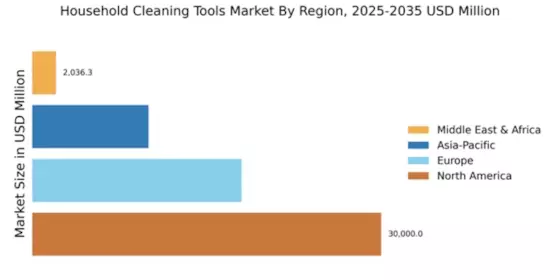
North America continues to lead the Household Cleaning Tools Market, holding a significant share of 30000.0. The growth is driven by increasing consumer awareness regarding hygiene and the rising demand for eco-friendly cleaning solutions. Regulatory support for sustainable products further enhances market dynamics, encouraging innovation and investment in cleaner technologies. The region's robust retail infrastructure also facilitates easy access to a variety of cleaning tools, boosting sales. The competitive landscape in North America is characterized by the presence of major players such as Procter & Gamble, SC Johnson, and Clorox. These companies leverage advanced marketing strategies and product diversification to maintain their market positions. The U.S. remains the largest market, with a growing trend towards online shopping for cleaning products. This shift is expected to further enhance market penetration and consumer engagement, solidifying North America's leading role in the global market.
Europe's Household Cleaning Tools Market is valued at 18000.0, driven by a strong emphasis on sustainability and eco-friendly products. Regulatory frameworks across the EU promote green cleaning solutions, encouraging manufacturers to innovate. The increasing consumer preference for biodegradable and non-toxic cleaning tools is reshaping the market landscape. Additionally, the rise in urbanization and disposable income levels contribute to the growing demand for efficient cleaning solutions. Leading countries in this region include Germany, France, and the UK, where major players like Unilever and Reckitt Benckiser are actively competing. The competitive landscape is marked by a focus on product quality and sustainability, with companies investing in research and development to meet consumer expectations. The presence of established brands and a growing trend towards online retailing are expected to further enhance market growth in Europe.
The Asia-Pacific Household Cleaning Tools Market, valued at 10000.0, is witnessing rapid growth driven by urbanization and rising disposable incomes. The increasing awareness of hygiene, especially post-pandemic, has led to a surge in demand for effective cleaning tools. Regulatory initiatives promoting health and safety standards are also contributing to market expansion. The region's diverse consumer base is driving innovation in product offerings, catering to various preferences and needs. Countries like China, India, and Japan are leading the market, with local and international players competing vigorously. Companies such as Ecolab and Diversey are focusing on expanding their product lines to capture the growing market share. The competitive landscape is characterized by a mix of established brands and emerging local players, creating a dynamic environment for growth and innovation in the cleaning tools sector.
The Middle East and Africa Household Cleaning Tools Market, valued at 2036.32, is gradually expanding, driven by increasing urbanization and a growing middle class. The demand for cleaning tools is rising as consumers become more health-conscious and seek efficient cleaning solutions. Regulatory bodies are beginning to implement standards that promote product safety and environmental sustainability, which is expected to further stimulate market growth in the coming years. Leading countries in this region include South Africa and the UAE, where the presence of both local and international brands is notable. Companies are focusing on product innovation and marketing strategies tailored to regional preferences. The competitive landscape is evolving, with an increasing number of players entering the market, indicating significant growth potential in the cleaning tools sector.
The Household Cleaning Tools Market is currently characterized by a dynamic competitive landscape, driven by innovation, sustainability, and digital transformation. Major players such as Procter & Gamble (US), Unilever (GB), and SC Johnson (US) are at the forefront, each adopting distinct strategies to enhance their market positioning. Procter & Gamble (US) emphasizes innovation in product development, focusing on eco-friendly cleaning solutions that appeal to environmentally conscious consumers. Unilever (GB) has been actively pursuing regional expansion, particularly in emerging markets, while SC Johnson (US) is leveraging partnerships to enhance its product offerings and distribution channels. Collectively, these strategies contribute to a competitive environment that is increasingly focused on sustainability and consumer engagement.
Key business tactics within the market include localizing manufacturing and optimizing supply chains to enhance efficiency and responsiveness to consumer demands. The competitive structure appears moderately fragmented, with several key players holding substantial market shares. This fragmentation allows for a diverse range of products and innovations, fostering competition that drives continuous improvement and adaptation among the leading companies.
In November 2025, Reckitt Benckiser (GB) announced a strategic partnership with a leading technology firm to integrate AI into its product development processes. This move is likely to enhance the company's ability to innovate rapidly and respond to consumer preferences more effectively, positioning it as a leader in the digital transformation of household cleaning tools. The integration of AI could streamline operations and improve product efficacy, thereby strengthening Reckitt's competitive edge.
In October 2025, Clorox (US) launched a new line of biodegradable cleaning products, reflecting a growing consumer demand for sustainable options. This initiative not only aligns with global sustainability trends but also reinforces Clorox's commitment to environmental responsibility. By diversifying its product portfolio to include eco-friendly alternatives, Clorox is likely to attract a broader customer base and enhance brand loyalty.
In September 2025, Henkel (DE) expanded its manufacturing capabilities in Asia, aiming to meet the rising demand for household cleaning products in the region. This expansion is significant as it allows Henkel to localize production, reduce lead times, and better serve its customers. Such strategic moves are indicative of a broader trend where companies are increasingly focusing on regional manufacturing to enhance supply chain reliability and responsiveness.
As of December 2025, the competitive trends within the Household Cleaning Tools Market are heavily influenced by digitalization, sustainability, and the integration of advanced technologies such as AI. Strategic alliances are becoming more prevalent, enabling companies to leverage each other's strengths and enhance their market offerings. Looking ahead, competitive differentiation is expected to evolve, with a notable shift from price-based competition to a focus on innovation, technology, and supply chain reliability. This transition underscores the importance of adapting to consumer preferences and market demands in an increasingly complex landscape.

The Household Cleaning Tools Market is projected to grow at a 4.07% CAGR from 2025 to 2035, driven by innovation, sustainability, and increasing consumer demand for efficiency.
New opportunities lie in:
By 2035, the market is expected to achieve robust growth, reflecting evolving consumer preferences and technological advancements.
| MARKET SIZE 2024 | 60036.32(USD Million) |
| MARKET SIZE 2025 | 62479.8(USD Million) |
| MARKET SIZE 2035 | 93109.75(USD Million) |
| COMPOUND ANNUAL GROWTH RATE (CAGR) | 4.07% (2025 - 2035) |
| REPORT COVERAGE | Revenue Forecast, Competitive Landscape, Growth Factors, and Trends |
| BASE YEAR | 2024 |
| Market Forecast Period | 2025 - 2035 |
| Historical Data | 2019 - 2024 |
| Market Forecast Units | USD Million |
| Key Companies Profiled | Procter & Gamble (US), Unilever (GB), SC Johnson (US), Reckitt Benckiser (GB), Clorox (US), Henkel (DE), Ecolab (US), Bissell (US), Diversey (US) |
| Segments Covered | Application, Product Type, Material, End User |
| Key Market Opportunities | Integration of smart technology in Household Cleaning Tools Market enhances efficiency and consumer convenience. |
| Key Market Dynamics | Rising consumer preference for eco-friendly cleaning tools drives innovation and competition in the household cleaning tools market. |
| Countries Covered | North America, Europe, APAC, South America, MEA |
As of 2024, the Household Cleaning Tools Market was valued at approximately 60036.32 USD Million.
The market is projected to reach approximately 93109.75 USD Million by 2035.
The expected CAGR for the Household Cleaning Tools Market during the forecast period 2025 - 2035 is 4.07%.
In 2024, the Surface Cleaning segment had the highest valuation, estimated between 15000.0 and 22000.0 USD Million.



Kindly complete the form below to receive a free sample of this Report

“This is really good guys. Excellent work on a tight deadline. I will continue to use you going forward and recommend you to others. Nice job”


“Thanks. It’s been a pleasure working with you, please use me as reference with any other Intel employees.”


“Thanks for sending the report it gives us a good global view of the Betaïne market.”


“Thank you, this will be very helpful for OQS.”


“We found the report very insightful! we found your research firm very helpful. I'm sending this email to secure our future business.”


“I am very pleased with how market segments have been defined in a relevant way for my purposes (such as "Portable Freezers & refrigerators" and "last-mile"). In general the report is well structured. Thanks very much for your efforts.”


“I have been reading the first document or the study, ,the Global HVAC and FP market report 2021 till 2026. Must say, good info! I have not gone in depth at all parts, but got a good indication of the data inside!”


“We got the report in time, we really thank you for your support in this process. I also thank to all of your team as they did a great job.”


“The Automotive 48V ECU Components Procurement Intelligence Study” was a complex project, but the Market Research Future (MRFR) team handled it with quality, agility, and customer-centricity. They delivered all requested data on time and within the agreed scope. The team, including Shubhendra Anand and Rahul Gotadki, was always readily available to clarify questions and swiftly implement necessary adjustments, driving the project to a successful conclusion within a very demanding timeframe.
I would also like to specifically commend Akshay Agarwal for his responsiveness and support at every stage—from our initial inquiry on May 6th through to final delivery on June 18th. His dedication made the entire process seamless.”



